

If you’re not using TikTok Stories, then it’s time to learn how to introduce them into your content plan. TikTok, already a global sensation with over 1 billion users, has rolled this feature that should be a must-have in your content strategy.
And when you consider that 15% of those users are engaging daily, the implications for businesses become impossible to ignore. Any social media marketer can see the opportunity here.
Wondering how TikTok Stories can help you boost your business results? Let’s get into the specifics to learn everything you need to know!

What are TikTok Stories?
Stories are a TikTok feature that lets users post photos or videos that disappear after 24 hours. Unlike regular TikTok videos, which remain on your profile and can continue generating views for months, Stories are designed for temporary content that prioritizes immediacy over long-term reach.
The TikTok Stories feature works similarly to stories from other social meia apps. When you create a Story, a blue ring appears around your profile picture, making it easy for followers to spot new updates. Users can tap your profile photo from the For You feed, Following feed, inbox, or profile page to watch your Story before it disappears.
What sets TikTok Stories apart is that they give creators, brands, and businesses a new way to share content without filling their main profile with every update. You can upload content from your camera roll or use the camera button to record directly in the app. Like regular TikTok content, Stories support stickers, filters, sounds, text, and interactive features that help the TikTok audience engage with your posts.
In my experience, TikTok Stories work best for content that loses value quickly, such as:
- Product launches and limited-time offers
- Event reminders and countdowns
- Behind-the-scenes updates
- Quick audience questions and polls
- Daily updates that don’t need a permanent place on your profile
- Casual content experiments and feature tests
However, Stories aren’t always the best choice. If you’re creating tutorials, educational videos, product demonstrations, or other content with long-term value, regular TikTok videos are usually the better option because they can continue attracting views, comments, and engagement long after they’re posted.
Think of TikTok Stories as a complement to your regular TikTok strategy rather than a replacement for it. Use Stories to keep your audience engaged between major posts, while using permanent videos to build reach, visibility, and a content library that continues working for your brand over time.
How to see TikTok Stories
There are several ways to access TikTok Stories once they’re published.
The easiest method is to look for the blue ring around a creator’s profile picture. When you see the ring, tap the profile photo to watch their active Story.
You can also view Stories from:
- A creator’s profile page
- Your Following feed, at the top of the screen in the Story panel
- Your inbox
- Other areas of the TikTok app where the profile appears
If a Story is active, the blue ring will remain visible around the account’s profile picture until the TikTok Stories expire or are deleted.
For businesses, this visibility makes Stories a useful way to stay present between regular posts. Followers can quickly spot new updates without having to visit your profile and scroll through older content.
How do TikTok Stories differ from stories on other platforms?
TikTok Stories share many similarities with Instagram Stories and Snapchat Stories. They allow users to post temporary photos and videos that disappear after 24 hours and include features like stickers, filters, text, sounds, and audience interactions.
The biggest difference is how Stories fit into TikTok’s content ecosystem.
On Instagram, Stories often act as a companion to a profile built around photos, Reels, and direct messaging. On Snapchat, Stories are a core part of the platform experience, with people often
crafting engaging short stories to post there. On TikTok, Stories are designed to complement regular TikTok videos rather than replace them.
Because TikTok is heavily focused on video discovery and content consumption, most brands still rely on regular TikTok videos for long-term reach, search visibility, and trend participation. Stories work best as a secondary format for quick updates, reminders, behind-the-scenes content, and audience engagement.
How do TikTok Stories work?
TikTok Stories work much like Stories on Instagram and Snapchat. You can create a temporary photo or video, share it with your audience, and let it disappear automatically after 24 hours.
Here’s how the feature works:
Where TikTok Stories appear
When you post a Story, a blue ring appears around your profile picture. Users can tap the ring to view your Story from various places across the TikTok app, including your profile page and other areas where your account appears.
Who can see your Stories?
Who can access your Stories depends on your account’s privacy settings. Public accounts can make Stories visible to a broader audience, while private accounts limit visibility to approved followers.
How long do TikTok Stories last?
Unlike regular TikTok videos that remain on your profile until you delete them, Stories disappear after 24 hours. This temporary format allows you to encourage interaction with more casual, time-sensitive content and gives creators the freedom to experiment without permanently adding every post to their profile. As for the clips themselves, they are capped at 15 seconds clips per Story frame.
How viewers can interact with Stories
TikTok users can engage with Stories in several ways:
- React to a Story
- Send replies and messages
- Publicly comment on a Story (depending on settings)
- Share Stories with other users
These interactions can help creators and brands maintain regular contact with their audience between major content releases.
What creative tools are available
TikTok Stories include many of the same creation tools available for regular TikTok content. You can:
- Record directly using the camera button and record button
- Upload a photo or pre-recorded video from your camera roll
- Add stickers, text, filters, and effects
- Include sounds and music
- Edit content before publishing
What metrics can you track?
After posting a Story, you can monitor its performance through TikTok’s analytics tools to make sure you leverage TikTok Stories for your brand. Key metrics include:
- Story views
- Viewer interactions
- Comments and reactions
- Shares
- Audience engagement
Tracking these metrics can help you understand what types of temporary content resonate most with your followers and whether Stories deserve a larger role in your content strategy.
How do you make a TikTok Story?
To post a Story to TikTok, open the TikTok app, tap the create button, choose Story mode, record or upload your content, edit it, and post to Story.
Here’s the step-by-step process:
1. Open TikTok and tap the create button
Open the TikTok app on your device and tap the + button at the bottom of the screen. This opens the content creation screen, where you can create regular TikTok videos, upload content from your camera roll, or record something new directly in the app.

2. Choose Story mode
From the creation screen, select the Story option if it’s available on your account. TikTok sometimes tests features with certain users or regions first, so the exact placement of the Story button may vary.
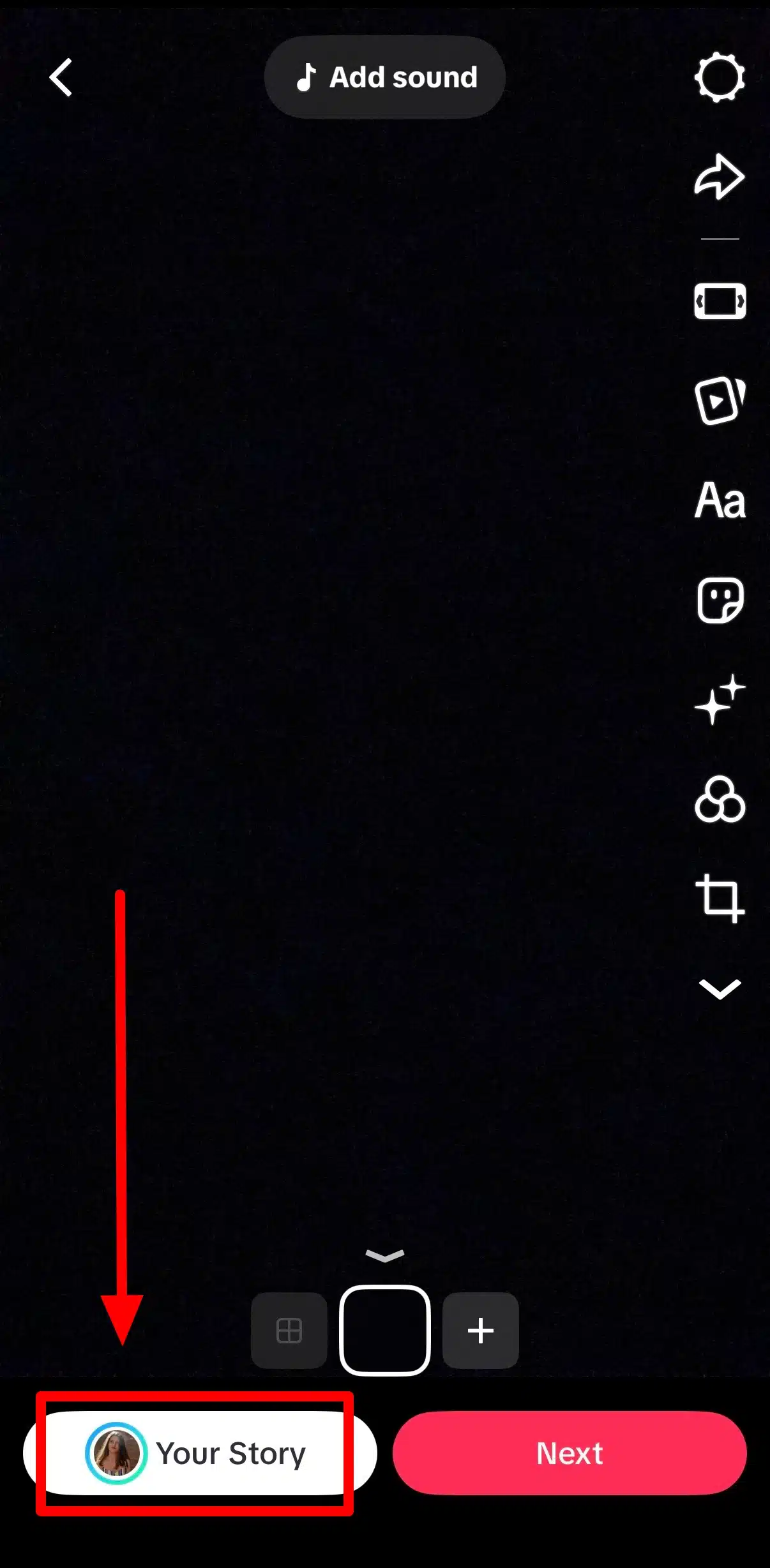
If you don’t see TikTok Stories yet, update the app and check again later. The feature may not be available to every account at the same time.
3. Record or upload your content
You can either press the record button to film a new Story or tap the upload option to choose photos and videos from your camera roll.
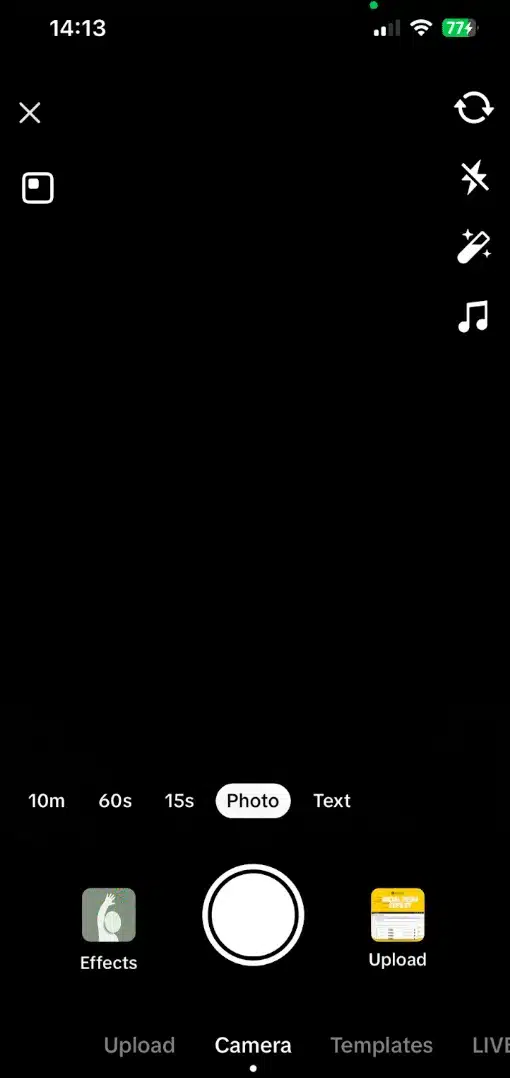
Use Stories for quick, casual updates rather than polished videos. For example, a brand could post a same-day event reminder, a quick product restock update, or a behind-the-scenes clip from a campaign shoot.
4. Add text, stickers, music, or polls
Once your photo or video is ready, use TikTok’s editing tools to create TikTok Stories that are clearer and more engaging. You can add:
- Text
- Stickers
- Filters
- Effects
- Sounds or music
- Mentions
- Hashtags
- Polls, if available
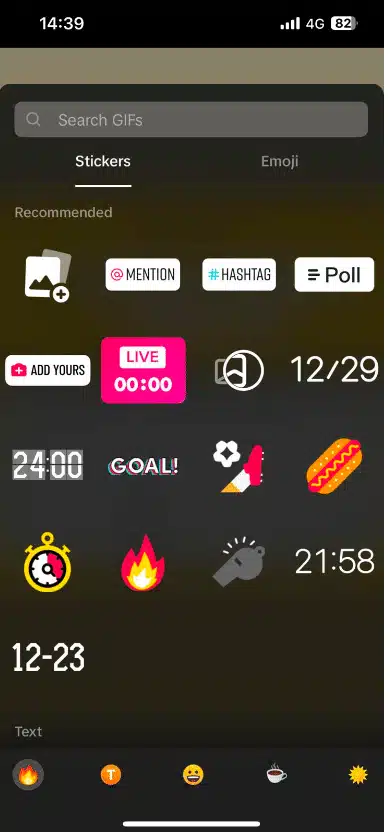
Keep the edit simple. TikTok Stories disappear after 24 hours, so the goal is not to create a perfect post. The goal is to share timely content that feels easy to watch and easy to react to.
5. Publish and monitor replies or comments
When everything looks right, tap the button to post a TikTok Story. Once it’s live, check that the blue Story ring appears around your profile picture. That ring signals that you have an active Story.
After publishing, monitor story views, replies, comments, and reactions. These signals can help you understand whether your audience wants more quick updates, behind-the-scenes posts, polls, or time-sensitive announcements.
If you’re not happy with how the post looks, you can edit and re-post or simply delete TikTok Stories after they’re published
Why should businesses use TikTok Stories?
Stories on TikTok are most valuable when you need to share timely updates, test a few ideas, or stay visible between major content pieces. Rather than replacing your regular TikTok short-form video content, TikTok Stories effectively work best as a supporting format that helps you maintain engagement and gather feedback with less effort.
1. Test content ideas before creating full videos
Creating high-quality TikTok videos takes time. Before investing in scripting, filming, and editing a longer piece of content, you can use Stories to gauge audience interest.
For example, if you’re planning a tutorial series, product announcement, or YouTube video, post a quick Story first and watch how people respond. Strong story views, reactions, and comments can help validate an idea before you commit more resources to it.
2. Remind followers about launches, upcoming events, and deadlines
Stories are ideal for announcements that lose relevance after a few hours or days.
Businesses often use TikTok Stories to promote:
- Product launches
- Flash sales
- Webinar registrations
- Limited-time offers
- Event reminders
- New content releases
Since Stories disappear after 24 hours, they naturally create a sense of urgency without cluttering your profile with temporary updates.
3. Show a more human side of your brand
Not every piece of content needs professional editing or a detailed production process.
Stories give brands a place to share informal updates, behind-the-scenes moments, team highlights, work-in-progress projects, or quick company news. In my experience, this type of content often helps audiences feel more connected to a business because it feels less polished and more authentic than traditional promotional posts.
4. Collect fast feedback from your audience
One of the biggest advantages of Stories is the ability to interact with followers quickly.
We learn from Keenya Kelly, a video marketing strategist who helps female business owners generate more leads and sales, that “TikTok has introduced a novel feature where comments on TikTok stories are automatically directed to the creator’s DMs, fostering more intimate conversations between creators and their audience.”
You can use comments, reactions, and this relatively new feature to learn:
- Which products people want next
- What questions customers have
- Which content topics generate the most interest
- How audiences feel about a new concept or feature
This feedback can help shape future content, campaigns, and product decisions.
5. Support campaigns already running in your feed
Stories work particularly well alongside larger marketing campaigns.
For example, if you’ve published a regular TikTok video announcing a new product, you can use Stories throughout the week to share updates, answer questions, highlight customer reactions, and remind followers about the launch.
I often think of Stories as reinforcement content. The main video introduces the message, while Stories help keep the conversation going and give people multiple opportunities to engage with the campaign.
TikTok Stories vs. TikTok videos: Which should you use?
TikTok Stories and regular TikTok videos serve different purposes. The best results usually come from using both formats together rather than choosing one over the other.
Use TikTok videos when you want to… | Use TikTok Stories when you want to… |
Reach new audiences | Share quick updates |
Appear in TikTok search results | Promote limited-time offers |
Create tutorials and educational content | Remind followers about launches or events |
Participate in trends | Share behind-the-scenes moments |
Build a library of evergreen content | Collect feedback through comments and reactions |
Generate views over weeks or months | Create urgency around campaigns |
Publish polished, high-production content | Post casual, informal content |
I think of TikTok videos as your long-term content assets. A well-optimized video can continue attracting views, engagement, and traffic long after it’s published.
TikTok Stories, on the other hand, are designed for content that has a shorter lifespan. They’re ideal for updates that matter today but won’t be relevant next week.
For most businesses, a simple approach works best: use regular TikTok videos as the foundation of your content strategy, then use Stories to support those videos with reminders, follow-up updates, audience questions, and time-sensitive announcements.
Managing both content types becomes much easier when you plan ahead and have a consistent posting schedule. SocialBee is a TikTok management tool that helps you create, schedule, and organize your TikTok videos from one dashboard.

You can build a content calendar, generate caption ideas with AI, collaborate with your team, and schedule posts in advance. Then, use TikTok Stories natively to complement those planned videos with real-time updates and audience interactions.
TikTok Story ideas for businesses
One of the biggest mistakes I see businesses make with TikTok Stories is treating them like smaller versions of regular TikTok videos. Stories work differently. Because they disappear after 24 hours, they’re most effective when they deliver timely information, create conversation, or support content that’s already part of your broader marketing strategy.
If you’re not sure what to post, start with these proven Story formats. I’ve also added some templates that can inspire you for creating your own content.
1. Give followers a behind-the-scenes look
Behind-the-scenes content is one of the easiest ways to make a brand feel more human.
Most businesses spend a lot of time sharing finished products, polished videos, and carefully planned campaigns. Stories give you a place to show what happens before the final result. This could be a product being developed, a team preparing for an event, a content shoot in progress, or a quick office update.

For example, a clothing brand could share the design process behind an upcoming collection. A software company could show screenshots of a feature being tested before launch. A restaurant could post clips from the kitchen while preparing a new menu item.
This type of content works because people are naturally curious. They enjoy seeing how things are made and getting access to information that isn’t available in your regular content.
Tip: Don’t worry about making behind-the-scenes Stories perfect. The real and authentic look is often what makes them interesting.
2. Promote new TikTok videos through Stories
Many businesses publish a TikTok video and immediately move on to the next piece of content. Stories give you another opportunity to get attention without creating an entirely new post.

When you publish a new TikTok video, use Stories to remind followers about it throughout the day. Instead of simply saying “new video live now,” give people a reason to watch.
You could:
- Share a surprising takeaway from the video
- Highlight a common mistake discussed in the post
- Ask a question related to the topic
- Reveal a result without giving away the full answer
For example, if your video explains how to improve engagement, your Story could say: “Most brands are making this one mistake with their captions. We break it down in today’s video.”
This approach creates curiosity and helps extend the life of content you’ve already created.
3. Ask questions and collect audience feedback
TikTok Stories can also function as a lightweight research tool.
Before launching a product, publishing a new content series, or investing time into a campaign, use Stories to learn what your audience actually wants.

For example, you could ask:
- Which product should we launch next?
- What topic should our next video cover?
- Which feature would help you most?
- What’s your biggest challenge with social media?
I’ve found that audiences are often more willing to respond to a quick Story than a formal survey. The barrier to participation is lower, which means you can gather useful feedback faster.
Over time, these interactions can also reveal content opportunities you may not have considered. If the same questions keep appearing in comments and Story replies, that’s usually a sign that the topic deserves its own TikTok video.
4. Create urgency with limited-time offers and announcements
Stories are particularly effective when timing matters.
Because users know the content will disappear, Stories naturally support promotions that have a deadline. Product launches, flash sales, webinar registrations, seasonal offers, event reminders, and limited-time discounts are all strong candidates.

For example, if you’re running a 48-hour sale, you can use Stories throughout the campaign to:
- Announce the offer
- Remind followers before the deadline
- Highlight popular products
- Answer common questions
- Share customer reactions
This keeps the promotion visible without publishing multiple feed posts about the same offer.
In my experience, Stories work best as campaign support content. Your regular TikTok videos introduce the offer, while Stories keep it top of mind until the promotion ends.
5. Share timely updates that don’t need a permanent post
Not every update belongs on your profile forever.
Sometimes you simply need to communicate information that will be irrelevant a few days later. That’s exactly what Stories are designed for.

Examples include:
- Event schedule changes
- Shipping updates
- Product restocks
- Conference appearances
- Team announcements
- Last-minute reminders
- Daily business updates
If the information has a short shelf life, consider posting it as a Story instead of a regular TikTok video.
This helps keep your profile focused on evergreen content while still giving your audience the updates they need. The result is a cleaner content strategy where permanent videos build long-term reach and Stories handle short-term communication.
Frequently asked questions
1. How do you delete a TikTok Story?
To delete a TikTok Story, open your Story, tap the three-dot menu or More option, and select Delete. Once removed, the Story will disappear immediately and will no longer be visible to viewers. You can access active Stories from the blue ring around your profile picture.
2. Does TikTok notify users when you screenshot a Story?
No, TikTok does not currently notify creators when someone takes a screenshot of their Story. Users can capture screenshots without the account owner receiving a notification. However, social media features can change over time, so it’s always worth checking TikTok’s latest updates.
3. How do you add a link to a TikTok Story?
The ability to add links to TikTok Stories depends on your account type, location, and feature availability. If the option is available, you’ll see a link sticker or link feature while creating your Story. Businesses often use links to direct viewers to product pages, event registrations, or other online resources.
4. How do you tag someone in a TikTok Story?
To tag someone in a TikTok Story, create your Story and use the mention feature before publishing. Type the @ symbol followed by the username of the account you want to tag. Tagged users may receive a notification and can easily access the Story through the mention.
5. How do you repost a TikTok Story?
TikTok doesn’t offer a universal repost feature for Stories the way it does for regular TikTok videos. If someone mentions your account in their Story, TikTok may give you the option to share or repost it. Otherwise, you’ll typically need to create a new Story and manually share the content if permissions allow.
6. Can you see old TikTok Stories after they disappear?
Yes, TikTok may save your Stories in a Story Archive, depending on your settings and account access. To check, go to your profile and look for archive or story history options. If Story Archive is enabled, you’ll be able to review previously published Stories even after they disappear from public view.
7. How do you share a TikTok to your Facebook Story?
Open the TikTok video you want to share, tap the Share button, and select Facebook Stories if the option appears on your device. The TikTok app will transfer the content to Facebook, where you can make final edits before posting it to your Facebook Story.
8. How do you share a TikTok to your Instagram Story?
To share a TikTok to Instagram Stories, tap the Share button on the TikTok video and select Instagram Stories. TikTok will open Instagram automatically and prepare the content for sharing. From there, you can add stickers, text, or other edits before publishing it to your Instagram Story.
Make TikTok Stories part of your content strategy
TikTok Stories won’t replace regular TikTok videos, but they can make your overall content strategy more effective. They’re useful for sharing quick updates, promoting time-sensitive offers, testing new ideas, answering audience questions, and keeping followers engaged between major posts.
The most effective brands use Stories to support the content already running on their TikTok profile. A Story can remind people about a new video, provide behind-the-scenes context, or create urgency around a campaign that’s already live.
To stay consistent with your TikTok strategy, it helps to plan your content in advance. SocialBee is a TikTok scheduling tool that lets you organize your content calendar, generate caption ideas with AI, collaborate with your team, and schedule TikTok videos directly from one dashboard. Then, you can use TikTok Stories natively for the timely updates and real-time interactions that keep your audience engaged between planned posts.
If you’re looking for a simpler way to manage your TikTok presence, try SocialBee free for 14 days and see how much easier planning, creating, and scheduling content can be.