
Social media for fitness brands is one of the most effective ways to attract the right audience, build trust, and turn attention into paying clients. Your potential clients are already on social media platforms every day, looking for fitness tips, workout routines, and guidance they can actually stick to. If your fitness brand isn’t showing up consistently, someone else is filling that gap.
The fitness industry continues to grow, with the median revenue of health and fitness facilities growing by 9.9% in 2025 compared to 2023. More fitness professionals, personal trainers, and gym owners are relying on fitness social media marketing as a core part of their digital marketing strategies. A strong social media presence now plays a direct role in brand visibility and long-term business growth.
In this guide, I’ll walk you through practical, experience-based social media tips for fitness business owners, fitness coaches, and professional influencers. You’ll learn how to build a clear social media strategy, choose the right social media channels, create engaging content that supports real fitness goals, and turn your social media efforts into measurable social media success.

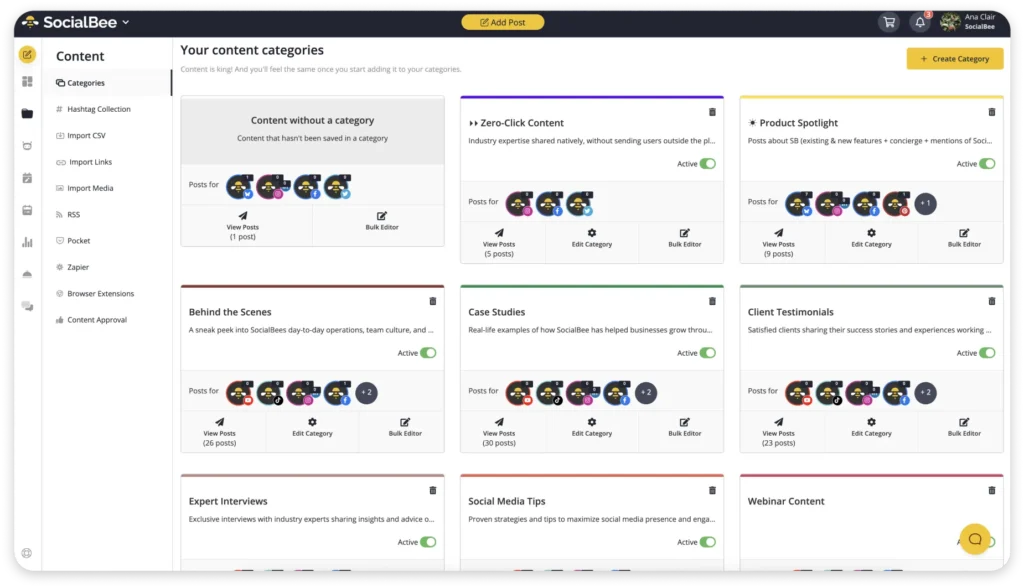
2. Highlight client stories in a way people trust
Client stories work in fitness marketing because they reduce uncertainty. When someone is considering a personal trainer, a gym, or an online program, they want proof that the process works for people like them, not just polished promises.
That said, fitness transformations are sensitive. Sharing them carelessly can damage trust instead of building it. The goal is credibility, not shock value.
Strong client success stories focus on process and context, not just outcomes. Instead of posting a before-and-after photo with a vague caption, show how the change happened.
A simple structure that works well:
- Where the client started (experience level, main challenge)
- What the plan looked like (training frequency, support, accountability)
- The obstacle they struggled with
- What changed over time
- The result, with a clear timeframe
- One takeaway others can apply
For example, instead of “Lost 10kg in 12 weeks,” explain what habits were built, how gym workouts were adjusted, or how consistency improved. This makes the story believable and useful. You can also include client testimonials so your followers can hear the story straight from the source.
3. Find and stick to a clear brand voice
A clear brand voice helps your fitness brand feel familiar and trustworthy over time. When people scroll through their feed, they should be able to recognize your content before they see your name. That recognition is what separates strong fitness social media accounts from ones that blend into the background.
Most fitness brands don’t struggle because they lack personality, they struggle because their tone changes constantly. One post sounds motivational, the next reads like a textbook, and another feels overly promotional. This inconsistency makes it harder for people to connect with your brand or understand what you stand for.
A strong brand voice starts with making a few intentional choices. Decide how you want to sound when you give fitness advice. Are you more coach-like and direct, or supportive and conversational? Do you explain exercises in simple language, or do you lean into technical cues and training terminology?
Just as important, decide what you avoid. Many fitness professionals intentionally stay away from crash-diet language, body shaming, or exaggerated claims because those undermine trust in the long run.
Once you’re clear on your voice, apply it consistently across your fitness content. This shows up in small but repeatable ways. The way you explain proper form, how you respond to comments, the phrases you use in workout videos, and even the type of humor you include all contribute to how people perceive your brand. Over time, this consistency helps your audience feel like they know you, even before they become clients.
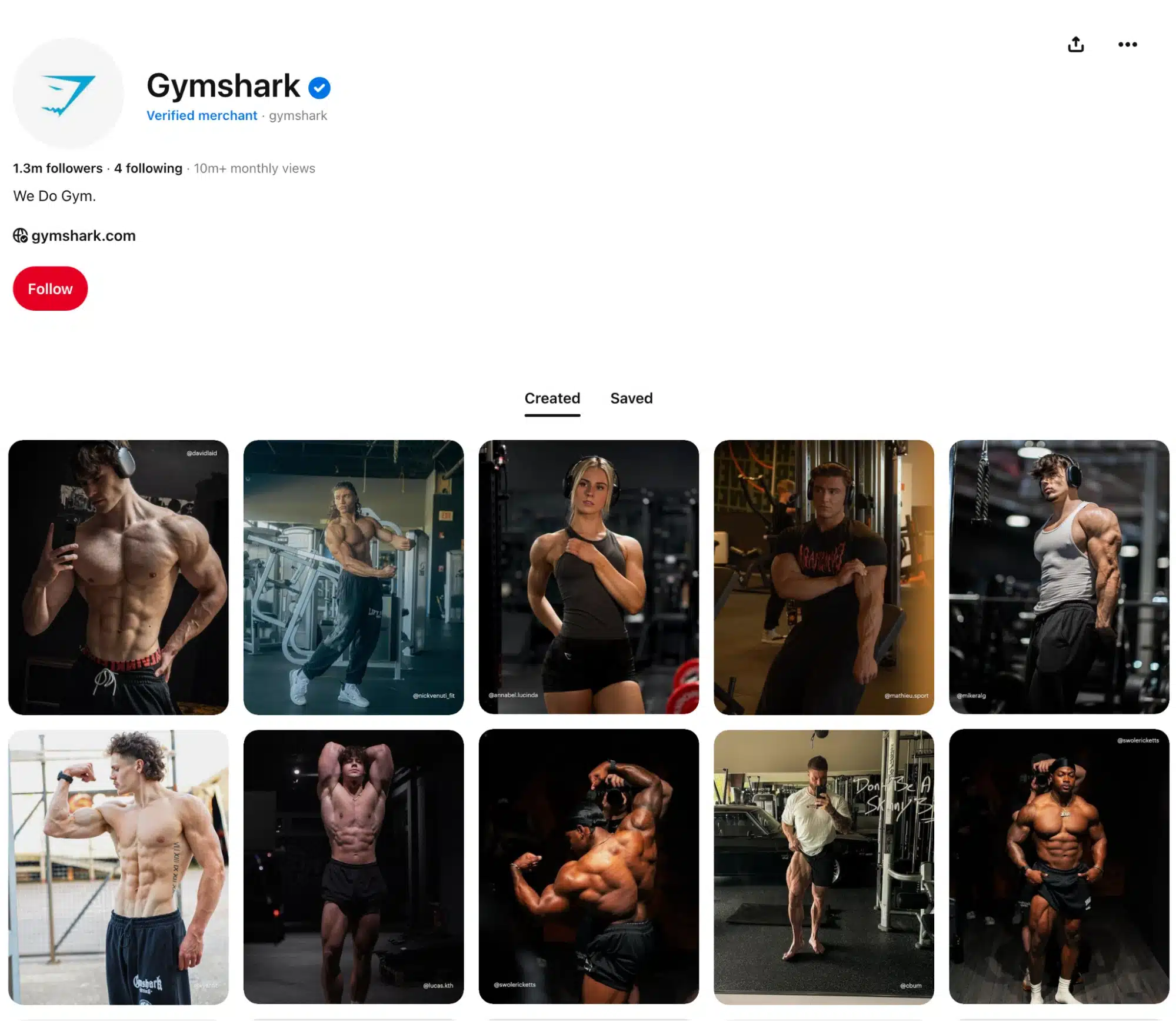
Well-known fitness brands and creators do this exceptionally well. Gymshark’s social media content consistently speaks to a younger, community-driven audience through informal language and creator-led content.
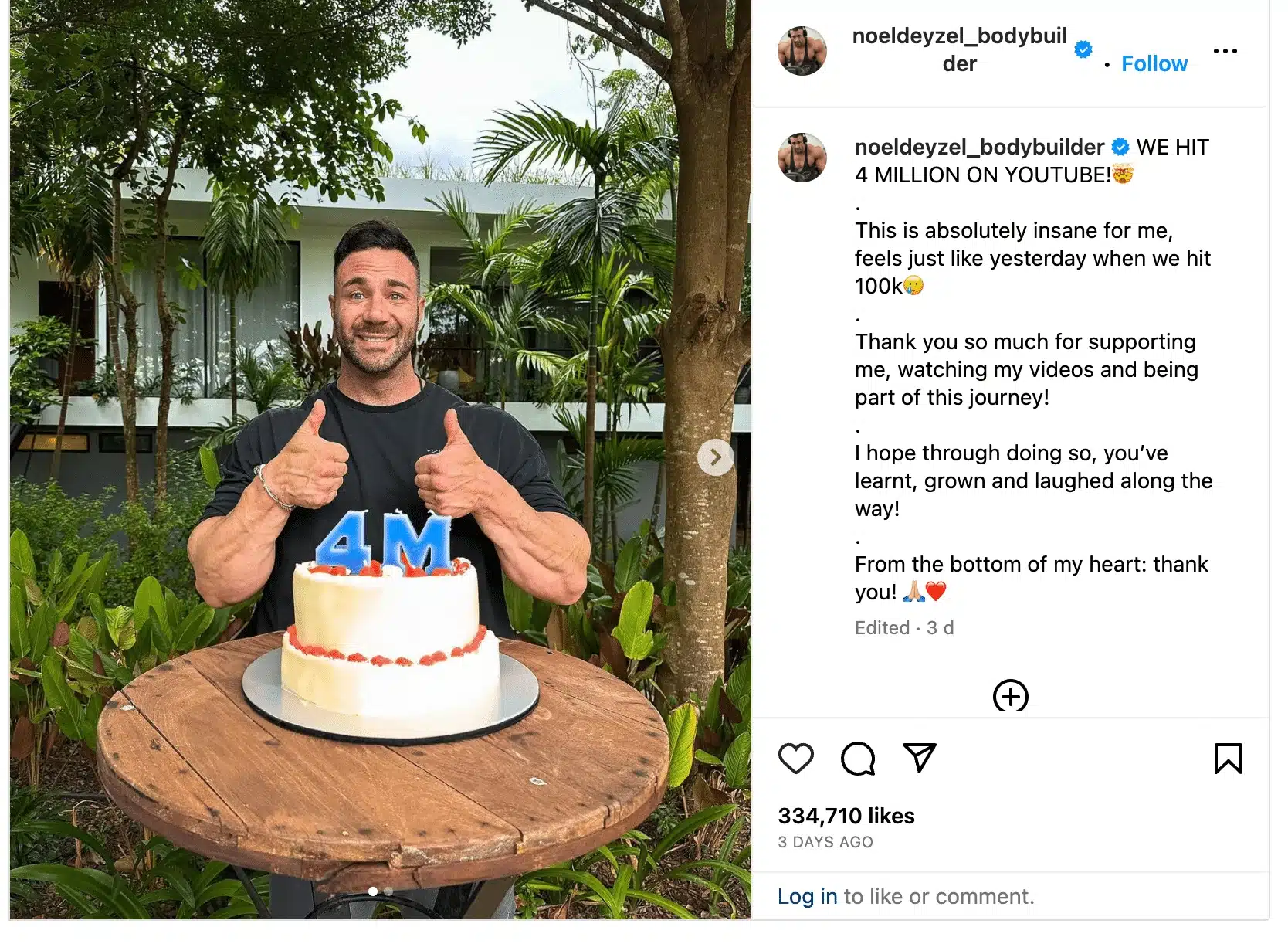
Fitness creators like Noel Deyzel use the same educational tone and recurring phrases in nearly every video, which reinforces their personal brand without needing an introduction each time.
The lesson isn’t to copy their style, but to commit to one that fits your audience and repeat it.
4. Share educational content that answers real questions
Educational content works in fitness social media because it helps people make decisions. Before someone books a class, downloads workout apps, signs up for a program, or messages a personal trainer, they usually want clarity.
For fitness brands, this means focusing on content that explains how and why, not just what. The most effective educational posts reduce confusion around training, form, and expectations.
Examples of educational fitness content that performs well:
- Proper form breakdowns for common exercises
- Short workout tutorials focused on one movement
- Explanations of common fitness myths
- Guidance on choosing workout plans based on fitness goals
Specificity matters here. A post explaining “three squat mistakes beginners make” is far more useful than generic fitness advice. The more concrete your examples, the easier it is for people to trust your expertise.
Educational content also compounds over time. When followers repeatedly learn something useful from your posts, they’re more likely to save your content, return to your profile, and reach out when they’re ready to commit. In the fitness and wellness industry, that trust often matters more than reach.
To keep this manageable, extend one idea across formats. For example:
- Turn a form demo into a short workout video
- Follow it with a carousel checklist
- Answer questions about it in Stories
Track saves, shares, and DMs rather than likes. Those signals help you gain insights into whether your educational content is helping potential customers move closer to action.
5. Leverage user-generated content to build social proof
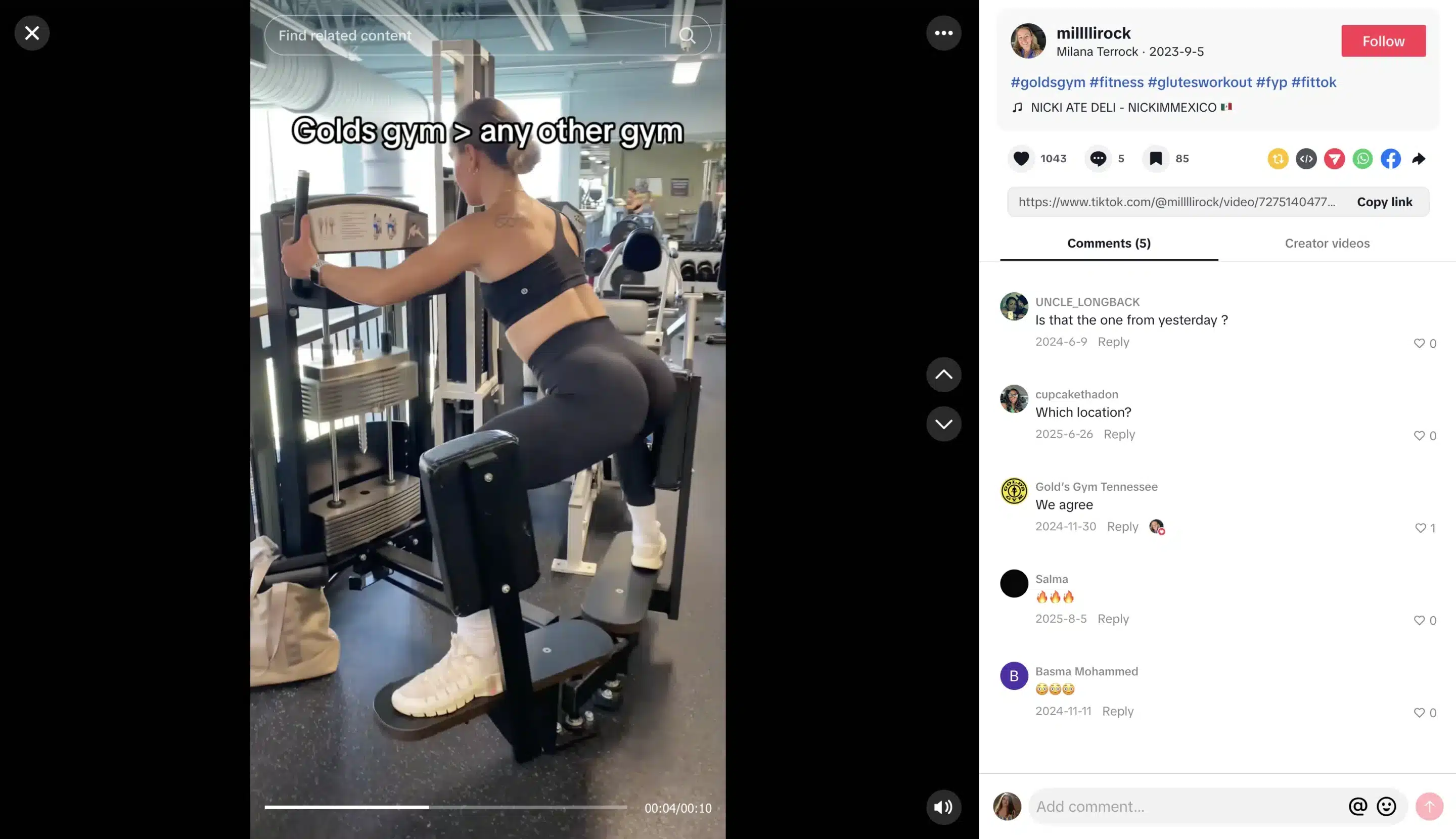
User-generated content works because it shows your fitness brand through someone else’s experience. For potential clients, this feels more believable than brand-created posts, especially in the fitness industry, where trust matters.
User-generated content can include:
- Clients sharing their own fitness journey with workout videos or gym check-ins
- Progress updates or fitness journey posts
- Tagged Stories from gym members or class attendees
- Before and after photos shared with consent
This type of content reinforces that real people are showing up, putting in the work, and getting results with your fitness services.
To make this repeatable, give people a clear way to participate:
- Ask clients and UGC creators to tag your account
- Create a branded hashtag
- Prompt members to share progress after workout challenges or programs
Reshare consistently and always credit the creator. Over time, this builds a sense of community and strengthens your brand’s social proof without requiring you to create everything from scratch.
Pay attention to how this content performs. Saves, replies, and profile visits often increase when people see relatable results from others who look like them.
6. Use influencer marketing with a clear purpose
Influencer marketing can work well in the fitness space, but only when it’s intentional. Partnering with the wrong creators or focusing only on follower count often leads to visibility without results.
For fitness brands, influencer marketing works best when the creator already speaks to your target audience and uses a similar training philosophy. Micro-influencers with smaller but engaged fitness audiences often drive more meaningful interactions than large social media pages with broad reach.
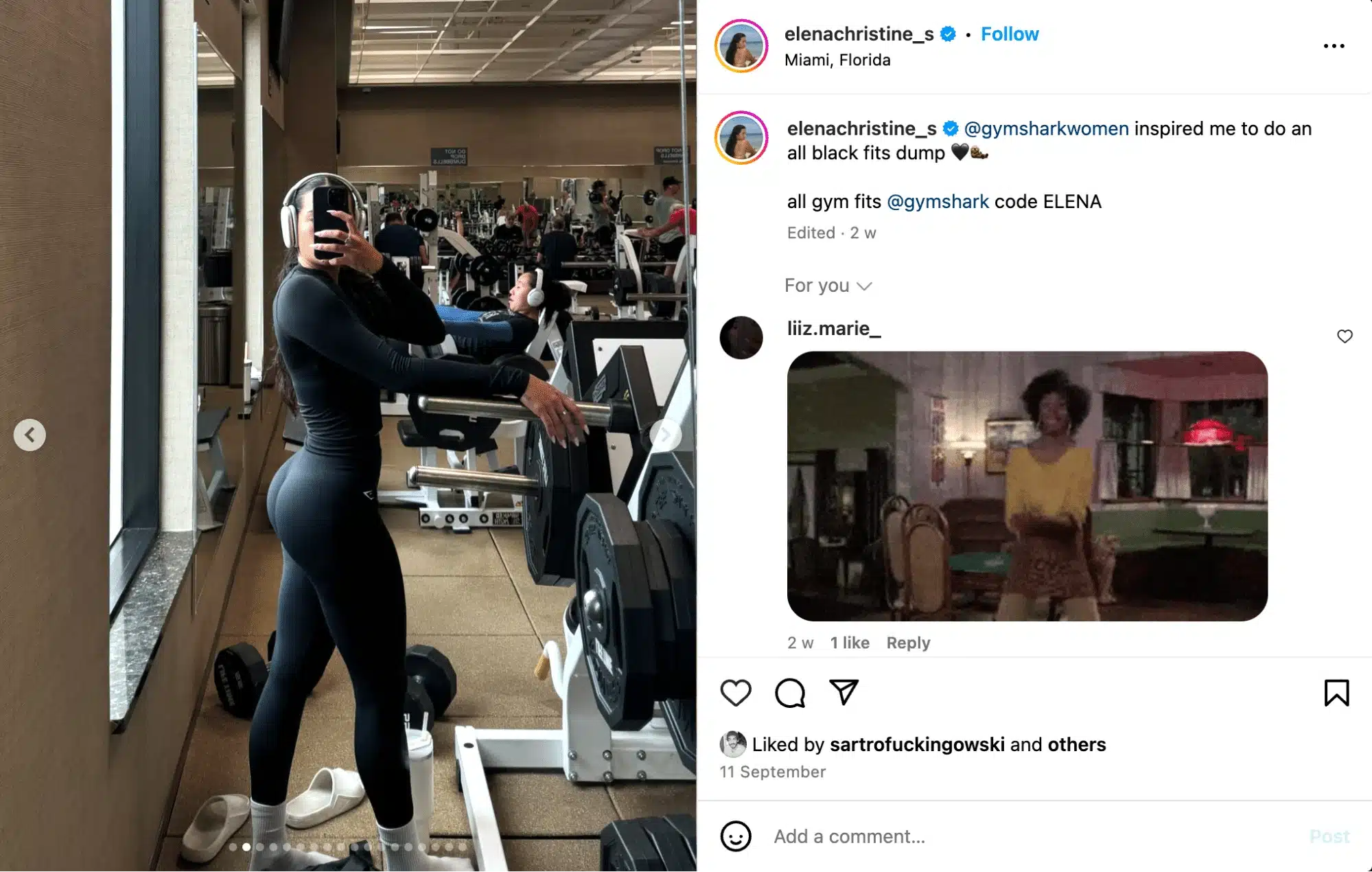
When evaluating potential partners, look for:
- Alignment with your fitness values and training approach
- Audience relevance, not just size
- Content quality and audience engagement in comments
- Past examples of authentic brand collaborations
Influencer content should feel useful, not scripted. Workout videos, class try-outs, honest reviews, or behind-the-scenes training sessions tend to perform better than direct promotions.
7. Use challenges and giveaways to get people involved
Promote fitness challenges and giveaways and give people a clear reason to participate instead of just watching from the sidelines. In the fitness space, many followers need a small push to take action, and a time-bound challenge does exactly that.
The most effective challenges are simple and achievable. Short challenges built around habits, mobility, or beginner workouts tend to perform better than long or complex fitness programs. A five-day mobility challenge or a week of short home workouts is easier to commit to and easier to share. When people feel they can complete something, they’re more likely to join and stay engaged.
For example, Gymshark has a 66-day challenge that encourages people to pick three daily habits and stick to them for the entire duration of the challenge.
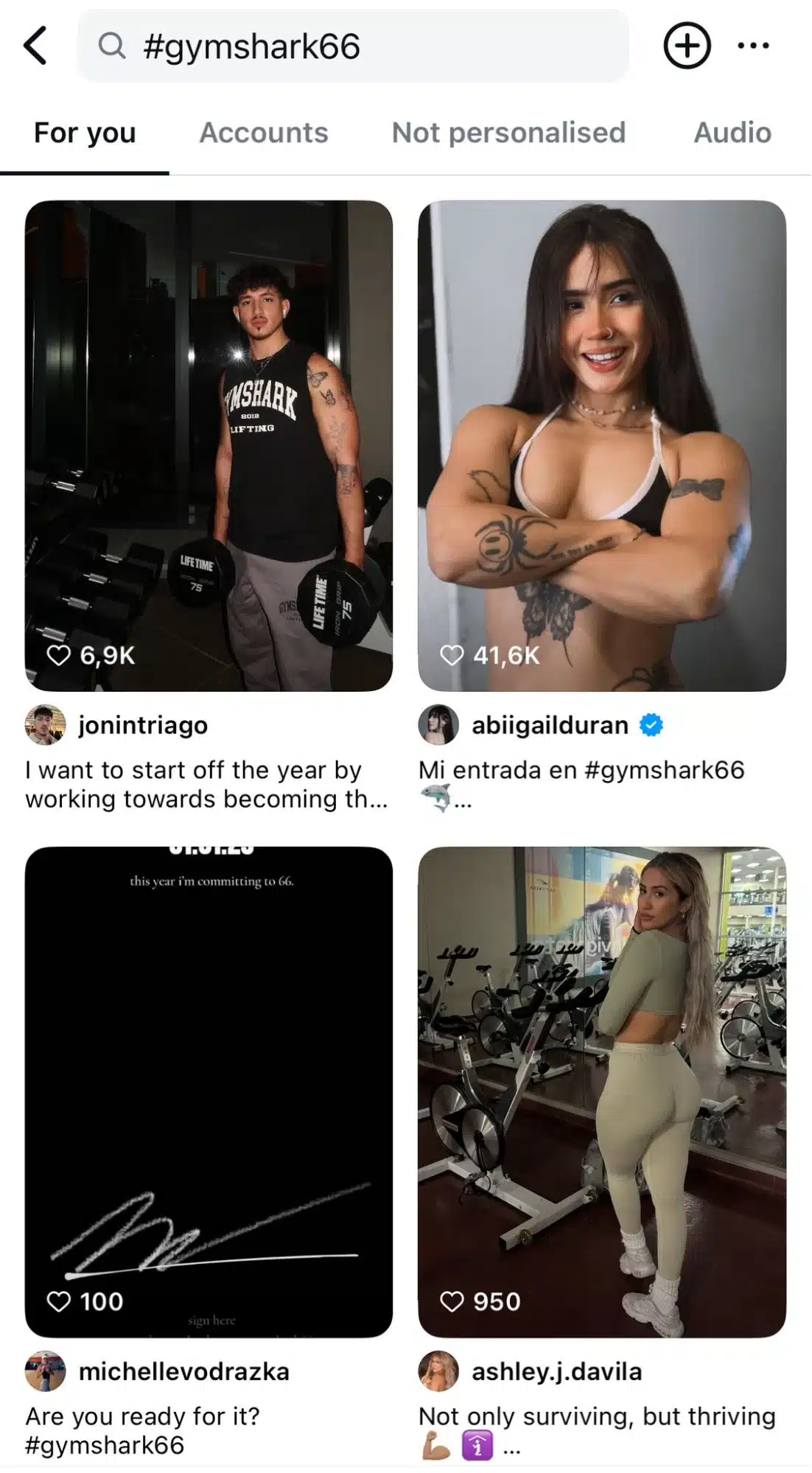
Giveaways work in a similar way when they’re relevant. Offering a free class, a free membership, a short personal training program, or a one-on-one session attracts people who are genuinely interested in your fitness services. Generic prizes may boost numbers, but they rarely bring in the right audience.
Visibility matters here. Pin a post explaining the challenge, remind people through Stories, and encourage participants to tag your account or use a branded hashtag. This makes participation visible and helps your fitness community grow organically.
8. Know when to keep social media in-house and when to get help
At some point, social media starts competing with the rest of your fitness business. What begins as “I’ll handle this myself” can turn into missed posts, unanswered messages, and rushed content because client sessions, classes, or programming always come first.
Doing your own social media makes sense early on. It helps you understand your audience, refine your voice, and test what type of fitness content resonates. But as your fitness business grows, the question becomes less about capability and more about capacity.
If you’re consistently short on time, social media tasks tend to be the first thing pushed aside. That’s usually the moment when bringing in help becomes practical, not optional. This doesn’t always mean hiring a full-time social media manager. Some fitness brands benefit from outside support from sports marketing agencies or social media specialists focused on planning, scheduling, and engagement, while they stay involved in fitness content ideas and on-camera work.
Before getting help, be clear on what you actually need. Some fitness businesses need support in keeping a consistent posting schedule. Others need help managing comments and messages so potential clients don’t fall through the cracks. The right support understands the fitness industry, communicates responsibly, and reports on outcomes that matter, such as inquiries, trial signups, or bookings.
If social media has become too much to manage alongside client work, ConciergeBee gives you access to social media specialists who can support different parts of the process depending on the service you choose.
That can include content publishing, performance monitoring, engagement, and even lead generation. It’s a practical option if you want expert support without building an in-house team, while still keeping control over your brand and messaging.
Social media gym post ideas (grouped by purpose)
When gym content performs well, it’s usually because it serves a clear purpose. Some posts build trust, others show expertise, and others keep your community active. Organizing specific post ideas around these roles makes content planning faster and more effective.
Proof posts (build trust and credibility)
Success stories
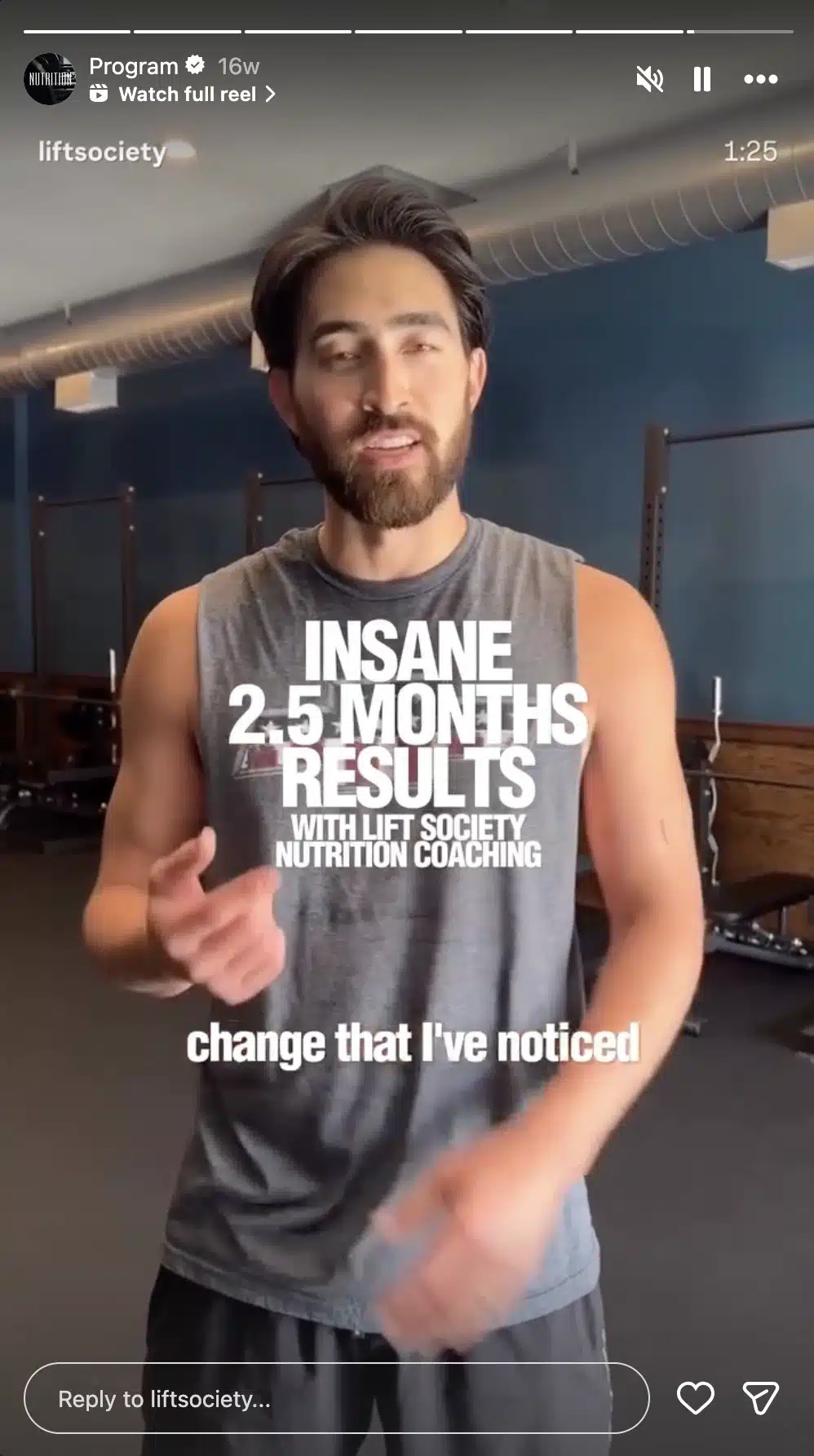
Why it works: People join gyms or fitness apps when they see realistic results from people like them. Specific progress builds trust more than polished marketing.
How to do it:
- Share before and after photos or videos with written consent
- Include a timeframe when you share success stories and what the member focused on
- Add one takeaway others can apply
- Use carousels or short videos for context
Milestones
Why it works: Celebrating progress reinforces community and makes your gym feel active and supportive.

How to do it:
- Highlight personal, member, or staff milestones, attendance streaks, or gym anniversaries
- Explain why the milestone matters
- Tag members when appropriate to increase reach
User-generated content
Why it works: Content created by members feels more authentic than brand-created posts and acts as authentic social proof.
How to do it:
- Ask members to tag your gym or use a branded hashtag
- Repost consistently and credit the creator
- Add a short caption explaining what they’re working on
Authority posts (show expertise)
Workout tips and tutorials
Why it works: Clear, specific guidance helps people trust your coaching before they ever train with you.

How to do it:
- Focus on one exercise or cue per post
- Show common mistakes and corrections
- Keep videos short and practical
- Save high-performing tips to Highlights
Nutrition tips
Why it works: Answering questions and giving nutrition advice can influence buying decisions, especially for beginners.
How to do it:
- Share general guidance only (timing, recovery, habits)
- Debunk common myths without making medical claims
- Add disclaimers that needs vary by individual and that people need personalized meal plans
Personality and community posts (humanize your brand)
Behind-the-scenes glimpses
Why it works: Familiarity reduces hesitation. People are more likely to join when the gym feels approachable.
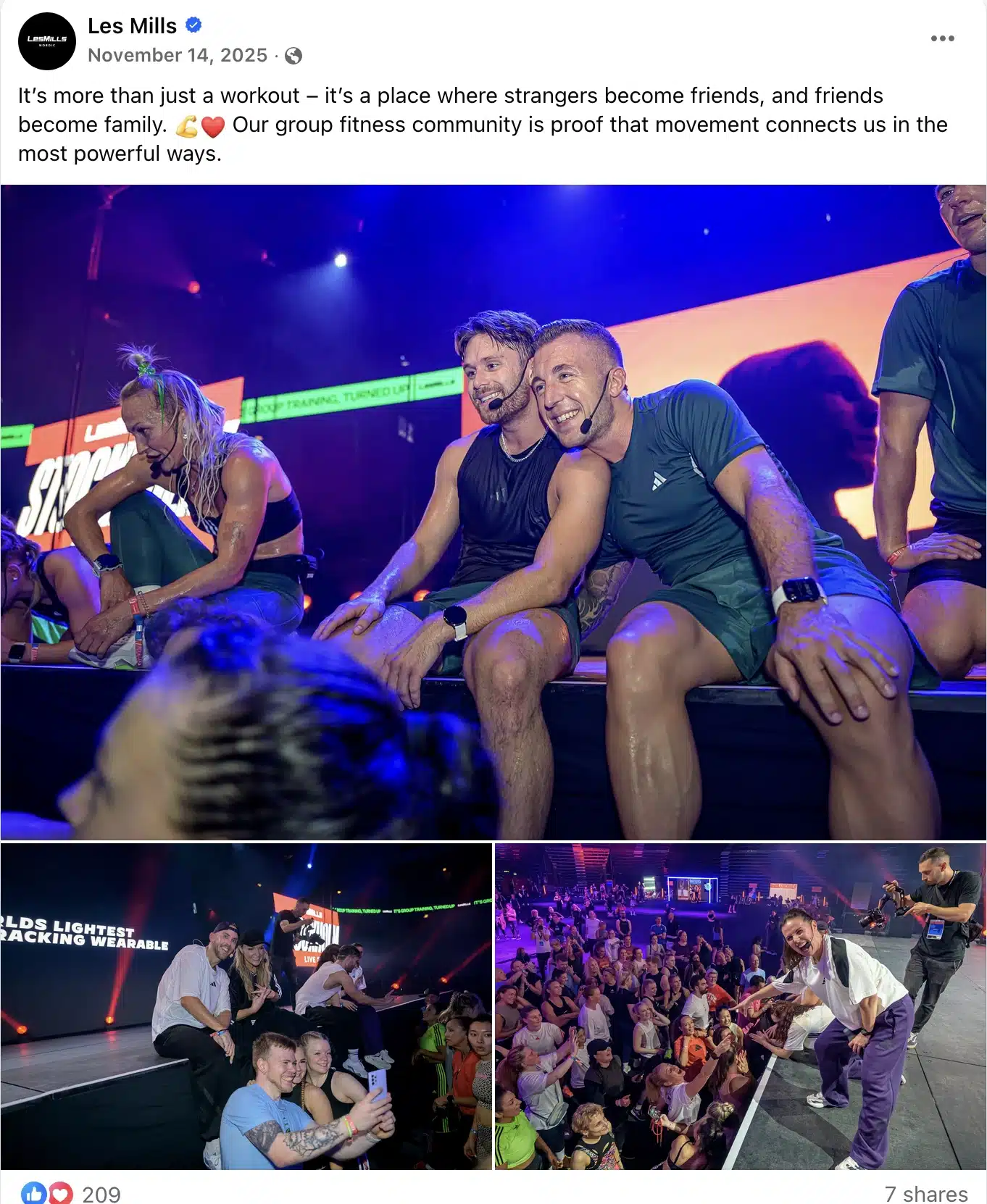
How to do it:
- Share Stories of trainers setting up sessions or daily routines
- Show new equipment, fitness gear, or prep moments
- Keep it casual and unpolished
Your trainers
Why it works: People often choose gyms based on who they’ll work with.

How to do it:
- Introduce trainers with their coaching style or specialties
- Share favorite movements or training philosophies
- Use short videos or Q&A formats
Engagement posts (encourage participation)
Challenges or contests
Why it works: Time-bound activities create urgency and shared momentum.

How to do it:
- Keep challenges short and achievable
- Define rules, duration, and prize clearly
- Use a hashtag to track entries
- Repost participant content during the challenge
Live Q&As or sessions
Why it works: Live content creates real-time interaction and lowers barriers to asking questions.
How to do it:
- Announce the topic in advance
- Collect questions beforehand
- Save and repost the session afterward
Motivational content
Why it works: Motivation works best when paired with context, not as standalone quotes.
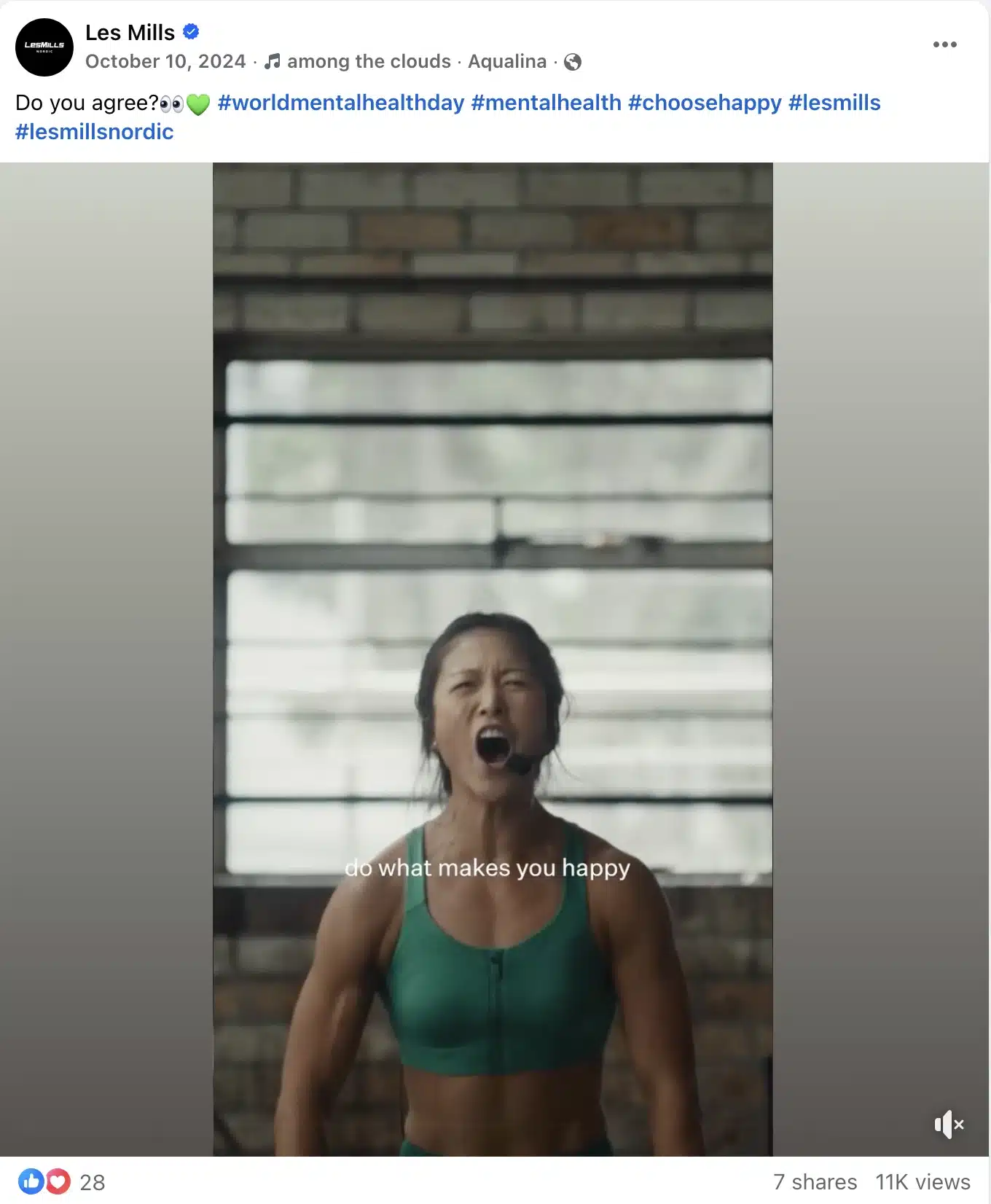
How to do it:
- Tie the motivation to a member’s story or training principle
- Use sparingly to avoid filler posts
- Pair quotes with real gym visuals
3 fitness brands that do it right on social media
JD Gyms
JD Gyms uses social media to create a sense of energy and scale without feeling overly polished. Instead of focusing on perfectly staged visuals, their content emphasizes momentum: new gym openings, busy training floors, member activity, and brand milestones. This approach works well for a large fitness brand with multiple locations, because it communicates growth while still feeling accessible.
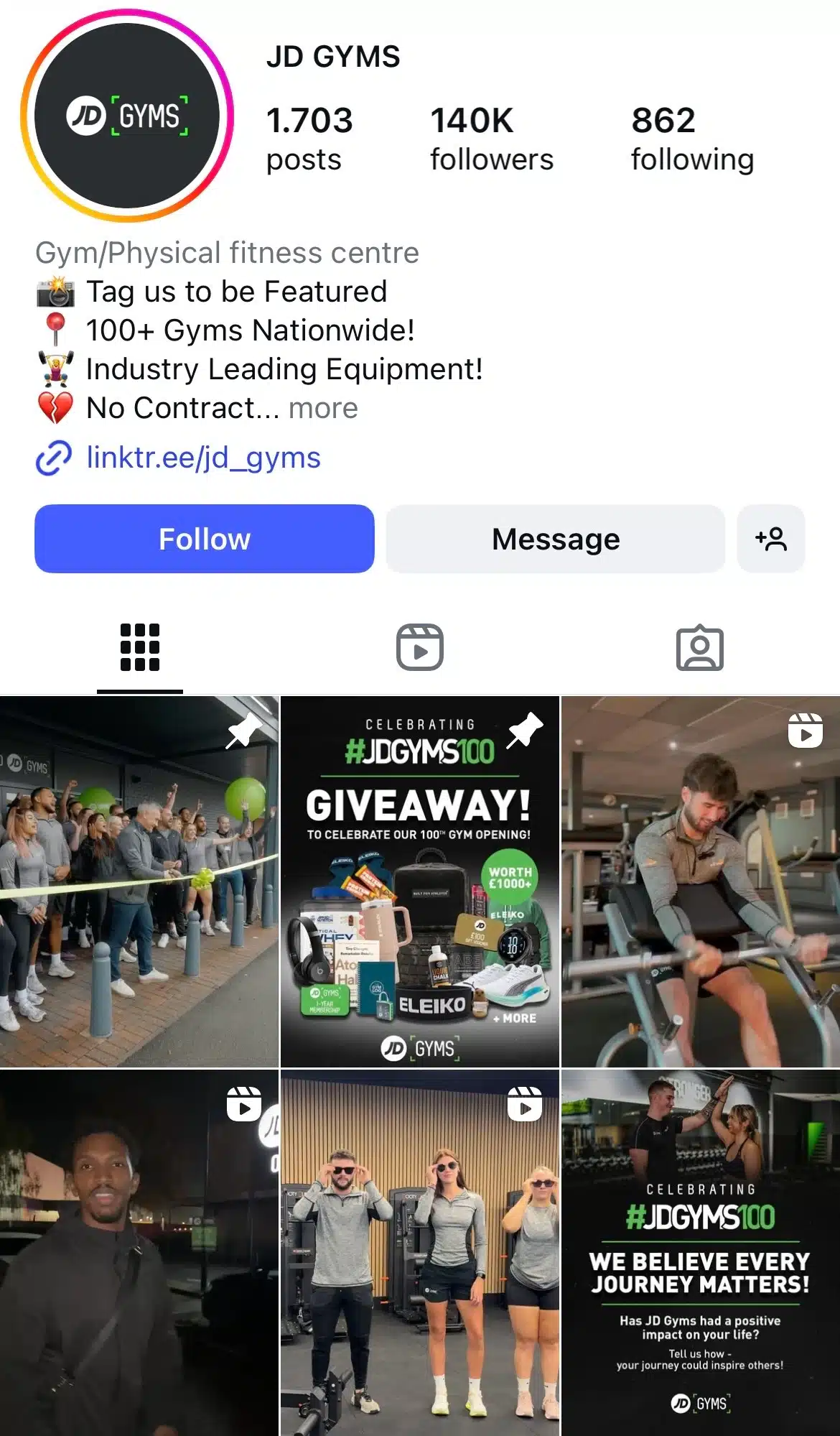
Across their social channels, JD Gyms mixes promotional updates with member-focused content and short workout clips. That variety allows them to speak to different age groups and fitness levels at once, which is especially important for a nationwide gym chain. Featuring real members instead of models helps build trust and makes the brand feel inclusive rather than aspirational in an unrealistic way.
Overall, JD Gyms shows how fitness brands can use social media to promote expansion, celebrate achievements, and reinforce brand awareness without losing the community feel that keeps members engaged.
LIFT Society
LIFT Society’s social media presence reflects its positioning as a premium, boutique training gym. The content is structured, informative, and intentional, which mirrors the semi-private training model they offer. From the start, it’s clear who the gym is for and how it operates.
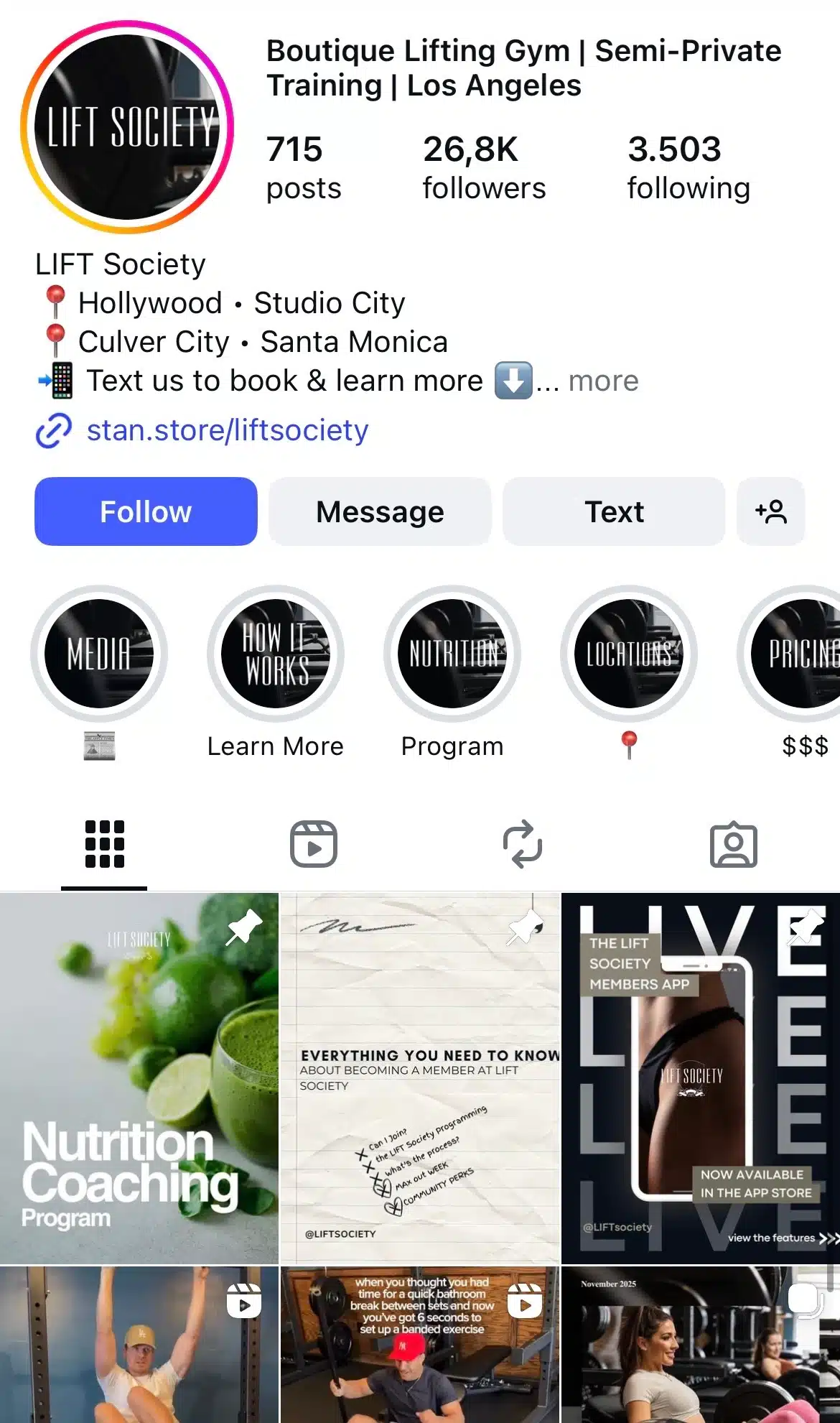
Their social content blends educational posts, program explanations, and behind-the-scenes looks at training sessions. This helps potential members understand not just what the gym offers, but how the experience works day to day. LIFT Society also balances this professionalism with moments of gym humor and personality, which prevents the brand from feeling overly rigid or intimidating.
By clearly explaining key elements like programming, onboarding, and tools used in training, LIFT Society uses social media as an extension of its sales and onboarding process. It’s a strong example of how fitness brands can educate first and sell second.
9Round
9Round uses social media to make fitness feel approachable and unintimidating. The tone across their content is upbeat, playful, and community-driven, which aligns well with their short, high-intensity workout model.
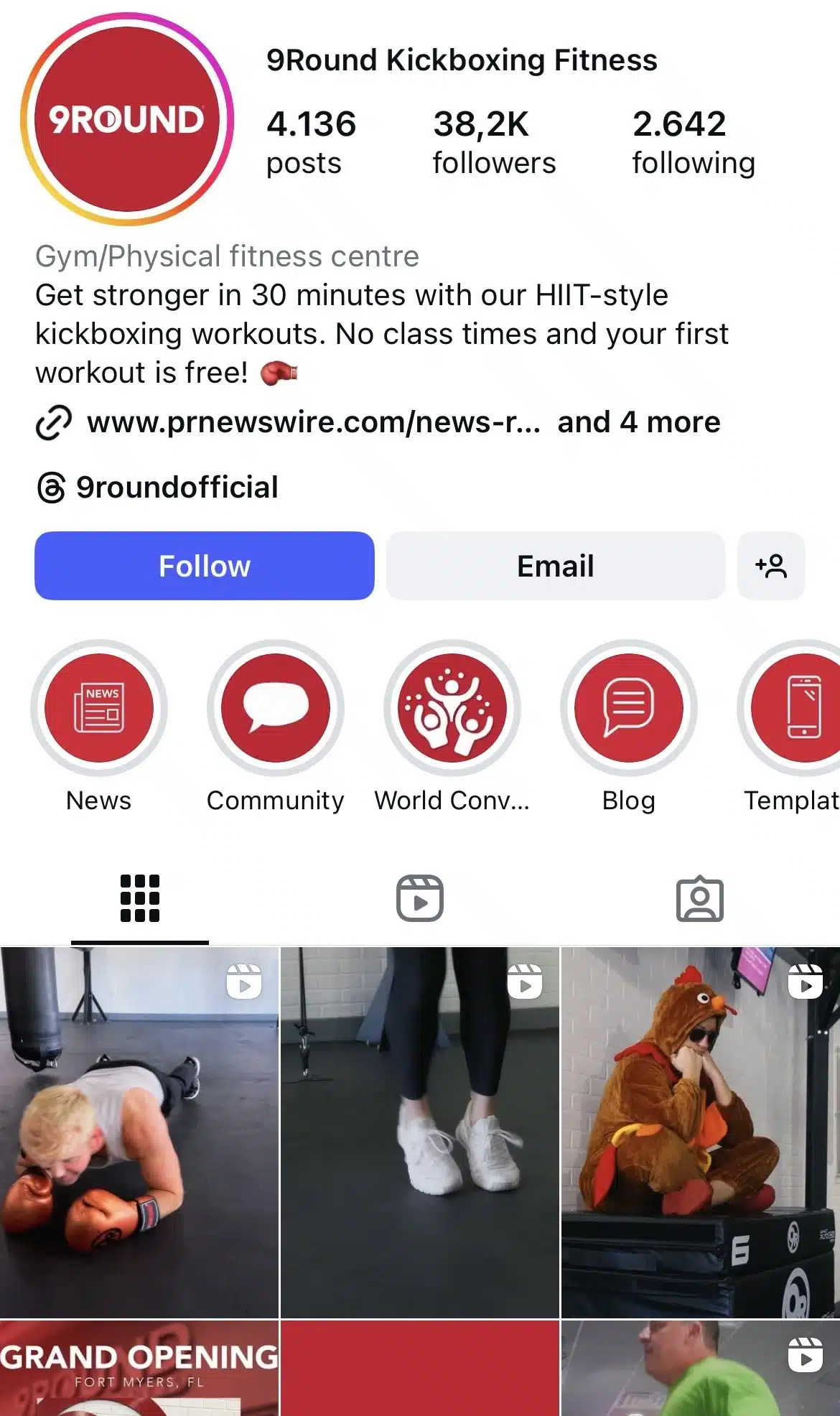
Their posts often feature quick workout demonstrations, staff participation, and lighthearted moments from training sessions. This reduces the intimidation factor that can stop people from trying kickboxing or HIIT-style workouts. The consistent use of humor and personality encourages interaction and helps followers feel comfortable engaging with the brand.
Community updates and global brand moments are regularly highlighted, reinforcing that 9Round is part of a larger network while still feeling personal. Overall, their social media shows how fitness brands can promote their services clearly while keeping the tone welcoming and easy to engage with.
Frequently asked questions
1. Which social media platforms are best for fitness brands?
The best social media platforms for fitness brands depend on content format and where fitness enthusiasts are, but most see the strongest results on Instagram, TikTok, and YouTube due to their support for workout videos, tutorials, and fitness storytelling. Local gyms often benefit from Facebook for community updates, while coaches and creators use multiple platforms for short-form video marketing for discovery and reach.
2. How often should a fitness brand post on social media?
Fitness brands should post regularly based on what they can sustain, typically several times per week per platform, rather than posting daily without a plan. A steady cadence built around workout videos, educational posts, and community content performs better long-term than irregular bursts of activity, alongside social media ads.
3. Can small gyms and personal trainers compete on social media without big budgets?
Yes, small gyms and personal trainers can compete on social media by focusing on helpful content, real client stories, and consistent engagement instead of paid ads or polished production. Audiences in the fitness space respond more to authenticity, practical advice, and a supportive community than to high-budget social media marketing campaigns.
Put your fitness social media strategy into practice
Fitness businesses can build a successful social media strategy when it’s treated as a system, not a side task. The brands that see results are the ones that post consistently, focus on useful content, and build trust over time through real stories, education, and community interaction.
The key takeaway is simple: you don’t need to do everything at once. Start with the platforms you can maintain, build a repeatable content rhythm, and pay attention to what your audience actually responds to. Small improvements made consistently are what turn social media into a reliable channel for visibility, engagement, and follower growth.
If planning and consistency are what slow you down, SocialBee helps you with organizing and creating content, scheduling posts in advance, and reviewing social media performance in one place. Start your 14-day free trial and allow SocialBee to help you maintain a steady social media presence without letting it compete with client work.