When you manage multiple social media platforms, the work quickly spreads across different tabs, calendars, inboxes, and reports.
A social media management dashboard brings those tasks into one place. You can plan content, publish posts, check messages, and review performance without switching between several tools.
In this article, we’ll look at how a unified dashboard can make social media management easier to follow and easier to manage.
We’re SocialBee LABS SRL, part of WebPros. We use the information you provide to share relevant content & updates, as outlined in our Privacy Policy. You can opt out anytime.
Short Summary
- A single dashboard can make social media scheduling, engagement, and reporting easier to manage across platforms.
- AI tools like SocialBee’s AI Post Generator can support your content strategy by helping you create post ideas and captions faster.
- A scheduling dashboard gives you a clear view of your content calendar, so you can spot gaps or overlaps before they become a problem.
- Analytics dashboards bring performance data into one place. This makes it easier to compare results and see what needs to change.
- An engagement and community management dashboard can help you keep up with comments, messages, and mentions.
- You can also collaborate with your team or clients on planning, feedback, and approvals.
What Is a Social Media Management Dashboard?
A social media management dashboard lets you manage several social media accounts from one place.
You can create and schedule posts, reply to your audience, and check performance without moving between different platforms and tools.
Having everything together can also simplify your content process. It saves time and makes it easier to keep your content and communication consistent.
What Social Media Challenges Can a Single Dashboard Solve?
When your social media work is spread across several tools, even simple tasks take longer.
You may use one platform for scheduling, another for analytics, and several more for messages, approvals, and team feedback.
A unified social media management dashboard brings your scheduling, analytics, engagement, and team collaboration into one place.
Here are the main social media management challenges a single dashboard can help solve:
- Inconsistent posting across social media platforms: Managing each platform separately makes it easier to miss posts or lose track of what is scheduled. A social media management dashboard lets you handle content creation, scheduling and publishing in one place. That makes it easier to keep your posting schedule and messaging consistent.
- Scattered social media analytics: Checking results across different platforms takes time. With integrated analytics and reporting, you can compare performance in one dashboard, spot patterns faster, and create reports without pulling data together manually.
- Slow responses to social media interactions: Comments, mentions, and direct messages are easier to miss when they live in separate apps. A unified social inbox brings those conversations together. This makes social media community management easier and helps your team respond faster.
- Poor team collaboration: Collaborating on social media content gets harder when feedback, approvals, and tasks are spread across different tools. Shared calendars, approval steps, and task assignments give everyone a clearer view of what needs to happen next.
The main benefit is simple: fewer places to check and less time spent switching between tools.
As a result, your team gets a clearer view of content, performance, conversations, and approvals across all your social media accounts.
Social Media Management Tools That Make Your Work Easier
A lot of social media experts say things like “stay consistent” and “track your performance,” but they don’t always explain how to manage everything on a day-to-day basis.
This video covers 8 tools that can make your social media work easier, faster, and more organized, especially if you’re handling multiple accounts or clients.
Watch the video to learn how these tools can help you:
- Plan content more efficiently
- Design without needing Photoshop
- Turn blog posts into videos
- Track hashtags and measure ROI
- Find influencers without the hassle
One of these tools literally lets you bulk-generate dozens of social media designs from a spreadsheet in minutes.
By the end of the video, you’ll know which tools can save you time and help you focus on the important tasks.
5 Types of Social Media Dashboards
So, what should a social media dashboard look like? What exact indicators should a social media dashboard template include?
To answer these questions, we have put together a list of the most common types of social media dashboard tools.
The goal is to look for a social media management tool that includes them all.
Here are 5 social media dashboard examples you can use:
- Content creation dashboard
- Schedule overview dashboard for all your social media channels
- Analytics and reporting dashboards
- Engagement and community management dashboard
- Team collaboration dashboard
1. Content Creation Dashboard
A content creation dashboard helps you move from an idea to a finished social media post.
It can support different parts of the process, from finding inspiration and writing captions to preparing visuals and reviewing what has performed well before.
Used well, it can also make your content strategy more consistent because you can base new ideas on what your audience already responds to.
Here’s what to look for in a content creation dashboard:
- AI content generation: Tools like SocialBee’s AI Post Generator can help you draft captions and generate new post ideas when you need a starting point.
- Design integrations: Built-in design tools or integrations make it easier to turn an idea into a finished visual.
- Performance insights: Past results can show which topics, formats, and posts get the strongest response. That gives you something concrete to work from when planning new content.
- Content curation: Saving relevant articles, industry news, and other third-party content gives you more options when your own promotional content isn’t enough.
2. Schedule Overview Dashboard for All Your Social Media Channels
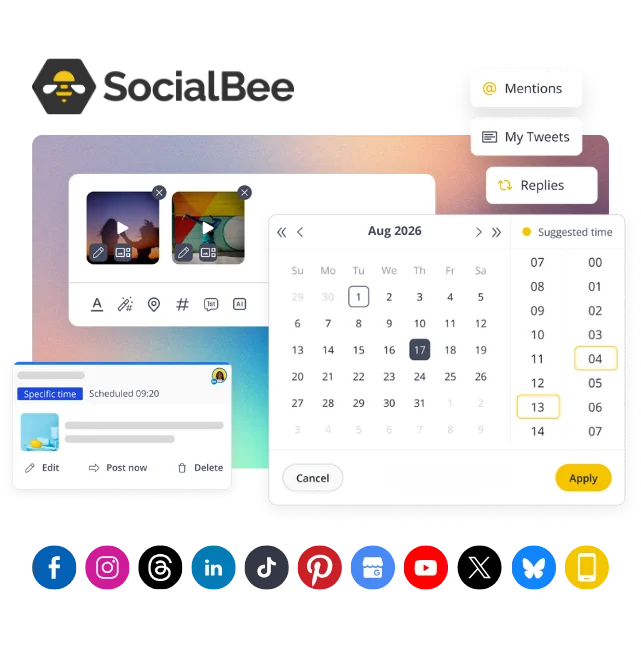
A social media scheduling dashboard gives you a clear view of what is planned across your channels.
That makes it easier to spot gaps, crowded days, or platforms that are getting too much or too little attention.
You can also check whether your content mix feels balanced before posts go live.
Here’s what a schedule overview dashboard can help you do:
- Balance your content mix: Make sure your calendar includes a healthy mix of promotional, educational, and engaging posts.
- Choose better posting times: Use audience data to schedule posts when people are more likely to be active.
- Plan around key dates: Add launches, campaigns, events, and holidays in advance so important dates do not catch you off guard.
- Reuse evergreen content: Repurpose evergreen posts across platforms and remove time-sensitive content once it is no longer relevant.
SocialBee offers a visual planning tool that gives you a clear view of your entire social media schedule. It’s perfect for planning and adjusting your content in a simple, intuitive way.
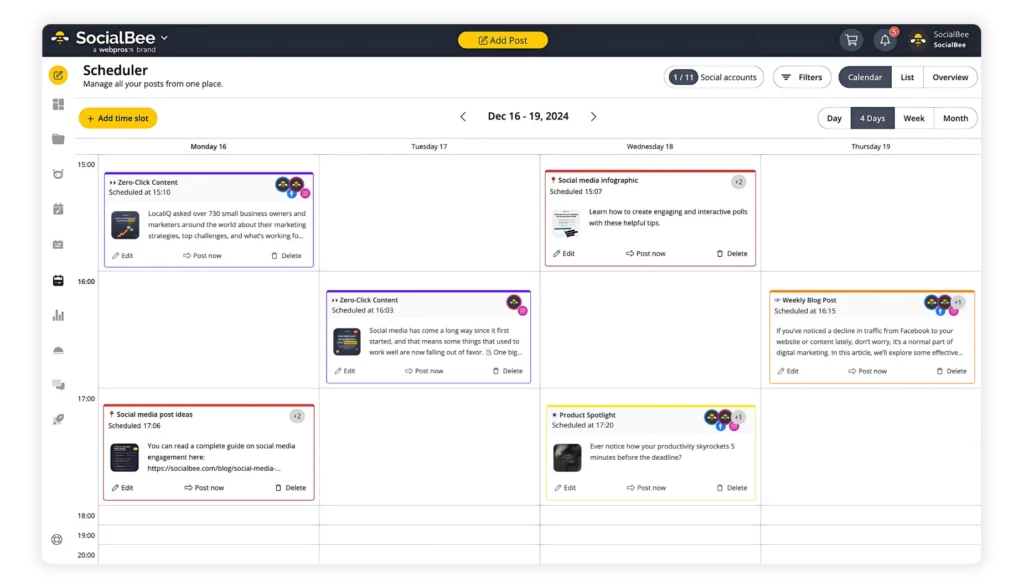
Manage all your social media accounts from one user-friendly dashboard: SocialBee.
3. Analytics and Reporting Dashboards
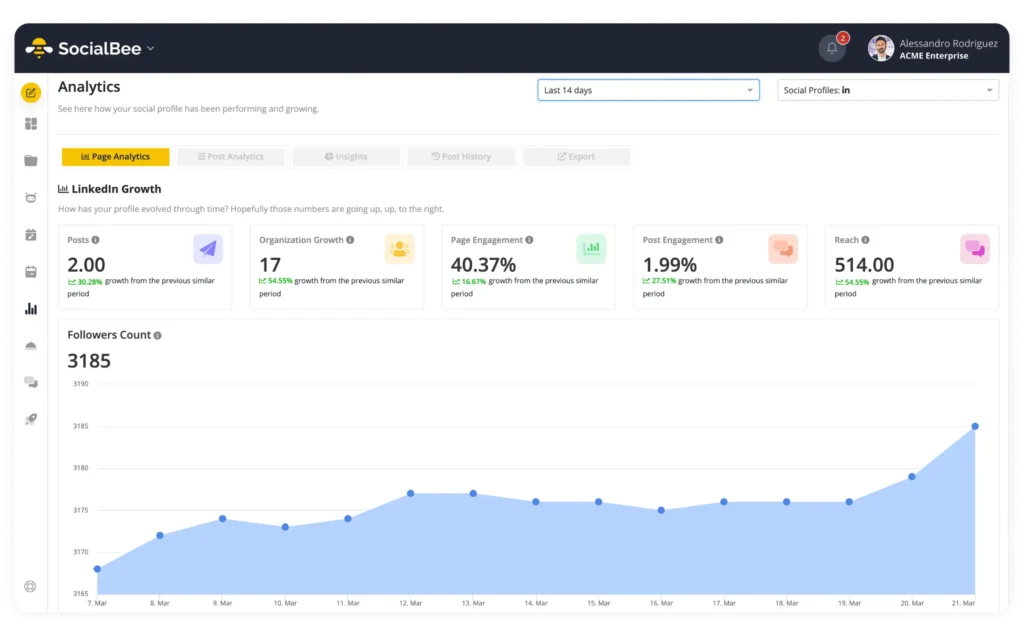
Analytics and reporting dashboards help you understand what is working across your social media accounts.
They bring metrics like engagement, follower growth, and reach into a format that is easier to compare over time.
More importantly, they help you turn those numbers into decisions.
Here’s what an analytics dashboard can help you do:
- Find your best-performing content: Compare likes, comments, shares, reach, and other signals to see which topics and formats get the strongest response.
- Learn more about your audience: Use social media analytics dashboards to review demographics, behavior, and preferences. Then use those insights to shape future content.
- Track progress over time: Compare current results with past performance. This helps you spot trends and see whether your strategy is moving in the right direction.
- Create reports: Turn key performance metrics into reports you can share with clients, managers, or other stakeholders.
- Measure your goals: Set clear targets for growth, reach, engagement, or other priorities and track how close you are to reaching them.
SocialBee is a powerful social media analytics tool that provides insights into how your posts are performing. See what’s working, identify what you need to improve, and use these insights to optimize your social media strategy.
4. Engagement and Community Management Dashboard
An engagement dashboard helps you keep up with the conversations happening around your brand.
That includes comments, mentions, and direct messages across different social platforms.
It also makes social media engagement easier to manage because you can quickly see which conversations need attention first.
Here’s what an engagement dashboard can help you do:
- Prioritize interactions: Filter conversations by urgency or relevance, so important messages are easier to spot.
- Monitor brand mentions: See where people are talking about your brand and join the conversation when it makes sense.
- Spot engagement patterns: Notice which topics or posts lead to the most replies, comments, or mentions.
- Automate common replies: Set up responses for frequently asked questions and other routine requests.
- Keep replies personal: Adjust your response to the person and situation instead of relying only on canned messages.
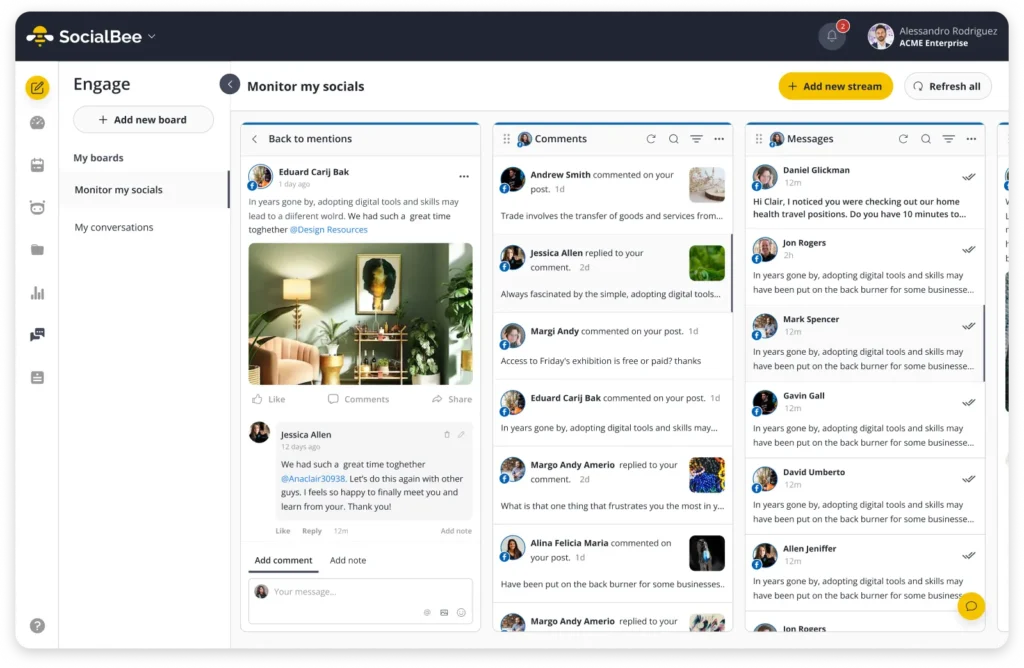
SocialBee helps you manage mentions, comments, and DMs across all your social media platforms in one easy-to-use dashboard. Stay on top of conversations and engage with your audience without hopping between different platforms.
5. Team Collaboration Dashboard
A team collaboration dashboard is useful when several people are involved in creating and approving social media content.
That’s especially important for larger teams and agencies, where different people may write, review, approve, and publish posts.
The main benefit is clearer ownership. Everyone can see who is responsible for what and what still needs to be reviewed.
Here’s what a team collaboration dashboard can help you do:
- Assign roles and permissions: Decide who can create, edit, approve, or publish content. This helps prevent accidental changes or posts going live too early.
- Review content together: Draft posts in shared spaces where team members can leave feedback, suggest edits, and approve content before publishing.
- Stay updated: Use notifications to alert team members when feedback is added or a post needs attention.
An example of a platform offering robust team collaboration dashboard features is SocialBee. We provide tools for assigning roles, managing permissions, and collaborating on content, alongside workspaces that allow users to invite multiple teams to the platform.
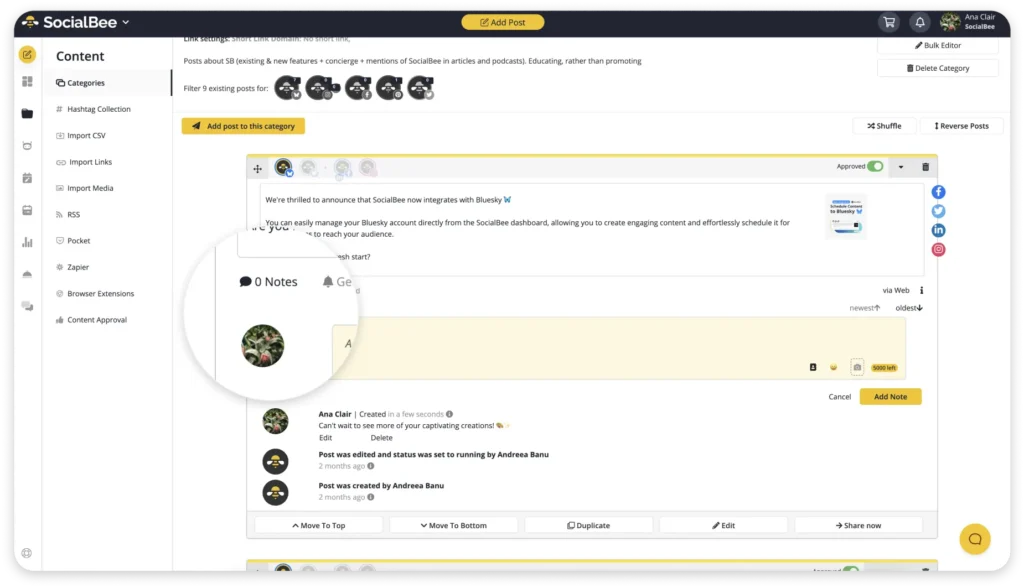
Effortlessly manage and collaborate with your social media team from SocialBee.
Frequently Asked Questions
1. What Is a Good Social Media Marketing Dashboard to Use?
A good social media marketing dashboard should cover the tasks you handle most often.
For many teams, that means content creation, scheduling, analytics, engagement, and collaboration.
SocialBee brings those areas together in one platform. You can create and organize posts, schedule content across multiple networks, review performance, manage interactions, and work with your team.
It also includes AI features that can help with caption ideas and content planning.
The best choice still depends on your setup. A solo marketer may care most about scheduling and content creation, while an agency may need stronger approval and collaboration features.
2. Why Do You Need a Social Media Analytics Dashboard?
A social media analytics dashboard helps you understand what is actually happening with your content.
Instead of looking at isolated numbers, you can compare results over time and see which posts, topics, or formats perform best.
You can also track metrics such as reach, engagement, follower growth, and clicks.
That makes the data more useful. If a certain format keeps performing well, you can create more of it. If another type of post consistently underperforms, you know it may need a different approach.
3. Should I Track My Social Media Performance in a Dashboard?
Yes, especially if you manage several accounts or platforms.
Checking each social network separately can make it harder to see the bigger picture.
A dashboard lets you review performance in a more consistent way. You can compare accounts, follow progress over time, and see whether your current strategy is supporting your goals.
Regular tracking also makes it easier to catch changes early.
For instance, you may notice that engagement is dropping on one platform while another is growing. That gives you a reason to investigate and adjust before the problem gets bigger.
Get a Clearer View of Your Social Media Strategy
A social media management dashboard should make your work easier to follow.
Instead of treating planning, publishing, analytics, engagement, and collaboration as separate tasks, you can see how they connect.
That makes it easier to notice gaps in your schedule, find strong content, keep up with conversations, and understand what needs attention next.
If you want to manage those tasks with fewer moving parts, start your 14-day SocialBee trial and see how SocialBee fits into your social media setup.