Posting regularly on social media is easier said than done when you’re running a small business. Between creating content, managing accounts, and checking results, it can take up more time than you’d like.
A social media scheduler helps you plan posts ahead of time, so you don’t have to publish everything manually. Some tools also help you create content, manage conversations, and see which posts perform best.
But which one should you choose? In this guide, we’ll compare the best social media schedulers for small businesses, look at the features worth paying for, and help you find a tool that fits your budget and goals. That way, you can spend less time managing posts and more time growing your small business.

2. NapoleonCat
NapoleonCat is worth considering if several people on your team manage social media. You can assign tasks, share reports, and set up a content approval process so everyone knows what needs to be done before a post goes live.
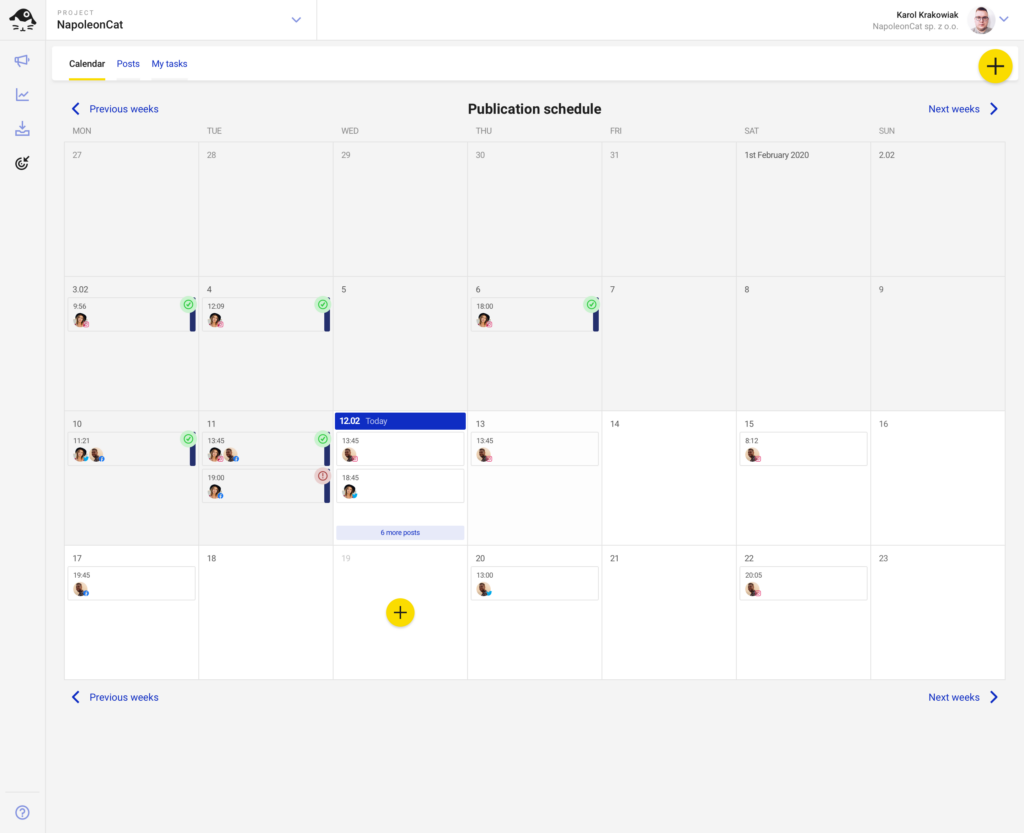
The publishing calendar helps you plan content across different platforms, while automated moderation rules make it easier to handle comments and customer questions. That way, your team can spend less time sorting through interactions and more time responding to the ones that need attention.
NapoleonCat’s key features
- Automated publishing: Schedule posts across multiple social media platforms and plan your content ahead of time.
- Social inbox: Manage comments and messages from different accounts without switching between platforms.
- Moderation rules: Automatically hide, delete, or respond to certain comments based on rules you set.
- Analytics: Track post engagement, audience growth, and other metrics to see how your content performs.
- Competitor benchmarking: Compare your social media performance with competitors to see where you could improve.
- Team collaboration: Assign tasks and roles to team members and manage content reviews.
- Custom reports: Create reports with the metrics that matter to your business or clients.
Pros
- Easy-to-use interface
- Helpful customer support
- Supports major social media platforms
Cons
- Limited access to historical data
- Finding specific comments can be difficult
Pricing
- 14-day free trial
- Plans starting at €32/month
- Higher-tier plans starting at €76/month
- Custom pricing available on request
3. SocialChamp
Social Champ is an option for small businesses, freelancers, and agencies that want to manage social media without spending too much. It brings scheduling, content planning, and analytics together in one place, so you don’t need separate tools for every task.
You can also reuse content you’ve already created instead of coming up with something new for every post. This is helpful when you’re short on time but still want to keep your social media accounts active.

Social Champ’s key features
- Post scheduling: Schedule posts across 11 social media platforms, including Facebook, Instagram, Threads, Mastodon, Bluesky, X, LinkedIn, Pinterest, and Google Business Profile.
- Content calendar: Plan upcoming posts in a visual calendar and see what’s scheduled across your accounts.
- Team collaboration: Work with team members on content and manage multiple social media accounts together.
- Social listening: Track brand mentions, keywords, and hashtags to keep up with relevant conversations.
- Analytics and reporting: Check engagement, reach, impressions, and other metrics to see how your posts perform.
- Automation: Use features like automatic publishing and RSS feeds to reduce manual posting.
- Engagement tools: Respond to comments, messages, and mentions from one place.
Pros
- Easy to navigate, even for beginners
- Covers scheduling, analytics, and engagement
- Affordable compared to some larger platforms
- Helpful customer support
Cons
- Limited native language support may be an issue for businesses that prefer using the tool in another language.
Pricing
- Free plan
- Champion: $29/month
- Business: $99/month
- Agency: $299/month
- Enterprise: Custom pricing
4. AgoraPulse
Agorapulse is a social media management tool for businesses that want to handle publishing, customer interactions, and reporting in one place.
Along with scheduling posts, you can manage comments and messages through a shared inbox. Its CRM features also help you identify your most engaged followers and keep track of how they interact with your brand.
If you regularly report on social media results, Agorapulse gives you detailed performance data to help you understand what’s working and where you might need to make changes.

Agorapulse’s key features
- Queue categories: Group posts by topic and organize your publishing schedule around different types of content.
- User-generated content management: Schedule and share content created by your customers or followers.
- Unified social inbox: Reply to comments and messages from multiple social media accounts in one place.
- Social listening: Monitor brand mentions and relevant conversations to see what people are saying about your business.
- Detailed reporting: Track engagement, reach, and other performance metrics to understand how your posts are doing.
- Team collaboration: Assign tasks and work with teammates on scheduling and managing social media content.
- Content labeling: Add labels to posts so you can organize them and compare the performance of different content types.
Pros
- Easy content scheduling and editing
- Shared inbox for managing conversations
- Detailed social media analytics
- Helpful customer support
Cons
- Occasional performance and speed issues
- Some advanced reporting features may be limited
Pricing
- 30-day free trial
- Standard: €69/month
- Professional: €99/month
- Advanced: €149/month
- Custom: Book a demo
5. Planoly
Planoly is a social media scheduler for small businesses and creators that rely heavily on visual content, especially on Instagram.
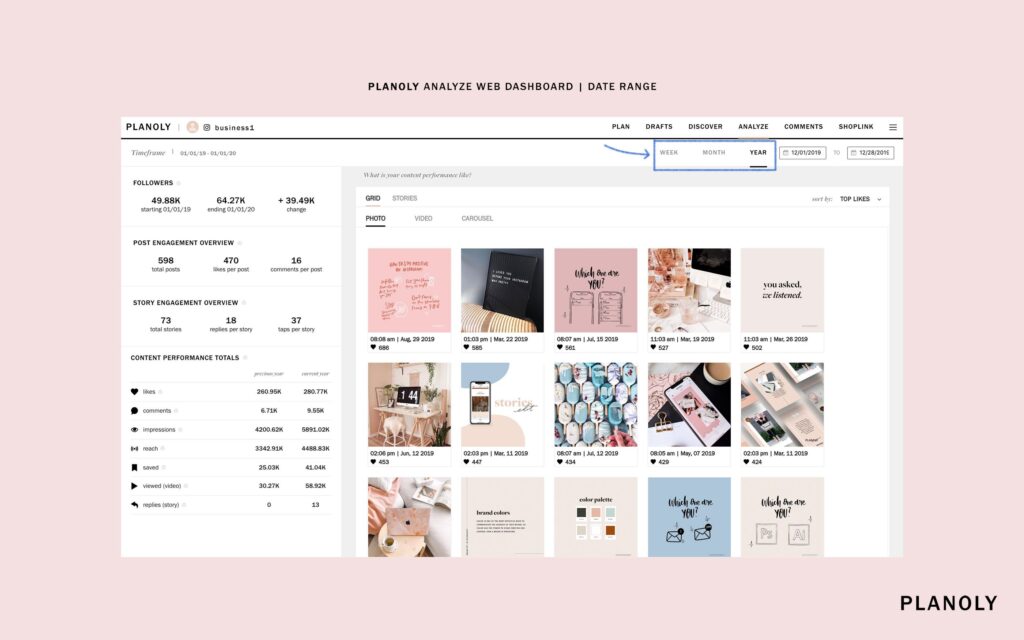
One of its main features is the Instagram grid planner, which lets you preview how your posts will look together before publishing them. This is useful if you want your feed to have a consistent style or you’re planning a product launch with several related posts.
You can also schedule Instagram Stories and other social media content ahead of time, so you don’t have to stop what you’re doing every time something needs to go live.
Planoly’s key features
- Instagram grid planner: Arrange posts in a visual preview to see how they’ll look on your profile before publishing.
- Auto-posting: Schedule content for Instagram, Facebook, Pinterest, and X (Twitter), including supported Instagram carousels and Stories.
- ShopLink: Add clickable links to your Instagram content to help followers find products and visit your website.
- Analytics: Track post performance and audience engagement to see which content gets the best results.
- Easy-to-use interface: Plan and schedule posts without having to learn a complicated tool.
- Content planner: Organize upcoming posts across different social media platforms in one place.
- Hashtag manager: Save and organize hashtags so you can quickly add them to relevant posts.
Pros
- Well suited to visual content planning
- Easy to navigate
- Instagram grid preview
- Auto-posting and hashtag management
- Comment and engagement management
- Content and influencer collaboration tools
Cons
- Fewer analytics features than some competitors
- Limited social listening and monitoring capabilities
Pricing
- Starter: $13/month, for solo creators
- Growth: $23/month, for creators with small teams
- Professional: $43/month, for social media consultants and agencies
6. Hootsuite
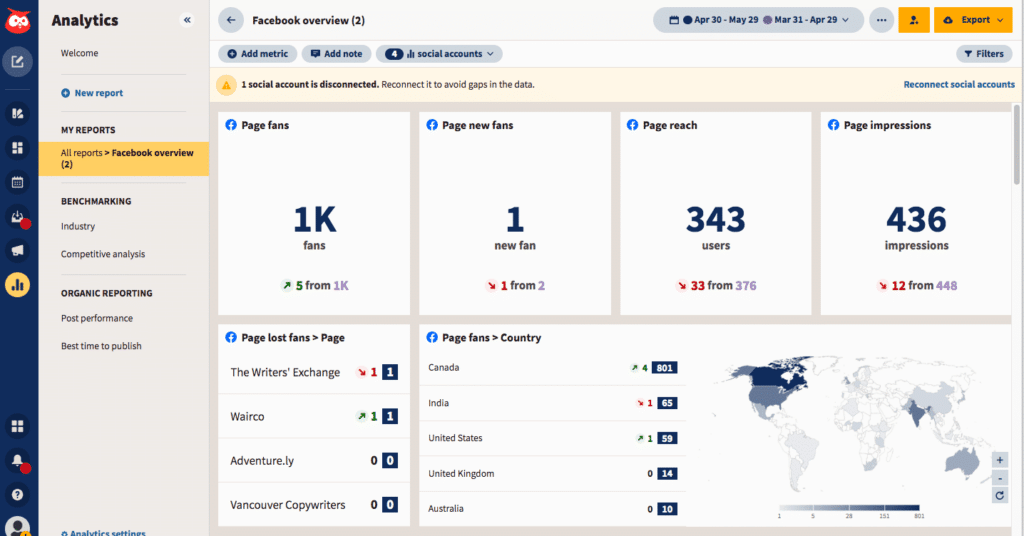
Hootsuite is a social media management platform that helps businesses schedule content, track results, and manage conversations across multiple accounts.
Its social inbox brings comments, messages, and brand mentions together, so you don’t have to check each platform separately. This can be especially helpful if your business receives a lot of customer questions or manages several social media profiles.
Hootsuite also offers bulk scheduling, analytics, and social listening tools. However, its pricing and range of features may be more than a small business needs if the main goal is simply to schedule posts.
Hootsuite’s key features
- Bulk scheduling: Schedule hundreds of posts at once across multiple social media platforms.
- Content curation: Find relevant content to share and add it to your posting schedule.
- Team assignments: Assign posts and tasks to team members so everyone knows what they’re responsible for.
- Analytics: Track engagement, reach, and other metrics to see how your content performs.
- Social listening: Follow brand mentions, industry conversations, and trends to understand what people are talking about.
- Ad management: Manage paid social media campaigns alongside your regular content.
- Stories and post scheduling: Plan Instagram Stories and other social media posts ahead of time.
Pros
- Manage multiple social media accounts in one place
- Schedule posts in advance
- Access detailed analytics
- Monitor brand mentions and relevant conversations
Cons
- Expensive for small businesses
- Interface can take time to learn
- Customer support may be limited
- Some additional features, such as URL shortening, can increase costs
- Limited content queuing options
Pricing
- Professional: $99/month
- Team: $249/month
- Business: $739/month
7. Buffer
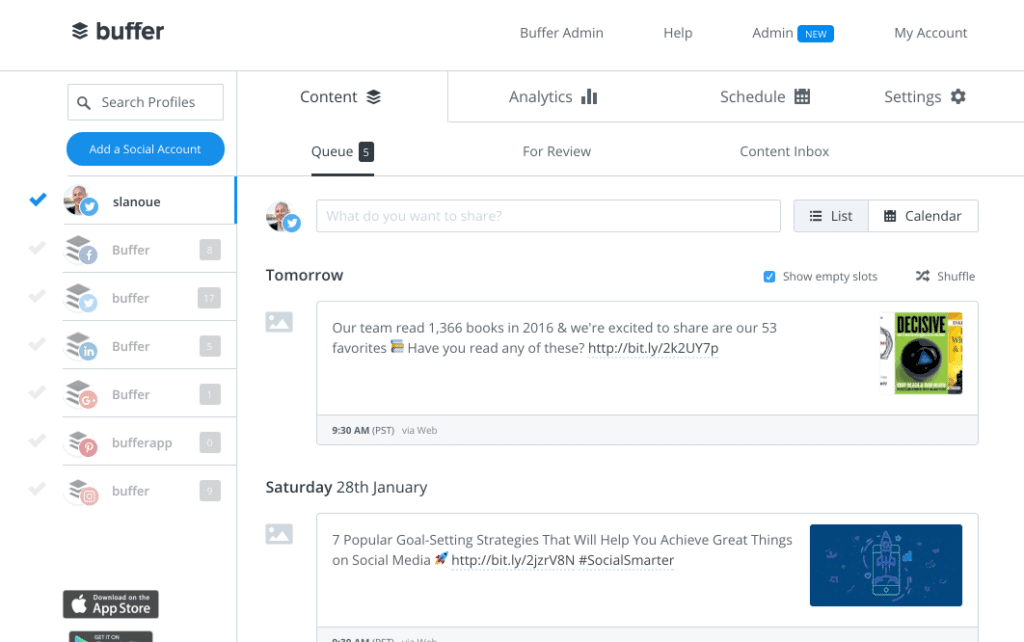
If you want a simple way to schedule social media posts, Buffer is worth considering. It’s easy to get started with, even if you’ve never used a social media scheduling tool before.
You can create posts, add them to a queue, and let Buffer publish them at your chosen times. This takes the pressure off having to remember when and where to post, especially if you’re managing several accounts.
Buffer also has an analytics dashboard where you can check how your posts are performing. You can see which content gets the most attention and use those insights to plan what to share next.
Buffer’s key features
- Easy-to-use interface: Create, schedule, and manage posts without having to learn a complicated platform.
- Analytics: Track engagement and other performance metrics to see which posts work best.
- Pablo image creator: Create simple visuals to go with your social media posts.
- Custom scheduling: Choose when your posts go live and set up a posting schedule for each account.
- Multi-platform posting: Schedule content for multiple social media networks from one dashboard.
- Team collaboration: Invite team members to help create, review, and schedule content.
- Stories and post scheduling: Plan Instagram Stories and regular posts ahead of time.
Pros
- Easy to learn and use
- Saves time with post queues and scheduling
- Clear analytics and reporting
- Helpful customer support
Cons
- Costs can add up when managing multiple channels
- Occasional interface bugs
Pricing
- Free plan
- Essentials: $6/month per channel
- Team: $12/month per channel
- Agency: $120/month per 10 channels
8. MeetEdgar
MeetEdgar is a social media scheduler for small businesses and entrepreneurs who want to get more use out of the content they’ve already created.
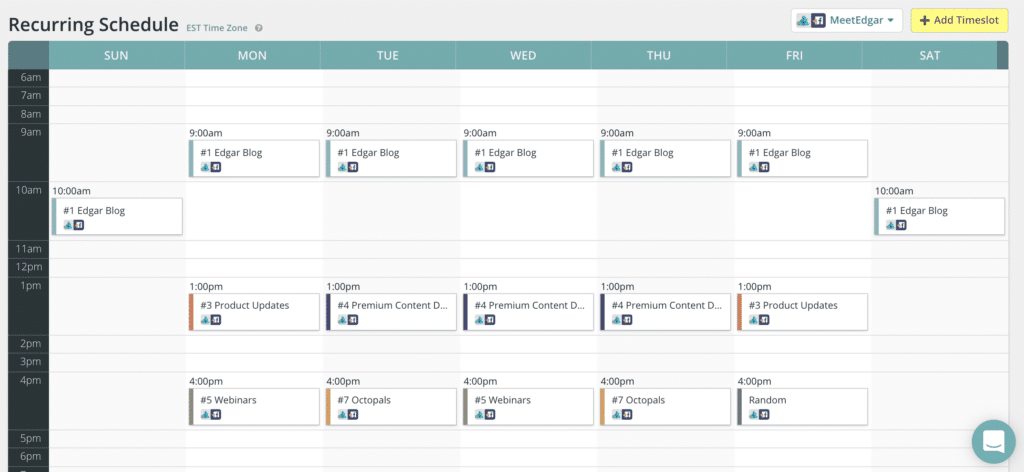
Instead of letting older posts disappear from your schedule, MeetEdgar stores them in a content library and automatically brings them back into rotation. This works particularly well for evergreen content, such as helpful tips, tutorials, and FAQs that remain relevant over time.
Posts are organized into categories, and the auto-scheduler fills your calendar based on the schedule you’ve set. It’s a practical option if you’re trying to post consistently without having to come up with something new every day.
MeetEdgar’s key features
- Content variation creator: Generate different versions of existing posts to avoid sharing the exact same message every time.
- Content library: Save evergreen posts and automatically reshare them according to your schedule.
- A/B testing: Compare different versions of a post to see which performs better.
- Auto-scheduler: Automatically fill your posting calendar using your saved content and scheduling preferences.
- Category-based scheduling: Organize posts by topic and decide how often each type of content gets published.
- Unlimited content library: Store as many posts as needed for future scheduling and recycling.
- Direct video uploads: Upload and schedule videos for supported social media platforms.
Pros
- Supports multiple social media platforms, including Google Business Profile
- Easy content scheduling
- Organizes posts into categories
- Automatically recycles evergreen content
Cons
- Customer support could be better
- Some features take time to learn
Pricing
- Eddie: $29/month or $299/year
- Edgar: $49/month or $499/year
9. StoryChief
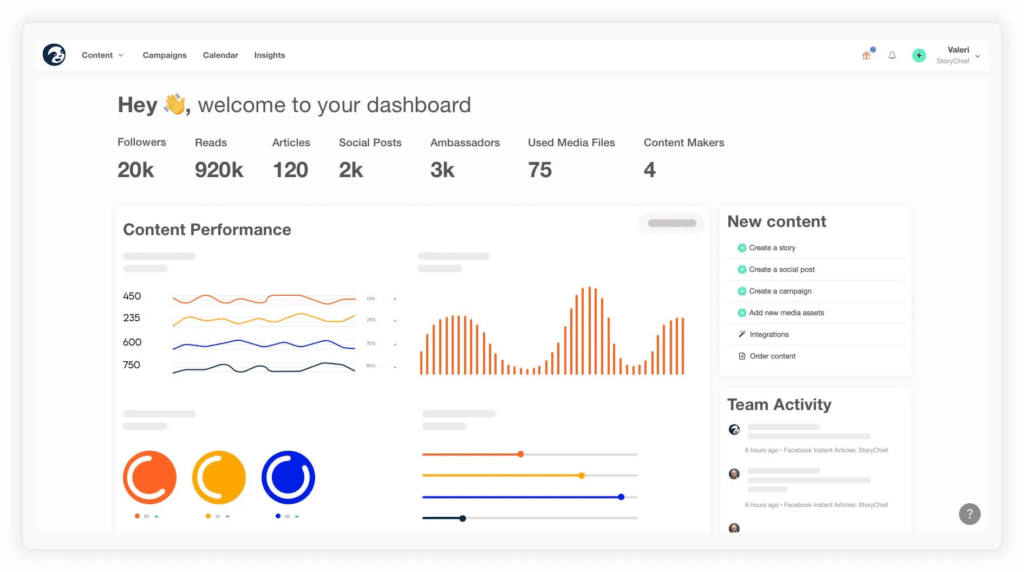
StoryChief is worth considering if your small business publishes blog articles alongside social media content. Rather than managing everything in separate tools, StoryChief brings content creation, scheduling, and publishing into one place.
For example, after writing a blog post, you can prepare social media posts to promote it across different platforms. The shared content calendar keeps everything organized, while built-in SEO tools help you optimize articles before publishing.
StoryChief also supports team collaboration, making it easier for writers, editors, and marketers to review content and keep track of upcoming campaigns.
StoryChief’s key features
- Unified content calendar: Plan blog articles, social media posts, and other content in one calendar.
- Multi-channel publishing: Publish content to blogs, websites, and social media platforms without managing each channel separately.
- Team collaboration: Draft, review, and approve content with your team before publishing.
- SEO assistant: Get suggestions for improving your blog posts’ search visibility while writing and editing.
- Social media scheduling: Prepare and schedule posts for multiple social media accounts from one dashboard.
- Analytics and reporting: Track content performance across different channels to see what gets the best results.
- Campaign management: Group related content into campaigns and monitor how each campaign performs.
Pros
- Easy-to-use interface
- Helpful customer support
- Publish content across multiple channels with fewer manual steps
Cons
- Doesn’t support simultaneous editing of the same document by multiple people
- Analytics are less detailed than those offered by some competitors
Pricing
- 7-day free trial
- Plans starting at €30/month
- Higher-tier plans starting at €50/month
- Custom pricing available
10. Later
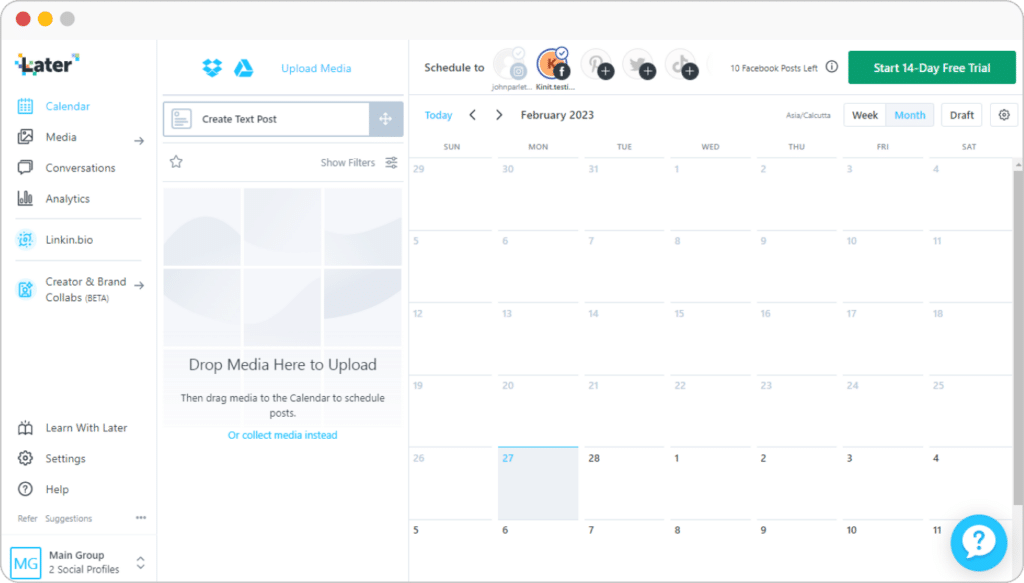
Later is a social media scheduler for small businesses that share a lot of photos and videos, especially on Instagram and TikTok. Its visual calendar makes it easy to organize upcoming posts, move content around, and see what’s planned for the week.
There’s also a media library for keeping your photos and videos in one place, so finding the right visual for a post doesn’t turn into a search through different folders.
Another useful feature is Link in Bio, which lets you create a landing page with links to your website, products, or other important pages. It’s particularly handy for businesses that want to turn social media visits into website traffic or sales.
Later’s key features
- Scheduling and publishing: Plan and schedule images, videos, and carousels across supported social media platforms.
- Media library: Store and organize photos and videos, including files imported from Dropbox or Google Drive.
- Hashtag discovery: Find relevant hashtags to use in your posts.
- AI-generated captions: Get caption suggestions when you’re short on ideas or need help writing a post.
- Caption library: Save frequently used captions and reuse them whenever needed.
- Link in Bio: Create a customizable landing page that directs Instagram and TikTok followers to your website, products, or other links.
- User-generated content: Find and reshare Instagram content created by your customers or followers.
- Team collaboration: Work with teammates or clients, share feedback, and review content before publishing.
- Analytics: Track impressions, engagement, and clicks to see how your content performs.
- Influencer search: Find potential creators to collaborate with based on your brand and audience.
Pros
- Drag-and-drop content calendar
- Mobile app for managing content on the go
- Modern, easy-to-use interface
- Tools for finding and sharing user-generated content
Cons
- Limited post preview options
- Basic photo and video editing tools
- No Canva integration
- Social inbox limited to Instagram and TikTok comments
- Analytics history limited to three months
Pricing
- 14-day free trial
- Starter: $25/month
- Growth: $45/month
- Advanced: $80/month
11. SocialPilot
SocialPilot is a social media scheduling tool for small businesses, freelancers, and agencies managing multiple accounts. It covers everyday tasks like planning posts, tracking results, and working with clients, without the complexity of some larger platforms.
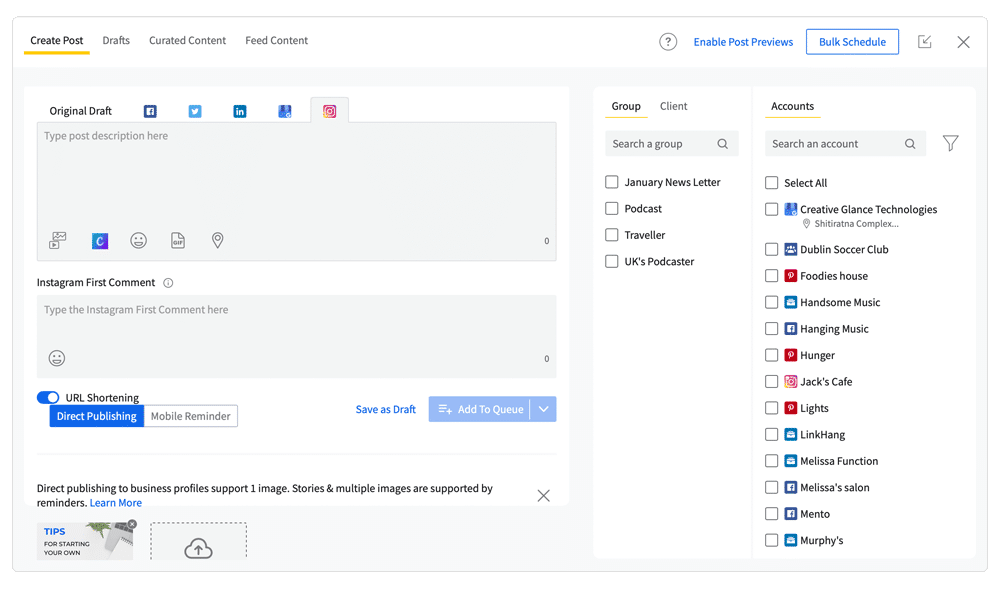
One of its biggest advantages is bulk scheduling. Instead of adding posts individually, SocialPilot lets you schedule up to 500 at once. That’s especially useful for agencies preparing content for several clients each month.
It also includes client management tools and branded reports, making it easier to keep accounts organized and share results without spending hours putting reports together.
SocialPilot’s key features
- Bulk scheduling: Schedule up to 500 posts at once, saving time when planning content for multiple accounts.
- Content curation: Find relevant articles and content ideas to share with your audience.
- Client management: Keep different client accounts organized and manage their content from one dashboard.
- Social inbox: View and respond to supported social media interactions without switching between platforms.
- Analytics: Track engagement, reach, and other metrics to see how your posts perform.
- White-label reports: Create reports with your agency’s branding to share with clients.
- Team collaboration: Work with teammates and clients on content planning, reviews, and approvals.
Pros
- Covers the main social media scheduling and management features
- Affordable pricing, especially for managing multiple accounts
Cons
- The interface isn’t as intuitive as some competing tools
Pricing
- Professional: $30/month
- Small Team: $50/month
- Agency: $100/month
- Agency+: $200/month
12. Onlypult
Onlypult brings content creation, scheduling, and analytics together in one platform. It’s an option for small businesses and agencies that want to prepare posts for different social networks without switching between several tools.
Its built-in AI writer helps with captions, while the image editor and saved hashtag sets make it easier to get posts ready for publishing. There’s also a visual planner for organizing content and checking what’s coming up.
Analytics are included in the subscription, with options to customize charts and create branded reports. This is particularly useful for agencies that need to share social media results with clients regularly.

Onlypult’s key features
- Multi-platform publishing: Schedule posts across Facebook, Instagram, X, LinkedIn, Google Business Profile, YouTube, TikTok, Tumblr, WordPress, Telegram, Pinterest, and Medium. The multi-posting feature lets you publish to several accounts at once.
- Content creation tools: Prepare posts using AI-generated text, a built-in image editor, saved hashtags, and a content library.
- Multiple calendar views: Switch between a dashboard, post list, visual grid, and calendar depending on how you prefer to plan content.
- Analytics: Track account performance and post metrics to see what’s working and where there’s room to improve.
- Custom reports: Create reports manually or schedule them in advance, with options to add your company’s branding.
- Team collaboration: Invite teammates to plan content, discuss posts, share previews with clients, and review editing history.
Pros
- Built-in tools for creating and organizing content
- Detailed social media analytics
- Reasonably priced plans
- 24/7 customer support
Cons
- No dedicated social listening or brand monitoring features
Pricing
- 7-day free trial
- Start: €25/month
- SMM: €35/month
- Agency: €65/month
- Agency: €99/month
- Custom: Contact for pricing
13. HubSpot Social Media Management
HubSpot is worth considering if your business already uses its marketing tools or wants to manage social media alongside email campaigns, ads, and customer relationships.
Its social media management tool lets you schedule posts for Instagram, Facebook, LinkedIn, YouTube, and X. It also tracks performance, monitors conversations, and suggests content types and posting times based on your results.
What makes HubSpot different is its built-in CRM. Social media interactions can be connected to customer records, giving your team more context when following up with potential customers.
Since social media management is part of HubSpot’s Marketing Hub, it’s particularly useful for businesses that want to see how their social media efforts contribute to their wider marketing goals.

HubSpot’s key features
- Cross-posting: Create a post, adapt it for different social networks, and schedule it across your connected accounts.
- Social inbox: Manage comments and messages in one place, with keyword monitoring to help you follow relevant conversations.
- Cross-channel analytics: See how social media performs alongside your email, website, and advertising campaigns.
- Automation: Generate social media content and performance reports with less manual work.
- Built-in CRM: Connect social media interactions to contact records and keep track of potential customers.
- Campaign management: Group related posts and marketing materials into campaigns to track their overall performance.
- Automated recommendations: Get suggestions for content types and posting times based on performance data.
Pros
- Easy to navigate once you’re familiar with the platform
- Connects social media with email marketing, advertising, and other campaigns
- Built-in CRM helps track leads and customer interactions
Cons
- Social media management is only available on higher-tier Marketing Hub plans
- Supports fewer social media platforms than some dedicated scheduling tools
Pricing
- Marketing Hub Professional: Starting at $800/month (3 users included)
Frequently Asked Questions
1. What is a social media scheduler?
A social media scheduler is a tool that lets you plan and schedule posts across different social media platforms in advance.
Instead of publishing content manually every day, you set up a posting schedule and let the tool handle it. Many schedulers also offer features like cross-posting, analytics, and content planning.
2. What is the best social media scheduling tool?
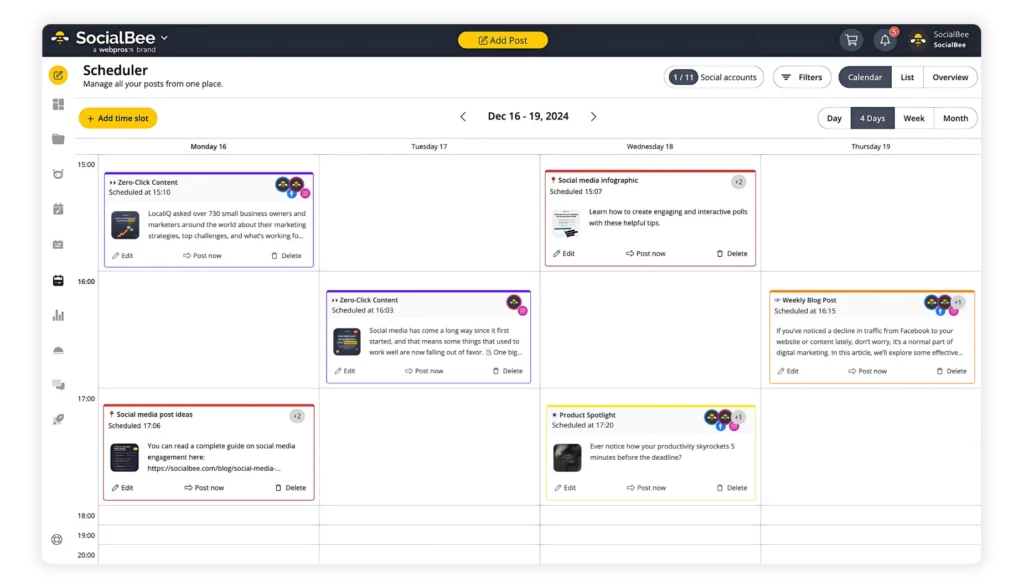
The best social media scheduler depends on your budget, the platforms you use, and the features you need. SocialBee is a good option for small businesses that want content categories, AI tools, and evergreen posting.
Buffer works well for simple scheduling, Later focuses on visual content planning, and NapoleonCat is useful for managing customer conversations.
3. How much do social media scheduling tools cost?
Social media scheduling tools range from free plans to several hundred dollars per month. Basic paid plans often cost around $15 to $50 per month, while tools with advanced analytics, collaboration, and client management features can cost $50 to $200 or more.
Many platforms offer free trials, including SocialBee’s 14-day trial, so it’s worth testing a tool before committing to a paid plan. The final cost usually depends on how many accounts, users, and features you need.
Find a social media scheduler that works for your small business
The best social media scheduler isn’t necessarily the one with the most features. It’s the one that makes managing your accounts easier without stretching your budget.
If you mainly need to schedule a few posts each week, a simple tool might be enough. But if you’re juggling multiple accounts, creating content regularly, or working with a team, features like bulk scheduling, analytics, and content organization can make a big difference.
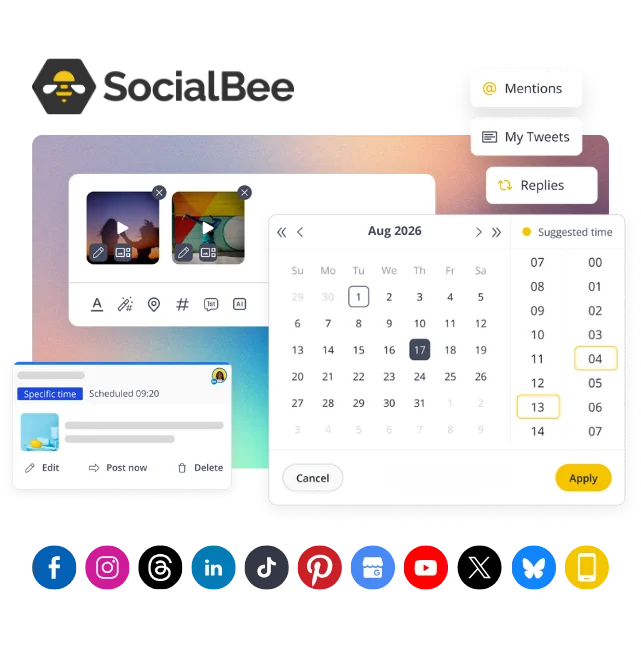
SocialBee brings these features together, along with AI content creation and evergreen posting to help you stay consistent without starting from scratch every week.
Ready to make social media management less time-consuming? Start your 14-day free SocialBee trial and see how it fits your business.