A social media campaign looks simple from the outside. You come up with an idea, create some content, and publish it.
In reality, a lot more goes into making a successful campaign.
I’ve seen brands spend weeks designing campaign assets only to realize they never defined what success looks like. Others invest heavily in influencer partnerships, then discover their message doesn’t resonate with the target audience. The content isn’t usually the problem. The planning is.
This guide breaks down the process I use to build a winning social media campaign before a single post goes live. You’ll learn how to develop a campaign concept, set a budget, create content, choose the right social media platforms, and measure campaign results. Along the way, we’ll look at campaign examples from brands that got it right and what made their campaigns work.

We’re SocialBee LABS SRL, part of WebPros. We use the information you provide to share relevant content and product updates, as outlined in our Privacy Policy. You can opt out anytime.
Short summary
- A social media campaign is a coordinated marketing effort with key elements like a specific goal, timeline, audience, and messaging strategy.
- Start by defining clear marketing goals and KPIs before creating any content or choosing social media platforms.
- Research your target audience, competitors, and social media trends to build a campaign that resonates with the right people.
- Develop a simple campaign concept and core brand message that people can easily understand, remember, and share.
- Allocate your budget based on campaign objectives, focusing resources where they’ll have the greatest impact.
- Create a content calendar that maps out campaign phases, publishing dates, and key marketing activities.
- Create engaging content and adapt it for different social media platforms instead of publishing the exact same social posts everywhere.
- Track campaign results using key metrics tied to your goals, such as reach, engagement, leads, sales, or branded hashtag usage, to make sure you’re generating buzz.
- User-generated content, influencer partnerships, and community participation often help campaigns reach a wider and more loyal audience organically.
- SocialBee helps manage effective campaigns by bringing content creation, scheduling, collaboration, engagement, and analytics into one platform, making it easier to plan, execute, and measure campaigns across multiple social networks.
What is a social media campaign?
A social media campaign is a coordinated marketing effort designed to achieve a specific goal through social media.
Unlike everyday posting, a social media campaign has a clear objective, a defined timeline, a consistent brand voice and messaging, and content created specifically to support that goal. The objective might be to increase brand awareness, promote a product launch, generate leads, drive more sales, encourage user-generated content, or reach new audiences.
For example, if you publish a few promotional posts about a new product, that’s just regular social media marketing. If you create a branded hashtag challenge, partner with influencers, launch a series of campaign-specific social media posts, and track performance over six weeks, that’s a social media campaign.
The most successful social media campaigns also extend beyond a single platform. They combine content, community engagement, influencer collaborations, paid media, email marketing, and other marketing efforts to create momentum around a central idea, not just what you sell.
Common types of social media campaigns
Not all campaigns are designed to accomplish the same thing. The type of social media campaign you create should align with your business goals and target audience.
Here are the most common campaign types I see brands use successfully:
1. Brand awareness campaigns
These campaigns focus on reaching a wider audience and getting more people familiar with your brand, products, or services. They’re especially useful for new businesses that want to establish their brand’s personality, product launches, market expansions, and rebranding initiatives.
For example, Spotify Wrapped is a yearly campaign where Spotify turns your listening habits into a shareable recap of your year in music. People share it because it feels personal, it’s fun to compare with friends, and it’s basically made to be posted.
It works as a brand awareness campaign because those shares end up all over social media, even on the feeds of people who don’t use Spotify. Those non-users aren’t being pushed to buy anything in the moment, but they do get repeated exposure to the brand and what it offers. The goal is simple: make Spotify feel familiar and everywhere while keeping branding consistent, so when someone needs a music app, Spotify is the one they already know.
2. User-generated content campaigns
UGC campaigns encourage users to create content related to your brand, often through a contest, challenge, or branded hashtag. They’re effective because people trust authentic content from other customers more than brand-only content.
For example, GoPro regularly encourages customers to share videos captured with its cameras. The brand then features the best submissions across its own social media channels and marketing materials.
It works because customers get brand recognition while GoPro gets a constant stream of authentic content. Instead of telling people what its products can do, the brand lets real social media users demonstrate it through their own experiences.
3. Product launch campaigns
Product launch campaigns build anticipation before a release and maintain attention after launch. They often combine teaser content, influencer partnerships, countdowns, giveaways, and behind-the-scenes content across different social media platforms.
For example, Nothing’s smartphone launches are heavily driven by social media. Before releasing a new device, the company shares teasers, behind-the-scenes content, product reveals, and creator reviews to build anticipation.
It works because the audience feels involved in the launch process. By gradually revealing information rather than announcing everything at once, Nothing keeps the audience engaged and talking about the product long before it becomes available.
4. Seasonal and event-based campaigns
These organic campaigns tie into holidays, industry events, cultural moments, or awareness days that are relevant to the brand.
Many brands create campaigns around events like Christmas, the Super Bowl, and International Women’s Day to capitalize on existing conversations and increase audience engagement.
For example, Oreo frequently creates real-time social media content around major events like the Super Bowl, holidays, and cultural moments. The brand adapts its visuals and messaging to fit conversations people are already having.
It works because Oreo joins discussions that already have massive audience attention. Rather than creating interest from scratch, the brand inserts itself into existing conversations in a way that feels timely and relevant.
5. Influencer marketing campaigns
Influencer collaborations help brands reach new audience segments through trusted creators who already have established communities.
The most effective social media marketing campaign partnerships feel natural and allow creators to produce content in their own style rather than following a rigid script.
For example, Gymshark built much of its early growth through partnerships with fitness creators who shared workout routines, training tips, and lifestyle content featuring the brand’s apparel.
It worked because the creators already had credibility with the target audience. The content felt like a natural extension of their existing posts rather than a traditional advertisement, making followers more likely to trust the recommendation.
Why social media campaigns matter for brands
A social media campaign gives your marketing efforts focus. Instead of publishing random content, you’re creating a coordinated marketing effort designed to achieve a specific goal, whether that’s increasing brand awareness, generating leads, building brand loyalty, or driving more sales.
Campaigns also make it easier to stand out. When people see consistent messaging across different social media platforms, influencer collaborations, email marketing, and other marketing activities, they’re more likely to remember your brand and take action.
Just as importantly, campaigns are easier to measure. Because they have a defined objective and timeline, you can track performance, evaluate campaign results, and understand what’s actually contributing to your business goals.
How to create a social media campaign step by step
These are the steps you should follow when creating a campaign:
- Set a clear goal and define your KPIs
- Understand your audience and market
- Choose the right platforms for your campaign
- Develop a campaign concept and core message
- Set your campaign budget and allocate resources
- Build your campaign timeline and content calendar
- Create your campaign content and creative assets
- Launch your campaign and track performance
1. Set a clear goal and define your KPIs
Start by deciding what your social media campaign needs to achieve. This sounds obvious, but it’s where I see many campaigns become vague too early. “Get more engagement” is not a campaign goal. “Increase Instagram engagement by 20% during a four-week product awareness campaign” is much easier to plan, execute, and measure.
Your campaign goal should connect directly to a business goal. If the business needs more sales, your campaign might focus on product clicks, conversions, or promo code redemptions. If the business needs visibility, your campaign might focus on reach, impressions, brand mentions, and social sharing. If the goal is to build trust, user-generated content, comments, saves, and positive customer stories may matter more than website traffic.
Choose key performance indicators before you create content, not after the campaign goes live. Otherwise, you’ll end up judging the campaign based on whatever performed best instead of what actually mattered.
Useful campaign KPIs include:
- Reach and impressions for brand awareness
- Engagement rate, comments, shares, and saves for audience interest
- Click-through rate for traffic campaigns
- Leads, signups, and downloads for lead generation
- Sales, revenue, and promo code usage for conversion campaigns
- Mentions, branded hashtag usage, and user-generated content for participation campaigns
I like to define one primary KPI and two or three secondary KPIs. The primary KPI keeps the campaign focused, while the secondary KPIs give useful context. For example, a product launch campaign might use sales as the main KPI, with reach, clicks, and influencer content engagement as supporting metrics.
This step also helps internal teams stay aligned. When everyone knows what success looks like, it becomes easier to make decisions about budget, content creation, platform choice, influencer partnerships, and campaign reporting.
2. Understand your audience and market
A campaign can have a great concept and still fail if it targets the wrong people.
Before building your own social media campaign, spend some time understanding who you’re trying to reach. Look beyond basic demographics and focus on what your target audience cares about, what problems they’re trying to solve, what content they actively engage with, and which social platforms they use most often.
I also like to look at competitors before launching a campaign. Not to copy what they’re doing, but to see what’s already working in the market. Sometimes you’ll spot content gaps, audience frustrations, or opportunities that other brands have completely overlooked.
Pay attention to:
- The topics people discuss most often
- The content formats generating the most engagement
- Common questions and objections
- Relevant hashtags used within your industry
- Influencers and creators your audience already follows
- Recent cultural moments that align with your brand
If you already have an existing customer base, this step becomes much easier. Your comments, reviews, customer interviews, and social media analytics can reveal exactly what resonates with the people most likely to buy from you.
For example, a campaign targeting small businesses will likely look very different from one targeting enterprise buyers. The messaging, creative approach, content marketing strategy, and platform selection all change based on who you’re trying to reach.
The best social media campaigns feel like they were created specifically for the right audience seeing them. That’s rarely an accident. It usually comes from taking the time to understand the market before creating a single piece of content.
3. Choose the right platforms for your campaign
One mistake I see often is brands trying to run the same campaign everywhere.
Just because a social media platform exists doesn’t mean it deserves a place in your campaign. Every platform has different audiences, content formats, and user expectations. The goal is to choose the social media channels that give you the best chance of reaching your target audience, not to be present on every network.
For example:
- LinkedIn works well for B2B campaigns, thought leadership, and professional audiences.
- Instagram is ideal for visual storytelling, creator partnerships, and user-generated content.
- TikTok excels at discovery and reaching new audiences through short-form video.
- Facebook remains valuable for community building, local businesses, and targeted advertising.
- Pinterest works particularly well for lifestyle, home, fashion, and DIY brands.
Think about where your audience already spends time and how they use each platform. A campaign that performs well on TikTok may need a completely different format on LinkedIn.
If you’re running a multi-platform campaigns, it’s also important to adapt the content. Brands lose engagement by copying the same post everywhere instead of tailoring it to each channel.
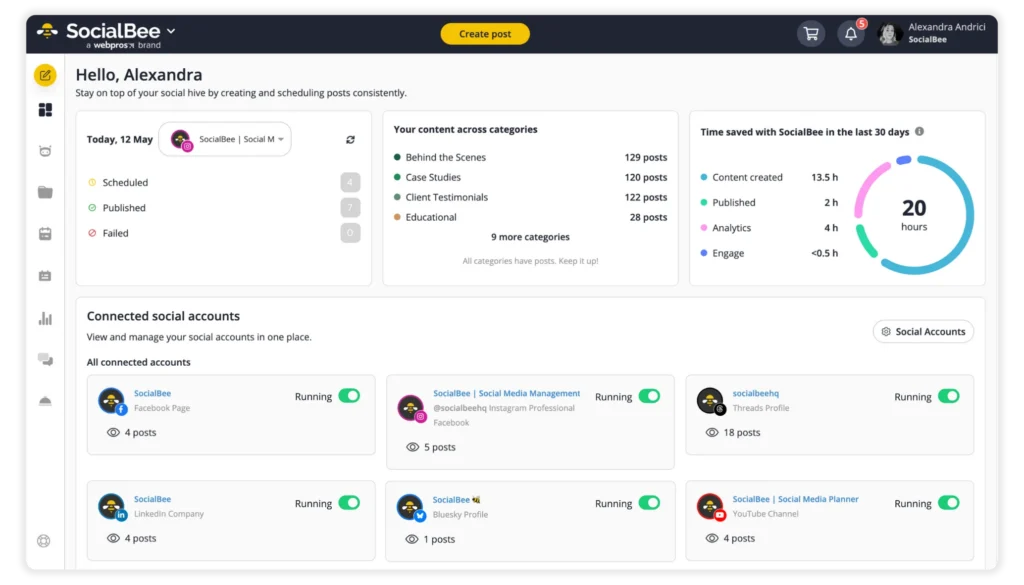
This is where a social media management platform like SocialBee can help. Instead of jumping between different social media platforms, you can manage your campaign from a single dashboard, schedule content across all your accounts, and keep everything organized in one place.
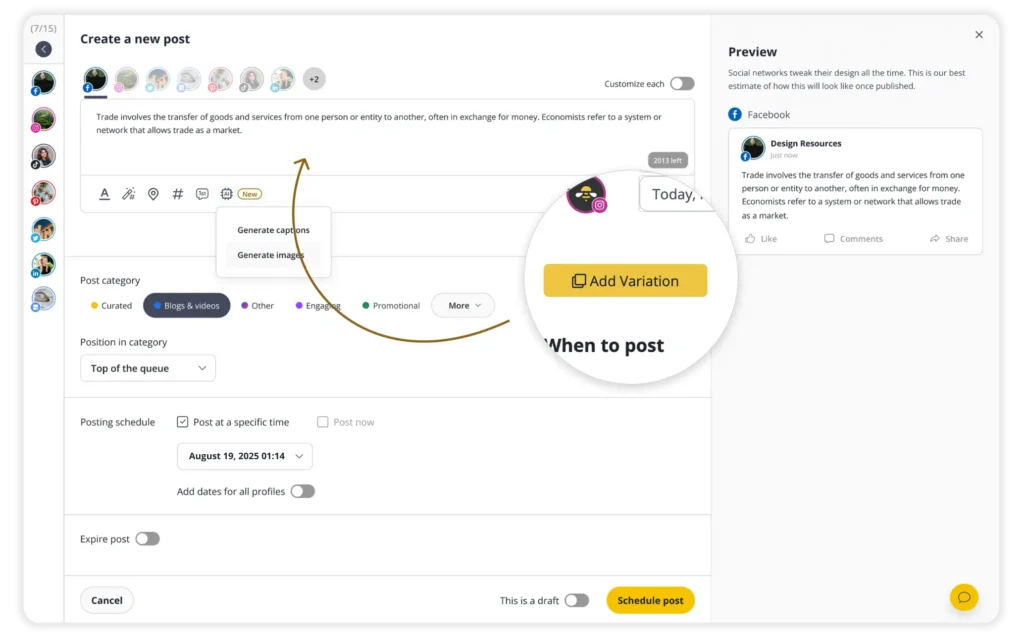
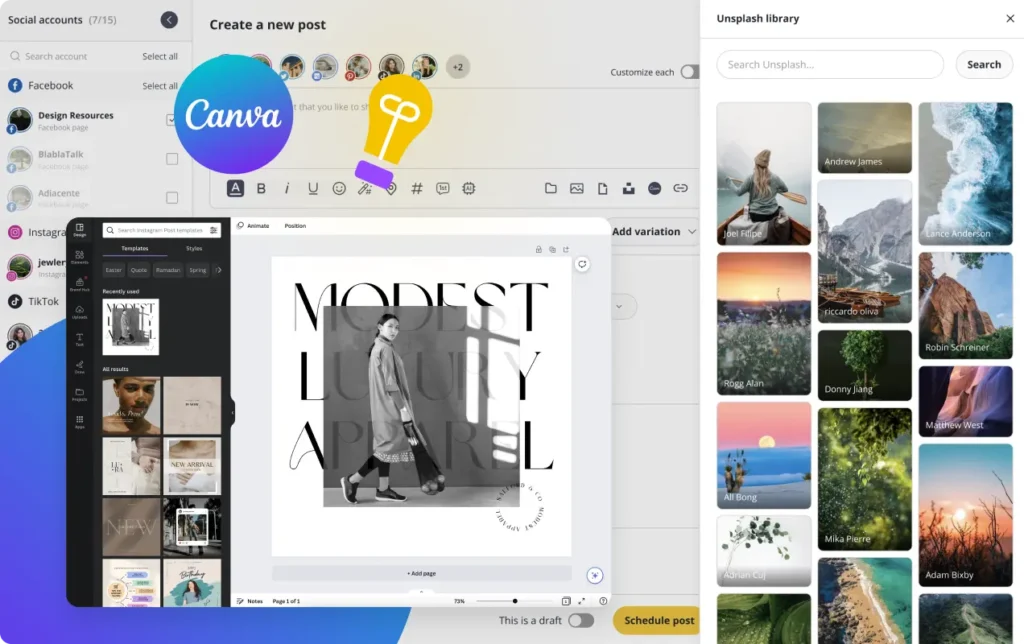
If you’re running the campaign on multiple platforms, SocialBee also lets you customize each post for each network without creating separate posts from scratch. You can keep the same core message while adapting the copy, visuals, and format for each channel, making the content feel native wherever it’s published.
4. Develop a campaign concept and core message
This is the step that separates forgettable campaigns from memorable ones.
A campaign concept is the central idea that ties everything together. It gives people a reason to pay attention, participate, share, or talk about your brand. Without it, even good content can feel disconnected.
As you develop your concept, ask yourself:
- Why would someone care about this campaign?
- What makes it different from other marketing campaigns in my industry?
- Does it align with our brand values?
- Can people easily explain it to someone else?
Once you have the concept, define your core message. This is the main idea you want people to remember after seeing the campaign. Every piece of content, influencer partnership, and marketing activity should reinforce that message.
For example, if you’re launching a project management tool, your core message might be “help teams spend less time managing work and more time doing it.” Every social media post, creator collaboration, customer story, and ad should support that idea. If you’re promoting a sustainable clothing brand, the message could be “buy fewer, better pieces.” The content may vary, but the central message stays consistent.
Keep it simple. If you need several paragraphs to explain the campaign idea, it’s probably too complicated. The strongest campaigns can usually be summarized in a single sentence.
At this stage, I also think about participation. Will people simply consume the content, or will they contribute to it? User-generated content, branded hashtags, contests, and community-driven initiatives tend to generate more engagement because they give people a reason to get involved.
5. Set your campaign budget and allocate resources
Not every successful social media campaign requires a large budget.
I’ve seen brands spend thousands on production, creators, and traditional ads only to get average results. I’ve also seen relatively small campaigns outperform expectations because the idea resonated with the audience. Budget matters, but it’s rarely the deciding factor.
Instead of starting with a number, start with your goal. The objective will often tell you where your budget should go. If you’re trying to increase brand awareness quickly, you’ll probably need to invest in paid promotion, influencer partnerships, or both. If your goal is to generate user-generated content, your budget may be better spent on prizes, incentives, or community management.
A simple framework I use is to split campaign costs into three categories:
- Content creation: graphics, videos, photography, copywriting, and design
- Distribution: paid ads, creator partnerships, influencer collaborations, and sponsored content
- Management: community engagement, reporting, campaign monitoring, and internal coordination
For most campaigns, distribution deserves the largest share of the budget. Creating great content is important, but people still need to see it.
It’s also worth remembering that resources aren’t limited to money. Time is often the bigger constraint. Someone needs to create the content, coordinate approvals, publish posts, answer questions, and monitor engagement once the campaign launches. The more moving parts your campaign has, the more important it becomes to define who owns each responsibility clearly.
When multiple teams are involved, I like to clarify expectations early. A few conversations before launch can prevent a lot of confusion later when deadlines start approaching, and campaign activity increases. The goal is to make sure your budget, people, and time are invested in the activities most likely to support your campaign objectives.
6. Build your campaign timeline and content calendar
A campaign without a timeline quickly becomes chaotic.
Once you know your goal, audience, concept, and budget, map out how the campaign will unfold. Most campaigns perform better when they’re broken into phases rather than launched all at once. You might start with teaser content, follow with the main launch, and then maintain momentum with follow-up content, influencer collaborations, or community-driven activities.
As you build the timeline, think about how often you’ll publish, which content will go live on each platform, and whether there are key dates you need to plan around. Product launches, holidays, industry events, and cultural moments can all influence your schedule.
This is where a content calendar becomes invaluable. Instead of managing dozens of campaign assets through spreadsheets and scattered documents, you can see the entire campaign in one place and spot gaps before they become problems.
I typically build the full campaign calendar before creating the content itself. It helps me balance promotional posts with educational, entertaining, or community-focused content so the campaign doesn’t feel repetitive. It also makes it easier to coordinate different platforms and make sure every piece of content supports the larger campaign objective.
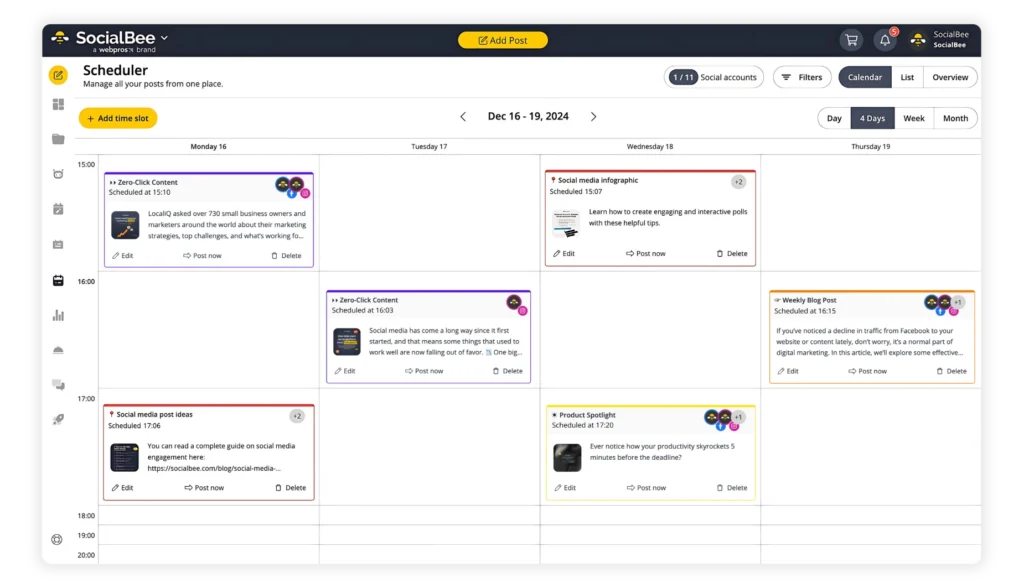
If you’re managing the campaign with SocialBee, you can use the visual content calendar to map out your entire campaign across multiple social media platforms.
Seeing everything laid out in a calendar view makes it much easier to identify content gaps, adjust publishing schedules, and keep the campaign organized as it grows.
7. Create your campaign content and creative assets
With the social media marketing plan in place, it’s time to start creating.
This is where many brands rush straight into designing graphics or writing captions. I prefer to start with the campaign message and work outward. All of the social media campaign ideas should reinforce the core idea behind the campaign, whether it’s a video, carousel, image, creator partnership, landing page, or email.
Think about the different roles your content needs to play. Some pieces should capture attention. Others should educate, encourage participation, answer questions, or drive action. The strongest campaigns combine multiple content formats instead of relying on a single type of post.
It’s also important to adapt content for different platforms. The same campaign can appear on Instagram, LinkedIn, TikTok, and Facebook, but the execution shouldn’t be identical everywhere. Audiences consume content differently depending on the platform, and your creative assets should reflect that.
When creating campaign content at scale, I like keeping everything in one place. SocialBee helps with this by combining content creation, Canva integration, scheduling, and collaboration tools in a single platform. For example, if you need campaign graphics, you can create or edit them directly through Canva and attach them to your posts without constantly moving files between different tools.
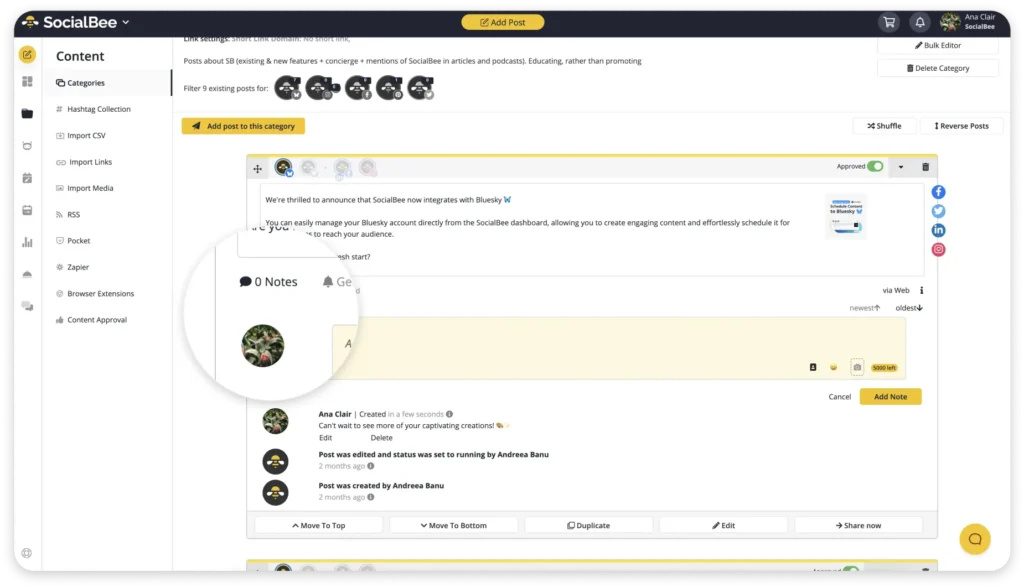
It’s also useful when multiple people are involved in the campaign. Team members can leave internal notes on individual posts, provide feedback, and share instructions directly where the content lives.
I’ve found this much easier than managing approvals and revisions through long email threads or scattered Slack messages. You can create posts, organize campaign assets, collaborate with team members, and prepare content for publication without constantly switching between different social media tools.
Before moving on, review every asset through a simple filter: does this content support the campaign goal? If the answer isn’t obvious, it probably doesn’t belong in the campaign. Your focus should always be valuable content.
8. Launch your campaign and track performance
Once the campaign goes live, resist the urge to immediately start changing things.
One of the most common mistakes is making major adjustments after a day or two because the initial results aren’t what they expected. Most campaigns need time to gain traction, especially when they involve user-generated content or content distributed across multiple platforms.
Instead, focus on monitoring performance against the KPIs you defined at the beginning. Look at engagement metrics, reach, clicks, conversions, branded hashtag usage, or whatever metrics are most closely tied to your campaign objective. The goal is to understand what’s working and what isn’t, not obsess over every fluctuation.
At the same time, pay attention to the conversations happening around the campaign. Comments, mentions, and direct messages (because not just their feeds matter, but what’s said in private too) often reveal insights that analytics alone can’t provide. Sometimes, the most valuable feedback comes directly from the people participating in the campaign.
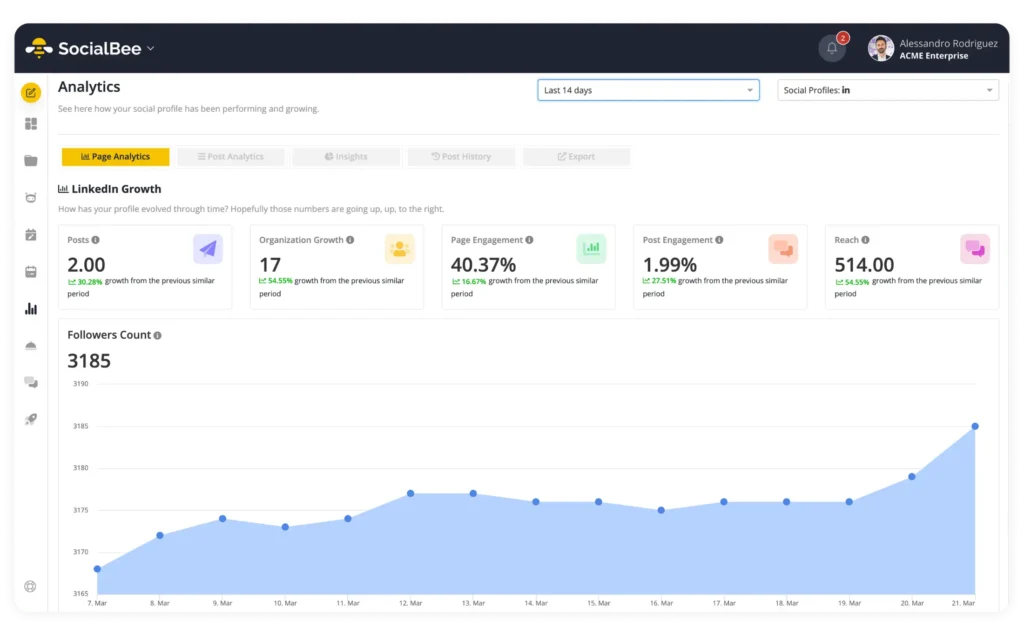
This is another area where SocialBee can simplify the process. Its analytics dashboard helps you track campaign performance across your social media platforms, making it easier to monitor data beyond vanity metrics like reach, engagement, audience growth, and post performance without manually pulling data from multiple networks. As the campaign progresses, you can quickly identify which content is generating the strongest results and adjust your strategy accordingly.
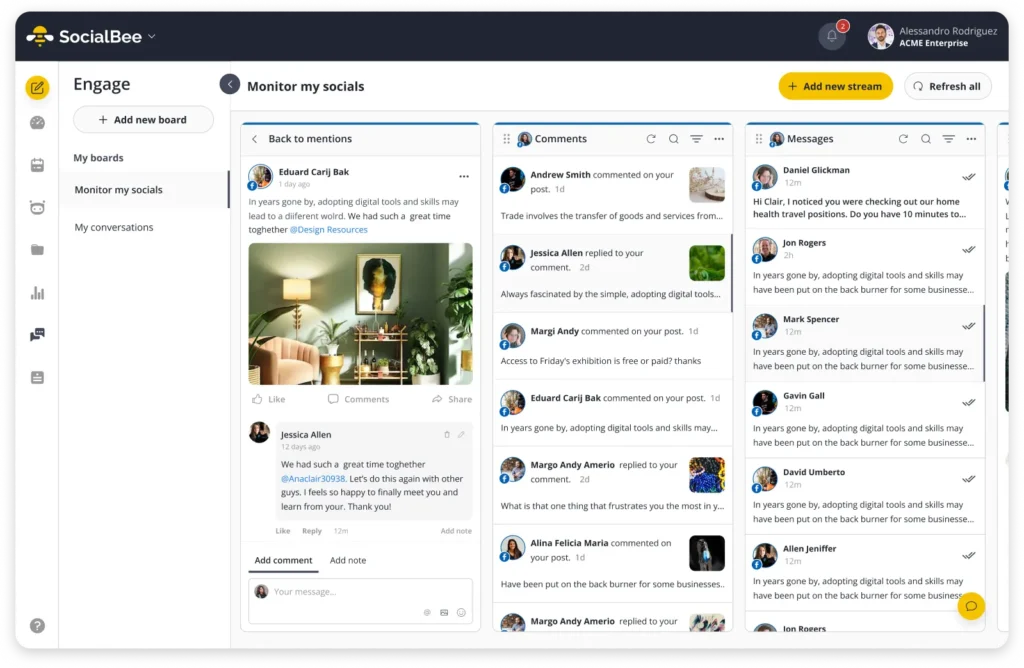
SocialBee also includes a social inbox that brings comments, mentions, and messages from different social media channels into one place. Instead of constantly switching between platforms to respond to your audience, you can manage campaign conversations from a single dashboard and make sure important interactions don’t get missed.
When the campaign ends, take time to review the results. Compare the outcome against your original goals, identify what contributed most to the campaign’s success, and document lessons for future campaigns.
5 successful social media campaign examples from major brands
1. #DoveOpenCall
The company launched the #DoveOpenCall campaign to challenge the narrow beauty standards often promoted by social media algorithms. This great social media campaign invited people to post selfies showcasing the features, traits, and differences that make them unique using the hashtag #DoveOpenCall, generating millions of posts.
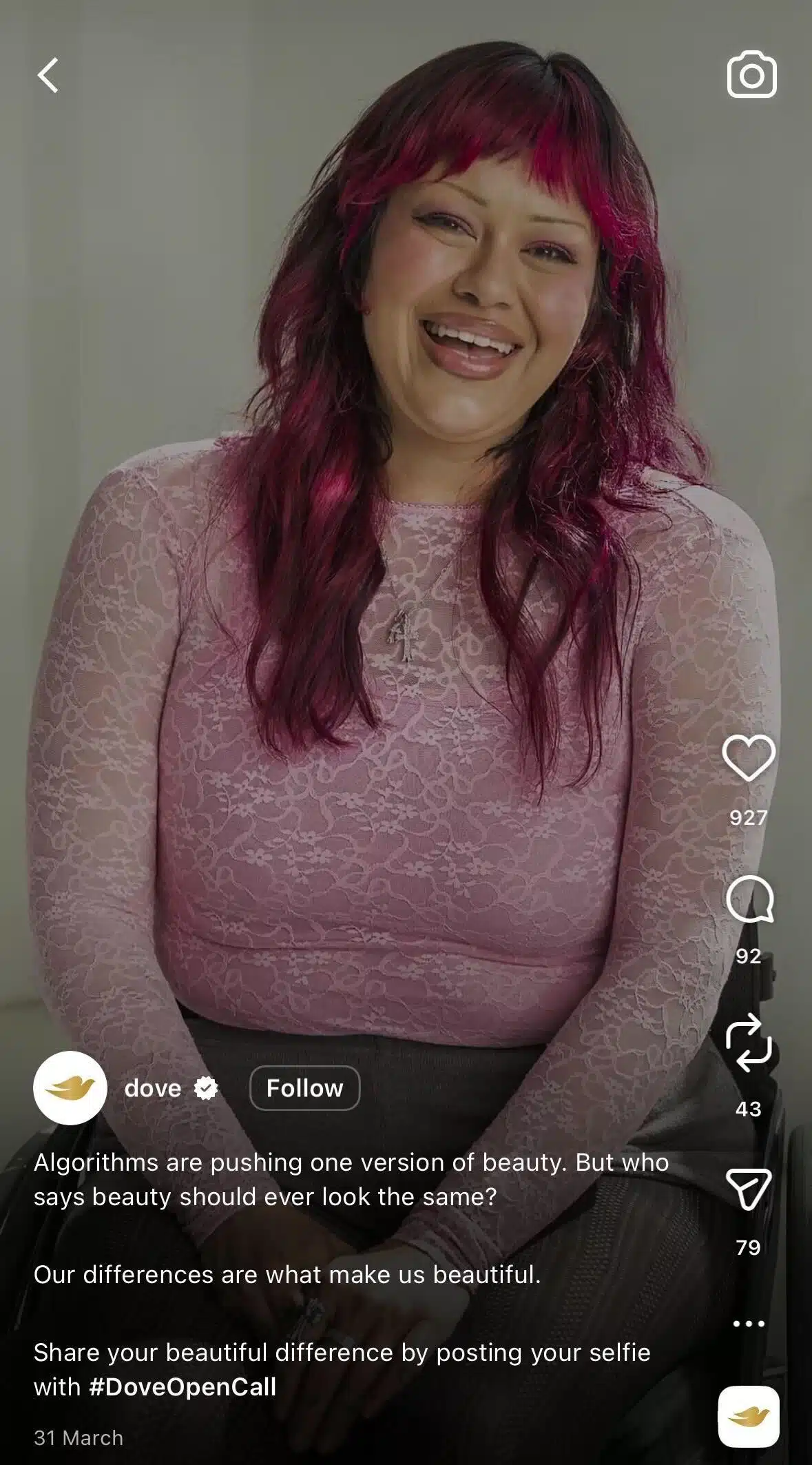
The message was simple: beauty doesn’t have to fit a single mold. By inviting users to share their own photos, Dove shifted the spotlight away from polished brand content and toward real people. The campaign generated conversations across social media platforms while reinforcing Dove’s brand story and long-standing commitment to helping raise awareness on body positivity and inclusive beauty.
Why it worked
What made this campaign effective was that it aligned perfectly with Dove’s brand values, and the audience formed an emotional connection. The company wasn’t jumping on a trend, it was continuing a conversation it had been leading for years, which made the message feel authentic rather than performative to users and devoted brand advocates.
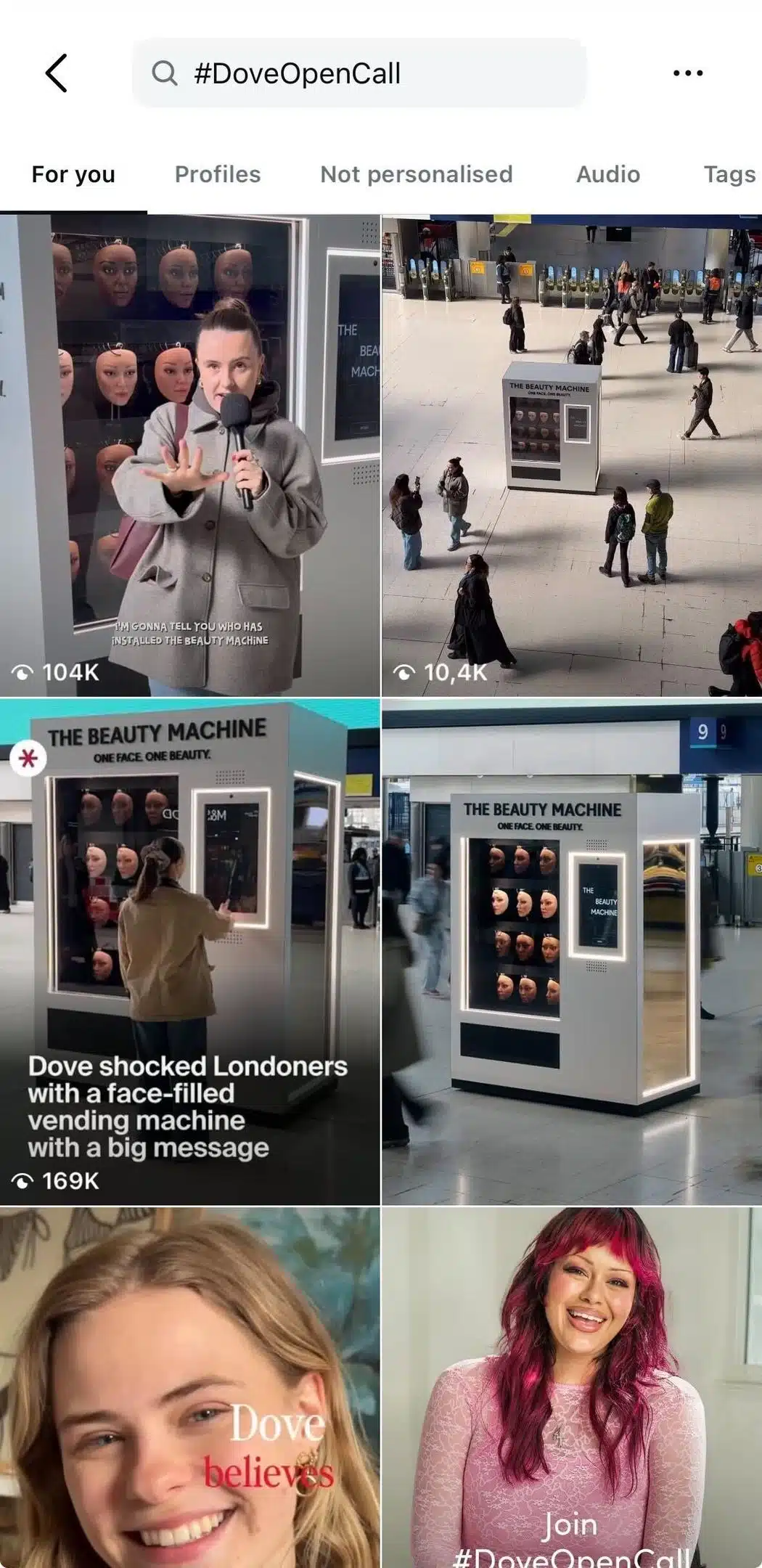
The campaign also turned participation into the content itself. Instead of relying solely on brand-created assets, Dove encouraged users to create and share their own content. This user-generated content approach helped the campaign reach a wider audience and go viral globally while creating real engagement around the topic. Every selfie shared under the hashtag became both a personal statement and a piece of campaign content, allowing the message to spread organically through social sharing.
Garnier’s “Moose” campaign
To promote its newly repackaged Fructis Curl Construct Creation Mousse, Garnier built an entire campaign around a deliberate spelling mistake.
The brand leaned into the confusion between mousse and moose, creating a fictional marketing mishap that quickly spread online. The campaign featured comedic videos, creator content, “moose sightings” around New York City, guerrilla marketing activations, and product sampling events that blurred the line between internet joke and product launch.
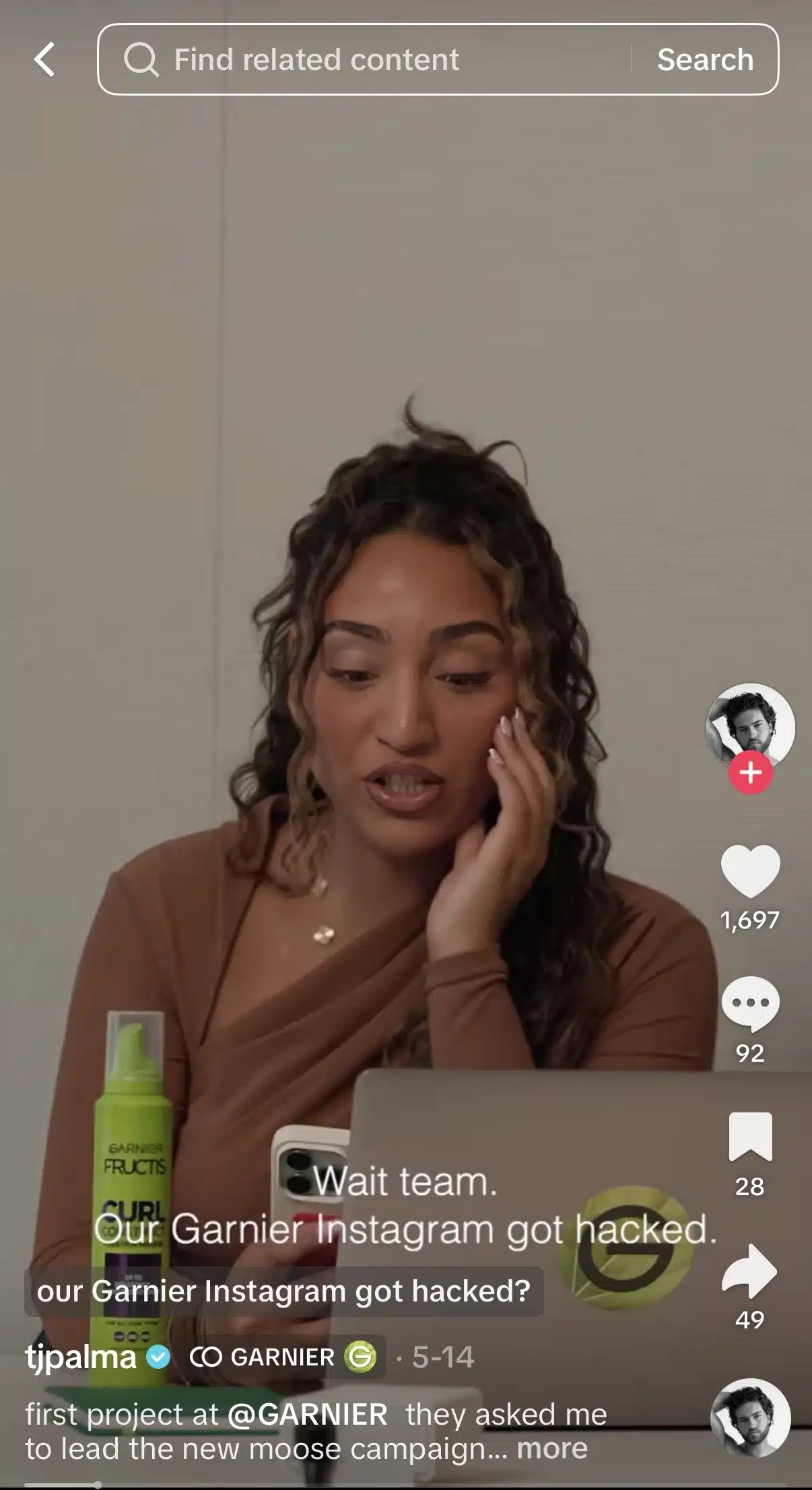
The stunt generated significant attention both online and offline. More importantly, it translated into business results, helping push the product from #10 to #6 in Amazon’s rankings within 24 hours.
Why it worked
What stands out to me about this campaign is how well it understood internet culture. Instead of fighting confusion, Garnier embraced it and turned curiosity into a social media marketing strategy. People wanted to know whether the mistake was real, encouraging followers to click, comment, and share, and improving brand perception.
The campaign also succeeded because it didn’t stay confined to social media. Garnier connected digital content with real-world experiences through street marketing, product sampling, and creator activations. That crossover helped the joke feel bigger than a typical marketing campaign and gave people multiple ways to encounter it.
Another smart move was involving creators and meme-focused communities early. Rather than relying entirely on brand-owned content, Garnier gave people something fun to talk about and remix. The result felt less like an advertisement and more like a cultural moment, which helped the campaign reach a much wider audience than traditional product promotion typically would and form a personal creation with the users.
3. Starbucks Refreshers summer campaign
Every summer, Starbucks brings its Refreshers lineup back into the spotlight. While the drinks themselves change over time with new flavors and limited-time offerings, the broader campaign follows a familiar pattern: colorful beverages, seasonal messaging, creator partnerships, and social-first content designed to signal that summer has officially arrived.
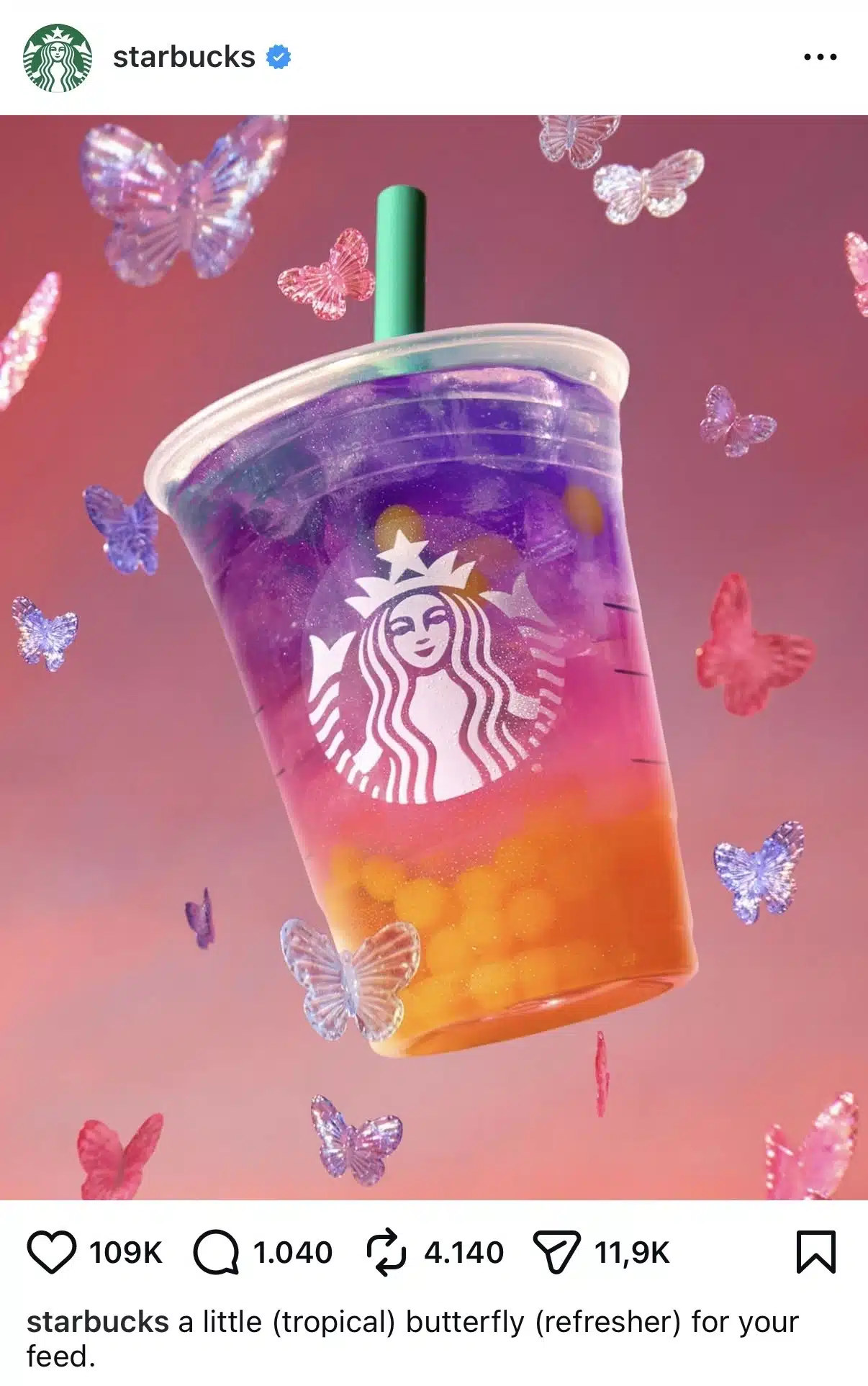
The campaign appears across multiple social media platforms through product photography, lifestyle content, influencer collaborations, and celebrity partnerships. The brand partnered with public figures such as Khloé Kardashian to amplify the campaign and introduce the drinks to new audiences.
Why it worked
What makes this campaign effective is consistency. Starbucks doesn’t treat Refreshers as a one-time product launch. By returning every year, the campaign has become part of the seasonal conversation. For many customers, the arrival of Refreshers serves as a signal that summer is beginning, much like pumpkin spice products have become associated with fall.
The visual brand identity also plays a major role. Bright colors, unique flavors, and highly photogenic drinks naturally encourage social sharing. People don’t just buy the product; they post it. That creates a steady stream of user-generated content that extends the campaign far beyond Starbucks’ own social media channels.
The campaign also understands that seasonal products perform best when they’re tied to a feeling rather than a feature. Starbucks isn’t simply marketing beverages, but also summer experiences, making the drinks feel like part of a larger seasonal ritual. That’s a big reason the campaign continues generating engagement year after year.
4. Vaseline’s #VaselineVerified campaign
Vaseline found itself at the center of thousands of beauty hacks circulating across TikTok and Instagram. People were using the product in unexpected ways, recommending it for everything from skincare routines to makeup techniques, but it wasn’t always clear which advice was actually worth following.
Instead of trying to control the conversation, Vaseline built a campaign around it.
The #VaselineVerified campaign brought scientists into the process, testing popular beauty hacks shared online and awarding a verification seal to the ones that proved effective and followed brand guidelines. The content combined social listening, creator culture, and laboratory testing, creating a steady stream of videos that felt both educational and entertaining.
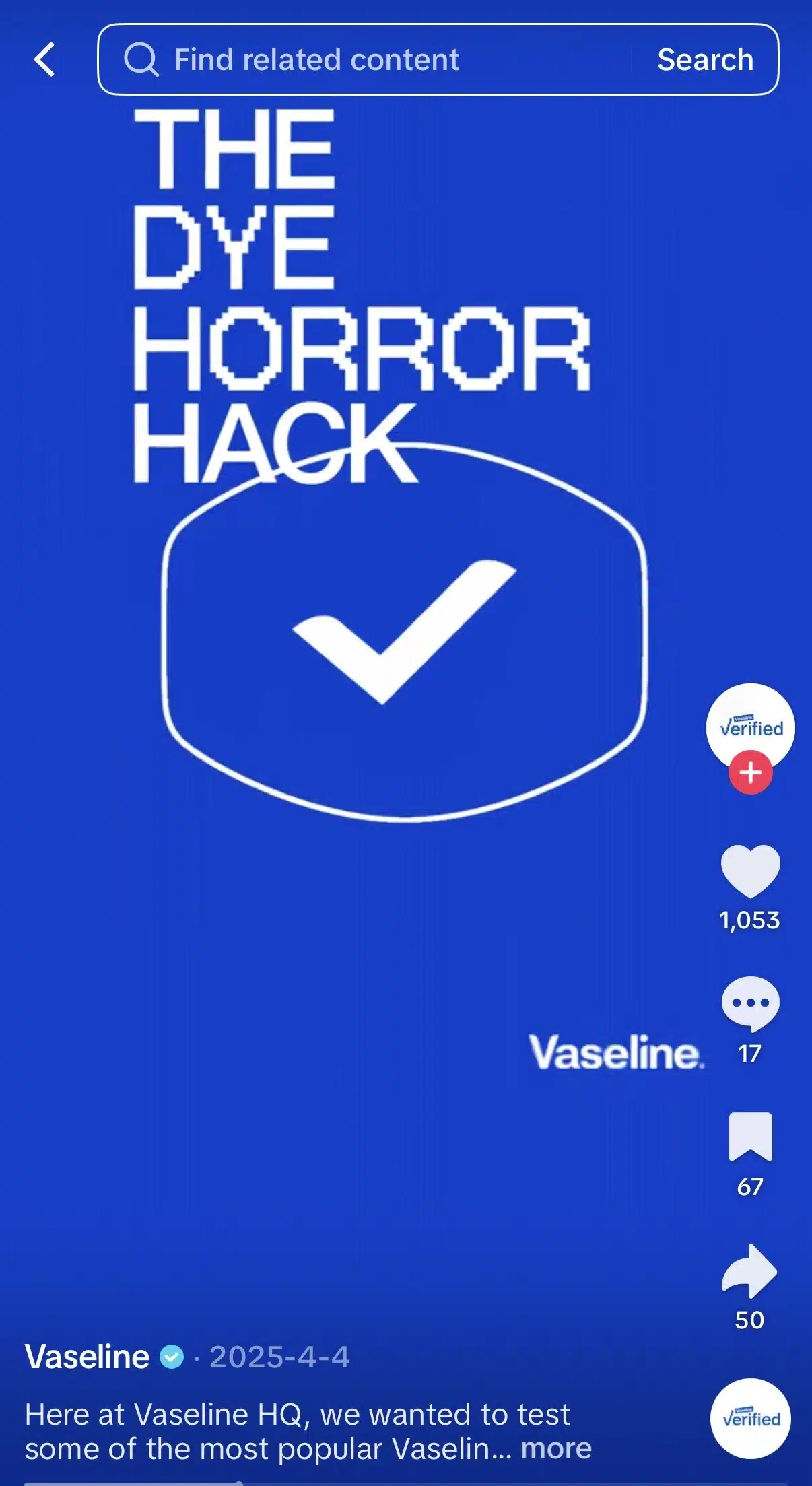
The campaign generated more than 100 million views, increased sales significantly, and helped position Vaseline as a trusted source in a category crowded with conflicting advice, allowing people to share their own stories with the product. The brand later expanded the concept by turning some community-created hacks into actual products, publicly crediting the creators who inspired them.
Why it worked
What I find most interesting about this campaign is that Vaseline didn’t start with a product. It started with a conversation that was already happening.
There were millions of posts featuring creative uses for Vaseline long before the campaign launched. Rather than competing for attention with another traditional marketing message, the brand focused on helping people navigate information they were already consuming.
The campaign also gave creators something many brands overlook: recognition. By highlighting community contributions and crediting the people behind popular ideas, Vaseline transformed customers into collaborators. That made the campaign feel less like brand-created content and more like a celebration of the community itself. This let to a lot more content and discourse compared to classic one-off campaigns.
This campaign proved that social listening can uncover opportunities that traditional market and audience research often misses.
5. FRAME x Alexandra Leclerc’s Monaco-inspired collection launch
FRAME partnered with Alexandra Leclerc to launch a 21-piece capsule collection inspired by life in Monaco. Instead of centering the campaign around product features, the brand focused on a specific lifestyle and location, using the French Riviera as the backdrop for the collection’s story.
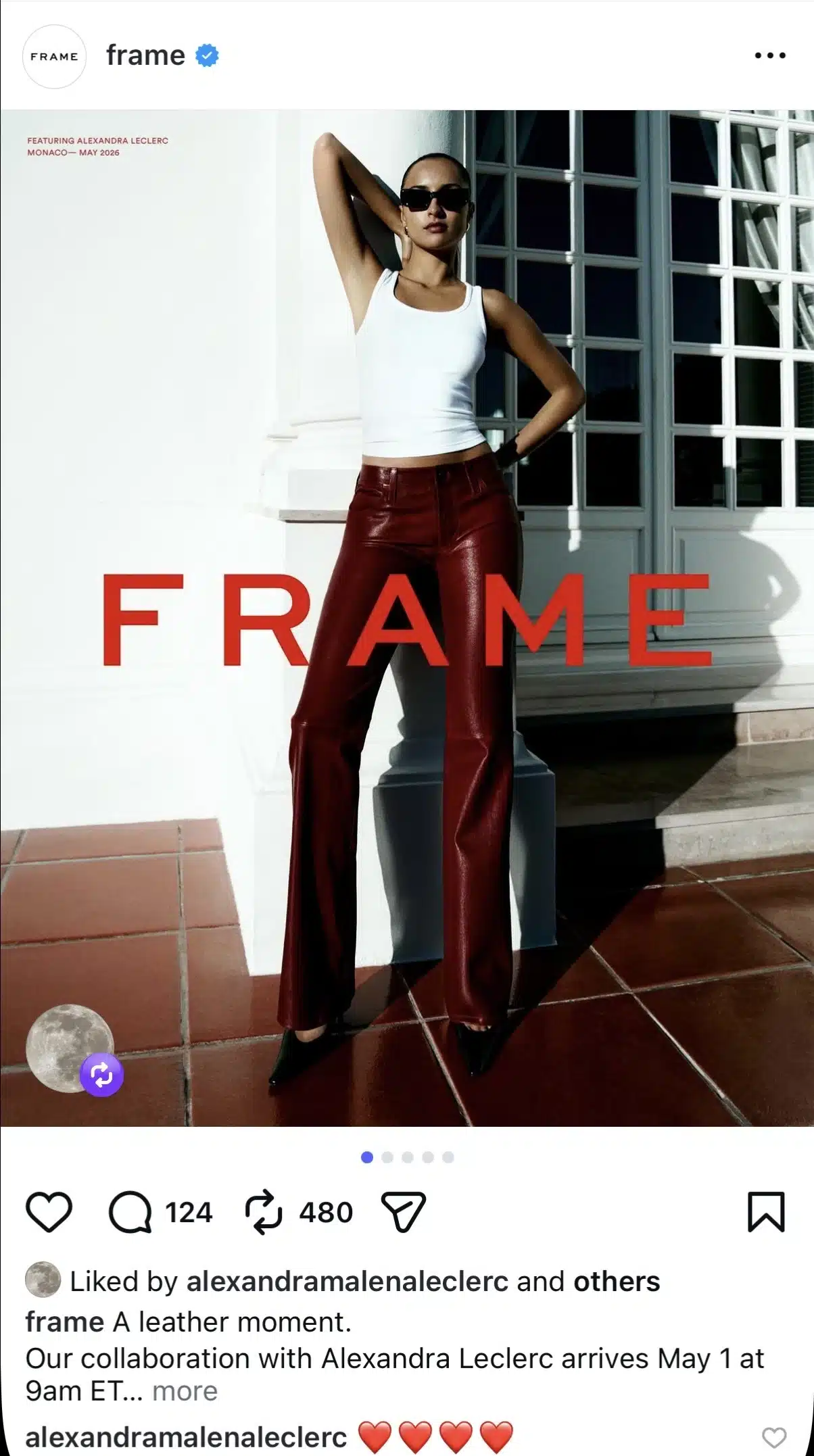
The campaign featured sun-soaked visuals, editorial-style photography, and content inspired by Alexandra’s daily life in Monaco. From relaxed denim silhouettes to elevated wardrobe staples, every piece was presented as part of a larger lifestyle rather than a standalone fashion item.
Why it worked
What makes this campaign interesting is that Monaco became the main character.
Rather than telling people why they should buy the collection, FRAME showed them the world the collection belonged to. The content sold a feeling of escape, luxury, and effortless style, allowing audiences to imagine themselves in that environment.
The partnership also felt authentic because the collection was tied directly to Alexandra’s personal experiences and aesthetic. Too many influencer collaborations and brand ambassadors feel transactional. This one felt like a natural extension of the creator’s identity, which made the emotional storytelling more believable compared to campaigns with global celebrities.
The visual consistency played a major role as well. Every image, video, and social media post reinforced the same mood, creating a strong campaign identity across platforms.
Frequently asked questions
1. What are some common mistakes to avoid in social media campaigns?
The most common mistakes are launching without a clear goal, targeting the wrong audience, spreading your budget too thin, and publishing the same content across different platforms without adapting it, hurting your social media presence. I’ve also seen brands focus so much on content creation that they forget to define how they’ll measure success. Every campaign should have a clear objective, a timeline, and KPIs established before the first post goes live.
2. How long should a social media campaign last?
Most social media campaigns run between two and eight weeks, depending on the objective. Product launches and seasonal promotions are often shorter, while brand awareness and community-building campaigns can run for several months. The right duration depends on your marketing goals, budget, and how much content you have available to support the campaign.
3. How much budget do you need for a campaign?
There’s no universal number. Some small businesses run effective social media campaigns with a few hundred dollars, while larger brands invest thousands in content production, influencer collaborations, and paid promotion. The budget should be based on your objectives, audience size, and distribution strategy rather than an arbitrary benchmark.
4. What makes a campaign successful?
A successful social media campaign starts with a clear goal and a strong idea that resonates with the target audience. The most successful campaigns combine relevant content, consistent messaging, effective distribution, and ongoing performance tracking. They also give people a reason to engage, share, participate, or talk about the brand.
Build a successful social media campaign with SocialBee
The best social media campaigns aren’t always the biggest or the most expensive. They’re the ones built around a clear objective, a strong concept, and content that gives people a reason to pay attention.
Whether you’re trying to increase brand awareness, launch a new product, generate user-generated content, or drive more sales, the process remains largely the same: define your goal, understand your audience, build a campaign plan, create compelling content, and measure the results.
Managing all the moving parts of a social media strategy can quickly become overwhelming, especially when you’re coordinating content across multiple platforms. That’s where SocialBee can help. As a social media management platform, it gives you one place to create content, customize posts for different social channels, collaborate with your team, schedule content, manage engagement through the social inbox, and track digital marketing campaign performance with built-in analytics.
If you’re ready to launch your next social media campaign, start your SocialBee 14-day free trial and see how much easier campaign planning, execution, and reporting can become when everything lives in one place.