


Buffer and Sprout Social are two popular social media management tools, but they serve different needs.
Buffer focuses on simple scheduling and affordable social media management. Sprout Social offers more advanced analytics, engagement, and team collaboration features.
In this guide, we’ll compare their features, pricing, and ease of use. Whether you’re a small business owner or a social media manager, you’ll learn which platform is a better fit for your team, budget, and social media strategy.

We’re SocialBee LABS SRL, part of WebPros. We use the information you provide to share relevant content & updates, as outlined in our Privacy Policy. You can opt out anytime.

Short Summary
- Both Buffer and Sprout Social support major platforms, including Facebook, Instagram, LinkedIn, TikTok, Pinterest, and YouTube. However, their content creation and management features differ.
- Buffer is easy to use, with straightforward scheduling and tools for creating engaging social media posts.
- Sprout Social offers more advanced scheduling features, including a visual content calendar and recommendations for the best times to post.
- Sprout Social provides more detailed analytics and engagement tools, while Buffer focuses on essential performance tracking and everyday interactions.
- Sprout Social is better suited to larger teams that need advanced collaboration features. Buffer offers a simpler experience for individuals and smaller teams.
- Buffer is the more affordable option, while Sprout Social comes at a higher price with more advanced features.
Buffer vs Sprout Social: Side-by-Side Comparison Table
Features | SocialBee | Sprout Social | Buffer |
| Social Media Profiles | |||
| Post On | Facebook, X (Twitter), Instagram, Threads LinkedIn, Pinterest, Google Business Profiles, TikTok, YouTube, and Bluesky | Facebook, X (Twitter), Instagram, LinkedIn, YouTube, Pinterest, TikTok, WhatsApp, Reddit | Facebook, Google Business Profile, Instagram, LinkedIn, Mastodon, Pinterest, Shopify, TikTok, and X (Twitter) |
| Import Content | |||
| CSV Upload | ✅ | ✅ | ❌ |
| RSS Feeds | ✅ | ✅ | ❌ |
| Social Media Management | |||
| AI Content Generation | ✅ | ❌ | ✅ |
| AI Social Media Manager | ✅ | ✅ | ❌ |
| Content Scheduling | ✅ | ✅ | ✅ |
| Bulk Scheduling | ✅ | ✅ | ❌ |
| Content Publishing | ✅ | ✅ | ✅ |
| Evergreen Posting | ✅ | ❌ | ❌ |
| List View | ✅ | ❌ | ❌ |
| Social Media Calendar | ✅ | ✅ | ✅ |
| Social Media Inbox | ✅ | ✅ | ✅ |
| Content Categories | ✅ | ❌ | ❌ |
| Hashtag Collections | ✅ | ✅ | ✅ |
| Hashtag Generator | ✅ | ❌ | ❌ |
| Team Collaboration | |||
| Client Workspaces | ✅ | ❌ | ❌ |
| Content Approval | ✅ | ✅ | ✅ |
| Analytics | |||
| Social Media Analytics | ✅ | ✅ | ✅ |
| Analytics On Schedule Set Up | ✅ | ✅ | ❌ |
| Content Category Analytics | ✅ | ✅ | ❌ |
| Export PDF Reports | ✅ | ✅ | ✅ |
| Integrations | |||
| Canva Integration | ✅ | ✅ | ✅ |
| Unsplash Integration | ✅ | ✅ | ❌ |
| GIPHY Integration | ✅ | ✅ | ✅ |
| Multiple Shortlink Tools | ✅ | ✅ | ✅ |
| Pocket Integration | ❌ | ✅ | ✅ |
| QUUU Content Curation | ✅ | ✅ | ✅ |
| Customer Support | |||
| Help Documentation | ✅ | ✅ | ✅ |
| Email Support | ✅ | ✅ | ✅ |
| Chat Support | ✅ | ✅ | ✅ |
| Support Calls | ✅ | ✅ | ❌ |
| UTM Customization | |||
| Category Based UTM Settings | ✅ | ✅ | ❌ |
| Custom URL and Tracking | ✅ | ✅ | ❌ |
| Additional Tools | |||
| Mobile App | ✅ | ✅ | ✅ |
| Chrome Extension | ❌ | ✅ | ✅ |
| Additional Services | |||
| Migration / Onboarding | ✅ | ✅ | ❌ |
| Pricing Plans | |||
| Monthly Plans | ✅ | ✅ | ✅ |
| Yearly Plans | ✅ | ✅ | ✅ |
| Price | Starting at $29/month | Starting at $249/month | Starting at $6/month for one channel |
Check out how independent sources compare and review:
Buffer vs Sprout Social: How to Choose the Best Social Media Management Tool
The right choice depends on your budget, team size, and the features you need.
Here are ten factors to consider when comparing Buffer and Sprout Social:
- Supported social media platforms
- Content creation
- Planning and scheduling
- Social media analytics
- Social inbox and engagement
- Team collaboration
- Ease of use
- Integrations
- Pricing
- Customer support
1. Supported Social Media Platforms
Both Buffer and Sprout Social support major social networks, including Instagram, TikTok, Facebook, X (Twitter), Pinterest, LinkedIn, Google Business Profile, and YouTube.
However, Buffer also supports posting on Mastodon and offers a Shopify integration for e-commerce data analysis. These are two options that Sprout Social doesn’t offer.
2. Content Creation Features
Both Buffer and Sprout Social offer content creation tools, but they focus on different needs.
Buffer makes it easy to create and curate content. It includes an image creator and options to repost popular content, helping businesses generate engaging social media posts without spending too much time on content creation.
Sprout Social offers more options for planning and improving posts. You can preview how content will look on each platform and use optimization recommendations to refine it before publishing.
These features are especially useful for businesses that need more control over their content strategy.
3. Social Media Planning and Scheduling
Sprout Social offers advanced planning and scheduling features for businesses managing content across multiple platforms.
You can schedule posts well in advance and use data-based recommendations to find the best times to publish. The visual content calendar also makes it easier to organize upcoming posts and adjust schedules.
These features are particularly useful for businesses running large social media campaigns that require detailed planning.
Buffer takes a simpler approach to scheduling, making it a practical option for individuals and smaller teams.
Its scheduling interface is easy to set up and helps you manage posts across multiple social media platforms. You also get a calendar view where you can see upcoming content and make changes to your posting schedule.
4. Social Media Analytics
Sprout Social offers detailed social media analytics and reporting tools that help businesses understand how their content performs.
You can use reporting templates to track key metrics, identify trends, and see what’s working across different platforms. These features are especially useful for larger teams that need in-depth reports to guide their social media strategy.
Buffer takes a simpler approach to analytics, focusing on essential performance metrics and overall account activity.
It works well for businesses that want to track their results without dealing with complex reports. However, teams that need more detailed insights may find Sprout Social better suited to their needs.
5. Social Inbox and Engagement Tools
Sprout Social’s Smart Inbox brings messages and comments from multiple social networks into one place.
This makes it easier to manage audience interactions, respond to customer questions, and keep track of conversations across platforms. It’s particularly useful for businesses that receive a high volume of messages and need to respond regularly.
Buffer offers a simpler approach to engagement, with tools for managing comments and interacting with followers on supported platforms.
However, its engagement features are more limited than Sprout Social’s, especially for businesses that need to manage conversations across several social networks.
6. Team Collaboration Features
Sprout Social offers advanced collaboration features for larger teams and agencies.
You can assign user roles, manage permissions, and organize how team members work together on social media content. These features help businesses manage responsibilities and coordinate projects involving several people.
Buffer focuses on simpler team collaboration, making it a practical option for smaller teams.
Team members can work together on post drafts and leave comments without needing complex approval processes. However, larger organizations may find Buffer’s collaboration features too limited for managing multiple roles and responsibilities.
7. User Experience and Ease of Use
Sprout Social offers a wide range of features in a well-organized interface.
The platform provides guidance to help new users learn its main tools. However, advanced features like analytics and reporting may take some time to understand.
Buffer is easier to get started with, especially for beginners and smaller teams.
Its simple interface makes it easy to create, schedule, and manage posts without much training. If you mainly need straightforward social media management, Buffer may be the more practical choice.
8. Integrations
Sprout Social connects with tools that help businesses manage social media alongside customer service and sales.
For example, it integrates with Zendesk and HubSpot Service Hub. These connections are useful for teams that want to link social media conversations with their customer relationship management (CRM) activities.
Buffer offers integrations with tools such as WordPress, IFTTT, and Zapier.
These connections help businesses link social media management with other everyday tasks. For instance, they can use integrations to automate certain activities and reduce the need to switch between different apps.
9. Pricing
Buffer is the more affordable option, making it a good choice for individuals and small businesses with limited budgets.
Its pricing plans focus on essential social media management features, so you don’t have to pay for advanced tools you may not need.
Sprout Social costs more but offers additional features, including detailed analytics, social listening, and team collaboration tools.
The higher price may be worth it for larger businesses and agencies that need these features to manage their social media accounts.
10. Customer Support
Sprout Social offers several support options, including training programs and a detailed help center.
New users can access resources to learn how the platform works, while larger businesses may receive personalized training. The help center also includes recorded webinars and Q&A resources to help users solve common problems.
Buffer takes a simpler approach to customer support, mainly offering assistance through email and social media channels.
These options work well for general questions and everyday issues. However, businesses that need extensive training or direct phone support may find Sprout Social a better fit.
When to Choose Buffer
Buffer is a good choice for individuals and smaller teams that want a simple, affordable social media management tool.
It’s particularly useful if you need:
- Simple social media management: Create, schedule, and manage posts without dealing with complicated features.
- Beginner-friendly tools: If you’re new to social media marketing, Buffer makes it easier to get started and maintain a consistent posting schedule.
- Multi-platform scheduling: Manage content across several social networks from one place.
- Basic team collaboration: Work with other team members on content without needing advanced approval processes or complex permissions.
- Affordable pricing: Access essential social media management features without paying for tools your business doesn’t need.
When to Choose Sprout Social
Sprout Social is a good choice for medium to large businesses and agencies that need more advanced social media management features.
It’s particularly useful if you need:
- Detailed analytics: Track social media performance, identify trends, and create reports to guide your strategy.
- Advanced automation: Use automation tools to reduce manual work and manage more complex social media activities.
- More than basic scheduling: Access tools for publishing, engagement, analytics, and content management in one platform.
- Team collaboration: Manage campaigns involving several team members with user roles, permissions, and approval processes.
- CRM integrations: Connect social media management with customer service and sales tools to keep customer interactions organized.
What Is a Good Buffer and Sprout Social Alternative?
If you’re looking for an alternative to Buffer and Sprout Social, SocialBee is worth considering.
SocialBee helps businesses, content creators, and agencies manage their social media accounts from one place. It offers tools for creating content, scheduling posts, tracking performance, and collaborating with team members.
It’s a practical option for those who want more than basic scheduling without dealing with overly complicated tools.
Here are seven reasons to consider SocialBee as an alternative to Buffer and Sprout Social:
- Social Media Copilot
- AI post generator
- Content categories
- 14-day free trial
- Social inbox
- Hashtag generator
- Evergreen posting
1. Social Media Copilot
SocialBee’s Social Media Copilot uses AI to help you build a social media strategy based on your business and goals.
It recommends suitable social media platforms, organizes your content into categories, and generates editable posts you can review before publishing.
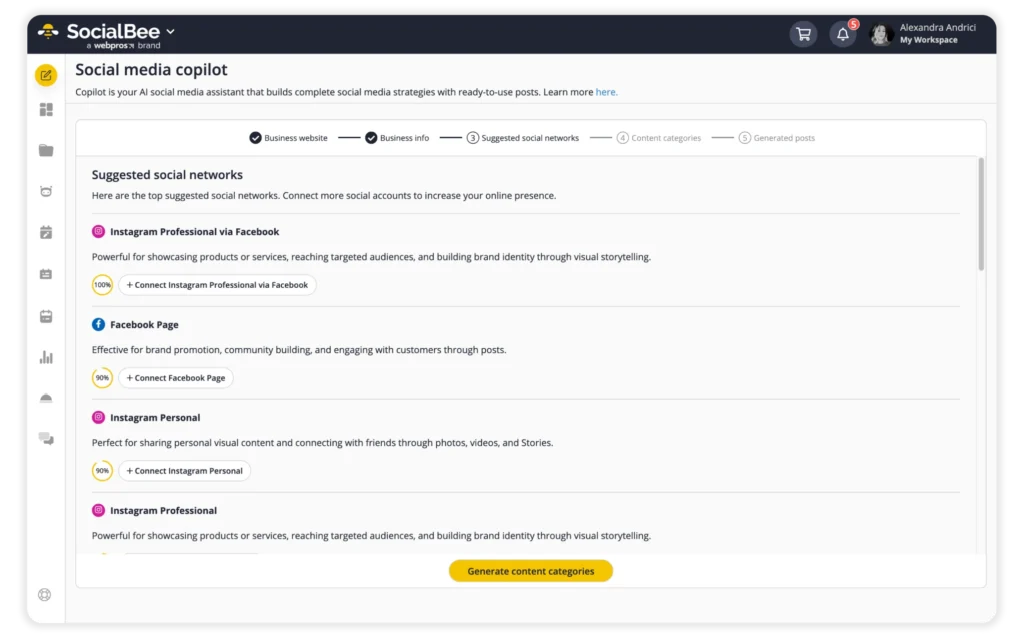
Let the Social Media Copilot create a tailored strategy for each platform.
Start your 14-day free trial today!
You can then plan and schedule your content in SocialBee, saving time on the initial setup and content creation process.
2. AI Post Generator
SocialBee’s AI Post Generator helps you create social media captions, post ideas, and images without starting from scratch.
You can choose from over 1,000 AI prompts to generate content, overcome writer’s block, or repurpose existing posts. The tool also lets you adjust the tone of voice, length, hashtags, and emojis to match your brand and audience.
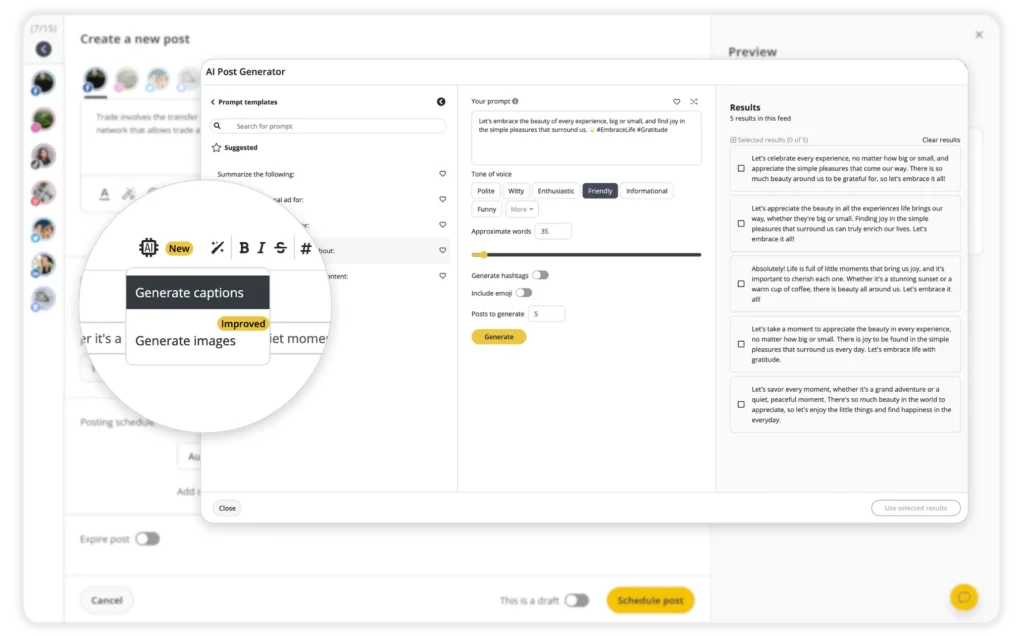
Generate more social media captions and ideas than ever before with SocialBee’s 1000+ AI prompt collection.
Start your 14-day free trial today!
SocialBee also supports AI image generation directly in the post editor, so you can create visuals alongside your captions without switching between tools.

3. Content Categories
SocialBee lets you organize your posts into content categories based on topics, formats, or goals. This makes it easier to plan a balanced mix of content and avoid posting about the same things too often.
You can also schedule, edit, and delete posts in bulk across multiple social media accounts. This saves time when managing large amounts of content or making changes to your posting schedule.
4. 14-Day Free Trial
SocialBee offers a 14-day free trial so you can explore its features before choosing a paid plan.
During the trial, you can test content creation, scheduling, and other social media management tools to see whether SocialBee meets your needs.
5. Social Inbox
SocialBee’s Social Inbox brings comments, messages, and mentions from supported social media platforms into one place.
You can keep track of conversations and respond to your audience without constantly switching between apps. This makes it easier to manage interactions, especially when handling multiple social media accounts.
6. Hashtag Generator
SocialBee’s Hashtag Generator suggests relevant hashtags based on your post’s content, saving you time on hashtag research.
You can use these suggestions to reach people interested in your topics and support your social media engagement strategy.
Choosing relevant hashtags also helps keep your posts focused on the audiences you want to attract.
7. Evergreen Posting
SocialBee lets you automatically recycle evergreen content, so you can continue sharing valuable posts without scheduling them again manually.
You can add posts to a content category, set a posting schedule, and let SocialBee republish them over time. This helps you maintain a consistent social media presence while reducing the amount of new content you need to create.
Evergreen posting works especially well for educational tips, tutorials, FAQs, and other content that stays relevant long after its original publication.
SocialBee vs Buffer & Sprout Social: Side-by-Side Comparison Table
Features | SocialBee | Sprout Social | Buffer |
| Social Media Profiles | |||
| Post On | Facebook, X (Twitter), Instagram, Threads, LinkedIn, Pinterest, Google Business Profiles, TikTok, YouTube, and Bluesky | Facebook, X (Twitter), Instagram, LinkedIn, YouTube, Pinterest, TikTok, WhatsApp, Reddit | Facebook, Google Business Profile, Instagram, LinkedIn, Mastodon, Pinterest, Shopify, TikTok, and X (Twitter) |
| Import Content | |||
| CSV Upload | ✅ | ✅ | ❌ |
| RSS Feeds | ✅ | ✅ | ❌ |
| Social Media Management | |||
| AI Content Generation | ✅ | ❌ | ✅ |
| AI Social Media Manager | ✅ | ✅ | ❌ |
| Content Scheduling | ✅ | ✅ | ✅ |
| Bulk Scheduling | ✅ | ✅ | ❌ |
| Content Publishing | ✅ | ✅ | ✅ |
| Evergreen Posting | ✅ | ❌ | ❌ |
| List View | ✅ | ❌ | ❌ |
| Social Media Calendar | ✅ | ✅ | ✅ |
| Social Media Inbox | ✅ | ✅ | ✅ |
| Content Categories | ✅ | ❌ | ❌ |
| Hashtag Collections | ✅ | ✅ | ✅ |
| Hashtag Generator | ✅ | ❌ | ❌ |
| Team Collaboration | |||
| Client Workspaces | ✅ | ❌ | ❌ |
| Content Approval | ✅ | ✅ | ✅ |
| Analytics | |||
| Social Media Analytics | ✅ | ✅ | ✅ |
| Analytics On Schedule Set Up | ✅ | ✅ | ❌ |
| Content Category Analytics | ✅ | ✅ | ❌ |
| Export PDF Reports | ✅ | ✅ | ✅ |
| Integrations | |||
| Canva Integration | ✅ | ✅ | ✅ |
| Unsplash Integration | ✅ | ✅ | ❌ |
| GIPHY Integration | ✅ | ✅ | ✅ |
| Multiple Shortlink Tools | ✅ | ✅ | ✅ |
| Pocket Integration | ❌ | ✅ | ✅ |
| QUUU Content Curation | ✅ | ✅ | ✅ |
| Customer Support | |||
| Help Documentation | ✅ | ✅ | ✅ |
| Email Support | ✅ | ✅ | ✅ |
| Chat Support | ✅ | ✅ | ✅ |
| Support Calls | ✅ | ✅ | ❌ |
| UTM Customization | |||
| Category Based UTM Settings | ✅ | ✅ | ❌ |
| Custom URL and Tracking | ✅ | ✅ | ❌ |
| Additional Tools | |||
| Mobile App | ✅ | ✅ | ✅ |
| Chrome Extension | ❌ | ✅ | ✅ |
| Additional Services | |||
| Migration / Onboarding | ✅ | ✅ | ❌ |
| Pricing Plans | |||
| Monthly Plans | ✅ | ✅ | ✅ |
| Yearly Plans | ✅ | ✅ | ✅ |
| Price | Starting at $29/month | Starting at $249/month | Starting at $6/month for one channel |
Switching from Buffer or Sprout Social to SocialBee
If you’re considering switching from Buffer or Sprout Social, SocialBee offers a migration service to help you get started.
The service helps transfer your account settings, including posting schedules, RSS feeds, and shortlink provider preferences. This saves you time and reduces the amount of manual setup needed when moving to a new platform.
Once the migration is complete, you’ll receive an email report showing what was successfully transferred.
Ready to make the switch? Start your 14-day free SocialBee trial and explore a simpler way to manage your social media content.
Frequently Asked Questions
1. Is Buffer better than Sprout Social?
Buffer is a better choice for individuals and small businesses that need affordable, easy-to-use scheduling tools. Sprout Social is better suited to larger teams that need advanced analytics, social listening, and collaboration features.
2. What is the difference between Sprout Social and Buffer?
The main differences are their features, pricing, and target audiences. Buffer focuses on straightforward scheduling and performance tracking at a lower cost, while Sprout Social offers more advanced analytics, engagement management, and team collaboration tools.
3. Who is a competitor to Sprout Social?
SocialBee is one alternative to Sprout Social, offering content creation, scheduling, analytics, and team collaboration features. It’s worth considering if you want to manage multiple social media accounts without paying for more advanced tools you may not need.
Buffer vs Sprout Social: Which One Should You Choose?
Buffer is a good choice if you need affordable, straightforward tools for scheduling posts and managing social media accounts. Sprout Social is better suited to larger teams that need detailed analytics, social listening, and advanced collaboration features.
If you’re looking for an alternative, SocialBee offers a practical way to create, organize, and schedule content across multiple social media platforms. Features like content categories, AI-assisted content creation, and evergreen posting can help you maintain a consistent posting schedule with less manual work.
Ready to simplify your social media management? Start your 14-day SocialBee trial and see how it fits your needs.