

A social media approval workflow sounds like something you only need once your marketing team gets big. That’s what I used to think, too, until I found myself buried in Slack messages, email chains, and last-minute edits just to get a single social media post out.
At one point, I had more time spent chasing approvals than actually creating content. A caption would sit in a Google Doc, the design in Google Slides, feedback scattered across comments, and no clear “go ahead” from the people involved.
So I rebuilt my entire social media approval workflow from scratch.
What I’m going to walk you through in this article is the exact process I use now. It’s designed for real-world social media teams with multiple stakeholders, multiple approvers, and not a lot of time to waste. It keeps everyone on the same page and makes sure every piece of social content gets a proper final sign-off without slowing down publishing.

We’re SocialBee LABS SRL, part of WebPros. We use the information you provide to share relevant content & updates, as outlined in our Privacy Policy. You can opt out anytime.
Short summary
- A social media approval process defines the review stage and how posts are approved and published, ensuring every post maintains brand consistency and meets legal compliance and regulatory standards as well as content quality before going live.
- Most workflows break down because feedback is scattered across tools, roles are unclear, and too many approvers slow down your social media efforts.
- Setting clear expectations early (review rounds, deadlines, final approver) prevents delays and keeps content moving.
- Assigning a single point of contact for feedback eliminates conflicting comments and reduces back-and-forth.
- Creating content guidelines, templates, and examples helps teams produce on-brand content faster with fewer revisions.
- Defining a clear workflow (Idea → Draft → Review → Approval → Schedule → Publish) keeps everyone aligned and removes confusion.
- Using structured roles and approval deadlines ensures accountability and prevents posts from getting stuck in drafts and feedback loops.
- Batching content and reviewing multiple posts at once speeds up approvals and keeps your content calendar full.
- Managing feedback, approvals, and scheduling in one place with a tool like SocialBee reduces friction and saves time.
- Using social media management software like SocialBee, you can manage drafts, collect client feedback, track approval status, and schedule approved posts in one place instead of relying on email threads.
What is a social media approval workflow?
A social media approval workflow is how you make sure your posts are reviewed, checked, and approved before they go live. It’s what keeps a typo, an outdated offer, or a post that doesn’t sound like your brand from slipping through the cracks.
The approval process is more about setting the ground rules: who’s involved, what needs checking, and who gets the final say. The workflow is what happens day to day, from the moment someone creates a post to the moment it’s approved and ready to schedule.
And if you work with clients, you know there’s another layer to it. Social media client approval means getting your team’s feedback sorted out first, then sending the content to the client for their input and final sign-off. Ideally, without digging through three email threads to figure out which caption they actually approved.
Why most social media approval workflows break down
Most social media approval workflows fail because there isn’t a real system behind them. Everything happens across different tools, and nothing is connected.
I’ve seen this happen over and over again. On paper, the process makes sense. In reality, it looks like this:
- Feedback sits in email chains, Slack messages, and scattered Google Docs
- No one is sure who gives the final approval
- Multiple stakeholders leave conflicting comments
- There’s no clear version of the post to work from
This slows everything down. Posts sit waiting for approval, and people lose track of what’s been updated, especially new team members who might still need mentoring. Instead of focusing on creating engaging content, teams spend their time chasing feedback.
Another issue I see often is too many approval steps. When every post needs input from multiple team members, including a marketing manager or legal team, things start to stall. Urgent posts miss their publish date, and scheduled posts start to pile up.
At that point, the process stops working. Deadlines slip, edits get rushed, and posts still go out with issues.
How I set up my social media content approval process for success
After dealing with missed deadlines, unclear feedback, and too many moving parts, I realized the problem wasn’t my team. It was the lack of an effective content approval workflow.
I didn’t need more meetings or extra steps. I needed a structured process that everyone could follow without second-guessing what comes next.
So I rebuilt my content approval process around one simple goal: remove friction. Every step had to answer three questions. Who is responsible? What needs to happen? When is it done?
Here’s exactly how I set up a proper review process so it runs smoothly, even with multiple stakeholders involved:
- Set expectations with clients and team members
- Assign a single point of contact for feedback
- Create simple content guidelines, examples, frameworks, and templates
- Define the steps your posts will go through
- Decide who is responsible for each step
- Approve post ideas and content pillars FIRST
- Set clear approval deadlines
- Create posts in batches and save them as drafts
- Review the post and leave feedback
- Approve the post when it is ready
- Schedule the posts for publishing
- Handle urgent or time-sensitive posts
- Revisit and improve your approval workflow
- Analyze performance and align the team on strategy
1. Set expectations with clients and team members
Before I create a single social media post, I define how the approval process works.
This step saves more time than anything else. If expectations aren’t clear from the start, every post turns into a back-and-forth.
Here’s what I always clarify upfront:
- How many review rounds are allowed: I usually limit this to one or two rounds of feedback. Anything more leads to endless edits and delays.
- How long approvals should take: I set a clear timeframe. For example, 24 to 48 hours for internal reviews. Without this, posts sit in limbo and miss their publish date.
- Who the final decision-maker is: There has to be one person with approval permission. Otherwise, you end up with conflicting feedback and no clear direction.
- How clients will receive approval requests: I make sure they know where to find the posts, how to leave feedback, and where to give their final approval. I don’t want to explain the process again every time a new batch is ready.
- What happens when someone misses a deadline: I agree on this upfront, too. Will we send a reminder, move the publishing date, or ask another approved contact to step in? It’s much easier to decide this before a post is already overdue.
Instead of explaining this over email or scattered documents, I built it directly into my social media workflow process in SocialBee.
I can leave notes under each post, tag the right people, and track approval status without chasing anyone. Everyone involved sees the same version of the post, along with the feedback and approval step.
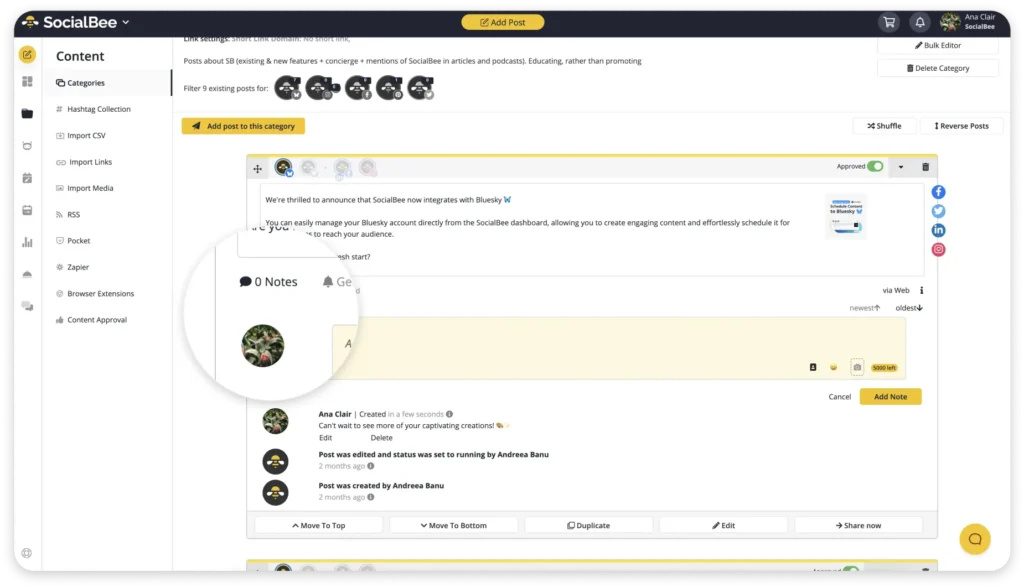
That clarity makes a huge difference. When expectations are set early and the process is visible, approvals move faster, feedback is more focused, and publishing becomes predictable instead of stressful.
2. Assign a single point of contact for feedback
Too many voices slow everything down. I’ve seen posts go through five different people, each leaving separate comments, and no one taking responsibility for the final direction.
That’s when feedback starts to conflict, and the approval process breaks.
What works better is simple. I ask the client or internal team to assign one main point of contact. That person gathers input from everyone else and sends back clear, consolidated feedback.
For client projects, I also make sure this person can actually give the final sign-off, or at least knows who can. Otherwise, you end up with someone collecting everyone’s opinions but nobody willing to make the final decision. And you’re right back to chasing approvals.
3. Create simple content guidelines, examples, frameworks, and templates
If your team keeps rewriting the same social media post over and over, the problem is usually the lack of clear brand guidelines.
Without structure, every draft turns into a discussion about tone, formatting, or small details that should already be decided.
So now, before creating content, I set clear rules.
Here’s what I include:
- Brand voice and tone. I define how the brand messaging should sound. Is it formal, casual, opinionated, or educational? This removes guesswork for every content creator, whether they work on captions, images, or the video creation process.
- Hashtag usage. I set limits and formats. For example, how many hashtags to use and whether they go in the caption or comments.
- Emoji rules. I clarify if emojis are part of the brand voice and how often they should be used.
- Link formatting. I standardize how links appear in posts so everything looks consistent across platforms.
But clear guidelines alone aren’t enough to create high-quality content. I also share examples of approved posts so the team knows what “good” looks like, along with simple caption frameworks and ready-to-use templates for recurring content like promotions, tips, or announcements.
I also keep a quick checklist for reviewing posts before they reach the client. It covers a few things that are easy to miss when you’re creating content in bulk:
- Does the caption sound like the brand?
- Does the post fit the campaign goals?
- Are the facts, dates, prices, and links correct?
- Are there any spelling or grammar mistakes?
- Do we have permission to use the images, videos, and other materials?
- Are any legal disclaimers or compliance checks needed?
I’d rather catch these things during internal review than have a client point them out after we’ve already sent everything over.
Using tools can help maintain brand standards during the content creation process. Here are a few examples:
- Grammarly for grammar, clarity, and readability
- Sharethrough for analyzing headlines
- Canva for design
- Quetext for plagiarism
- Wordtracker for keyword research
4. Define the steps your posts will go through
If your team doesn’t follow a clear sequence, your approval process will always feel chaotic.
What worked for me was defining a simple path that every social media post follows, no exceptions. Once that’s in place, no one has to ask what comes next.
Here’s the structure I use:
Idea → Draft → Review → Approval → Schedule → Publish
That’s the basic version, and it works well when you’re managing content within your own team.
With clients, though, I split the review into two parts. I don’t want clients spending their time catching mistakes that should have been fixed internally.
Here’s what that looks like:
Internal team: Idea → Draft → Internal review
Client: Client review → Revisions (if needed) → Final sign-off
Publishing: Schedule → Publish
The extra review stage doesn’t mean every post needs more people involved. It just means I know when a post is ready for the client to see, and when it’s actually approved for publishing.
If a client requests changes, the post goes back for revisions before they give the final go-ahead. Nobody has to guess whether the latest version has been approved.
Each step has a clear purpose:
- Idea: decide what the post is about
- Draft: create the caption and visuals
- Review: this is the time for quality control; collect feedback and make edits
- Approval: get final sign-off from the right person
- Schedule: assign a date to publish content
- Publish: let the post go live
This might look basic, but the clarity makes a big difference. Everyone involved knows exactly where a post is in the process and what needs to happen next once the approval notifications come through.
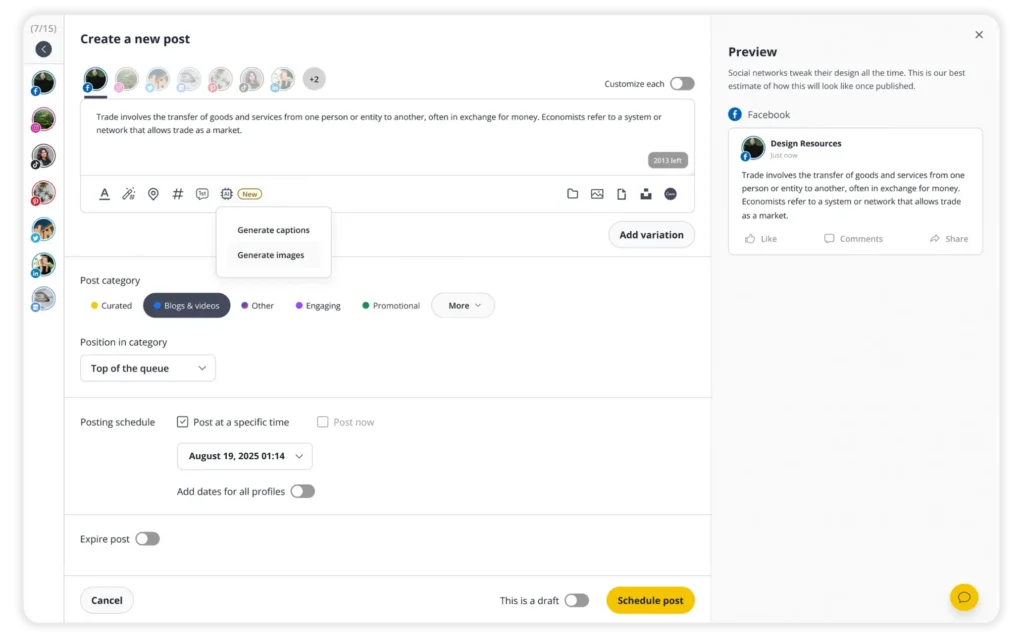
I manage all of these steps inside SocialBee.
For example, I create posts, move them through different stages, and track progress directly in the content calendar. I can see which posts are still in review, which ones are approved, and which scheduled posts are ready to go out. The post preview also helps me catch issues before publishing, so there are fewer last-minute edits.
5. Decide who is responsible for each step
A clear process only works if everyone knows their role in it. If people aren’t sure what they’re responsible for, tasks get delayed or duplicated.
To avoid confusion, I assign tasks and clear ownership to each step in the process. For example, the content creator is responsible for writing the caption and preparing the post, while the content manager oversees the entire workflow, reviews content, does version control, and handles scheduling after multiple approvals.
Not every team needs a different person for each stage. On smaller teams, the social media manager might write captions, review designs, and schedule posts. But I still like to spell out who handles what, especially when clients are involved.
Role | What they’re responsible for |
|---|---|
Content creator | Writing captions and preparing posts |
Graphic designer | Creating visuals and handling design changes |
Social media manager | Reviewing content, managing feedback, and keeping approvals on track |
Client contact | Gathering client feedback and giving or coordinating final approval |
Legal or compliance reviewer | Checking claims and disclosures when needed |
Content manager | Confirming posts are approved before scheduling |
Some roles will overlap, and plenty of posts won’t need legal review at all. What matters is knowing who’s responsible at each stage, so a post doesn’t sit there waiting for someone who didn’t even know it was their turn.
6. Approve post ideas and content pillars FIRST
Before I start drafting anything, I get post ideas approved.
This one change made a bigger difference than I expected. When I used to skip this step, I’d spend time creating content that didn’t quite fit the campaign or had to be reworked later, especially when multiple departments were involved.
Now I organize ideas first using content pillars. I group them by topic, decide what type of post fits best, and think about how each idea should show up on different platforms. That way, I’m not guessing while creating. The direction is already clear.
With clients, I like to get a quick yes on the topics and campaign direction before anyone starts writing captions or designing graphics. It’s much easier to change an idea in a draft than redo five finished posts because the client had something else in mind.
I keep everything inside SocialBee using content categories, which are essentially structured folders tied to a consistent posting schedule. Each category represents a content pillar or post type, like educational, promotional, or behind-the-scenes, and has its own predefined time slots for publishing.
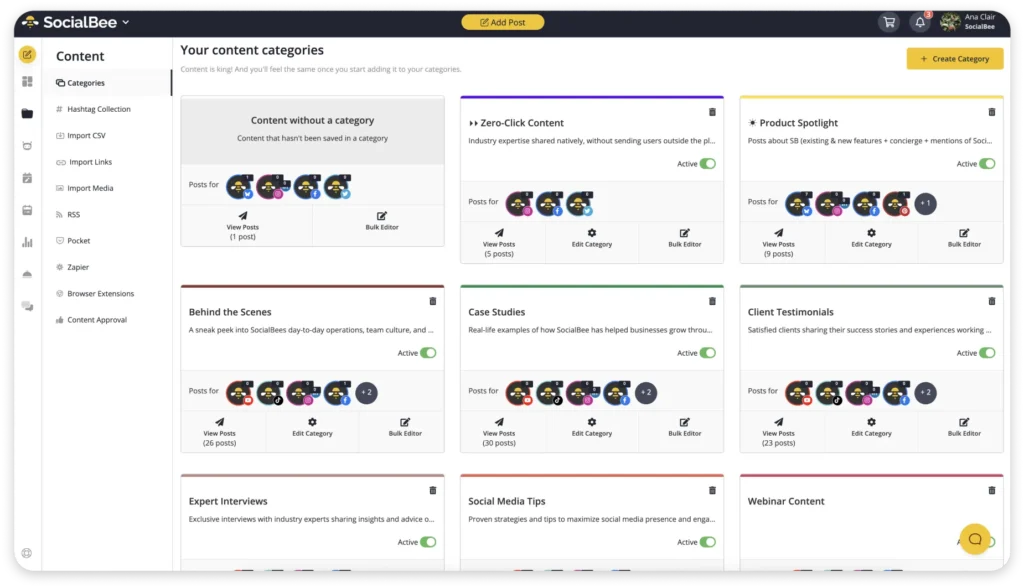
Instead of storing ideas in a Google Doc or spreadsheet, I add them directly as draft posts inside these categories. I can attach links, visuals, or reference materials to each draft so the idea is fully developed before content creation even starts.
When it’s time for review, clients or team members can go into those drafts and leave notes directly on the post. That means feedback stays connected to the idea itself, not scattered across tools.
This keeps the whole process cleaner and the review criteria clearer. I’m not starting from scratch every time, and I’m not creating posts that need to be rethought later.
7. Set clear approval deadlines
If you don’t set deadlines, posts will sit in drafts longer than they should. Without a timeframe, reviews become “I’ll get to it later,” and later usually means missed publish dates.
So I set clear expectations for how long each approval step should take. For example, I expect internal reviews within 24 hours and final approval within 48 hours. These timelines keep content moving without rushing the review process.
Of course, clients get busy, and sometimes an approval deadline comes and goes without a response.
When that happens, I send a reminder to the main client contact and make it clear which posts are waiting for their decision. If I still don’t hear back, I move the publishing date or follow whatever backup plan we agreed on.
One thing I don’t do is treat silence as approval. Unless we’ve explicitly agreed on a different arrangement, I’d rather delay a post than publish something the client hasn’t signed off on.
I apply the same rule to everyone involved, whether it’s internal team members or clients. If someone is part of the structured workflow, they also follow the deadline.
8. Create posts in batches and save them as drafts
Creating one post at a time sounds manageable, but it quickly turns into a bottleneck. I used to do this, and I was always waiting for feedback before I could move on.
Now I batch everything.
I sit down, create multiple posts in one go, and save them as drafts while they’re under review. This way, I’m not stopping and starting all day. I stay in creation mode, and approvals happen in parallel.
I do the same thing with client approvals. Instead of sending a new request every time I finish a caption, I prepare a batch for them to review together.
For example, a client can look through next week’s posts in one sitting, leave comments on anything that needs changing, and approve the rest. It’s easier for them to see how the content fits together, and I’m not interrupting their day with five separate approval requests.
In SocialBee, I simply keep posts in Draft until they’re approved, then switch them to Approved once they’re ready to go. That small status change makes it very clear where each post stands.
What I’ve noticed is that this speeds up everything. Reviewers can go through several posts at once instead of reacting to one-off requests. There’s less back and forth, fewer interruptions, and way less context switching for everyone involved.
It also keeps the content calendar healthy. You’re not scrambling to fill gaps because you always have approved posts ready to schedule.
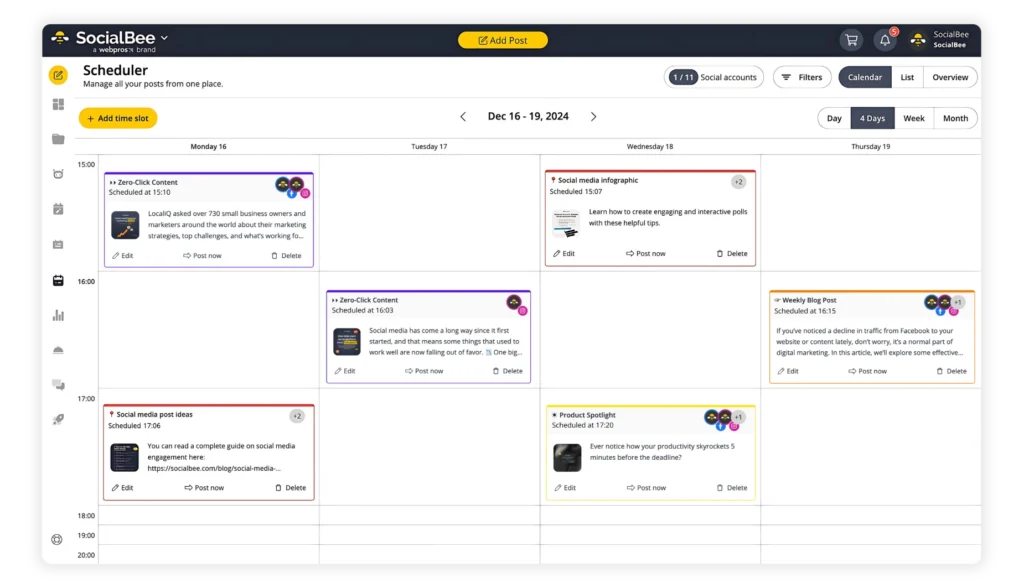
If you’re only creating posts one by one, batching is one of the easiest ways to save time without changing your entire process.
9. Review the post and leave feedback
Most approval processes fall apart because feedback gets scattered, unclear, or lost entirely.
I avoid that by keeping all feedback in one place, directly on the post.
Instead of sending comments through email or Slack, I review content inside SocialBee and leave notes right where the post is created. I can point out specific changes, suggest edits, and tag the right people using @mentions so nothing gets missed.
Everything stays attached to the post, including comments and edits. That means no digging through old messages or wondering which version is the latest. You can see the full history of feedback and changes in one place.
I also try to make feedback as specific as possible. “I don’t like this caption” doesn’t give the person writing it much to work with. “Can we make the opening less promotional and focus more on the customer’s problem?” is something they can actually act on.
The same goes for client feedback. If three people have different opinions about a post, I ask the main client contact to agree on the changes before sending them back. Otherwise, the team ends up making one revision only to undo it after someone else weighs in.
10. Approve the post when it is ready
Once the feedback is addressed, the next step is simple. Someone needs to give the final approval.
I always make sure this is handled by the right person, whether that’s a social media manager, a client, or a designated approver. This avoids confusion and makes it clear when a post is ready to move forward.
For client accounts, I make a distinction between internal approval and final client sign-off. A post might look good to everyone on my team, but that doesn’t mean it’s ready to publish. If the client has the final say, I wait for their approval before moving it out of Draft.
And if someone wants to change the caption, visual, or offer after it’s been approved, I send the updated version back for review. The approval was for the version they saw, not whatever we decide to change afterward.
In SocialBee, approving content is straightforward:
- You can switch the post from Draft to Approved directly inside the content category once everything looks good.
- If you’re working with multiple posts, you can also use the Content Approval tab to review drafts in one place and approve them in batches.
I use both depending on the situation. For quick approvals, I update the post status directly. For larger batches, I go through everything at once.
11. Schedule the posts for publishing
Once a post is approved, I don’t touch it again. That’s the goal.
Earlier in my process, scheduling was a separate step. I had to go back in, pick a time, and manually publish or double-check everything. It added unnecessary work and made it easy to miss things.
Now I set the scheduling logic upfront instead of treating it as a separate step later.
In SocialBee, I can add each post to a content category, and it will automatically follow the posting schedule assigned to that category. That covers most of my content because the schedule is already aligned with my content pillars.
If needed, I can also set a specific date and time for individual posts. This is useful for campaigns or time-sensitive content, and SocialBee even highlights the best times to post based on past performance.
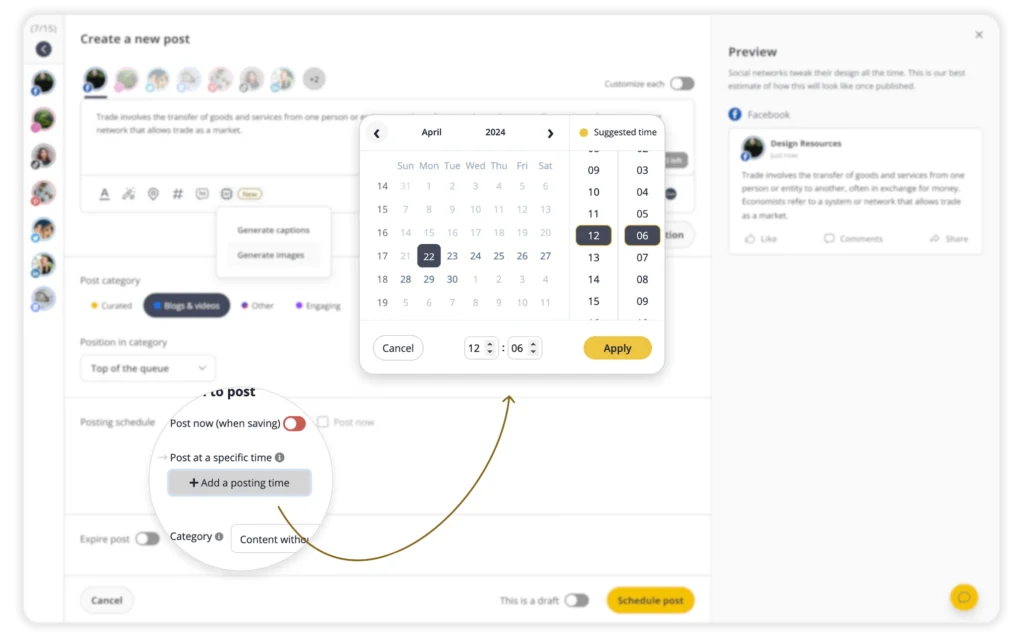
And for urgent cases, I can choose to publish immediately. As soon as the post is approved, it goes live without waiting for a scheduled slot.
Having these options makes the workflow much more flexible. I can plan content in bulk, adjust timing when needed, and still keep everything organized. I’m not going back and forth to manually schedule posts after approval, and I’m not worried about missing a publish date.
It also keeps the content calendar consistent. Whether posts follow a category schedule, a custom time, or go out immediately, everything is handled within the same workflow, so nothing slips through.
12. Handle urgent or time-sensitive posts
Not every post can wait for the full approval process. Sometimes you’re dealing with breaking news, live events, or last-minute campaigns that need to go out quickly.
This is where a simplified approval flow helps.
For urgent posts, I reduce the number of reviewers and go straight to the decision-maker. Instead of waiting for multiple rounds of feedback, I rely on direct communication to get a quick yes or a small set of edits.
There are a few checks I won’t skip, though. If I’m working with a brand in finance, healthcare, or another regulated industry, anything involving sensitive claims or required disclosures still needs the right person’s approval. A post being urgent doesn’t make a compliance mistake any less serious.
The key is to keep this process simple without skipping responsibility. You still want approval, just without the delays. Done right, urgent posts go live fast without disrupting the rest of your process.
13. Revisit and improve your approval workflow
Even the best approval process needs continuous improvement over time.
What works for a small team might break once you add more people. New clients, new campaigns, or changes in team size can all introduce friction.
So I make it a habit to review my workflow regularly.
I look for things like:
- Where posts are getting stuck
- Whether roles are overlapping
- If the same issues keep coming up during approvals
- How long posts typically wait for approval
- How many rounds of revisions each post needs
- How often approval deadlines are missed, and whether it’s usually at the same stage
When I notice patterns, I adjust. Sometimes it’s shortening deadlines. Other times it’s removing unnecessary approval steps or redefining who is responsible for what.
For example, if client approval consistently takes four days when we’ve agreed on two, I know we need to revisit the timeline or the way we’re requesting feedback. And if most posts go through three or four rounds of revisions, I look at whether the original brief was clear enough.
I’d rather fix the reason posts keep getting delayed than spend another month sending reminders.
I also ask for feedback from both team members and clients. They’re the ones using the process daily, so they usually spot inefficiencies faster than I do.
Keeping the workflow flexible is what makes it sustainable. The goal is to keep improving your system as your team evolves.
14. Analyze performance and align the team on strategy
A smooth approval process is only useful if the content performs.
That’s why I always connect my workflow back to results in my marketing strategy.
I regularly review performance data to understand what’s working and what needs to change. I focus on metrics like engagement, reach, clicks, and conversions, depending on the platform and goals.
Inside SocialBee’s Analytics dashboard, I can track how posts perform across channels and use that data to guide future decisions. Instead of guessing, I adjust based on real results.
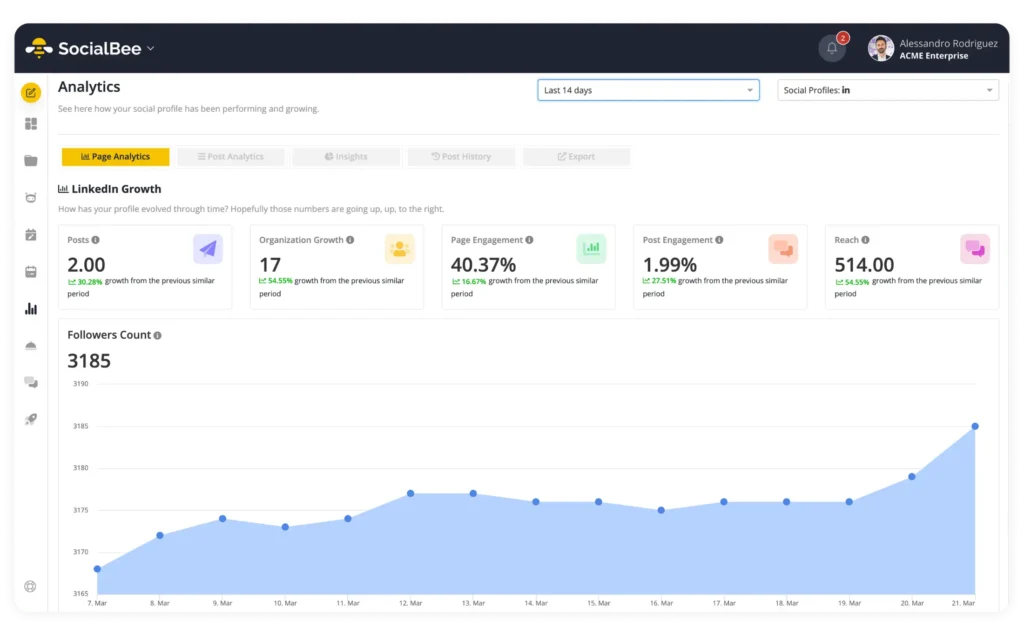
I also make time to align with the team.
Since we all work on a unified platform, we can review what performed well, identify patterns, and adjust content pillars or post formats if needed. This keeps both internal team members and clients on the same page and avoids repeating the same mistakes.
What to look for in social media approval software
Not every social media approval tool will make your job easier. Some let you collect feedback but leave you to handle scheduling elsewhere. Others have so many approval stages and settings that reviewing a simple Instagram post becomes more complicated than it needs to be.
When comparing tools, I’d pay attention to a few things:
- How easy is it for clients to review posts? If they need a 30-minute walkthrough just to approve a caption, chances are they’ll go back to emailing you.
- Can you keep feedback attached to each post? You want to know exactly which caption or visual a comment refers to, especially when you’re reviewing several posts at once.
- Can you control who sees and approves what? Clients shouldn’t have access to other clients’ content, and not everyone on your team needs permission to publish.
- Can you tell which version was approved? Look for a clear record of comments, changes, and approval decisions. It’s particularly useful when someone requests an edit after giving the go-ahead.
- What happens after approval? Ideally, the approved post goes straight into your publishing schedule. Having to download visuals and copy captions into another tool defeats much of the point.
I’d also check whether the software supports the way your team actually works. If you only have one person reviewing content, you probably don’t need a complicated multi-level approval system. But if every campaign goes through a marketing manager, a client, and sometimes a legal team, those extra controls might be worth having.
How to manage social media client approvals without email using SocialBee
If you’ve ever tried to get a week’s worth of content approved through email, you know how messy it can get. One client replies to an old version, another sends feedback in a separate thread, and suddenly you’re trying to figure out which posts are actually ready to publish.
That’s why I prefer keeping the entire social media client approval process in SocialBee. I can prepare posts, collect feedback, get approvals, and schedule content without jumping between emails, spreadsheets, and other tools.
Here’s how I set it up:
- Create a separate Workspace for each client. This keeps their content, drafts, approvals, and analytics organized. I can also give clients access to their own Workspace with the appropriate permissions, so they can review content without getting involved in everything else I’m managing.
- Set up Content Categories based on your content pillars. I usually create categories for educational posts, promotions, behind-the-scenes content, and other recurring topics. This keeps posts organized and makes it easier for clients to understand what they’re reviewing.
- Create content in batches. Instead of sending clients individual posts throughout the week, I prepare captions, visuals, and videos in advance. That way, they can review several posts at once and see how everything fits into the content calendar.
- Save posts as Drafts and collect feedback in SocialBee. Team members and clients can leave notes and comments directly on posts, and I can use @mentions to bring the right people into the conversation. If something needs changing, the feedback is right there with the content, not buried in an email thread.
- Move posts from Draft to Approved once everyone has signed off. I handle internal reviews first, then get the client’s final approval when needed. Once a post is ready, I can change its status directly or use SocialBee’s Content Approval tab to review and approve multiple posts at once. Approved posts can then follow the schedule I’ve already set up for their categories.
- Customize posts for each platform. I can adjust captions, visuals, and other details for different social networks without creating everything from scratch. I also make sure the client reviews the platform-specific versions they’ll actually be publishing.
- Track performance with SocialBee’s analytics. Once the posts go live, I check what’s getting engagement, clicks, and reach. I can then use those results when discussing future content ideas with clients, instead of relying on personal preferences alone.
- Keep at least two weeks of content approved and scheduled. This gives clients enough time to review upcoming posts without feeling rushed. It also means I’m not chasing last-minute approvals every time something needs to go live.
The biggest difference for me is knowing exactly where everything stands. If a client requests a change, I know which post they’re talking about. If something is still waiting for approval, I can see that too.
And once the content is approved, I don’t have to move it into another tool just to schedule it. It’s already where it needs to be.
Frequently asked questions
1. What is the best social media approval workflow for agencies?
For agencies, the most practical setup is a two-stage approval workflow: the internal team checks captions, visuals, and campaign details first, then the client reviews the finished posts and gives final sign-off. This keeps clients from having to catch basic mistakes and makes it easier to manage several accounts without mixing up feedback or approvals.
2. What is the difference between a social media approval workflow and a content approval workflow?
A content approval workflow can cover anything from blog posts and newsletters to website copy. A social media approval workflow focuses on posts for social platforms, where reviewers also need to check visuals, platform-specific captions, publishing dates, and campaign timing. Both follow the same basic review principles, but social media approvals are closely tied to the publishing schedule.
3. Can you use a client review link for social media approvals?
Yes, some social media approval tools let you send clients a review link so they can see posts, request changes, and approve content without creating an account. Others use shared workspaces with individual access permissions. The right option depends on whether your clients prefer quick, occasional reviews or need to collaborate regularly.
4. What features should social media approval software have?
Look for draft management, post-specific comments, approval statuses, client permissions, and scheduling. If several people need to review content, check whether the tool supports multiple approval stages and keeps a record of feedback and decisions. For agencies, separate client workspaces are particularly useful for keeping accounts organized.
Simplify your social media approval process with SocialBee
If your approval process feels messy, the issue is usually the setup. Too many tools, unclear steps, and no single place where content actually gets approved.
I ran into this when everything lived in different places. Drafts in one tool, feedback in another, approvals somewhere else. Every post required extra effort just to figure out what was going on.
What helped was building a social media process I could follow without stopping to think. Clear steps, clear roles, and a single place where everything happens.
That’s how I use SocialBee now. I create content, collect feedback, approve posts, and schedule everything from the same workspace. I can see which posts are still in review, which ones are approved, and what’s already scheduled without checking multiple tools.
If your current approval structure feels scattered, start by simplifying the steps and bringing everything into one system. And if you want to set this up without rebuilding your process from scratch, you can start your 14-day free trial of SocialBee and see how it works for your team.