

A lot of architects still treat social media like an online portfolio.
They post a few completed projects, disappear for weeks, then wonder why other architects are getting more visibility, site visits, and new clients online.
The difference usually isn’t better work. It’s knowing how to build a social media presence that actually keeps the right audience engaged.
Social media for architects isn’t just a way to show off their skills. It’s one of the best channels to get clients and growth opportunities.
While industry awards and publications in fancy magazines can bring you some visibility, they rarely convert into actual projects. So, if you want to have a constant flow of inquiries from people who actually appreciate your style, you have to learn how social media works. And the good news is that you’re in the right place for that.
In this practical guide, I’ll share how successful architecture firms use social media platforms like Instagram, LinkedIn, Facebook, and TikTok to build awareness, attract new clients, and turn social content into real business opportunities.

Why is social media important for architects?
A lot of talented architects struggle with visibility, not skill.
You can design incredible spaces, have years of experience, and still lose projects to architecture firms with a stronger social media presence. Why? Because people trust what they constantly see.
That’s exactly why social media marketing for architects matters so much today. Clients want to see your process, your ideas, your site visits, your personality, and the way you think before they ever reach out.
Being active on social media platforms helps architects build credibility, stay top of mind, and attract the right audience without relying only on referrals or word of mouth.
Here’s why social media makes such a big difference for architects:
- Access to a huge audience: There are over 6 billion internet users, and around 94% use social media every month. That gives architecture firms direct access to potential new clients, general contractors, collaborators, and even job opportunities.
- Organic promotion: Good social content can keep working long after you post it. One Instagram Reel, LinkedIn post, or project video can reach thousands of people without spending money on ads.
- Credibility and trust: People connect with people. Sharing completed projects, behind-the-scenes stories, materials, and even challenges helps your audience engage with your work on a more human level.
What social media platforms can architects use?
Pretty much all of them.
A lot of architects spend too much time trying to figure out the “best” platform when the real goal should simply be building a consistent social media presence where their ideal client already spends time.
Still, some social media platforms naturally work better for architecture because they’re more visual or community-driven.
Here are the main platforms architects should focus on:
- Instagram for visual content, project updates, Instagram Reels, and Stories
- LinkedIn for professional networking and industry conversations
- Pinterest for visual inspiration and website traffic
- YouTube for long-form videos, home tours, and storytelling
- TikTok for short videos and more casual content
You don’t have to be active on every single platform. Most practices see better results when they focus on one or two social media channels they can manage consistently instead of trying to post everywhere at once.
Instagram for visual content, project updates, Instagram Reels, and Stories
If there’s one platform that naturally fits architecture, it’s Instagram.
People already use it for visually stunning content, aesthetics, interiors, materials, and design ideas, so architectural content feels right at home there. For architects, it’s one of the easiest ways to build a strong social media presence and attract new clients without making content feel overly “marketing-focused.”
You also don’t need to treat Instagram like a polished portfolio all the time. The accounts that usually perform best mix beautiful visuals with more human content that people can actually connect with.
Best content formats:
- Instagram carousels to showcase completed projects, concepts, or before-and-afters
- Instagram Reels showing site visits, your process, mistakes, or behind-the-scenes moments
- Instagram Stories to create more casual conversations and keep your audience engaged
Where it fits in the funnel:
Instagram works across all stages of the funnel. Reels and discoverable posts help with awareness, while Stories, project breakdowns, and DMs help move people toward inquiries and conversations.
Instagram for architects is a place where you can share:
- Your life as an architect
- Project progress and updates
- Design challenges and solutions
- Thoughts on trends in architecture
- Materials, sketches, and inspiration
- Different content that shows the personality behind the firm
- User-generated content from happy customers
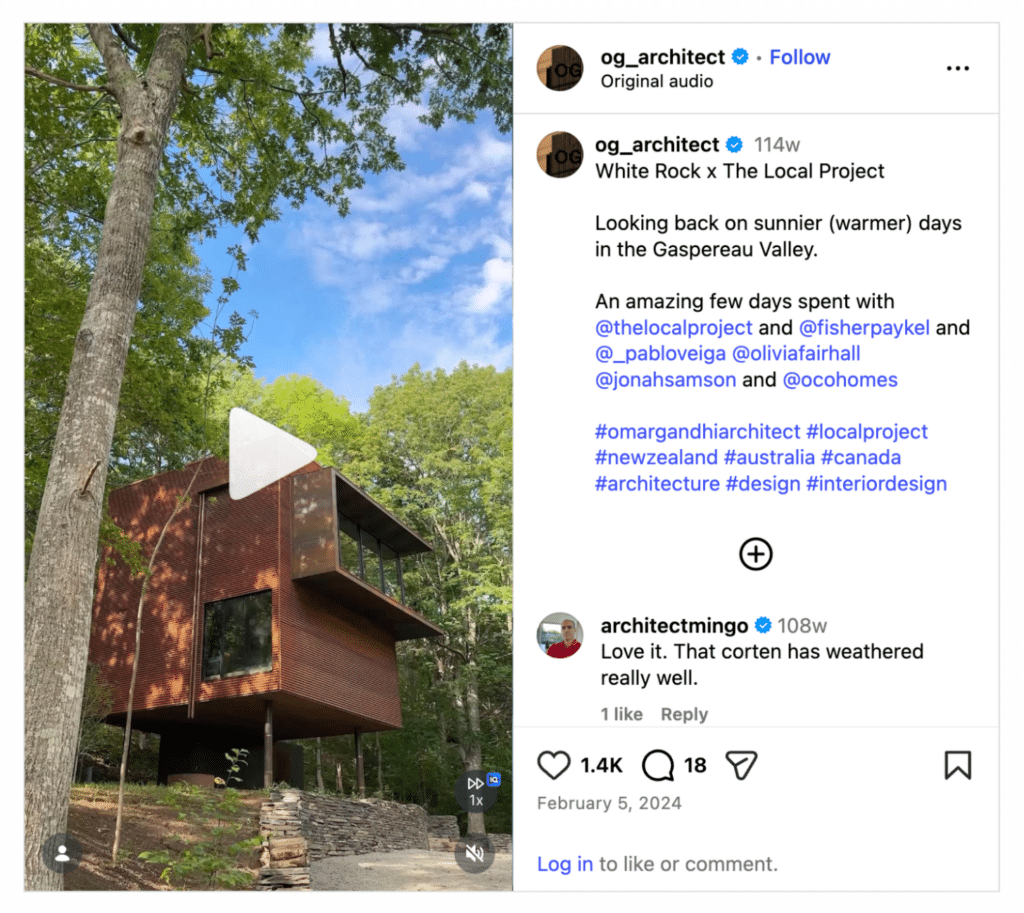
The example below works well because it doesn’t feel overly produced or corporate. It’s simply a short video showing a completed project in a natural way, combined with a personal caption about the experience behind it.
Source: Instagram
That’s the kind of social content people actually stop scrolling for. It feels real, visually pleasing, and easy to watch. You immediately understand the atmosphere of the project without needing a long explanation.
LinkedIn for professional networking and industry conversations
A lot of architects underestimate LinkedIn.
They either ignore it completely or use it like a digital CV filled with corporate updates nobody really interacts with. But LinkedIn can actually become one of the best social media platforms for attracting the right audience, building credibility, and starting conversations that lead to real opportunities.
Unlike Instagram, where visuals usually do the heavy lifting, LinkedIn is more about perspective. People want to see how you think, what you’ve learned, and what happens behind the scenes of your projects and business.
Best content formats
- LinkedIn posts about completed projects, lessons, or challenges
- Videos explaining the bigger picture behind your work
- Posts that spark conversations around architecture industry insights, materials, cities, or design trends
- Snippets from industry events
- Shoutouts to collaborators, clients, or general contractors
Where it fits in the funnel:
LinkedIn works especially well for the consideration and decision stages because it helps architects build trust and show expertise. But being active on other people’s posts also increases your visibility and awareness over time.
LinkedIn for architects isn’t really about showing off. The best-performing posts usually feel personal, thoughtful, or conversational.
Simple ideas work surprisingly well:
- “This project completely changed how I think about small spaces.”
- “A client asked us for something unusual, and here’s what happened.”
- “I saw this idea from another architect, and it made me rethink our approach.”
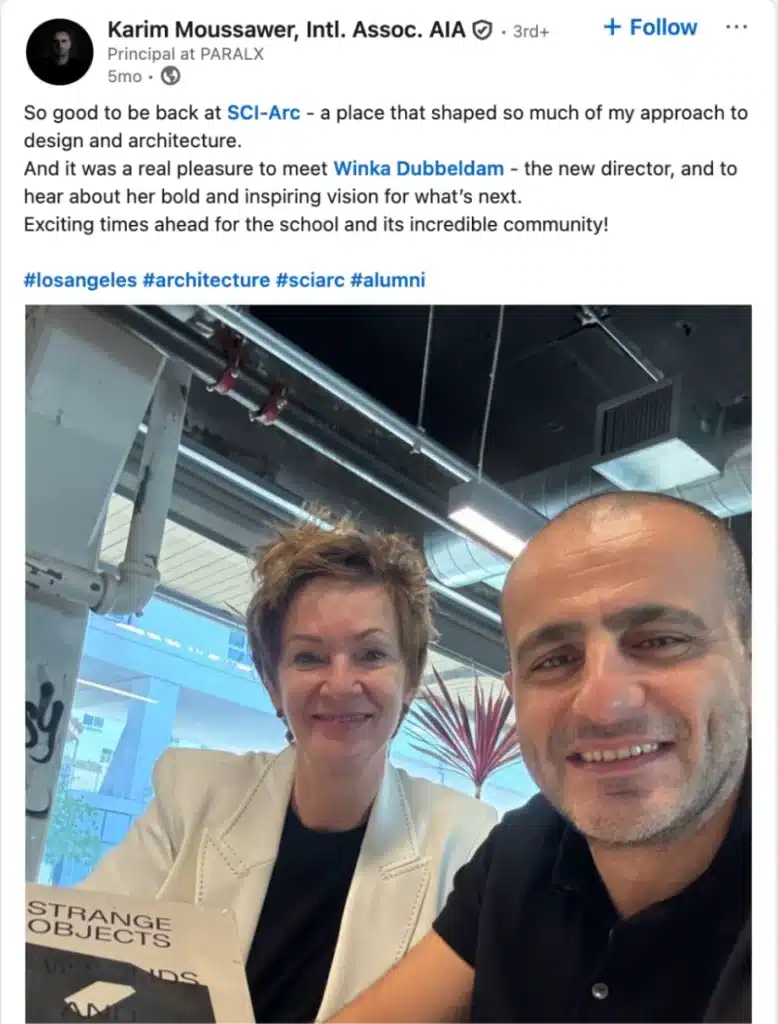
The example below works because it feels natural. It’s not trying too hard to sound “professional” or overly polished. It’s just someone sharing a real moment from their work, tagging the people involved, and adding a bit of context behind it.
Source: LinkedIn
That’s usually the type of LinkedIn content people respond to most. Not perfect corporate updates, but posts that actually sound like a person wrote them.
And honestly, you probably don’t need LinkedIn Premium either. For most architects, simply posting consistently, interacting with other architects, and staying active in conversations is more than enough.
Pinterest for visual inspiration and website traffic
Pinterest is probably one of the most underrated social platforms for architects.
A lot of people still see it as a moodboard app, but it can actually become a really solid traffic source for your business. Unlike other platforms where posts disappear after a few days, Pinterest content can keep bringing clicks, saves, and engagement for months.
And because architecture is already so visual, the platform fits naturally into a good social media strategy.
Best content formats:
- Project photos with aesthetic details
- Before-and-after transformations
- Short videos and walkthroughs
- Renders and visual concepts
- Design compilations and material inspiration
Where it fits in the funnel:
Pinterest works best at the awareness stage. It helps architects reach the right audience, grow their social media presence, and drive people toward their website, services, or other platforms.
The best thing about Pinterest is that people are actively searching there for ideas. They’re already looking for interiors, materials, layouts, architecture trends, and inspiration for future projects.
So instead of trying to “go viral,” focus on creating social content people actually want to save.
Some great examples of Pinterest content for architects include:
- Completed projects with multiple angles
- Before-and-after visuals
- Site visits and process photos
- Design sketches and concepts
- Instagram Reels repurposed into vertical pins
- Material palettes and styling ideas
People save content like this because it helps them visualize ideas for their own spaces. A clean interior, a smart layout, or a material combination can easily end up in someone’s “dream home” board. For architects, that creates long-term visibility and puts your work in front of people who are already planning future projects.
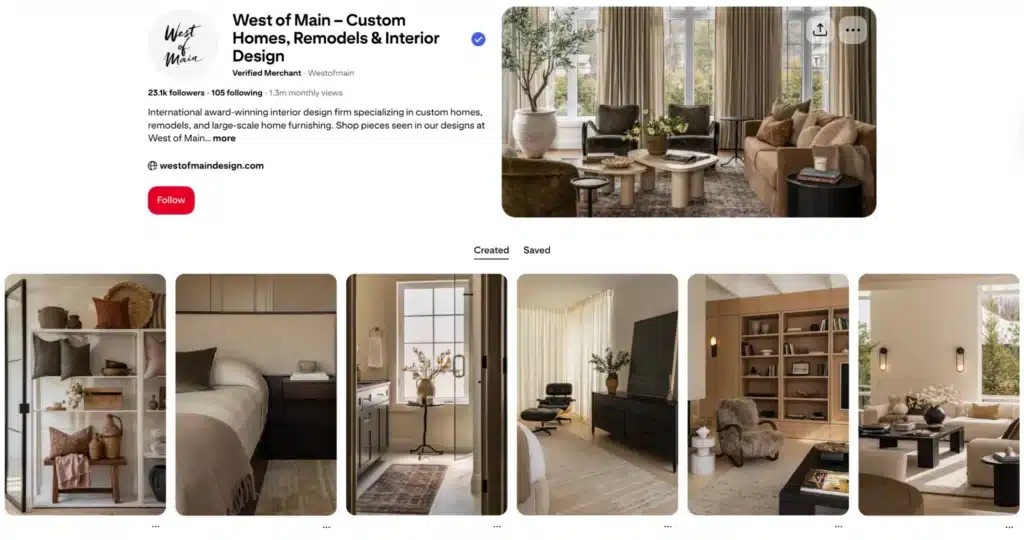
Also, don’t forget to optimize your company page properly. Add your website, contact details, services, and links to your other social media channels. Small practices, especially, can benefit from Pinterest because good content there keeps working long after you post it.
TikTok for short videos and more casual content
TikTok works really well for architects who don’t want their social media to feel overly polished or corporate.
Unlike Instagram or LinkedIn, the platform rewards personality, opinions, humor, and everyday moments just as much as beautiful projects. That’s why even simple short videos can get strong engagement there.
Best content formats:
- Short videos from site visits
- Funny or relatable moments from the process
- Before-and-after transformations
- Project walkthroughs
- Quick architecture opinions or reactions to trends
- Day-in-the-life content
Where it fits in the funnel:
TikTok is great for awareness and building a stronger social media presence. It helps architects reach new audiences quickly and keeps your content discoverable for longer.
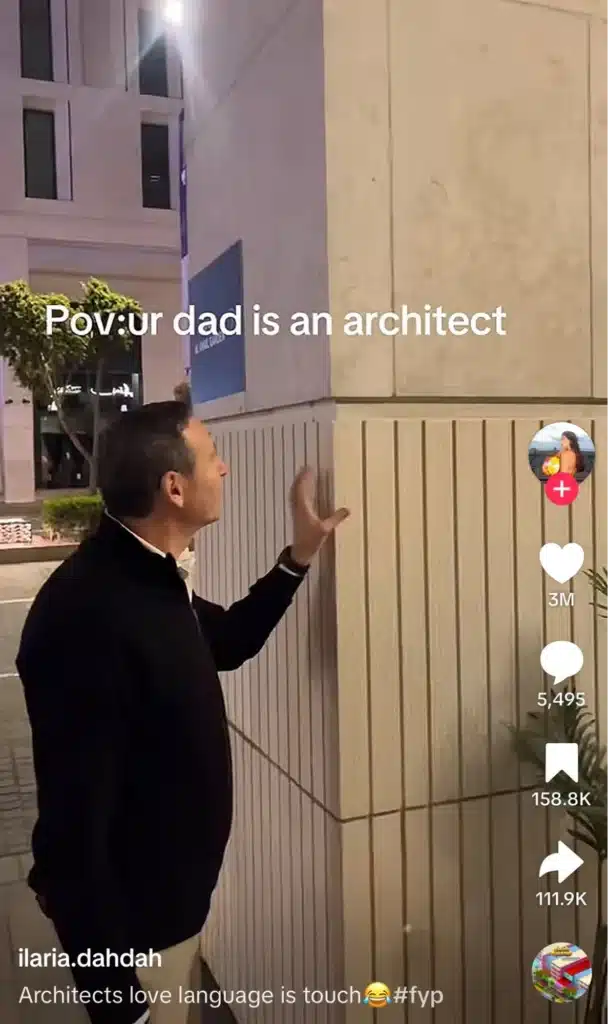
This type of content works because it’s relatable beyond the architecture niche itself. Even people outside the industry understand the joke, which makes the video easier to share and engage with.
That’s what TikTok usually rewards most: content that feels natural, entertaining, and easy to consume in a few seconds.
Source: TikTok
And that’s also where many architects and small practices get stuck. They treat TikTok like a polished portfolio instead of a social platform built around personality and quick interaction.
You don’t always have to post completed projects or perfectly edited videos. Casual moments, site visits, opinions on trends, or small behind-the-scenes clips from the process often perform much better because they feel more human.
YouTube for long-form videos, home tours, and storytelling
YouTube takes more effort than most social media platforms, but it can also build a much stronger connection with your audience.
Unlike short-form social content, YouTube gives architects space to actually talk through their ideas, explain their process, and show the thinking behind projects in a deeper way. That’s what makes it such a strong platform for building trust and a recognizable personal brand.
Best content formats:
- Home tours and walkthrough videos
- Project breakdowns and behind-the-scenes content
- Videos explaining design decisions or materials
- Day-in-the-life content and site visits
- Videos with personal opinions or commentary on architecture trends
Where it fits in the funnel:
YouTube can support your entire social media strategy, from awareness to conversion. Some videos bring in new people through search, while others help potential clients better understand your work, your firm, and your approach.
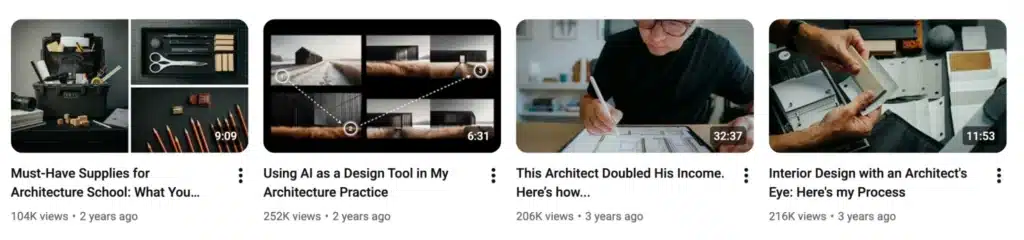
When it comes to architecture content on YouTube, there are usually three directions creators take:
- Educational videos made mainly for other architects
- Entertainment-focused content for broader audiences
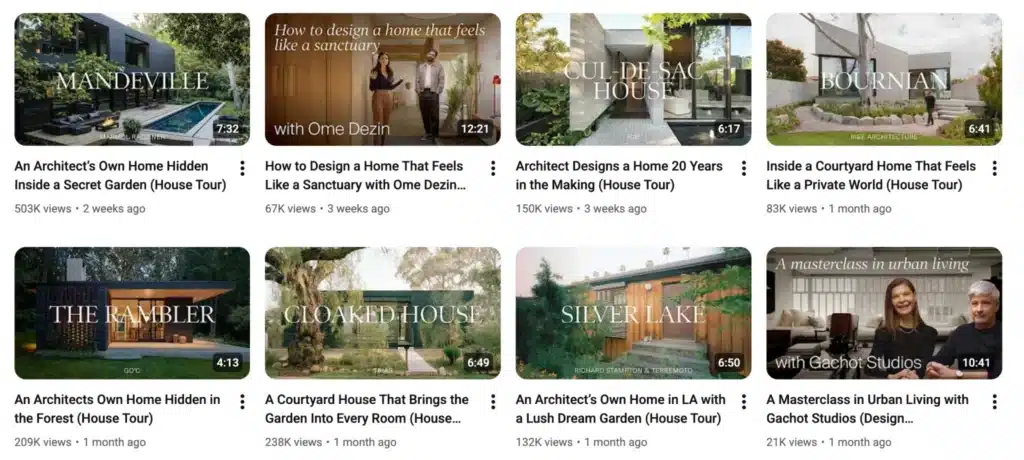
- Visually driven home tours and project storytelling
Source: YouTube
All three can work depending on your business goals, but the third format is usually the strongest if your goal is attracting clients.
People love seeing how spaces come together. And they don’t always need a perfectly polished production either. Simple walkthroughs, commentary during site visits, or videos explaining small details in a project can keep an audience engaged surprisingly well.
The home tour examples below work because they combine visual inspiration with storytelling. You’re not just looking at a beautiful house. You’re being guided through the thinking behind it, the feeling of the space, and the decisions that shaped the final result.
Source: YouTube
That’s what makes YouTube different from faster social platforms like TikTok or Instagram Reels. People stay longer because they want context, personality, and a story.
And while monetization exists, most architects shouldn’t approach YouTube like full-time creators. The real value usually comes from building trust, growing your firm’s social media presence, and helping the target audience discover your work over time.
What social media content works best for architects?
One of the biggest mistakes architects make on social media is thinking they constantly need completely new ideas.
In reality, most successful architects and firms repeat the same few content formats over and over again, just adapted to different projects, situations, and audiences.
And that’s actually what makes content creation easier long term. Once you find formats that work for your audience, posting consistently becomes much less overwhelming.
Some of the best-performing social media content for architects includes:
- Project visuals and case studies
- Behind-the-scenes content
- Short videos and educational posts
- Personal brand building posts
- Before-and-after content
1. Project visuals and case studies
If you want social media to actually help your architecture business, you need to show your projects.
That’s what helps people imagine working with you. A beautiful space instantly creates a reaction like, “I want something like this too.”
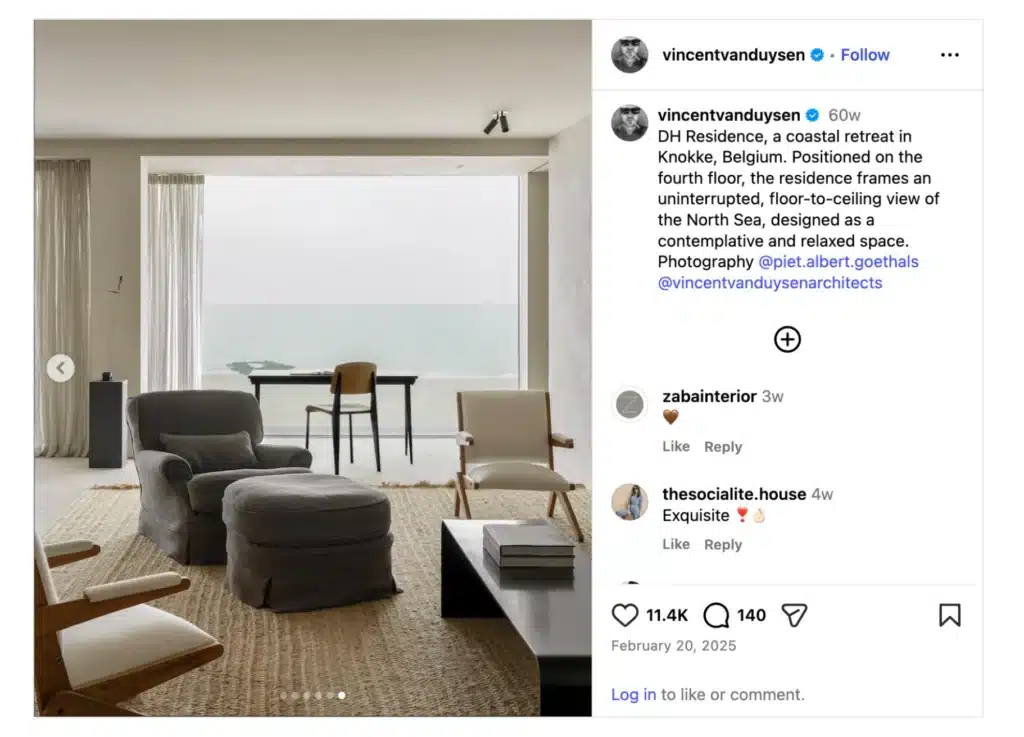
A lot of architects keep it simple and post a carousel with a few project photos and a short description, just like in the Instagram example below. And to be fair, this format still works really well because the visuals immediately grab attention.
Source: Instagram
But you can usually get much more out of one project by turning it into multiple pieces of content instead of posting it only once.
For example:
- An overview of the project and the client’s goals.
- A case study explaining materials, challenges, or decisions.
- Before-and-after content.
- Progress updates and site visits.
- Short videos explaining the process behind specific design choices.
The post below works because it feels clean, calm, and aspirational. You instantly understand the atmosphere of the space without needing a huge explanation. And that’s exactly what good architecture content should do: make people imagine themselves there.
At the same time, the caption still adds context around the project, location, and overall concept, which helps turn beautiful visuals into something more memorable.
This is also a good reminder that project posts don’t always need complicated storytelling or trendy editing. Sometimes strong visuals, a clear concept, and consistent posting are enough to build trust and attract the right audience over time.
2. Behind-the-scenes content
Behind-the-scenes content is one of the easiest ways to make architecture content feel more human.
A lot of polished architecture accounts only show the final reveal, but people are usually just as interested in everything happening before that point: sketches, renders, site visits, construction progress, material choices, mistakes, and small daily moments from the process.
And the good news is that this type of content usually doesn’t require a huge production effort.
You can turn it into a recurring series like:
- “Week 1 of renovating this holiday home.”
- “Today’s site visits.”
- “What we’re working on this week.”
- “Things people don’t see behind an architecture project.”
Or you can simply film random moments whenever you remember to.
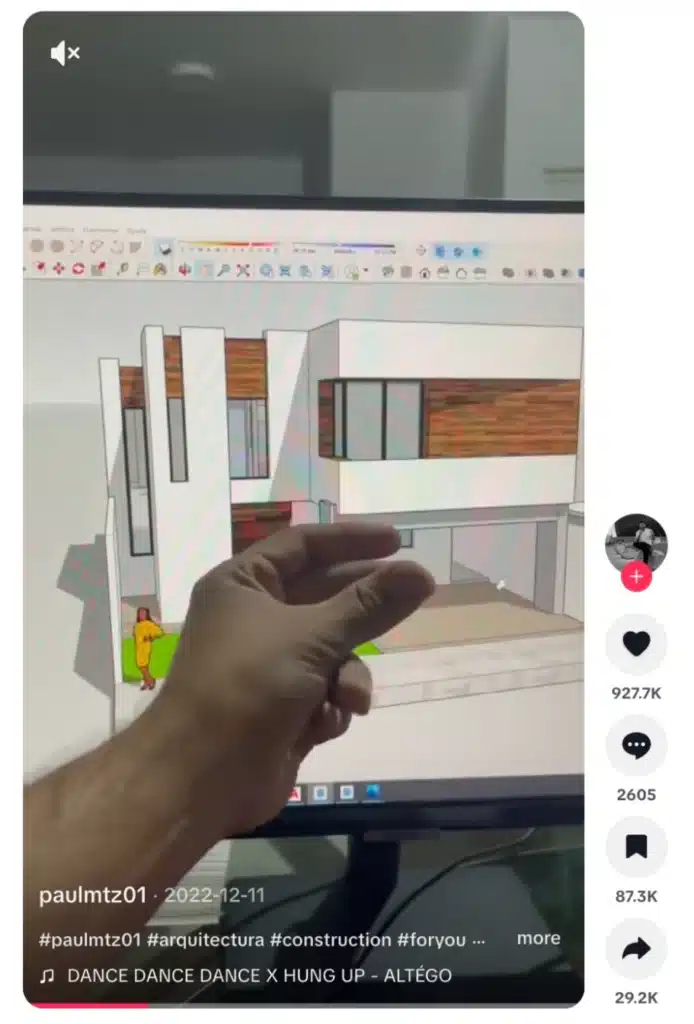
The TikTok example below is a good reminder that behind-the-scenes content doesn’t have to be complicated. It’s just quick clips from the design process with minimal editing, but it still works because it feels real and visually satisfying to watch.
Source: TikTok
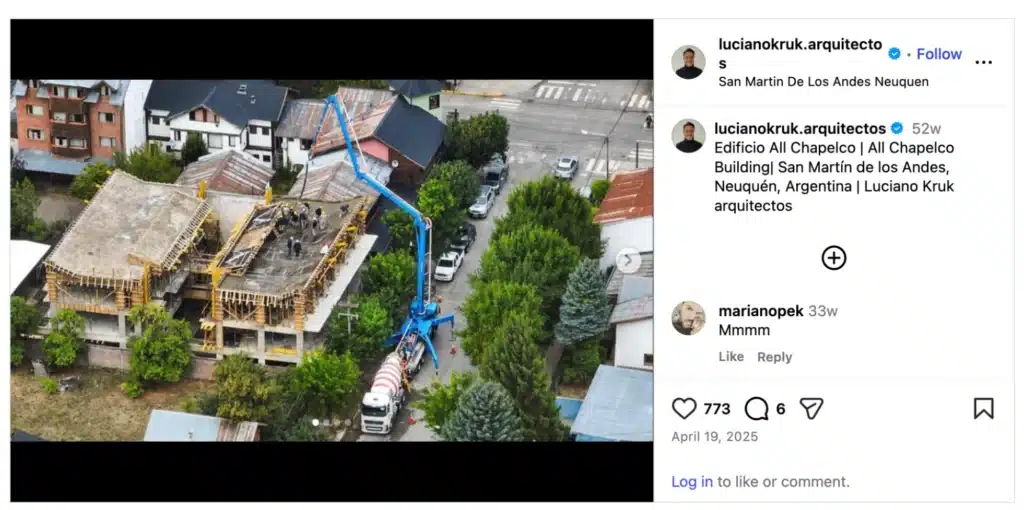
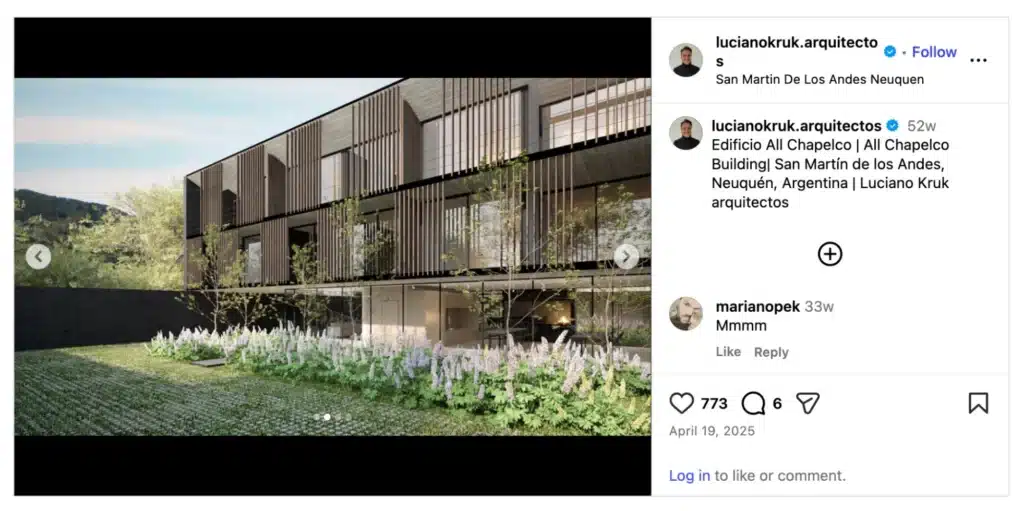
I really like this Instagram carousel because it mixes construction progress photos with final renders of the project. You instantly understand the vision behind the space and where the project is heading.
Source: Instagram
And this format is actually very practical for architects because you already have most of the content ready:
- Renders
- Progress photos
- Site visit pictures
- Material samples
- Work-in-progress visuals
You’re simply turning things you already create during projects into social content.
Not every behind-the-scenes post will go viral, especially when your audience is still small. But over time, this type of content helps build trust because people start seeing the thought, effort, and process behind your work instead of only the polished final result.
3. Short videos and educational posts
Educational content works really well for architects, especially when it’s simple and easy to follow.
And no, this doesn’t mean you have to create highly technical videos made only for other architects. The best educational content is usually the kind that helps regular people understand design decisions, spaces, materials, or the thinking behind a project.
That’s why short videos with voiceovers work so well on social media platforms like Instagram and TikTok.
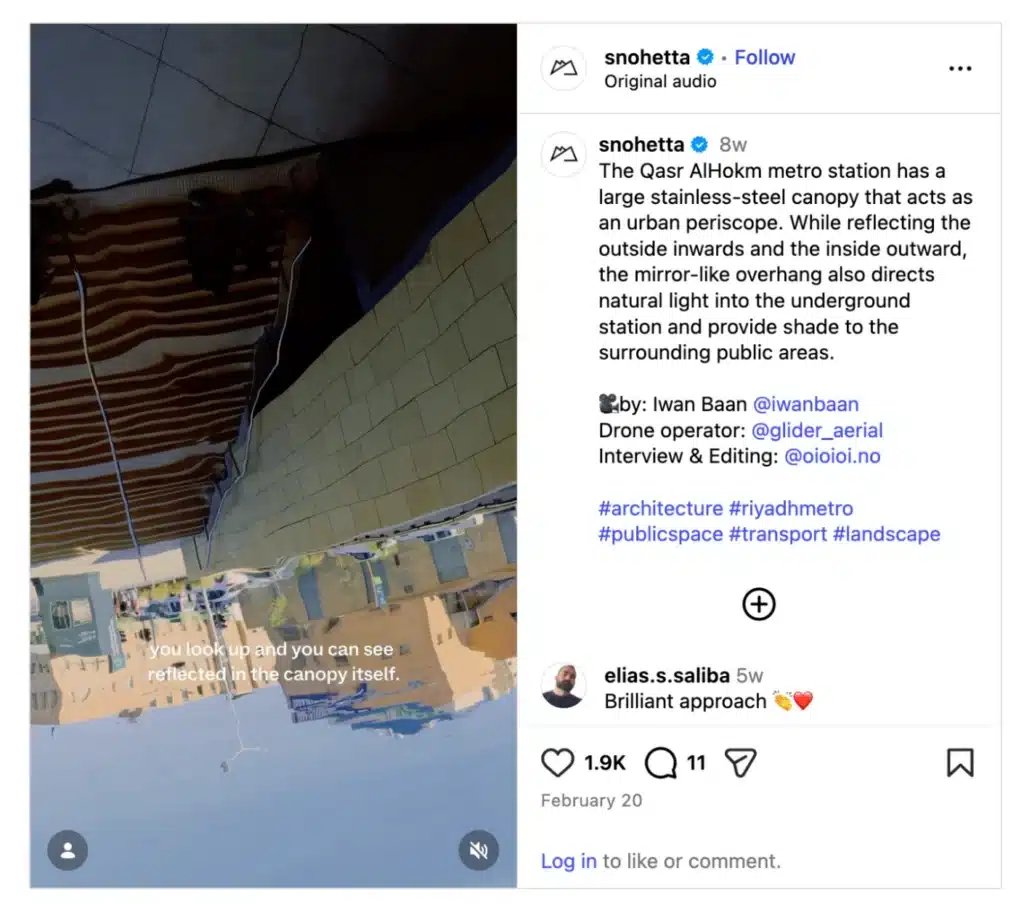
What makes this Reel interesting is that it combines storytelling with visuals. You’re not just looking at the architecture, you’re also understanding the reasoning behind it.
Source: Instagram
What makes this format work is that it turns architecture into a story people can follow instead of just another beautiful visual.
And the same approach works even for smaller projects.
You don’t need a huge public building or complex concept to create educational content. A small apartment renovation, a clever storage solution, or a simple layout change can become an interesting post if you explain the reasoning behind it clearly.
People love understanding why certain design choices were made. That’s what keeps audiences engaged and makes educational posts feel interesting instead of overly technical.
This type of content also helps position you as an expert naturally because you’re teaching people something while showing your projects at the same time.
A simple voiceover, a few short videos from the process, and clear explanations are usually more than enough.
4. Personal brand building posts
A lot of architects only post finished projects.
And while that’s a good start, it usually isn’t enough to build a memorable social media presence anymore. People connect much faster when they can see the person behind the work, not just the final result.
That’s why personal-brand-style content works so well on social media for architects.
You don’t have to become an influencer or share your entire private life either. Even small moments from your working day can make your content feel more relatable:
- Talking through a project during site visits
- Sharing your thoughts on architecture trends
- Filming your daily process
- Posting short videos with voiceovers
- Showing what your day actually looks like behind the scenes
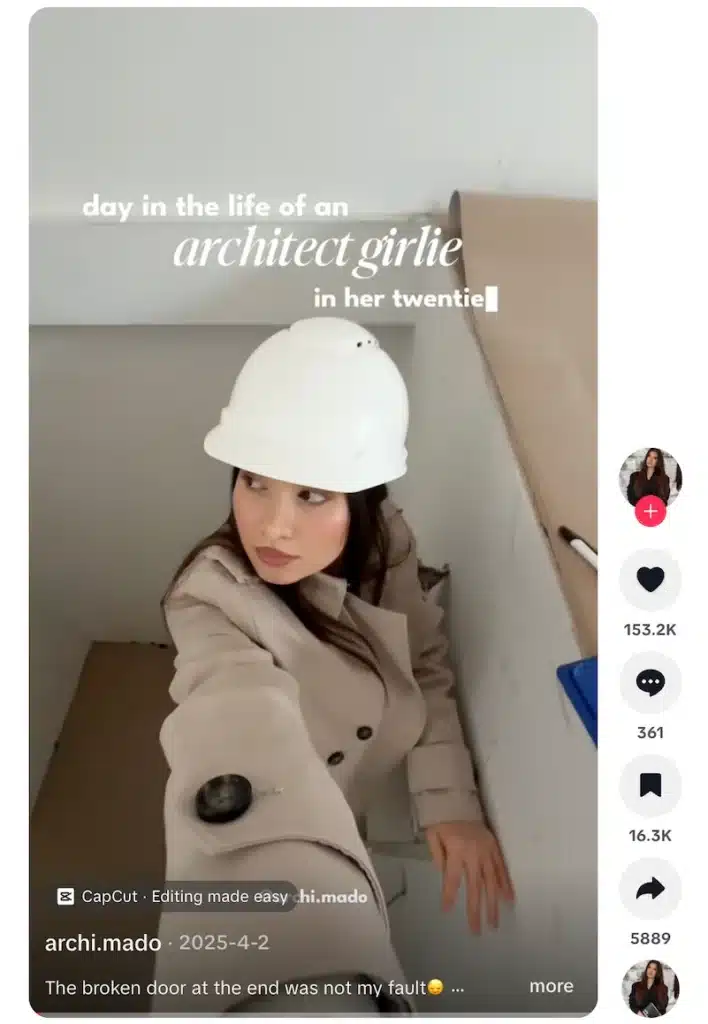
The creator in this TikTok keeps it very simple. She’s just showing small moments from her day as an architect, without overediting everything or turning it into a highly polished production.
Source: TikTok
A lot of architects hold back from posting this kind of content because they feel like they need more experience, awards, or recognition first. But social media doesn’t really work that way.
People rarely follow someone just because they have impressive credentials. They follow creators, businesses, and architects whose content feels interesting, consistent, or relatable.
Start filming small moments during your workday. You can create “day in the life” videos, talk about your process, react to trends in architecture, or share opinions and lessons from projects. The key is consistency, not perfection.
5. Before-and-after content
Before-and-after content works for a reason: people love seeing transformation.
And for architects, it’s one of the easiest types of social content to make because the contrast already tells the story for you. Even simple posts comparing an old space with the final result can get strong engagement across social media platforms.
You also don’t need complicated editing or dramatic transitions for this format to work.
Sometimes filming the “before” and “after” from the exact same spot is enough. The visual difference alone keeps people watching.
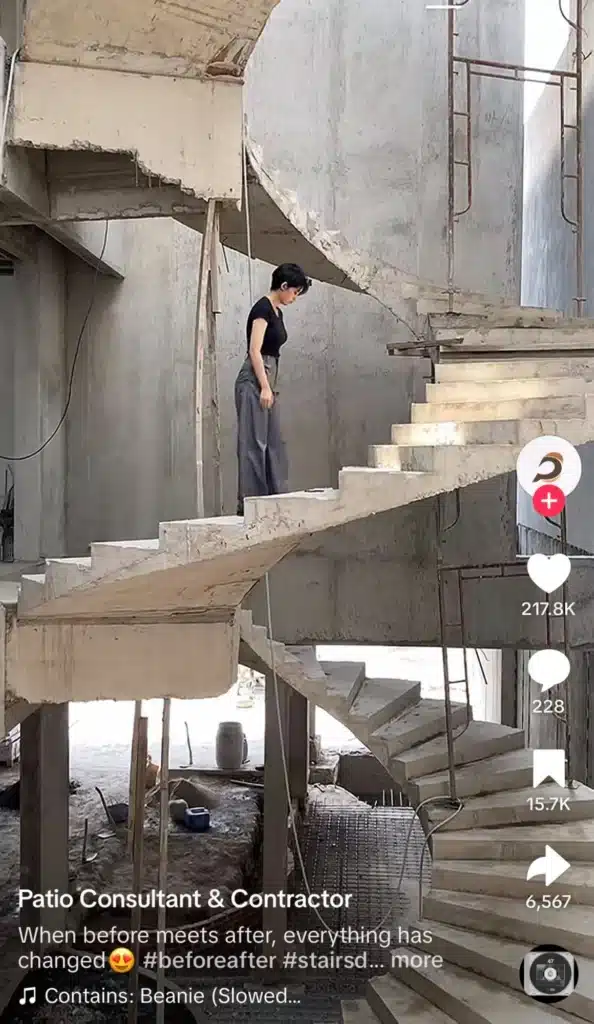
The TikTok example below works because the transformation feels massive. You instantly want to see how the unfinished structure turns into a finished architectural space.
Source: TikTok
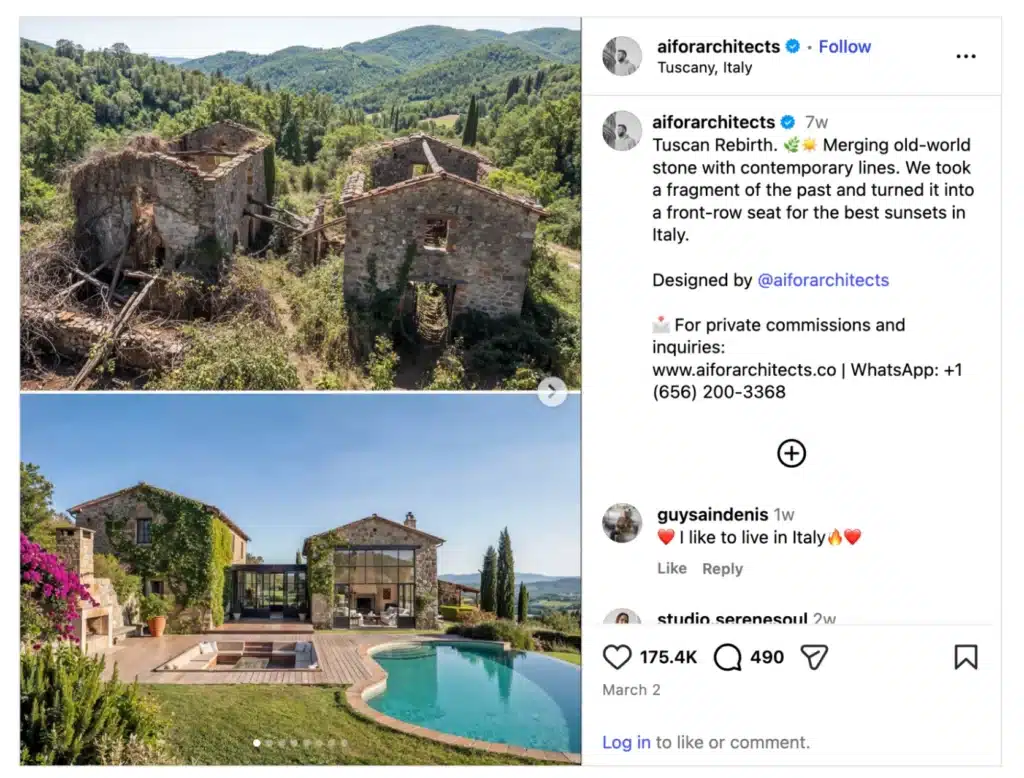
As you can see in the Instagram example underneath, the architect uses renders and visualizations to show the potential of the space instead of relying on finished project photos.
That’s also why before-and-after posts perform so well for architecture content in general. People immediately understand the value of the work without needing a long explanation.
Source: Instagram
When people see point A, they naturally want to stay and see point B. That curiosity creates engagement and keeps viewers watching until the end.
You can film short videos or take photos during different stages of your projects, site visits, or renovations. You can turn them into Instagram Reels, TikToks, carousels, or split-screen videos. And if a project isn’t built yet, renders and AI visualizations can still work really well for showing the transformation process.
How can architects turn social media followers into clients?
Getting views and engagement on social media doesn’t automatically mean you’ll get clients.
A post can go viral and still bring zero inquiries. At the same time, a simple video with fewer views can end up bringing serious project opportunities.
That’s because social media for architects works best when it’s treated like a long-term trust-building tool, not just a place to collect likes.
The architects who consistently get leads from social media usually focus on three things:
- Building trust through more personal and human content.
- Engaging with their audience instead of only posting and disappearing.
- Using clear calls to action so people actually know how to contact them or take the next step.
1. Building trust through more personal and human content
Beautiful project photos alone usually aren’t enough to build trust online.
People might admire the work, save the post, or scroll for a few seconds, but trust usually happens when they start understanding the person behind the projects and the way they think.
That’s why more personal content works so well for architects.
And this doesn’t mean you suddenly need to become an influencer or share your entire life online. Even simple videos where you talk about your philosophy, process, design decisions, or opinions can make your content feel much more human and memorable.
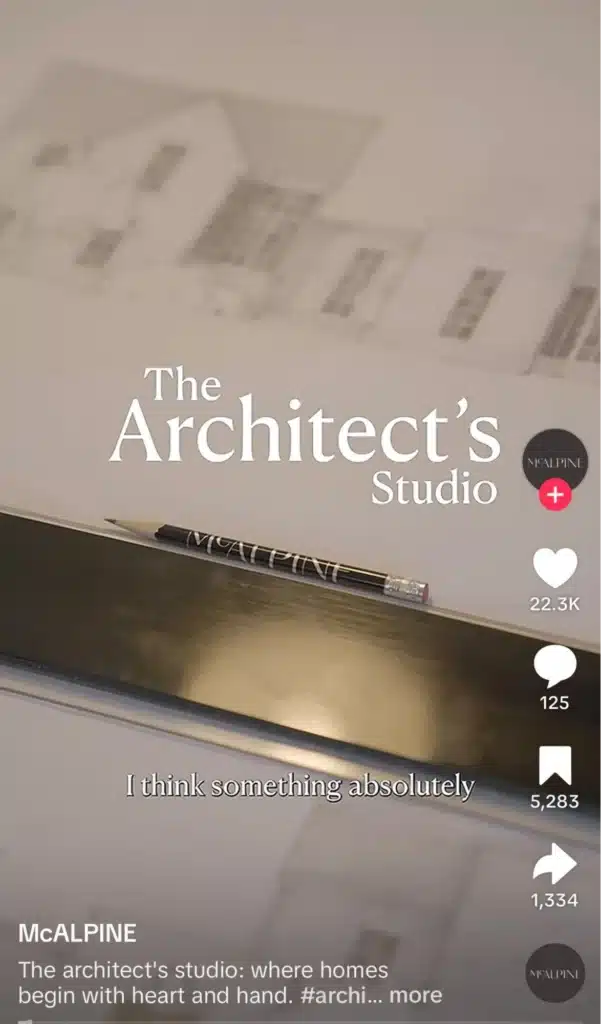
In this TikTok, the architect is simply sitting in his studio talking about sketching with a pencil, but the video feels calm, personal, and authentic because he clearly speaks in a way that feels natural to him.
Source: TikTok
And that’s really the main takeaway here.
You don’t need to copy someone else’s tone, filming style, or personality. What matters is creating content that feels like you. Some architects are more poetic and reflective, others are more direct, educational, or casual.
People usually connect much more with creators and businesses that feel genuine than with accounts that sound overly polished or corporate.
That’s also why trust-building content often performs well long term. It helps your audience feel like they know the person behind the architecture, not just the final result.
2. Engaging with their audience instead of only posting and disappearing
A lot of architects treat social media like a portfolio website. They upload content, maybe reply to a few comments, and leave until the next post.
But social media works much better when it actually feels social.
People are much more likely to remember your work, follow your projects, and eventually contact your firm when they feel involved in the conversation instead of just watching from the outside.
And engagement doesn’t always have to mean replying to every single comment.
Sometimes it’s simply:
- Asking people for their opinion on a design choice.
- Sharing updates during the process.
- Creating content people want to send to friends.
- Starting conversations around architecture trends or common client problems.
At the same time, it also helps to guide people somewhere after they engage with your content. Because realistically, most people won’t become clients immediately after seeing one Instagram Reel or TikTok.
That’s where simple social media funnels can help.
Some easy ways architects do this include:
- Asking people to comment a specific word to receive a guide, moodboard, checklist, or resource through DMs.
- Creating Instagram Highlights that answer common client questions and explain their services more clearly.
- Building an email list through downloadable guides or helpful resources related to architecture, renovation, layouts, or design ideas.
And the good news is that these things don’t need to feel overly sales-focused either.
When the content already feels helpful, personal, or interesting, people are usually much more open to continuing the conversation outside the post itself.
3. Using clear calls to action
A lot of architects create beautiful content, but never actually tell people what to do after seeing it.
And while this sounds like a small detail, it makes a huge difference when it comes to turning social media followers into actual inquiries or clients.
Because if someone loves your work but can’t quickly understand:
- What services do you offer?
- Where are you located?
- How can clients contact you?
- What type of projects do you specialize in?
This doesn’t mean every post has to sound salesy or pushy. Sometimes a simple reminder is enough:
- “DM us for project inquiries.”
- “Based in Amsterdam.”
- “Currently taking renovation projects.”
- “Full project details in our highlights.”
- “Contact information in bio.”
Source: Instagram
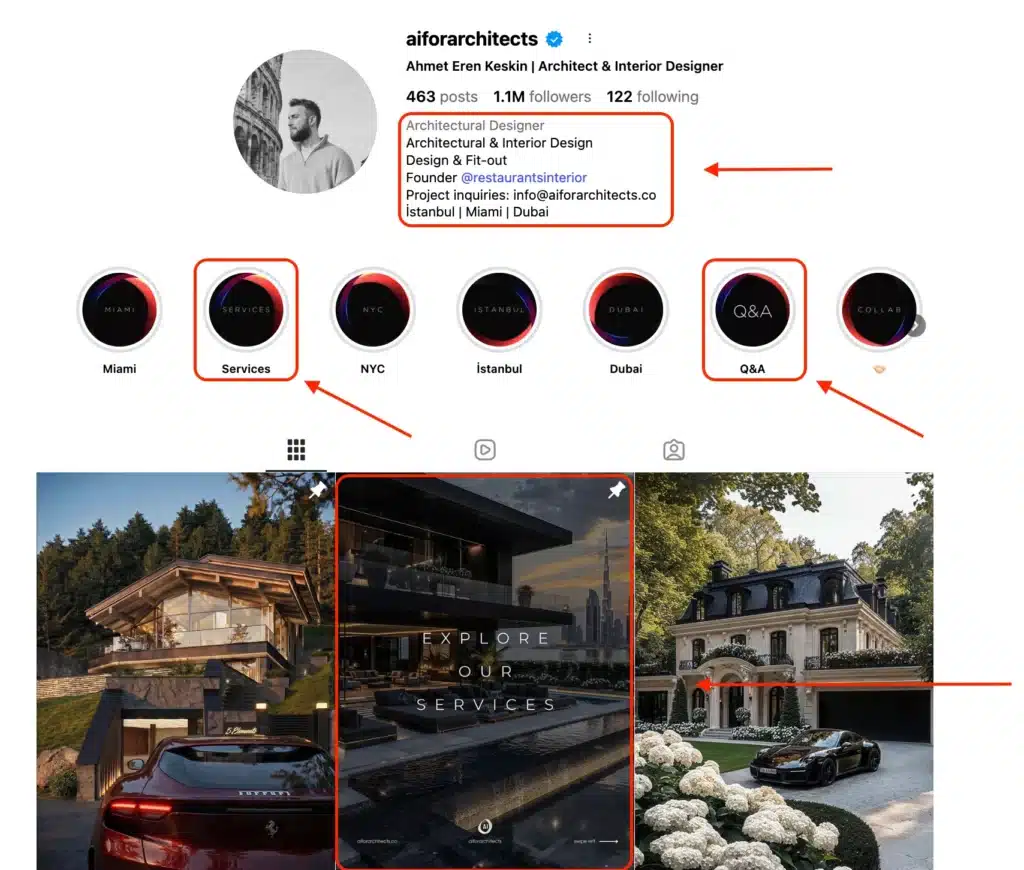
The Instagram profile above is a good example because everything feels very clear immediately. You can quickly understand the type of architecture work they do, explore highlights related to services and projects, and find ways to contact the firm without searching for information.
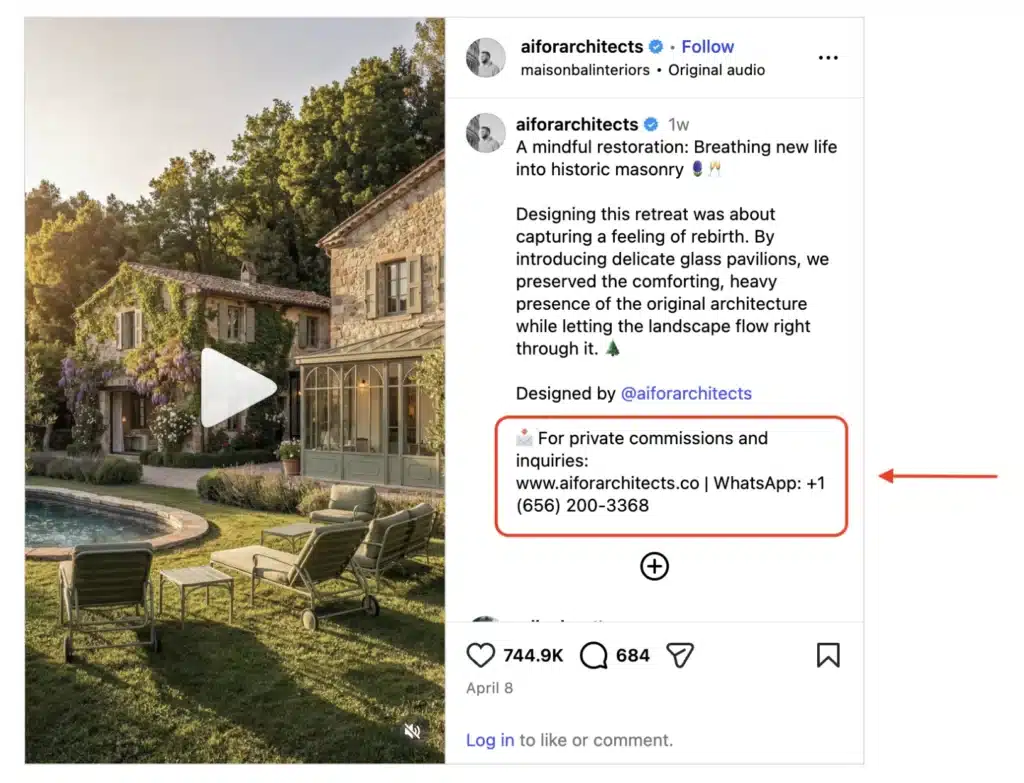
The second post works for the same reason. The CTA is simple, direct, and naturally connected to the content itself. It reminds people that the project they’re looking at isn’t just inspiration online. It’s also a real service they can inquire about for their own home or space.
Source: Instagram
A lot of architects underestimate how important this step is. But sometimes people simply need a small reminder that they can actually work with you.
Common mistakes to avoid as an architect on social media
When architects first start posting online, they usually make the same few mistakes. And most of them have nothing to do with talent, design skills, or the quality of their projects.
Here are some of the biggest ones to avoid:
- Posting only final results: A lot of architects only share polished finished projects because they think that’s what people care about most. But in reality, audiences usually connect more with the process behind the work. Site visits, sketches, progress updates, materials, and small behind-the-scenes moments often create much better engagement than only posting the final reveal.
- Being inconsistent: You don’t need a massive social media strategy or daily uploads to grow. But posting once and disappearing for six months usually won’t help your social media presence either. Consistency matters much more than volume. Even one or two posts per week can make a big difference over time.
- Trying to be on every platform at once: A lot of small practices burn out because they try to post on every social platform immediately. It’s usually much better to choose the right platform for your content and business goals first, then expand later if needed.
- Creating content only for other architects: There’s nothing wrong with architecture-focused content, but if your goal is attracting clients, your posts also need to speak to regular people. Potential clients care more about how a space feels, how the process works, and how you solve problems than highly technical industry discussions.
- Overediting everything: People on social media don’t always expect perfect production quality. Sometimes simple videos, quick thoughts, or casual updates perform better because they feel more natural and relatable.
- Not having a clear direction: You don’t need a huge marketing document, but you should know why you’re posting in the first place. Some architects want to build a personal brand, some want more local projects, while others want to grow awareness around their firm or services. Once you know your goal, creating social content becomes much easier.
Simple tips to get started with social media as an architect
Social media for architects can feel overwhelming at first, especially when you see architecture firms posting everywhere at once. But building a strong social media presence usually comes down to simple habits, not complicated marketing systems.
You don’t need to become a full-time content creator to make social media work for your business. You just need a workflow that makes posting easier and more consistent.
Here are a few things that make the biggest difference for your social media presence as an architect:
- Build a content routine that works
- Stop obsessing over perfection
- Use tools that actually save you time
1. Build a content routine that works
We’ve covered several social media platforms throughout this guide. But managing multiple accounts can quickly become exhausting if you don’t have a system.
And at the end of the day, you’re an architect, not a full-time creator. That’s why making content creation easier is so important.
These are some simple habits that can save you hours:
- Turn content filming into a habit. Film small moments during site visits, meetings, sketching sessions, or your daily process.
- Create separate folders for projects so your visuals stay organized and easy to find later.
- Write down ideas immediately instead of trying to remember them later.
- Batch content once a week instead of creating posts from scratch every day.
- Repurpose content across platforms whenever it makes sense. One video can easily become a TikTok, Instagram Reel, Pinterest pin, or LinkedIn post.
2. Don’t obsess over editing and perfection
A lot of architects hold themselves back because they think every post has to look perfect.
But social media usually rewards content that feels human much more than content that feels overly polished.
People care more about the story, perspective, or process behind a project than perfectly edited transitions or expensive production quality.
That’s why a quick TikTok or Instagram Reel talking about something that went wrong on a project can often perform much better than a corporate-looking architecture video with no personality behind it.
3. Use tools that actually save you time
Managing social media for architects becomes much easier when you stop doing everything manually.
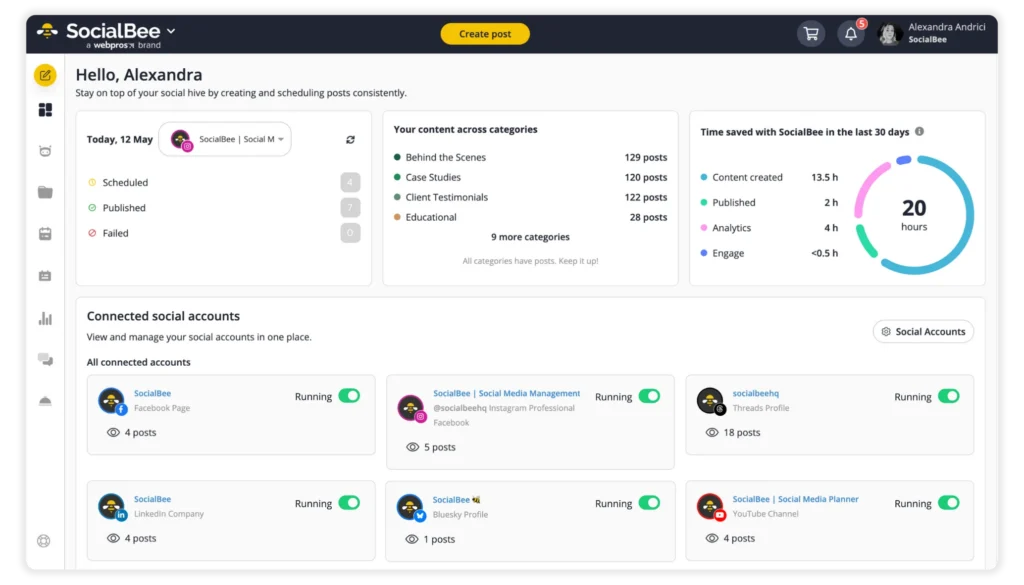
Instead of constantly switching between platforms, writing captions from scratch, looking for hashtags, replying to comments in different apps, and trying to remember what to post next, tools like SocialBee help keep everything in one place.
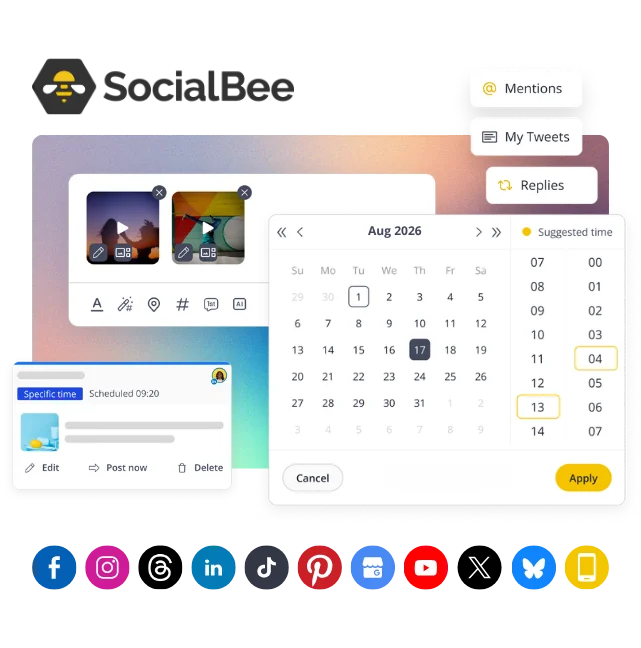
One of the biggest advantages is social media scheduling. Instead of posting manually every day, you can plan your content in advance and organize your entire week or month ahead of time.
Another feature that saves a lot of time is the AI support inside the platform, especially the AI post generator and Copilot, which help turn rough ideas into captions, hooks, and actual posts much faster.
And when it comes to engagement, the Social Inbox makes it easier to manage comments, mentions, and conversations across different social media platforms without constantly switching between apps.
And that’s really just the beginning.