Artificial intelligence (AI) is changing how businesses plan and run marketing campaigns. It helps marketers understand customer behavior, create more relevant content, and reach the right audience.
AI also takes care of time-consuming tasks. For example, social media AI tools can help write posts, generate content ideas, and automate parts of your marketing campaigns. That leaves more time to focus on strategy and connecting with customers.
In this guide, we’ll cover the benefits of AI in marketing, seven practical ways to use it, and five tools worth exploring.

We’re SocialBee LABS SRL, part of WebPros. We use the information you provide to share relevant content & updates, as outlined in our Privacy Policy. You can opt out anytime.
What are marketing AI tools?
AI marketing tools use artificial intelligence to help businesses understand their customers, create content, and improve marketing campaigns. They analyze data to spot patterns, suggest improvements, and handle tasks that would otherwise take hours.
For example, AI tools for marketing and business can help personalize messages, manage advertising budgets, and reach the right audience. They also make it easier to measure campaign results and understand what works by tracking customer behavior.
Some tools even automate tasks like grouping customers based on their interests or adjusting ad budgets. This saves time and gives marketers more room to focus on strategy and creative work.
The benefits of using AI in marketing
AI can help businesses save time, understand their customers, and make better marketing decisions. It also makes it easier to personalize campaigns and reach people who are more likely to be interested in what you offer.
Here are seven benefits of using AI in marketing:
- Improved efficiency: AI handles repetitive tasks like collecting data, creating content, and organizing customer lists. This means less time spent on manual work and more time for planning campaigns and developing new ideas.
- Increased personalization: AI analyzes customer interests, preferences, and past interactions to help businesses create more relevant messages. For example, an online store might use AI to recommend products based on what someone has browsed or purchased before.
- Better decision-making: AI helps marketers understand customer behavior and spot trends in their campaign data. With predictive marketing, businesses can also use past results to estimate what customers might do next and plan their campaigns accordingly.
- Better customer experience: AI chatbots and virtual assistants can answer common questions around the clock, making them useful for automating customer support. AI can also help businesses identify customers who may be losing interest, giving teams a chance to reconnect with them.
- Improved return on investment (ROI): AI can help businesses make better use of their marketing budgets. By automating tasks and identifying what works, teams can reduce unnecessary spending and focus their resources on campaigns that deliver results.
- More accurate audience targeting: AI analyzes customer data to identify people who are more likely to respond to your marketing. It can also help adjust ad targeting, messaging, and bids based on campaign performance, so your budget goes toward reaching the right audience.
- Better search engine optimization (SEO): AI tools can help with keyword research, content ideas, and identifying opportunities to improve existing pages. These insights can support your marketing strategy and help you create content that better matches what people are searching for.
How to use AI in your digital marketing campaigns
AI can help with almost every part of a marketing campaign, from creating content to understanding your audience and tracking results. The key is knowing where it can save time and where human input still matters.
Whether you’re just getting started or already using AI regularly, there are several ways to include it in your digital marketing strategy.
Here are seven ways to use AI in your marketing campaigns:
- Social media marketing
- Content creation and optimization
- Personalized marketing
- Chatbots and virtual assistants
- Email marketing
- Predictive analytics
- AI-powered PPC advertising
1. Social media marketing
AI can help you create social media content, understand your audience, and spot trends worth paying attention to. It can also analyze past posts to show which topics and formats get the most engagement.
These insights make it easier to plan social media campaigns that match your audience’s interests.
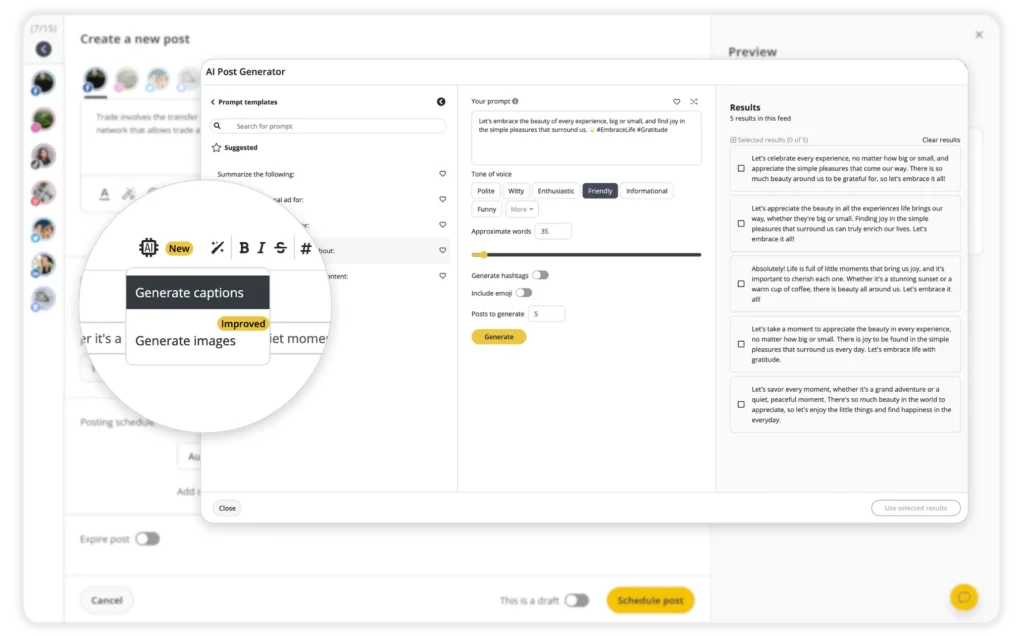
For example, SocialBee’s AI post generator helps you write captions without starting from scratch. Enter a prompt, choose your preferred tone of voice, and generate caption suggestions. Once you’ve found one you like, edit it to match your brand and schedule it in SocialBee’s content calendar.
Generate social media content faster and easier than ever with SocialBee’s AI post generator.
Start your 14-day free trial today!
| 🐝 Pro tip: Not sure what to ask AI to write? Try SocialBee’s free AI post generator and explore over 1,000 ready-made prompts for different platforms, industries, and content ideas. Use them as a starting point, then adjust the results to fit your brand. |
2. Content creation and optimization
AI tools can make content creation easier, from coming up with ideas to improving a finished draft. They can suggest topics, check grammar, find relevant keywords, and help make your writing clearer.
Some tools can also generate blog posts, social media captions, and reports based on a short brief. They can even analyze your past content to identify what performed well and suggest improvements for future posts.
The goal isn’t to let AI do all the writing. It’s to spend less time on repetitive tasks and more time creating content your audience will find useful.
3. Personalized marketing
AI helps businesses create marketing messages based on what their customers are interested in. It looks at information like browsing history, past purchases, and preferences to suggest more relevant content and offers.
For example, an online store might recommend products similar to those a customer has viewed. AI can also help personalize email marketing campaigns, improve ad targeting, and adjust prices based on factors such as demand.
By spotting patterns in customer behavior, AI can also help predict what people might buy next or when they’re likely to lose interest. This gives marketers a better idea of when to reach out and what messages to use.
4. Chatbots and virtual assistants
AI chatbots and virtual assistants help businesses answer customer questions, recommend products, and provide support around the clock.
They work through websites, messaging apps, and social media platforms. For example, an online store might use a chatbot to answer delivery questions, check order statuses, or help customers find products.
Some virtual assistants also use past purchases and customer preferences to suggest relevant products. This makes shopping easier while giving support teams more time to handle complicated requests.
5. Email marketing
AI can help businesses create more relevant emails and manage their campaigns with less manual work.
Here are some practical ways to use AI in email marketing:
- Write better emails: Generate subject lines, preview text, and email copy based on your campaign goals.
- Personalize messages: Use customer interests and past purchases to recommend products or create targeted offers.
- Improve campaign performance: Analyze past results to find patterns in open rates, clicks, and engagement.
- Manage contact lists: Group subscribers by their interests and use email verification tools to identify invalid addresses.
Keeping your contact lists clean is just as important as writing good emails. Regular email verification helps remove invalid or duplicate addresses, while reliable SMTP services support email delivery.
Together, these tools can help reduce delivery problems and make your email campaigns more effective.
6. Predictive analytics
Predictive analytics uses past data to help businesses understand what customers might do next. AI can spot patterns in customer behavior and campaign results that would take much longer to find manually.
For example, AI marketing tools can help businesses:
- Predict future purchases: Identify which products customers are most likely to buy based on their browsing and shopping history.
- Spot customers at risk of leaving: Find signs that someone is losing interest, such as fewer purchases or less engagement.
- Plan better campaigns: Use past results to predict which audiences, offers, or messages are most likely to perform well.
Some AI-powered ecommerce platforms also use these predictions to recommend products and create more relevant offers.
While AI can’t predict customer behavior with certainty, these insights can help businesses make smarter marketing decisions.
7. AI-enhanced PPC advertising
AI can help businesses manage pay-per-click (PPC) ads by analyzing campaign results and adjusting bids, targeting, and ad content.
For example, if certain keywords bring in more customers, AI can help shift the budget toward those keywords. It can also test different headlines, images, and messages to identify which ads perform better.
Some AI advertising tools make these adjustments automatically, helping marketers spend less time managing campaigns and more time reviewing results.
AI-powered chatbots can also support advertising campaigns by answering questions from people who click on an ad. This gives potential customers quick answers while reducing the workload for support teams.
5 AI Marketing Solutions You Need
AI marketing tools can help with everything from creating social media content to personalizing customer experiences and managing advertising campaigns.
But not every tool does the same job. Some focus on content creation, while others help businesses understand their customers or improve ad performance.
Here are the top five AI marketing solutions you need:
- SocialBee
- Jasper
- MobileMonkey
- Optimove
- Smartly.io
1. SocialBee
SocialBee helps businesses create, schedule, and manage social media content from one place. It combines AI content creation with publishing, analytics, and team collaboration, making it useful for marketers who manage several social accounts.
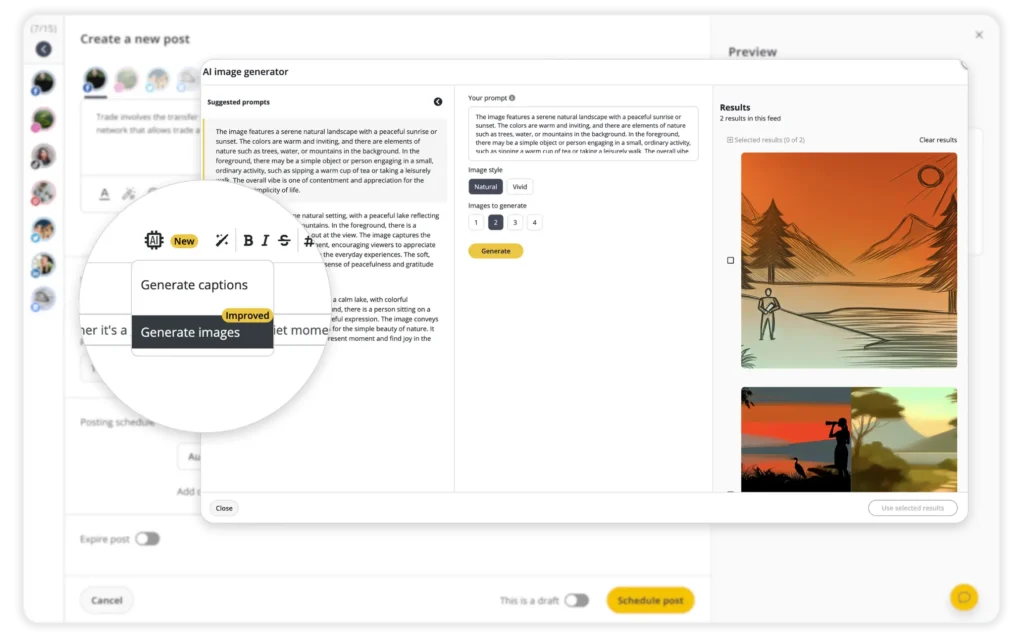
Generate captions and images in seconds from SocialBee.
Start your 14-day free trial today!
Beyond generating captions and images with AI, SocialBee includes tools to make content creation and planning easier:
- Content creation: Import designs from Canva, find stock images and GIFs through Unsplash and GIPHY, or generate visuals with AI.
- AI writing assistance: Create captions based on your instructions or choose from over 1,000 ready-made prompts for different platforms, industries, and post types.
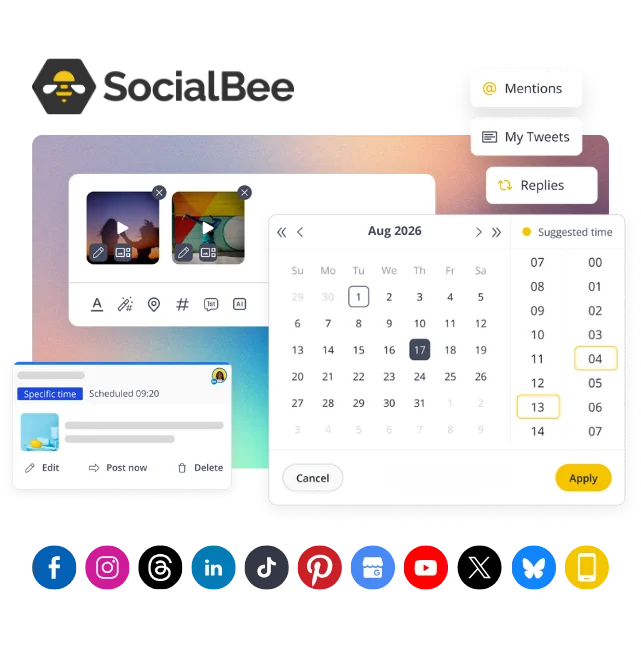
- Scheduling and management: Organize posts in a content calendar, publish them automatically, track performance, and collaborate with your team.
For example, a small business could use AI to draft a week’s worth of captions, add branded visuals, and schedule everything in advance. This leaves more time to interact with customers instead of preparing posts every day.
2. Jasper
Jasper is an AI writing tool that helps marketers create content faster. It can generate social media captions, ad copy, blog posts, sales emails, and website content based on your instructions.

As a generative AI platform, Jasper also helps teams keep their content consistent with their brand’s tone of voice. This makes it useful for businesses that produce content regularly and want to spend less time writing first drafts.
3. MobileMonkey
MobileMonkey is a marketing automation tool that helps businesses connect with potential customers and generate leads through automated conversations.

It can help automate sales outreach, follow up with leads, and send relevant offers based on customer interactions. This reduces the time spent on repetitive messages and helps sales teams focus on conversations that are more likely to turn into customers.
4. Optimove
Optimove is a marketing platform that uses AI and customer data to help businesses create more personalized campaigns. It works with CRM data to understand customer behavior and identify opportunities to improve engagement and retention.

For example, businesses can use Optimove to send relevant offers based on a customer’s purchase history or activity. The platform supports email marketing, SMS, push notifications, and in-app messages, making it easier to reach customers through different channels.
5. Smartly.io
Smartly.io helps businesses create, manage, and improve paid advertising campaigns across platforms like Facebook, Instagram, Pinterest, and Snapchat.

The platform offers ad templates, creative testing, audience targeting, and automated bidding. For example, marketers can test different versions of an ad and use performance data to decide where to spend their budget. This makes it easier to manage campaigns across several platforms without adjusting every detail manually.
Frequently Asked Questions
1. What are the challenges of using AI in marketing?
The biggest challenges of using AI in marketing are poor data quality, privacy concerns, lack of human oversight, and implementation costs.
Here’s what businesses need to watch out for:
- Data quality: AI relies on accurate information. Outdated or incomplete customer data can lead to unreliable results.
- Data privacy: Businesses need to protect customer information and follow relevant privacy regulations when using AI tools.
- Lack of human input: AI-generated content can contain mistakes or sound generic. Human review helps keep it accurate and consistent with your brand.
- Implementation costs: Some AI tools require paid subscriptions, employee training, or additional setup.
Start with a small project, choose tools that fit your budget, and review AI-generated results before using them in your campaigns.
2. Are there any free AI marketing tools?
Yes. Several marketing tools offer free AI features or free plans that can help with content creation, design, and analytics.
Here are some examples:
- SocialBee’s free AI post generator: Generate social media captions and explore over 1,000 prompts for different content ideas.
- Canva: Create social media graphics and use selected AI design features available on its free plan.
- HubSpot’s Website Grader: Check your website’s performance, SEO, mobile experience, and security.
- Google Analytics: Track website traffic, understand visitor behavior, and access automated insights.
- Meta Ads Manager: Create and manage advertising campaigns across Meta’s platforms. The tool is free to use, but running ads costs money.
- Hootsuite Insights: Monitor brand mentions and social media conversations. Availability and pricing depend on the product and plan.
Free features often come with usage limits, so check what’s included before choosing a tool.
3. How can businesses get started with AI in marketing?
Start by choosing one marketing task you want to improve, such as writing social media captions or analyzing campaign results. Set a clear goal and check what data you’ll need.
Next, compare AI tools and choose one that fits your budget. Test it on a small campaign before using it more widely.
Finally, track the results. Look at how much time you’re saving, whether the output is useful, and what needs improving. Once you’ve found an approach that works, gradually introduce AI into other marketing tasks.
Start putting AI to work in your marketing campaigns
AI can make marketing easier, but you don’t need to use it for everything to see the benefits. Start with tasks that take up the most time, whether that’s creating content, personalizing messages, or analyzing campaign results.
The key is to use AI where it makes a difference while keeping people involved in the decisions that matter. Test different tools, review the results, and build on what works for your business.
If social media content creation is taking up too much of your time, SocialBee can help. Its AI tools let you generate captions and images, then plan and schedule your posts from one place.
Ready to give it a try? Start your 14-day free SocialBee trial and see how much time you can save.