Man sitting at a desk using a laptop and desktop monitor displaying LinkedIn, with an illustrated LinkedIn logo and people networking overlaid on the left. The graphic has a dark navy background, yellow frame, and megaphone icon.

LinkedIn endorsements: what they are and how to get them

LinkedIn endorsements are a way for your 1st-degree connections to confirm the skills listed on your LinkedIn profile. They add social proof to your professional abilities and can help you get discovered for opportunities related to your expertise.

But not every endorsement carries the same value. A recommendation from someone who knows your work is more meaningful than collecting endorsements for skills that have little to do with your career goals. The idea is to highlight the skills that matter most to recruiters, potential clients, and others in your industry.

In this guide, we’ll explain how LinkedIn skill endorsements work in 2026, how to endorse someone, which skills to prioritize, and how to get more relevant endorsements from your network. We’ll also cover how endorsements compare to LinkedIn recommendations and when each can help strengthen your professional brand.

SocialBee logo featuring a stylized yellow bee icon on a dark hexagonal background.
SocialBee – Social media management tool
Social media management tool
Get your free social media strategy template!

We’re SocialBee LABS SRL, part of WebPros. We use the information you provide to share relevant content & updates, as outlined in our Privacy Policy. You can opt out anytime.

Short summary

  • LinkedIn endorsements validate specific skills listed on your profile. Only your 1st-degree connections can endorse you.
  • Endorsements add credibility to your profile and can improve your chances of being discovered for opportunities related to your skills, but they don’t replace proof of experience.
  • You can add up to 100 LinkedIn skills. Prioritize the ones most relevant to your career goals and reorder them to highlight your strongest abilities.
  • To get more endorsements, keep your profile updated, demonstrate your expertise through your work and LinkedIn content, and ask colleagues, managers, or clients who’ve seen you use those skills.
  • You can manage your endorsements by hiding individual endorsements or turning off the feature entirely. Removing a skill also removes its associated endorsements.
  • LinkedIn endorsements and recommendations serve different purposes. Endorsements confirm individual skills, while written recommendations provide more detailed evidence of your professional experience.
  • Focus on relevance rather than endorsement count. A few endorsements for skills that matter to your target audience are more useful than collecting endorsements for unrelated abilities.

What is a LinkedIn endorsement?

A LinkedIn endorsement is a way for your 1st-degree connections to confirm that you have a particular skill listed on your profile. For example, if you’ve added “Graphic Design” to your skills section, a colleague you’ve worked with can endorse you to show they recognize your expertise in that area.
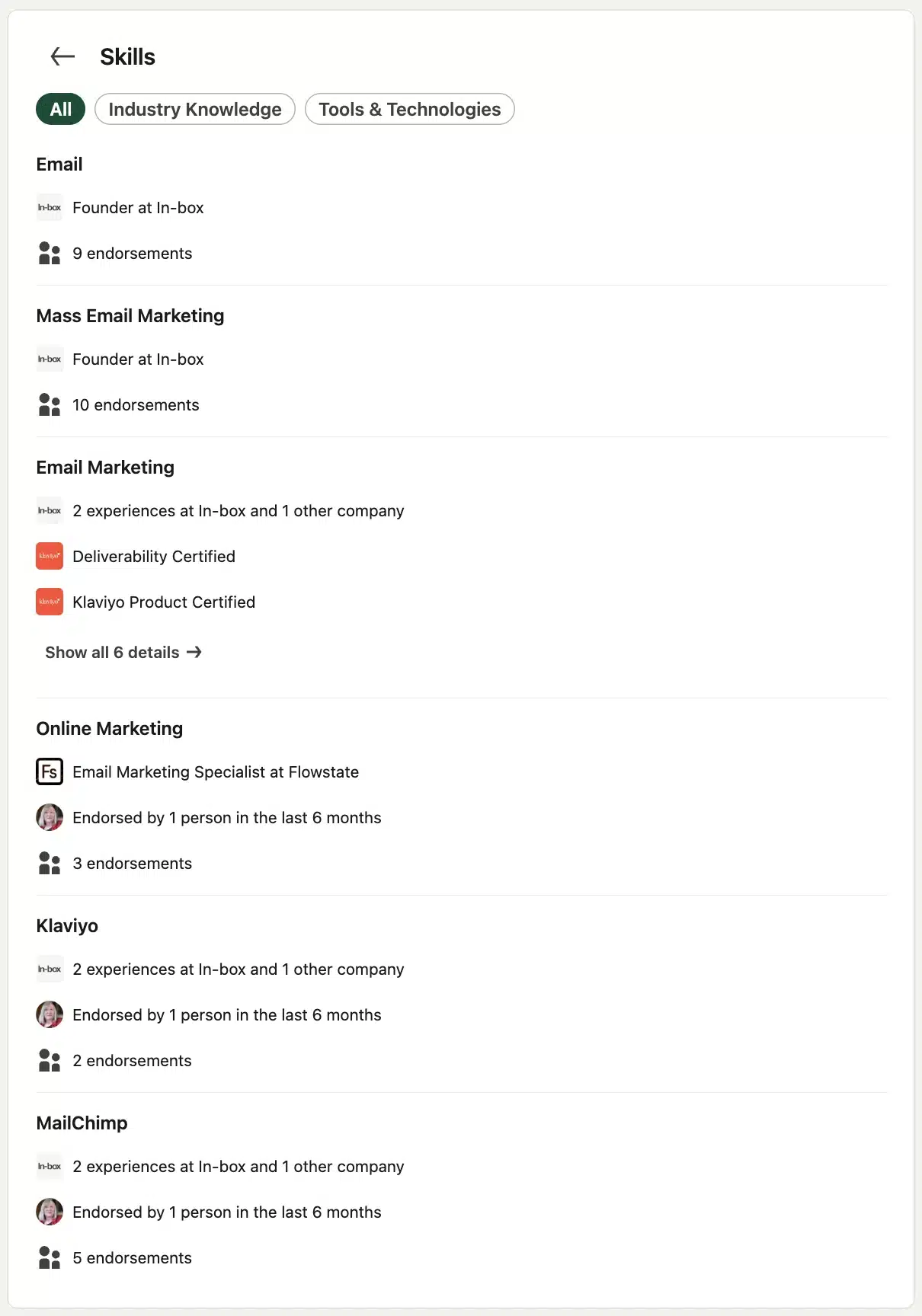
LinkedIn Skills section displaying Email, Mass Email Marketing, Email Marketing, Online Marketing, Klaviyo, and MailChimp, with associated work experience, certifications, and endorsement counts. Filters for All, Industry Knowledge, and Tools & Technologies appear at the top.

These endorsements act as social proof for your professional abilities. According to LinkedIn, they also reinforce the weighting of your skills and can improve your chances of being discovered for opportunities related to them.

You can add up to 100 skills to your LinkedIn profile. Each skill can receive endorsements from your connections, and the endorsement count shows how many people have vouched for that ability.

You also have control over how your skills and endorsements appear on your profile. You can reorder skills to highlight the ones most relevant to your career, hide individual endorsements, or turn off skill endorsements entirely through your profile settings.

How do LinkedIn endorsements work?

LinkedIn skill endorsements are pretty straightforward. Once you’ve added skills to your profile, your 1st-degree connections can endorse the ones they believe you possess. Each endorsement appears under the relevant skill, showing other LinkedIn users that someone in your network recognizes your abilities.

Here’s how the process works:

  1. Add skills to your profile. Choose the professional skills you want to highlight, such as project management, content writing, or leadership.
  2. Receive endorsements from your connections. Someone you’re connected with can visit your profile and endorse any of your listed skills.
  3. Get notified about new endorsements. LinkedIn sends you a notification when someone endorses you, unless you’ve turned off these notifications.
  4. Manage which endorsements appear. You can hide individual endorsements or turn off skill endorsements entirely through your endorsement settings.
  5. Reorder your skills. Move your most relevant skills higher on your profile so recruiters, potential clients, and other connections can easily see your main areas of expertise.

One thing worth knowing before you update your skills section: removing a skill also removes its endorsements. If you later add the exact same skill again, LinkedIn says your previous endorsements may reappear. However, there’s no guarantee they’ll be restored.

Do LinkedIn endorsements matter?

Yes, LinkedIn endorsements matter, but they’re best treated as supporting evidence of your skills rather than proof of expertise on their own. They add credibility to your LinkedIn profile by showing that other professionals recognize your abilities.

LinkedIn also confirms that skill endorsements contribute to profile strength and can increase your chances of being discovered for opportunities related to those skills.

And there’s a good reason to pay attention to your skills section. Recruiters are increasingly looking at what candidates can do, not just their job titles or education.

According to LinkedIn’s Future of Recruiting 2025 report:

  • 93% of talent acquisition professionals believe accurately assessing candidates’ skills is crucial to improving quality of hire.
  • Companies conducting the most skills-based searches are 12% more likely to make a quality hire, based on LinkedIn’s platform data.

Another LinkedIn report on skills-first hiring found that 13% of recruiter searches globally use skills filters, compared to just 3% that filter by degree. In OECD countries, 14% of recruiter searches use skills filters, more than seven times the share filtered by degree.

These findings highlight why keeping your LinkedIn skills updated matters. However, they don’t mean that having more endorsements automatically improves your ranking in recruiter searches.

For example, if you’re a social media manager looking for new clients, endorsements for social media strategy, content creation, and analytics can help reinforce your expertise in those areas. But potential clients will still want to see examples of your work and the results you’ve achieved.

It’s also worth remembering that not every endorsement carries the same weight as a LinkedIn recommendation or client testimonial. Endorsing a skill takes one click, while a written recommendation can explain how you’ve applied that skill and what you’ve accomplished.

Whether endorsements come naturally or you ask colleagues and clients for them, focus on getting relevant endorsements for skills that support your professional goals. A strong profile combines those endorsements with real experience, accomplishments, and recommendations that give people a clearer picture of what you can do.

How to endorse someone on LinkedIn

You can endorse the skills of anyone you’re connected with on LinkedIn, as long as they’re a 1st-degree connection and have added those skills to their profile.

Here’s how to endorse your connection’s skills on LinkedIn using a desktop:

  1. Visit their LinkedIn profile. Search for the person you want to endorse and open their profile.
  2. Scroll to the Skills & endorsements section. This is where you’ll find the professional skills they’ve added to their profile.
  3. Find the skill you want to endorse. Choose a skill you’ve seen them demonstrate through their work or a shared project.
  4. Click the Endorse button next to that skill to endorse it.
  5. Select Show more if needed. If you can’t find the skill you’re looking for, expand the list to see their other skills.
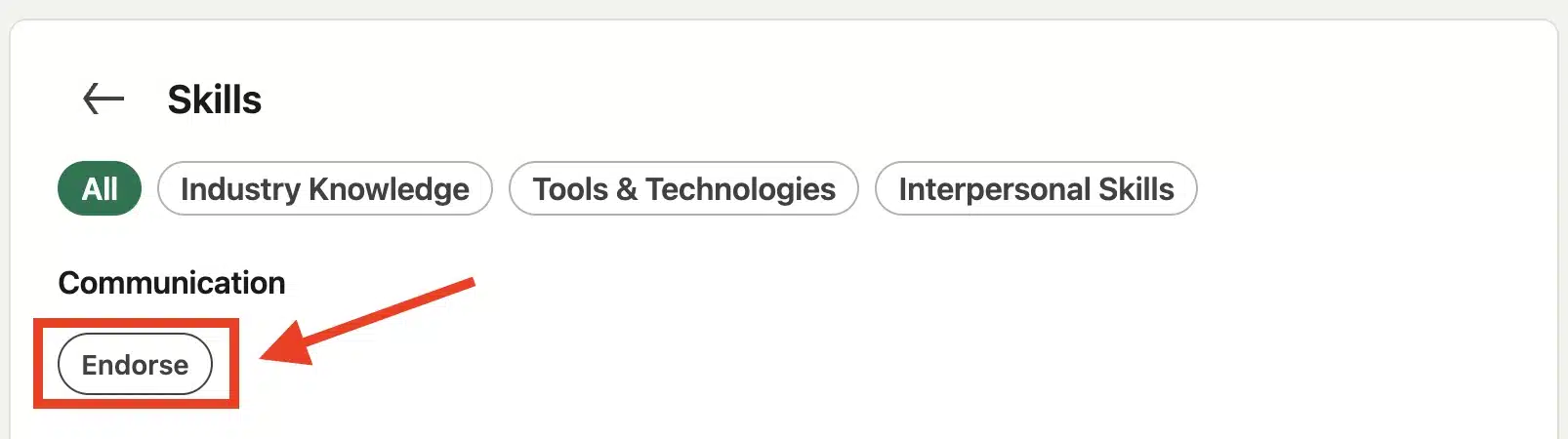
LinkedIn Skills page showing category filters for All, Industry Knowledge, Tools & Technologies, and Interpersonal Skills. Under Communication, a red box and arrow highlight the Endorse button.

LinkedIn also allows some English-language users to endorse multiple skills at once, making it easier to recognize several abilities without endorsing each one separately.

Tip: Be selective about the skills you endorse. For example, if you’ve worked with a colleague who consistently meets deadlines and keeps complex projects on track, endorsing their project management or organizational skills is more meaningful than endorsing abilities you haven’t seen them use.

LinkedIn endorsements vs LinkedIn recommendations

LinkedIn endorsements and recommendations both add credibility to your profile, but they serve different purposes.

Endorsements confirm specific skills, while recommendations provide more context about your work, experience, and accomplishments. Both come from your 1st-degree connections, but the process of giving and receiving them is different.
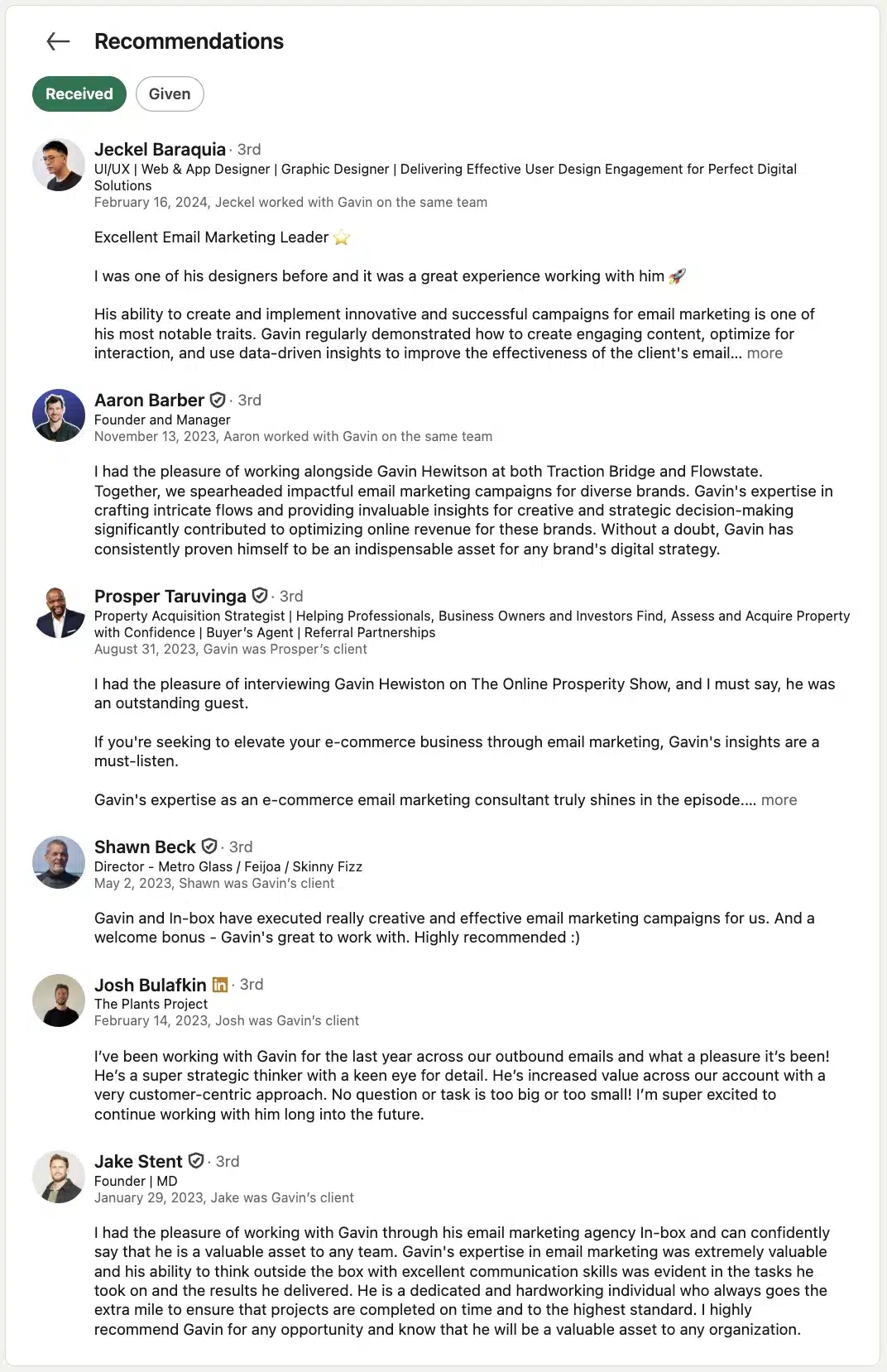
LinkedIn Recommendations page with the Received tab selected, displaying professional testimonials from colleagues and clients praising Gavin Hewiston’s email marketing expertise, campaign strategy, communication skills, and results. Each recommendation includes the author’s profile photo, name, professional title, and date.

Here’s how they compare:


LinkedIn endorsement

LinkedIn recommendation

What it validates

One listed skill

Your work or professional contribution

Format

Quick skill validation

Written statement

Who can give it

1st-degree connections

1st-degree connections

Can you request it?

Yes, by asking someone privately

Yes, through LinkedIn’s built-in request feature

Level of detail

Limited

Detailed

Best use

Reinforcing specific skills

Showing how you’ve applied your skills and what you’ve accomplished

For example, imagine you’re a web developer looking for new clients.

When a connection endorses you for Web Development, it shows that someone in your network recognizes that skill. A recommendation from a former manager could explain how you built their company’s website, handled technical challenges, and improved its performance.

The recommendation gives potential clients a better understanding of what it’s like to work with you, while the endorsement reinforces a skill you want to be known for.

The best approach is to use both. Seek endorsements for your most relevant skills and ask for recommendations from colleagues, managers, or clients who can share specific examples of your work. Together, they give people a more complete picture of your expertise.

How to get more skill endorsements on LinkedIn

Getting more LinkedIn endorsements starts with making it clear which skills you want to be known for and giving your connections a reason to recognize them.

You don’t need hundreds of endorsements or an enormous network. A few relevant endorsements from people who know your work can be more useful than a high endorsement count for skills that have little to do with your current goals.

Here are six ways to get the right endorsements and strengthen your professional brand.

1. Choose skills that support your current goals

Before you seek endorsements, take a look at the skills listed on your LinkedIn profile. Do they reflect the work you do now and the opportunities you’re looking for?

LinkedIn lets you add up to 100 skills, but that doesn’t mean you need to use every available slot. Focus on the abilities that are most relevant to your industry, expertise, and target audience.

For example, if you’re a sales manager looking for a leadership position, skills such as Sales Management, Team Leadership, and Business Development may be more valuable to highlight than software tools you used in an earlier role.

To decide which skills deserve priority:

  • Review job descriptions or client requirements for the opportunities you’re interested in.
  • Identify the specific skills that appear repeatedly and that you genuinely possess.
  • Compare those skills with your current LinkedIn skills section.
  • Add any important missing skills and reorder your existing ones to highlight your strongest areas of expertise.

Pay particular attention to your top three skills, since these should communicate your main professional strengths.

Career coach and former executive recruiter Jeff Altman offers a useful reminder:

“Only endorse people for skills that are and will be significant for them. As a coach (and before that, an executive recruiter), I’ve been endorsed for software development life cycle skills more than 100 times. What I actually know about this skill would fit in a thimble, yet more than 100 people felt that this was a significant skill to endorse me for.”

The lesson applies when choosing your own skills, too. Having more endorsements doesn’t necessarily help if they’re attached to abilities you no longer use or want to promote.

2. Connect your skills to evidence on your profile

Listing a skill is easy. Showing that you’ve used it successfully gives people a stronger reason to believe you possess it.

Your headline, About section, work experience, and Featured section should support the professional abilities you want your connections to endorse.
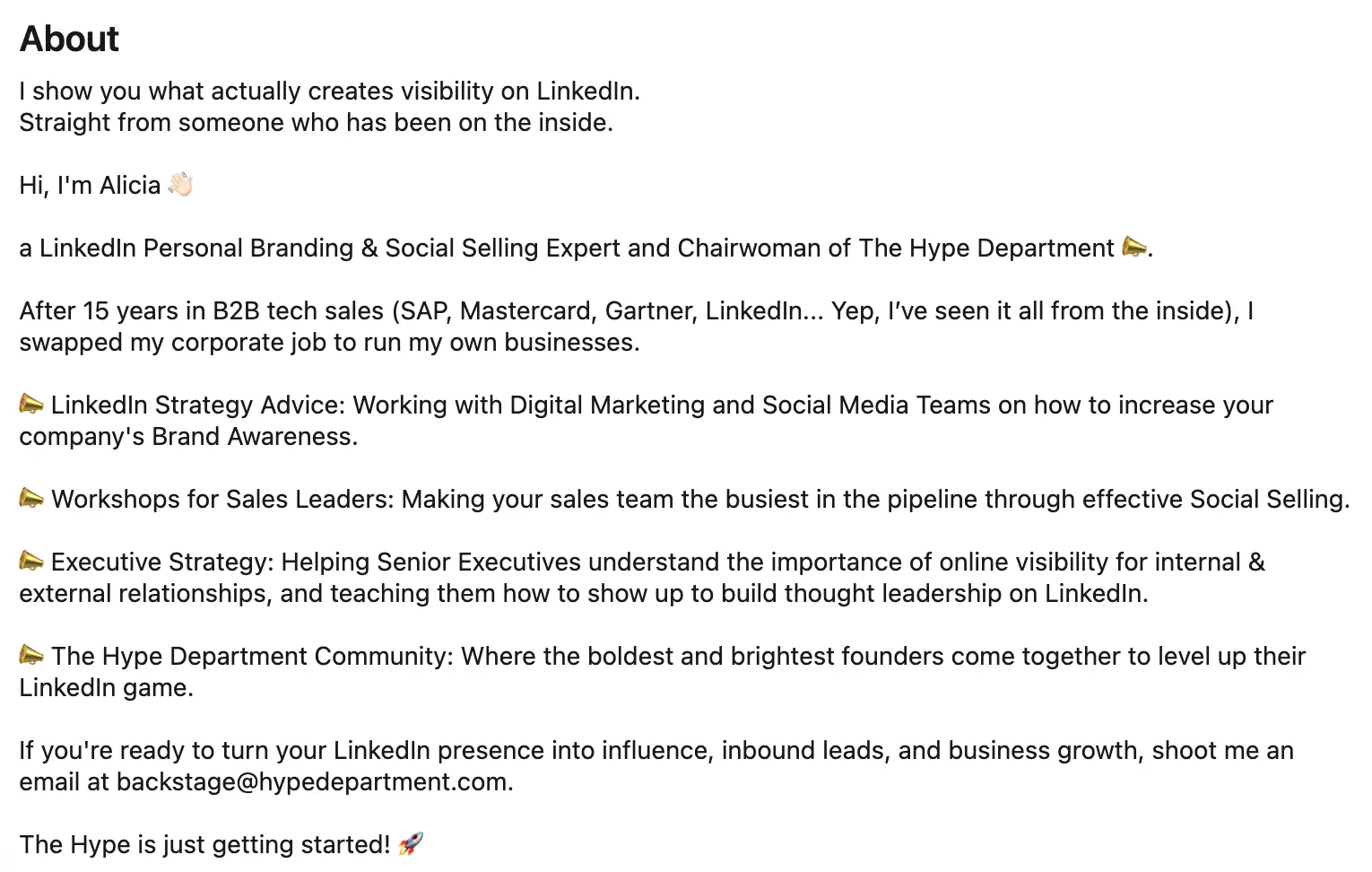
LinkedIn About section example of a personal branding expert describing services, experience, and offerings for LinkedIn strategy and social selling.

For example, if you’ve listed Project Management as one of your top skills, your experience section could describe a project you coordinated, the teams involved, and the outcome.

You can also use your Featured section to highlight relevant work samples, presentations, or completed projects.

As Jeff Altman explains:

“Your LinkedIn profile needs to demonstrate congruence with what you are claiming to be an expert on when applying for a position.”

This consistency matters because recruiters and potential clients need more than a list of skills to evaluate your expertise.

Tip: Review your profile from the perspective of someone who has never worked with you. Can they find a concrete example that supports each of your top skills? If not, consider adding one before asking for endorsements.

3. Show your skills through your LinkedIn content

Your LinkedIn activity can give connections a better understanding of what you know, particularly if they haven’t worked directly with you.

Instead of simply posting that you’re experienced in a particular area, share useful insights that demonstrate your knowledge.

For example, an HR manager could explain how they improved an employee onboarding process, including the challenges they encountered and what they learned. This gives their network a clearer picture of their experience in employee engagement and HR operations.

You can also share lessons from completed projects, answer industry questions, or discuss changes affecting your field.
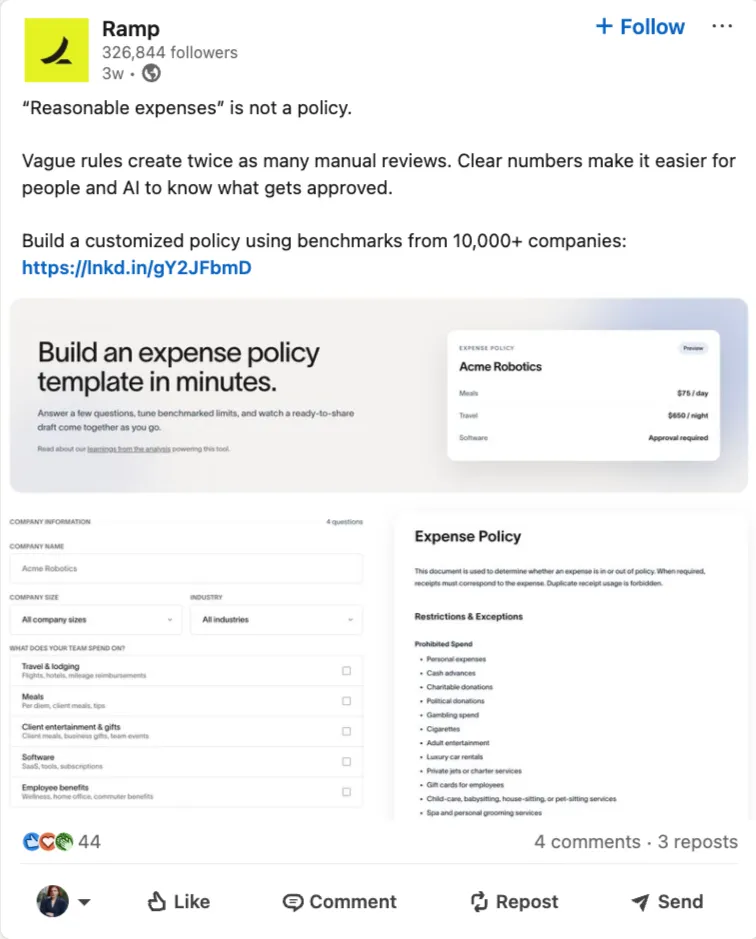
LinkedIn post promoting Ramp's expense policy builder by explaining the importance of clear expense policies before introducing the tool.

The important thing is to make your content useful to your target audience rather than turning every post into a list of accomplishments.

Consistency helps people become familiar with your expertise. However, you don’t need to post every day to make an impression. Choose a schedule you can maintain and focus on sharing something worthwhile.
PRO TIP

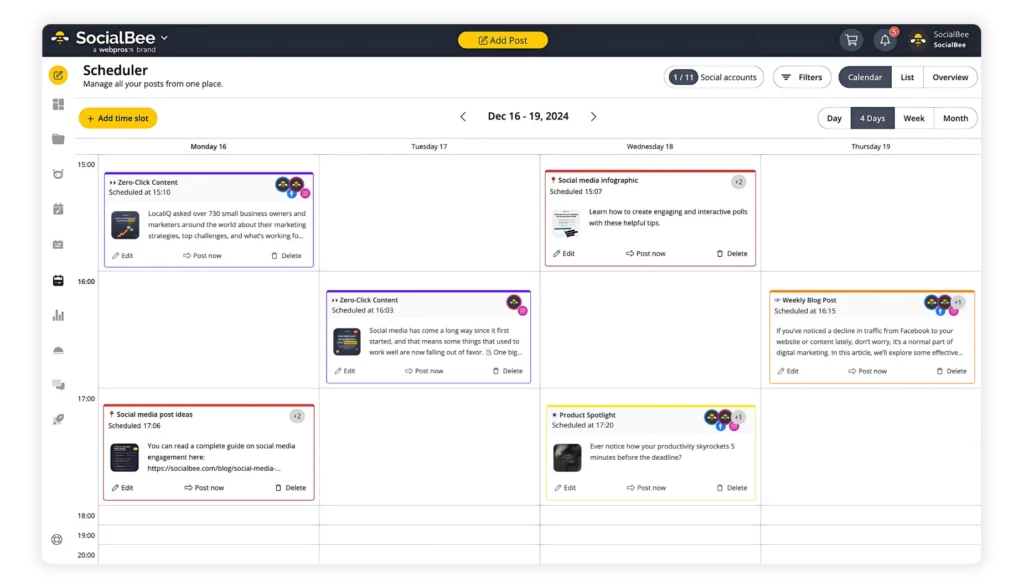
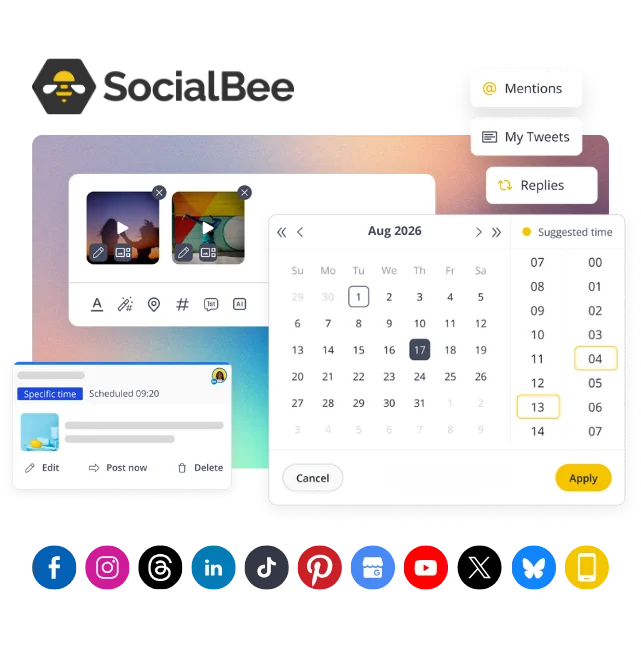
SocialBee can help you prepare LinkedIn posts in advance, organize them into content categories, and schedule them from a visual calendar.

For instance, you could create separate categories for industry insights, project highlights, and practical advice. That way, your posts demonstrate different aspects of your expertise without repeating the same topics.

4. Ask people who have actually seen you use the skill

You don’t have to wait for endorsements to happen on their own. It’s perfectly acceptable to ask, provided you’re approaching the right people.

Start with colleagues, former managers, clients, or professional peers who have firsthand experience with your work.

Think about who has seen you demonstrate a particular skill. Someone who collaborated with you on a difficult project, for example, may be well placed to endorse your problem-solving or project management abilities.

The best endorsement requests are specific and personal. Rather than asking someone to endorse your entire skills section, mention one or two abilities they’ve actually seen you use.

Here’s an example of a personalized message:

“Hi Sarah! I really enjoyed working with you on the website redesign last year. I’m updating my LinkedIn profile to reflect my UX design experience, and I wondered if you’d feel comfortable endorsing that skill based on our work together. No pressure at all, and thanks again for being such a great collaborator!”

A request like this works because it reminds the person of your professional relationship and gives them a clear reason to consider the endorsement.

Avoid sending the same generic message to dozens of LinkedIn connections. And don’t ask someone to endorse a skill they have no way of evaluating.

If you want someone to describe how you applied a skill or the results you achieved, consider requesting a LinkedIn recommendation instead.

5. Endorse other people when you can genuinely vouch for them

Giving skill endorsements is another way to recognize the people in your professional network.

Think about former colleagues, managers, or clients whose abilities you’ve seen firsthand. If someone consistently demonstrated strong leadership, communication, or technical expertise, you can endorse the relevant skills on their profile.

For example, if a former colleague helped your team resolve a complicated customer issue, you might endorse their Customer Service or Problem Solving skills.

They may appreciate the recognition and decide to endorse you in return, but that shouldn’t be your main motivation.

Don’t treat endorsements as an exchange. An endorsement is most valuable when it reflects something you genuinely know about the person’s abilities.

And if someone endorses you, there’s no obligation to return the favor. Only endorse skills you can confidently validate.

6. Review your skills and endorsements periodically

Your professional skills change as you gain experience, take on new responsibilities, or move into a different role.

That’s why it’s worth reviewing your LinkedIn skills and endorsements every few months, especially when you’re preparing for a job search or trying to attract new clients.

During your review, check whether:

  • Your top skills still reflect your current expertise and career goals.
  • You’ve developed new skills that deserve a place on your profile.
  • Older skills are taking attention away from your strongest abilities.
  • Your endorsements are relevant to the work you want to do next.
  • Your experience and Featured sections support the skills you’re highlighting.

You can reorder skills to give greater visibility to the ones that matter most and hide individual endorsements you don’t want displayed.

Be careful when removing skills, though. LinkedIn removes the associated endorsements when you delete a skill, and adding it back later doesn’t guarantee they’ll return.

The goal is to maintain a LinkedIn profile that accurately represents your abilities and helps the right people understand what you can offer.

Examples of LinkedIn endorsements for different professionals

The best LinkedIn endorsements highlight skills that are relevant to your experience and the opportunities you’re pursuing. Since endorsements are given with a click, you don’t need to write a statement explaining someone’s abilities.

Here are some practical examples of LinkedIn endorsements you can give or receive:

Professional role

Skills worth endorsing

Marketing manager

Strategic Thinking, Marketing Strategy, Brand Management, Market Research

Team leader

Leadership Skills, Team Building, Conflict Resolution, Coaching

HR professional

Talent Acquisition, Employee Relations, Professional Development, Recruiting

Customer success manager

Customer Satisfaction, Client Success, Relationship Management, Customer Retention

Software developer

Software Development, Technical Skills, Problem Solving, Programming

Account manager

Business Acumen, Negotiation, Account Management, Business Development

Project manager

Project Management Skills, Time Management, Risk Management, Strategic Planning

Sales representative

Sales Strategy, Lead Generation, Negotiation, Customer Relationship Management

Operations manager

Process Improvement, Operations Management, Resource Allocation, Organizational Skills

Business analyst

Analytical Skills, Business Analysis, Data Analysis, Strategic Thinking

Customer service representative

Communication Skills, Customer Satisfaction, Conflict Resolution, Interpersonal Skills

Creative director

Creative Problem Solving, Creative Direction, Leadership Skills, Innovation

Executive assistant

Time Management, Multitasking, Organizational Skills, Calendar Management

Training and development specialist

Professional Development, Employee Training, Communication Skills, Coaching

Business consultant

Business Acumen, Strategic Planning, Problem Solving, Change Management

Communications specialist

Excellent Communication Skills, Public Speaking, Written Communication, Interpersonal Skills

For example, if you’ve worked with a team member who demonstrates exceptional leadership skills and creates a supportive environment, endorsing their Team Leadership skill makes sense. Similarly, if a colleague consistently finds creative solutions to difficult problems, Problem Solving could be a relevant skill to endorse.

When choosing which skills to highlight, think about what hiring managers, potential employers, or business partners would want to know about your abilities.

One important distinction: If you want to write about someone’s excellent communication skills, positive attitude, or work ethic, you’re probably looking for a LinkedIn recommendation instead. Endorsements validate listed skills, while recommendations let you describe specific experiences and accomplishments in your own words.

Frequently asked questions

1. Can anyone endorse you on LinkedIn?

No. Only your 1st-degree LinkedIn connections can endorse your skills. They can only endorse skills you’ve already added to your profile, so make sure your skills section reflects the abilities you want to highlight.

2. How many LinkedIn endorsements should you have?

There’s no ideal number of LinkedIn endorsements. Focus on getting relevant endorsements for your top skills from colleagues, managers, and clients who know your work. Ten endorsements for a skill you regularly use can be more useful than 100 for one unrelated to your professional goals.

3. Can you remove an endorsement on LinkedIn?

Yes. LinkedIn allows you to hide individual endorsements so they no longer appear on your profile. You can also turn off skill endorsements entirely through your profile settings.

4. Are LinkedIn Skill Assessments still available?

No. LinkedIn discontinued its Skill Assessments feature in 2023. You can still add skills to your profile and receive endorsements from your connections, but you can no longer take LinkedIn’s skill quizzes to earn assessment badges.

5. Can you ask someone to endorse you on LinkedIn?

Yes. You can send a personalized message to a 1st-degree connection asking them to endorse a specific skill. Unlike LinkedIn recommendations, endorsements don’t have a built-in request feature, so you’ll need to ask privately. Choose someone who has seen you demonstrate that skill and give them the option to decline.

Make your LinkedIn skills easier to trust

LinkedIn endorsements work best when they support your expertise, rather than simply increase your endorsement count. Start by choosing skills that match your career or business goals, highlighting them on your profile, and asking people who’ve seen your work to endorse the ones they genuinely recognize.

Remember that endorsements are only one part of building credibility on LinkedIn. Your experience, completed projects, professional accomplishments, and recommendations should give recruiters and potential clients a clearer understanding of what you can do. Sharing useful LinkedIn content can also help you demonstrate your knowledge and stay connected with your professional network.

If you’re using LinkedIn content to showcase your expertise, SocialBee can help you plan posts, schedule them in advance, and track their performance without having to manage everything manually.

Start your 14-day free SocialBee trial.

SocialBee: Your AI-powered LinkedIn management tool
Create posts, publish, analyze, engage and collaborate, all from SocialBee.
Summarize this post

SocialBee

Social media management made simple

Join thousands of brands growing with SocialBee

Read the latest articles

Level up your social media marketing with exclusive resources delivered straight to your inbox

We’re SocialBee LABS SRL, part of WebPros. We use the information you provide to share relevant content and product updates, as outlined in our Privacy Policy. You can opt out anytime.

Something special for you!

Get 20% off your SocialBee plan for 3 months. Just enter your email below and we’ll send you the discount code.

Email us at [email protected] if you need any help.