

An Instagram marketing strategy helps you decide what to post, why you are posting it, and who you want to reach. In my experience, Instagram users engage more with brands that show up with a clear point of view, consistent visuals, and content that solves a real problem.
When those pieces line up, your Instagram business profile becomes a place people trust, not a collection of random posts.
This guide walks you through what Instagram marketing looks like today, how businesses use it to attract the right audience, and how to build a simple plan you can follow week after week. You will also get a free template that helps organize your goals, content pillars, and posting schedule, so you always know what to create next.

What is Instagram marketing?
Instagram marketing is the process of using the Instagram app to reach your target audience, share content that reflects your brand, and guide people toward a clear action, such as visiting your website, joining your email list, or making a purchase. It combines strategy, content creation, and ongoing optimization to build an Instagram presence that feels consistent and purposeful.
A strong strategy clarifies what you want to say and how you want to say it. Your content pillars keep your message consistent, your visual identity shapes how your Instagram profile looks and feels, and your community-building work keeps your audience involved.
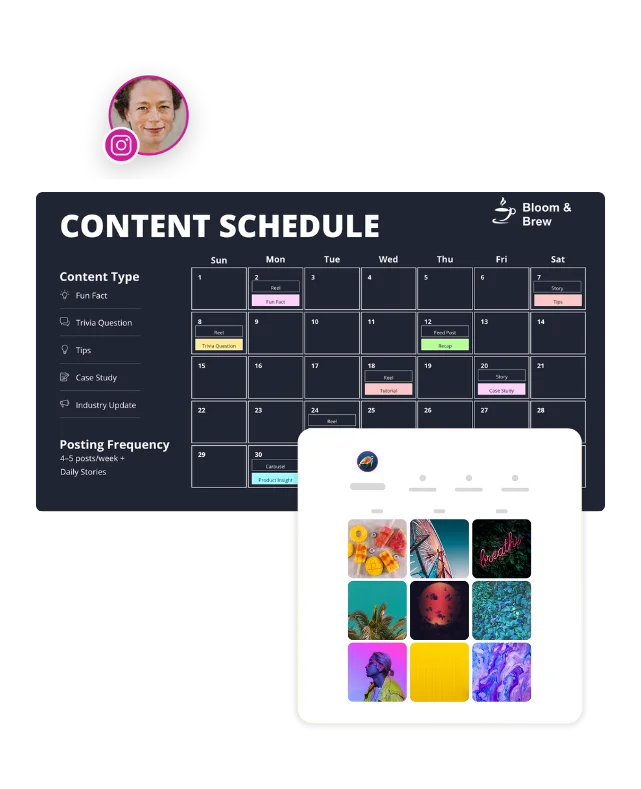
The free template included in this Instagram marketing strategy guide turns these pieces into a structured plan with space for your brand details, goals, content pillars, ideas, and posting calendar.
Why use Instagram for marketing?
Instagram is one of the strongest social media platforms for brands that want to reach the right people, create authentic content, and build a lasting Instagram presence. It supports every stage of the marketing funnel, from discovery to conversion, which is why so many businesses rely on it as a core part of their social media strategy.
Here are the main reasons Instagram businesses use Instagram for marketing:
- Instagram gives brands access to a large base of social media users, helping you reach your target audience with visuals, short-form videos, and carousel posts that stand out in the Instagram feed.
- Instagram influencers help brands connect with new Instagram users through creators who already have trust and momentum in the community.
- Instagram ads allow precise targeting that helps you reach potential customers based on interests, behaviors, and demographics. DataReportal found that in January 2025, the advertising reach of Instagram (outside China) was 1.74 billion users, which is over 21% of the world’s population.
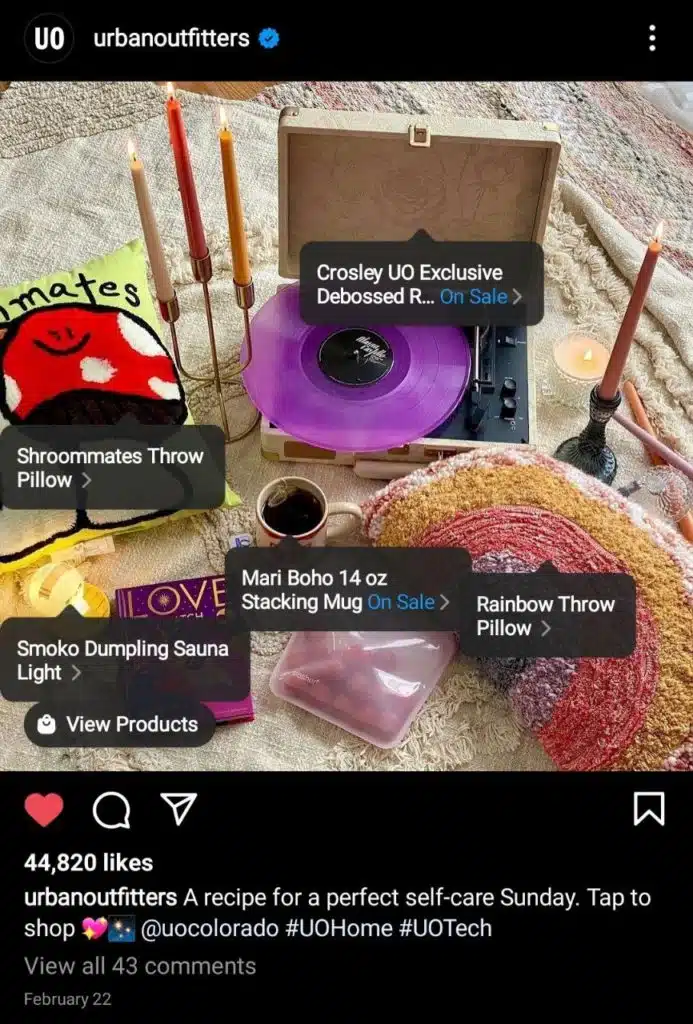
- Shoppable posts and product tags make it easy to guide people from an Instagram post to a purchase, which supports product-focused marketing campaigns.
- Community interactions, replies, and user-generated content help reinforce your brand values and strengthen brand loyalty over time.
- The Instagram app is built for mobile-first content consumption, so behind-the-scenes updates, quick social media posts, and Instagram Stories fit naturally into your audience’s daily routine.
- Instagram analytics tools give you clear insight into audience engagement, follower count trends, and what type of Instagram content performs best.
- Organic reach is still possible on Instagram, making it a cost-effective option for small businesses and social media marketers that want to boost brand awareness without relying only on traditional ads or a large marketing budget.
How to set up Instagram for marketing
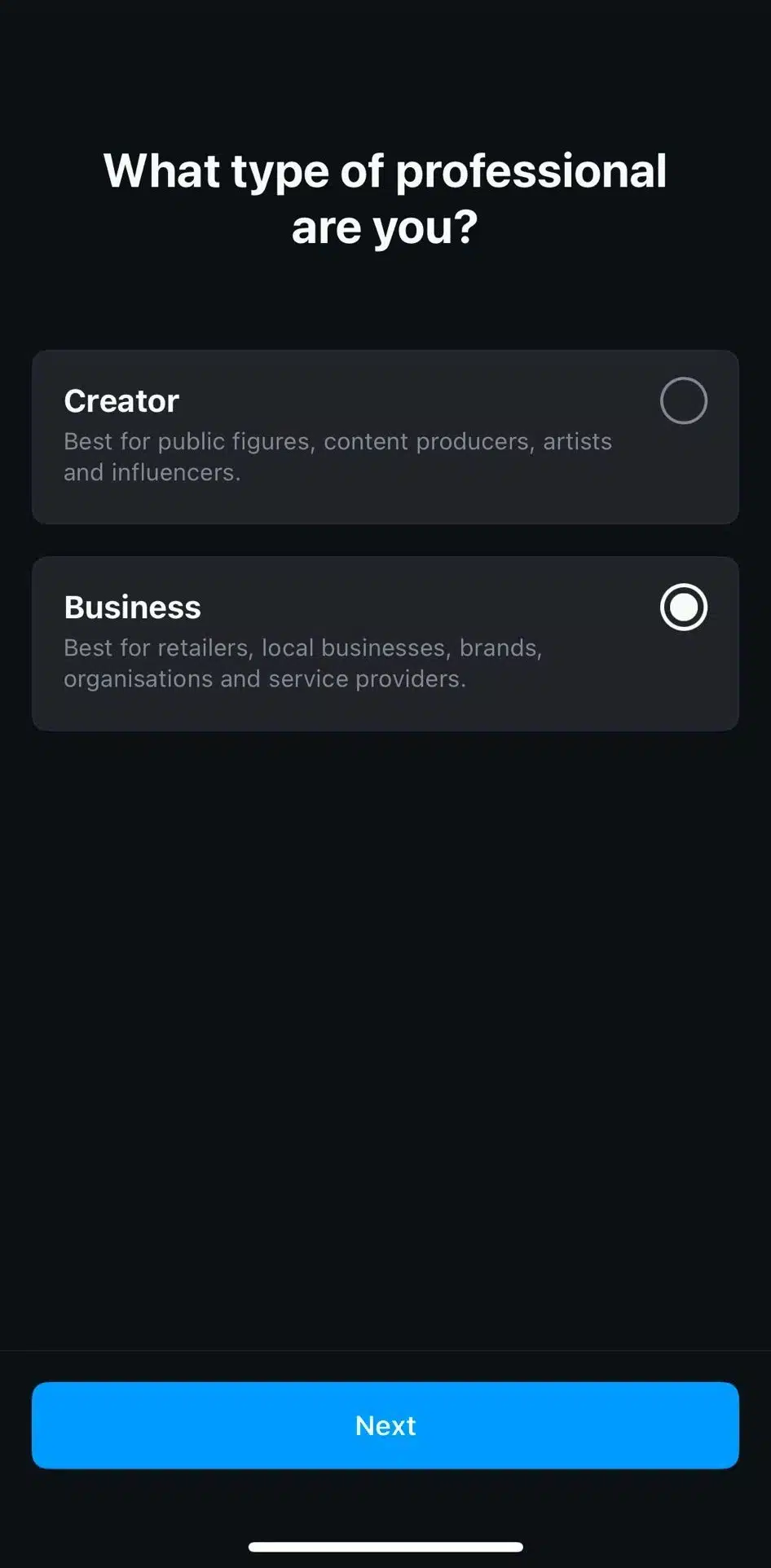
1. Switch to a Business or Creator account. An Instagram business account unlocks Instagram analytics tools, allows you to run Instagram ads, add contact buttons, and tap into all the features you need for a professional Instagram marketing setup.
2. Complete your Instagram profile. Write a clear Instagram bio, use a recognizable username, add your link, and enable contact options so potential customers can reach you easily.
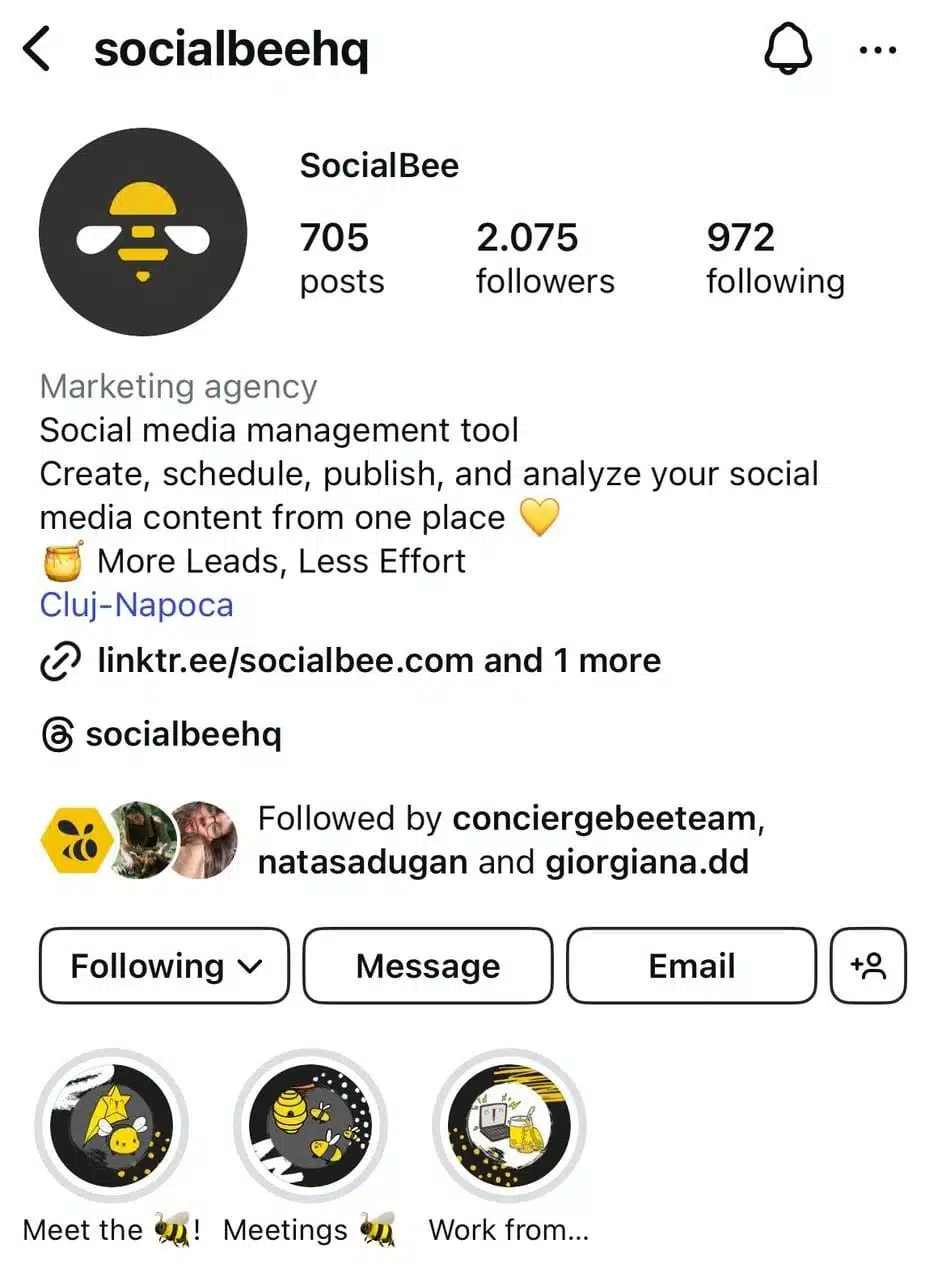
3. Add action buttons. If your business supports bookings, reservations, or orders, activate the appropriate buttons on your Instagram profile page to streamline conversions.
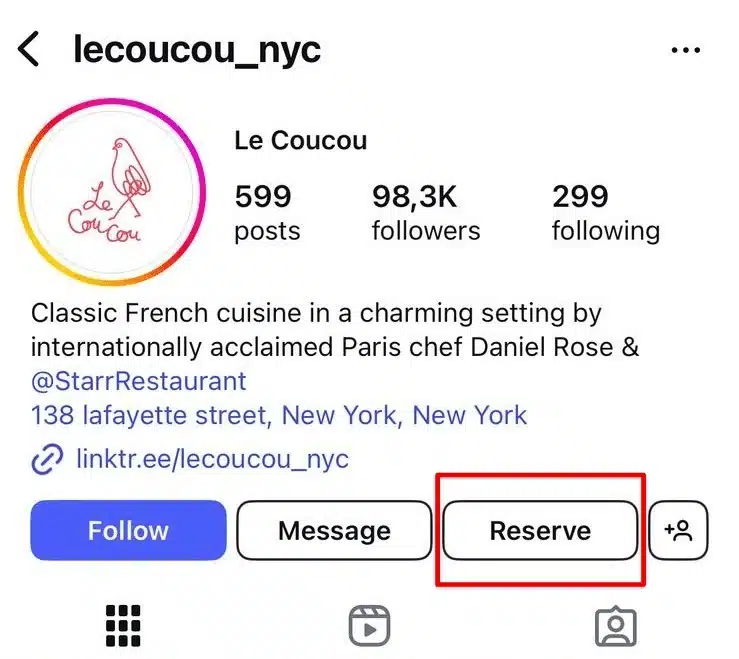
4. Create and organize Story Highlights. Save your most important Instagram Stories into Highlights so new visitors can quickly learn about your services, offers, FAQs, and behind-the-scenes content.
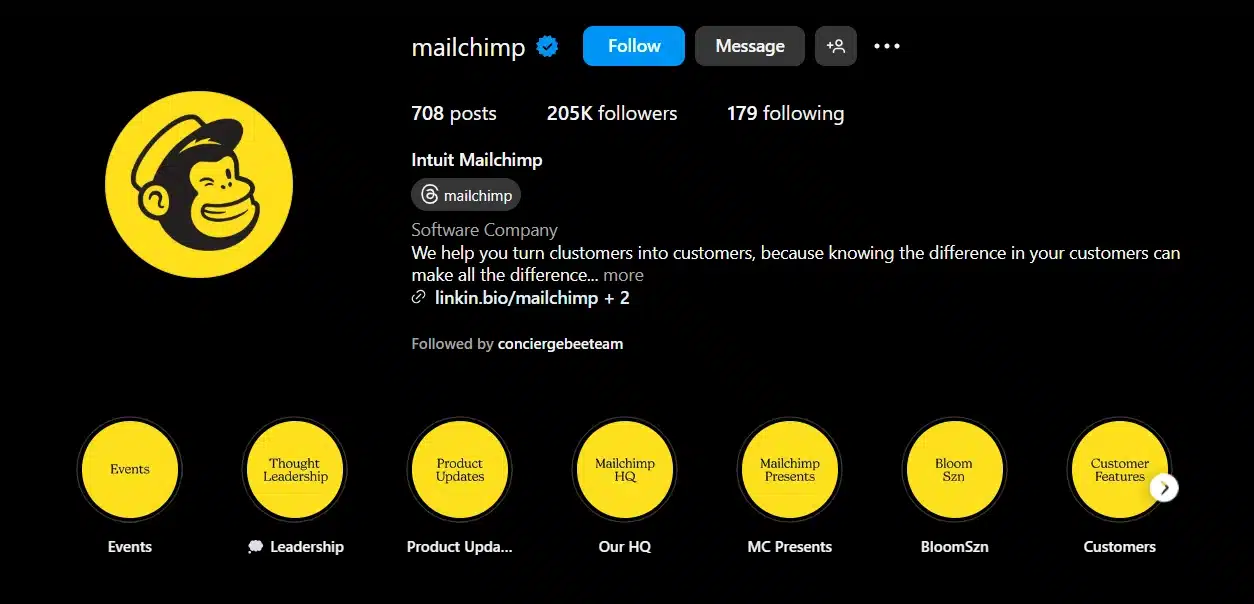
5. Optimize for search. Add relevant keywords to your name field and Instagram bio, choose the right category, and use clear language that helps your target audience find your Instagram account.
6. Understand the main content formats. Reels help with reach, carousels support education, Stories build daily engagement, Lives create real-time connection, and Notes offer quick updates.
7. Set up Instagram Shopping (optional). If you sell products, connect your catalog so users can browse and purchase directly from your Instagram feed and product tags, or even from your Reels and video ads.
How to create an Instagram marketing strategy
The best Instagram marketing strategy helps you understand what to post, why you are posting it, and how each post supports your brand’s goals. Instead of reacting to the algorithm, you follow a plan built around your target audience, your brand values, and the way people actually use the Instagram app.
Here is the framework I recommend when building an Instagram marketing strategy from scratch.
1. Define your goals
Your Instagram marketing journey starts with clear goals. Without them, it is impossible to measure whether your Instagram content is working. Use SMART goals that tie directly to business outcomes, not vanity metrics.
For example, a brand might set goals such as:
- Increase follower count by three thousand in one quarter
- Reach a six percent average engagement rate across Instagram posts
- Generate one hundred purchases per month from Instagram traffic
- Drive consistent website traffic through Reels and Stories
The more specific your goals are, the easier it becomes to plan content that supports them and track Instagram performance using analytics tools.
2. Identify your target audience
Your Instagram audience determines your tone, your visuals, and the type of Instagram marketing content you need to create. Think beyond social media analytics like demographics and focus on how your audience behaves on social media.
Consider:
- What they care about
- When they scroll
- What topics they save or share
- Which social media platforms they already use
- What problems they are trying to solve
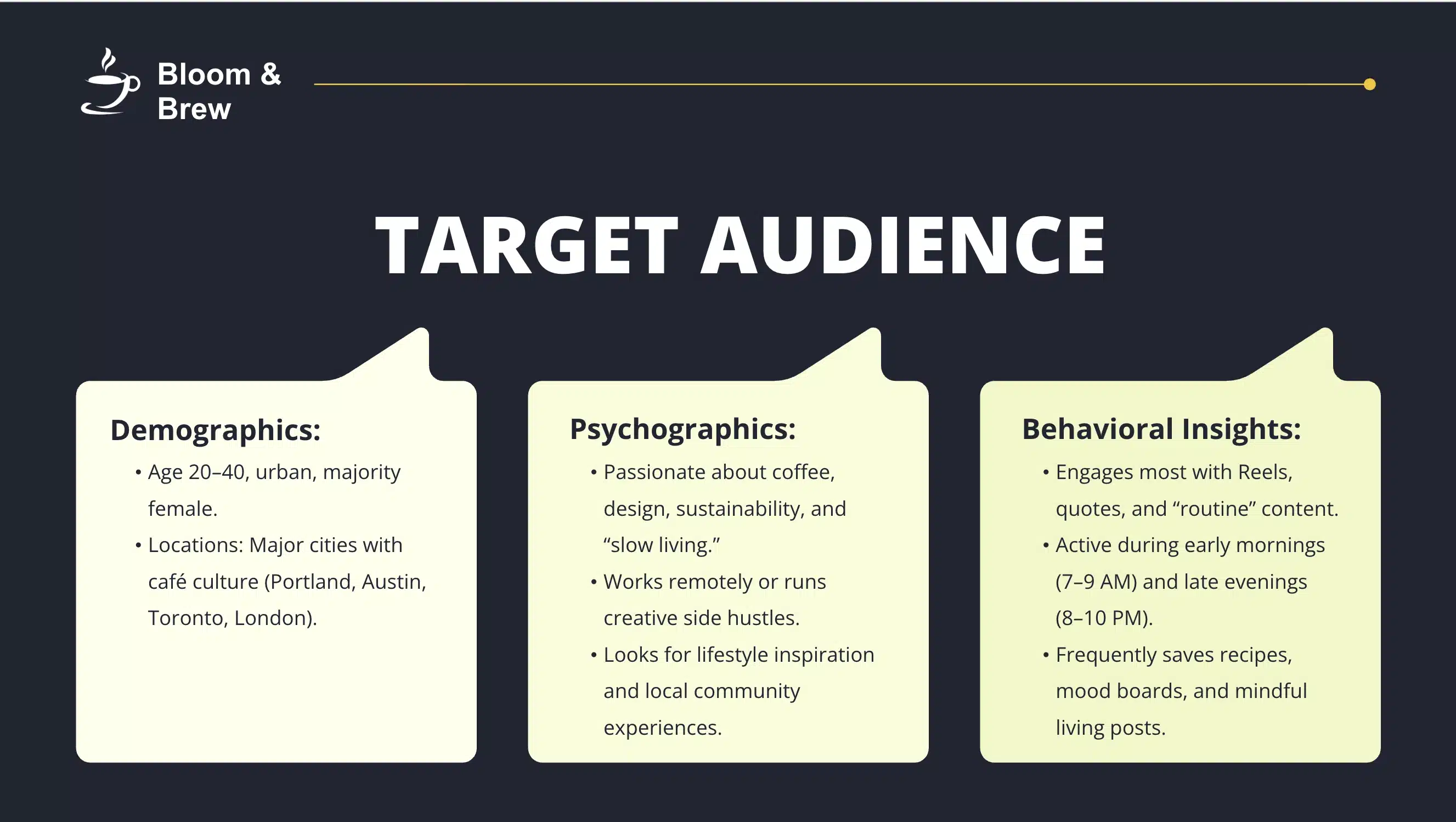
This step ensures your Instagram presence feels relevant and helps you create authentic content that encourages users to engage and come back.
3. Analyze competitors
Competitor analysis helps you understand what already works in your niche and where your Instagram strategy can stand out. Look closely at the content formats your competitors rely on most, whether they lean into Reels for reach, Stories for daily connection, or carousel posts for education.
Study the themes they repeat, identify trends, the visual identity they maintain, and how their grid is structured. Pay attention to how they approach influencer marketing or collaborations and which posts consistently earn unusually high audience engagement.
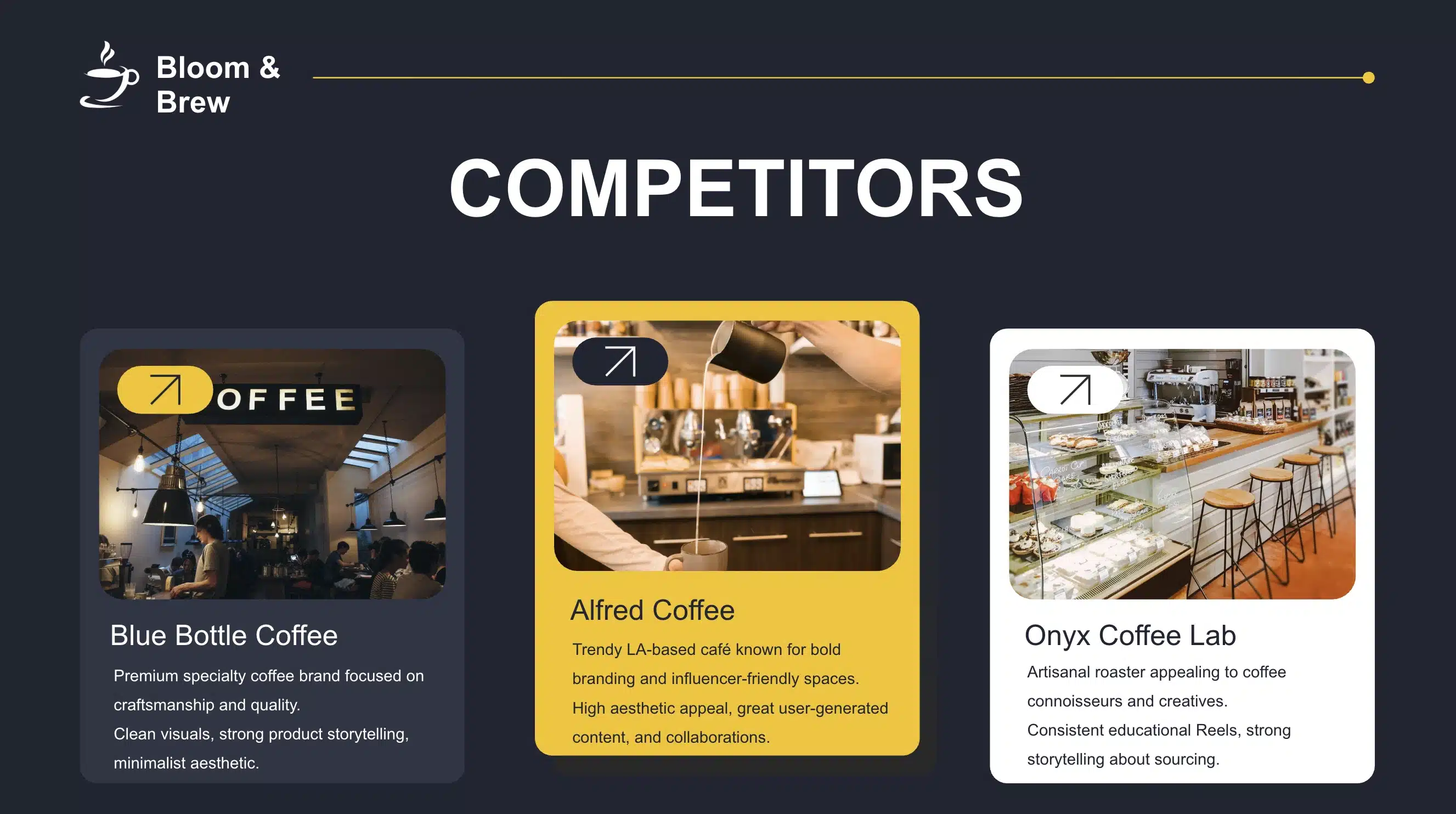
The goal is not to copy what others are doing but to see the patterns and use them to position your brand more strategically for marketing success.
4. Choose your content pillars
Your content pillars are the foundation of your Instagram marketing strategy. They help you stay consistent and prevent your social media feed from feeling scattered.
Common pillars that work across many industries include:
- Lifestyle or aspirational content that reflects your brand values
- Education or tips that position you as an expert
- Behind-the-scenes content that builds trust
- Community and user-generated content that strengthens relationships
- Product and offer content that supports conversions
“Your audience wants content that’s interesting, entertaining, educational, or valuable, and the algorithms want the exact same things,” highlights Adam Erhart, marketing strategist.
Choose three to five pillars you can commit to. These guide your ideas, your posting cadence, and the role each post plays in your Instagram campaign.
5. Develop your content plan
Your content plan brings your pillars to life. This is where you map out how often you post, what formats you use, and what recurring ideas will make your content more predictable and easier to produce.
A strong content plan usually includes a mix of:
- Reels for reach and discovery
- Carousel posts for education and storytelling
- Single images or graphics for quick updates
- Instagram Stories for daily touchpoints and interactive elements
Add recurring content series such as tips, routines, Q&As, fun facts, or customer photos. This makes planning social media posts far easier and gives your Instagram feed a steady rhythm.
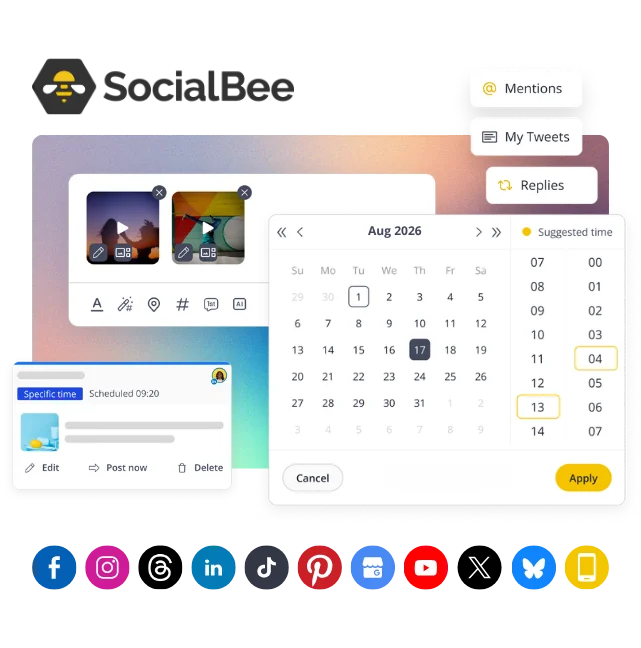
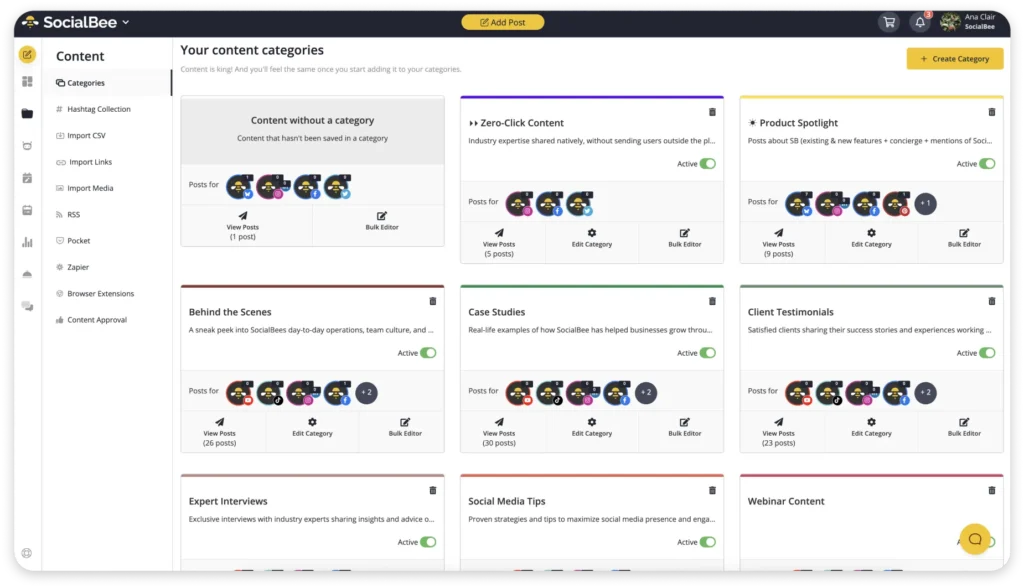
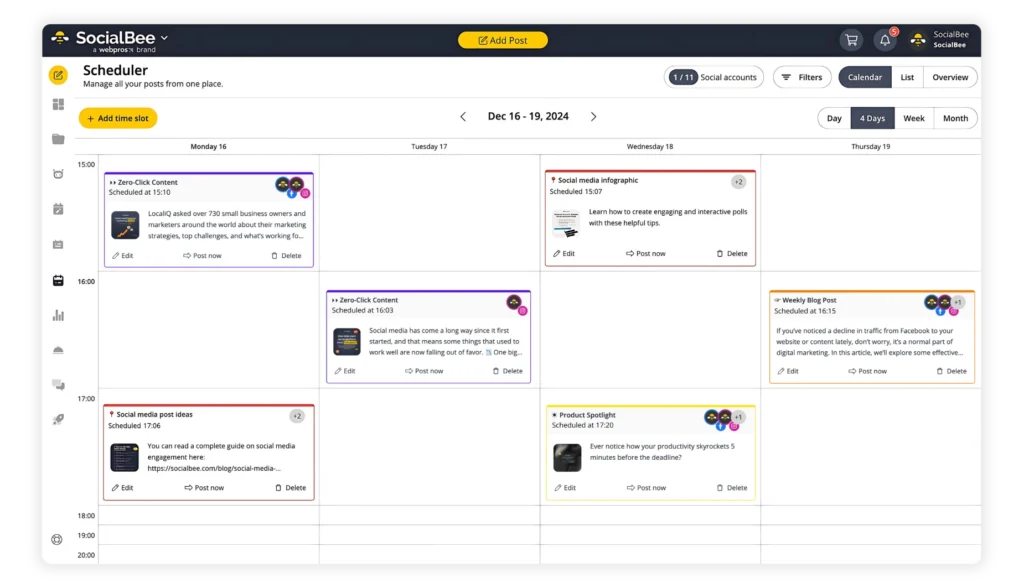
With SocialBee’s Content Categories, you can organize each recurring series into its own folder and keep your calendar balanced. It helps you plan posts faster, rotate different themes consistently, and make sure your Instagram feed never leans too heavily in one direction.
6. Decide on your visual direction
Visual consistency helps users recognize your brand immediately in their social media feed. Decide on the colors, fonts, and photography style that best reflect your brand personality.
Focus on:
- A defined color palette
- Consistent typography choices
- A photography or graphic style that matches your tone
- How your grid should look overall

A recognizable visual direction strengthens your Instagram presence and supports long-term brand visibility.
7. Write captions that resonate
Your Instagram captions should add value, not just words. Think of them as part of your message, not an afterthought.
Strong captions usually include:
- A clear hook that stops the scroll
- A useful idea or simple story
- Personality that reflects your brand voice
- A call to action that guides next steps
- Relevant keywords that help Instagram search understand your content
Good captions increase audience engagement and improve how your posts appear in the user’s feed.
8. Map your hashtag strategy
Hashtags still matter, especially when you want to reach niche audiences who are highly engaged. Instead of repeating the same group of hashtags in every post, create rotating sets that align with your content pillars and the themes you cover.
A balanced hashtag system usually combines a small number of branded hashtags, trending hashtags, broader industry hashtags that your competitors rely on, and niche community tags with smaller but more active groups of Instagram users.
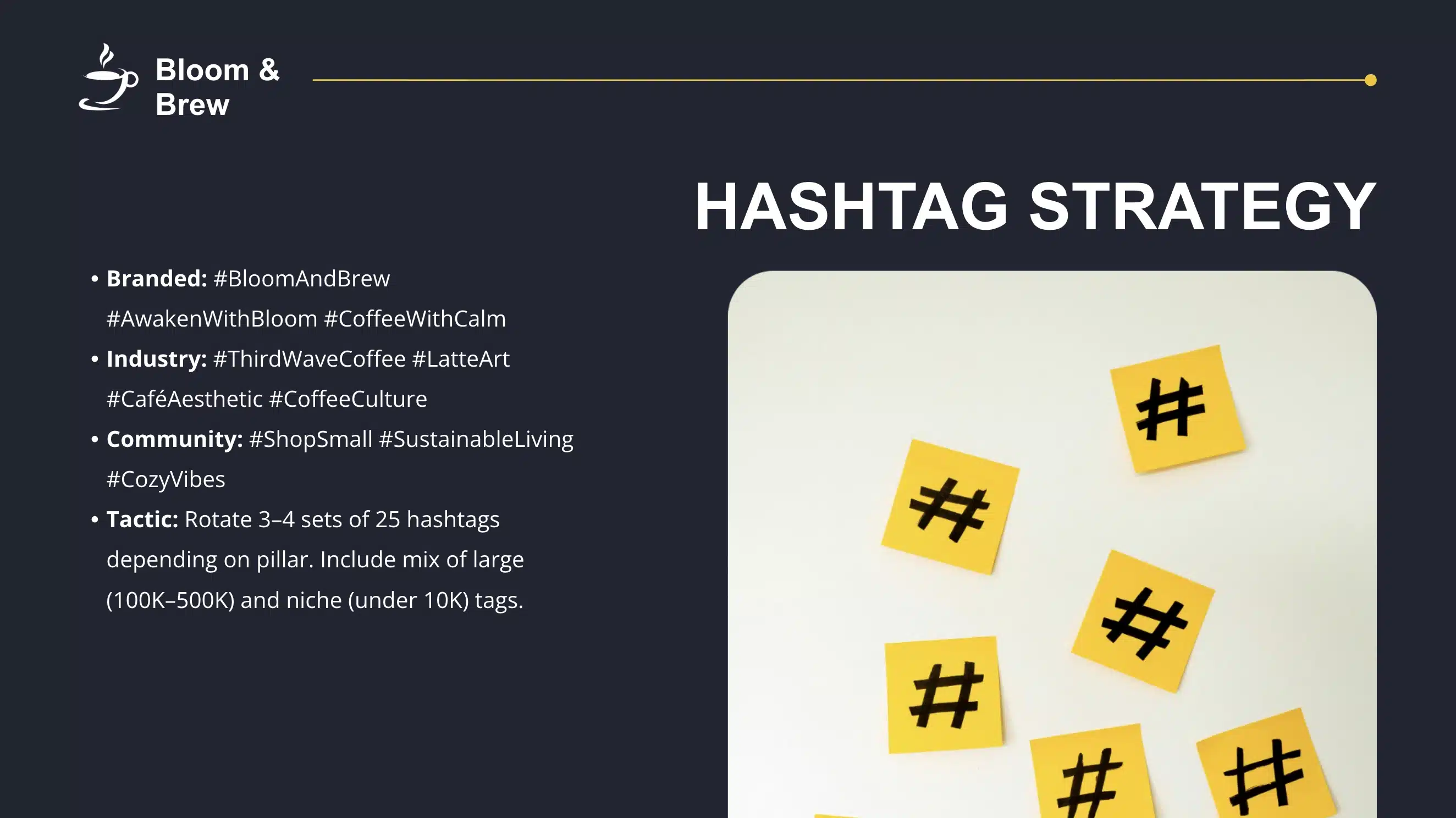
This mix helps your Instagram content appear in search results, suggested posts, and topic pages, all while supporting your wider social media strategy.
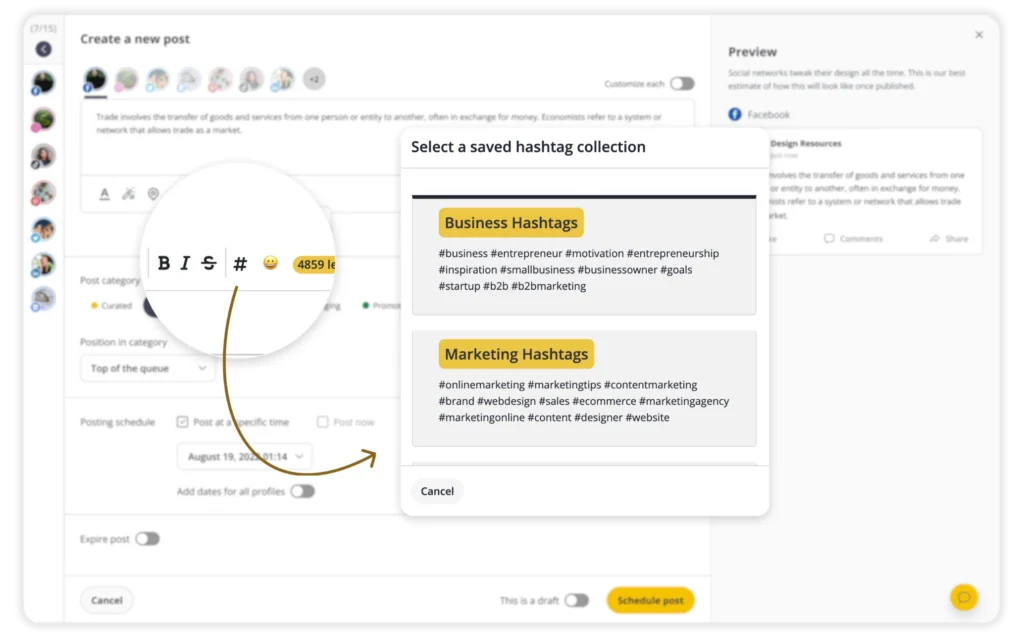
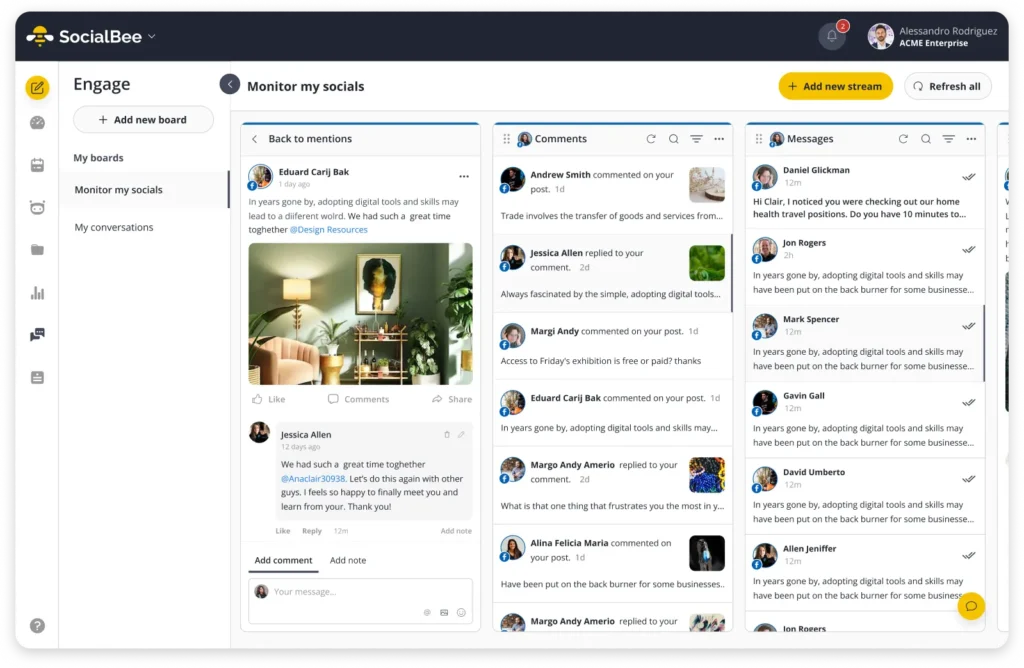
If you want an easier way to stay organized, SocialBee lets you save your hashtags into dedicated collections so you can rotate sets quickly, keep everything grouped by pillar, and add them to your posts with one click.
Instagram marketing strategy examples
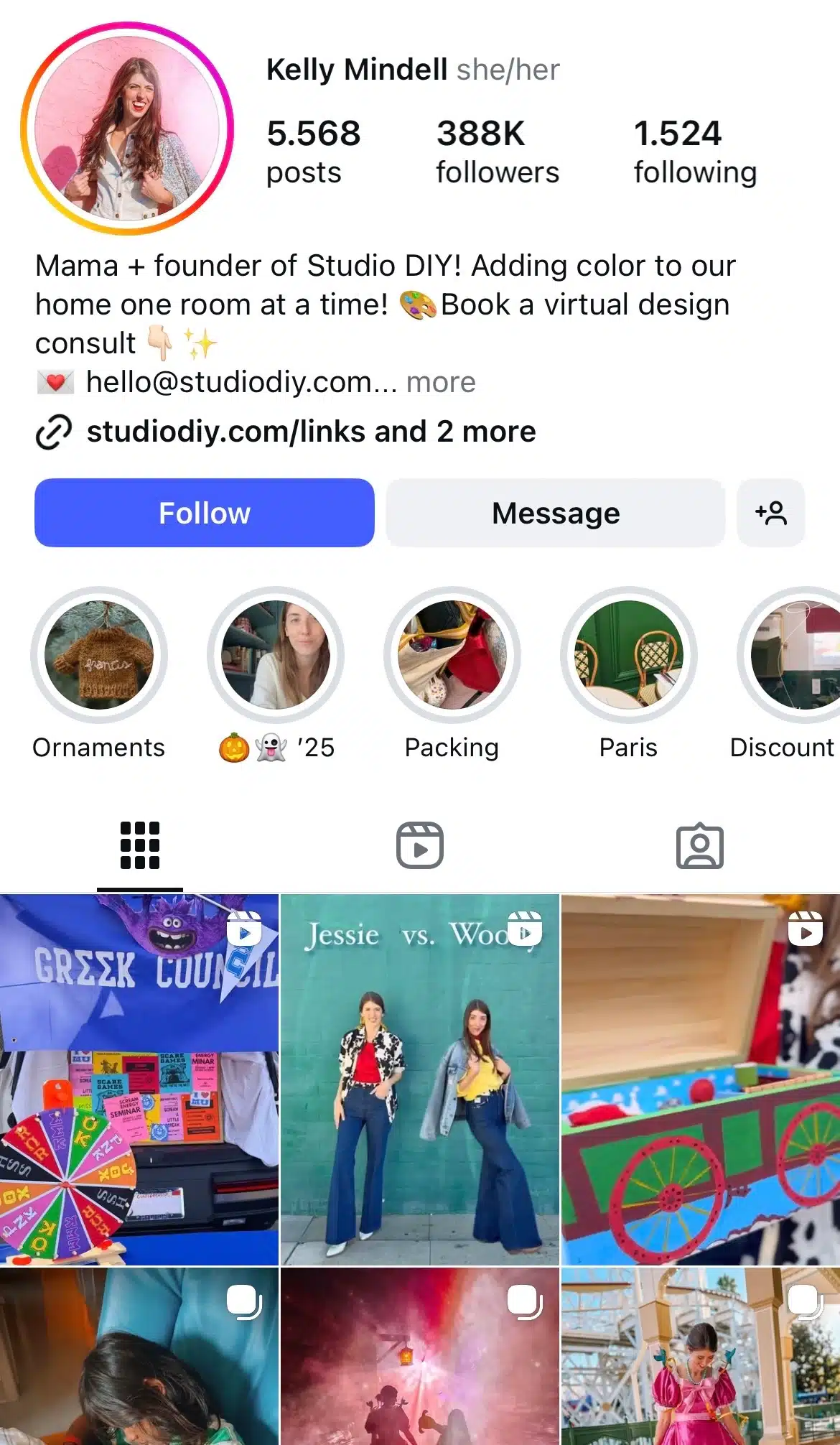
Studio DIY (@studiodiy)
Goal
Studio DIY has a creative marketing strategy that aims to inspire people to decorate with confidence by sharing colorful, achievable ideas for everyday life rather than intimidating home makeovers.
Audience
Her followers are mostly women interested in DIY decor, parenting, and joyful home styling. They come to her Instagram page for inspiration that feels fun, personal, and easy to recreate.
Approach
Kelly uses a mix of bright visuals, quick decor tips, and family moments to make her world feel accessible. Her Reels often show small transformations viewers can try at home, which keeps engagement high and makes her content feel less like an Instagram marketing campaign and more like a friendly conversation.
Content pillars
She focuses on bold DIY projects, seasonal ideas, personal stories, and behind-the-scenes glimpses that highlight creativity in everyday moments. Not only that, she balances polished posts with more spontaneous updates, giving her account a warm, human feel.
Results
Her strategy has brought her 387k followers so far, and an average engagement of 0.36%. She’s built a tight-knit community that can be found consistently in her comments, expressing admiration for her work. Her followers call her amazing, creative, and talented, and they love what she has to share.
What you can borrow
Kelly is a great example that you do not need a full production setup to stand out. Even on a simple photo-sharing app (which Instagram is far beyond), committing to a strong visual voice and showing small, repeatable ideas can make your content more memorable and relatable.
9Round (@9roundofficial)
Goal
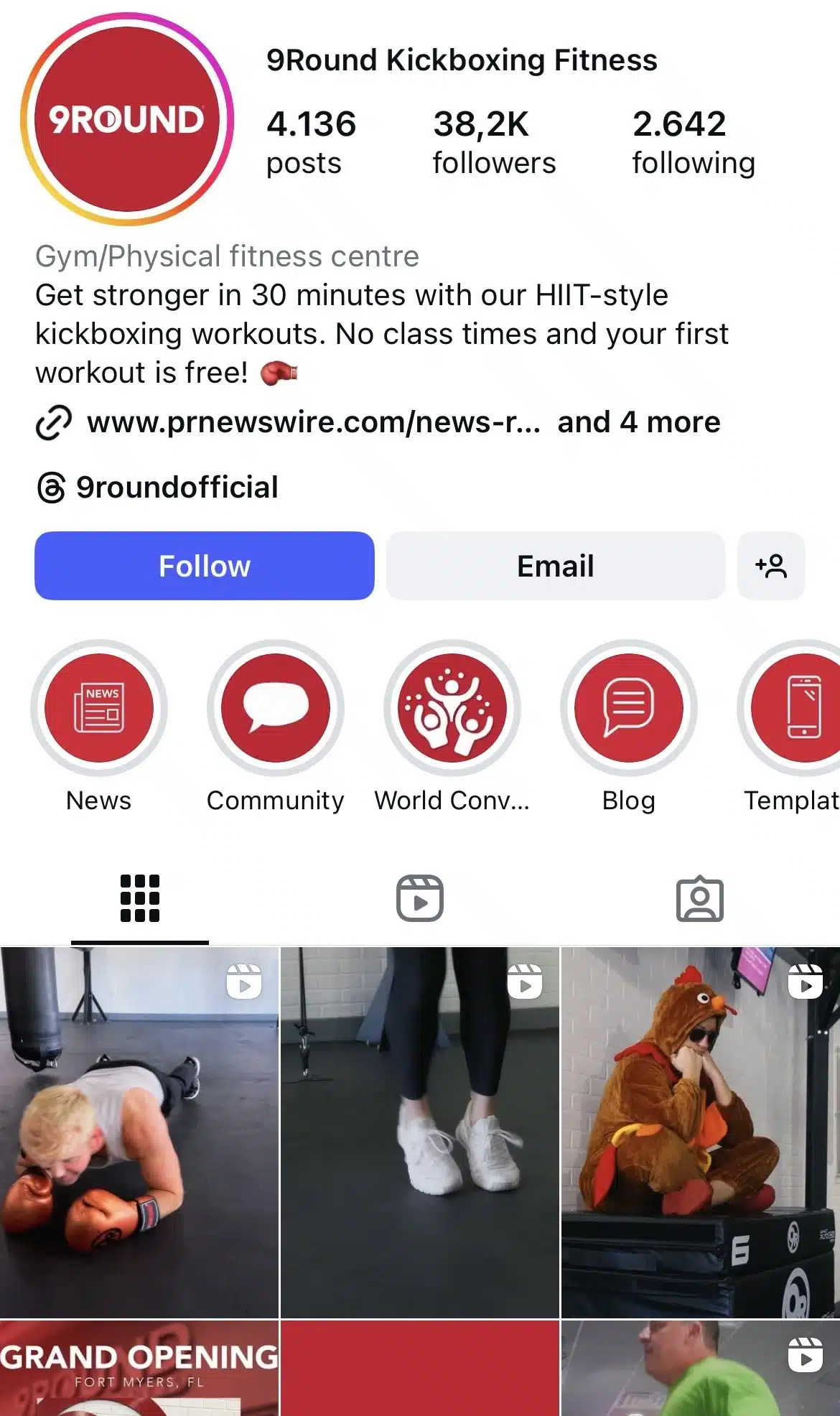
9Round focuses on attracting new members, building community loyalty, and showing that fitness can be friendly, flexible, and fun, compared to other accounts which tend to take a more serious route with gym content.
Audience
Their audience includes beginners who want approachable workouts and experienced gym goers looking for quick, structured sessions. The diverse mix keeps the community active and engaging.
Approach
The brand posts engaging content like energetic clips, quick workout demos, and celebratory moments from inside the gym. Staff members often appear in Reels, which reinforces the community-driven energy and makes the gym feel accessible to anyone considering a free introductory session.
Content pillars
Their content revolves around real workouts, member stories, seasonal themes, and global challenges. They consistently post content that looks energetic without feeling overly serious, which makes their professional account feel welcoming instead of intimidating.
Results
9Round has 38.2k followers and counting, and an average engagement rate of 0.14%. Users show admiration in their comments that feature owners of their different branches, and there are plenty of laughing emojis to be found under their humorous Reels.
What you can borrow
If you want to promote a service-heavy business, lean into personality. Showing your team, your process, and your customer experience builds trust faster than any polished ad.
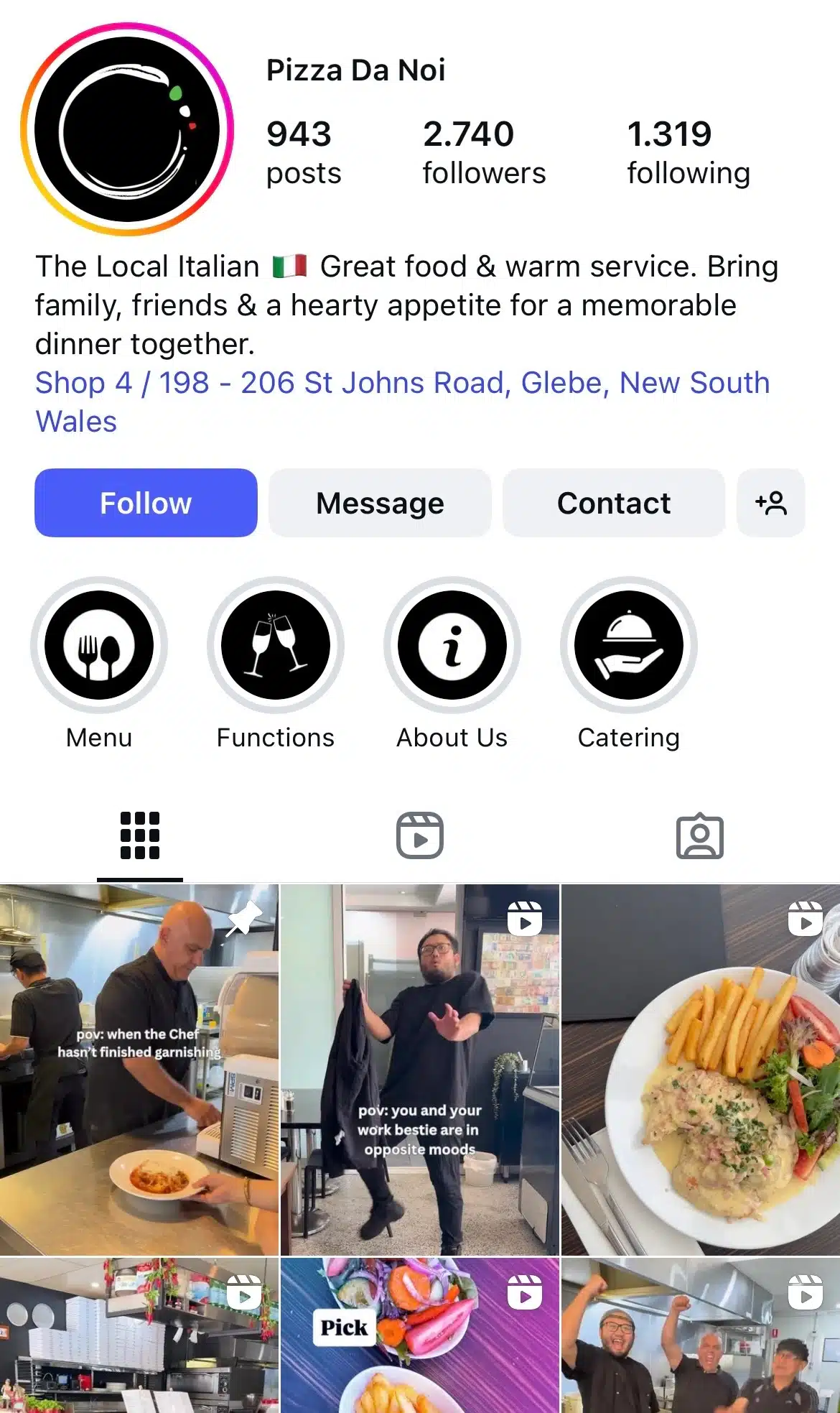
Pizza Da Noi (@pizza_da_noi)
Goal
The restaurant’s goal is to attract local customers, show the soul of the kitchen, and build loyalty through authentic, everyday storytelling.
Audience
Their audience includes locals, food lovers, and travelers searching for genuine Italian comfort food. These followers care more about connection and atmosphere than perfectly staged images.
Approach
Pizza Da Noi embraces authenticity. Most Reels come straight from the kitchen or dining room, capturing candid interactions and the natural rhythm of service. By showing unfiltered moments, the brand makes viewers feel like they’re already part of the community.
Content pillars
They share behind-the-scenes clips, staff highlights, customer moments, and mouthwatering dishes without over-editing. This natural style suits a small business that relies on trust, word of mouth, and repeat visits.
Results
This is the smallest out of the social media accounts we’re looking at, with 2.7k followers, but that’s still an amazing amount for a local restaurant. Their engagement rate is on par with the biggest account we looked at, Kelly Mindell’s, at 0.36%.
Because their content showcases what life is like behind the scenes working at a restaurant, you’ll find a lot of comments from people from the industry relating to life in the kitchen or as a waiter.
What you can borrow
Authenticity is powerful. When you show real people, real kitchens, and real stories, your Instagram marketing can feel more like a conversation than content. This approach works well for small restaurants and shops that want to create deeper connections through their Instagram page.
Frequently asked questions
1. How often should brands post on Instagram?
Brands should post on Instagram three to five times per week for feed content and share Instagram Stories daily to stay visible. A consistent posting schedule encourages engagement and gives the algorithm more opportunities to surface your content.
The ideal frequency varies by industry and audience behavior, so reviewing Instagram Insights regularly will help you decide when your audience is most active. The answer might not be the same for a beauty brand and a local cafe, for example.
2. Which content formats perform best on Instagram?
Reels currently deliver the strongest reach because the format is favored in the recommendation feed and often surfaces to non-followers. Carousel posts perform well for education, storytelling, and tutorials because users spend more time swiping through them.
Stories remain the best format for quick updates, behind-the-scenes content, and interactive elements like polls and question stickers. Testing a mix of short-form videos, carousels, and Stories usually leads to the most balanced results.
3. Do hashtags still matter for Instagram?
Yes, hashtags still matter on Instagram, but they work as a discovery tool rather than a growth hack. Relevant keywords in your caption and a small set of focused hashtags help Instagram understand your content and show it to the right users.
Branded hashtags also support user-generated content and make it easier to organize posts created by customers or your community. Using Instagram’s analytics tools to monitor reach from hashtags can help you fine-tune your content strategy over time.
Ready to build your own Instagram marketing strategy?
A strong Instagram strategy is built by making a few smart decisions and sticking to them. When you understand your target audience, choose clear content pillars, and create content that reflects your brand values, your Instagram account becomes easier to maintain and more effective at driving results.
The social media marketing examples in this blog post show how simple structures can support growth without adding extra pressure to your marketing workload.
Use the free template to map out your plan and keep your ideas organized. If you want help managing the day-to-day tasks, SocialBee gives you an easy way to plan your Instagram content, schedule posts, and track what performs.
Start your 14-day free trial today and focus on creating content that feels natural to your brand and useful to the people you want to reach.
Choose your next read:
- [Template] Build your Instagram content calendar
- How to make a collage on Instagram story
- How to Hide Likes on Instagram: A Quick Guide
- How to add a link to your Instagram Story: Best practices
- How to schedule a collab post on Instagram
- How to Get Verified on Instagram in 5 Simple Steps
- Best Instagram account examples from real brands & creators