I’ll be honest: most Facebook marketing advice sounds great in theory and then falls apart the moment you try to apply it to a real Facebook business page.
I’ve seen it happen plenty of times. Businesses create a Facebook page, publish a few Facebook posts, maybe run a small Facebook ad campaign, and hope for results. But without a clear Facebook marketing strategy, those efforts rarely lead to real audience engagement, leads, or sales.
That’s why I put this guide together. It’s a practical, step-by-step Facebook marketing strategy example you can actually use, plus a free template to help you turn the strategy into action and build a stronger Facebook presence as part of your wider digital marketing strategy. Let’s see how it works in practice!
What is a Facebook marketing strategy?
A Facebook marketing strategy is a structured plan for how a business uses Facebook to reach a specific audience and achieve clear marketing goals.
It sets direction for how a Facebook business page is managed, what kind of Facebook content gets shared, and how Facebook advertising is used alongside organic posts. It also defines who the target audience is, how often Facebook posts go out, and how results are tracked using Facebook analytics tools.
In practice, a Facebook marketing strategy helps keep Facebook marketing efforts focused, so content, ads, and community activity all work toward the same outcome instead of feeling scattered.
Step-by-step guide: How to build your Facebook marketing strategy
Before you think about Facebook posts, ads, or content calendars, you need a clear structure. Without one, Facebook marketing quickly turns into scattered efforts that are hard to measure and even harder to improve.
This step-by-step guide shows how I approach building a Facebook marketing strategy from the ground up. It starts with defining how your brand shows up on the Facebook platform and ends with tracking performance so you can make informed adjustments over time. Each step builds on the previous one, giving you a practical framework you can reuse for your own Facebook business page or client work.
Here are the 10 steps you need to build a Facebook marketing strategy:
- Define your voice, values, and visual style
- Specify who you want to reach
- Set your goals and KPIs
- Analyze competitors
- Pick 5 core topics your audience cares about
- Decide which post types you’ll use (Reels, Stories, posts, video, etc.)
- Plan your monthly content calendar
- Set up your community management system
- Build your Facebook ads strategy
- Track performance and optimize
Step 1: Define your voice, values, and visual style
Before posting anything, decide how your brand should come across on Facebook. If this isn’t clear, your Facebook page will feel inconsistent fast.
Start with your voice. Write down how you speak in Facebook posts and comments. Are captions short or explanatory? Do you use emojis or avoid them? This matters even more if more than one person manages the business Facebook page.
Next, define your values. These guide what you post, what you avoid, and how you respond to comments or Facebook Messenger messages. It keeps community management consistent and avoids mixed signals.
Finally, lock in your visual style. Pick your main colors, fonts, and image style. Decide how video ads, Stories, and static posts should look. This helps your Facebook content stay recognizable and makes creating multiple creative assets much easier.
Do this once, write it down, and use it as a reference. It will save time every time you plan posts, ads, or your content calendar.
Step 2: Specify who you want to reach
If you don’t define your audience, your Facebook marketing turns into broad posting with mixed results.
Start by describing your Facebook target audience in concrete terms. Age range, location, job type, interests, and buying intent are usually enough. Use Facebook audience insights and Facebook analytics to check who already follows your Facebook page and who engages with your Facebook posts.
For example, a local Pilates studio might define its Facebook target audience as women aged 25–45, living within a 10 km radius, working office or hybrid jobs, and interested in Pilates, yoga, and stress relief. This audience is more likely to engage with Facebook content about beginner-friendly classes, short workout videos, and after-work schedules.
If you’re running Facebook ads, this definition becomes your base inside Meta Ads Manager. You’ll use it to create saved audiences, guide ad campaigns, and control your Facebook marketing budget.
Write this down as a short audience profile. It should be specific enough that anyone creating Facebook content or managing ads knows exactly who they’re trying to reach.
Step 3: Set your goals and KPIs
Once you know who you’re targeting, you need to be clear on what Facebook should deliver for the business. Without defined goals, Facebook marketing efforts are hard to evaluate and even harder to improve. Start by setting one or two Facebook marketing goals tied to actual outcomes.
Each Facebook marketing goal should be SMART:
- Specific: Clearly defined, not broad
- Measurable: Tied to numbers you can track
- Achievable: Realistic for your budget and resources
- Relevant: Connected to a real business outcome
- Time-bound: Set within a clear timeframe
Example: Increase website traffic from Facebook by 20% over the next three months, measured through link clicks and landing page views in Facebook analytics.
Then choose key performance indicators that match those goals, such as:
- Link clicks and landing page views
- Leads, messages, or form submissions
- Conversion events from Facebook ads
- Reach, engagement, and video views
Track these regularly using Facebook analytics and the insights tool inside Meta Business Suite. Clear goals and KPIs make it easier to decide which Facebook posts, ad campaigns, and content formats are worth continuing and which need adjusting.
Step 4: Analyze competitors
Competitor analysis gives you context. It shows what already exists in your space and where your Facebook presence can stand out.
Start by identifying 3 to 5 competitors with an active Facebook page. Look at how often they post, what type of Facebook content they share, and which posts get the most audience engagement. Pay attention to tone, visuals, post formats, and whether they rely more on organic posts or paid Facebook ads.
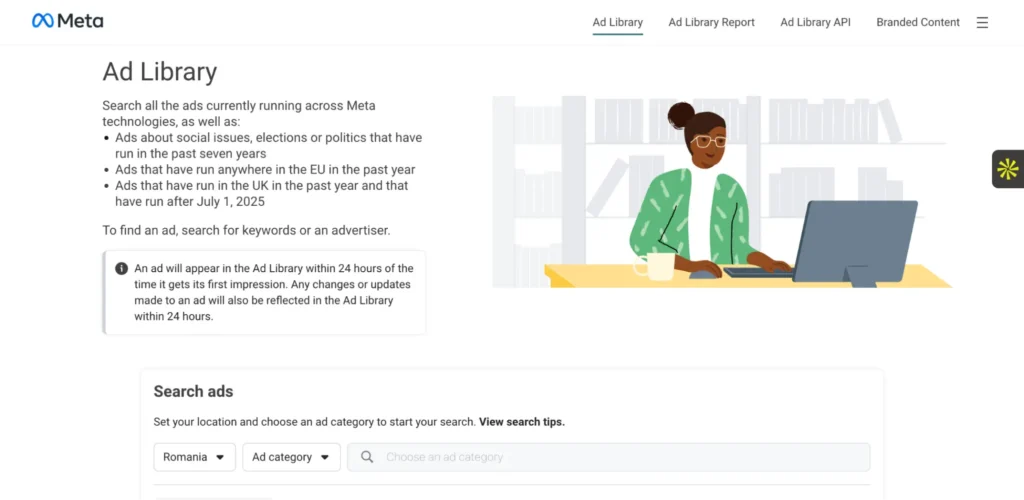
You can also check the Facebook Ads Library to see which ad campaigns competitors are running, what offers they promote, and how they structure their video ads or static creatives. This helps you understand common messaging and spot gaps you can use.
The goal isn’t to copy. It’s to understand patterns, avoid obvious mistakes, and make clearer decisions about your own Facebook content strategy and advertising approach.
Step 5: Pick 5 core topics your audience cares about
Once you know who you’re talking to, content planning gets simpler. You stop asking what to post and start rotating through a few topics that actually make sense for the business.
For a skincare brand, those topics could look like this:
- How to use the products: Simple routines, ingredient explanations, and tips people can apply right away.
- Common skin problems: Acne, sensitivity, dryness, breakouts during stress or seasonal changes.
- Real customer results: Reviews, before-and-after photos, and user generated content shared by customers.
- Behind the scenes: Product development, sourcing decisions, packaging, and brand updates.
- Launches and offers: New products, restocks, bundles, and limited-time promotions.
When every Facebook post fits into one of these buckets, your content stays relevant and planning a monthly content calendar becomes much easier.
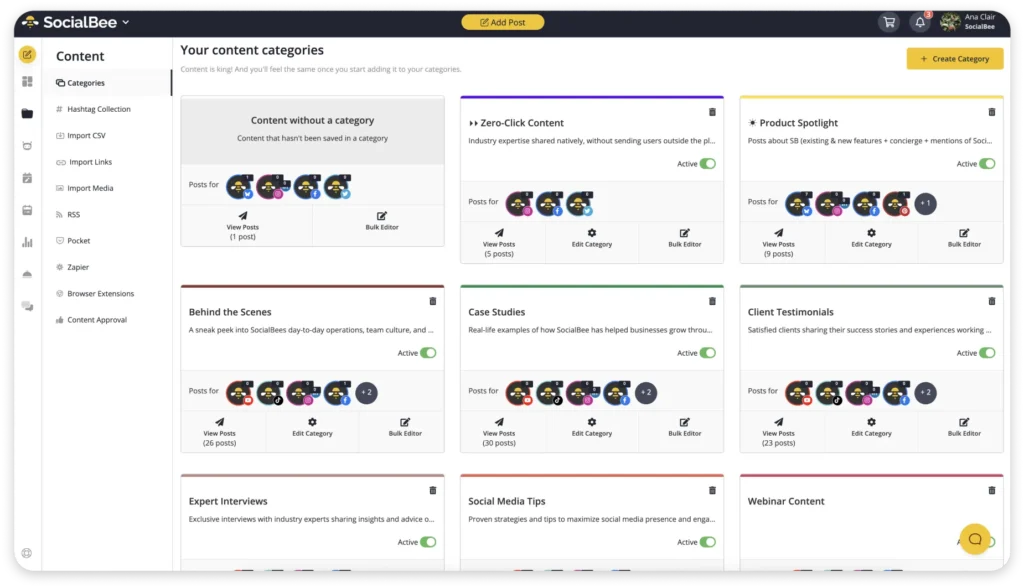
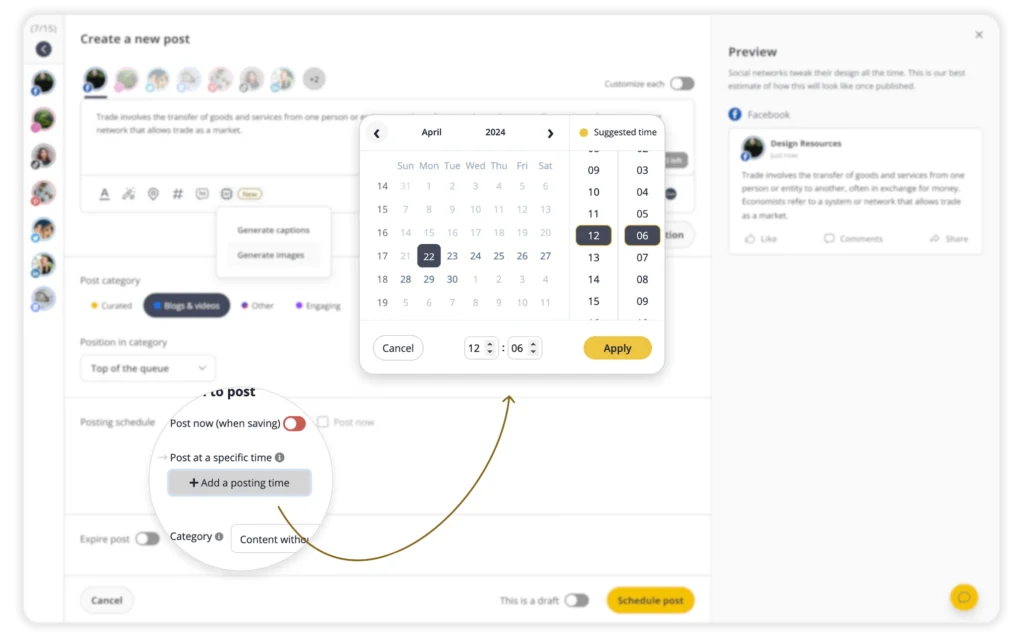
Step 8: Set up your community management system
Once your Facebook page becomes active and posts starts appearing in news feeds, people will respond. Comments, messages, replies, and tags all start to pile up, and without a system, it’s easy to miss them.
Start by deciding how you’ll handle interactions on your business page. Who replies to comments? Who answers Facebook Messenger messages? How quickly should people expect a response? Should you post on Facebook groups? These rules matter for audience engagement and brand trust.
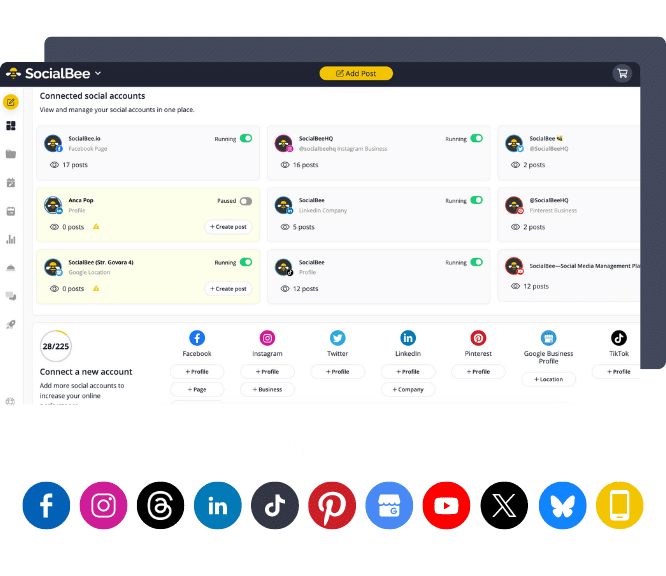
Use community management tools like SocialBee to manage comments and messages in one inbox and track basic response metrics through Facebook analytics. If your Facebook presence grows, consider simple automations like Facebook bots for FAQs or booking questions, especially during off-hours.
Step 9: Build your Facebook ads strategy
Facebook ads work best when they build on what you already know from your organic Facebook marketing. If your Facebook posts are already telling you what people react to, your ads should extend that, not reinvent it.
Start by deciding what your next Facebook ad campaign is meant to do. Keep it focused.
Each Facebook ad campaign should have one clear purpose, such as:
- Driving traffic to a website or blog post
- Generating leads or inquiries
- Promoting an offer or event
- Retargeting people who interacted with your Facebook posts
Next, set up your Facebook ad account properly. Inside Facebook Ads Manager, focus on:
Clear audience targeting using audience insights and Facebook’s targeting capabilities
Saved audiences you can reuse across campaigns
A realistic ad spend you’re comfortable testing with
Tracking and key metrics inside Facebook analytics
Strong ad copy matters more than polish. Clear language, one idea, and a direct call to action usually outperform clever concepts. Test different ad formats, placements, and visuals instead of relying on one “perfect” ad example. Over time, this gives you real data on what drives results.
Use the Facebook Ads Library to study some of the best Facebook ad examples and see how other brands structure their campaigns. This helps you spot patterns across great Facebook ads, from carousel ads, to video ads, or even to testimonial ads, without copying blindly.
Step 10: Track performance and optimize
This is the part most people rush through, even though it’s where your Facebook marketing campaign either holds up or falls apart.
Start with your organic content. Look at how your Facebook page and Facebook posts perform over time. Check Facebook analytics to see which posts get consistent engagement, which topics people interact with, and which formats get ignored. You’re looking for patterns, not one-off spikes. Over time, this tells you what your audience actually cares about.
For organic posts, tools like SocialBee make this easier by showing post-level performance in one place. You can compare weeks or months, see what performs best, and adjust your content calendar without jumping between dashboards. This is about posts, not ads.
Then move on to paid Facebook marketing. Inside Ads Manager, review how each Facebook ad campaign performs against its goal. Look at clicks, leads, conversions, and how different creatives perform with the same audience. If an ad underperforms, pause it. If one format works well, reuse it and test small variations.
A few things worth reviewing regularly in your Facebook marketing strategy:
- Engagement and reach on Facebook posts
- Topic and format performance across your content strategy
- Clicks, leads, or conversions from Facebook ads
- Cost efficiency and signs of fatigue in ad creatives
Optimization doesn’t mean constant changes. It means making informed adjustments based on real data. Over time, this is what improves Facebook marketing ROI and keeps your Facebook efforts focused on what actually works.
Get your free Facebook marketing strategy template!
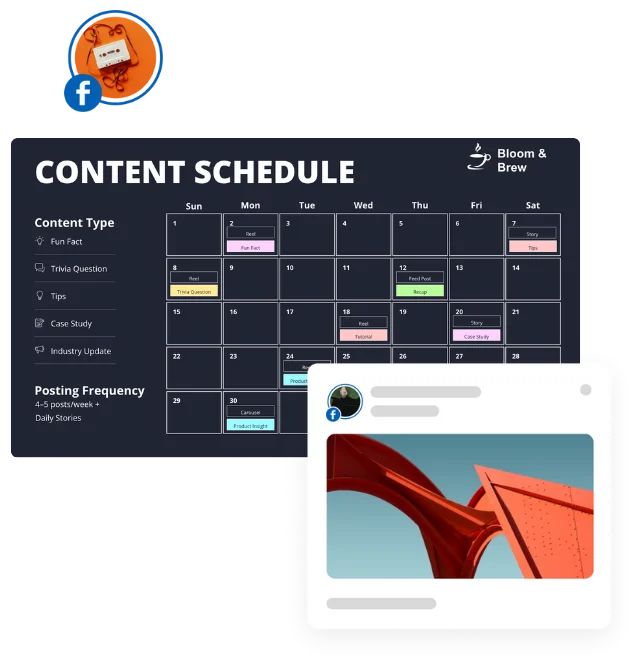
We created this Facebook marketing strategy template to help you apply everything covered in this guide without overcomplicating the process. It’s a practical working document you can use to define your goals, target audience, content plan, and tracking approach for your Facebook page.
Use it as a starting point or as a reference you come back to when adjusting your Facebook marketing over time.
3 Facebook marketing strategy examples to take a look at
Good Facebook marketing isn’t about doing everything the platform offers. It’s about knowing what role Facebook plays for your business and using it with intention.
The three brands below use Facebook in very different ways, but they all share one thing: their Facebook pages feel purposeful. The content fits the product, the audience, and the way people actually use Facebook. No random posting. No chasing trends that don’t make sense for the brand.
These examples are useful because they show how Facebook can work as an educational channel, a brand-building space, or a visual trust-builder, depending on what you sell and who you’re talking to.
Here are the three Facebook marketing strategy examples we’ll talk about:
- Hims: Owning the conversation everyone else avoids on Facebook
- Harry’s: A razor brand that knows how to behave like a real Facebook page
- ThirdLove: Selling comfort through visuals and feeling-first content
#1: hims: Owning the conversation everyone else avoids on Facebook
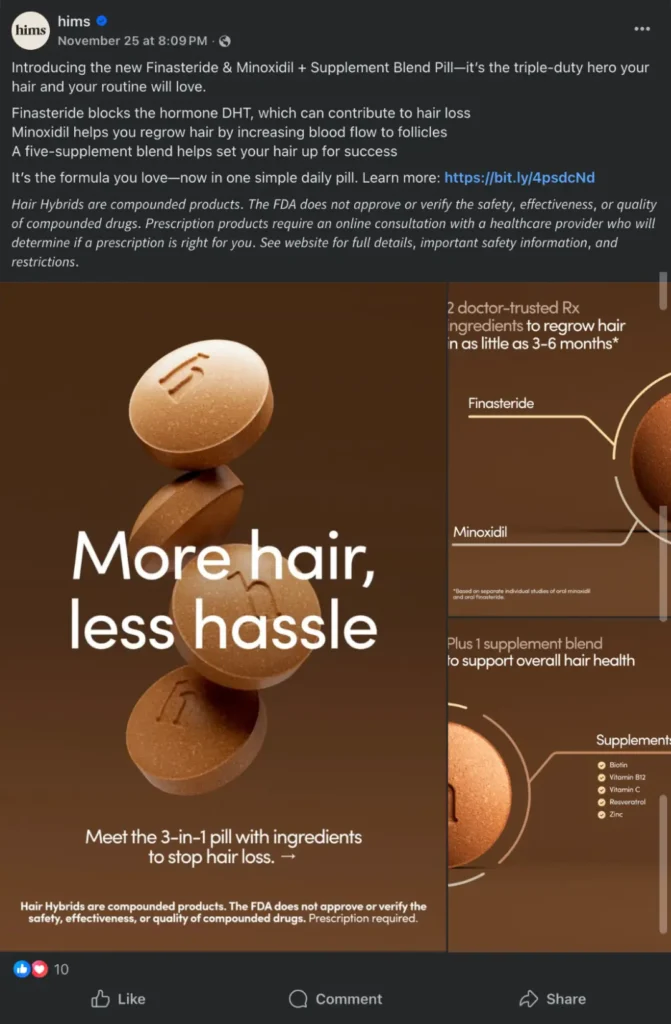
hims uses Facebook as an educational channel first and a marketing channel second. Their hims built a big part of its growth on Facebook by doing one thing very well: saying out loud what most brands in health and wellness avoid.
Their Facebook marketing focuses on direct, plain language. Hair loss, sexual health, mental health: the topics are sensitive, but the tone isn’t. Posts get straight to the point and speak to a specific problem their target audience already recognizes. That clarity is what makes people stop scrolling.
Most of their posts fall into a few clear formats. Educational posts explain one issue at a time, like why hair thinning happens or what to expect from treatment over the first few months. The language stays simple and direct, which keeps comments practical instead of skeptical.
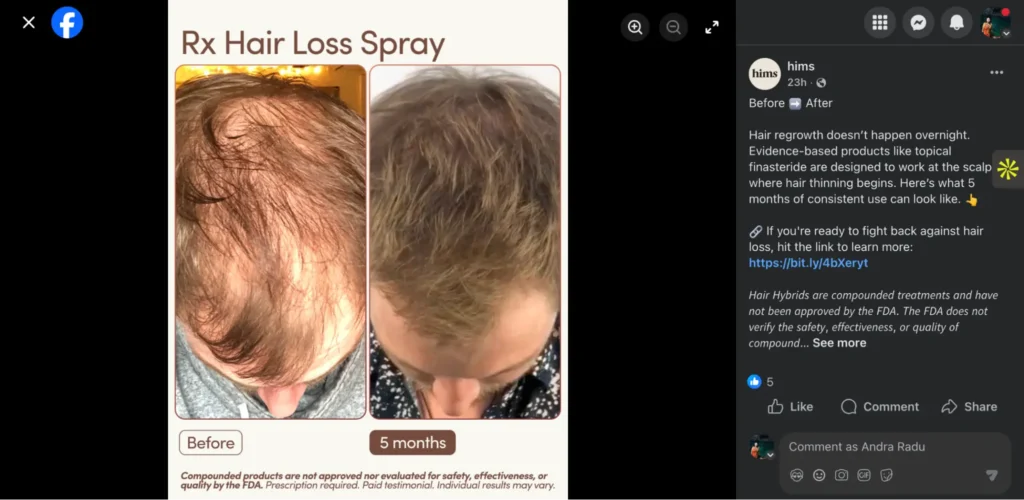
They also use before-and-after style content, but keep it realistic. No exaggerated transformations, no bold promises. That restraint builds trust and makes the content feel believable in the Facebook feed.
Short videos and Reels are usually explanatory. A person on screen, a clear point, and a calm tone. These posts work because they answer questions people are already asking privately, which leads to saves, shares, and longer comment threads.
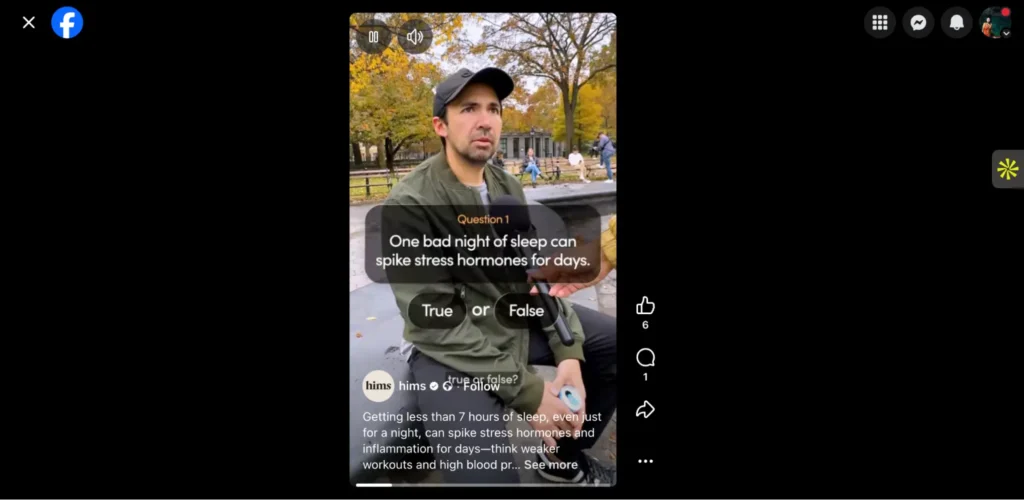
hims shows that on Facebook, steady, useful content can outperform flashy formats. Clear messaging and consistency go a long way toward building trust and long-term engagement.
#2 Harry’s: A razor brand that knows how to behave like a real Facebook page
Harry’s sells razors and shaving products, but their Facebook marketing rarely feels like product marketing.
As a business, Harry’s uses Facebook to show personality first and products second. Their Facebook page mixes brand content with culture, humour, and people, which makes the page feel human instead of corporate.
One clear example is how they feature their own team. Meet-the-team posts introduce employees in a casual, unpolished way. No big brand story attached. Just people behind the product. These posts tend to get strong engagement because they feel personal and low-pressure.

Seasonal content is another strong point. Around the holidays, Harry’s leans into trendy Christmas Reels and short-form videos that match what’s already circulating on Facebook. Festive, slightly ironic, and easy to watch. The products are there, but they’re not the headline.

#3 ThirdLove: selling comfort through visuals and feeling-first content
ThirdLove sells bras and underwear, and their Facebook marketing reflects that focus from the first scroll.
Their Facebook page leans heavily into sensory marketing. Most posts are calm, clean, and visually soft. Neutral colors, close-up fabrics, natural lighting, and relaxed poses dominate their feed. The content is designed to make you imagine how the product feels, not just how it looks. That aesthetic consistency makes their Facebook page instantly recognizable.

A lot of their Facebook posts focus on fit, comfort, and everyday wear, rather than dramatic transformations. You’ll see posts about how a bra should feel at the end of a long day, how different body shapes fit into their sizing system, or why comfort matters more than trends. The copy stays simple and reassuring, which matches the visuals.

They also use giveaways strategically. These aren’t loud or overly promotional. Usually, they’re tied into self-care, seasonal moments, or community appreciation. Giveaways help boost engagement, bring new people to the page, and encourage saves and shares without breaking the brand’s tone.
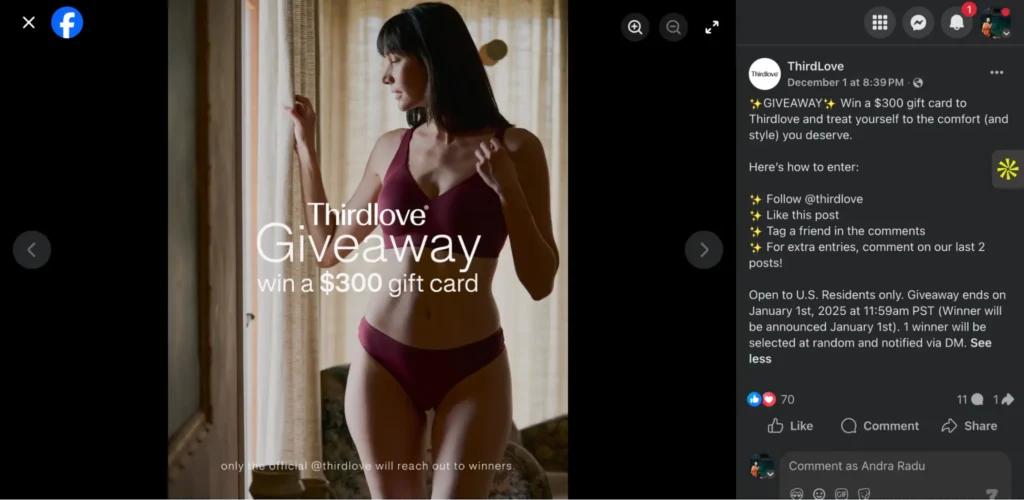
What works well here is restraint. ThirdLove doesn’t overpost, chase formats, or force trends. Their Facebook marketing stays aligned with the product and the audience, which helps build trust and long-term brand loyalty instead of short-term spikes.
Frequently asked questions
1. How often should I post on Facebook?
Consistency matters more than volume. For most Facebook business pages, posting 3 to 5 times per week is enough to stay visible without overwhelming your audience.
The exact frequency depends on your resources, your audience engagement, and the type of Facebook content you share. Track performance in Facebook analytics and adjust based on what actually gets reach and interaction.
2. Can I use the same strategy for Instagram and Facebook?
You can reuse the foundation, but not the execution. Your overall social media strategy and marketing goals can stay aligned, but Facebook users interact differently than Instagram users.
Facebook posts tend to perform better with longer captions, links, community-driven content, and discussion-based formats, while Instagram focuses more on visuals and short-form video. Treat Facebook as its own platform within your social media channels.
3. How can I plan my Facebook content ahead of time?
Start with a simple content calendar. Plan your Facebook posts by theme, goal, and format, then map them out weekly or monthly. Using tools like SocialBee makes it easier to schedule content, review insights, and keep your Facebook marketing efforts consistent without planning everything last-minute.
4. Can I promote multiple products on Facebook without overwhelming people?
Yes, but structure matters. When you promote multiple products on one Facebook page, each post should focus on a single idea or use case. Mixing too many messages in one published post usually weakens the result.
A good approach is to rotate products through your posting schedule and vary the ad type you use. For example, use a lifestyle photo for one product, a short video for another, and a simple testimonial ad for a third. This keeps your Facebook presence varied while still building social proof over time.
If you run paid ads, separate products into different campaigns or ad sets so you can track campaign performance properly in Facebook analytics and social media analytics. This makes it easier to see which product attracts potential customers and which needs a different angle.
5. What makes a Facebook ad actually work?
A great ad doesn’t need to be complicated. It needs to grab attention in just a few seconds as people scroll through users’ news feeds on mobile devices.
Effective ads usually have:
One clear message
Compelling copy that speaks to a real problem
Bright colors or a clean visual that stands out in the news feed
A clear call to action that encourages viewers to take the next step
Strong social proof matters too. Reviews, testimonials, and real customer quotes help build trust fast, especially when you want to build brand awareness or raise brand awareness with new audiences.
6. How do I keep Facebook marketing effective without overspending?
An effective Facebook marketing strategy starts with clarity, not budget. You can run a strong Facebook presence without high Facebook marketing costs if you’re intentional from the start. Focus on your own Facebook page first: clear page setup, consistent posting, and a simple social media content calendar already go a long way.
Mix formats instead of relying only on ads. Static images, Facebook videos, and organic posts inside Facebook groups or Facebook Marketplace help reach people without paid spend. When you do decide to leverage Facebook ads, start small and use them to support content that already performs well.
Track results beyond Facebook itself. Combine Google Analytics with SocialBee insights to understand what actually drives traffic, leads, or sales. This helps social media managers and business owners adjust strategy without guessing or overspending.
Time to create your own Facebook marketing strategy!
A solid Facebook marketing strategy doesn’t come from chasing every feature or copying what other brands are doing. It comes from clarity. Knowing who your Facebook page is for, what you want to achieve, and how each post, interaction, and decision fits into that bigger picture.
If there’s one takeaway from this guide, it’s that Facebook marketing works best when it’s intentional. Clear goals, a consistent content strategy, realistic posting habits, and regular performance checks go much further than random Facebook posts or one-off campaigns.
Once the strategy is in place, execution gets easier. Planning ahead, tracking what works, and staying consistent removes a lot of the friction that usually comes with managing a business Facebook page.
If you want help turning this strategy into something you can actually maintain, you can try SocialBee as a social media management platform. It helps you plan, schedule, and analyze your Facebook posts in one place, so you can focus more on strategy and less on day-to-day publishing.
You can start with our 14-day free trial and see how it fits into your Facebook marketing workflow.