

Are you aware of the latest trending memes on Instagram this week? One day, it’s a chaotic Lady Gaga soundbite paired with intrusive thoughts, the next, it’s a hyper-specific, relatable moment about forgetting why you walked into a room. The format changes constantly, but the pattern stays the same: the accounts winning attention know how to turn internet culture into content that feels timely, funny, and self-aware.
That’s why memes have become more than filler content on social media platforms. The best viral memes give brands a low-pressure way to connect with followers, comment on highlight moments, and poke fun at the little things their audience already talks about online. In my experience, even a simple funny image with text overlay or speech bubbles can outperform polished campaign graphics when the joke feels relevant and natural.
In this article, I’ll break down the trending memes dominating Instagram this week, why certain popular social media memes resonate so quickly with users, and how brands can spot trends before they peak and take advantage of a great opportunity.

Viral memes on Instagram this week (October 21, 2026)
You’re blatantly just not me nan
The meme comes from a comedy skit inspired by Little Red Riding Hood, where a man finds the Big Bad Wolf disguised as his grandmother and immediately calls out the obvious imposter. The audio has become popular on Instagram for funny videos of dogs lying in bed, pets dressed like grandmothers, and situations where someone is clearly pretending to be something they’re not.
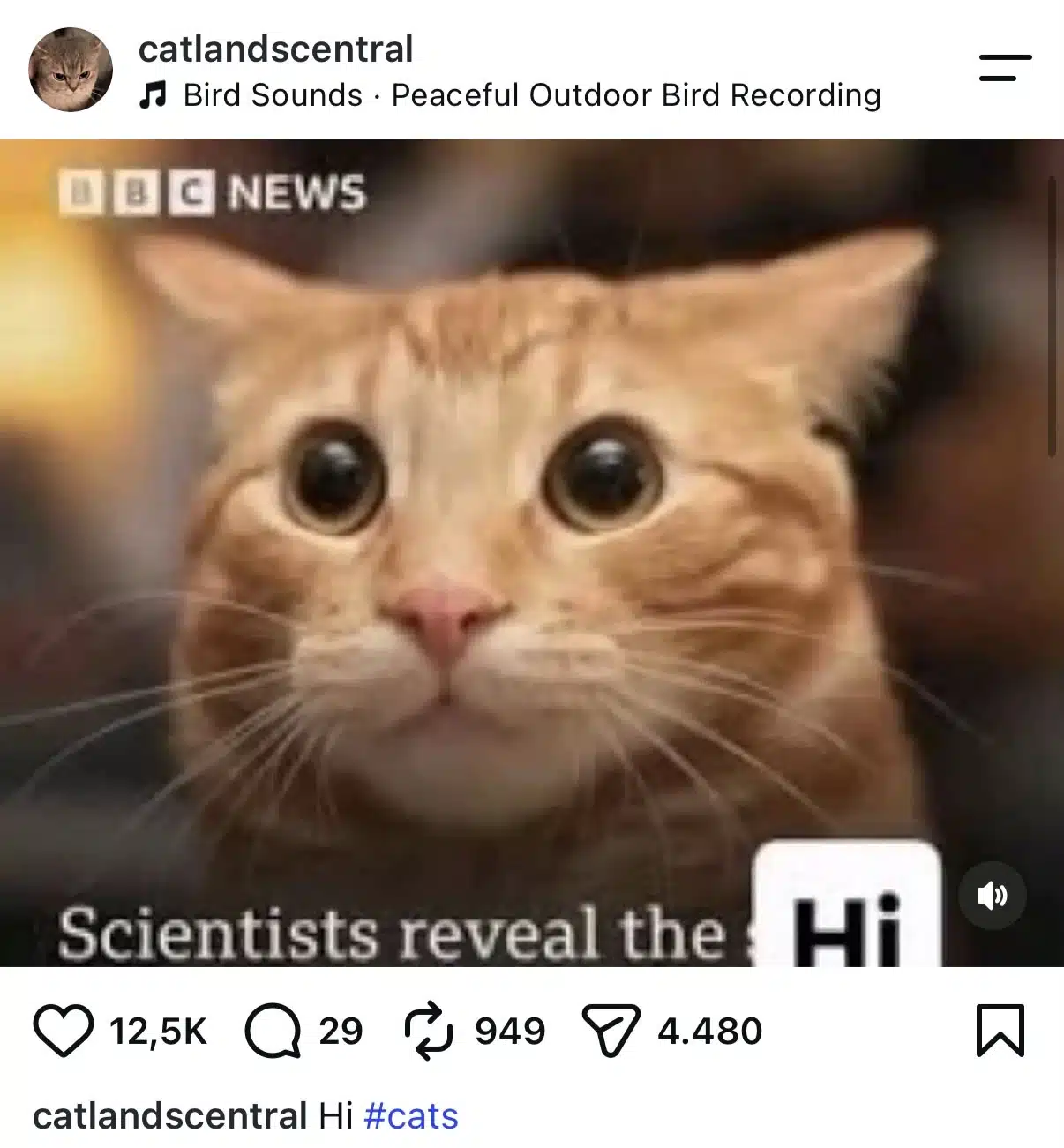
The humor comes from how ridiculously obvious the disguise is, making it perfect for calling out fake appearances, suspicious behavior, or terrible attempts at blending in.
Scientists reveal the hi
The “Scientists Reveal the Hi” meme is an absurd image-editing trend featuring a cat or dog alongside a mock-serious headline. Originally captioned “Scientists reveal the secret,” the meme evolved into increasingly ridiculous variations, including the nonsensical “Scientists reveal the hi.”
Instagram users are now editing the animal’s face, replacing the caption, and creating deliberately silly versions that make absolutely no sense. The appeal is pure internet absurdity, with each edit trying to be stranger or more unexpected than the last.
Viral memes on Instagram this week (October 14, 2026)
“Your month, your…”
The “Your Month, Your…” meme is an Instagram carousel format that assigns a different image, character, outfit, animal, or funny scenario to each birth month. Creators choose a theme and fill the slides with 12 different options, encouraging viewers to swipe until they find their month and see what they’ve been assigned.
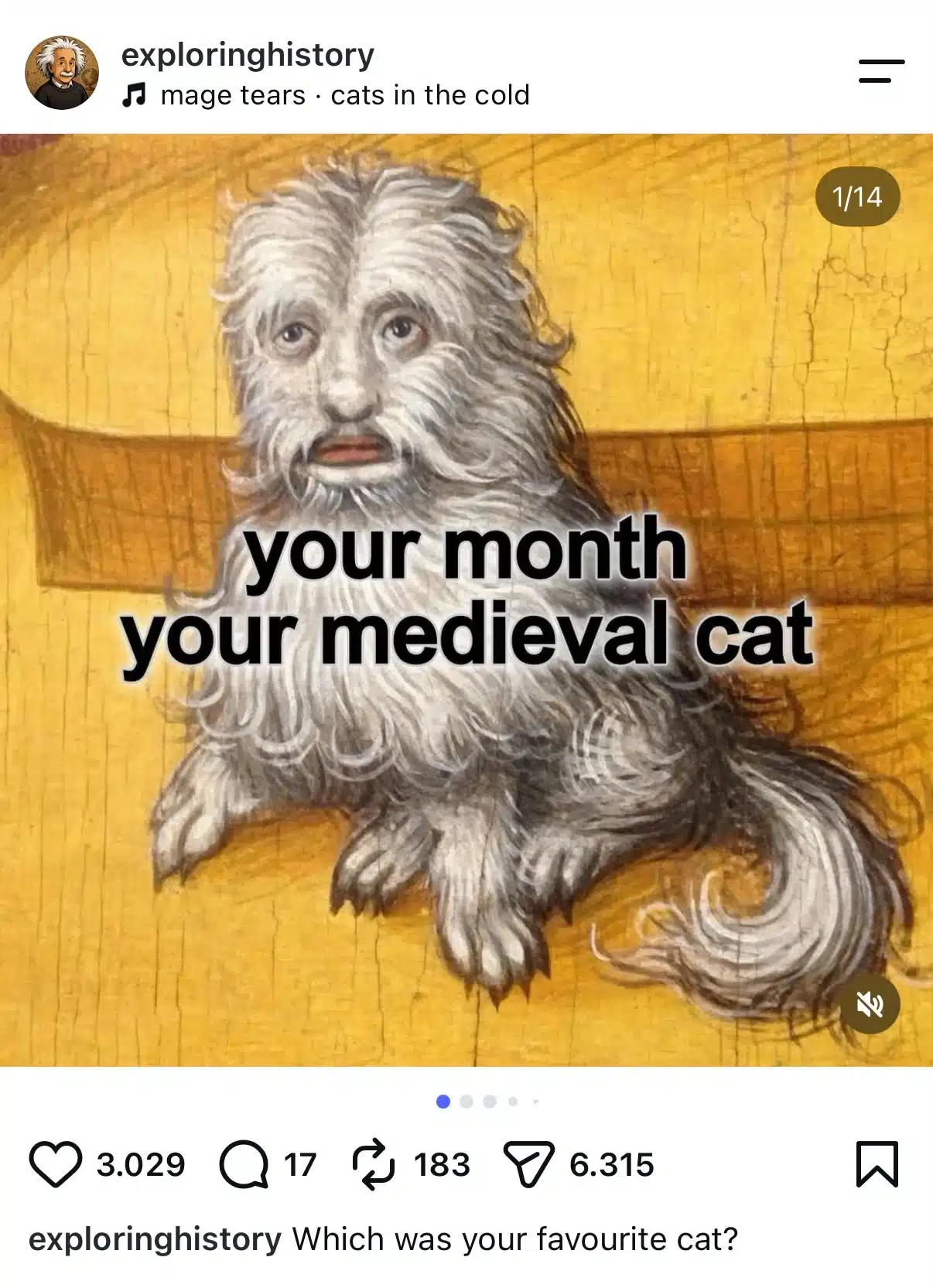
The results are often absurd or hilariously inaccurate, which makes the format perfect for sharing with friends. Brands can adapt it by assigning different products, customer personalities, or experiences to each month.
Black cat clapping
The Black Cat Clapping meme features a bizarre video of a black cat with human-like hands and a wide smile, enthusiastically applauding and offering a handshake.
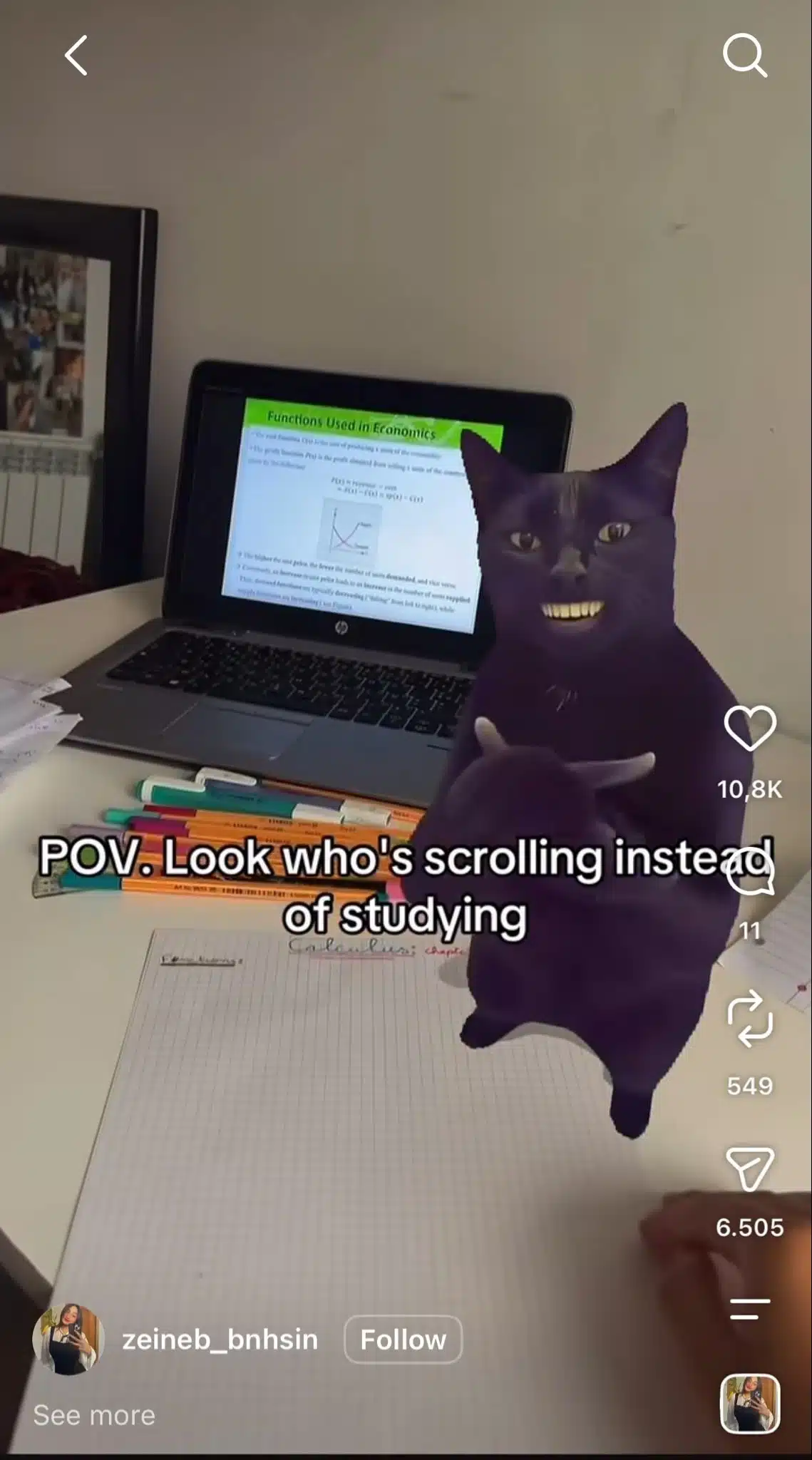
Originally shared by Instagram creator Aleksandr Kim (@merkurianin), the clip has become a reaction meme for moments that deserve applause, whether they’re genuinely impressive, completely ridiculous, or actually terrible. The cat’s unsettling enthusiasm makes it especially funny when paired with sarcastic captions about questionable decisions, minor achievements, or situations where applause is the last reaction you’d expect.
Viral memes on Instagram this week (October 7, 2026)
Cat with a rainbow hat and lollipop
The cat with a rainbow hat and lollipop meme features an adorable kitten wearing a colorful propeller hat and holding an oversized rainbow swirl lollipop.
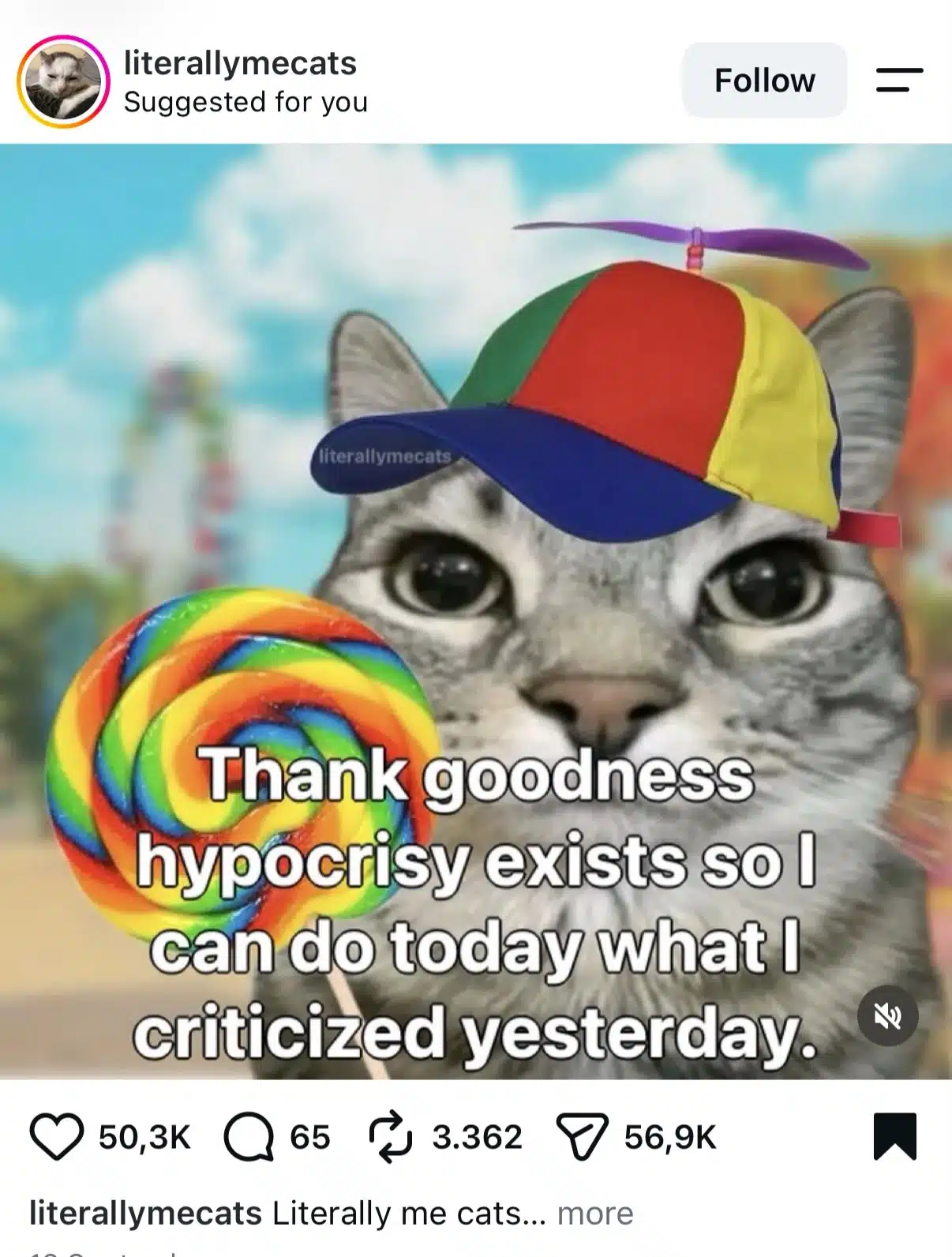
Its appeal comes from pure whimsical, brainrot-style absurdity, with creators using the overly silly cat as a reaction to unserious situations, childish excitement, or moments when they’re embracing their most ridiculous impulses.
Cat holding a sword in the wind
The cat holding a sword meme places a tiny, wide-eyed kitten in medieval armor, dramatically wielding a sword in a windswept landscape. The joke comes from treating such a cute, harmless animal like the battle-hardened hero of an epic fantasy movie.
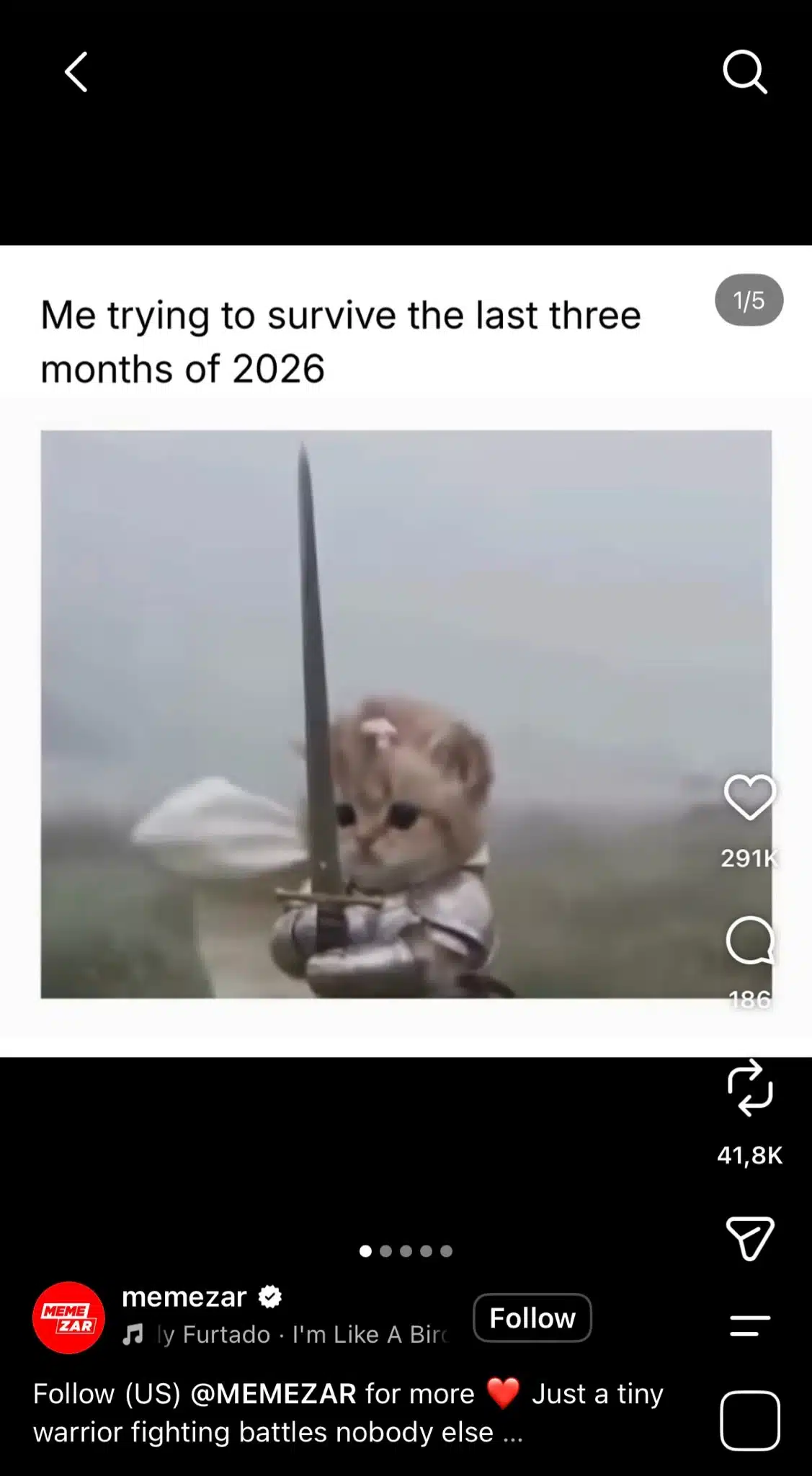
Creators use it to dramatize everyday challenges, turning minor inconveniences, responsibilities, or personal missions into heroic battles that must be faced with courage.
Viral memes on Instagram this week (September 29, 2026)
Tired Ben Affleck
The Tired Ben Affleck meme uses a photo of the actor with his eyes closed and an exhausted expression to capture moments when someone has simply had enough.
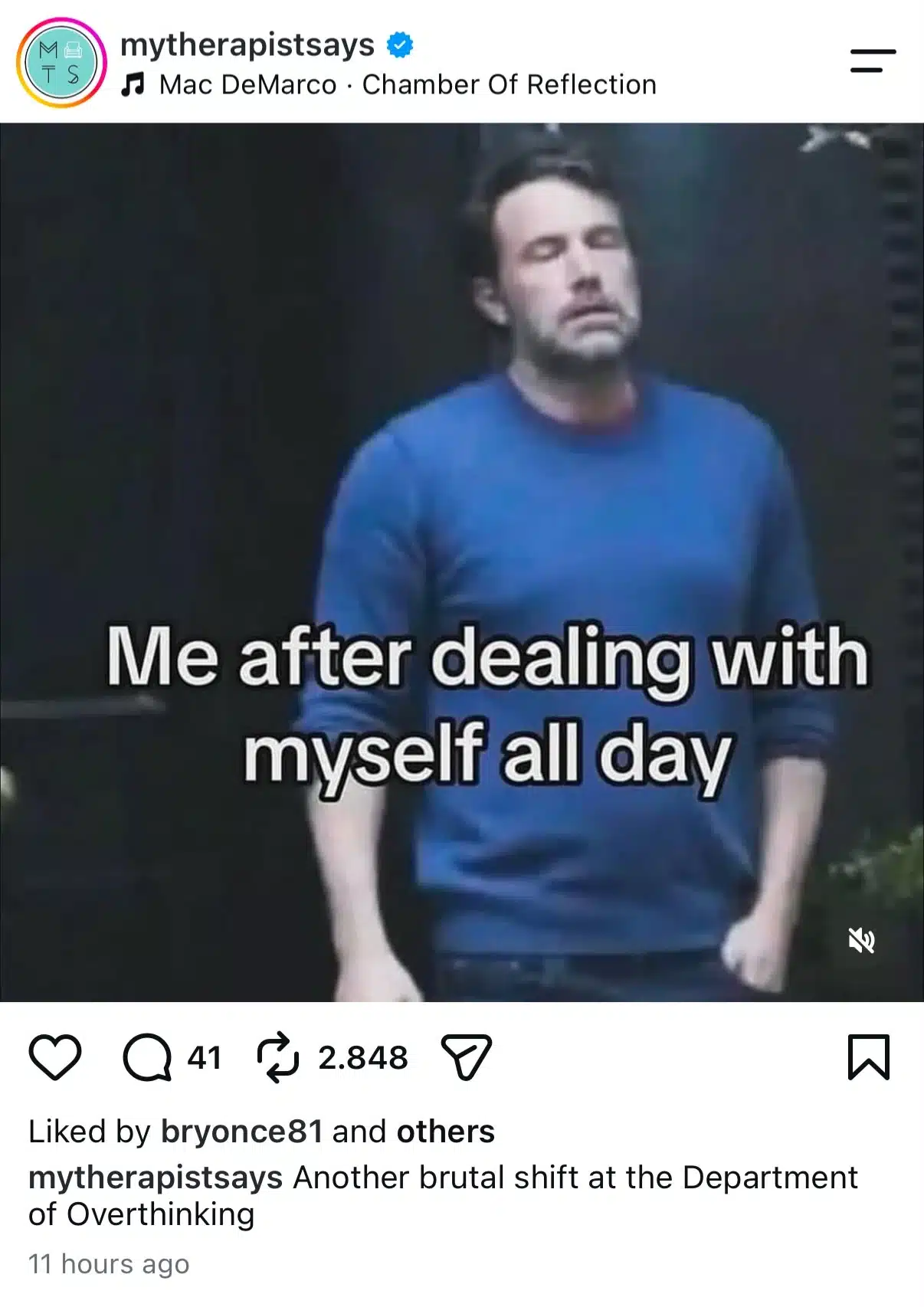
Creators add captions about draining workdays, minor inconveniences, social situations, deadlines, or anything that makes them mentally check out. It works particularly well for situations where the exhaustion feels disproportionate but completely relatable.
“How it feels talking to bro”
The “How It Feels Talking to Bro” meme uses an illustration of a brain located inside a knee to joke about conversations with a friend who isn’t exactly bringing their best thinking to the table.
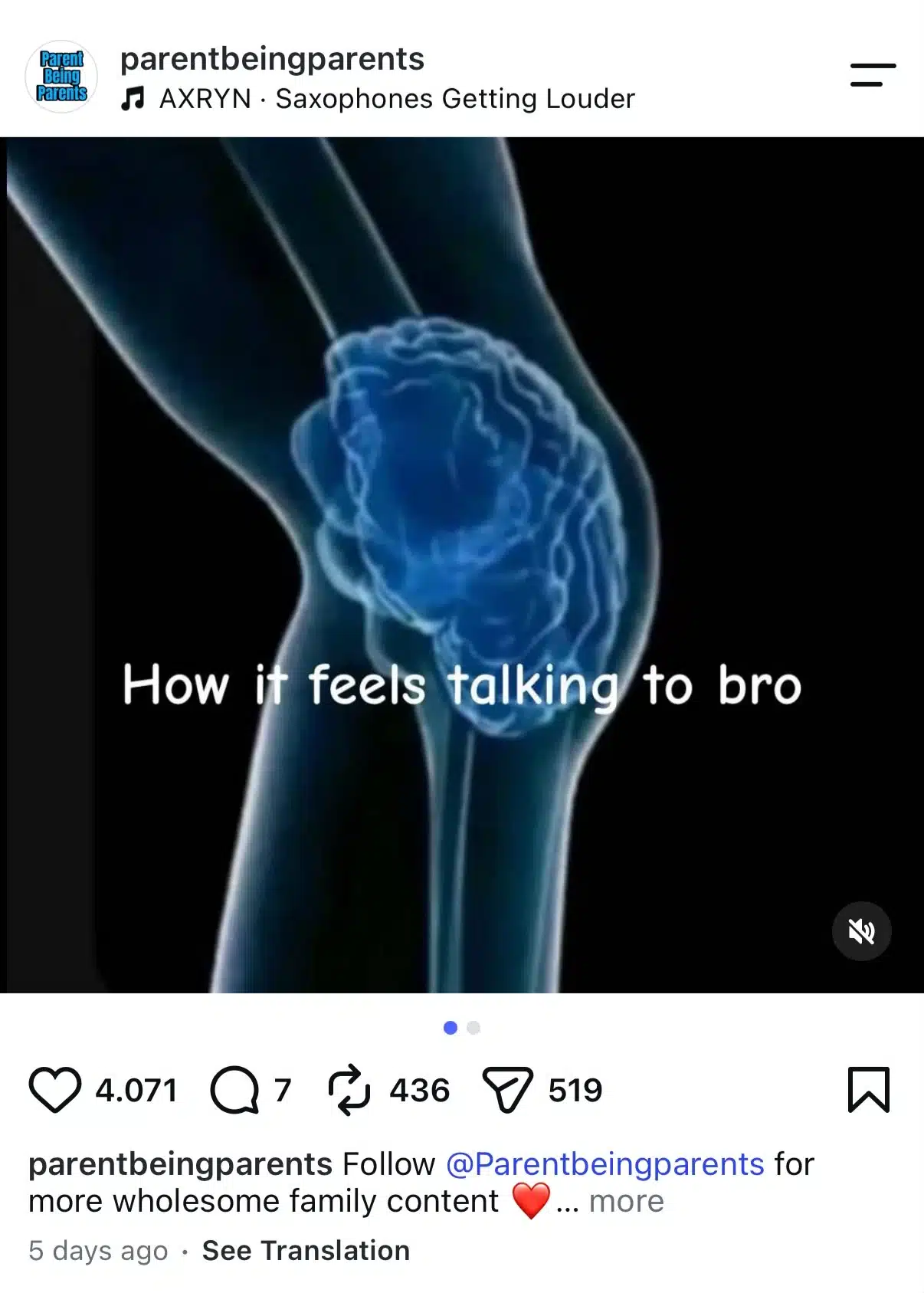
The absurd anatomy is the punchline: instead of having a brain in their head, “bro” is apparently thinking with his knee.
Creators use it for friends who give questionable advice, misunderstand obvious things, or somehow turn a normal conversation into nonsense.
Viral memes on Instagram this week (September 23, 2026)
Evil Larry meme
This meme uses the “Evil Larry” (who is actually Dexter, a very sweet cat) reaction image to represent the moment someone gets a mischievous, chaotic, or deliberately bad idea. The joke is that the cat looks quite scary or mean close up, even though it’s actually just someone’s pet that happened to go viral.
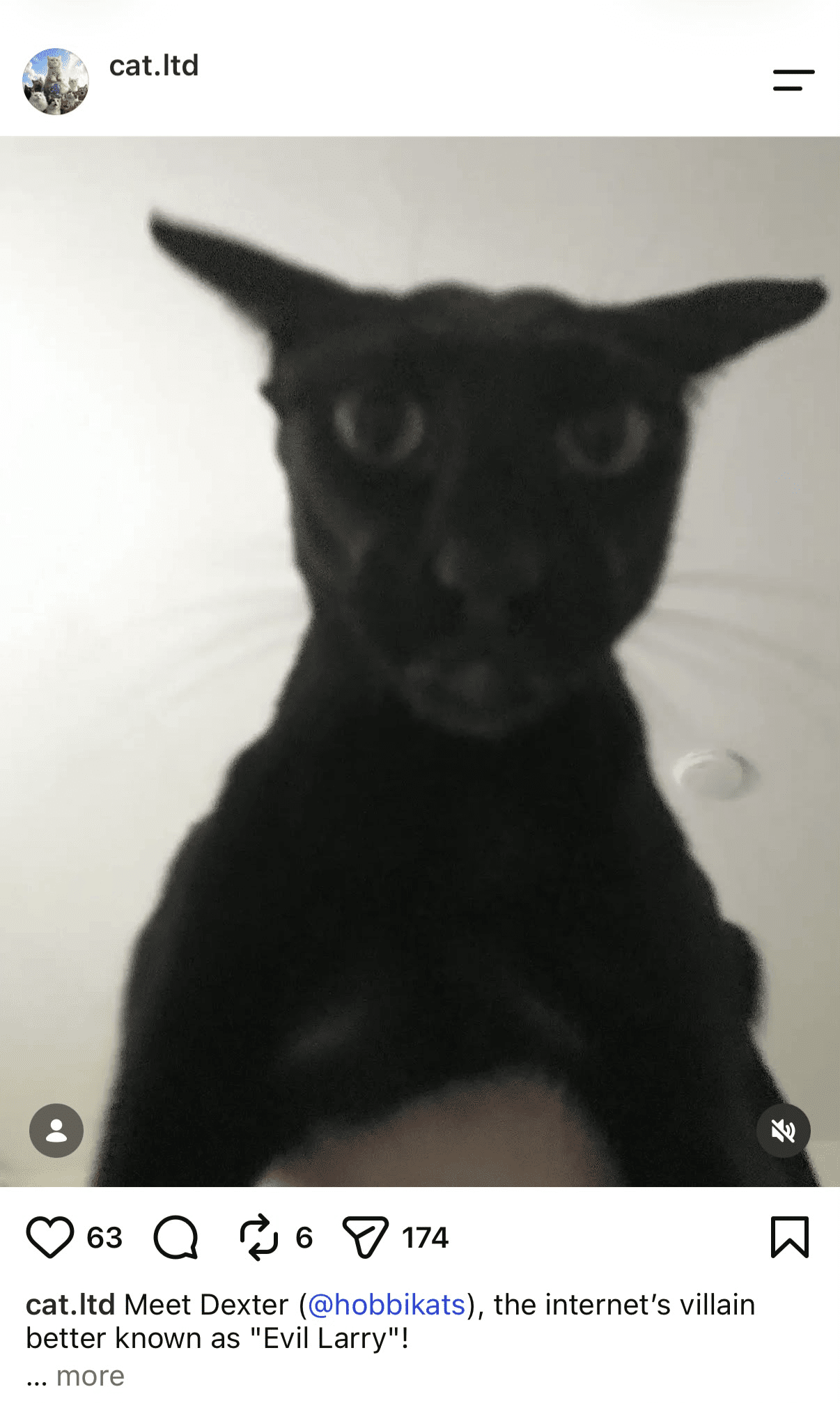
Brands can adapt it to harmless temptations their audience knows well, like launching another sale, adding something unnecessary to their cart, or posting one more time about a favorite product.
“Hold to see…” trend
This interactive video asks viewers to press and hold the screen while a rapid sequence of images flashes by. Whatever product, outfit, destination, food, or other option is on screen when they pause is supposedly what they “get.”
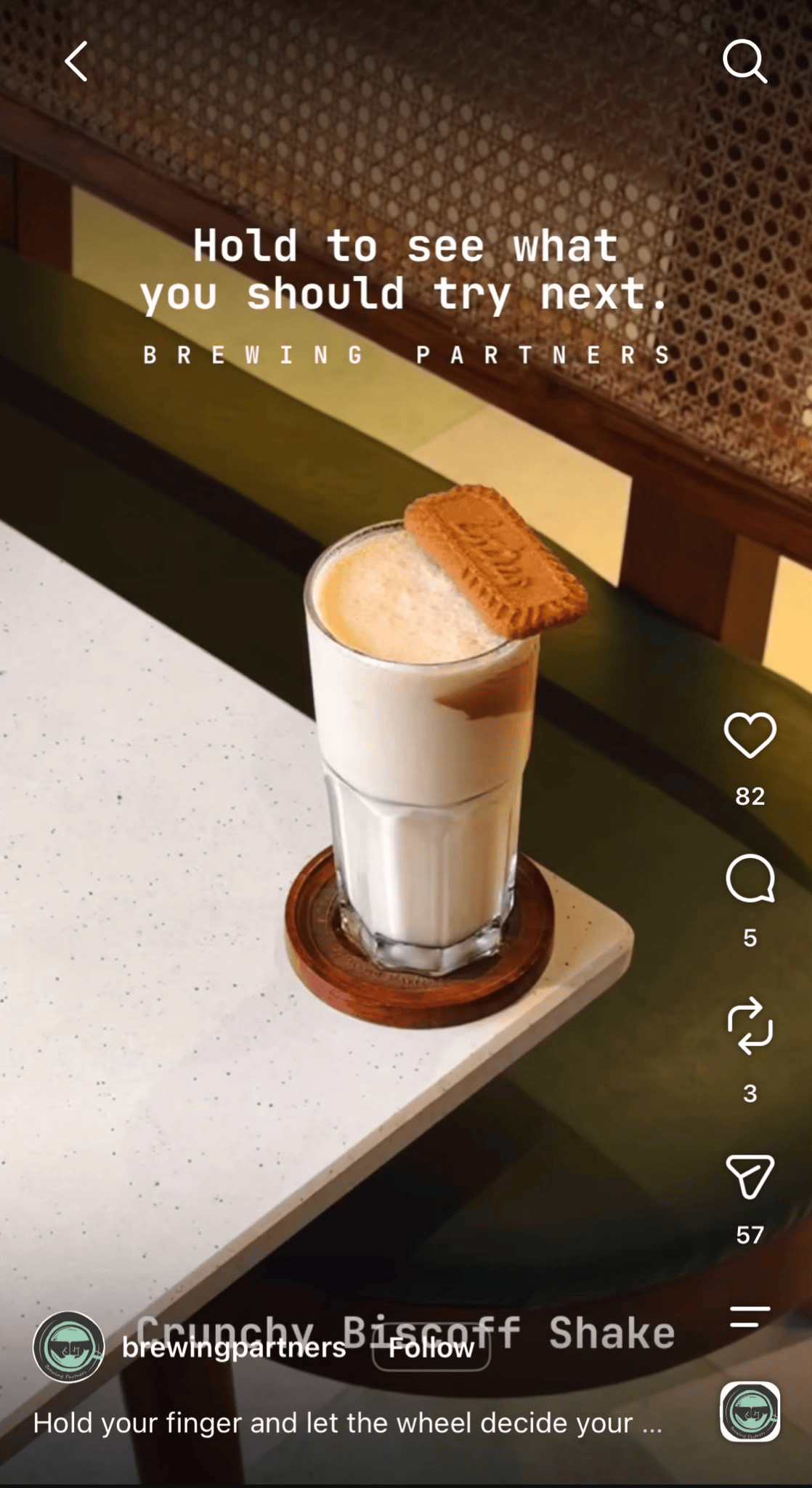
Brands can turn it into a quick game using different products, services, menu items, or variations, with prompts like “Hold to see which one you’re getting” or “Your next order is…”
Viral memes on Instagram this week (September 18, 2026)
Andy closing laptop
This is a reaction meme and GIF taken from Toy Story 3. It shows Andy shutting his laptop and turning away from the screen looking completely exhausted.
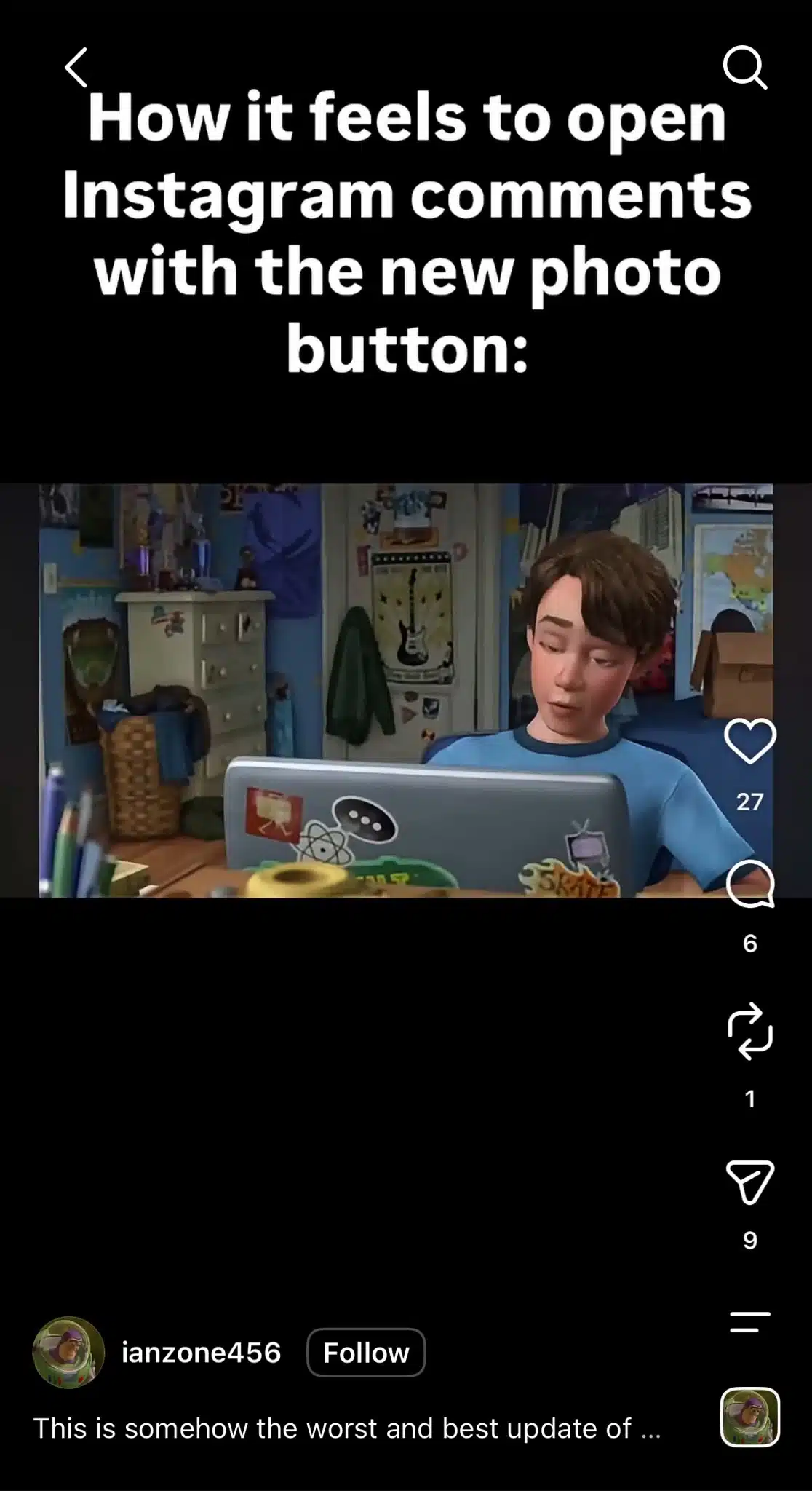
People use the meme to capture the exact moment they have seen, read, or experienced enough and are mentally checking out. For brands, it is an easy format to adapt to relatable industry frustrations, repetitive tasks, customer pain points, or those “that’s enough internet for today” moments.
Parent split-face trend
The trend has users combine half of their face with half of a parent’s face to reveal just how similar they look. The trend emerged in August 2026 and has since expanded beyond parents to siblings, other relatives, and couples.
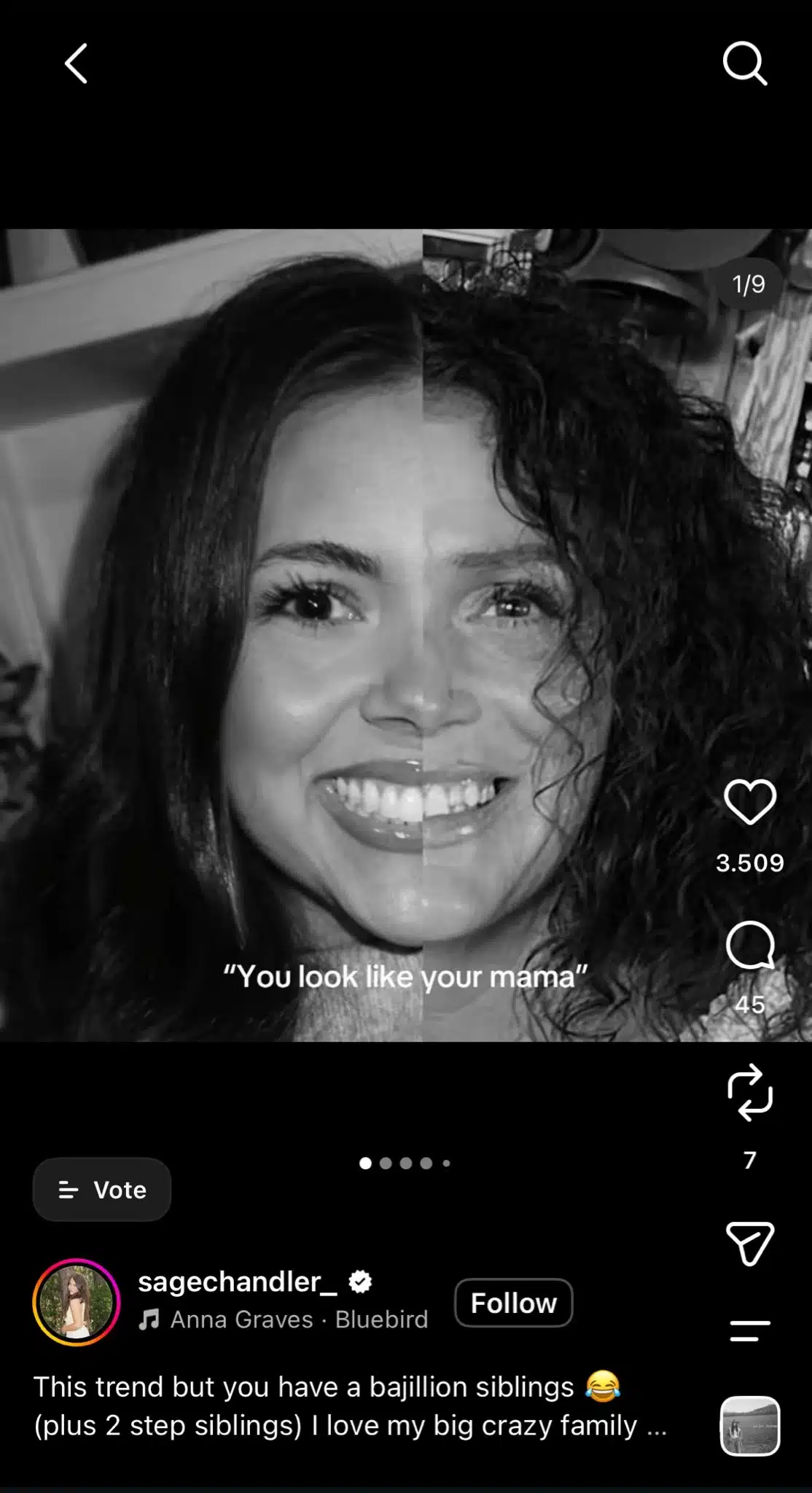
Most posts start with a familiar comment such as “you look just like your mom” or “you’re your dad’s twin” before revealing the merged portrait. Black-and-white AI-generated portraits are especially common, although some creators use regular color photos. Brands could adapt the split-screen concept beyond literal family resemblance by comparing products, old and new branding, team members with similar styles, or two things their audience constantly says look alike.
Viral memes on Instagram this week (September 10, 2026)
Viral memes on Instagram this week (September 2, 2026)
Viral memes on Instagram this week (August 19, 2026)
Buffering cat
The Buffering Cat meme features a cat staring blankly, often with a loading or buffering symbol added to make it look like its brain has temporarily stopped working. Creators use it for moments when they’re confused, caught off guard, trying to process what someone just said, or simply have no idea how to respond.
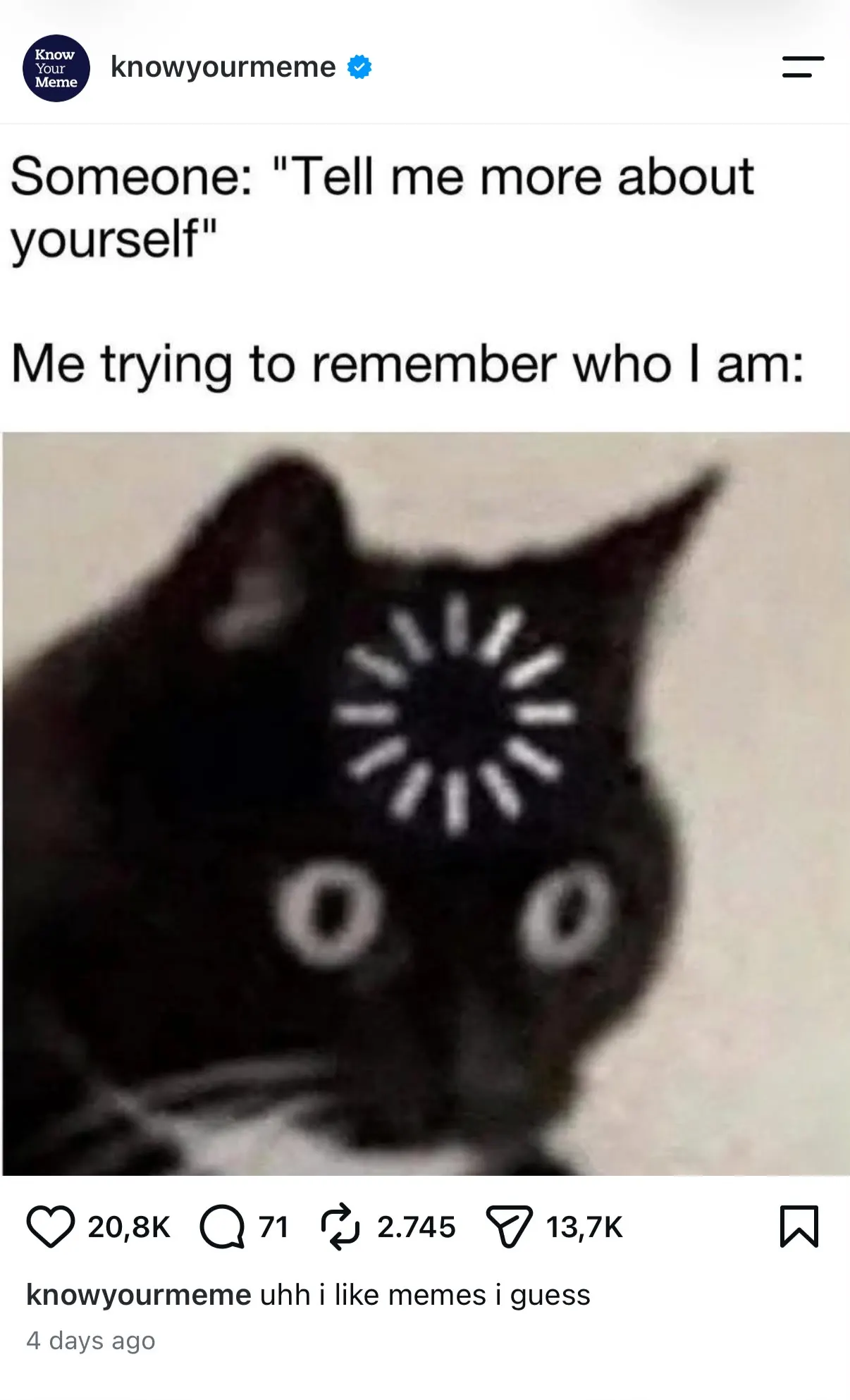
Brands can adapt it to relatable customer questions, workplace moments, or situations where the only reasonable response is a few seconds of mental loading.
Tired guy with messy hair
The meme captures the look of someone who is completely exhausted, overwhelmed, or barely holding things together. Creators pair the disheveled reaction image with captions about long workdays, lack of sleep, deadlines, social plans, or seemingly simple tasks that somehow became exhausting.
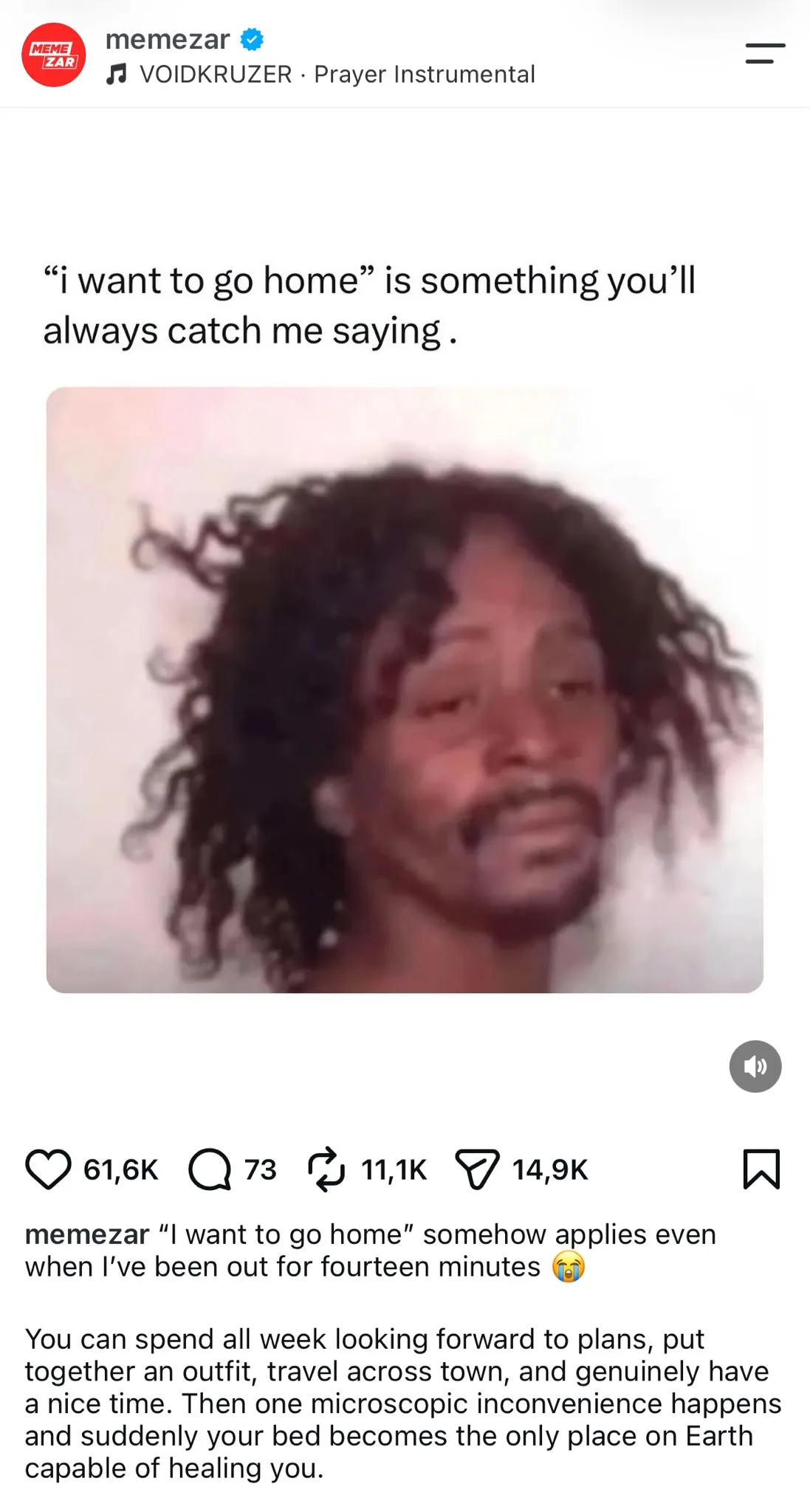
Brands can use it for relatable industry struggles, busy-season humor, or exaggerated before-and-after scenarios their audience immediately recognizes.
Viral memes on Instagram this week (August 19, 2026)
Somebody get these beggars out of here
The “Somebody get these beggars out of here” meme uses a scene from Christopher Nolan’s The Odyssey in which Robert Pattinson’s character delivers the line with an exaggerated, dismissive tone.
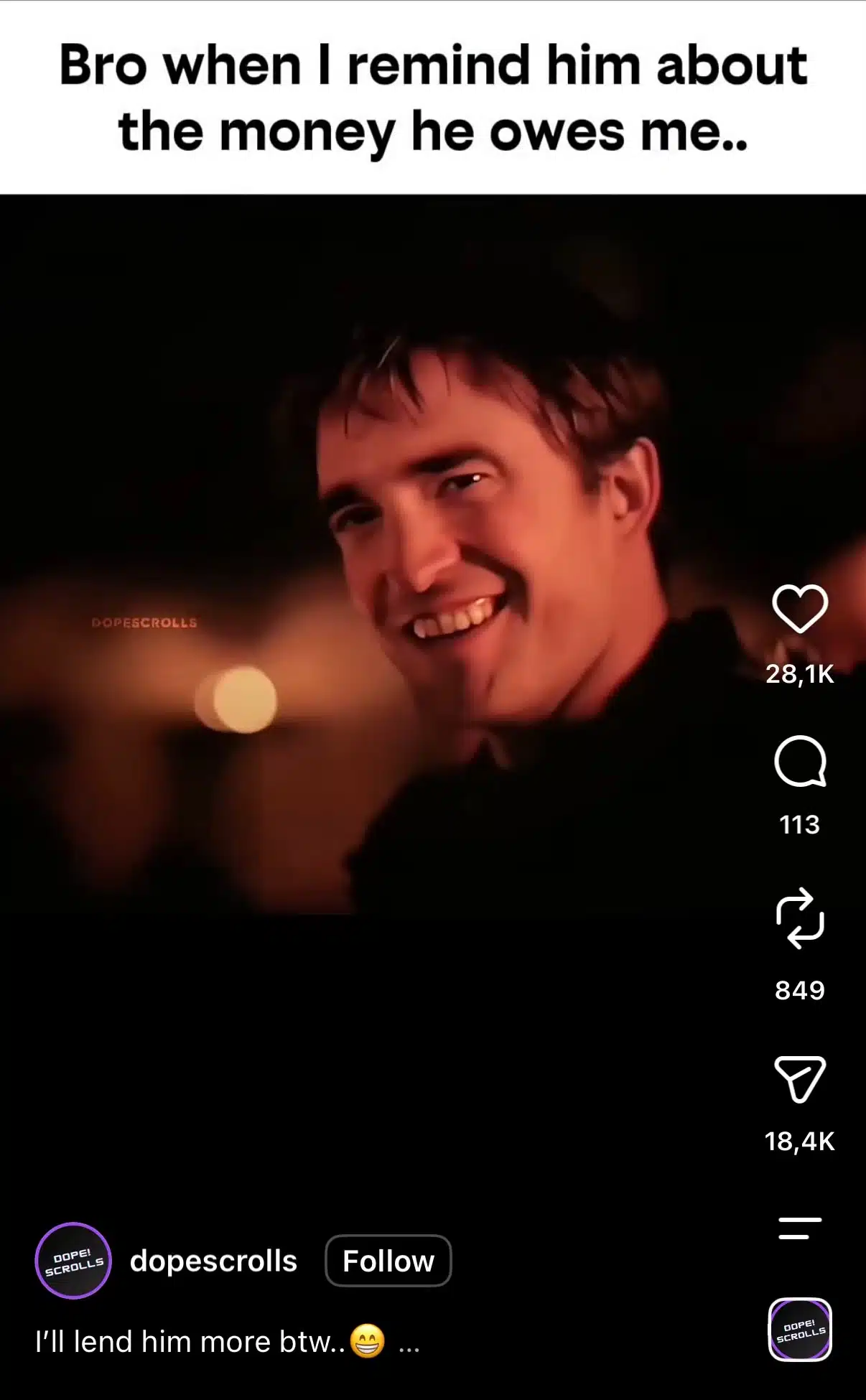
The clip has become a reaction meme for situations where someone has the audacity to ask for a little too much, like a friend taking full advantage when someone else is paying, a self-checkout machine asking for a tip, or yet another subscription asking you to upgrade. Brands can adapt the meme to joke about annoying requests, extra fees, or relatable situations their audience would also love to dismiss.
Spider-Man: Brand New Day memes
With Spider-Man: Brand New Day now in theaters, scenes from the movie are quickly becoming meme templates across Instagram. Fans are turning funny expressions, dramatic exchanges, action sequences, and out-of-context moments featuring Spider-Man and the rest of the cast into reaction memes for everyday situations.
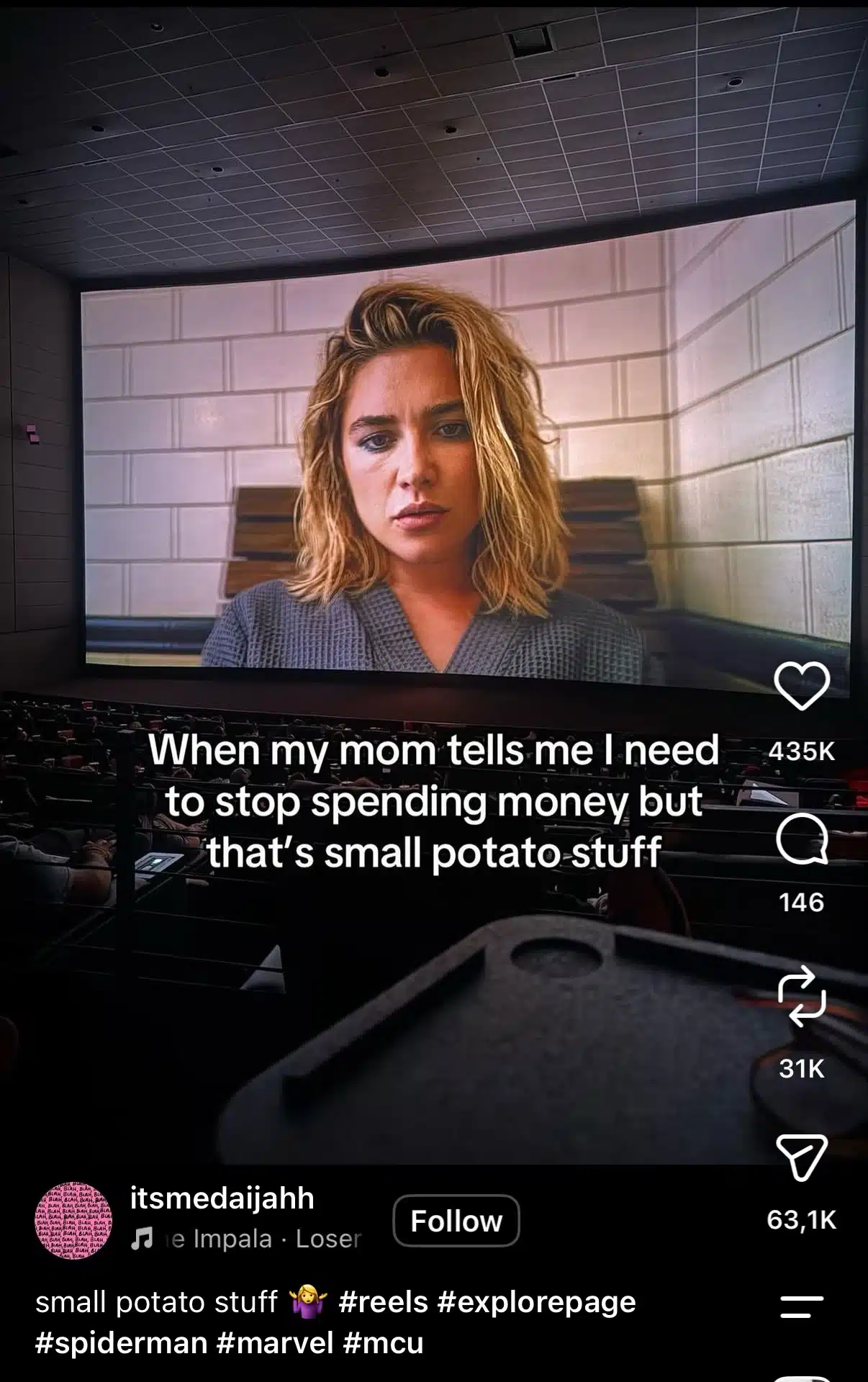
For brands, the movie’s current popularity creates plenty of opportunities to join the conversation by pairing recognizable scenes with workplace jokes, customer experiences, or niche situations their audience will understand.
Viral memes on Instagram this week (August 13, 2026)
Beanos
The Beanos meme features a crudely edited purple version of Thanos that looks more like a bean than an intimidating supervillain. The intentionally terrible edit has become a reaction image for absurd, low-effort humor, with creators placing Beanos into random situations or using him as the punchline to deliberately stupid jokes.
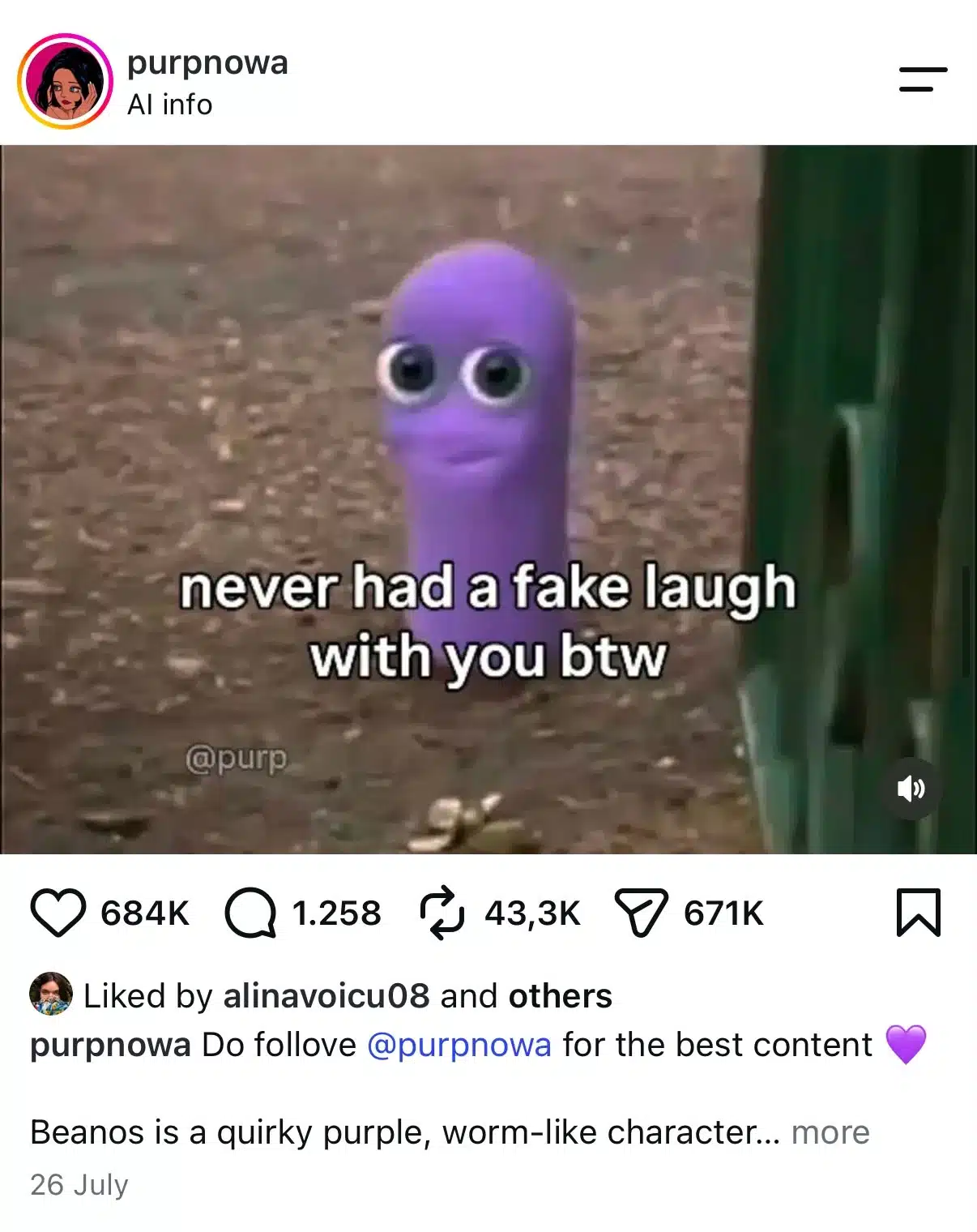
Brands can lean into the meme’s chaotic energy by inserting Beanos into relatable industry scenarios or treating him like an unexpectedly powerful solution to a very minor problem.
Spongebob in big handcuffs
The SpongeBob in big handcuffs meme is funny because the cuffs are comically oversized, meaning SpongeBob could easily slip his hands out and leave whenever he wants.
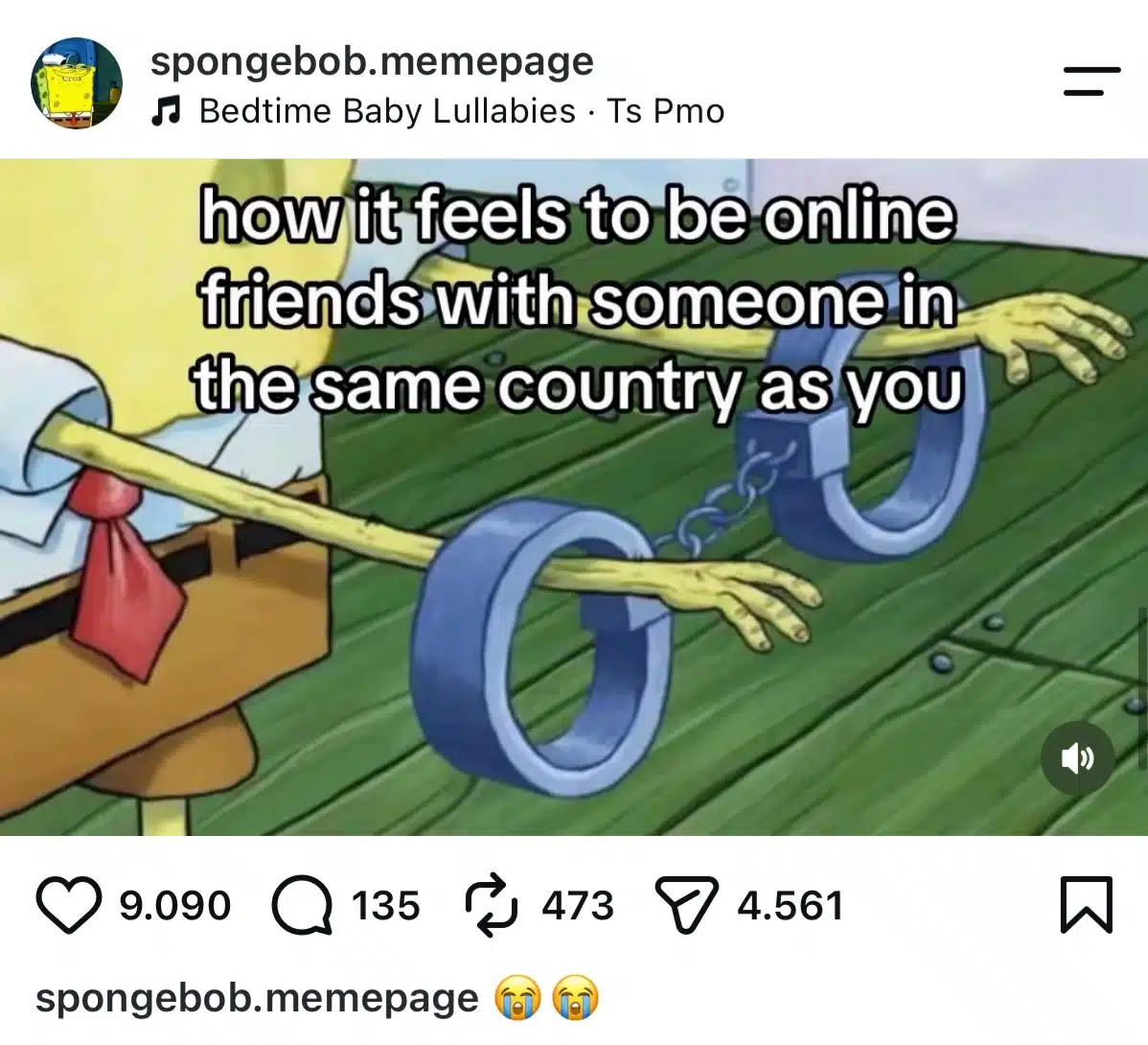
Creators use it to joke about voluntarily putting themselves through something unpleasant when nothing is actually forcing them to stay, like watching a video they hate instead of scrolling away or continuing to read an argument that annoys them. Brands can adapt it to relatable situations where customers knowingly make life harder for themselves despite having an obvious way out.
Viral memes on Instagram this week (August 5, 2026)
Cat at the car wash meme
The cat’s first car wash meme features Cozy, a cat experiencing an automatic car wash for the first time. Filmed with a wide-angle lens, Cozy’s wide-eyed stare and expression of instant regret quickly turned the clip into a viral reaction meme.
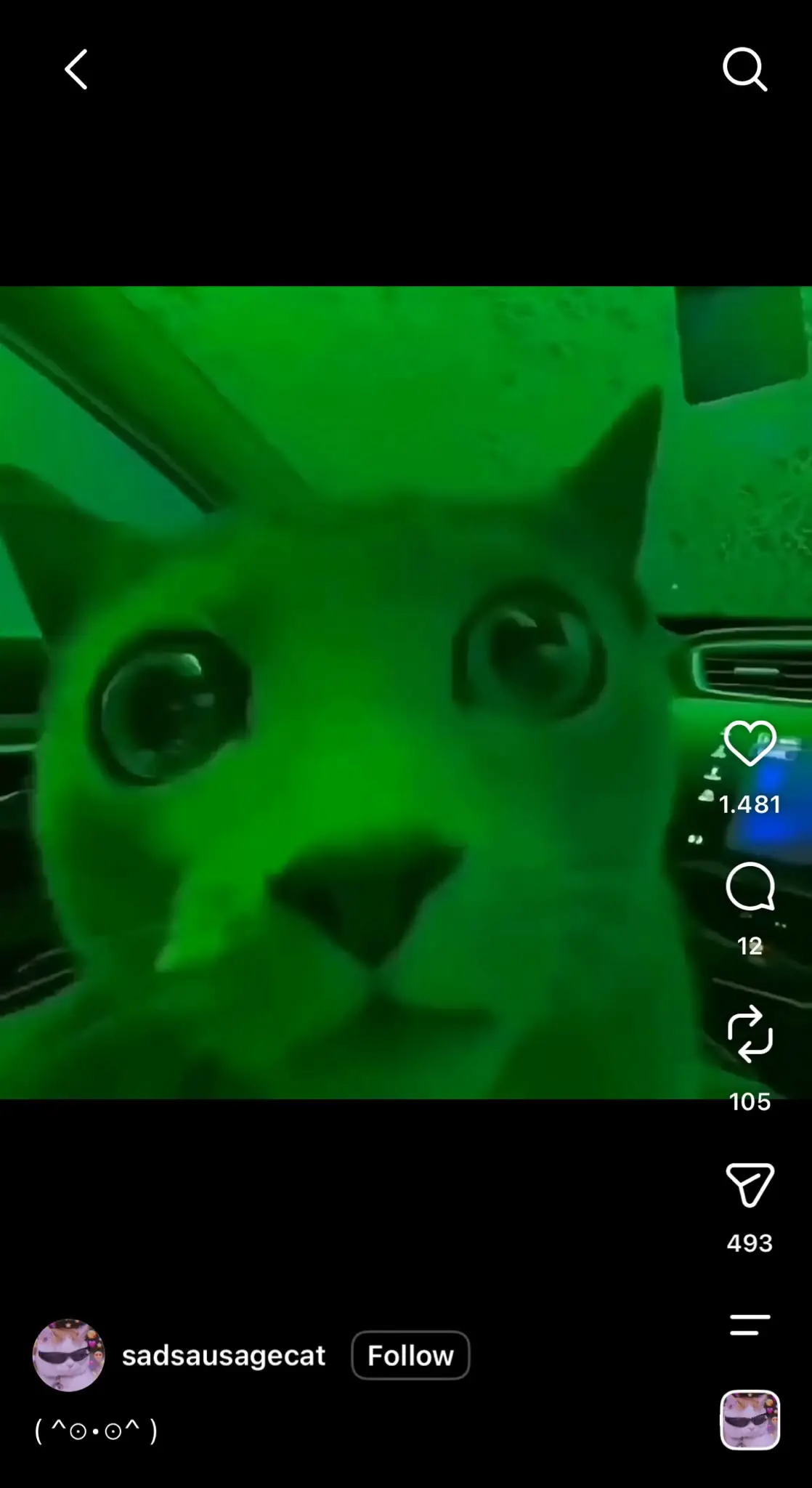
Creators are using screenshots and edits of the cat to represent confusion, fear, or realizing they’ve made a terrible decision, often with captions about everyday struggles or awkward situations. Brands can easily adapt the meme by pairing Cozy’s expression with relatable customer experiences or behind-the-scenes moments that didn’t go as planned.
Blue blob meme
The blue blob meme features B.O.B., the blue gelatinous character from Monsters vs. Aliens, staring blankly at the camera with a slightly confused smile. The image has become one of the internet’s go-to reaction memes, used to express speechlessness, secondhand embarrassment, or the feeling of mentally checking out after witnessing something absurd.
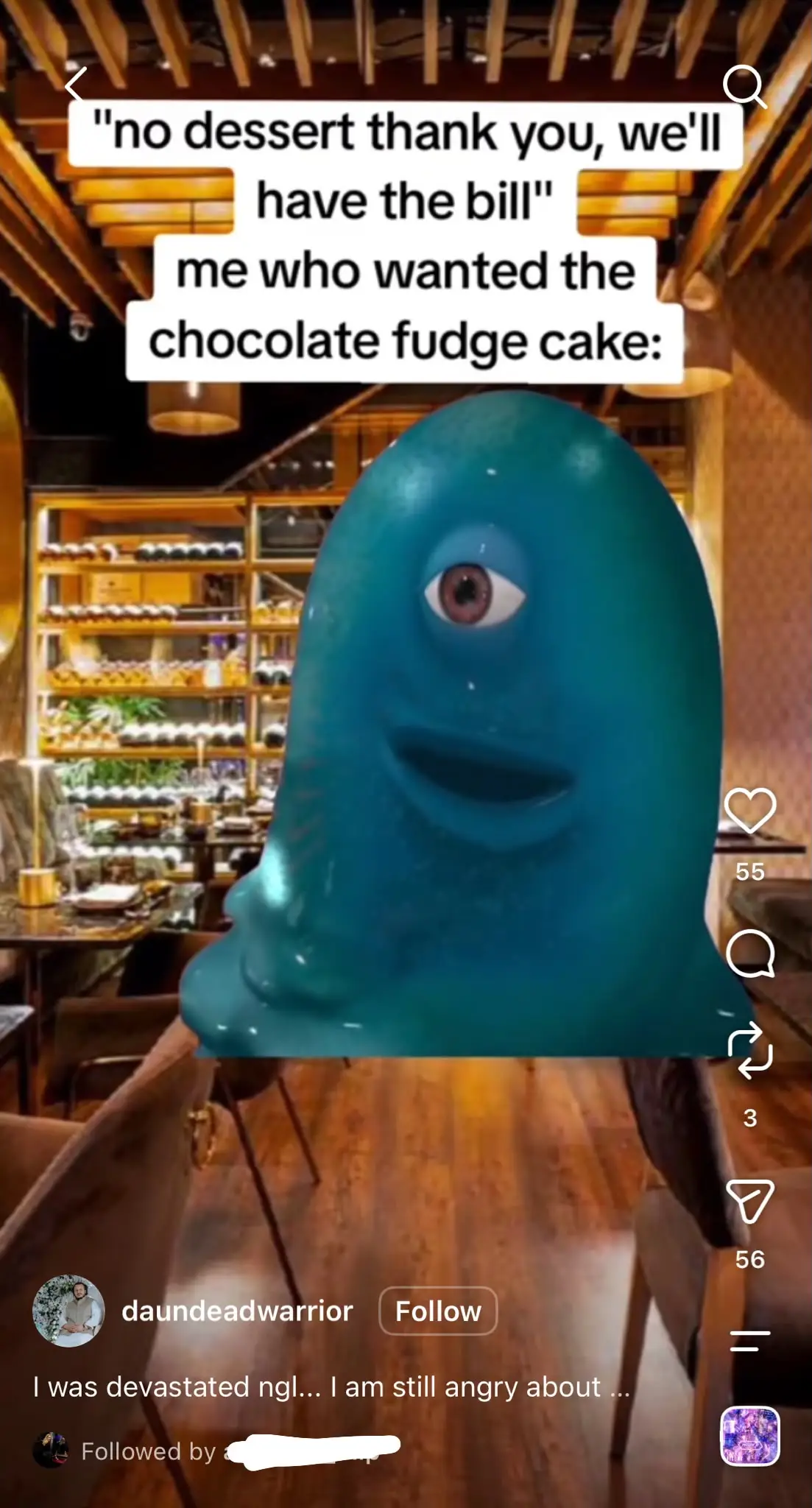
Variations include redrawn versions and edits with different facial expressions, but they all capture the same “I have no words” energy. Brands can easily adapt the meme by pairing B.O.B.’s blank stare with relatable customer moments or industry-specific situations that leave everyone equally confused.
Viral memes on Instagram this week (July 29, 2026)
Dancing cat
The cat on the train meme features a cat wearing a tiny beanie, sitting on a train seat and bouncing or dancing to music as the train moves.
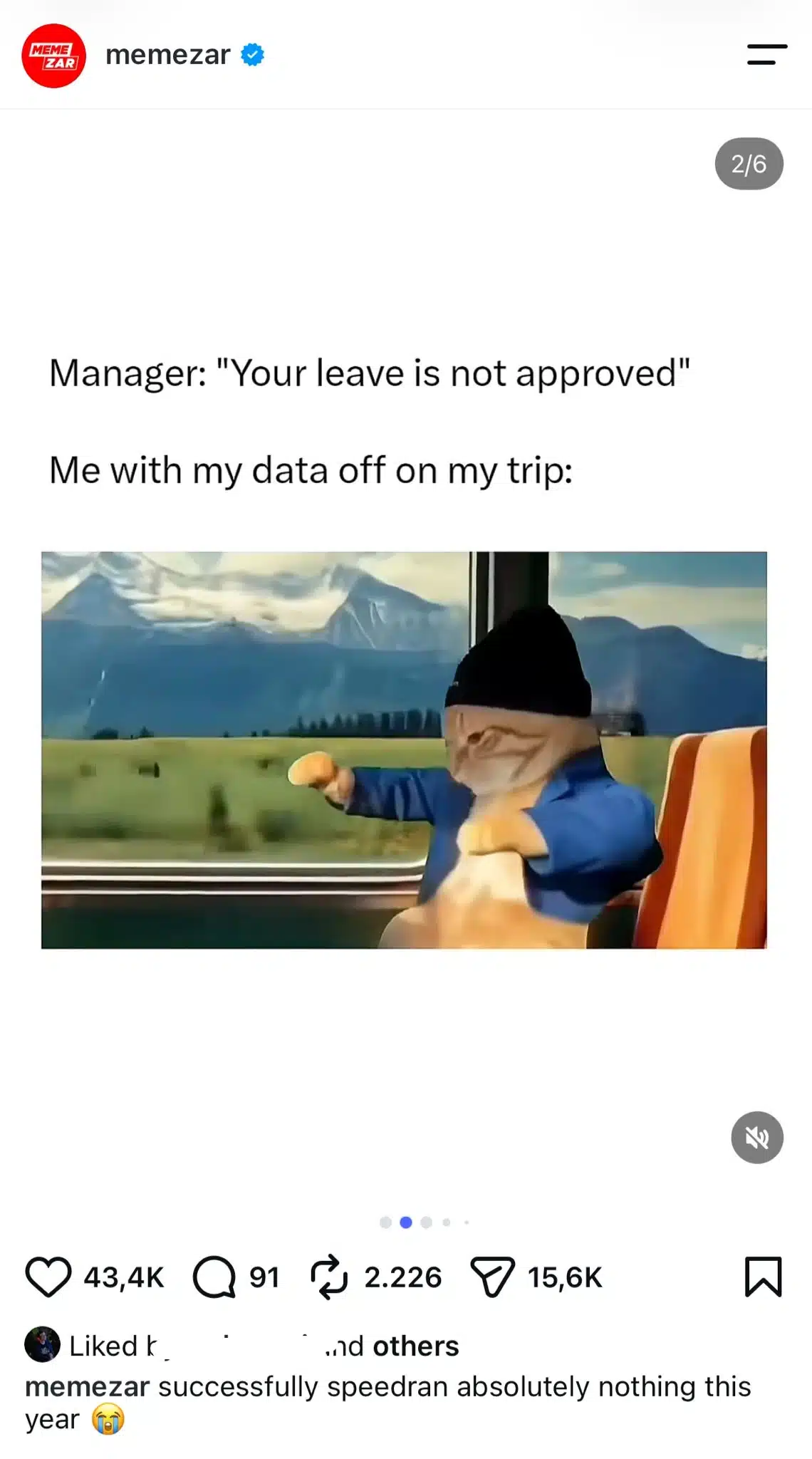
The clip has become a viral reaction meme thanks to its calm, unbothered energy, with creators adding different songs and captions to match everything from “heading to work after three hours of sleep” to “on my way to spend money I don’t have.” Brands can easily adapt the format by changing the music or overlaying a relatable caption that fits their audience, letting the dancing cat deliver the joke.
The Odyssey by Christopher Nolan meme
Christopher Nolan’s The Odyssey has quickly become meme material, with fans clipping dramatic scenes and turning them into reaction memes. Freeze frames of Odysseus, Penelope, Athena, and the Cyclops are being edited into everyday situations, while entire scenes are remixed with modern captions and pop culture references.
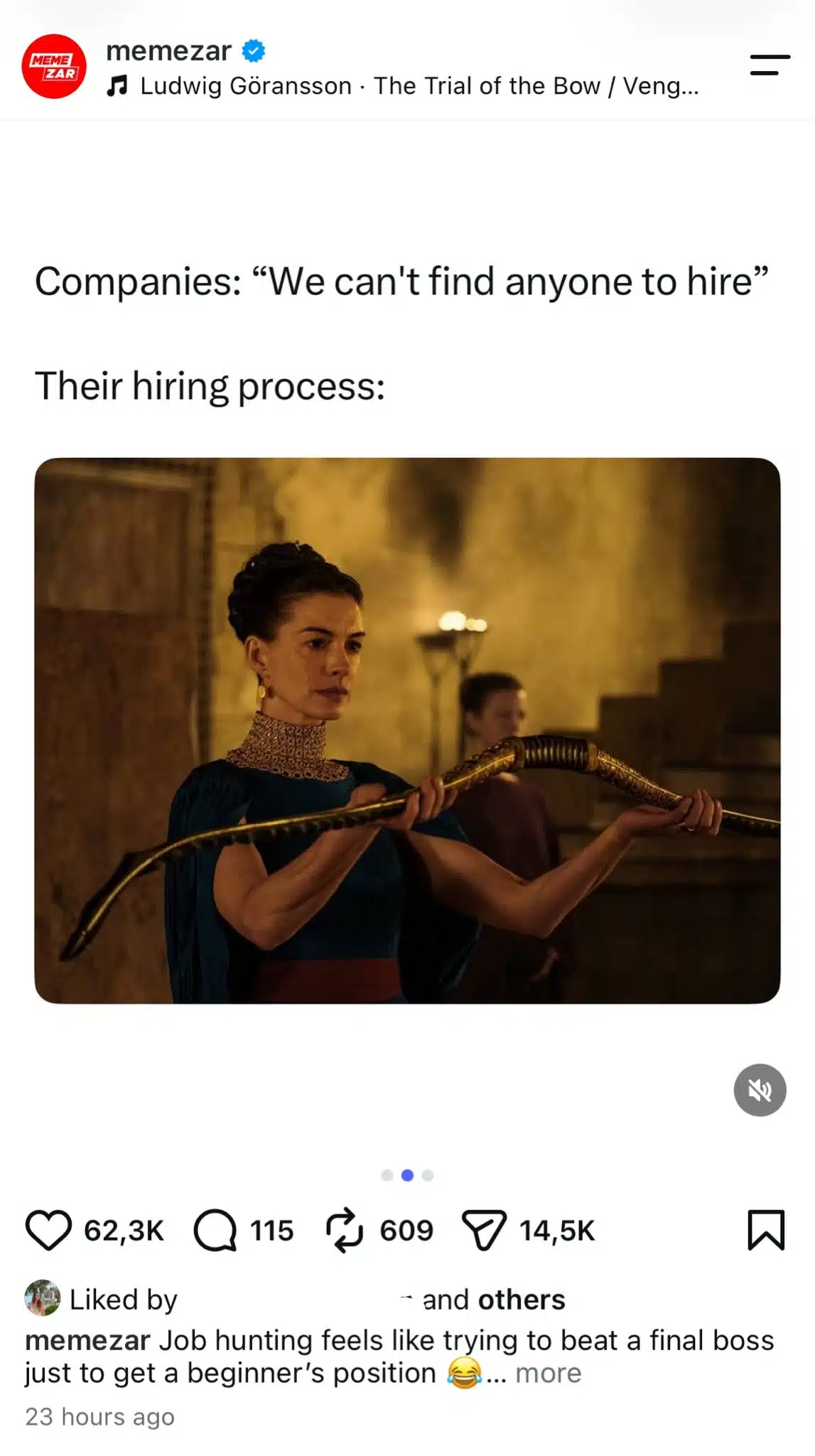
Brands can tap into the trend by pairing the film’s epic visuals with relatable customer experiences or workplace humor, letting the exaggerated drama elevate otherwise ordinary moments.
Viral memes on Instagram this week (July 22, 2026)
Jimothy the raccoon
Jimothy is the internet’s newest animal obsession. The unusually round Seattle raccoon, whose appearance is believed to be caused by a rare spinal condition, has gone viral across Instagram and TikTok, inspiring fan art, memes, merchandise, and countless reposts.
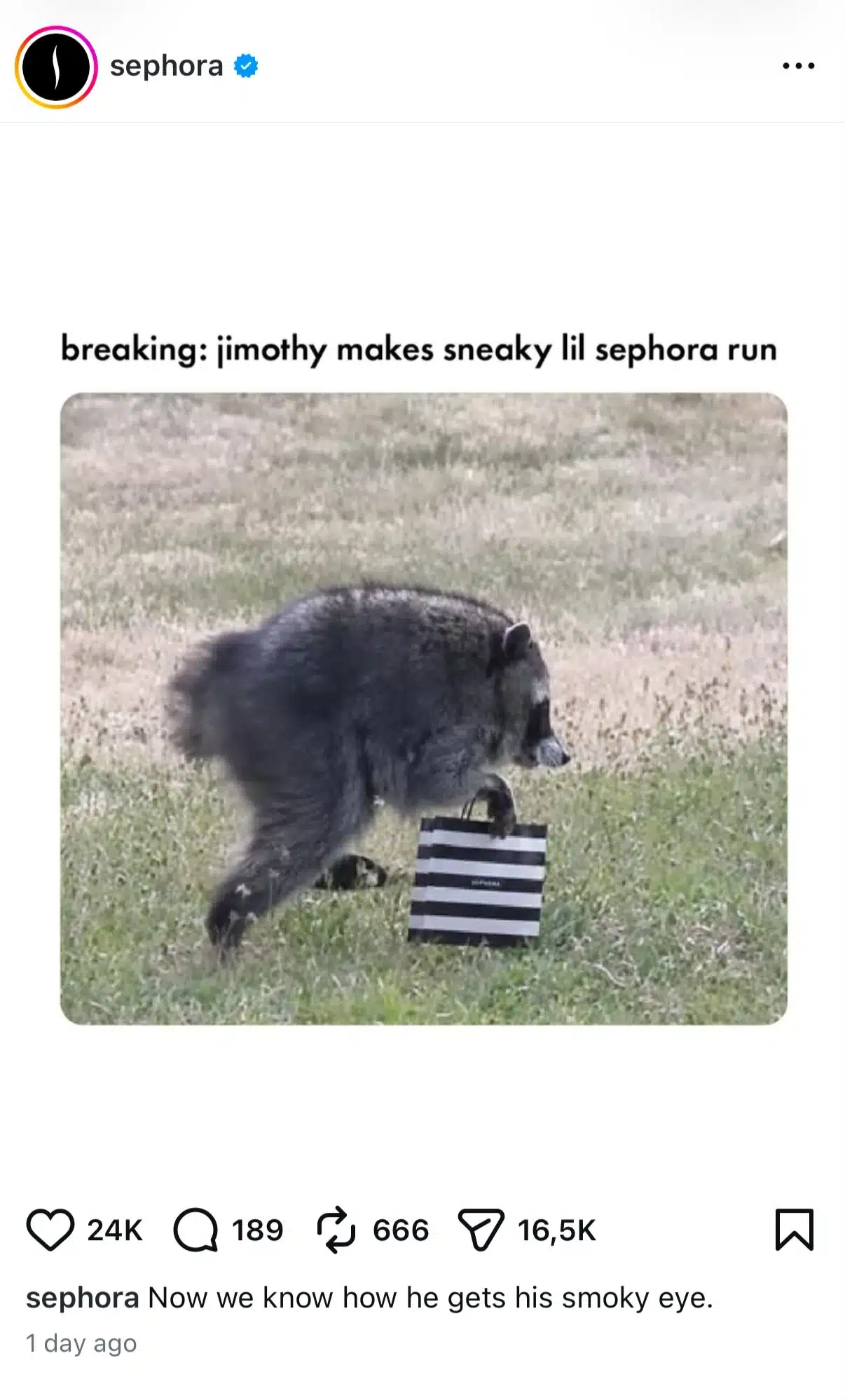
Brands can join the fun by referencing the raccoon’s wholesome popularity, sharing fan-style tributes, or playfully comparing products or situations to the internet’s favorite little trash panda.
Bison Tossing Man in Yellowstone Video
The Yellowstone bison freeze-frame meme comes from a viral video of a man being launched into the air by a bison in Yellowstone National Park. Creators pause the footage at the exact moment he’s suspended midair, then edit the freeze frame into completely different scenes, making it look like he’s diving into a pool, skateboarding, flying through space, or appearing in iconic movie moments.
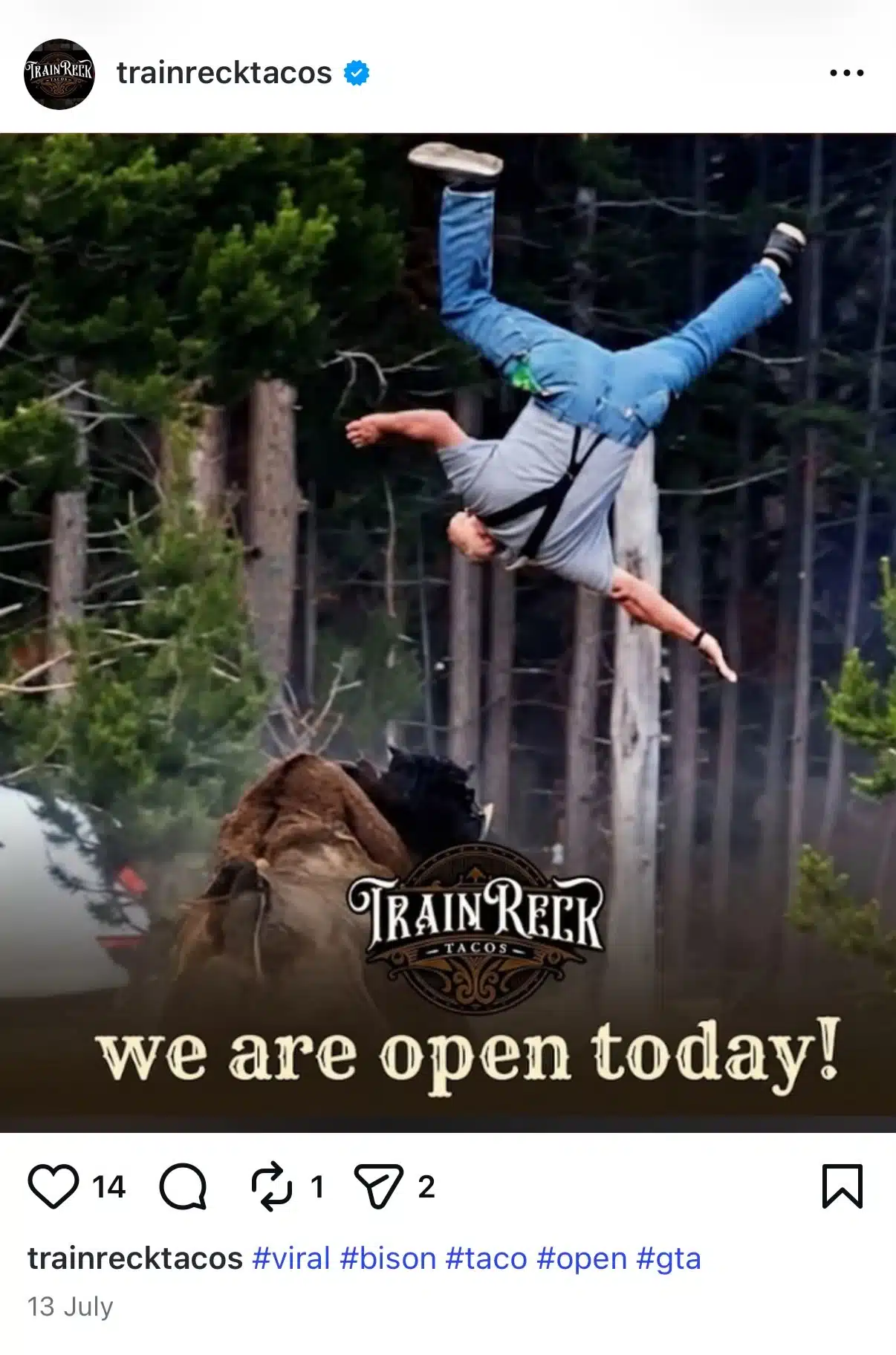
The format is incredibly versatile, allowing brands to place the frozen figure into product photos, campaigns, or industry-specific jokes with just a simple edit.
Viral memes on Instagram this week (July 16, 2026)
Heatwave memes
Heatwave memes have taken over Instagram as soaring temperatures continue across many parts of the world. Instead of following one specific template, the trend revolves around relatable jokes about melting in the sun, refusing to leave the house, sleeping without air conditioning, and doing anything to stay cool.
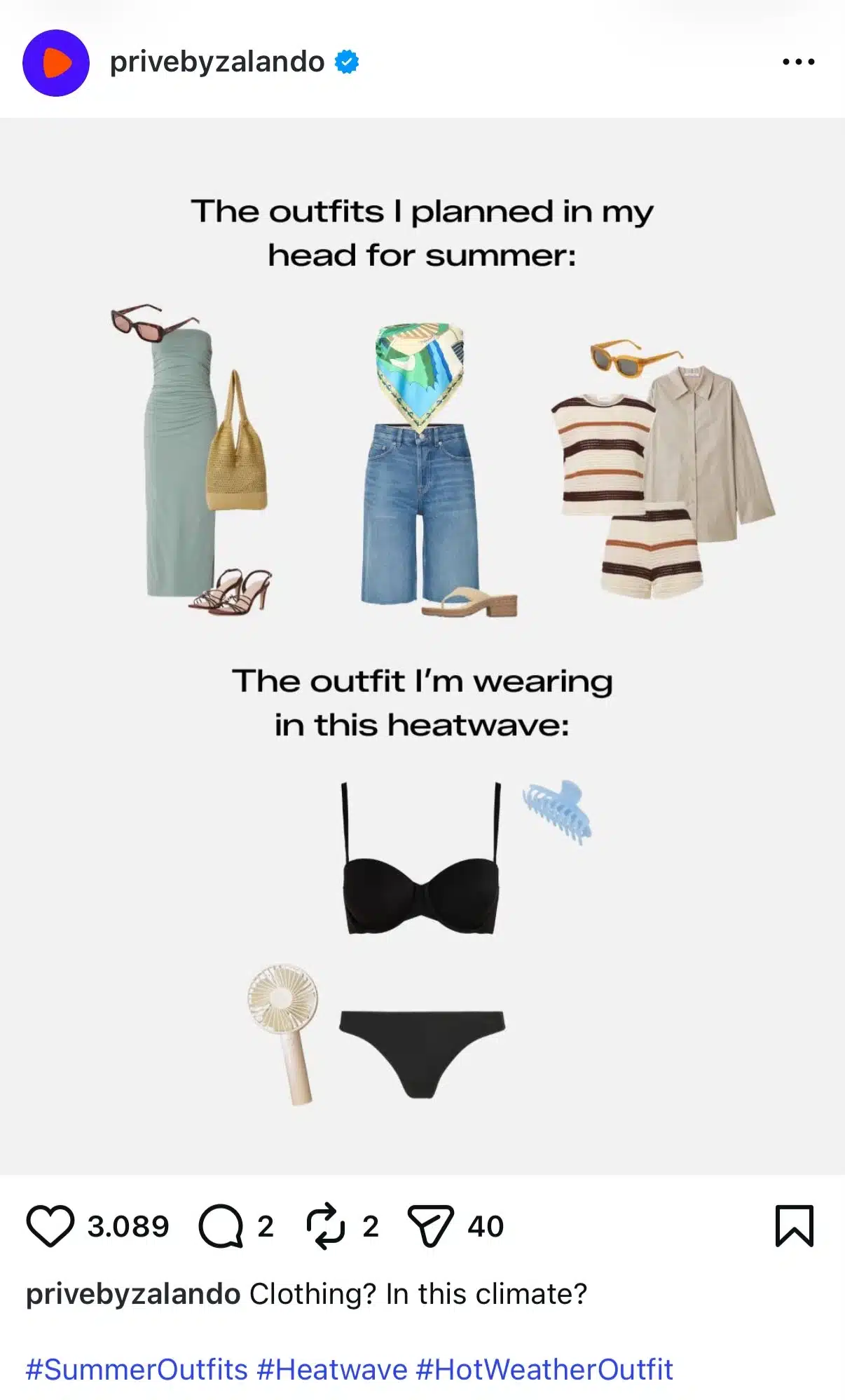
This one works well for brands that can ease the discomfort people are experiencing; summer clothes, iced drinks, sun cream, beachwear, etc.
Thinking Monkey meme
The Thinking Monkey meme features a photo of a Barbary macaque with its finger on its mouth, looking as though it’s deep in thought. The image is paired with captions that exaggerate overthinking, questionable ideas, awkward realizations, or bizarre internal monologues, making it one of the internet’s most versatile reaction memes.
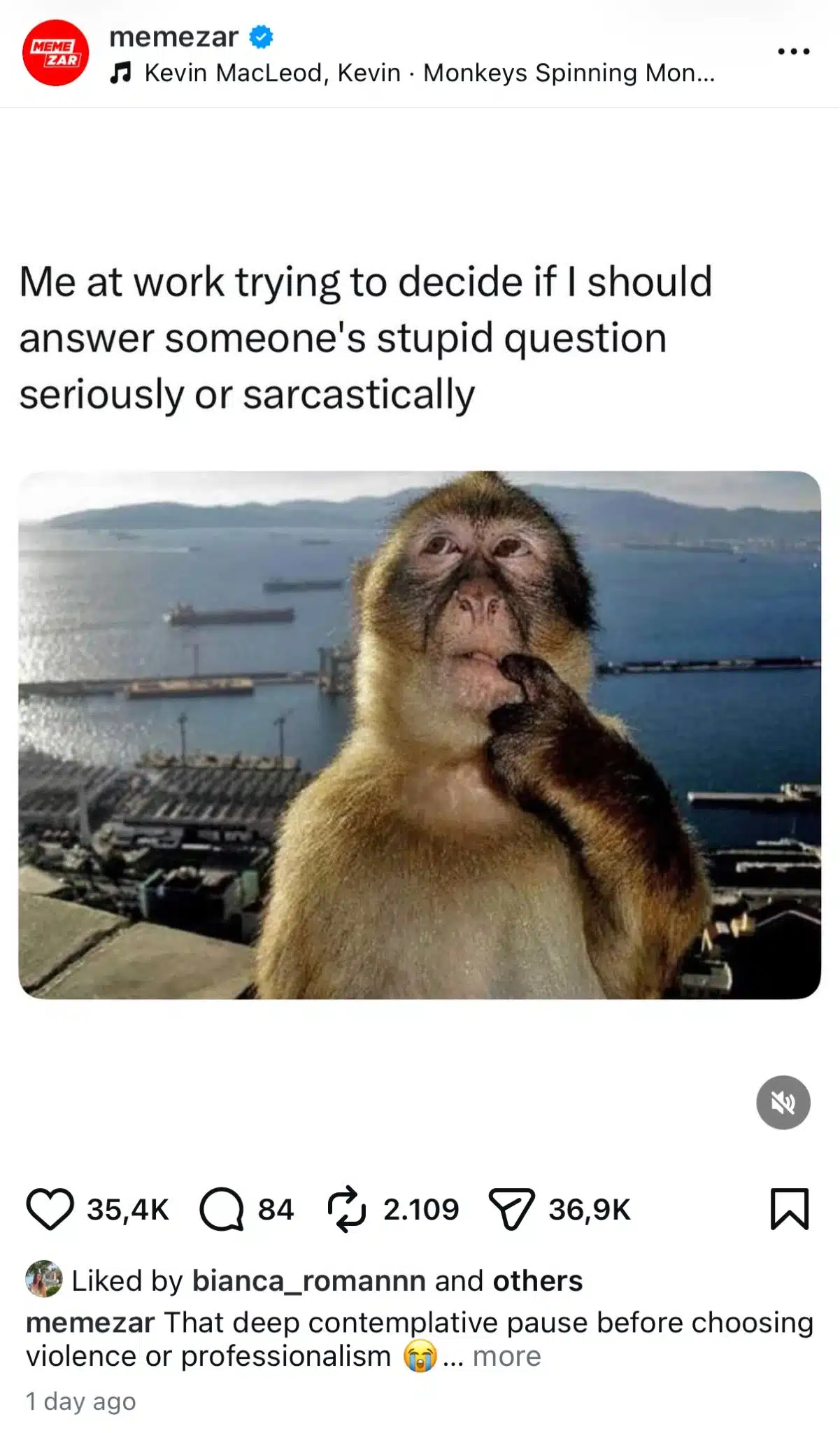
Brands can easily adapt the format by replacing the caption with a relatable customer dilemma or an industry-specific joke, letting the monkey do all the thinking.
Viral memes on Instagram this week (July 8, 2026)
Empire State Building meme
The Empire State Building flag meme took off after climbers Angela Nikolau and Ivan Beerkus got engaged atop the Empire State Building while holding a large black banner. Within hours, creators and brands began editing the flag to display their own messages, turning the image into one of the internet’s fastest-moving meme templates.
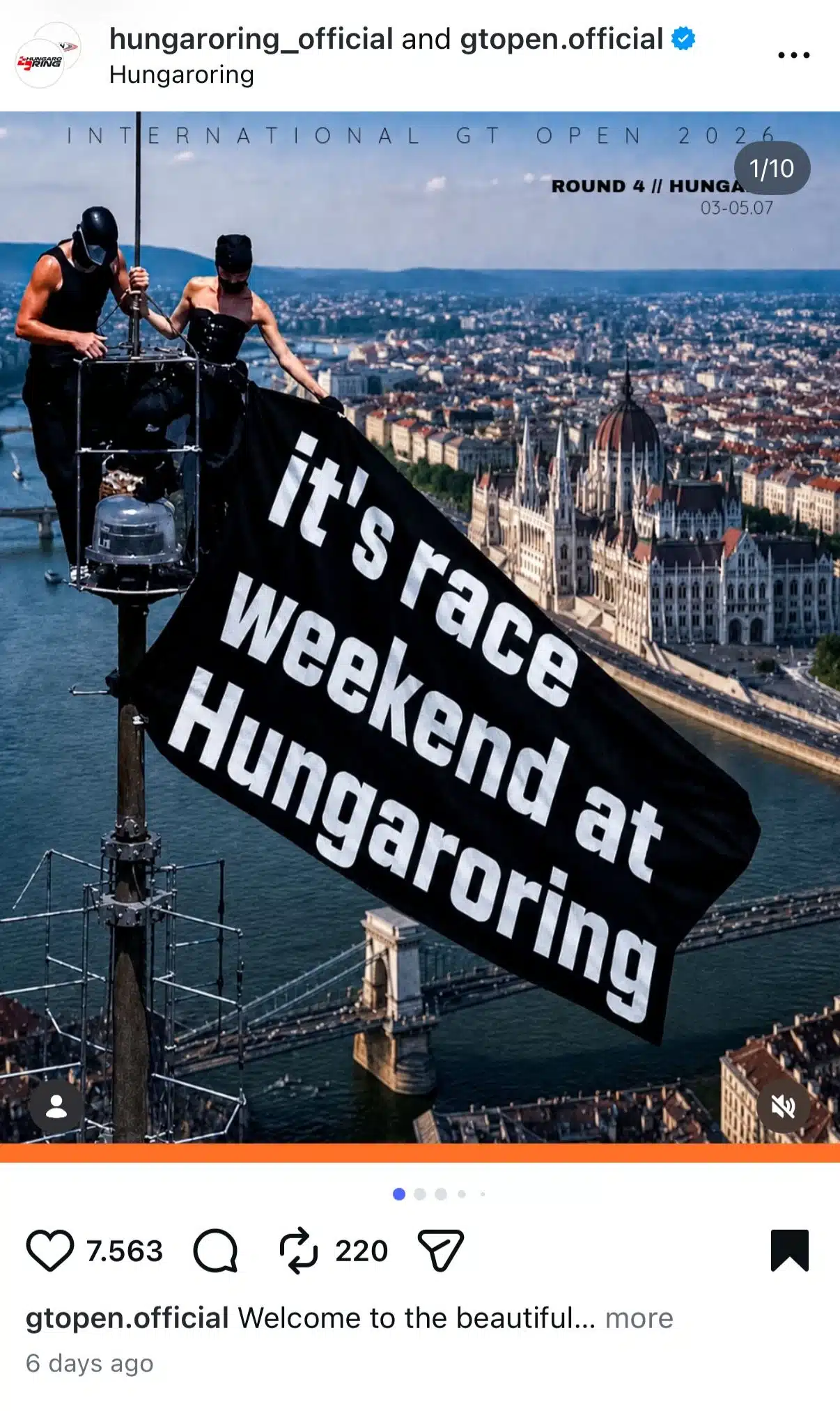
Companies have used it to announce product launches, promote offers, react to current events, and poke fun at industry-specific struggles, proving that sometimes a simple Photoshop edit is all it takes to join a viral moment.
Erling Haaland running meme
The Erling Haaland running meme is based on a screenshot of the Norwegian striker sprinting during the 2026 FIFA World Cup. His intense posture and determined expression quickly became an image macro, with creators editing him into absurd scenarios or captioning the image as someone charging toward a goal, a deadline, or an embarrassing situation.
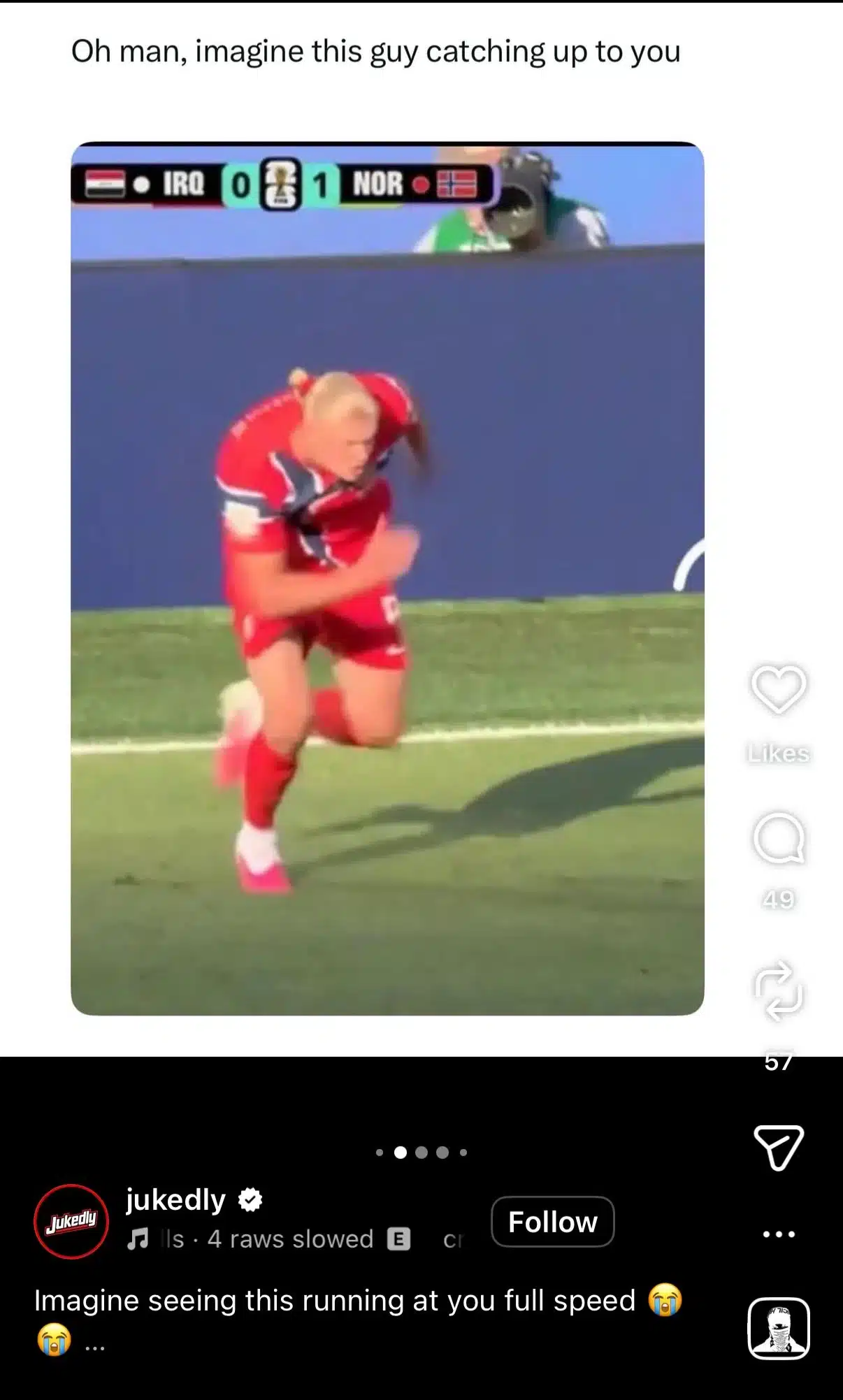
Brands can easily adapt the template by replacing the caption with a relatable customer experience or an industry-specific joke, making it one of the simplest reaction memes to recreate.
Viral memes on Instagram this week (June 23, 2026)
FIFA World Cup 2026 memes
The FIFA World Cup 2026 has already become a goldmine for memes. Unlike a specific audio or template, FIFA memes are event-driven.
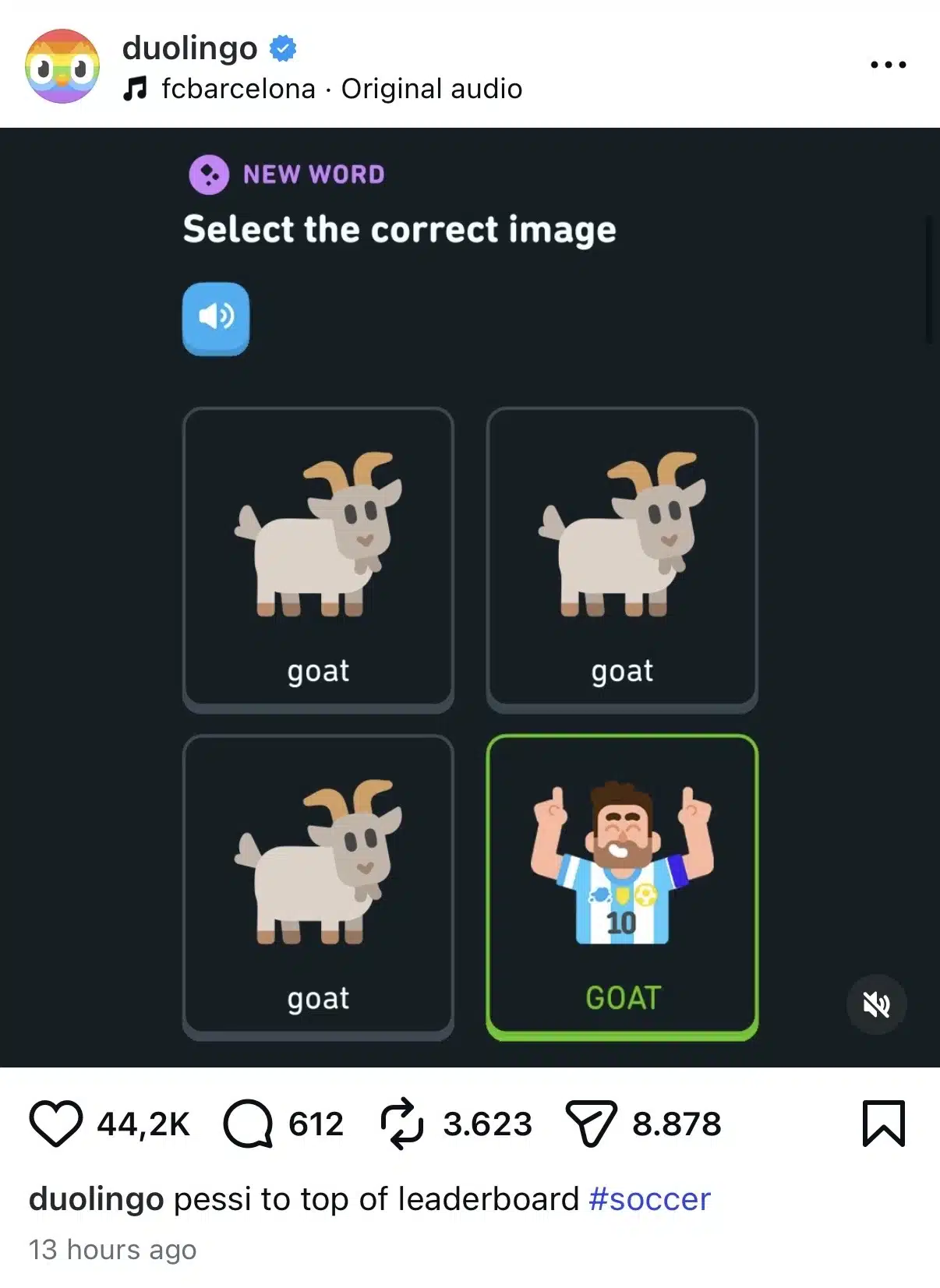
Some of the biggest memes so far have focused on over-the-top fan reactions, underdog teams exceeding expectations, and the internet’s collective disbelief that Messi is still setting records in his sixth World Cup.
For brands, the opportunity isn’t to force football jokes into every post. Instead, react quickly to viral moments and adapt them to your audience. The best World Cup memes feel timely, relatable, and connected to the emotions fans are already experiencing.
Lil Mayo meme
Lil Mayo is a long-running internet meme featuring a small alien doll that gets photoshopped or photographed in absurd situations, from partying with celebrities to flexing expensive cars and living a better life than most humans. The character became popular because of the contrast between a cheap-looking alien prop and the over-the-top influencer lifestyle it’s portrayed as having.
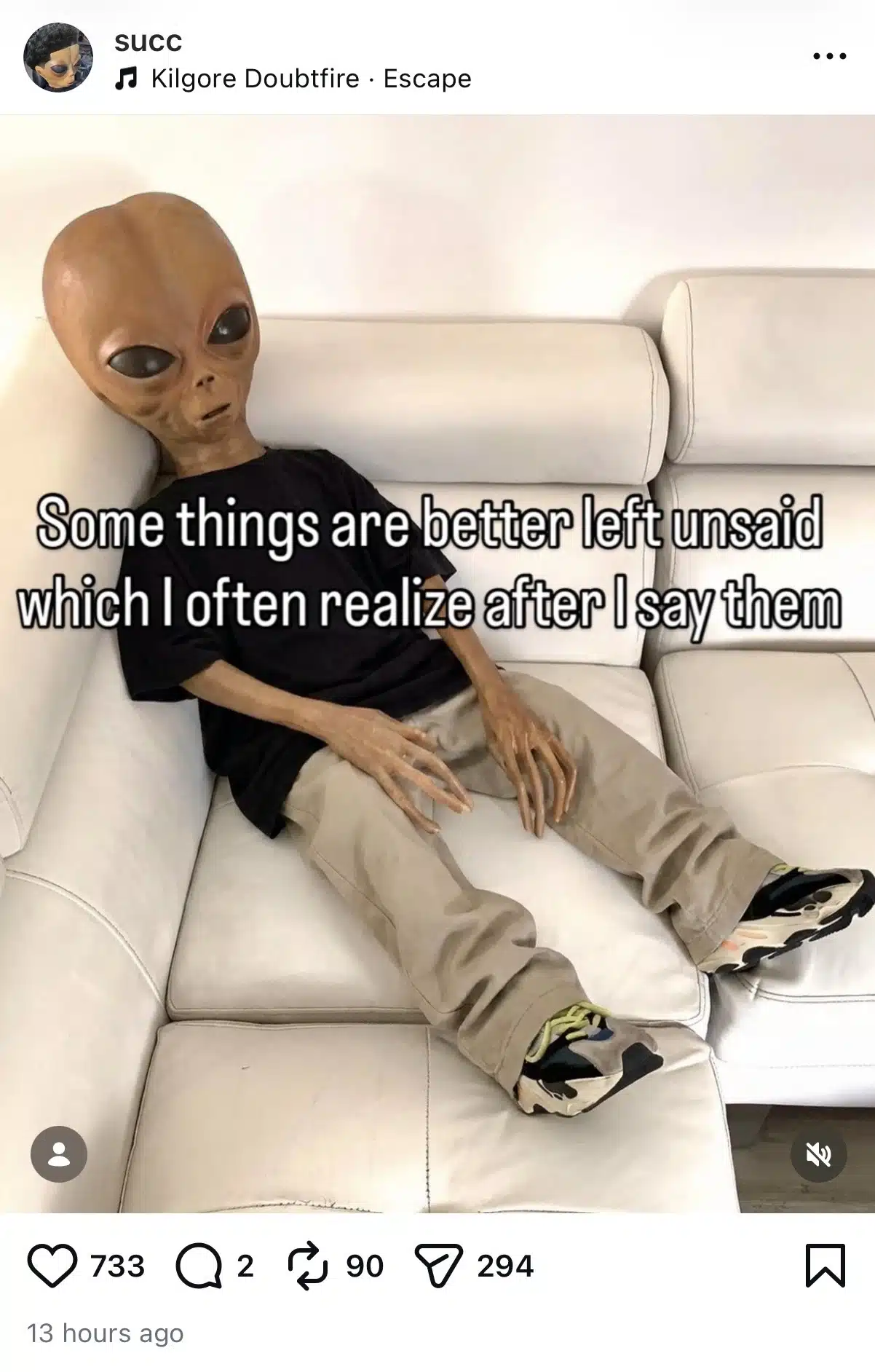
Though it’s been around for over 10 years, it has a habit of resurfacing quite often, and right now it’s getting a lot of attention on Instagram.
For brands, the trend works best when the alien becomes a stand-in for your audience, product, or industry stereotype. A coffee brand could show Lil Mayo lining up for a caffeine fix before sunrise. The format succeeds because it’s instantly recognizable, highly customizable, and relies on visual humor rather than complex editing or niche references.
Keep in mind that Lil Mayo isn’t just a meme template floating around the internet. The character is owned by Alex Martyn, and “LIL MAYO” is a registered trademark covering entertainment appearances, endorsements, and related commercial activities.
Viral memes on Instagram this week (June 17, 2026)
“Trying to have a conversation with my blue eyed friend”
The joke is that people with very bright blue eyes have such an intense, distracting stare that you can’t focus on the conversation anymore. Instead of listening to what they’re saying, you’re hypnotized by their eyes.
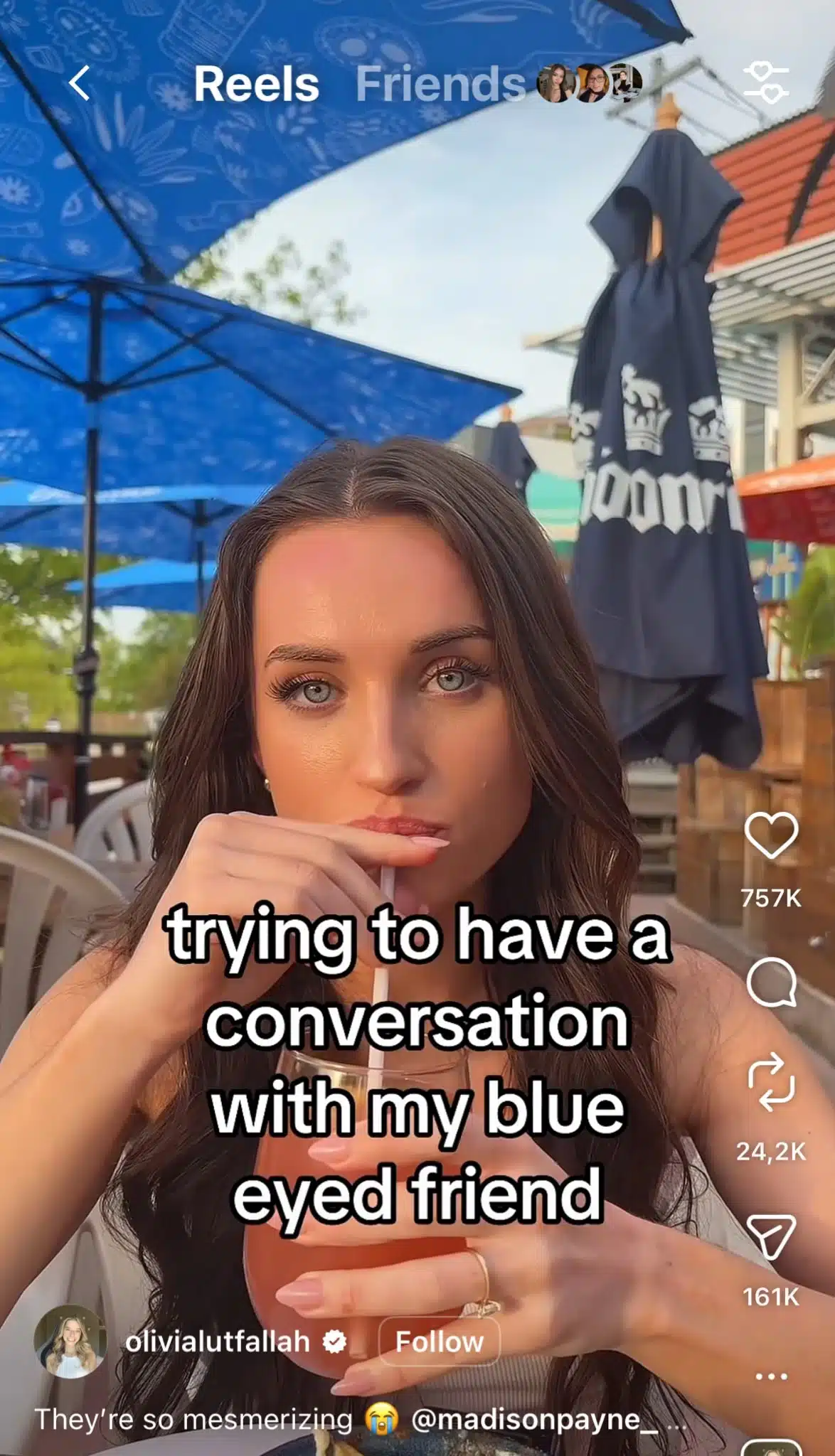
Most versions use captions like:
- “Trying to have a conversation with my blue-eyed friend”
- “Me trying to focus while they stare into my soul”
- “I forgot what we were talking about”
The humor comes from exaggerating how striking blue eyes are, treating them like a supernatural distraction rather than a normal physical feature. It’s usually playful rather than mean-spirited and often overlaps with the long-running “blue eyes staring into your soul” internet joke.
Cheesy Michael meme
The “Cheesy Michael” trend started with creator @nnichetony repeatedly placing random objects on his roommate’s door handle while singing “Cheesy Michael, open up the door.” The combination of a catchy song, an unseen roommate, and increasingly absurd pranks turned the format into a viral meme.
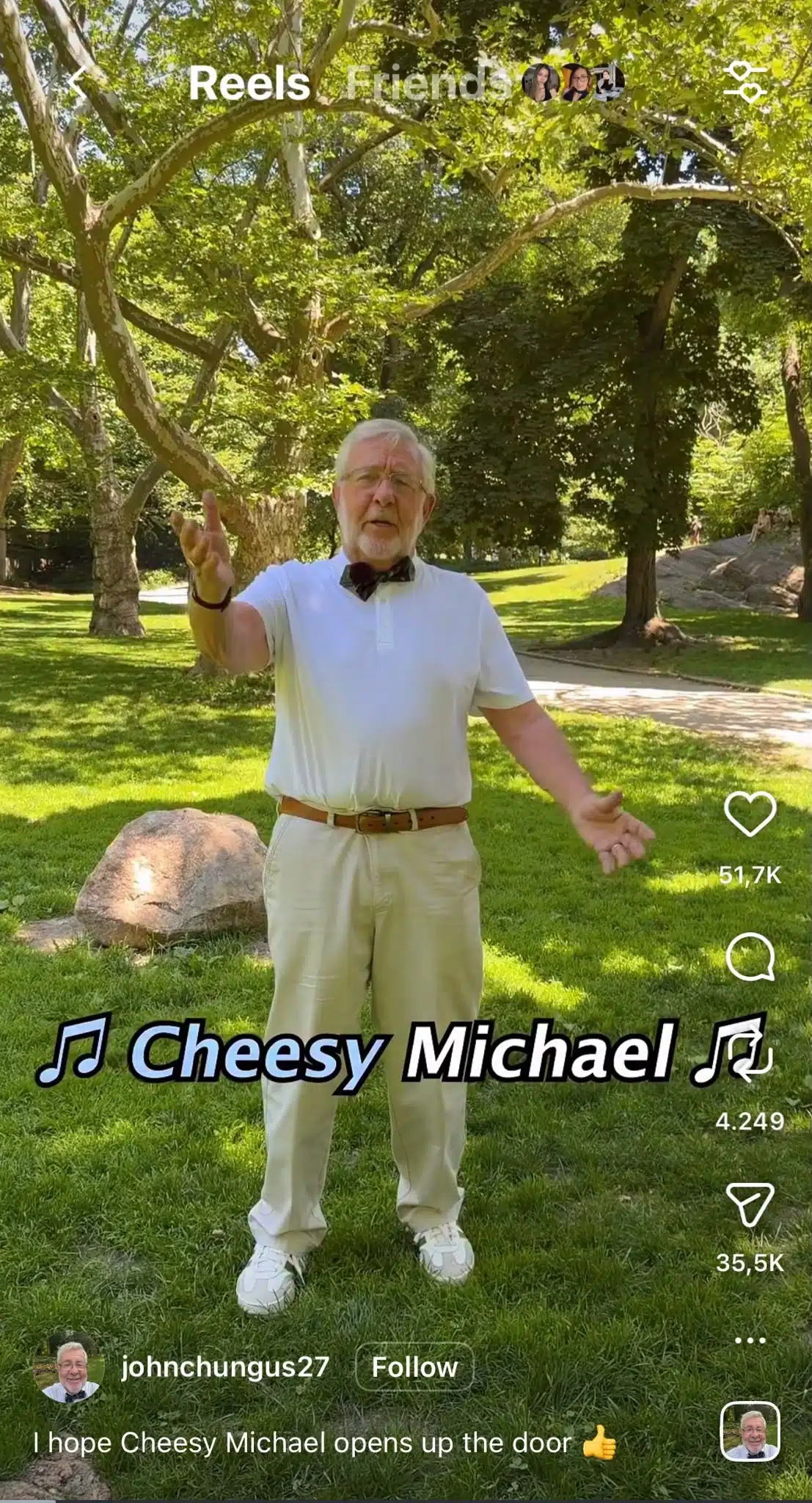
Creators are now making covers, remixes, and their own “Cheesy Michael” videos, proving once again that the internet loves jokes that make almost no sense.
Viral memes on Instagram this week (June 11, 2026)
The drooling cat meme
Reaction memes with cats have always been a staple of Instagram culture, but the cats change from time to time. This time, the drooling cat is taking center stage, and it’s the source for a lot of memes about what people like or enjoy.
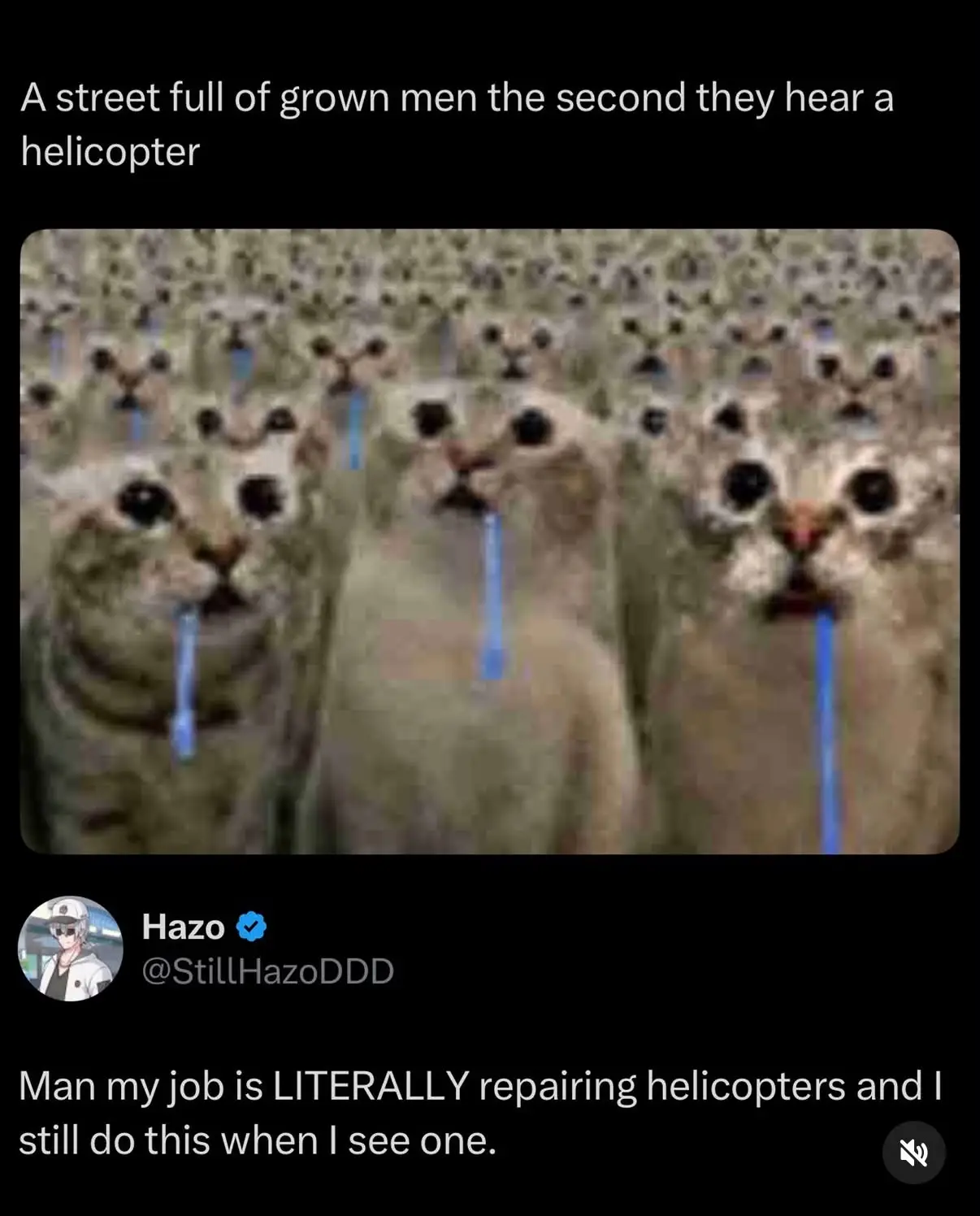
As a business, this one is very easy to adapt. You can pair your product or location with a picture of this funny cat, showing just how much people enjoy your brand while also putting forward a humorous side.
Imagine hating on me
The “imagine hating on me” trend is a lighthearted format where creators pair the caption “imagine hating on me” with clips of themselves doing something completely harmless, wholesome, or relatable. The joke is that there’s nothing remotely controversial happening. They’re usually just enjoying a hobby, relaxing at home, spending time with friends, traveling, or sharing a favorite interest.
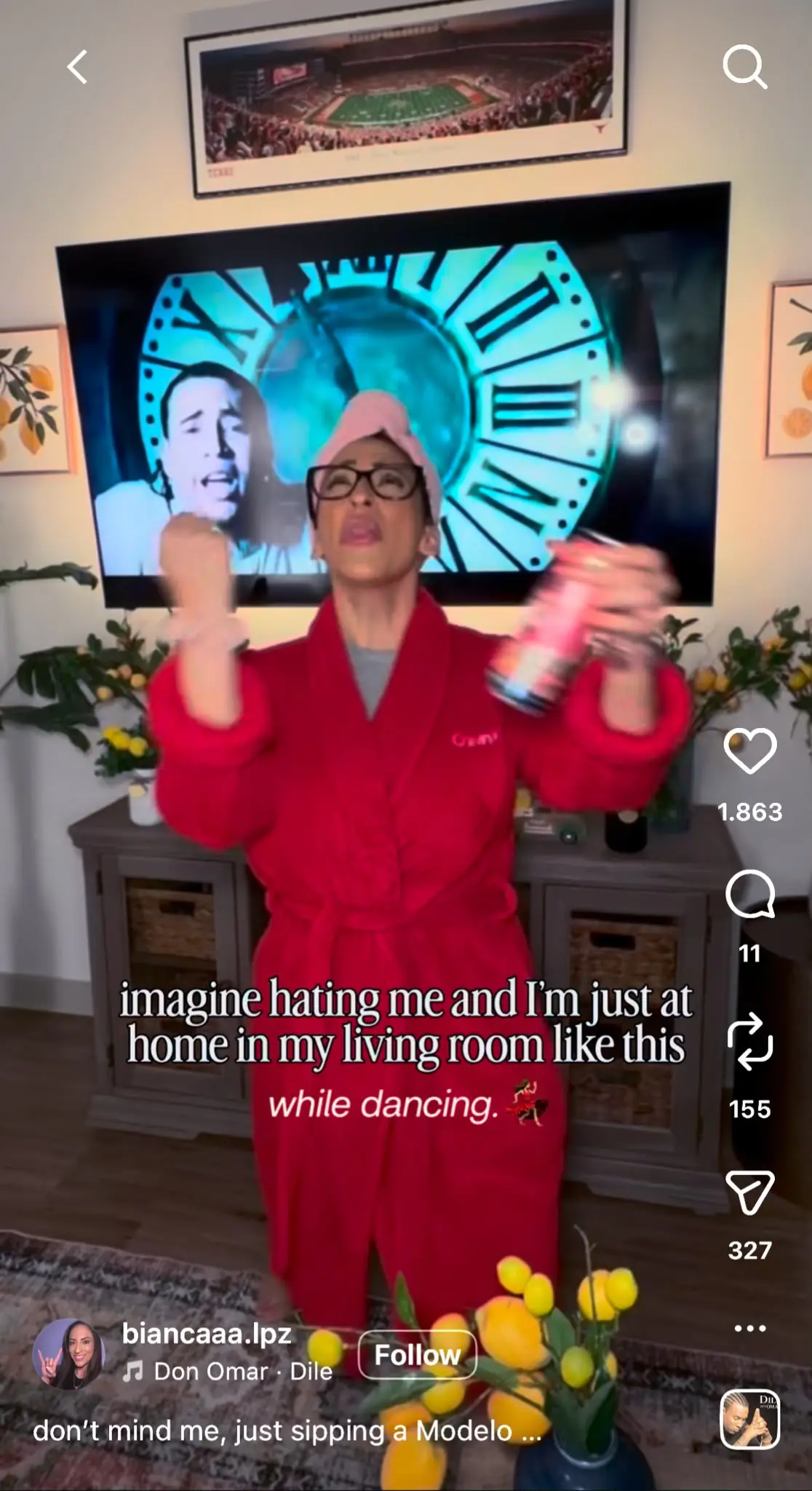
The trend works because of the contrast between the dramatic caption and the ordinary footage. By framing everyday activities as if they could possibly deserve criticism, creators create a self-deprecating joke that feels playful rather than defensive.
Brands can adapt the format by showing products, behind-the-scenes moments, or customer experiences alongside captions like “Imagine hating on us when we’re just making coffee” or “Imagine hating on us when we’re just helping people book vacations.”
Viral memes on Instagram this week (June 4, 2026)
Obsession movie scene
The “I thought we were having a nice date” meme comes from an early scene in Obsession (2026) where Inde Navarrette’s character Nikki declares her love for Bear on a date, only to have him completely ruin the moment, causing her to make an awkward scene inside a crowded restaurant.
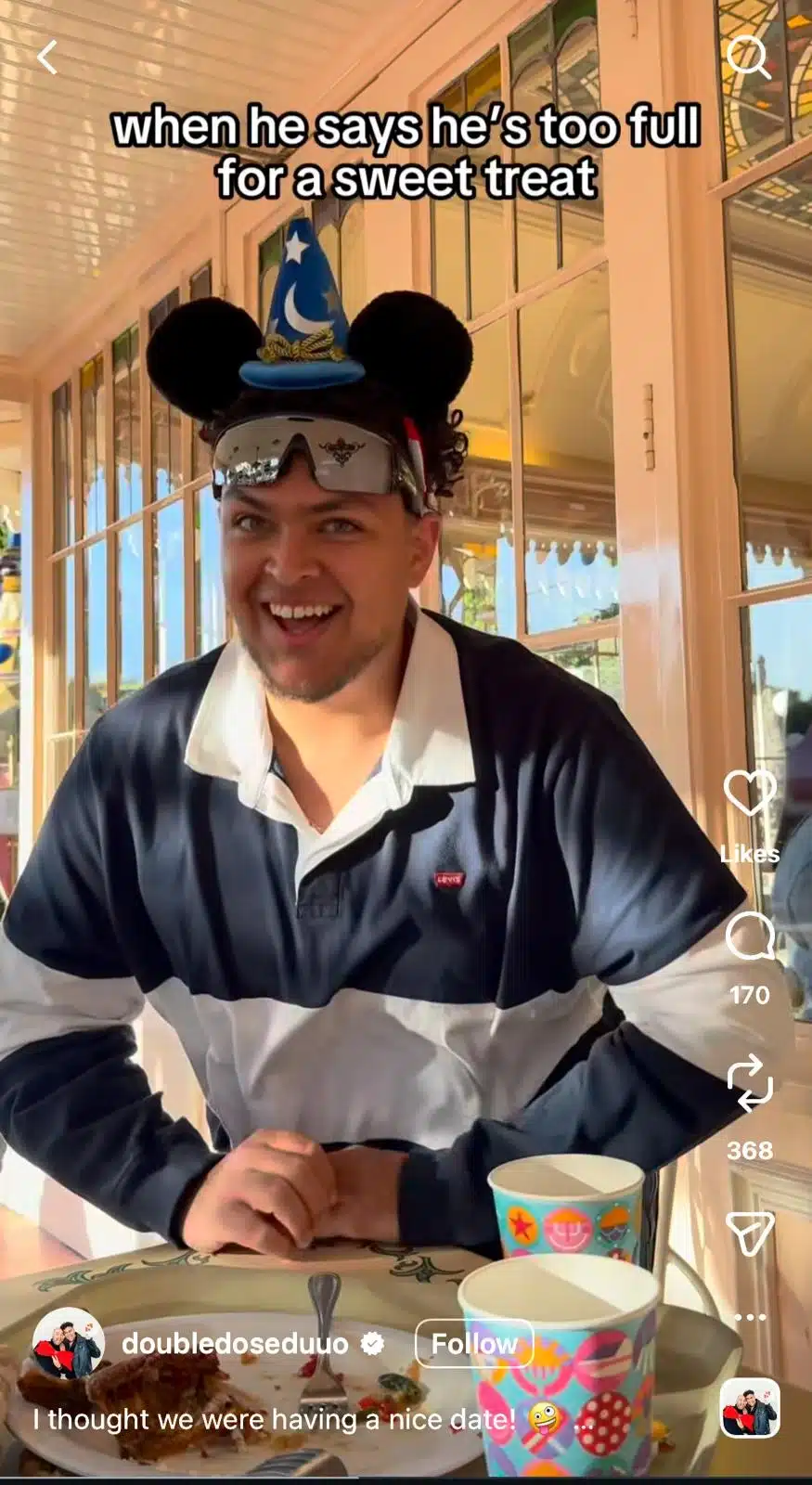
The line has taken on a life of its own online, with people using it to caption any situation where something starts out pleasant and promising but then gets unexpectedly derailed or disappointing. Think a great meal ruined by a bad bill, a fun hangout interrupted by bad news, or a smooth conversation that suddenly goes sideways.
The format works because the energy of the scene is so visceral and relatable: that specific feeling of whiplash when your vibe is killed. For brands, the meme is actually a natural fit for a “setup and subvert” style of content. A restaurant could post a beautiful plate of food with the caption “I thought we were having a nice date” followed by a shot of an empty plate demolished in minutes, leaning into the joke that their food is too good to last.
Bad news for my wallet…
In the “bad news for my wallet…” meme, the joke is basically that waking up each morning is its own trigger for spending, whether that’s grabbing a coffee, doing a little impulse shopping, ordering food, or just existing in a world that costs money.
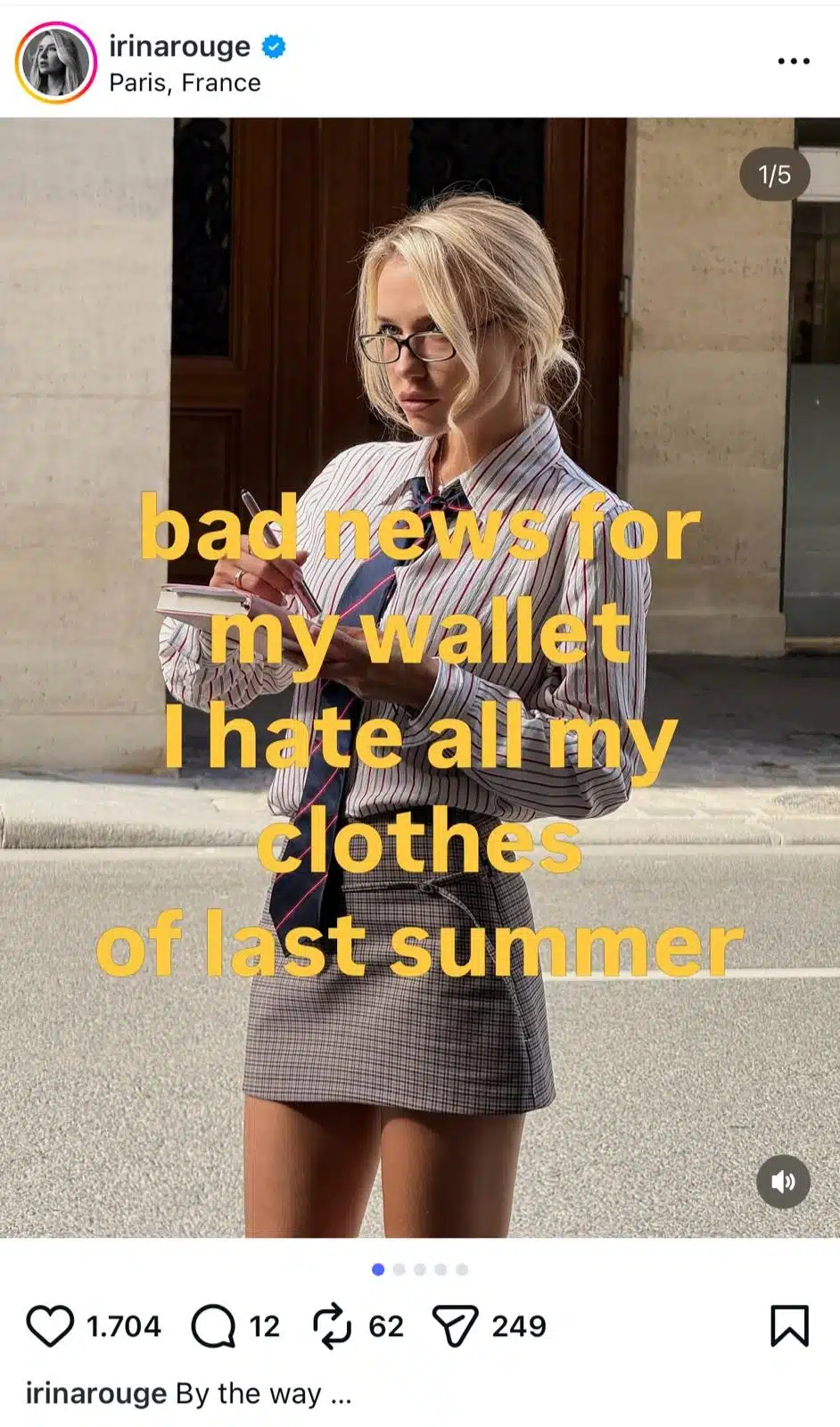
People use it to caption everything from opening a delivery app first thing in the morning to booking trips they probably shouldn’t, fully laughing at themselves in the process. It hits because there’s no villain in the story, just you, your bad decisions, and your very sad bank account.
For brands in food, lifestyle, or retail, it’s honestly a really fun one to jump on since you can lean straight into the bit and position your product as the thing that made waking up worth it anyway.
Viral memes on Instagram this week (May 27, 2026)
Millenial vs. Gen Z marketing
If you’ve been scrolling Instagram lately, you’ve probably seen brands posting two versions of the same ad side by side: one for millennials, one for Gen Z.
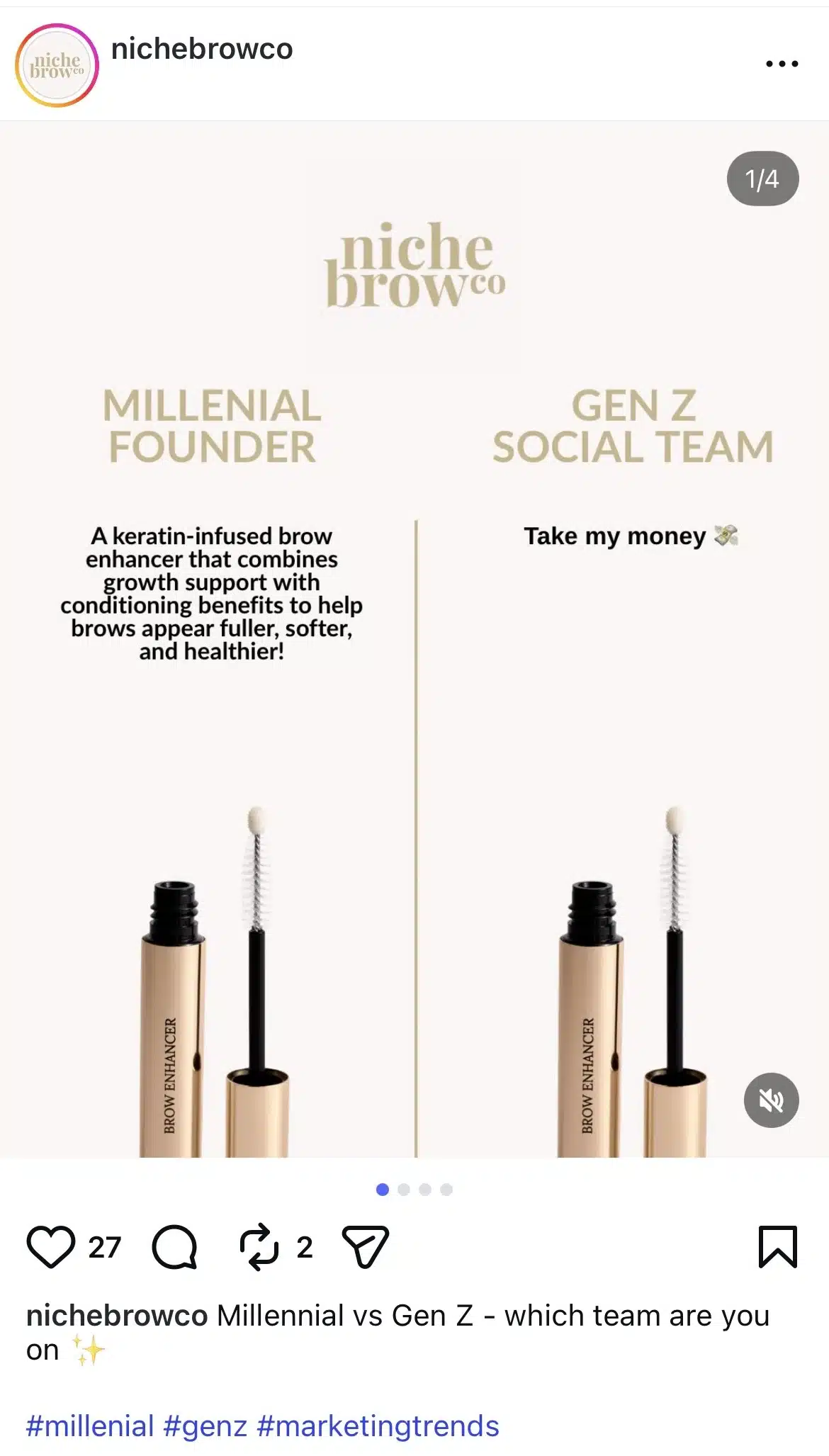
The concept is simple: brands create mockups of ad copy for both generations, leaning into the cliches and stereotypes associated with each. The millennial version is usually longer, more traditional, and written in full sentences, while the Gen Z version is short, loaded with emojis, and full of internet slang.
So how do you make it work for your brand? The key is to keep it specific. The millennial side should feel just as accurate: think benefit-driven copy, a little earnest, maybe a loyalty program mention. The goal is for both sides to feel genuinely recognizable, not mocked. When people see themselves in a post, they share it. That’s really the whole trick.
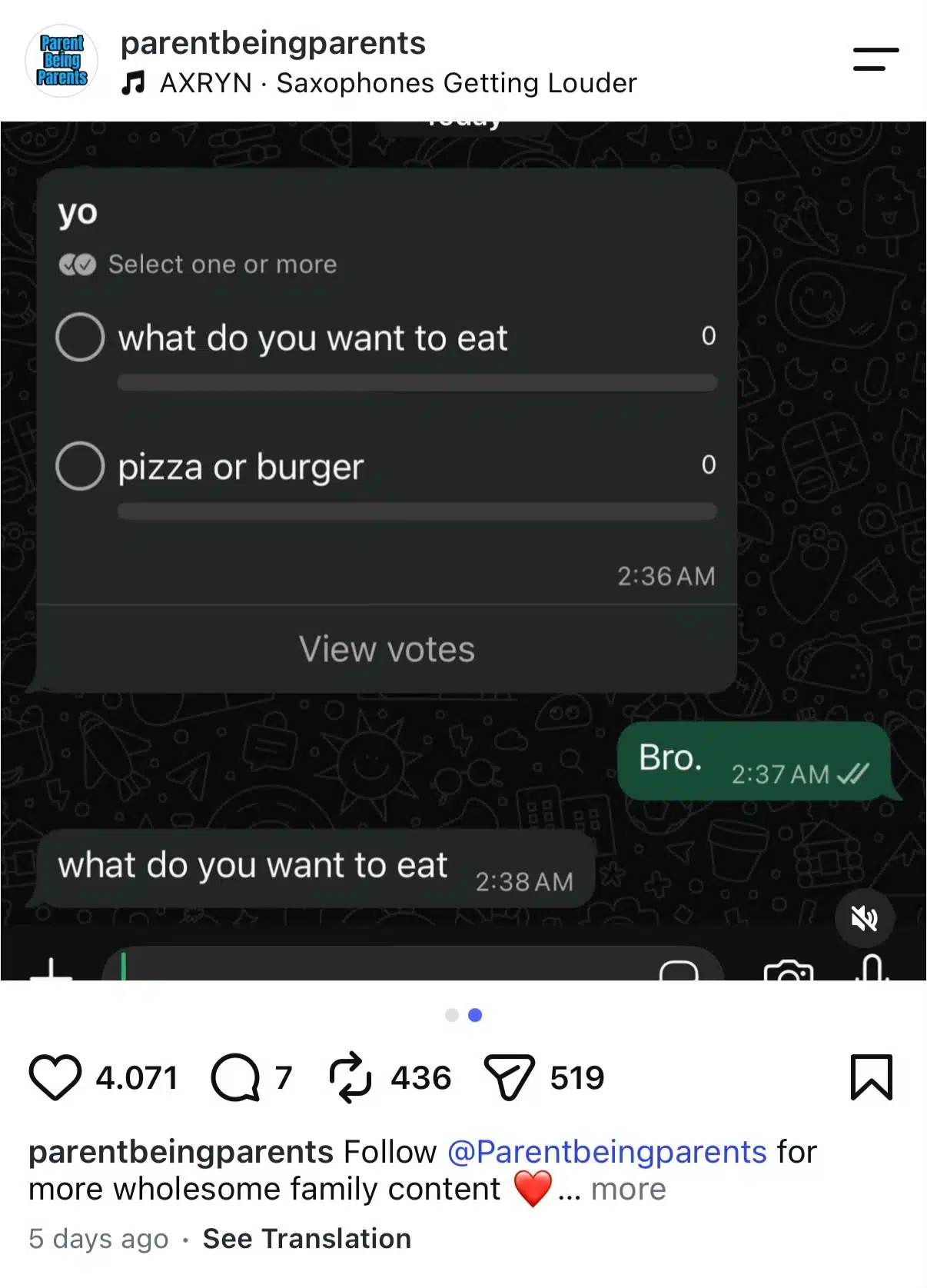
Saxophones getting louder
“The saxophones are getting louder” is social media’s way of describing that specific feeling when a normal situation starts quietly sliding toward disaster. If your boss asks you to “hop on a quick call” at 5 pm on a Friday, that’s the saxophones getting louder. If you accidentally eat way too much spicy food and you know what’s coming, saxophones.
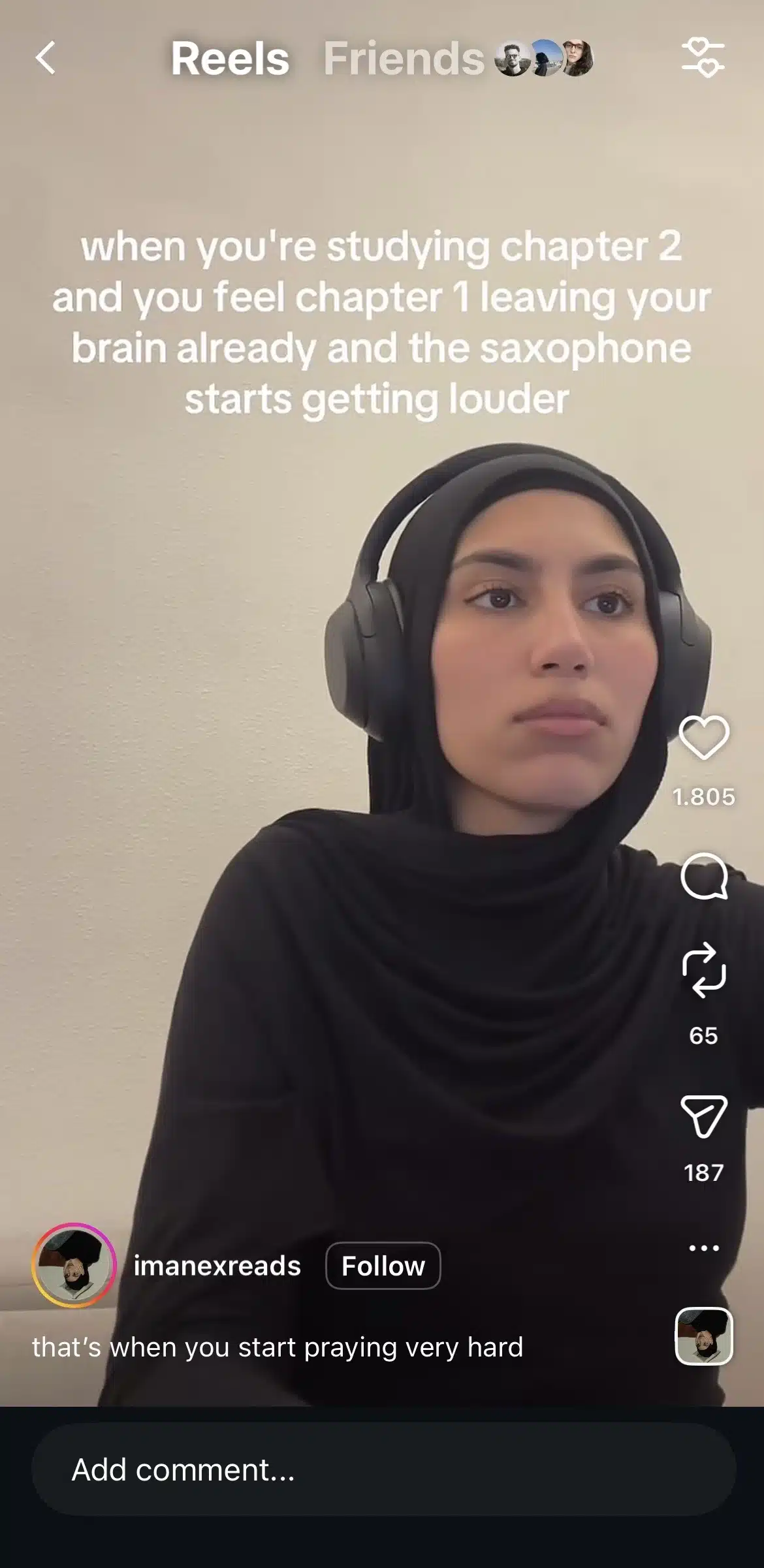
The videos feature a specific sound of an instrumental with multiple saxophones. The humor comes from that recognition: you can see exactly what’s coming, and there’s no stopping it.
For brands, this one is gold because almost every industry has its own version of impending, inevitable chaos. A social media tool could post “your manager calls you right after sharing a post on the company Instagram, and the saxophones keep getting louder.” A coffee brand could go with “you’re on your last pod, and guests are arriving in ten minutes.”
Viral memes on Instagram this week (May 11, 2026)
“Mom, what were you like in the 90s?”
The “Mom, what were you like in the 90s?” meme video is one of the trends dominating feeds this week. The trend starts with a present-day video before switching into a slideshow of old 90s photos set to Iris by the Goo Goo Dolls, one of the most recognizable songs from that era.
The meme gained traction after actors from major 90s shows began posting their own versions. Alyson Hannigan from Buffy the Vampire Slayer helped push the trend into mainstream internet culture, and thousands of users quickly recreated the format with childhood photos, family albums, and old screenshots.
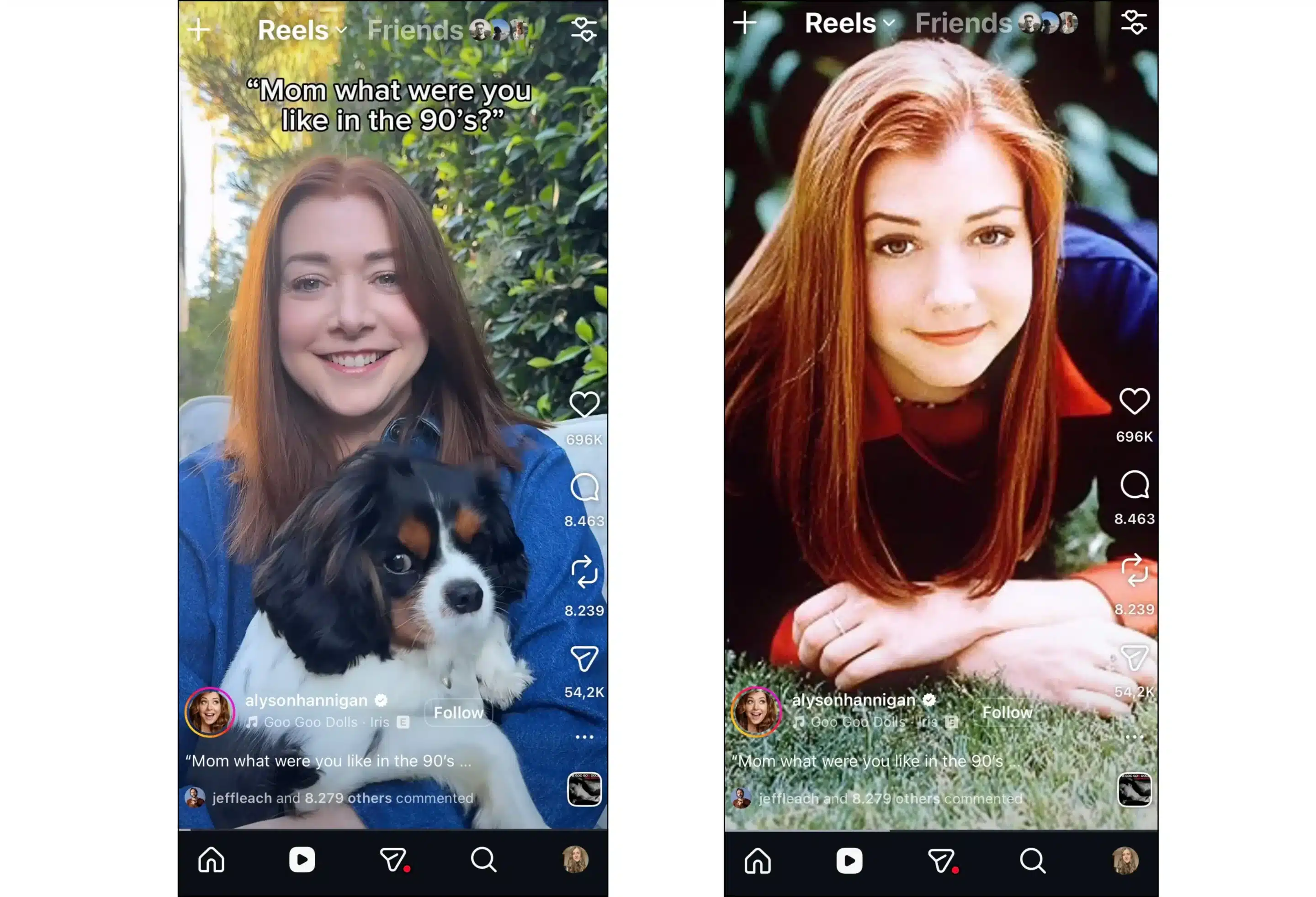
Most videos follow the same structure:
- A current-day selfie or casual clip
- Overlay text asking: “Mom, what were you like in the 90s?”
- A transition into nostalgic photos
- Iris playing in the background
- Slow slideshow pacing instead of fast edits
Unlike many viral memes built around humor alone, this format leans heavily on nostalgia and visual storytelling. That’s part of why it spread so quickly across social media platforms, especially among millennials sharing memories from their teenage years.
The consistency of the format also helped the trend explode. Once users recognized the music, pacing, and image style, it became easy to identify and recreate while still feeling personal.
Reginald Skulinski Disappointed (Monster House stare meme)
The “Monster House” meme uses a short clip from the 2006 animated movie Monster House featuring Reginald “Skull” Skulinski, voiced by Jon Heder. In the original scene, Skull aggressively grabs food from another child while giving a pointed, intense stare. However, creators froze one specific frame from the clip that unintentionally makes him look deeply disappointed.
That still image became the actual meme.
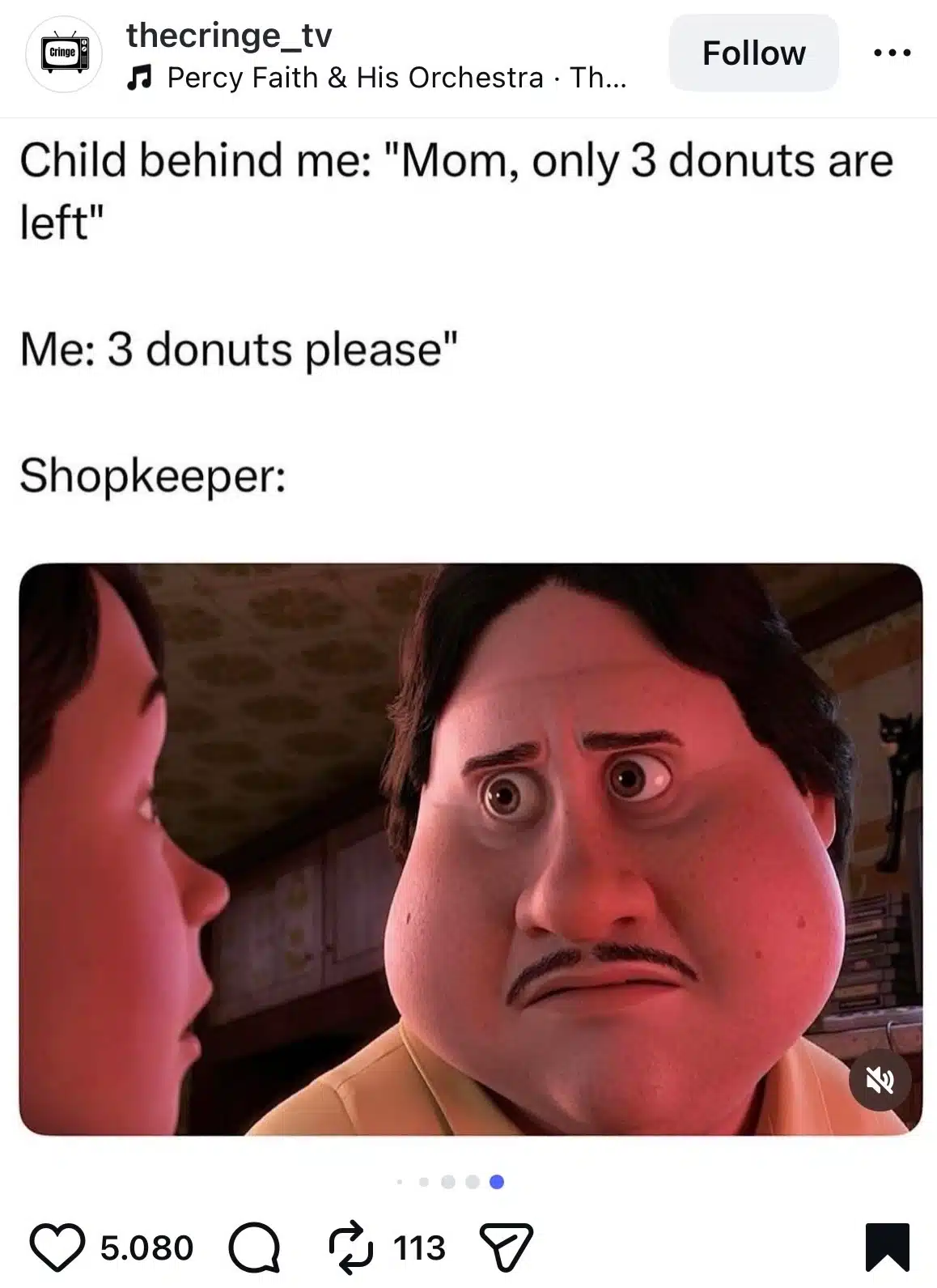
Creators now use the screenshot as a reaction image for awkward situations, bad decisions, or moments where reality doesn’t match expectations. The humor comes from how dramatic the expression looks, even though that’s not the original emotion in the movie scene.
The meme spread quickly because the expression feels surprisingly relatable. Users apply it to everything from disappointing online orders to watching someone make an obvious mistake in group chats or comment sections.
Like many popular memes right now, this trend also taps into nostalgia from early 2000s movies while giving creators an easy reaction format they can reuse across different topics and feeds.
Met Gala 2026 memes
Met Gala memes returned immediately after the red carpet started, with users turning celebrity outfits, awkward interviews, and dramatic poses into some of the most shared trending memes of the week. Like every year, the event became less about fashion coverage alone and more about how quickly the internet could turn highlight moments into reaction content.
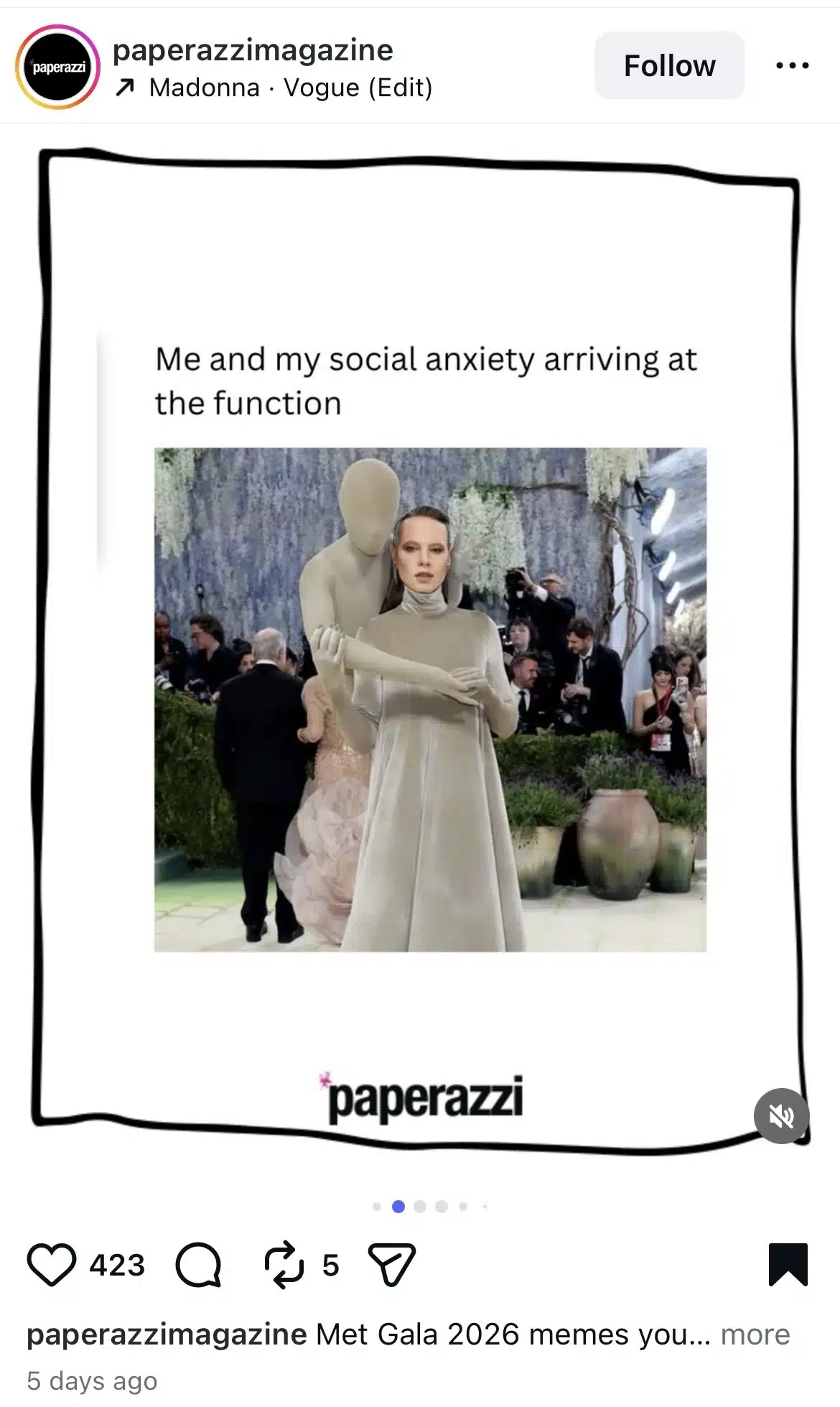
Many creators focused on exaggerated outfit comparisons, pairing celebrity looks with random objects, movie characters, or household items. Others used screenshots from interviews and red carpet reactions as memes across Instagram and TikTok.
The format works well because the Met Gala naturally creates high-contrast visuals that are easy to parody. One unusual outfit can generate thousands of posts, edits, and comments within hours.
Common Met Gala meme formats included:
- Side-by-side comparison jokes
- Reaction screenshots from interviews
- “Expectation vs. reality” punchlines
- Outfit comparisons to food, furniture, or pop culture characters
- Fast slideshow edits using trending sounds
The event also creates a perfect environment for viral content because millions of users watch the same clips at the same time. That shared viewing experience helps jokes spread faster across feeds and comment sections.
“And Emily… that’s all”
The “And Emily… that’s all” is one of the short video memes taking off again after renewed attention around The Devil Wears Prada 2, one of the most anticipated sequel announcements online this year. Instead of reusing the original movie scene, creators mostly use the audio clip while pairing it with completely unrelated videos and reactions.
That’s what made the trend spread so quickly across TikTok and Instagram.
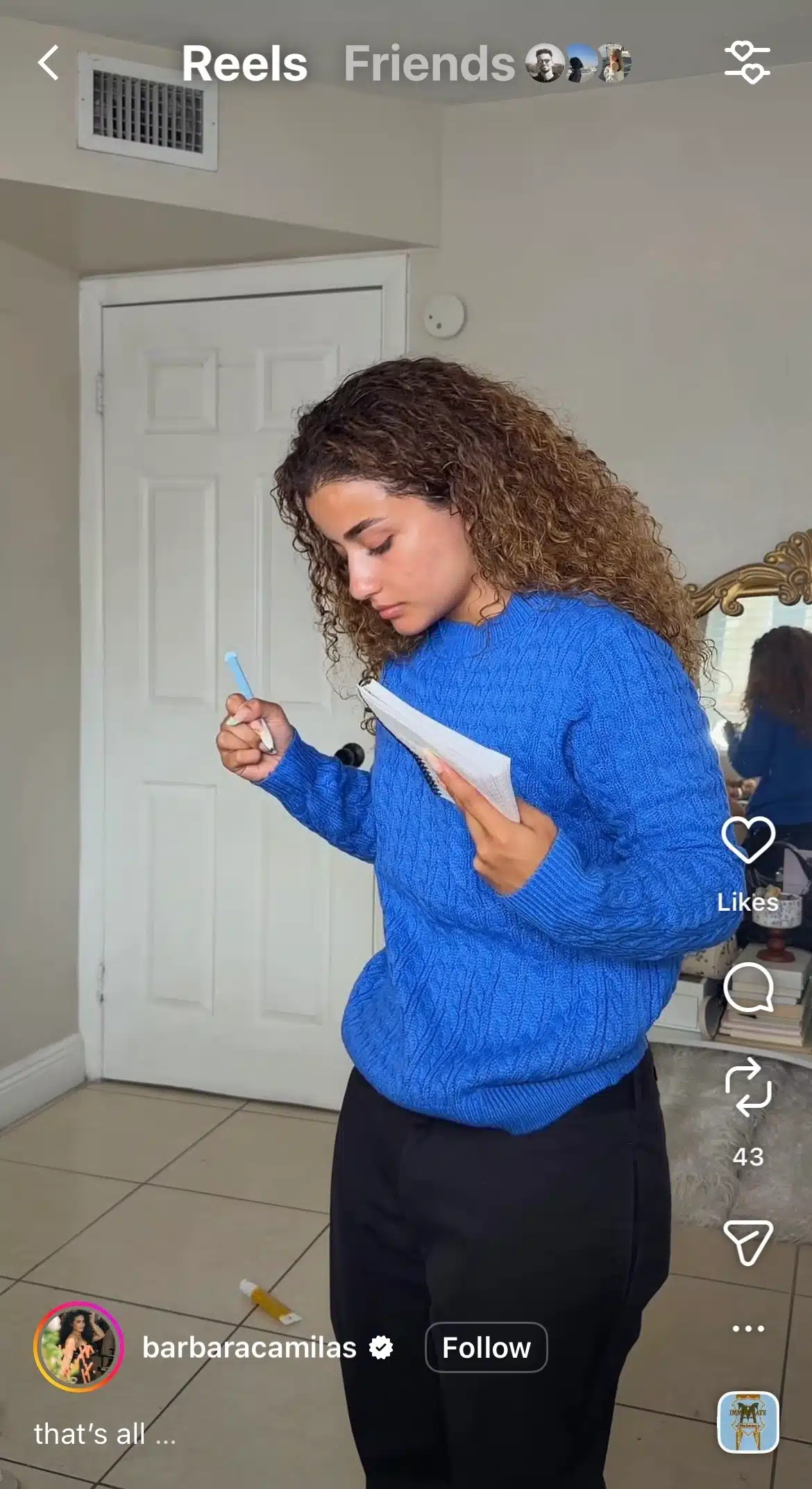
The audio usually appears at the end of a video where one person gets singled out, ignored, or subtly embarrassed. Creators use it to highlight awkward social moments, disappointing outcomes, or situations where someone clearly didn’t get the reaction they expected.
The trend works because the line delivery is instantly recognizable, even for users who haven’t watched The Devil Wears Prada. Miranda Priestly’s cold tone gives creators an easy punchline they can attach to almost any scenario.
The sequel announcement also pushed older movie references back into internet culture, which helped nostalgic audio trends gain traction again with younger creators and longtime fans alike.
“Top 5 horror movies”
The “Top 5 horror movies” meme turns ordinary frustrations into dramatic personal horror stories. Instead of listing actual scary films, creators use the format to rank things they genuinely hate dealing with in everyday life.
That twist is what made the trend go viral.
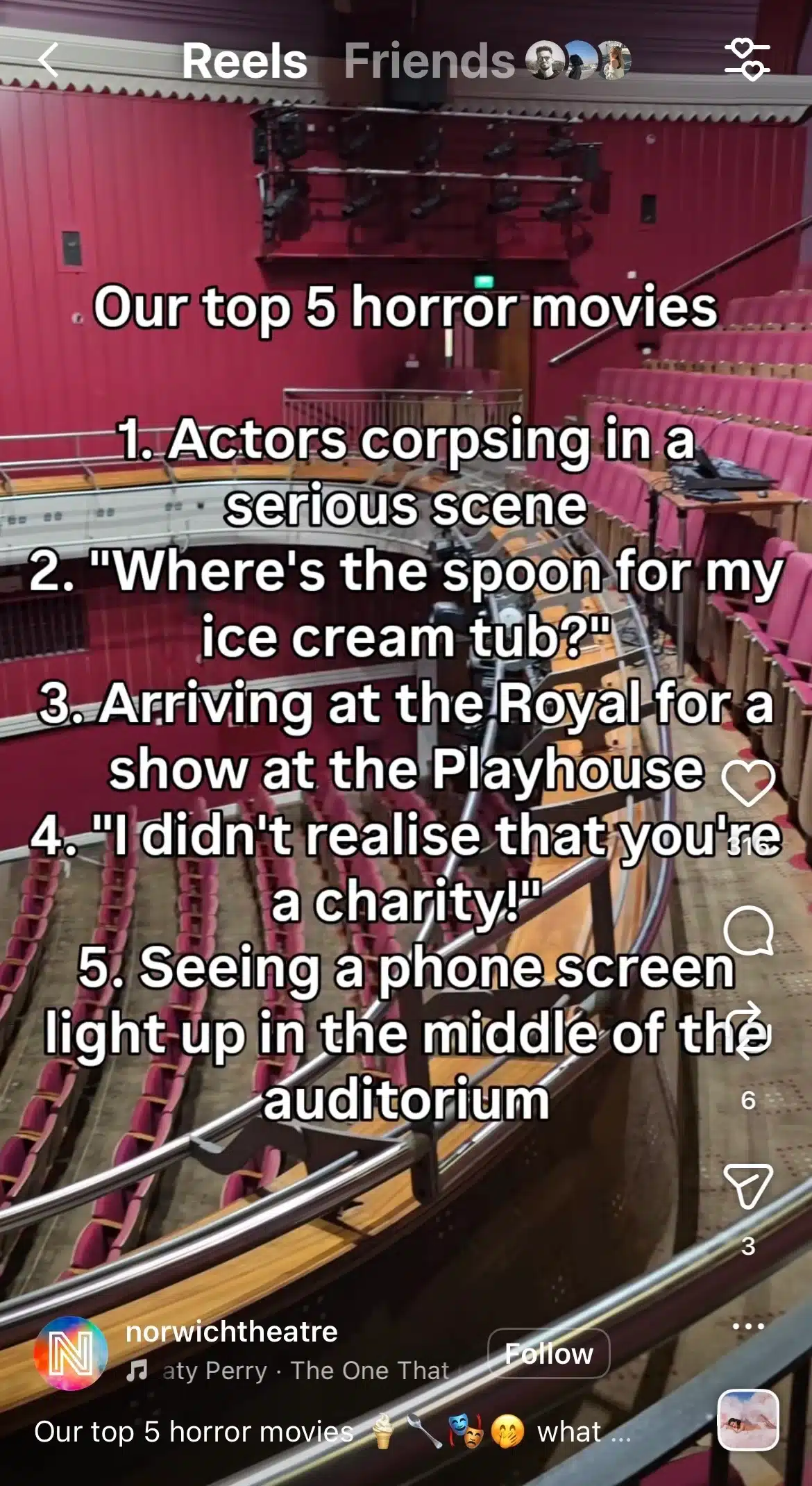
Most videos start like a serious movie ranking before quickly revealing painfully relatable answers instead. The humor comes from treating completely mundane situations as if they belong in a psychological thriller.
Popular examples include:
- “Calling customer support”
- “Replying all to an email by accident”
- “Hearing ‘we need to talk’”
- “Opening your front camera unexpectedly”
- “Monday morning meetings”
The meme spread quickly because it’s easy to personalize. Many creators adapt the format around work life, relationships, school, parenting, or awkward social interactions. Some use dramatic music and cinematic edits to make the joke even more exaggerated.
Unlike more niche internet humor, this trend works across almost every audience because the punchline depends on shared experiences. Everyone has their own version of “horror,” even if it’s something small and obvious.
The format also performs well on short-form video feeds because viewers immediately understand the setup. Once the first “movie title” appears, people stay to see what ridiculous answer comes next.
Euphoria season 3 memes
Euphoria season 3 memes are dominating social media platforms again because the new season is currently airing weekly, which means every episode creates a fresh wave of reactions, screenshots, and inside jokes online.
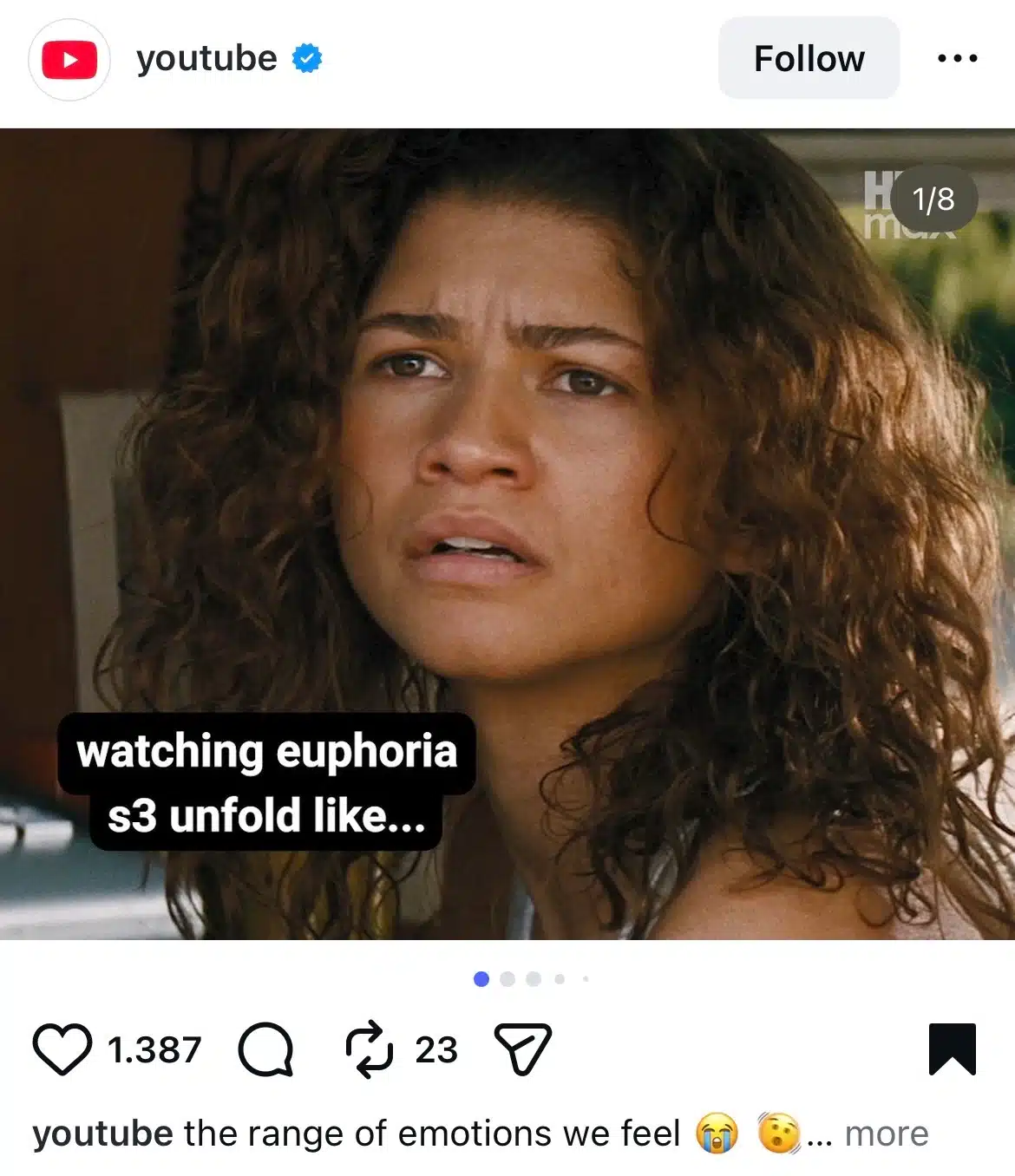
That weekly release schedule is a big reason the memes spread so fast.
Instead of audiences binge-watching the entire season at once, viewers spend days dissecting individual scenes, character decisions, outfits, and dramatic dialogue before the next episode arrives. Each new episode creates new viral moments almost immediately after airing.
Many creators also remix scenes with trending sounds, ironic captions, or fake commentary posts that poke fun at how exaggerated the show can feel. Some memes compare everyday situations to Euphoria-level drama, while others focus on specific characters and their increasingly messy storylines.
The show works especially well for internet humor because nearly every episode contains visually striking scenes or emotional moments that can easily turn into reaction images, edits, or punchlines.
What these popular social media memes mean and why they’re trending
Most trending memes follow the same pattern: they connect a familiar cultural reference with a feeling people instantly recognize. That’s why so many viral memes right now pull from older movies, nostalgic music, classic TV scenes, or major pop culture moments already dominating the internet.
You can see that across trends like the Devil Wears Prada audio comeback, 90s nostalgia slideshows using Goo Goo Dolls music, or reaction images from Monster House. Internet culture moves in cycles, and nostalgia gives creators a shortcut to audience recognition because people already understand the reference and emotional tone behind the joke.
At the same time, many popular social media memes are now driven by live events (especially around the holiday season) and weekly entertainment releases and upcoming events.
The Met Gala generated instant reaction memes because millions of users watched the same red carpet moments together in real time. Euphoria season 3 works similarly. Since new episodes air weekly, every episode creates fresh screenshots, reaction videos, and commentary posts that keep the trend active longer.
The other major reason these meme formats spread so quickly is relatability. Trends like “Top 5 horror movies” work for Instagram and TikTok users because creators replace actual horror films with mundane situations that feel painfully familiar, like awkward meetings or accidentally opening the front camera. The joke is simple, easy to recreate, and flexible enough for different audiences and creators.
In my experience, the memes that go most viral usually aren’t the most complicated ones, but those with formats people can instantly understand, personalize, and repost within seconds.
How to use trending Instagram memes for your brand
Trending Instagram memes can help brands feel more current, relatable, and visible on crowded social media platforms. But jumping into every viral trend rarely works. The brands that consistently create funny, relevant meme content usually follow a clear process instead of posting random jokes for attention.
Here’s what actually helps brands use trending memes effectively:
- Find trends early and move fast
- Participate in trends that fit your brand
- Avoid controversial trends
- Prioritize entertainment over selling
- Pick people who are naturally comfortable on camera
- Decide who approves meme content
- Give the social team creative freedom
1. Find trends early & move fast
Most viral memes have a short lifespan. By the time a trend appears everywhere, audiences are usually already tired of it.
That’s why timing matters more than production quality when you want to find popular memes.
In my experience, brands that perform best with meme content usually spot trends during the early adoption stage, when creators are still experimenting with the format, and users haven’t seen the same joke repeated hundreds of times yet.
A few ways brands track trends early include:
- Watching TikTok and Instagram Reels daily
- Following meme pages and creators
- Monitoring trending sounds and hashtags
- Paying attention to comment sections and repost accounts
- Tracking recurring audio clips or visual formats
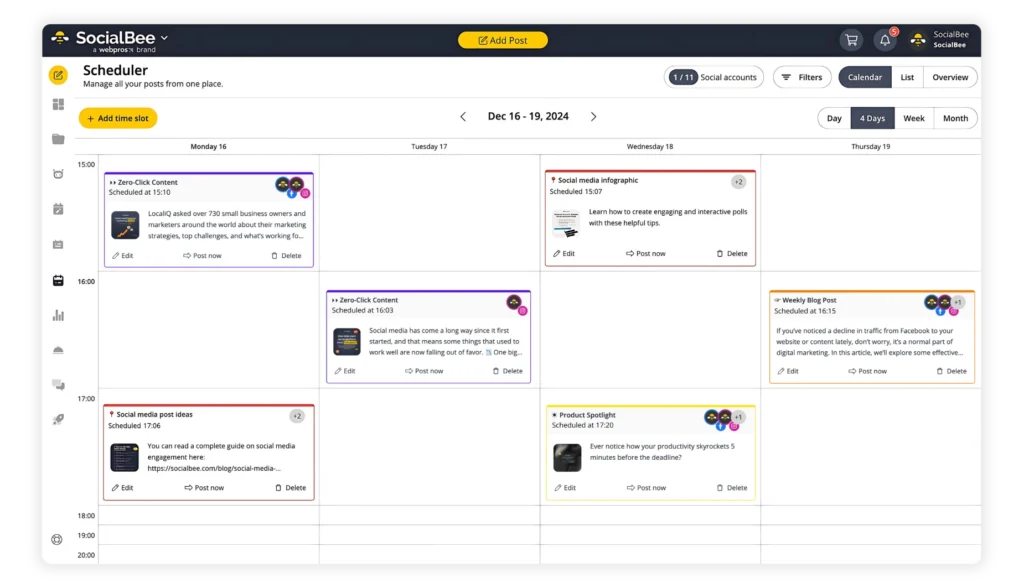
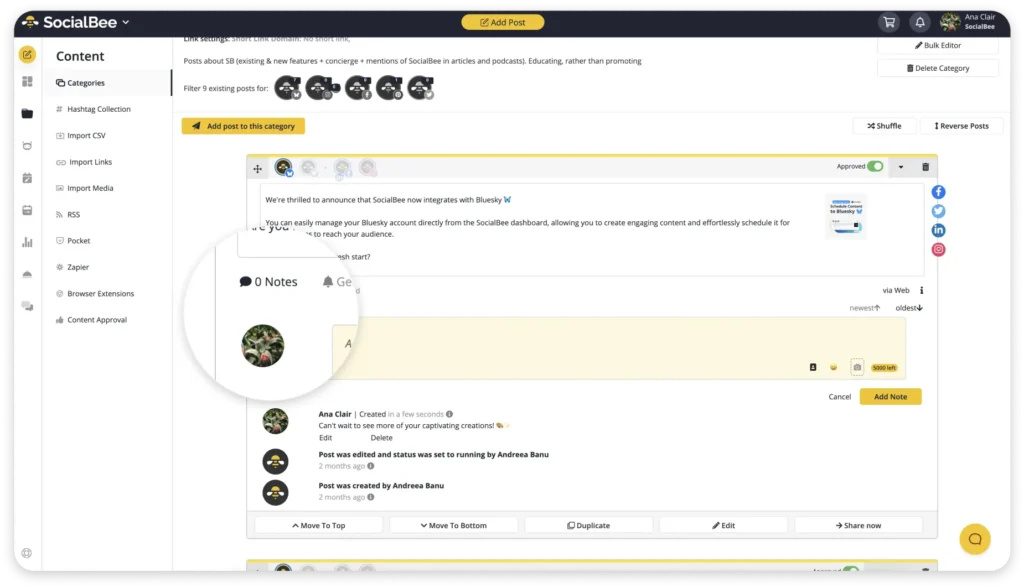
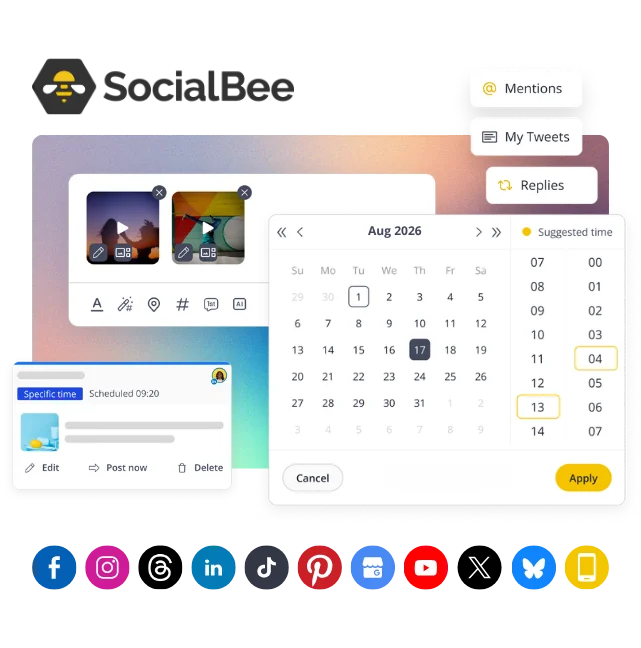
This process becomes much easier when your content planning system is already organized. With SocialBee, for example, social teams can quickly draft, approve, and schedule meme content across multiple social media platforms without scrambling between tools while the trend is still relevant.