Person browsing an online clothing store on a laptop at a wooden desk, with product listings visible on screen. Social media icons for Facebook, X, LinkedIn, Pinterest, and Instagram appear around the image, illustrating social media marketing for ecommerce brands.

How to use social media for ecommerce: tips and best practices

Social media for ecommerce is no longer optional if you want a predictable demand for your online store. Marketers can reach 64% of the world’s population, which makes it one of the few channels that can consistently solve two ecommerce problems at once: distribution and trust.

When a product is solid, but sales feel inconsistent, the issue is rarely the offer itself. More often, it’s a lack of visibility across the right social media platforms and not enough social proof during the buying process. 

In this guide, I’ll break down how to use social media for ecommerce in a practical way. You’ll see how to choose the right social media channels, align content with purchase decisions, track the key metrics that matter, and turn everyday social media posts into consistent ecommerce sales.

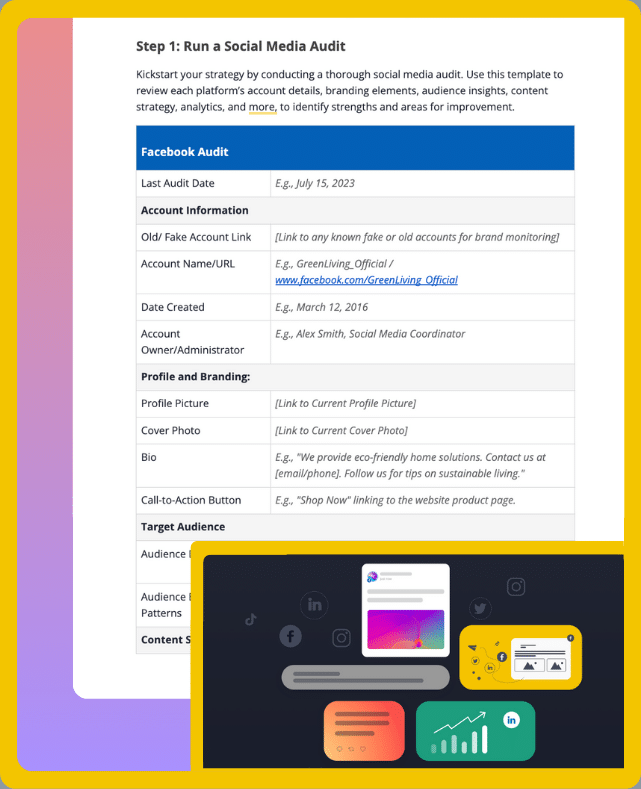
Social Media Strategy Template
Streamline your marketing with an efficient social media strategy template.

We’re SocialBee LABS SRL, part of WebPros. We use the information you provide to share relevant content and product updates, as outlined in our Privacy Policy. You can opt out anytime.

Short summary

  • Social media for ecommerce influences purchase decisions before customers ever reach an ecommerce site, shaping product discovery, comparison, and trust.
  • Platforms like Instagram, TikTok, Facebook, Pinterest, X, and Google Business Profile each support ecommerce differently, so choosing the right channels matters more than being everywhere.
  • Effective social media ecommerce marketing strategies align content with intent, from discovery and consideration to direct purchases through shoppable posts and product tags.
  • Influencer content, user-generated content, and visible customer interactions help create social proof that reduces hesitation for new and returning social commerce buyers.
  • Consistency comes from simplifying execution. Planning content, scheduling posts, responding to customers, and reviewing performance regularly makes social media easier to sustain.
  • Tracking a small set of signals, such as social media engagement, traffic, conversions, and customer interactions, helps ecommerce brands refine future campaigns without guessing.
  • Brands like Djerf Avenue, Mejuri, and The Ordinary show that social media ecommerce works when content reflects how customers actually browse, evaluate, and buy products.

Benefits of social media for ecommerce

The biggest benefit of optimizing social media for ecommerce is its role in the buying process before a purchase ever happens. Many social media platforms shape how people discover products, compare alternatives, and decide which brands they trust. That shift is why social media has become a B2B trend, not just a channel for awareness or promotion.

For brands, ecommerce social media marketing solves three problems at once: reach, trust, and timing. A strong social media presence keeps your products visible across multiple touchpoints while potential customers move from curiosity to consideration. Short-form videos, product-focused posts, and creator content introduce your products in context, which makes purchase decisions easier for mobile shoppers and younger consumers.

Social media also creates social proof at scale. Comments, reviews, and user generated content show real customers using your products, answering questions, and validating quality in public. That brand visibility reduces hesitation and builds confidence in ways product pages alone can’t.

From a performance standpoint, social media now contributes directly to ecommerce sales. Social commerce features like shoppable posts, product tags, and in-app checkout allow customers to move from discovery to purchase without leaving social media apps. At the same time, targeted advertising help ecommerce brands reach the right audience with offers that match intent.

Finally, social media gives you data you can actually use. Customer engagement, clicks, saves, and conversions reveal what content drives action and where friction appears in the customer journey. Tracking this performance alongside your main e-commerce KPIs makes it easier to refine future social campaigns and scale what works instead of guessing.

The best social media platforms for ecommerce

Choosing the right social media platforms matters more than being present everywhere. Each social platform supports ecommerce differently, depending on how people discover products, interact with brands, and move toward purchase.

Below are the social media channels that consistently support social media ecommerce when used with the right intent.

Facebook

Facebook remains a strong channel compared to other social media networks for ecommerce brands that want to combine reach, trust, and direct sales. It’s especially effective for retargeting, community-driven content, and social commerce features like Facebook Marketplace.

Where Facebook works best in your social commerce strategy:

  • Retargeting website visitors and existing customers
  • Running paid campaigns that support direct purchases
  • Hosting product catalogs through Facebook Shops

What to focus on:

  • Use Carousel ads to showcase multiple products or variations
  • Share short Reels that demonstrate product use or results
  • Keep your Facebook Page active with offers, reviews, and updates to support social proof

Facebook works best when it supports the middle and bottom of the buying process rather than pure discovery.

Instagram

Instagram is one of the strongest platforms for social media for ecommerce because it blends discovery, inspiration, and shopping features in one place. Visual brand storytelling and creator content play a major role here.

Where Instagram works best:

  • Product discovery through Reels and Explore
  • Influencer marketing and micro influencers
  • Shoppable posts and Instagram Shops

What to focus on:

  • Use Reels for short demos, routines, or before-and-after content
  • Create carousels that address common objections like shipping, sizing, or returns
  • Use Highlights as storefront FAQs for new visitors
  • Tag products consistently to reduce friction for mobile shoppers

Instagram is often where social commerce starts, even if the final sale happens elsewhere.

TikTok

TikTok is built for discovery. It’s especially effective for reaching younger consumers and introducing products through short-form videos that feel native rather than promotional.

Where TikTok works best:

  • Early-stage product discovery
  • Trend-driven content and creator collaborations
  • Driving interest that later converts through retargeting

What to focus on:

  • Create short social media videos that show products in real use, not polished social media advertising
  • Lean into creator-style content over brand-heavy production
  • Use product tags where available to shorten the path to purchase
  • Run live shopping events to encourage online purchases by showcasing products

TikTok is less about control and more about momentum. Brands that test frequently tend to learn fastest.

X (formerly Twitter)

X plays a different role in social media ecommerce. The X algorithm is less about visual browsing and more about real-time conversation, product drops, and customer interaction.

Where X works best:

  • Product launches and limited releases
  • Community building and feedback
  • Customer support and brand voice

What to focus on:

  • Share product updates, drop announcements, and behind-the-scenes posts
  • Amplify user-generated content and customer feedback
  • Respond quickly to questions and mentions to build trust publicly

X is most effective when treated as a conversation channel rather than a catalog.

Google Business Profile

Google Business Profile supports ecommerce brands that have a physical presence, local delivery, or strong review signals. It’s less about content volume and more about trust and visibility in search.

Where Google Business Profile works best:

  • Local ecommerce or hybrid online–offline businesses
  • Building credibility through reviews
  • Supporting branded and local search results

What to focus on:

  • Post updates about promotions, launches, or availability
  • Encourage customers to leave reviews after purchase
  • Keep product and business details accurate and up to date

For the right ecommerce business, GBP supports conversions before users even reach your ecommerce site.

Pinterest

Pinterest is a long-term product discovery channel. Content has a longer lifespan, making it especially effective for evergreen products, collections, and social shopping.

Where Pinterest works best:

  • As a visual discovery engine
  • Planning-based purchases (fashion, home, beauty, gifts)
  • Driving qualified traffic to an online store

What to focus on:

  • Create keyword-focused boards and product pins
  • Tag products to support shoppable content
  • Publish seasonal collections and buying guides
  • Track saves and outbound clicks to understand intent

Pinterest often influences purchases weeks or months after first exposure, making it a strong supporting channel.

How to create a social media strategy for ecommerce

To make it easier for you to build your ecommerce social media strategy, I outlined 10 steps that you can follow to get things moving in the right direction.

1. Use social media tools to simplify your work

Running social media for e-commerce businesses means working across multiple platforms, formats, and e-commerce marketing campaigns at the same time. Without the right tools, staying consistent quickly turns into manual work that’s hard to maintain.

The first goal is to reduce friction in your daily workflow. That starts with keeping content creation, planning, and publishing in one place instead of jumping between tools.

Batching content helps here. When you create posts in focused sessions, it’s easier to stay on message and avoid gaps in your social media presence. For ecommerce brands, this usually means planning product posts, educational content, and customer-focused posts together so everything supports the same goal.

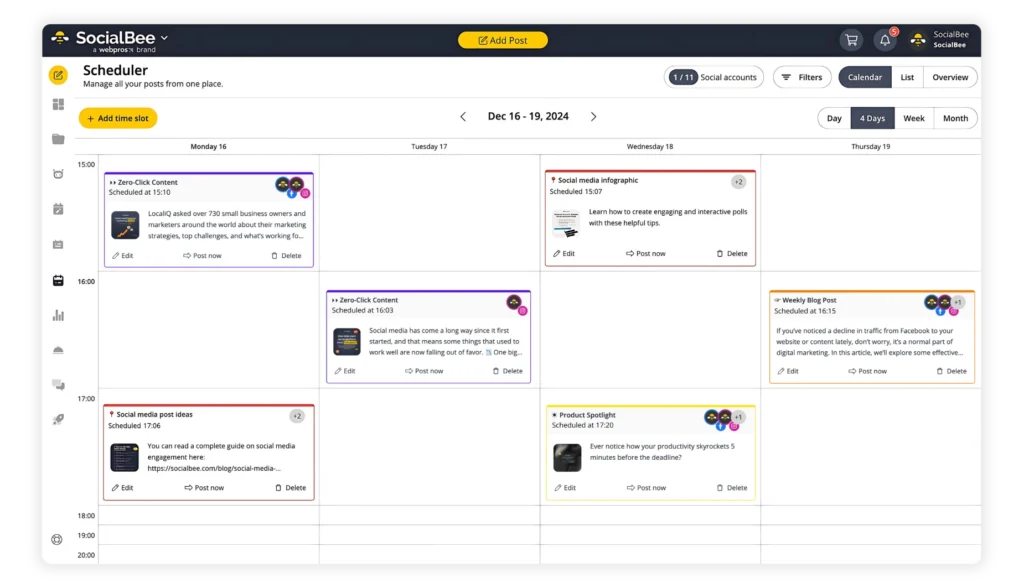
Scheduling is the next layer. Planning posts in advance removes the pressure to be online every day and helps you stay active across social media platforms even during busy periods.

PRO TIP

SocialBee lets you create, schedule, and publish social media posts across multiple social media platforms from one dashboard. You can organize content, create platform-specific variations, and keep your posting schedule consistent without extra manual work, so you can leverage social media to increase website traffic and sales.

2. Customize your content strategy for your target audience

A strong social media ecommerce strategy starts with knowing who you’re creating content for and why they follow you in the first place. Without that clarity, even well-designed social media posts tend to miss the mark.

Instead of trying to appeal to everyone, focus on how different groups of social media users interact with your ecommerce brand. Some people are still discovering products, others are comparing options, and some are ready to buy. Your content should reflect those different stages of the shopping journey.

A simple way to structure this is to align content with intent:

  • Discovery-focused content introduces your brand and products in context through short form videos, behind-the-scenes posts, or educational content.
  • Consideration content answers common questions, shows real customers using your products, and highlights brand values.
  • Conversion content removes friction with clear product highlights, shoppable posts, and limited offers.

Once that structure is in place, choose the social media platforms where your target audience already spends time. It’s better to show up consistently on a few social platforms than spread yourself thin across every channel.

3. Create content with clear marketing goals

If you have the right social media strategy, every post should support a specific goal for your ecommerce business. When content is created without a clear purpose, it usually leads to inconsistent results and scattered messaging across social media channels.

Start by deciding what you want each piece of content to do. Some posts should boost brand awareness and brand recognition, others should encourage product discovery, and others should focus on driving direct sales. Mixing these goals within a single post often weakens the message, so it’s better to keep them distinct.

For awareness, focus on content that introduces your brand values and helps new audiences understand what makes your products different. Educational posts, short form videos, and collaborations with a social media influencer or micro influencers work well here.

For conversion-focused content, reduce friction in the buying process. Highlight key product benefits, tag products where possible, and use clear calls to action that guide online shoppers toward your online store or in-app checkout experience.

4. Optimize your posting schedule

Posting at the right time matters, but there’s no universal schedule that brings ecommerce benefits. Your ideal posting times depend on your target audience, the social media platforms you use, and how people interact with your content on mobile devices.

Instead of guessing, look at when your social media users are most active and how they engage with different formats. Short-form videos, product highlights, and user-generated content often perform differently depending on the time of day and platform.

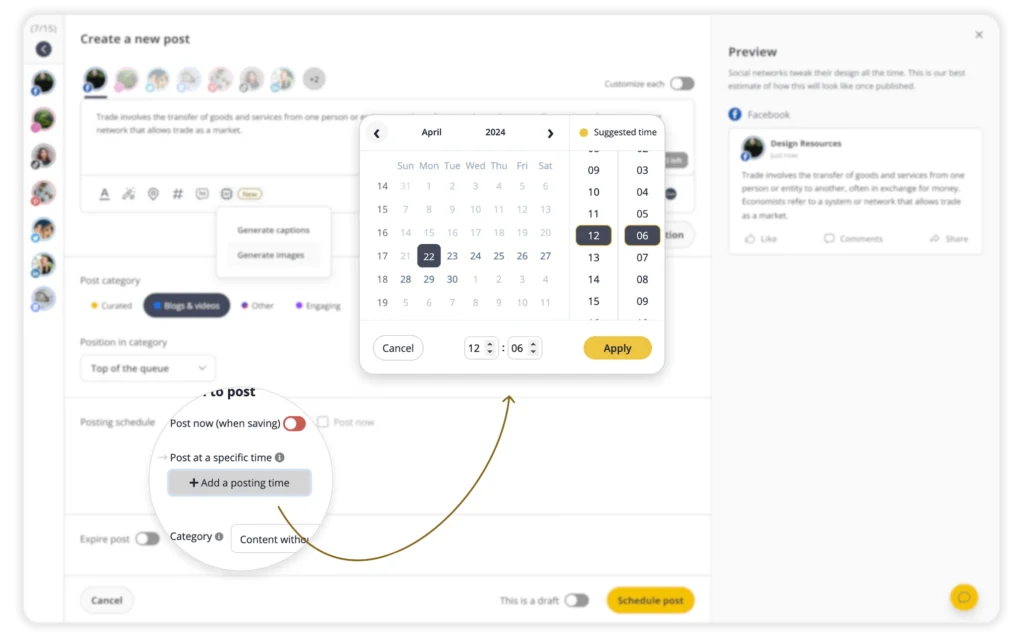
A practical approach is to adjust one variable at a time. Keep the content type consistent, test different posting windows, and observe which time slots lead to stronger engagement and more visits to your ecommerce site. Over time, this helps you build a posting schedule that supports steady social media efforts rather than sporadic spikes.

PRO TIP

SocialBee suggests posting times based on your past performance, giving you a starting point for building a schedule that fits your audience instead of relying on generic best-time recommendations.

5. Sell more through shoppable posts

Shoppable posts work because they remove unnecessary steps between product discovery and purchase. Instead of sending people from a social media post to your profile, then to your ecommerce website, they let online shoppers act while interest is high.

Most major social platforms now support shoppable formats. You can tag products directly in posts, Stories, or short-form videos, making it easier for mobile shoppers to explore your product catalog without leaving the app. For ecommerce brands, this creates a more seamless shopping experience and shortens the buying process.

Shoppable posts are especially effective when paired with real-world context. Showing products in use, highlighting routines, or featuring real customers helps people understand how the product fits into their lives before they commit to a purchase.

6. Use influencer content to build trust faster

Influencer marketing plays a practical role in social media ecommerce because it reduces uncertainty during the buying process. When potential customers see products used and recommended by people they already follow, it adds credibility that branded content alone often can’t provide.

This doesn’t require large creators or celebrity partnerships. Many ecommerce brands see better results working with micro influencers whose audiences closely match their target audience. Their content feels more personal, generates stronger customer interactions, and often delivers higher engagement at a lower cost.

Influencer content also extends the lifespan of your social media efforts. Reviews, tutorials, and product demos created by influencers can be reused across social media channels, paid campaigns, and future campaigns, helping you reach more potential customers with consistent messaging.

7. Provide reliable customer support on social media

For many ecommerce brands, social media pages are the first place customers ask questions. Comments and direct messages often influence purchase decisions, especially for new customers who want reassurance before buying.

Reliable support on social media helps reduce hesitation and builds trust. Responding clearly to questions about products, shipping, or returns shows that your brand is accessible and accountable. Over time, these public interactions become another form of social proof for potential customers watching from the sidelines.

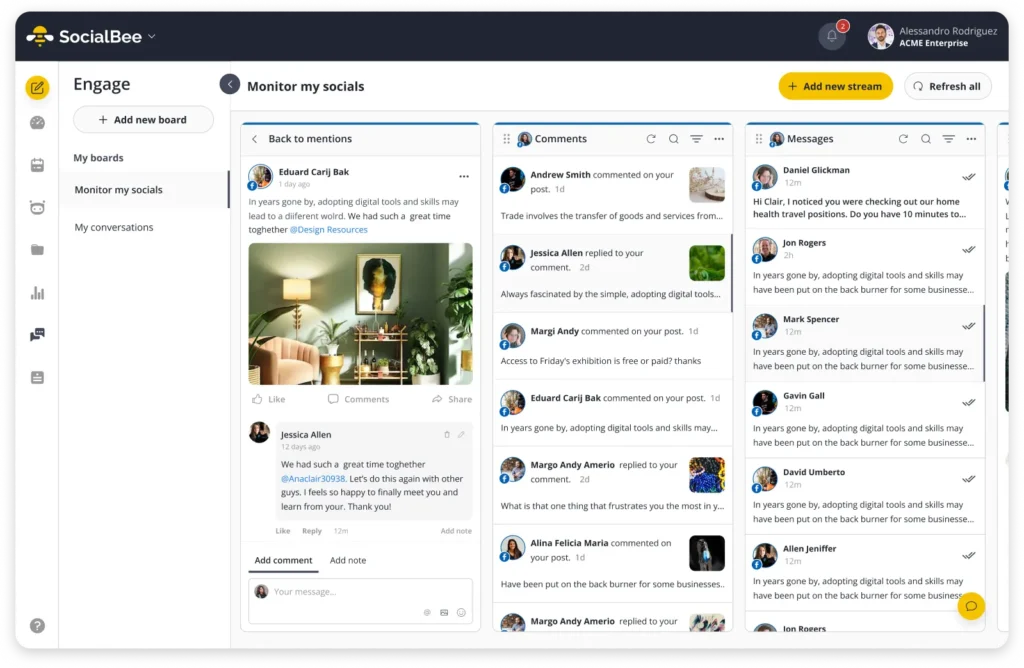
Customer support on social platforms works best when conversations don’t get lost. Messages should be handled consistently, with a clear tone of voice and an understanding of when a question needs follow-up outside of social media.

PRO TIP

When customer questions are spread across different social media accounts, it’s easy to miss messages that could have turned into sales. SocialBee solves this by bringing comments, mentions, and direct messages from all your social media platforms into one social inbox, so your team can respond faster and stay consistent.

8. Post user-generated content to strengthen social proof

User-generated content plays a key role in social media ecommerce because it shows real customers using and talking about your products. For online shoppers, this kind of visibility reduces perceived risk and makes purchase decisions easier, especially when they’re discovering your brand for the first time.

Sharing content created by customers and UGC creators helps your brand feel more credible and more relatable. Reviews, unboxings, tutorials, and before-and-after posts all act as social proof that supports direct purchases without relying on polished brand messaging.

User-generated content also encourages participation. When customers see their content reshared, they’re more likely to tag your brand again, comment on future posts, and recommend your products to others. Over time, this contributes to fostering loyalty and repeat engagement across social media channels.

9. Share lead magnets to grow owned channels

“I want to let you in on a big secret. There are three main objectives to keep in mind with marketing your business on social media, and if you don’t have this, then your strategy is broken. Lead generation, lead nurture, and lead conversion.” says Marley Jaxx, award-winning filmmaker and globally-recognized expert in video creation, YouTube growth, and content strategy with over 10 years of experience.

Social media is powerful for reach, but relying on it alone puts your ecommerce business at the mercy of changing algorithms. Lead magnets help you turn short-term attention into long-term relationships by moving interested social media users into channels you control.

Effective lead magnets for ecommerce focus on reducing friction or adding immediate value. First-order discounts, early access to launches, back-in-stock alerts, and simple product guides all give potential customers a clear reason to sign up.

Where you place these offers matters. Pin them to your profiles, reference them in relevant social media posts, and resurface them regularly so new followers don’t miss them. Over time, this creates a steady flow of engaged subscribers you can reach outside of social media platforms.

10. Monitor and refine your social media strategy over time

Social media for ecommerce works best when it’s treated as an ongoing system, not a set-it-and-forget-it channel. What resonates with social media users changes, platforms evolve, and your audience grows. Reviewing performance regularly with tools like Google Analytics helps you understand what’s supporting social commerce sales and what’s just adding noise.

Focus on patterns, not individual posts. Look at which content formats drive product discovery, which social media channels send engaged traffic to your ecommerce site, and how different campaigns support the customer journey over time. This makes it easier to adjust future campaigns based on evidence rather than assumptions.

To evaluate whether your social media strategy is actually supporting ecommerce growth, focus on a small set of signals that map to the customer journey:

  • Reach and follower growth to understand how many potential customers you’re exposing to your brand
  • Engagement (comments, shares, saves) to see which content builds interest and trust
  • Traffic from social media to your ecommerce site to measure product discovery
  • Conversion rate from social traffic to assess how well social supports purchase decisions
  • Direct purchases and assisted conversions to connect social media to ecommerce sales
  • Customer interactions (DMs and comments) through shared inbox software to surface buying intent and common objections

These indicators won’t tell the whole story in isolation, but tracked consistently, they give you a reliable picture of how social media ecommerce contributes to revenue over time.

Small, consistent improvements add up. Refining content themes, formats, and posting cadence helps your social media presence stay effective as your ecommerce business scales.

PRO TIP

Reviewing social media performance often falls through because the data is scattered across platforms. SocialBee brings post-level social media analytics and valuable insights from your pages into one place, making it easier to spot patterns, compare content across channels, and adjust your strategy without jumping between tools.

5 social media post ideas for ecommerce

These post formats show up repeatedly across social media platforms because they’re easy to produce, easy to recognize, and easy for audiences to engage with. You’ll see them used by large brands and small ecommerce teams alike.

1. Product inspiration without a hard sell

Some brands use social media to inspire, not convert immediately. Posts like IKEA’s focus on ideas and aesthetics rather than individual products or prices.
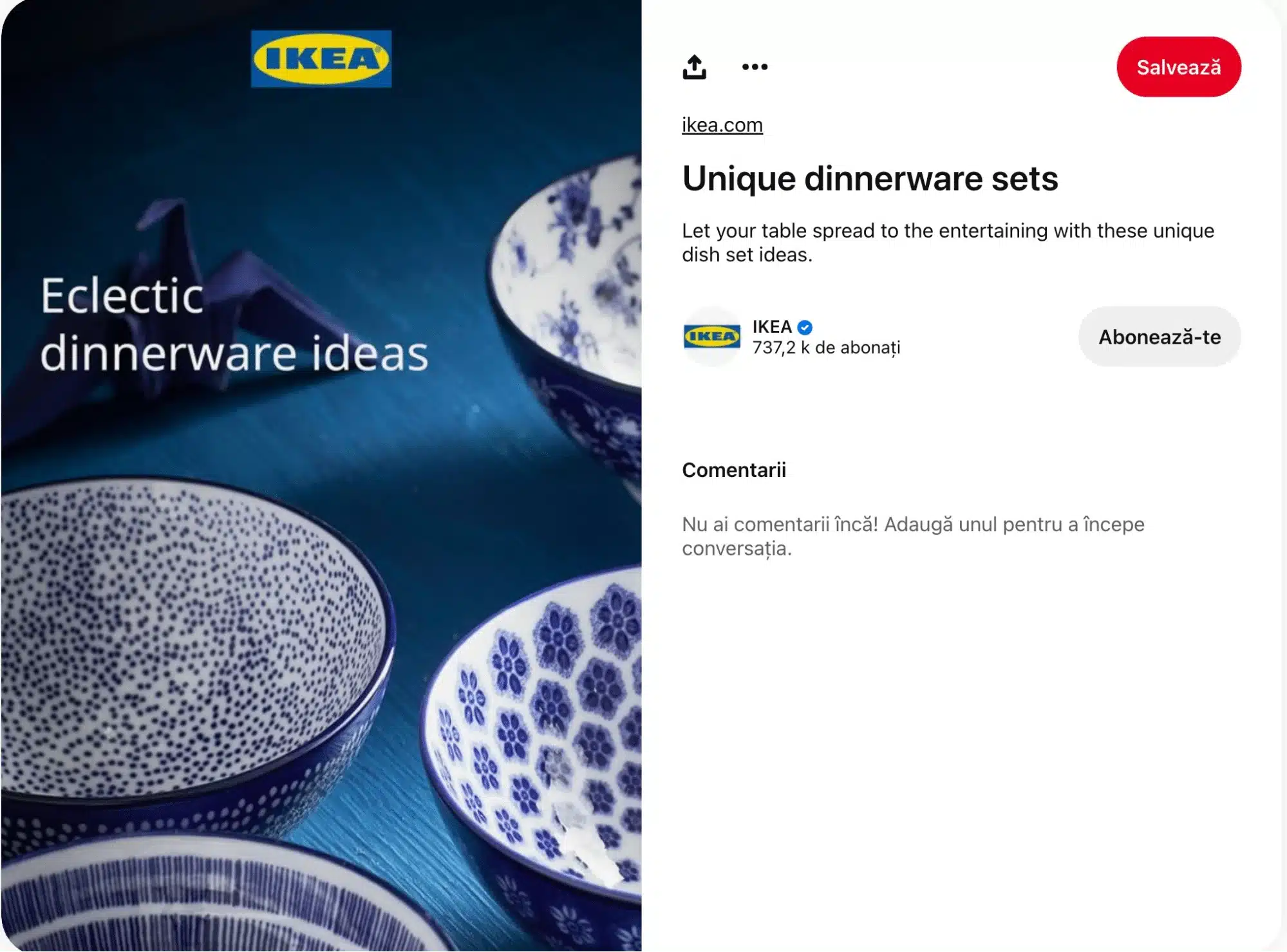
Pinterest pin from IKEA promoting unique dinnerware sets, featuring blue and white patterned bowls arranged on a dark blue table with the overlay text “Eclectic dinnerware ideas,” used to inspire creative table settings and dining decor.

This usually takes the form of:

  • A single image or carousel built around a theme
  • Minimal copy
  • A soft link back to a broader product category

It works well for early-stage browsing and saving user behavior.

2. Text-led posts that rely on brand voice

Text-first posts are still common on platforms like X. Brands like Innocent use humor and tone to keep attention while still mentioning the product.

Innocent Drinks social media post showing two fruit smoothie bottles (pink and yellow) pinned to a corkboard beside a red “New year’s resolutions” note, with a small kiwi decoration, promoting healthy smoothies in a playful marketing message.

These posts typically:

  • Read like native platform content, not ads
  • Mention the product briefly rather than leading with it
  • Reinforce brand personality more than features

This format supports long-term familiarity rather than immediate conversion.

3. Creator-style product mentions in short videos

Short-form videos where a creator talks directly to the camera are widely used in ecommerce, especially in beauty and fashion.

A woman in a bright studio space holds up two lip liner products toward the camera, smiling. On-screen text reads, “you need to buy that lip liner,” with a beauty brand account shown.

These videos usually:

  • Focus on one product or comparison
  • Use informal, unscripted language
  • Let the product appear naturally in the frame

They’re commonly reused across organic posts and paid campaigns.

4. Question-led Stories that surface objections

Q&A Stories are a simple way to gather and address questions publicly. Many e-commerce brands use them before launches or during promotions.

Charlotte Tilbury speaking in a makeup studio filled with beauty products, inviting viewers to submit questions through an Instagram Q&A sticker.

This format often includes:

  • A question sticker
  • Short follow-up answers
  • Occasional product references when relevant

It helps clarify details without turning Stories into sales slides.

5. Familiar social formats applied to product discovery

Some brands adapt familiar social interactions, like swiping or revealing content, to introduce products.

A beige Instagram graphic designed like a wrapped gift, with red and pink ribbon crossing in the center and a tag reading “FROM: PROSE TO: YOU.” Below it, bold red text says “Slide to unwrap.”

This usually looks like:

  • A carousel or Story sequence
  • A delayed product reveal
  • Minimal copy guiding the interaction

The goal is to keep users engaged long enough to notice the product.

3 examples of social media ecommerce done right

1. Djerf Avenue

Djerf Avenue’s social media strategy is closely tied to its founder, Matilda Djerf, who already has a strong presence as an influencer. Instead of separating personal influence from brand promotion, the brand uses it as a foundation for visibility and trust.

Across platforms, the content follows a consistent soft, feminine aesthetic built around pastel colors, clean styling, and calm visuals. The posts rarely push individual products in isolation. Instead, they present a lifestyle that the audience can relate to and aspire to, with the clothing positioned as a natural part of that everyday look.

Instagram and TikTok are the primary drivers of product exposure. On both platforms, content focuses on outfits in motion, daily routines, and behind-the-scenes moments rather than traditional promotional posts. This makes product discovery feel organic and reduces friction in the buying process, especially for younger online consumers who expect brands to blend into their feeds.
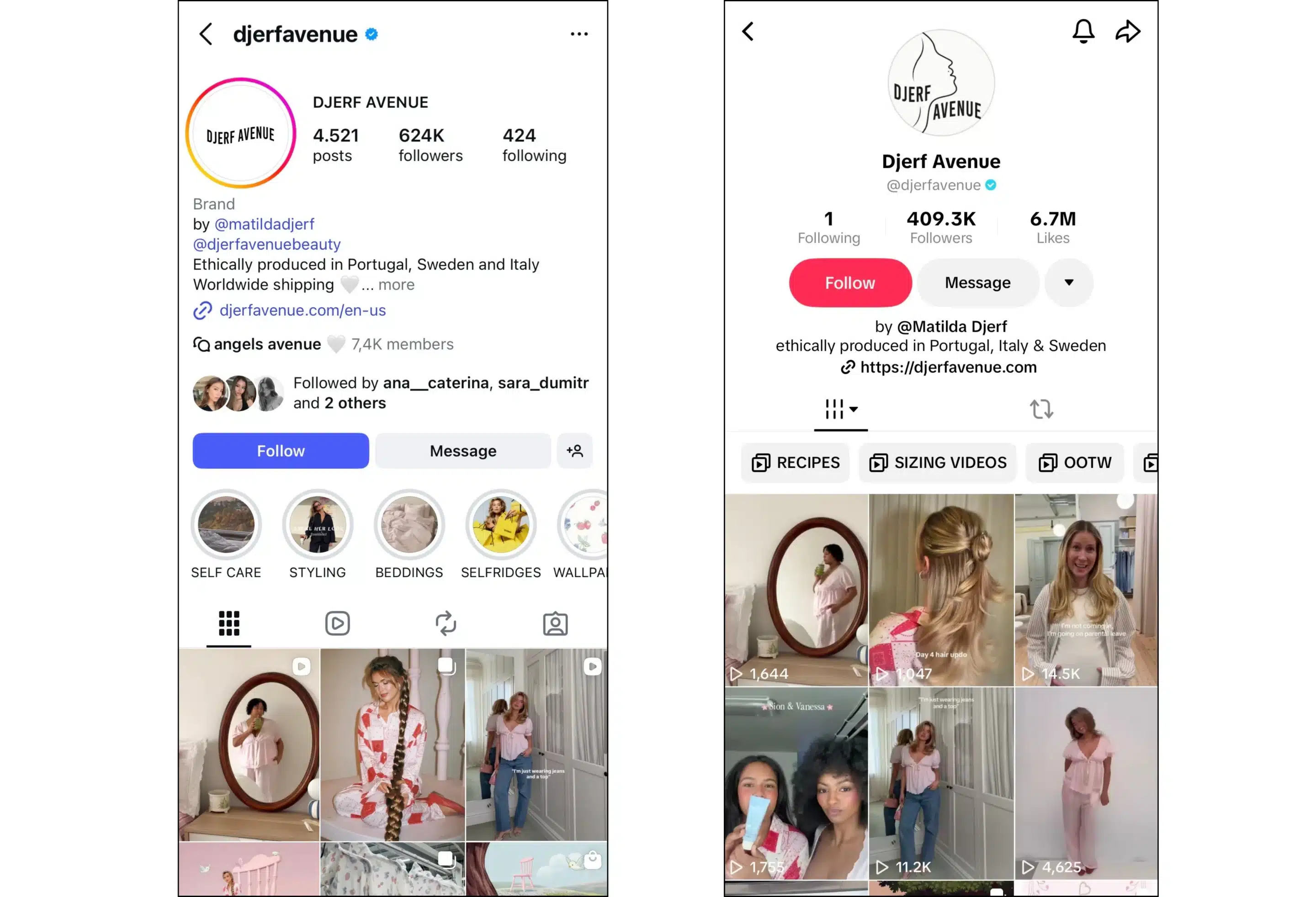
Side-by-side screenshots of Djerf Avenue’s Instagram and TikTok profiles, showing the brand bio by Matilda Djerf, follower counts, and grids of pastel-toned fashion and lifestyle videos featuring women modeling soft pink outfits and casual home styling content.

Pinterest plays a supporting role. Because the brand leans heavily into inspiration, Pinterest works as a long-term discovery channel where outfits, textures, and moods live beyond a single post’s lifespan.

Pinterest “Created” grid showing soft, pastel-toned fashion and lifestyle posts, including women modeling pajamas and casual outfits, mirror selfies, hair styling clips, flat lays of floral sleepwear on white bedding, cozy coffee-in-bed scenes, and minimalist home interiors with neutral colors.

YouTube exists mainly as an extension, with limited Shorts content, but it’s not a core traffic or sales channel for the brand.

2. Mejuri

On Instagram, Mejuri shares a mix of product-focused images and lifestyle shots featuring well-known figures. Pieces are often shown worn by actresses, athletes, or influencers such as Brittany Snow, Emma Chamberlain, or Emma Navarro. This approach adds social proof while helping potential customers imagine how the jewelry fits into different lifestyles, from casual to formal.

Instagram profile grid for Mejuri showing lifestyle jewelry content, including close-ups of hands wearing gold rings, models styling minimalist necklaces and earrings, skincare-style portraits, and celebrity features, presented in a clean, editorial layout that highlights Mejuri’s everyday fine jewelry aesthetic.

Facebook plays a more informational role. The brand uses it to communicate store openings, in-person events, and brand updates rather than product discovery. This supports trust and keeps existing customers informed without duplicating Instagram content.

Facebook event post from Mejuri announcing the grand opening of its Short Hills store in New Jersey at The Mall at Short Hills, featuring a black promotional graphic with “New Jersey” in large textured lettering and event details dated April 28, 2024.

Pinterest functions as a visual catalog. Boards are organized around different jewelry collections, making it easier for users to browse, save, and return when they’re ready to purchase. This supports longer consideration cycles, which are common for higher-value products like fine jewelry.
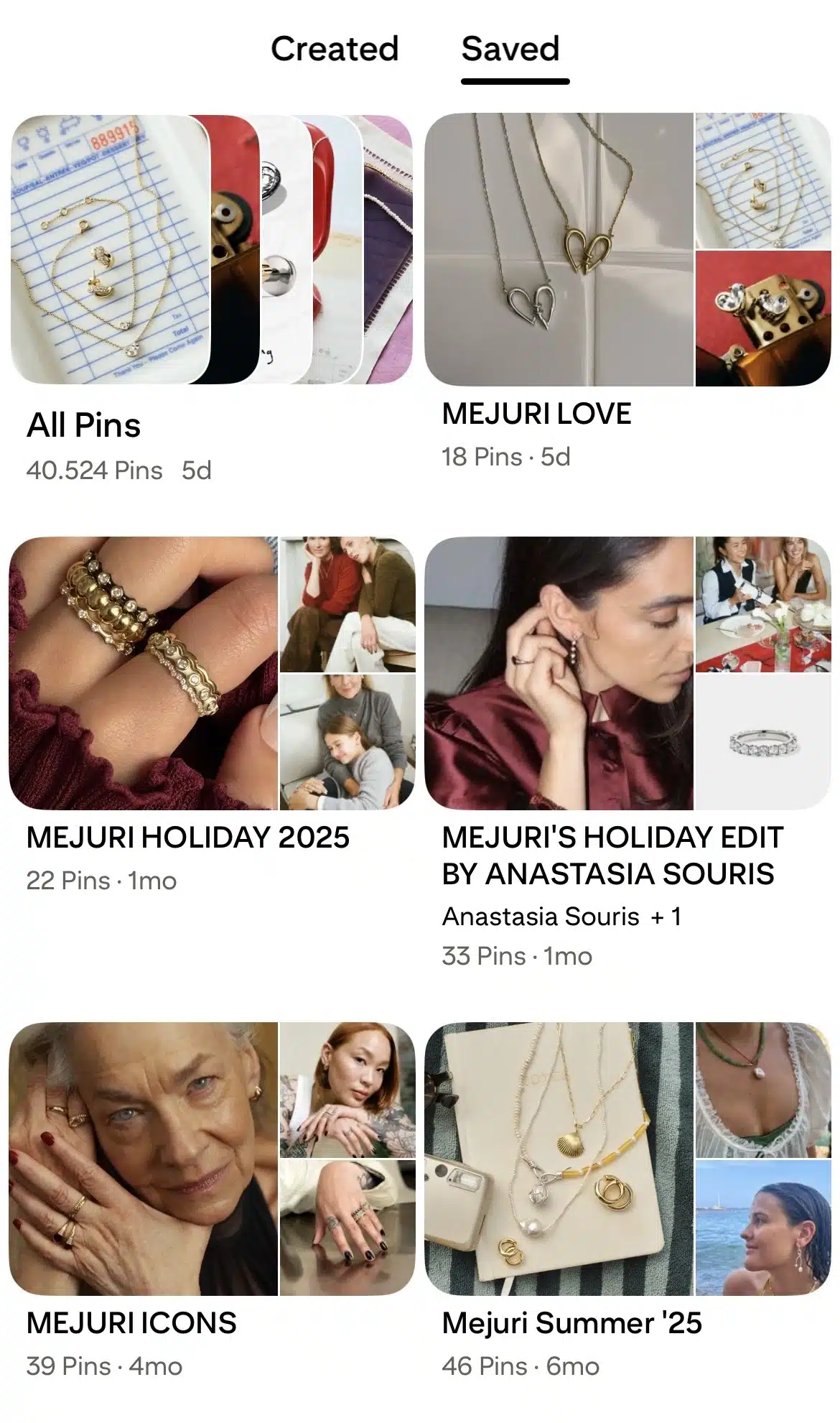
Pinterest profile view showing Mejuri’s saved boards, including “Mejuri Love,” “Mejuri Holiday 2025,” “Mejuri Icons,” and “Mejuri Summer ’25,” with preview thumbnails featuring gold and silver jewelry, rings on hands, layered necklaces, and lifestyle shots of models wearing Mejuri pieces.

Mejuri previously maintained a presence on X, but the account has been inactive for several years. The brand’s current strategy is clearly focused on visual platforms that support inspiration and product discovery rather than real-time conversation.

3. The Ordinary

The Ordinary takes a very different approach to social media ecommerce by removing lifestyle aspiration almost entirely. Instead, the brand focuses on clarity, consistency, and a pharmaceutical-style visual language that mirrors how its products are formulated and positioned.

Across platforms, the aesthetic is clean and restrained. Posts rely on close-ups of products, ingredient callouts, and simple demonstrations of how formulas are used. The brand frequently references scientific cues, including the periodic table of elements, to reinforce credibility and make the content feel clinical rather than cosmetic.

Instagram, Facebook, and TikTok are used to distribute this core visual system. Content across these social media platforms is highly consistent, whether it’s a short video showing texture and application or a static post highlighting a specific ingredient and its purpose. This repetition helps social media users quickly understand what each product does and who it’s for.
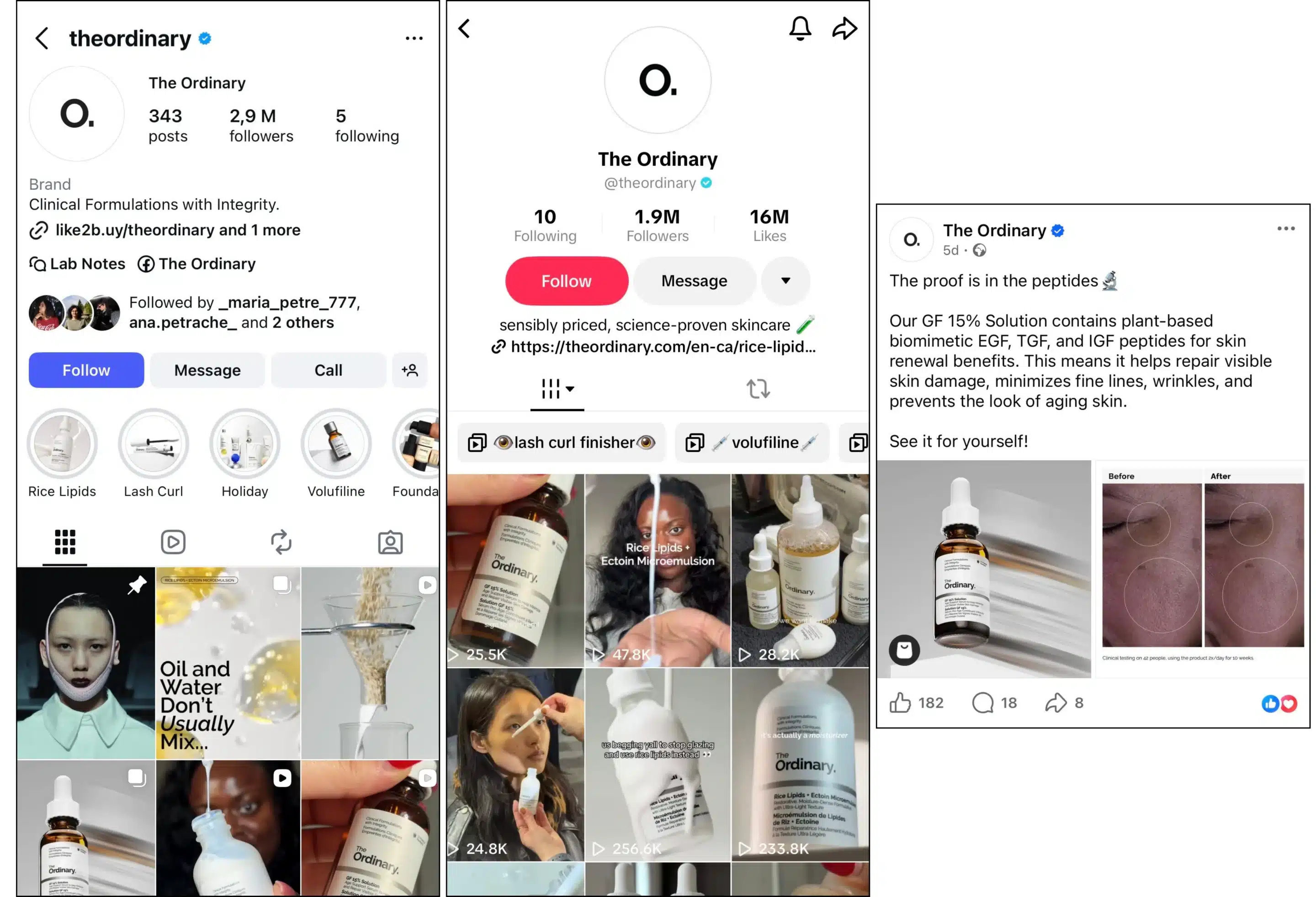
Collage showing The Ordinary across Instagram, TikTok, and Facebook, including brand profile pages, product-focused video grids, and a Facebook post about peptide skincare. Screens display serum bottles, application demos, before-and-after skin results, and captions highlighting science-backed formulations and peptide benefits.

YouTube plays a more educational role. The Ordinary uses it for product ads and longer informational videos, often featuring people in lab coats and lab-style environments. These videos reinforce the brand’s scientific positioning and support higher-consideration purchase decisions by explaining formulations in straightforward terms.

Frequently asked questions

1. How does social media influence ecommerce purchase decisions?

Social media influences how you purchase products by shaping trust, familiarity, and product understanding before a customer visits an online store. Through creator content, reviews, comments, and repeated exposure, social media reduces uncertainty and helps people feel confident choosing one product over another. For many online shoppers, social media is where comparison and validation happen, even if the final purchase happens later.

2. Is social media ecommerce effective without paid ads?

Yes, social media ecommerce can be effective without paid ads, but it requires consistency and strong content signals. Organic content like user-generated content, influencer posts, and educational videos supports product discovery and builds social proof over time. Paid campaigns can accelerate results, but organic social media usage often plays a key role in nurturing interest and supporting long-term online sales.

3. What is the difference between social media ecommerce and social commerce?

Social media ecommerce refers to using social media platforms to promote products and drive traffic to an ecommerce site, where the purchase happens off-platform. Social commerce goes a step further by enabling direct purchases within social commerce platforms through features like shoppable posts, in-app checkout, and native product catalogs.

Improve your ecommerce social media efforts

At this point, the picture should be clear: e-commerce social media marketing is about choosing the platforms that matter, using content that supports real buying behavior, and paying attention to what actually moves people closer to a purchase.

Where most ecommerce teams struggle is not strategy, but follow-through. Planning posts, keeping schedules consistent, responding to customers, and checking performance across platforms takes time and attention that’s hard to maintain manually.

If managing those day-to-day tasks is what slows you down, SocialBee helps you keep everything in one place. You can plan and schedule content across social media platforms, manage comments and messages, and review performance without switching tools.

Start your 14-day free trial with SocialBee and see whether a more organized workflow makes social media easier to sustain for your ecommerce business.


SocialBee blog CTA box visual with the supported platforms
SocialBee: Your AI-powered social media management tool
Create posts, publish, analyze, engage and collaborate, all from SocialBee.
Summarize this post

Manage your social media with SocialBee: publishing, AI assistance, Canva magic, analytics, unified inbox, and more.

SocialBee Supported Social Platforms with Round Logos
14-day free trial, no credit card required

Related articles

Level up your social media marketing with exclusive resources delivered straight to your inbox

We’re SocialBee LABS SRL, part of WebPros. We use the information you provide to share relevant content and product updates, as outlined in our Privacy Policy. You can opt out anytime.

Out of post ideas? Get our FREE social media calendar!

Access 500+ content ideas, post examples, and Canva templates.
We’re SocialBee LABS SRL, part of WebPros. We use the information you provide to share relevant content and product updates, as outlined in our Privacy Policy. You can opt out anytime.

... and turn your ideas in ready-to-share posts in seconds

Use SocialBee’s Free AI Post Generator to create content for your social media profiles.
SocialBee free AI generator