How Is Threads Different from Instagram?

How is Threads different from Instagram?

How is Threads different from Instagram? If you manage an Instagram account or follow the evolving social media landscape, you’ve probably wondered whether the Threads app is worth using or just another Meta experiment.

At first glance, Threads and Instagram feel closely connected. After all, you log in with your Instagram app credentials, import your profile picture, and instantly connect with your existing Instagram followers. 

But once you start posting, the difference becomes clear: Instagram focuses on visually driven content, polished photos, and visual storytelling, while Threads focuses on public conversations, quick thoughts, and real-time discussion around trending topics.

So the real question isn’t just what is Threads? It’s how to use each platform effectively. Should you post the same visual content on both? Is Threads better for meaningful conversations, while Instagram works better for photos, Stories, and videos? And where should you focus your time spent if your goal is to connect, engage, and grow your audience?

In this guide, I’ll break down the key features of both platforms, explain how Threads is different from Instagram, and show when it makes sense to create posts on Threads, publish Instagram posts, or use both together in your social media strategy.

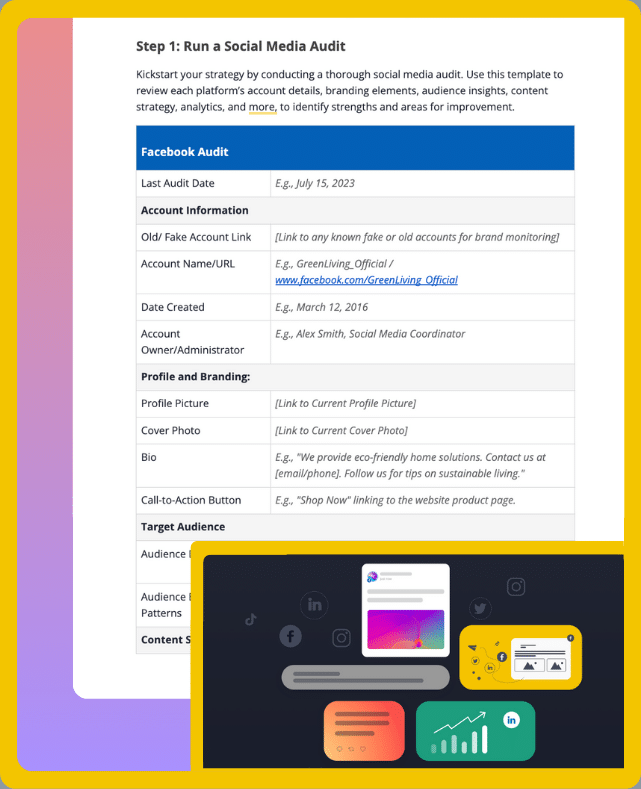
Social Media Strategy Template
Streamline your marketing with an efficient social media strategy template.

We’re SocialBee LABS SRL, part of WebPros. We use the information you provide to share relevant content and product updates, as outlined in our Privacy Policy. You can opt out anytime.

Short summary

  • Threads and Instagram serve different purposes. Instagram focuses on visually driven content like photos, videos, Stories, and Reels, while Threads focuses on quick thoughts, public conversations, and reacting to trending topics in real time.
  • Threads connects directly to your Instagram account. When you create a Threads profile, your username, profile picture, and existing Instagram followers transfer automatically, making it easier for Instagram users to start building a presence on the new app.
  • Threads is built for conversation, not polished visuals. Unlike Instagram posts, which often rely on curated images and videos, Threads posts are usually text-first updates designed to spark replies and meaningful conversations.
  • Clickable links make Threads useful for sharing external content. While most Instagram posts don’t support clickable links, Threads allows users to include links directly in posts, making it easier to share articles, resources, or websites.
  • The two platforms work best together. Many creators use Instagram for visual content and discovery, while using Threads to start discussions, react to trends, and engage their audience in real-time conversations.
  • Threads is growing quickly and evolving fast. The platform has already surpassed 400 million monthly active users, and Meta continues adding new features as it positions Threads as a major competitor in the text-based social media space.

What is the Threads app?

The Threads app is a text-first social media platform created by Meta that allows Instagram users to share short updates and participate in public conversations.

You log in with your existing Instagram account, which automatically imports your profile picture, Instagram followers, and basic account details to your new Threads profile. From there, users can create posts, reply to others, share photos, videos, and links, and join conversations around trending topics across the platform.

The design reflects how Threads focuses on real-time discussion rather than polished visual storytelling. While Instagram posts often revolve around curated visual content, Threads is built for quick thoughts, opinions, and ongoing conversation between users.

According to Mark Zuckerberg, Threads was built as a standalone app that “takes the best parts of Instagram and creates a new experience for text, ideas, and discussing what’s on your mind.”

Meta also plans to connect Threads with other platforms through open social networking protocols. As Zuckerberg explained, the company is “working toward making Threads compatible with the open, interoperable social networks that we believe can shape the future of the internet.”

Currently, Threads posts can include text updates along with links, photos, and videos, allowing users to share content in multiple formats while keeping the platform focused on discussion rather than highly curated feeds.

What are the differences between Instagram and Threads?

The main difference between Instagram and Threads is how each social media platform is designed to communicate. Instagram focuses on visually driven content, while Threads focuses on conversation, quick thoughts, and real-time discussion.

Both apps belong to Meta and are closely connected. You can create a Threads account using your Instagram account, import your profile picture, and instantly connect with your Instagram followers. But once you start posting, the experience changes quickly.

Instagram revolves around visual storytelling, polished photos, videos, Stories, and Reels. Threads, on the other hand, is designed for public conversations, commentary, and reacting to trending topics.

Understanding these differences helps you decide:

  • what type of content sharing works best on each platform
  • where to invest your time spent creating content
  • which platform is better for engagement, traffic, or community discussion

Below are the 13 key differences between Threads and Instagram and how each one affects what you post, how you connect with your audience, and how you build a social media presence.

1. You can’t natively schedule Threads posts

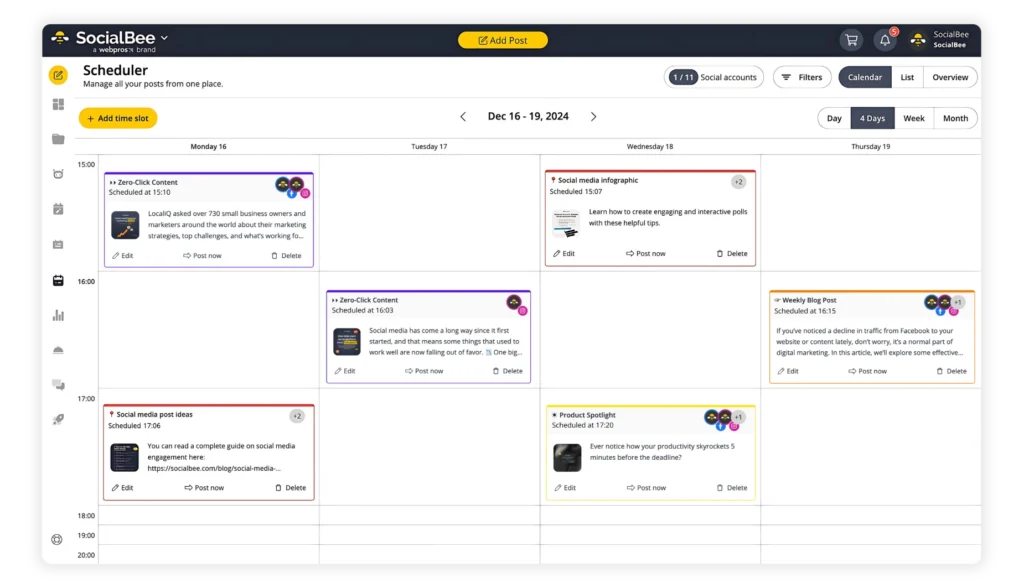
Threads currently doesn’t include a built-in option to schedule posts, which means most users have to publish content in real time.

For creators, marketers, and businesses managing multiple social media accounts, this can make consistent posting harder. If you’re active on both the Threads app and the Instagram app, manually logging in at the right time for every post quickly becomes inefficient.

Posting in real time also means you may miss important engagement windows. If you’re unavailable when your audience is most active, your post may appear lower in the feed and receive less interaction.

Because of this limitation, many creators plan their content ahead of time and use external social media scheduling tools to maintain a consistent presence across social media platforms.

PRO TIP

If you want to schedule Threads posts in advance, a social media scheduling tool can help. SocialBee allows you to plan and schedule posts for the Threads app alongside other platforms like Instagram, Facebook, and LinkedIn. This makes it easier to prepare content in batches, keep your posting schedule organized, and save time when managing multiple social media channels.

2. You can’t message people on Threads

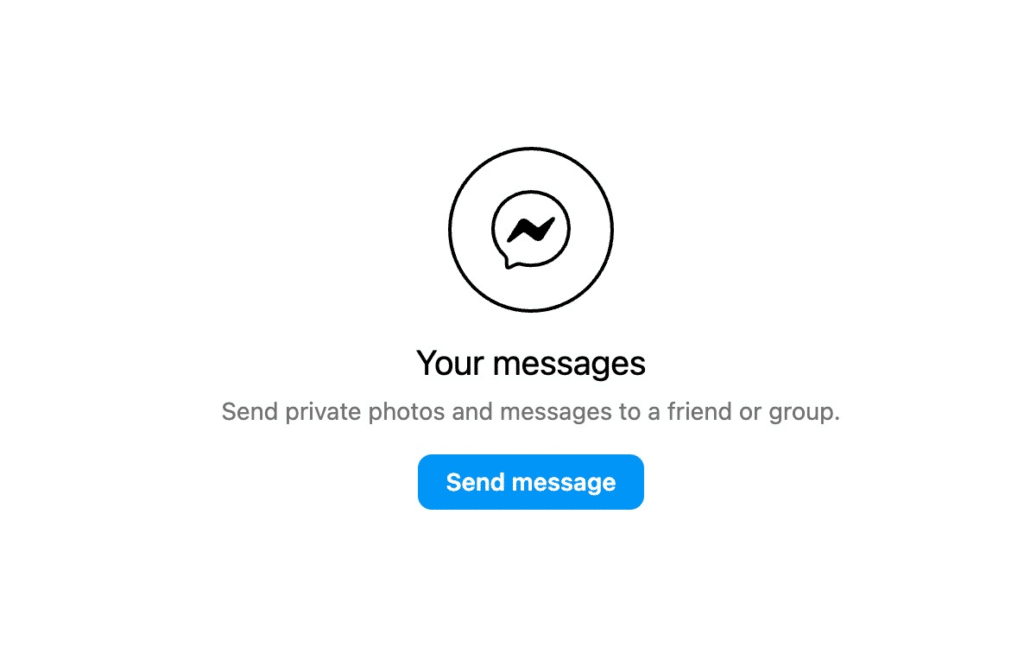
Threads does not currently include direct messaging, which means you can’t have private conversations with other users within the app.

This is one of the biggest differences between the Threads app and the Instagram app. Instagram allows users to communicate through direct messaging, making it easy to hold private communication with followers, collaborators, or customers. Threads takes a different approach and focuses almost entirely on public conversations in the feed.

In practice, this changes how people use the platform.

Threads works best for:

  • reacting to trending topics
  • sharing quick updates or opinions
  • starting discussions with your audience
  • replying publicly to other users’ posts

Instagram works better for:

  • private messages and one-to-one conversations
  • customer support via DMs
  • brand partnerships or collaborations
  • ongoing conversations with your inner circle

Because of this structure, many creators end up using both platforms together. They start discussions publicly on Threads, then move the conversation to Instagram direct messaging when something needs to happen privately.

PRO TIP

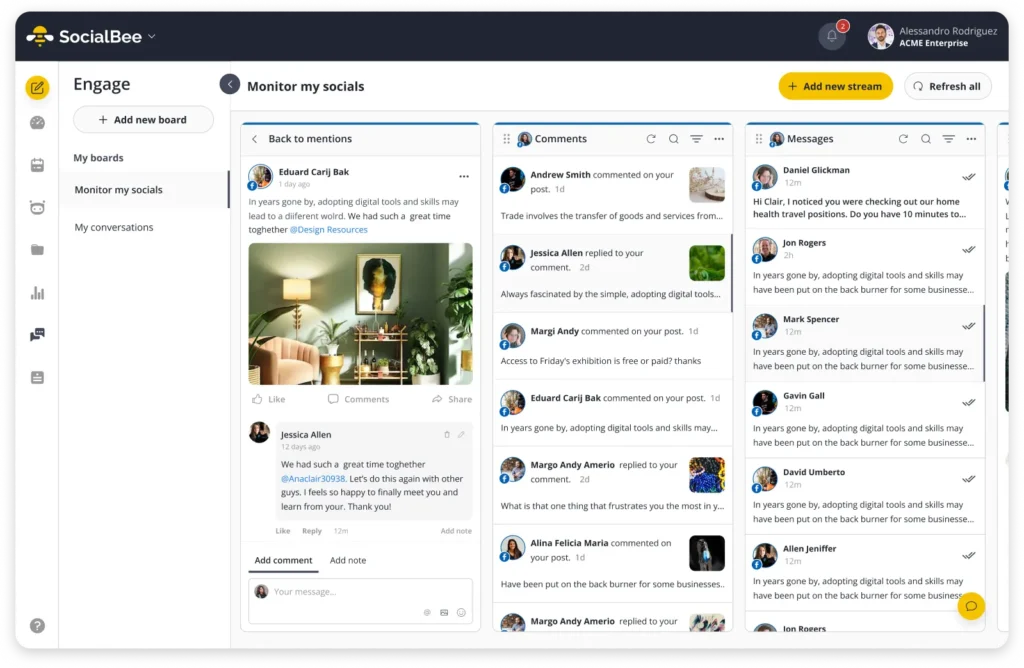
Managing conversations across multiple platforms can quickly become overwhelming, especially if you’re monitoring comments, mentions, and messages from several accounts.

With SocialBee’s Engage module (Social Inbox), you can track and respond to comments, mentions, and direct messages from platforms like Instagram, Facebook, LinkedIn, and X (Twitter) from one dashboard. Instead of switching between apps, you can manage conversations in one place and stay on top of audience interactions more efficiently.

3. Instagram isn’t built for text-first posts

One of the biggest differences between Threads and Instagram is how each platform treats text.

The Instagram team is always working on features to improve visual content. Most Instagram posts rely on photos, videos, carousels, or Stories to capture attention. While users can add captions or create graphics that contain text, the platform itself is designed for visually driven content and visual storytelling.

Threads takes the opposite approach. The platform allows users to create posts centered around text first, with optional photos, videos, or links added if they help support the idea.

Threads post from Ryanair’s verified account with the caption “I'm mysterious on social media until I'm on holiday,” showing engagement metrics such as likes, comments, and reposts.

This makes Threads a natural place to share quick thoughts, start a conversation, or comment on trending topics without needing to design visuals.

For example, many creators use Threads to share posts like:

  • a short opinion about a recent industry change
  • a behind-the-scenes update about their work
  • a quick question to engage their audience
  • a short list of lessons learned from a recent project

Posts like these often spark meaningful conversations, which is exactly what Threads focuses on. Instead of optimizing every post for a polished visual feed, users can simply share ideas and interact with others in real time.

4. Threads supports GIFs in posts

Another small but noticeable difference between Threads and Instagram is how each platform handles GIFs.

On Instagram, GIFs mostly appear as stickers inside Stories rather than as standalone content in regular Instagram posts. The main feed is still built around photos, videos, and other forms of visual content designed to maintain a polished aesthetic.

Threads offers a bit more flexibility here. The platform allows users to add GIFs directly to posts, which makes reactions, jokes, and quick commentary easier to share during public conversations.

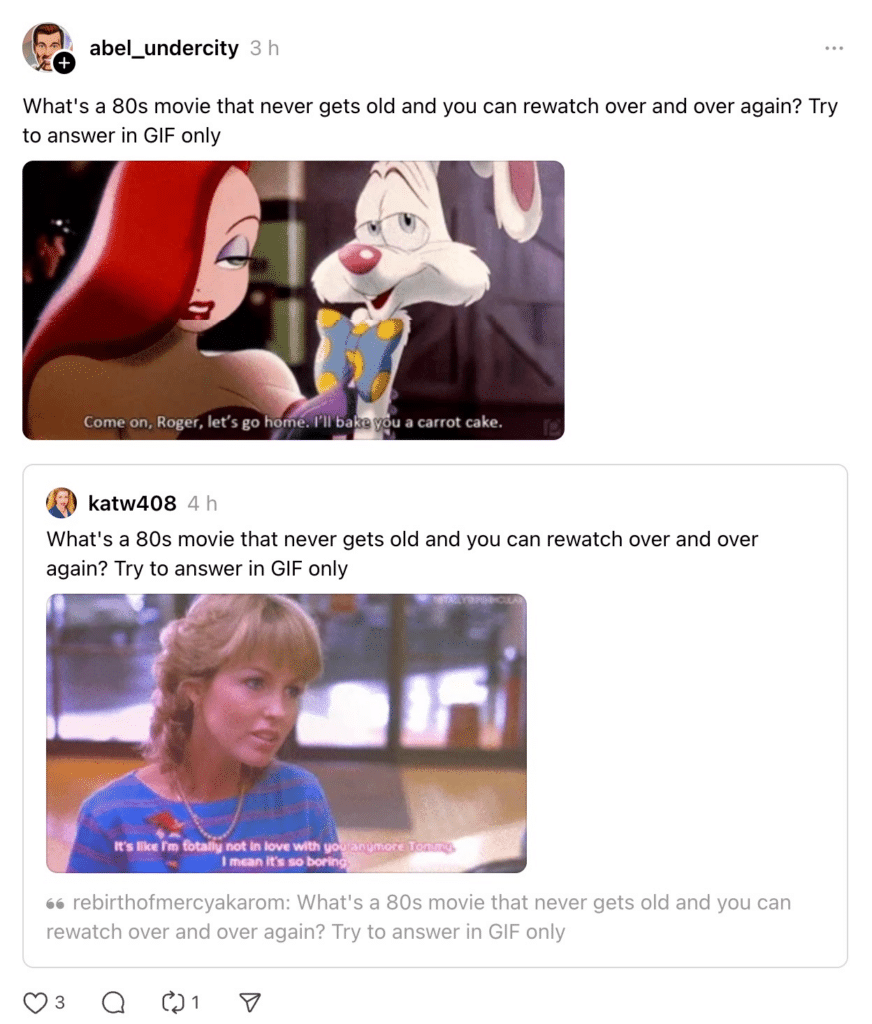
Threads discussion where users respond to the prompt “What’s a 80s movie that never gets old and you can rewatch over and over again? Try to answer in GIF only,” featuring animated GIF replies from films like Who Framed Roger Rabbit.

This feature fits naturally with how Threads focuses on casual discussion. Instead of designing highly curated visuals, users can respond to trending topics or conversations with a simple GIF and a short caption.

5. Links are not clickable in most Instagram posts

On Instagram, links inside regular Instagram posts are not clickable. If you want to direct people to a website, product page, or article, you usually need to rely on workarounds such as adding the link to your profile bio or using link stickers in Stories.

Threads removes that extra step. The Threads app allows users to include clickable links directly in a post, making it easier to guide readers toward external content.

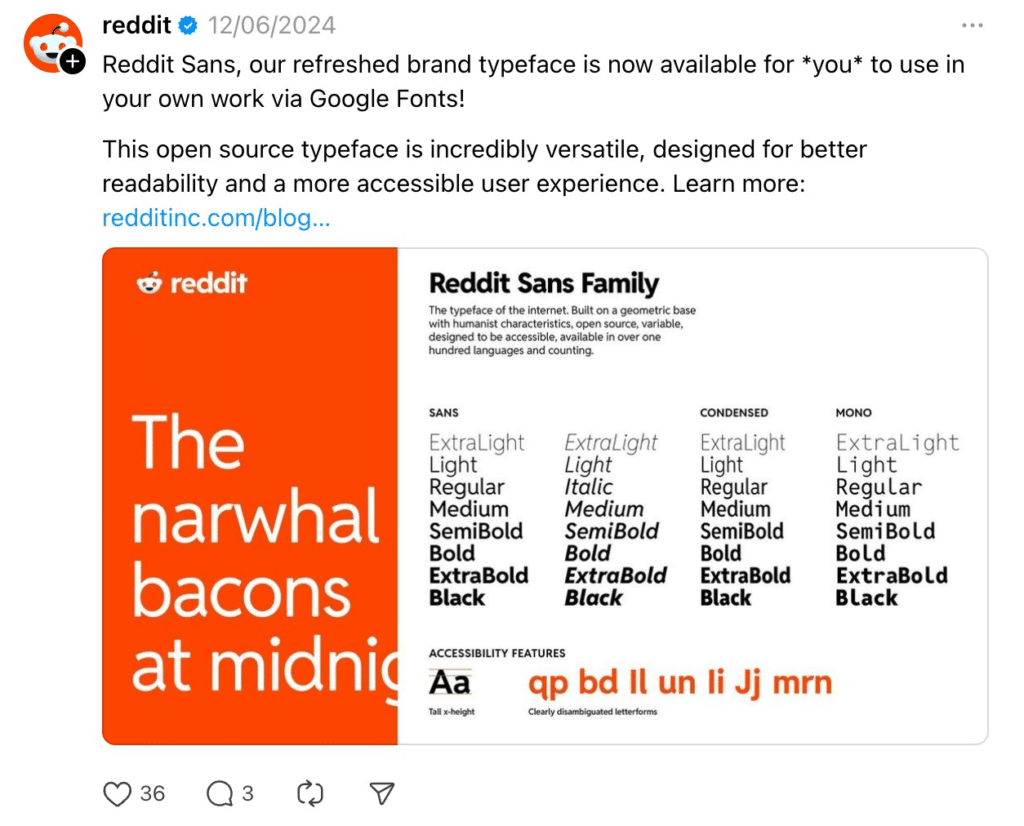
Threads post from Reddit’s verified account announcing that the Reddit Sans typeface is available on Google Fonts, accompanied by a graphic showing the Reddit Sans font family styles and accessibility features.

This changes how creators and businesses use the platform.

For example, on Threads, you can:

  • share a blog article and add context in the same post
  • link directly to a product launch or landing page
  • start a discussion and include a source or reference link
  • drive traffic to a newsletter, video, or resource

Because links work natively inside posts, Threads often functions as a content distribution platform. Users can share links, add commentary, and invite their audience into the conversation without asking them to visit a profile page first.

PRO TIP

If you regularly share articles, product updates, or resources on Threads, an RSS-based workflow can save a lot of time.

With SocialBee’s RSS integrations, you can automatically import content from your blog, news sources, or favorite websites and turn them into posts you can review, edit, and schedule for Threads. This makes it easier to consistently share links and keep your audience updated without manually copying every article into a new post.

6. Threads does not include Stories or Reels

Another important difference is the type of content formats each platform supports.

The Instagram enables users to publish formats designed for visually driven content, including Stories, Reels, carousel photos, and videos. These formats make Instagram a strong platform for visual storytelling and short-form video content.

The Threads app takes a simpler approach. Instead of focusing on multiple content formats, Threads is built around posts, replies, and ongoing conversation in the feed. Users can still share photos, videos, and links, but the platform doesn’t currently include features like Stories or Reels.

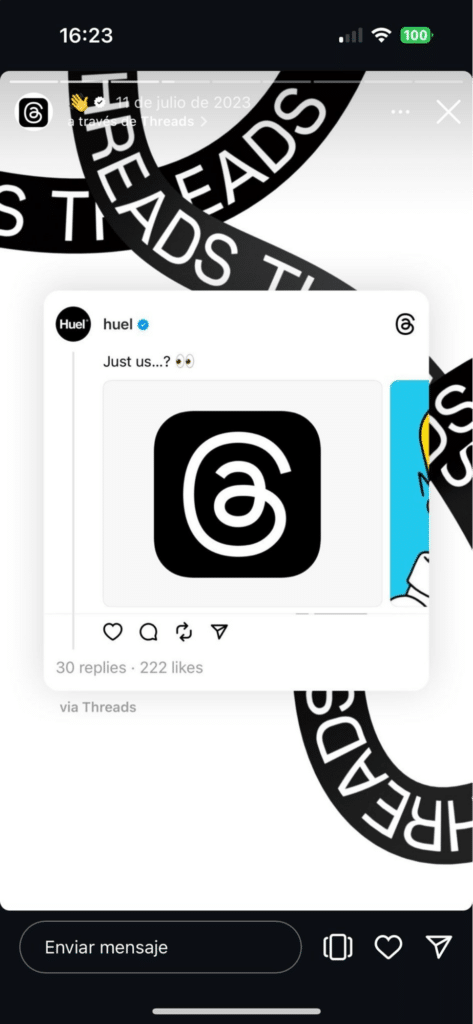
Instagram Story view showing a Threads post by Huel with the Threads logo and the caption “Just us…?” over a black and white background.

What you can do, however, given how connected Threads and Instagram are, is share a Threads post on your Instagram Story like in the example above.

7. Threads encourages more spontaneous posting

The tone of content on Threads tends to be more casual than on Instagram.

On Instagram, many accounts treat the feed as a curated portfolio. Posts are edited, formatted, and timed carefully because they represent the brand or creator long-term.

Threads works differently. Most users treat it as a place to share ideas quickly, react to what’s happening, or start a discussion.

Because of that, the pressure to make every post look perfect is much lower. You can simply share something you’re thinking about and see how people respond.

That said, Threads isn’t limited to small conversations. Posts can still spread widely depending on the topic and how people engage with it. But the culture of the platform generally rewards discussion and replies, not perfectly produced content.

8. Instagram offers more editing and customization options

Instagram includes a wide range of editing tools that allow users to adjust photos, enhance videos, add effects, and design more elaborate posts. Stories also include features like stickers, polls, music, and text overlays, which make it easy to create more interactive updates.

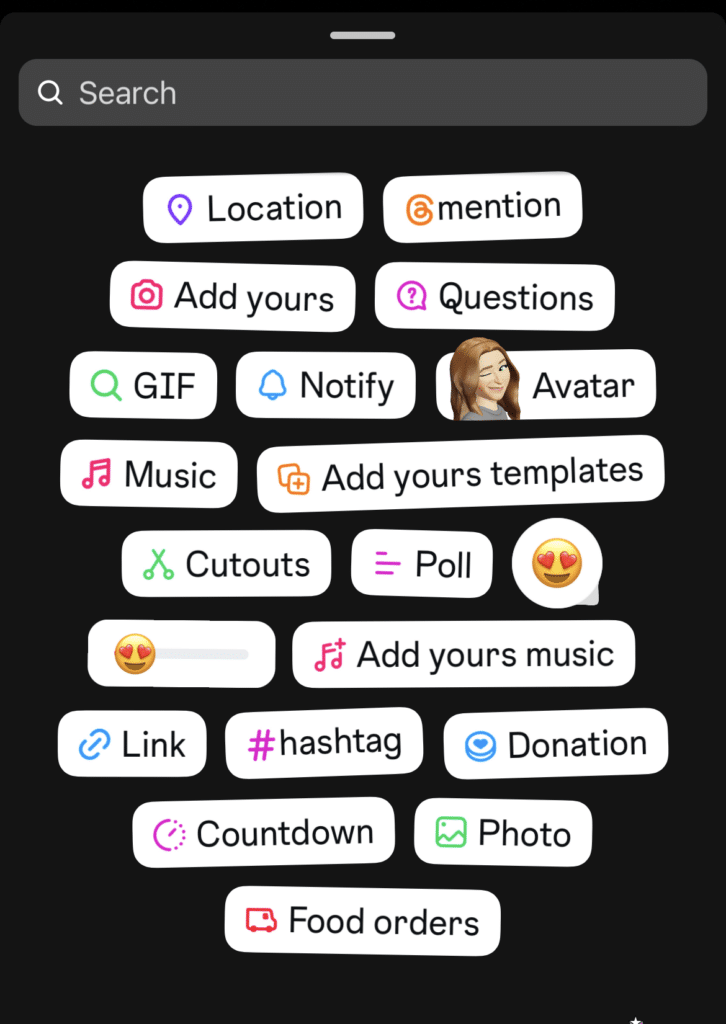
Instagram Story sticker menu showing interactive widgets such as location, mention, questions, GIF, music, poll, link, hashtag, countdown, donation, and other engagement tools used to make stories more interactive.

These tools are part of the reason many creators treat their Instagram accounts like a curated portfolio. Brands, photographers, and lifestyle creators often rely on these features to maintain a consistent visual identity and make their content stand out in the feed.

Threads keeps things much simpler. You can still add photos, videos, and links, but the editing options are minimal compared to Instagram.

In practice, this difference affects how people choose where to post.

If the goal is to publish carefully designed content that reflects a brand style, Instagram usually makes more sense. If the goal is to share an idea, start a discussion, or react to something happening right now, Threads is often the easier place to do it.

9. Threads doesn’t support paid ads (yet)

Threads currently doesn’t offer traditional advertising. Businesses can’t promote posts or run campaigns the way they can on Instagram, where brands rely on different ad formats to reach new audiences.

Instead, the platform focuses on public conversations and organic engagement. Posts spread through replies, reposts, and discussion rather than paid promotion.

That doesn’t mean businesses can’t collaborate with creators. Threads includes a paid partnership label that allows influencers and brands to disclose sponsored content transparently. This makes it possible to share sponsored posts while keeping the conversation format of the platform intact.

For marketers, the difference mainly affects how reach is generated. Instagram allows companies to scale visibility through ads, while Threads relies more on participation in discussions and timely posts that resonate with users.

10. Threads doesn’t offer audience controls like Close Friends

Instagram includes tools that let you control who sees certain content. One example is the Close Friends feature, which allows you to share Stories with a smaller group instead of your entire audience.

Instagram Story sharing screen showing “Your story (And Facebook story)” selected, with additional options for Close Friends and Message, and the blue “Share” button at the bottom.

This can be useful for creators who want to post updates for loyal followers, collaborators, or a specific community without broadcasting the content to everyone who follows their Instagram account.

Threads doesn’t currently include similar audience controls. Posts are visible to all followers, and the platform doesn’t provide options for limiting content to smaller groups.

Because of this, most Threads posts are shared openly with your full audience. If a creator wants to publish something more selectively, they typically use Instagram Stories or other platforms that offer more control over who sees a post.

11. Threads uses a single hashtag per post

Threads posts usually include one hashtag, while Instagram posts often include several. On Instagram, stacking hashtags is a common way to reach multiple communities at once.

On Threads, the approach is different. Because you only use one hashtag, it works more like a topic label for the post. The tag signals what conversation the post belongs to rather than acting as a list of discovery keywords.

Threads also lets you include spaces or emojis inside hashtags, which gives them a more natural, conversational feel.

12. Instagram has an in-app camera for quick videos

Instagram makes it easy to record videos or capture photos without leaving the app. The in-app camera lets you film a Story, Reel, or regular post immediately, apply filters, and publish it in seconds.

Threads doesn’t include a recording camera. If you want to post a video, you need to film it first and then upload it when you create a post.

It’s a small workflow difference, but it affects how quickly you can share something happening in real time. Instagram is built for capturing moments instantly, while Threads is more focused on sharing thoughts, replies, and conversations after the fact.

13. Threads supports voice notes as posts

Threads also lets you publish voice notes instead of typing a post. You can record a short audio message that appears in the feed and plays directly in the thread.

Threads conversation showing a post with an audio waveform voice note, where users can share and reply to messages using recorded voice clips within the thread.

Some creators use voice posts to share quick reactions, explain an idea, or add personality that text can’t capture.

At the same time, audio posts work differently from text. People can’t skim them the way they can scan a paragraph or a link, which means listeners need to pause and play the recording. That changes how people engage with the post and when they choose to listen.

Threads vs Instagram: which one should you choose?

Choosing between Threads and Instagram isn’t really about picking one platform over the other. The two apps are designed for different types of content and interaction, which means they often work best when used together.

Instagram is built for visual content. If your strategy relies on photos, videos, Stories, or carefully designed posts, Instagram will likely remain your main platform. It’s also where many brands invest time building a recognizable presence and attracting Instagram followers through consistent visuals.

Threads fills a different role. The platform is designed for short posts, replies, and public conversations that happen in real time. Instead of planning every detail of a post, users often share quick thoughts, react to trending topics, or start discussions with their audience.

Because of this difference, many creators use the platforms side by side:

  • Instagram becomes the place for polished posts, visual updates, and longer-term content.
  • Threads becomes a positive and creative space for reactions, commentary, and conversation.

For example, a creator might publish a polished product photo or video on Instagram, then use Threads to talk about the idea behind it, ask followers for feedback, or continue the conversation after the post goes live.

In other words, Instagram helps you show your work, while Threads helps you talk about it.

The future of Threads

Threads has grown quickly since its launch, and the numbers suggest it’s becoming a permanent social media pit stop for brands rather than a short-lived experiment.

The platform reached over 400 million monthly active users by 2025, with more than 115 million people using the app daily. That growth is remarkable considering the Threads app launched in 2023 and passed 100 million sign-ups within just a few days, making it one of the fastest-growing apps ever. 

Two factors largely drive this momentum. First, Threads is tightly connected to the Instagram app, which makes it easy for Instagram users to create a Threads account and immediately connect with people they already follow. Second, Meta has been steadily adding new features and testing monetization options like ads and partnerships as the platform matures.

At the same time, Threads is still evolving. Engagement patterns are different from older platforms, and the long-term success of the network will depend on whether conversations remain active and creators keep posting consistently.

“I think how we set the culture for Threads early on in terms of being a more positive, friendly place for discussion will hopefully be one of the defining elements for the next decade as we scale it out,” says Mark Zuckerberg.

For now, the trend is clear: Threads aims to become a serious direct competitor in the text-based social space and a go-to platform for users who want a place to share quick ideas, react to trending topics, and participate in ongoing discussions.

Frequently asked questions

1. What’s the difference between an Instagram post and a Thread?

Instagram posts are visual-first, built around photos, videos, carousels, Stories, and Reels designed to create a polished feed. Threads posts focus more on text updates, quick thoughts, and public conversations. While it still supports images, videos, and links, the platform is primarily designed for discussion and real-time interaction rather than curated visual content.

2. Do I need an Instagram account to create a Threads profile?

Yes. To create a Threads profile, you need an existing Instagram account. When you sign up for the Threads app, you log in using your Instagram credentials, which allows you to import your profile picture, username, and connect with your existing Instagram followers automatically. This integration makes it easier for Instagram users to start using Threads without building a new audience from scratch.

3. What are the key differences between X (Twitter) and Threads?

X (formerly Twitter) and Threads are both text-focused social media platforms, but they differ in ecosystem and user experience. Threads is a public conversations app in the Meta ecosystem, closely integrated with Instagram, and emphasizes conversation, replies, and community discussions. 

X operates as a standalone platform with features like trending topics, advanced search, and established monetization tools. Instagram Threads is still evolving with new features, while X has a longer history and a more mature platform structure.

Ready to make the most out of both social media platforms?

Instagram and Threads serve different roles in the social media ecosystem. Instagram is built for visual content like photos, videos, Stories, and Reels, while Threads focuses more on quick updates, conversations, and sharing ideas in real time.

For many creators and brands, the best approach is understanding how each one fits into your content strategy. Instagram helps you showcase polished content and reach new audiences, while Threads gives you a space to start discussions, react to trending topics, and connect with your community in a more conversational way.

Managing both platforms consistently can take time, especially if you’re juggling multiple accounts and posting manually. A social media management tool like SocialBee helps simplify the process by letting you plan, organize, and schedule posts across platforms from one place.

Start your 14-day free SocialBee trial and see how easy it is to manage your social media strategy.

SocialBee blog CTA box visual with the supported platforms
SocialBee: Your AI-powered Threads management tool
Create posts, publish, analyze, engage and collaborate, all from SocialBee.
Summarize this post

Manage your social media with SocialBee: publishing, AI assistance, Canva magic, analytics, unified inbox, and more.

14-day free trial, no credit card required

Related articles

Level up your social media marketing with exclusive resources delivered straight to your inbox

Somos SocialBee LABS SRL, parte de WebPros. Utilizamos la información que nos proporcionas para compartir contenido relevante y actualizaciones de productos, como se indica en nuestra Política de privacidad. Puedes darte de baja en cualquier momento.

Out of post ideas? Get our FREE social media calendar!

Access 500+ content ideas, post examples, and Canva templates.
We’re SocialBee LABS SRL, part of WebPros. We use the information you provide to share relevant content and product updates, as outlined in our Privacy Policy. You can opt out anytime.

... and turn your ideas in ready-to-share posts in seconds

Use SocialBee’s Free AI Post Generator to create content for your social media profiles.
SocialBee free AI generator