
Content volume keeps increasing. Social posts, blog articles, videos, landing pages. The pressure to keep publishing is constant, which explains why AI content production is now part of daily work for many marketing teams. 69% of marketers reported using AI as part of their strategy, according to the InfluencerMarketing Hub.
AI helps teams keep up. It speeds up drafts, supports research, and removes friction from repetitive steps. Used carelessly, it also produces content that feels interchangeable and detached from the people it is meant to reach.
Scaling content works best when AI stays in a supporting role. Human judgment sets direction, tone, and intent. AI supports production, not decision-making. That balance is what keeps content useful, readable, and worth publishing.
Let’s take a closer look at how to integrate AI tools, workflows, and human creativity to scale your content sustainably and ethically.
What is AI content production?
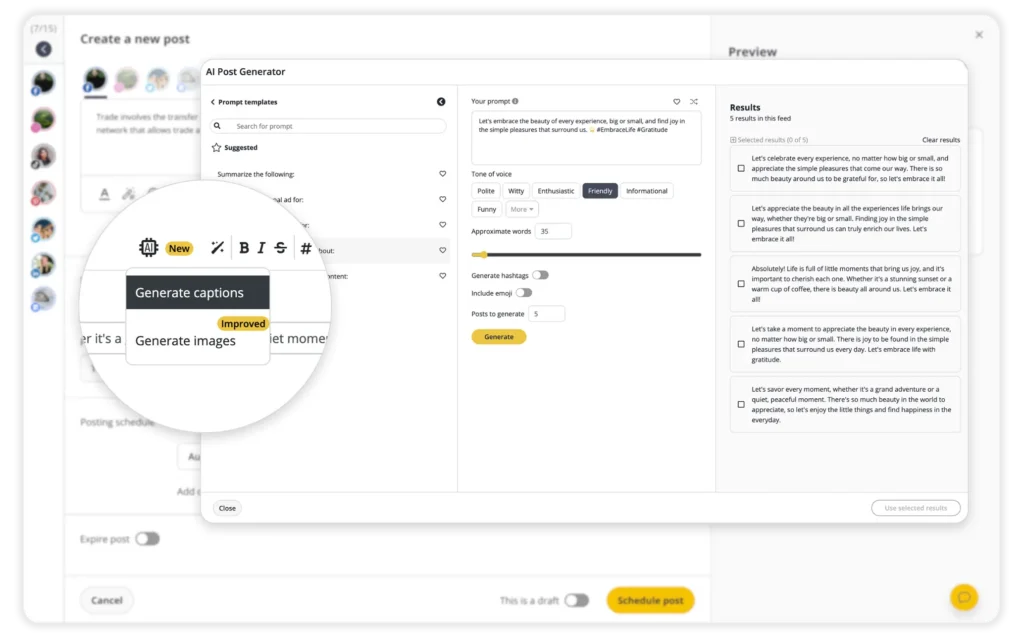
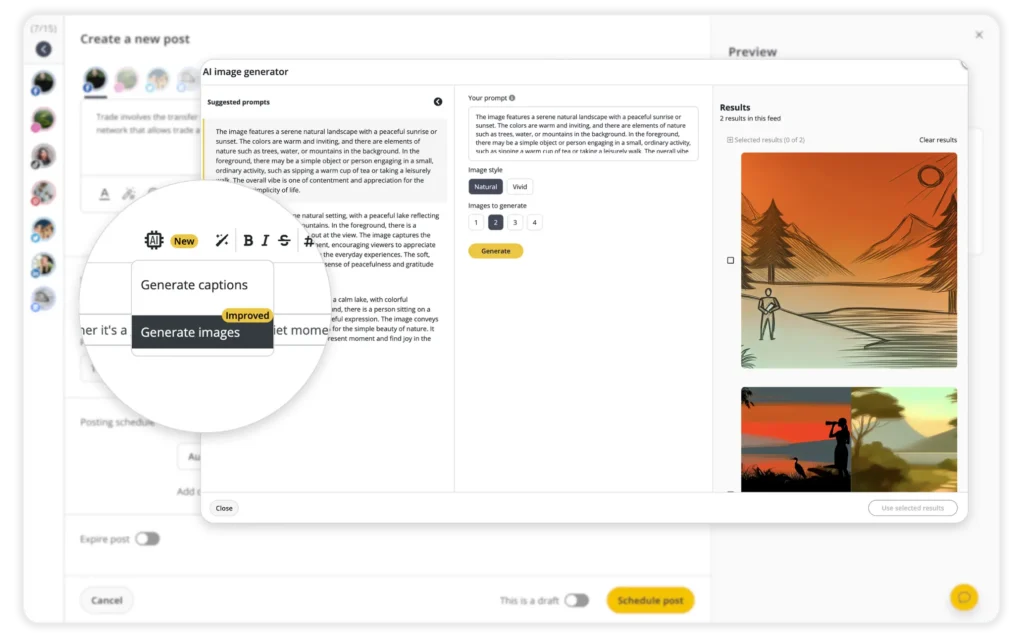
AI content production is the use of machine learning and Large Language Models (LLMs) to support content creation across text, images, and video. It includes AI tools like ChatGPT for writing, Adobe Firefly and Adobe Express for visual content, and SocialBee for captions and social media images.
These tools are now part of everyday workflows for many content and marketing teams. They help reduce manual effort, speed up production, and support consistency across channels. When used with clear guidelines and human oversight, AI becomes a practical layer in modern content marketing and social media strategies rather than a replacement for creative direction.
Why brands are turning to AI for scalable content creation
Content volume keeps growing. Blog posts, social posts, videos, landing pages, and news articles all compete for attention across the same channels. For many content teams, the challenge is no longer coming up with ideas, but keeping up with production without losing control over quality and brand tone.

AI content production fits into the content creation process. Used well, it supports teams by taking pressure off repetitive tasks and speeding up parts of content creation that slow teams down.
Common areas where content teams apply AI tools today include:
- Drafting written content for blog posts, product descriptions, and marketing copy
- Supporting keyword research and subject lines
- Creating short form content and short form video variations
- Assisting with image generation and basic video content
- Repurposing existing content into multiple formats
These tools rely on natural language processing and ai algorithms to analyze data, surface content ideas, and support content generation in a few clicks. Free tools often cover simple needs, while enterprise tools offer more control over brand consistency, reference images, and production workflows for larger enterprise teams.
The adoption trend continues to grow. Most marketers now incorporate AI and automation tools into their workflows, and over 70% of new pages online include some level of content produced with generative AI, according to Ahrefs. For content marketers, this shift helps streamline content workflows and focus effort on work that drives business outcomes rather than manual execution.
Human intelligence still sets direction. Decisions around brand control, brand tone, and relevance stay with content teams. Responsible AI use supports the creative process without overtaking it. Maintaining trust with your target audience and protecting the customer experience remains essential, especially as PRNewswire reports that many consumers remain cautious about AI-driven experiences.
In practice, teams that work smarter use the right tools to support production, not replace judgment. That balance keeps content relevant, consistent, and aligned with long-term goals.
The challenges of scaling AI-generated content
Scaling AI-generated content introduces real risks for content marketers, especially around brand consistency, accuracy, and long-term trust. When teams rely too heavily on automated content generation, written content can quickly lose brand tone and become repetitive across blog posts, landing pages, and long form content.
One of the most common issues appears when AI-generated drafts are published without editing. Copy-and-paste workflows often produce generic phrasing that lacks context and personality. Over time, AI-generated content starts to follow the same patterns, which makes content easier to spot and easier to ignore.
Accuracy is another major concern in the content creation process. AI systems can generate incorrect or outdated information, especially in news articles, product descriptions, and marketing copy. Without proper review, factual errors can reach customers, affecting credibility and business outcomes.
Content teams usually face the same AI challenges when safeguards are missing:
- Inconsistent brand tone across written content and multimedia content
- No review step for long-form content, article writing, or landing pages
- Unclear ownership of final content approval
- Overuse of AI-generated drafts without human oversight
Preventing these issues requires structure. A responsible AI policy and a documented style guide help content marketers define clear boundaries. These guidelines support brand control by outlining how AI tools should be used during content generation and where human intelligence must step in.
Human oversight remains a must throughout the content lifecycle. Clear standards for editing, fact-checking, and tone ensure that AI supports production without compromising relevance or trust. When teams combine clear processes with the right tools, scaling content becomes sustainable rather than risky.
How to build a balanced AI content workflow
A balanced content workflow starts with structure. Before introducing new tools or automation, it helps to clearly understand how content moves from idea to published post. When everyone on the team sees the same process, it becomes easier to scale without creating confusion or losing consistency.
The goal is not to change how your team thinks about content, but to support existing routines and remove friction where it slows things down. Some steps benefit from automation, while others still need human input to protect quality and brand voice.
Below, we’ll walk through a practical, step-by-step workflow that shows where AI can support your social media process and where human review should stay in place.
Here’s how to build a balanced AI content workflow:
- Map your existing content workflow first
- Brainstorm social media ideas and research with AI
- Create rough draft captions using AI
- Edit and humanize captions into final drafts
- Add a second review before publishing
- Schedule and track posts with a social media tool
- Add a security and compliance layer if needed
- Use AI-generated images selectively
1. Map your existing content workflow first
Before adding AI-powered tools to your process, document how content is created today. This can live in a Google Doc, a Notion page, or any format your team already uses. Outline how ideas are generated, how drafts are written, who reviews them, and how content gets scheduled.
This step creates a shared understanding. It also makes it easier to see which parts of the workflow benefit from support and which ones should stay manual.
2. Brainstorm social media ideas and research with AI
AI works well at the idea stage. Use it to explore trends, recurring questions, or themes your audience already engages with. This helps teams widen their perspective without replacing editorial judgment.
Any insights, stats, or claims surfaced here should always be checked against reliable sources before moving forward.
3. Create rough draft captions using AI
Once ideas and research are in place, AI can help generate rough social media captions using your brainstorm and research data.
Prompts work best when they include context, such as audience type, goal of the post, or tone guidelines. These drafts are starting points. They exist to speed things up, not to be published as-is.
What to look for in tools that help you scale content creation
Scaling content creation works best when tools remove friction from everyday work rather than adding new complexity. The focus should be on consistency, clarity, and control as volume increases.
When evaluating AI content tools, look for support in these key areas:
Reduction of repetitive work: Scheduling, rescheduling, and organizing posts should happen in one place. This cuts down on time-consuming manual steps and keeps workflows simple.
Help getting started: Tools that support content ideas or rough drafts make it easier to move past the blank page and spend more time refining messages.
Built-in visual support: Creating and testing visuals as part of the same workflow helps teams move faster, especially when design resources are limited.
Actionable audience insights: Posting time recommendations and performance data should help teams understand what resonates with their audience, without replacing editorial judgment.
Workflow and collaboration features: Shared calendars, approval steps, and clear ownership help teams scale content without losing consistency or control.
When these elements are in place, tools support content teams in producing more content without sacrificing quality, relevance, or brand standards.
How to maintain brand voice and human creativity when using AI tools to create content
Brand voice breaks down when teams move fast without shared rules. The fix is not more tools, but clearer inputs and tighter review habits.
Start by giving writers and editors something concrete to work with. A usable style guide should answer simple questions: how formal the brand sounds, how short or long sentences should be, which phrases feel on-brand, and which ones should never be used. Pair this with 8 to 10 real social posts your brand would publish today, not aspirational examples.
Use this material before drafting begins. When prompts are written with tone notes and examples included, early drafts come back closer to what you actually want. This reduces editing time and keeps language consistent across posts.
Editing should focus on specifics, not polish. Look for generic phrases, smooth but empty transitions, or lines that could belong to any brand. Replace them with concrete wording, product details, or audience context. Adding one clear insight, customer reference, or point of view per post helps anchor the message.
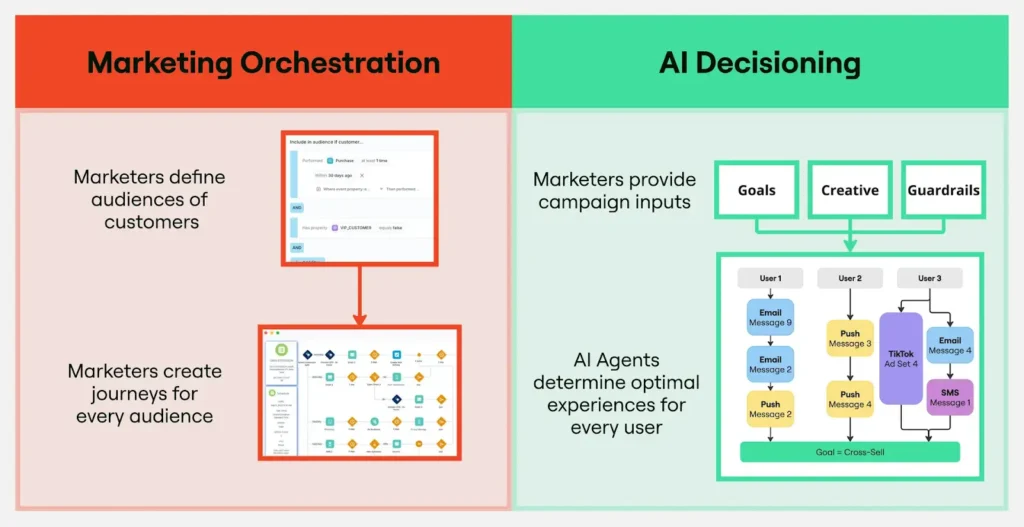
You can also plug AI decisioning into your existing tools. It learns from your data and helps you run experiments to better personalize content. On social media, this is perfect for automating A/B tests to see which posts perform best for each audience segment.
We also recommend giving your social media team a quick checklist they can use to verify brand tone, accuracy, story, and brand-specific wording before submitting captions for review. (Also, make sure to keep your style guide current. Add new examples after winning campaigns, so your team and prompts continue to improve with time.)
Frequently asked questions
1. Can AI completely replace human content creators?
No. Tools can help speed things up, but they don’t replace the people behind the work. Content still needs judgment, context, and a clear point of view to feel worth reading.
Automation is useful for tasks like automate post scheduling, early brainstorming, or light rephrasing. These steps save time, but they don’t decide what should be said or how it should sound. Without human input, content quickly turns generic and forgettable.
People remain responsible for voice, clarity, and relevance. That’s what makes content feel intentional rather than produced.
2. What’s the best way to use AI for SEO optimization?
For SEO, tools are most helpful at the research stage. They can surface keyword ideas and highlight gaps, giving writers a clearer starting point.
The writing itself still needs care. Keywords should fit naturally into the text and support the message instead of distracting from it. Final structure, flow, and emphasis are decisions best made by a human editor.
3. Are there risks in publishing AI-generated content?
Yes. Publishing content without review increases the chance of errors, repeated phrasing, or messaging that doesn’t match your brand.
These risks drop significantly when teams work with a clear style guide and a simple review process. Editing, fact-checking, and tone checks protect quality and keep content consistent over time.
4. Do you need multiple tools to manage content creation?
Not always. Not all tools are created for the same needs, and using too many can complicate workflows. Most AI tools focus on specific tasks, such as creating visuals, video editing, or drafting content, which can lead to unnecessary switching between platforms.
The best AI tools help with automating repetitive tasks and support consistency across content. They should make it easier to maintain brand consistency, understand your target audience through audience insights, and support thought leadership without flattening your voice.
Time to best integrate AI content creation in your marketing strategy
Scaling content works best when tools support decisions rather than replace them. AI can help teams move faster by analyzing patterns, suggesting improvements, and reducing guesswork in day-to-day publishing.
Used thoughtfully, AI supports areas where teams often slow down. Caption generation helps shape clearer messaging without starting from scratch. Image generation speeds up visual production when reference images or custom assets are limited. Posting time recommendations rely on performance data to suggest when content is more likely to be seen, helping teams make informed choices instead of relying on intuition alone.
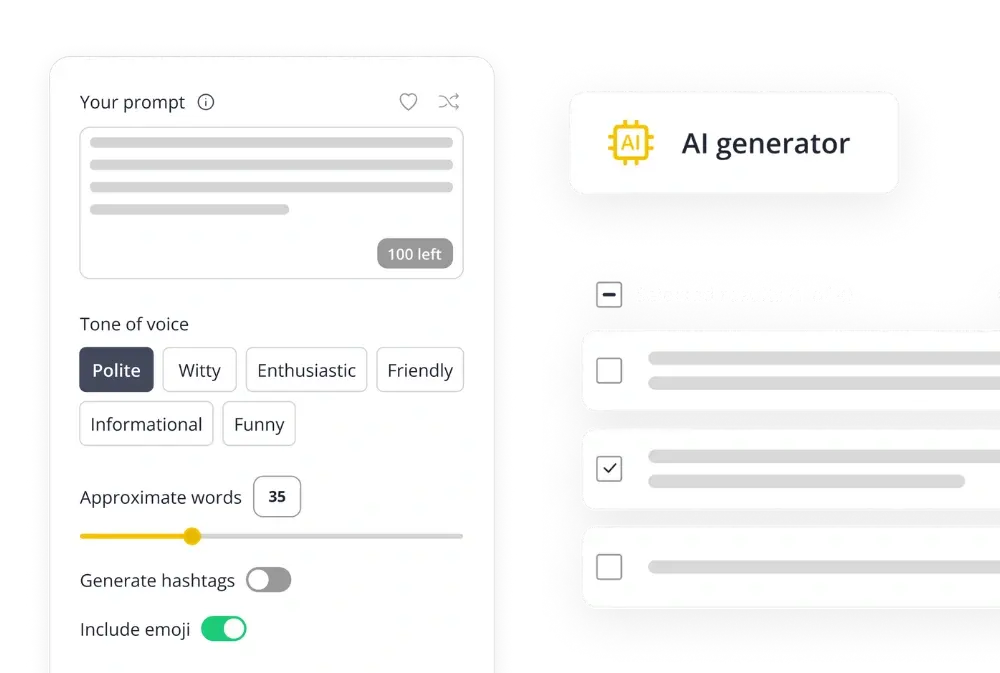
Tools like SocialBee apply these AI features to support planning and execution. From AI-assisted captions to posting time recommendations based on audience behavior, these capabilities help teams stay consistent while keeping human judgment in control.
If you want to explore how this works in practice, SocialBee offers a free 14-day trial.