

Is X (Twitter) still worth using for marketing? Absolutely.
While marketers have more platforms to choose from than ever, X remains one of the best places to join conversations, build authority, and connect with people who care about your industry.
The problem is that most businesses approach Twitter marketing without much of a plan. They post whenever they have something to say, share links that get little engagement, and hope for the best.
That’s why having a Twitter marketing strategy matters. When you know who you’re trying to reach and what you want to achieve, it’s much easier to create content that gets seen, starts conversations, and supports your marketing goals.
In this guide, I’ll show you how to build an effective X (Twitter) marketing strategy in 2026, from audience research and content planning to analytics and engagement. I’ll also share how SocialBee can help you schedule tweets, stay consistent, and manage your social media content more efficiently.

Why X (Twitter) marketing still matters in 2026
X isn’t the biggest social network anymore, but it’s still one of the fastest ways to get your content in front of the right people.
Unlike platforms where your posts mostly reach existing followers, X is built around conversations. A thoughtful reply to a popular discussion or an insightful thread can put your brand in front of thousands of people who have never heard of you before.
The audience is still significant. According to X and industry estimates, the platform has around 600 million monthly active users worldwide. In 2025, advertisers could reach 586 million users, with the largest audiences in the US, Japan, the UK, Germany, and India.
For marketers, X is particularly useful because people come there with intent. They ask questions, share opinions, discuss products, and react to industry news in real time. That creates opportunities you won’t find on platforms where content is consumed more passively.
The X co-founder Jack Dorsey described it well: “Twitter has this unique ability to bring you closer to whatever you care about the most.”
That still applies today. Whether someone is looking for AI tools, SEO advice, startup founders, or cybersecurity experts, chances are they’re following conversations on X.
The X (Twitter) platform also offers practical benefits for businesses:
- Reach people outside your followers. Replies and reposts regularly outperform standalone promotional posts.
- Spot trends early. X is often where industry news breaks first.
- Talk directly to customers. Many people use X to ask questions, report issues, or share feedback publicly.
- Learn your audience’s language. Reading replies is one of the fastest ways to discover the questions, frustrations, and phrases your customers actually use.
Many well-known brands have built strong communities this way. Companies like Notion, Ahrefs, Vercel, Linear, and Duolingo rarely rely on constant product promotion. Instead, they share useful insights, respond to conversations, and let their expertise speak for itself.
If your audience spends time on X, showing up consistently is often more valuable than chasing every new social platform.
How I create an effective X (Twitter) marketing strategy
The biggest mistake I see businesses make on X (Twitter) is jumping straight into posting.
They create a Twitter account, publish a few updates, maybe share some links to their latest blog posts, and then wonder why nobody is engaging.
An effective X (Twitter) marketing strategy starts long before you publish your first post. You need to understand who you’re trying to reach, what you want to achieve, and how X (Twitter) fits into your wider social media marketing efforts.
The good news is that you don’t need a huge team or thousands of Twitter followers to see results. What you need is a clear plan, consistent execution, and a way to stay organized.
Here’s the process I use to build an X (Twitter) marketing strategy:
- I define the role X (Twitter) plays in my overall marketing strategy
- I start with audience research before posting anything
- I optimize my X (Twitter) profile before focusing on growth
- I build my X (Twitter) content strategy around repeatable content pillars
- I focus on creating content people actually want to reply to
- I use real-time conversations to increase visibility
- I create a realistic posting schedule I can actually maintain
- I use hashtags strategically instead of stuffing them everywhere
- I mix organic content with paid promotion carefully
- I repurpose content from other social platforms
- I pay attention to audience signals instead of guessing
- I actively engage instead of only publishing tweets
- I use competitor insights to improve my strategy
- I prepare for negative feedback instead of avoiding it
- I use SocialBee to keep my X (Twitter) marketing organized
Step 1: I define the role X (Twitter) plays in my overall marketing strategy
Not every business should use X in the same way.
A B2B SaaS company will have different goals than an e-commerce brand. A founder building a personal brand will post differently than a local coffee shop. What works for one account won’t necessarily work for another.
Before you start posting, decide what success looks like. Your goal will shape everything from the topics you cover to how you measure performance.
For most businesses, X fits into one or more of these goals:
- Build brand awareness: Help more people discover and remember your business.
- Grow a relevant audience: Attract followers who are likely to become customers, partners, or advocates.
- Increase engagement: Start conversations and stay visible between buying moments.
- Drive website traffic: Send people to your blog, landing pages, or product pages.
- Generate leads: Turn interested users into newsletter subscribers, demo requests, or customers.
- Establish thought leadership: Share valuable insights so people begin to associate your brand with your expertise.
X (Twitter) can support several marketing goals at the same time. You might use it to build brand awareness, drive traffic to your website, strengthen customer relationships, and establish thought leadership. The key is knowing which goal takes priority, so you can make better decisions about what you post and how you measure success.
For example, if my main goal is to build a personal brand, I’ll spend more time sharing opinions, lessons learned, and industry commentary. If driving traffic is equally important, I’ll also include links to blog posts, resources, and landing pages.
Having clear priorities makes every other decision easier, from the topics you cover to the metrics you track.
Without that direction, it’s easy to post simply for the sake of staying active, instead of publishing content that supports your broader marketing goals.
Step 2: I start with audience research before posting anything
Once I know what I want to achieve on X (Twitter), I spend time understanding the people I want to reach.
I usually have ideas about what I want to share, but I don’t publish them blindly. Instead, I look at the conversations my audience is already having and shape my content around those interests. That way, my posts support my business goals while staying relevant to the people I’m trying to reach.
Before posting, I spend some time on the platform. I look at discussions in my industry, trending topics, and the types of posts that generate replies, reposts, and meaningful conversations. This gives me a good sense of what resonates, and what doesn’t.
I also check what competitors and industry leaders are posting. I’m not looking for ideas to copy. I’m looking for patterns. Which topics generate discussion? What questions keep coming up? Which formats perform well, and which ones are ignored?
Another habit that helps is creating X Lists. I keep separate lists for competitors, customers, industry experts, and creators I learn from. Instead of relying on the algorithm, I can quickly see what’s happening in my niche and spot new content ideas or emerging trends.
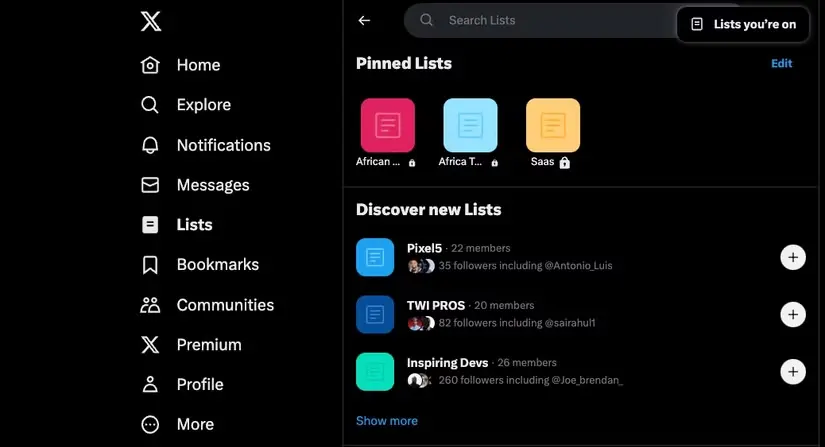
I follow industry leaders because they often shape the conversations everyone else joins. Just as importantly, I read the replies. That’s where people ask follow-up questions, share frustrations, challenge opinions, and reveal what they actually care about.
As I research, I look for signals like:
- Do people engage more with short opinions or detailed threads?
- Are they looking for practical advice or industry commentary?
- Do they respond to data and statistics or personal experiences?
- Which content formats generate the highest engagement rate?
The more time I spend listening, the easier it becomes to create content that feels relevant to the people I’m trying to reach.
Step 3: I optimize my X (Twitter) profile before focusing on growth
There’s no point driving people to your X (Twitter) profile if it doesn’t tell them who you are.
When someone discovers your content, they’ll often click on your profile before deciding whether to follow you. That’s why I treat my profile like a landing page. It should quickly answer three questions: Who are you? What do you do? Why should people care?
Here’s an X profile optimization checklist:
- Profile photo: Use a recognizable logo or a clear headshot.
- Header image: Use it to showcase your brand, product, service, or value proposition.
- X (Twitter) handle: Keep it simple and consistent with your other social media accounts.
- Bio: Explain what you do and who you help in a few short lines.
- Website link: Add a relevant destination, such as your homepage, newsletter, latest campaign, portfolio, or landing page. Update it when your priorities change.
- Pinned tweet: Highlight something important, whether that’s your best-performing post, a lead magnet, a product, or an introduction to your brand.

I also pay attention to consistency. Someone might discover your brand through a lighthearted meme on X (Twitter), then visit your website to learn more. Whether your brand is playful, professional, or somewhere in between, the experience should feel consistent across both touchpoints.
Before I spend time trying to get more followers, I make sure my profile gives people a good reason to stick around once they find me.
Step 4: I build my X (Twitter) content strategy around repeatable content pillars
Posting random tweets whenever inspiration strikes might work for a few days, but it’s difficult to keep up long-term.
Sooner or later, you’ll run out of ideas, start repeating yourself, or wonder what to post next.
That’s why I like working with content pillars. Instead of starting from scratch every day, I decide on a few topics I want to be known for and create content around them consistently.
Some formats that tend to work well on X (Twitter) are:
- Opinion posts that share a perspective or challenge common thinking
- Educational threads that teach something useful
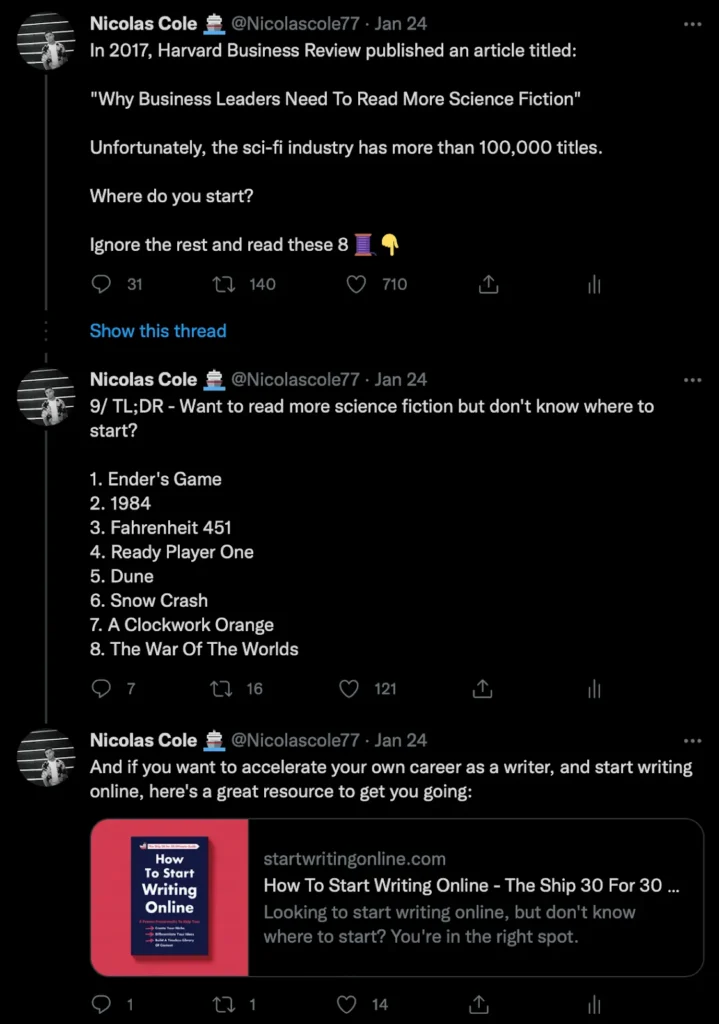
- Customer testimonials and success stories
- Company culture posts that show the people behind the brand
- Visual content like graphics, screenshots, and short videos
- Industry commentary on news and trends
- X (Twitter) polls that encourage people to engage with

Not every post needs to sell something. In fact, most shouldn’t.
A healthy content mix keeps your account interesting and gives people a reason to follow you beyond product updates and promotions.
This is also why I like using SocialBee. I can organize posts into different content categories, schedule them ahead of time, and make sure I’m not posting the same type of content over and over again.
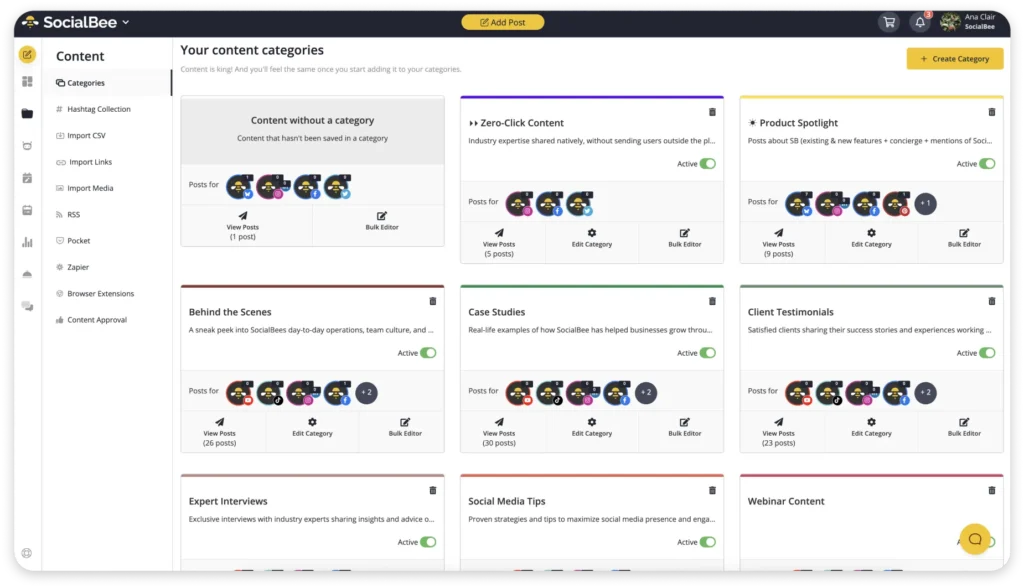
Over time, consistency helps shape your brand. When people regularly see you talking about the same topics, they start to recognize what you stand for and what they can expect from your content.
Consistently publishing around a few core themes also gives X clearer signals about your niche, which can help your content reach people interested in those topics.
Step 5: I focus on creating content people actually want to reply to
It’s easy to get caught up in impressions.
A post might get thousands of views, but if nobody replies, shares it, or starts a conversation, did it really do much for your brand?
That’s why I pay more attention to engagement rate than impressions alone. I’d rather have a post that sparks discussion than one that gets seen and immediately forgotten.
When I’m creating content for X (Twitter), I ask myself a simple question: Would someone have a reason to respond to this?
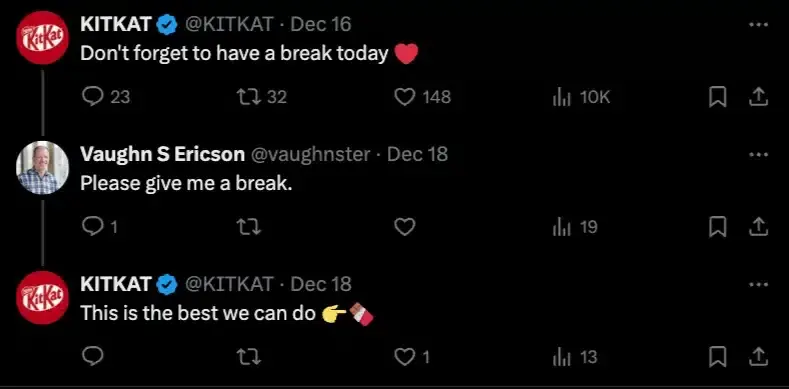
The posts that tend to perform best aren’t usually the most polished ones. They’re the ones that feel human. A strong opinion, an observation, a lesson learned, or a question often generates more engagement than a carefully written corporate update.
For example, compare these two posts:
❌ “Our new feature is now live.”
✅ “What’s one feature you wish every social media tool had? We finally built ours after hearing the same request for months.”
And these two:
❌ “Here’s our latest blog post.”
✅ “Most brands spend too much time worrying about posting every day and not enough time creating posts people actually want to respond to. Agree or disagree?”
These types of posts are more likely to start conversations because they invite opinions, experiences, and discussion instead of simply sharing information.
When I’m planning content, I try to include a mix of posts that:
- Ask a question;
- Share a lesson or mistake;
- Challenge a common opinion;
- Invite people to share their experience;
- React to industry news with my own perspective;
- Tell a short story with a clear takeaway.
Not every post needs to go viral. But if people are replying, reposting, saving your posts, or tagging colleagues, it’s a good sign you’re creating content they genuinely find valuable.
Step 6: I use real time conversations to increase visibility
Posting content is only half of the job on X (Twitter).
If all you do is publish tweets and log off, you’re missing one of the biggest advantages of the platform: conversations.
I try to spend time interacting with other people in my industry, replying to posts, and sharing my thoughts on topics that are already getting attention. It’s one of the easiest ways to get your name in front of new people without creating more content.
The best opportunities usually come from industry conversations, breaking news, and discussions your target audience is already following. A useful comment or interesting perspective can often get more attention than a post on your own account.
I also like using X (Twitter) Spaces and community chats when relevant. They’re a good way to meet people, learn from others, and have more meaningful conversations than you can fit into a tweet.
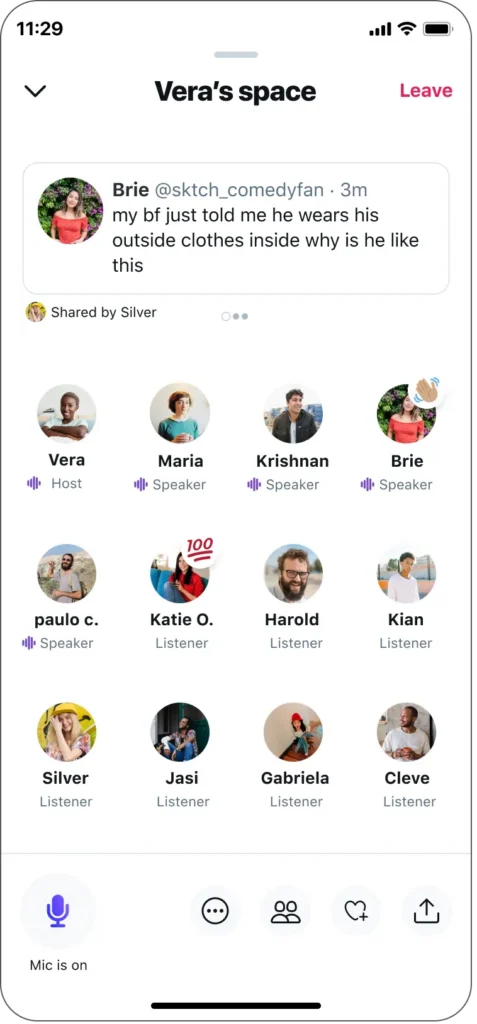
Most importantly, don’t rely entirely on pre-planned content. Scheduling is great for consistency, but it shouldn’t replace interaction. People follow people and brands that participate, not accounts that only broadcast updates.
Step 7: I create a realistic posting schedule I can actually maintain
A lot of advice about X (Twitter) focuses on posting more.
In reality, posting consistently is much more important than posting constantly.
You don’t need to publish 20 tweets in one day to grow your account. In fact, that approach often leads to burnout. What tends to work better is finding a posting schedule you can stick to week after week.
For some brands, that might mean posting once a day. For others, it could be three to five times per day. The exact number matters less than showing up regularly.
Consistency helps keep your brand visible and gives people more opportunities to discover your content. If someone visits your profile and sees you haven’t posted in three weeks, they’re less likely to follow you.
This is why I recommend using a content calendar. Instead of deciding what to post every morning, I plan content ahead of time and spread it throughout the week.
A content calendar also helps maintain a healthy mix of content. Rather than posting several promotional updates in a row, I can balance educational posts, opinions, industry commentary, and engagement-focused content.
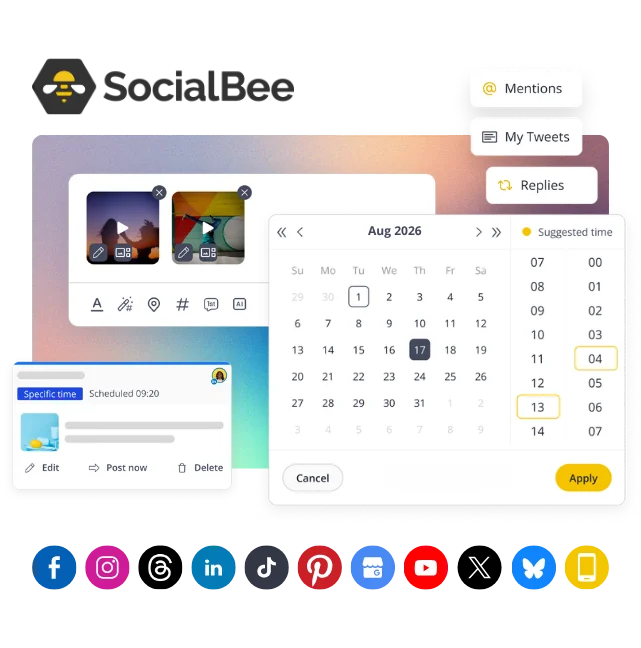
SocialBee is quite useful here. Besides letting me schedule posts in advance, it recommends the best times to post based on how my audience has engaged with previous content. That way, I don’t have to guess when people are most likely to see my posts.
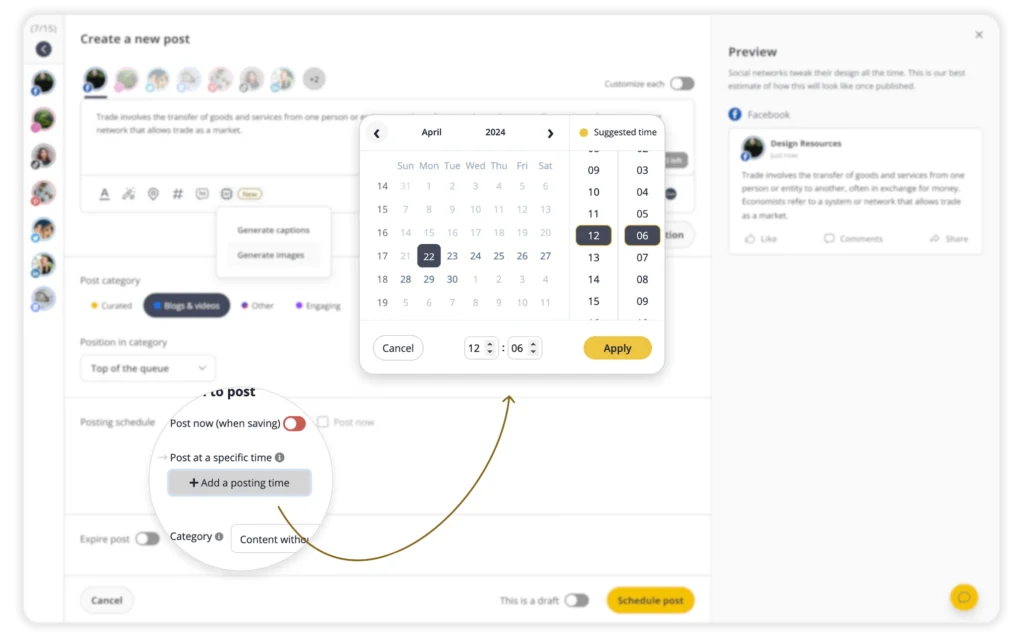
I also like the content calendar because it gives me a clear overview of everything I’ve scheduled. If I notice too many promotional posts in one week or not enough educational content, I can easily move things around.
Planning ahead doesn’t just save time. It helps me stay consistent without feeling like I have to come up with something new every day.
Step 8: I use hashtags strategically instead of stuffing them everywhere
Hashtags can help people discover your posts, but they’re not a shortcut to more engagement. A strong post with one relevant hashtag will usually outperform a weak post with ten.
My rule is simple: if a hashtag helps explain what the post is about or connects it to an existing conversation, I use it. If it doesn’t, I leave it out.
For example, here’s how I use hashtags on X:
- If I’m posting live from a conference, I’ll use the event hashtag (e.g. #WebSummit).
- If I’m sharing tips about social media, I might use #SocialMediaMarketing.
- If I’m joining a community discussion like #BuildInPublic, it makes sense to include that hashtag.
Adding unrelated or overly broad hashtags just because they’re popular usually doesn’t add much value.
X recommends using no more than one or two hashtags per post. Too many hashtags can make posts harder to read and distract from your message.
The same goes for trending hashtags. Just because a topic is trending doesn’t mean your brand should join the conversation. If there’s a genuine connection to your business or audience, go for it. Otherwise, it can feel forced.

The same goes for trending hashtags. Just because a topic is trending doesn’t mean your brand needs to join the conversation. If there’s a natural connection to your audience or expertise, great. If not, forcing it can come across as inauthentic.
Keep hashtags simple. Place them naturally within your post or at the end, choose hashtags that are specific to your topic, and avoid adding generic hashtags just because they’re popular. It’s also worth reviewing your hashtag performance from time to time to see which ones actually help people discover your content.
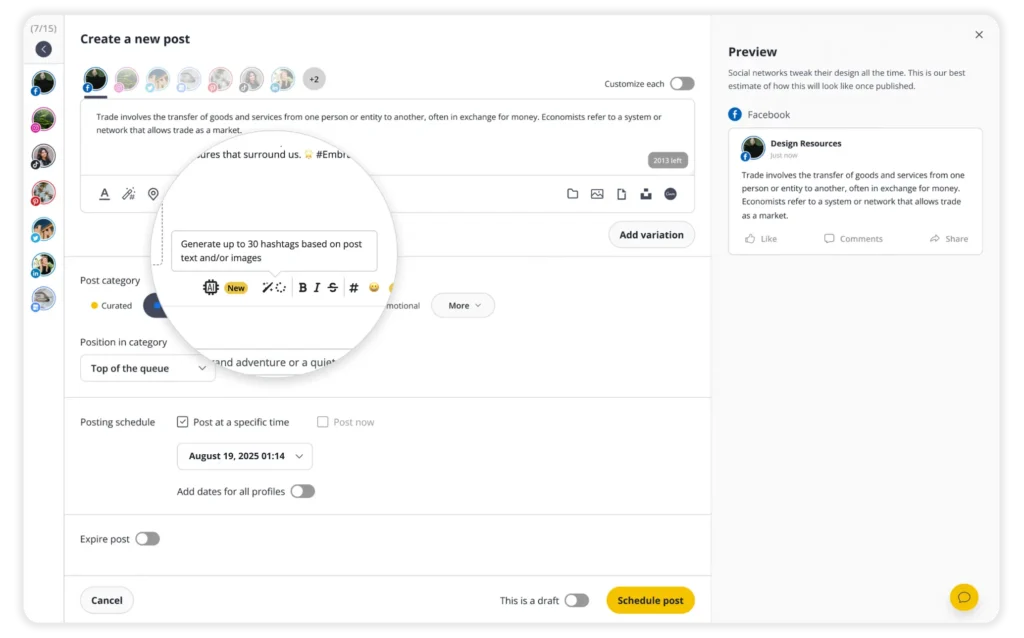
If you’re using SocialBee, the Hashtag Generator can suggest relevant hashtags based on your post. You can also save hashtag collections for different content categories, making it easy to reuse the right hashtags without researching them every time.
Step 9: I mix organic content with paid promotion carefully
A lot of brands turn to ads too quickly.
If your content isn’t getting any engagement organically, putting money behind it usually won’t solve the problem. In many cases, it just means more people will ignore it.
That’s why I always start with organic content.
Before spending a budget on X (Twitter) ads or promoted tweets, I want to know what resonates with my audience. Which topics generate replies? Which posts get shared? What kind of content drives profile visits or website clicks?
Once I have that data, paid promotion becomes much more effective.
For example, if a post is already performing well organically, promoting it can help put it in front of an even larger audience. Instead of guessing what might work, you’re investing in content that has already proven itself.
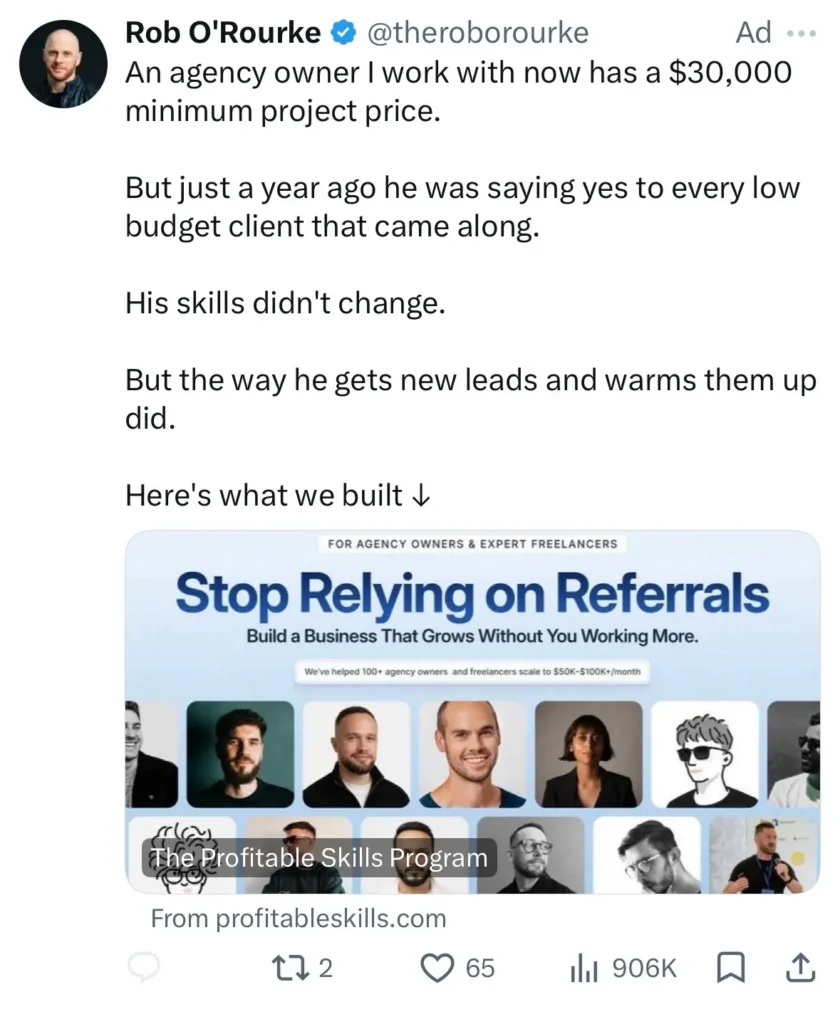
Promoted tweets can also be useful when you have a specific goal, such as:
- Driving traffic to a landing page
- Promoting a webinar or event
- Generating leads
- Launching a new product or service
- Reaching a highly targeted audience
What I like about X (Twitter) advertising is the ability to narrow your audience based on interests, keywords, locations, and other targeting options. This makes it easier to get your content in front of people who are likely to care about it.
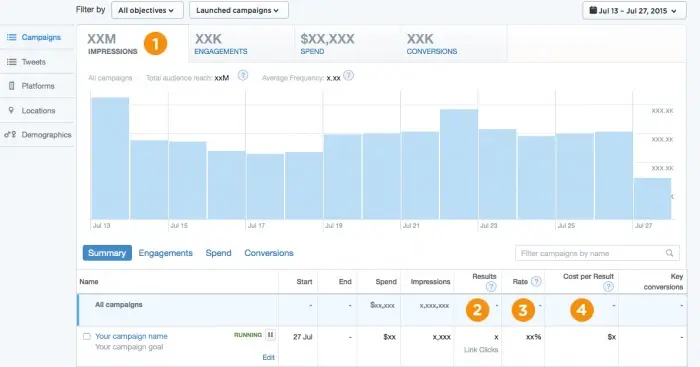
That said, I still see paid promotion as a supplement, not a replacement for a strong content strategy.
Organic content helps you build trust, learn what your audience responds to, and establish a presence on the platform. Paid promotion works best when it’s amplifying content that’s already doing well, not trying to rescue content that isn’t.
My advice? Focus on creating valuable content first. Once you know what’s working, use paid promotion to extend its reach.
Step 10: I repurpose content from other social platforms
I don’t believe every tweet needs to be a brand-new idea.
In fact, some of my best-performing X (Twitter) posts started as something else entirely: a blog article, a LinkedIn post, a webinar, a podcast clip, or even a customer conversation.
If you’ve already spent time creating a piece of content, get as much value from it as possible.
For example:
- Turn a blog post into a thread
- Pull a key takeaway from a webinar and turn it into a tweet
- Break a LinkedIn post into several shorter posts
- Share a quote or statistic from a case study
- Turn a video into a short text-based insight
This is much more sustainable than trying to come up with new content ideas every single day.
Repurposing also helps keep your messaging consistent across platforms. Someone following you on LinkedIn and X (Twitter) might see the same idea presented differently, but the message remains the same.
SocialBee also lets me adapt the same post for different platforms without creating everything from scratch. I can change the text, hashtags, images, links, mentions, and call to action for each network, so every post feels native to the platform it’s published on.
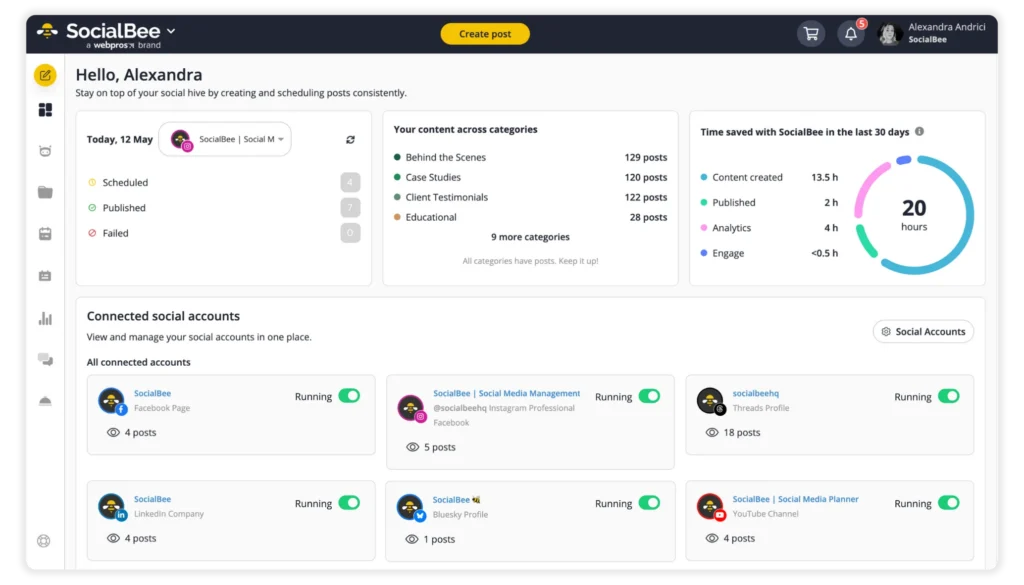
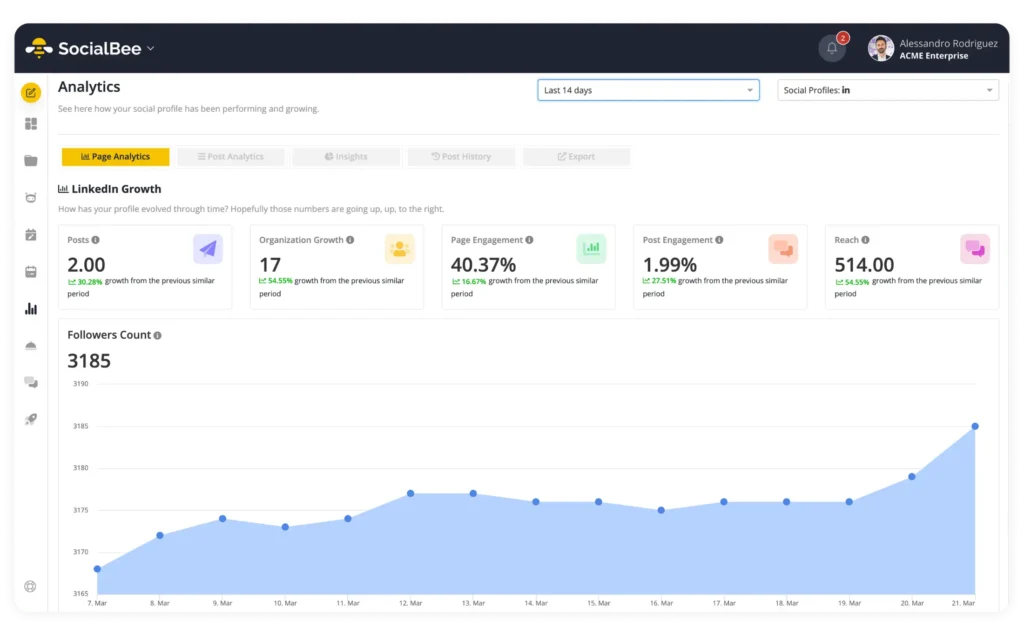
If you’re sharing links to your website, add UTM parameters before publishing. They let you see exactly how much traffic, and even how many conversions, your X posts generate in tools like Google Analytics 4. That gives you a much clearer picture of what’s contributing to your marketing goals than likes or impressions alone.
You don’t need to track everything. Just pay attention to the signals your audience is already giving you and use them to make better content decisions.
Step 12: I actively engage instead of only publishing tweets
A lot of brands treat X (Twitter) like a billboard.
They publish content, promote their products, and wait for people to engage.
The problem is that X (Twitter) works best when it’s a two-way conversation.
Some of the best opportunities to grow your Twitter presence don’t come from your own posts. They come from replying to other people, answering questions, and joining discussions that are already happening.
Look how DoorDash joined the World Cup conversations:
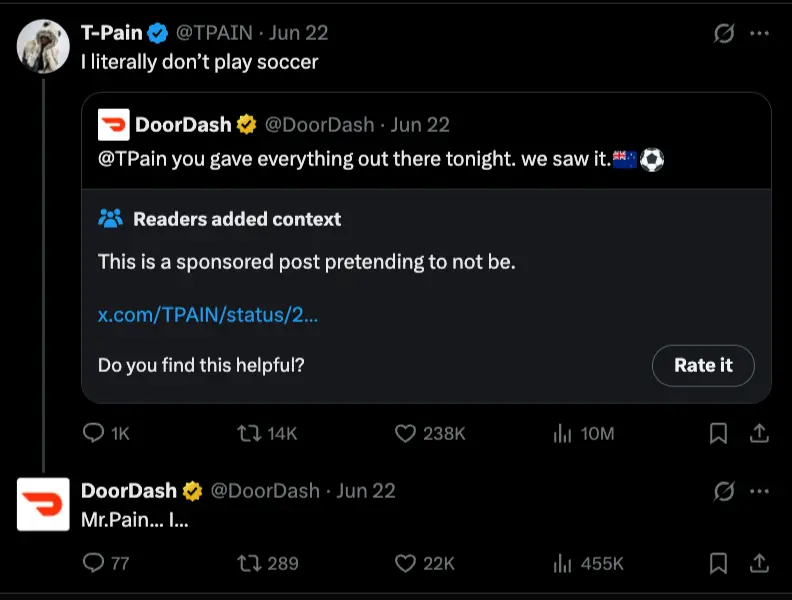
I make it a habit to respond to comments, thank people for sharing my content, and engage with both existing customers and potential followers. It doesn’t take much time, but it helps build stronger relationships and keeps the conversation going.
I also spend time interacting with industry leaders, creators, and other businesses in my space. Not because I’m expecting something in return, but because that’s how you become part of a community.
This is especially important if you’re building a personal brand. People are much more likely to remember someone they’ve interacted with than someone whose content they’ve only scrolled past.
Consistent engagement can also help increase your reach over time. The more conversations you’re part of, the more visible your account becomes. That’s difficult to achieve by relying solely on the content you publish on your own profile.
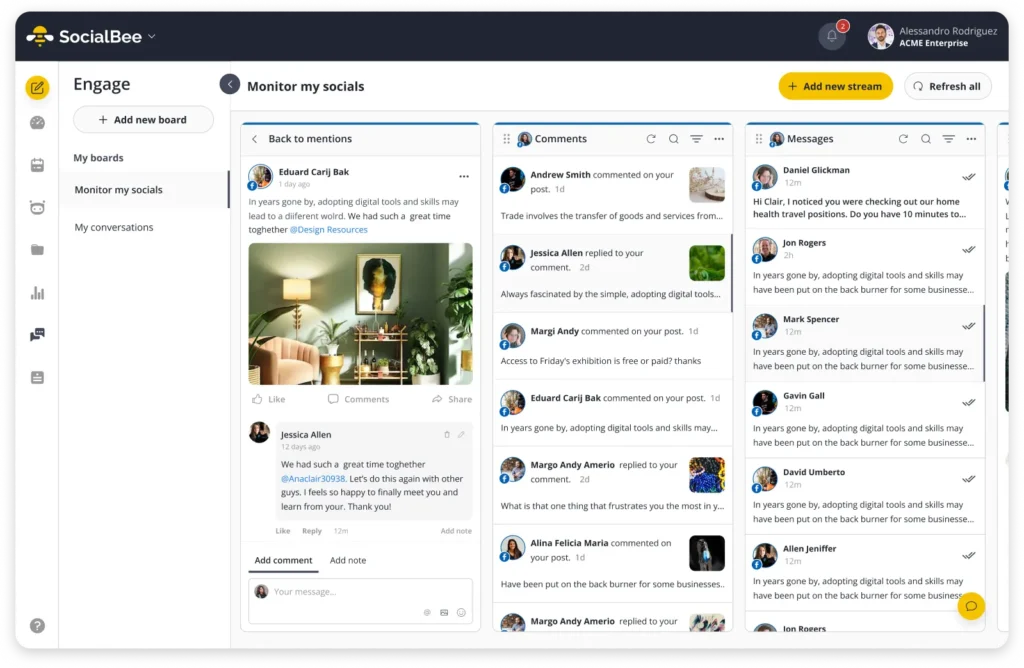
One thing I like about SocialBee is that it helps with both publishing and engagement. Besides scheduling content, you can also keep track of comments, and mentions from one place, making it easier to stay on top of conversations without constantly switching between platforms.