
I’ve published Facebook posts that looked good on paper and still went nowhere. The issue usually wasn’t the idea. It was the format and how it showed up in the feed.
That matters, especially now. Average organic reach for Facebook pages often sits below 5%, and posts that don’t get early reactions tend to disappear fast. Facebook has been clear about this: posts that trigger comments, shares, and saves are far more likely to keep circulating.
After posting consistently for a while, patterns become obvious. Some posts reliably spark interaction. Others fade within hours.
These Facebook post examples are based on what repeatedly works today. They reflect how people actually scroll, pause, and engage on the platform. No trend chasing. No posting just to stay visible.
What follows are ten post ideas with clear examples and guidance on how to adapt each one to your own brand. Each example serves a specific purpose: starting conversations, building trust, or keeping your page active in a way that actually supports your business.

10 Facebook post ideas and examples
I pulled these examples together after seeing the same types of posts perform well again and again across different pages. Different industries, different audiences, same result. When a post follows a clear structure and gives people a reason to react, Facebook rewards it with reach and interaction.
The examples below are practical by design. Each one serves a clear role on a Facebook business page, whether that’s starting conversations, building trust, or keeping engagement steady over time. You’ll see why each post works and how to adapt it to fit your own brand, tone, and audience without forcing it.
Here are 10 Facebook post ideas you can try:
- Behind-the-scenes look at your process
- Quick tip your audience can use today
- Customer success story highlight
- Question that sparks comments
- Value-packed carousel post
- Giveaways
- Short relatable mini story
- Teaser for an upcoming announcement
- Poll to gather audience opinions
- User-generated content feature
1. Behind-the-scenes look at your process
A behind-the-scenes post lets people see what actually goes on before, during, or after something happens. These posts feel natural because they show real moments instead of finished highlights and company milestones. They work well when you want your Facebook posts to feel open and human.
Why it works
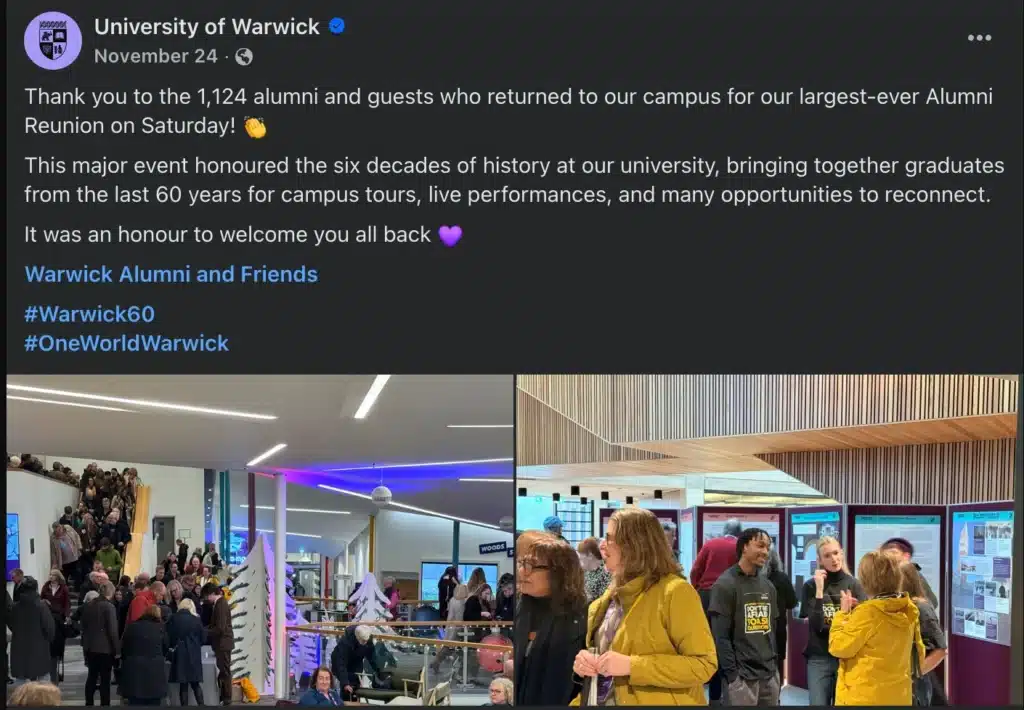
In this example, the University of Warwick shares photos from an alumni event while it’s happening and just after. You see crowds, conversations, people moving through the space. Nothing feels staged. The photos show scale and energy without needing much explanation.
The caption does what it needs to do. It thanks people, gives context, and acknowledges the moment. For Facebook users, this kind of post feels like being given access, not being sold something. That’s why behind the scenes content often holds audience attention longer and encourages comments from people who were there or wish they had been.
How to adapt it for your own brand
- Share moments people normally don’t see, like setup, prep, or wrap-up
- Use photos that show activity and people, not empty spaces
- Keep the caption simple and focused on what happened
- Acknowledge participants, guests, or your team when possible
- Post soon after the moment while it still feels fresh
- Add these posts regularly to your Facebook post ideas mix
2. Quick tip your audience can use today
A quick tip post is about being useful and getting out of the way. It gives people something they can read, understand, and move on from without effort. It’s one of those Facebook post ideas that works well for a small business when you want to stay active without pushing an offer.
Why it works
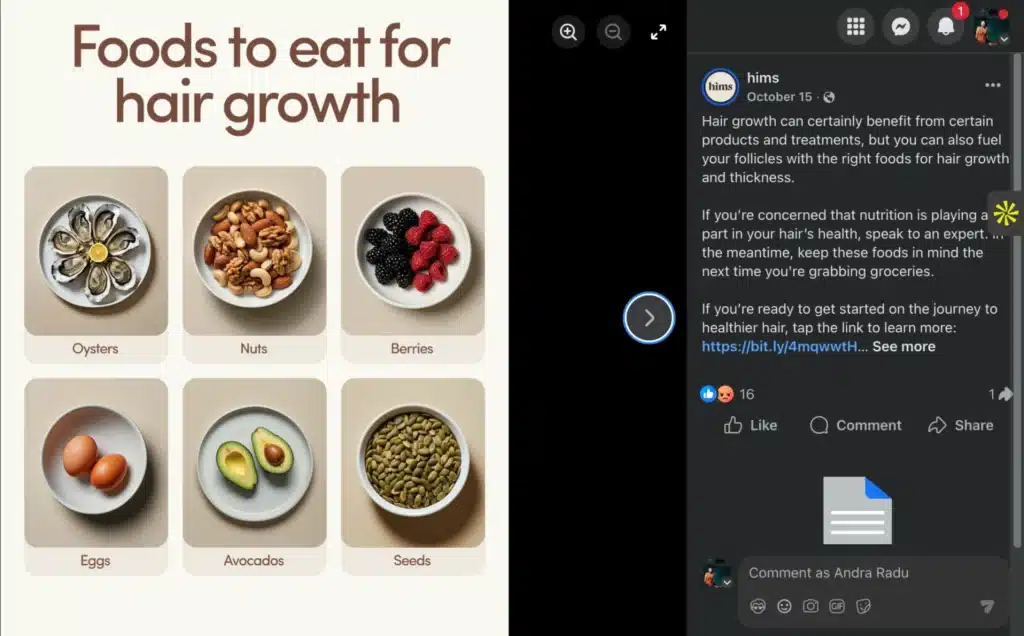
This example keeps things simple. The image shows a small list of foods, each clearly labeled. You don’t need the caption to understand the point. That’s important on a social media platform like Facebook, where people scroll fast.
The caption adds a bit of context and then stops. It doesn’t try to explain everything or sell anything. That’s why posts like this tend to get saved and shared. They feel useful. Over time, these kinds of social media posts help maintain steady Facebook engagement and keep your post content visible.
How to adapt it for your own brand
- Pick one tip your target audience can actually use today
- Use clear post images that explain the idea on their own
- Keep the caption short and practical
- Link to a blog post only when it genuinely adds value
- Post these tips often enough to build consistent content
- Repeat the format with new tips so people recognize it
3. Customer success story highlight
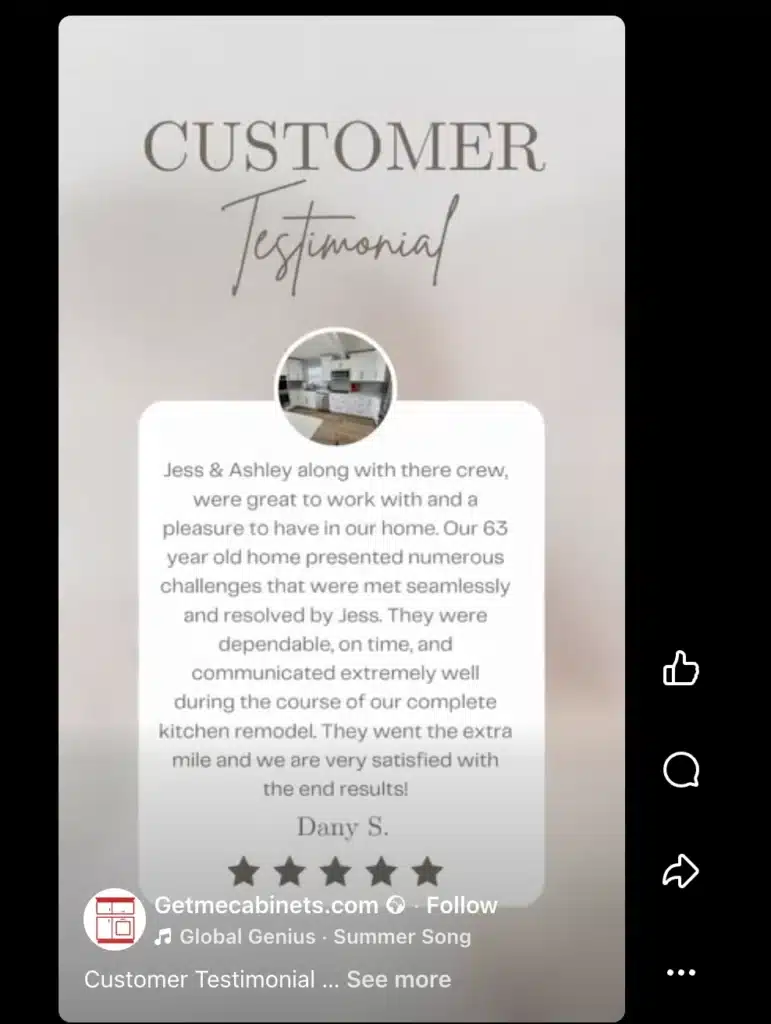
A customer success story works when it feels like someone is simply talking about their experience. This kind of Facebook post doesn’t try to impress. It just shows what it was like to work with you.
That’s why these testimonial Facebook post ideas tend to land well, especially for a small business where trust matters more than big promises.
Why it works
This example reads like a real message someone took the time to write. It mentions the age of the home, the challenges, and how the team showed up during the project. Those details matter. They make the story believable.
The layout stays quiet, which helps. Nothing pulls attention away from the words. For people scrolling through Facebook posts, this feels reassuring. It’s clear social proof without being loud about it. Even when people don’t comment, they stop and read, and that still supports Facebook engagement in a meaningful way.
How to adapt it for your own brand
- Ask customers if they’re happy for you to share their feedback on your Facebook page
- Choose testimonials that describe a real situation, not just general praise
- Keep the text easy to read and avoid cramming too much into one image
- Include a name, initials, or small personal detail
- Mention your product or service naturally, the way a customer would
- Share these posts regularly so your page builds trust over time
4. Question that sparks comments
A question post works when it sounds like something you’d casually ask, not something designed to perform. On Facebook, posts like this fit right in because people are already there to share opinions and small stories.
Why it works
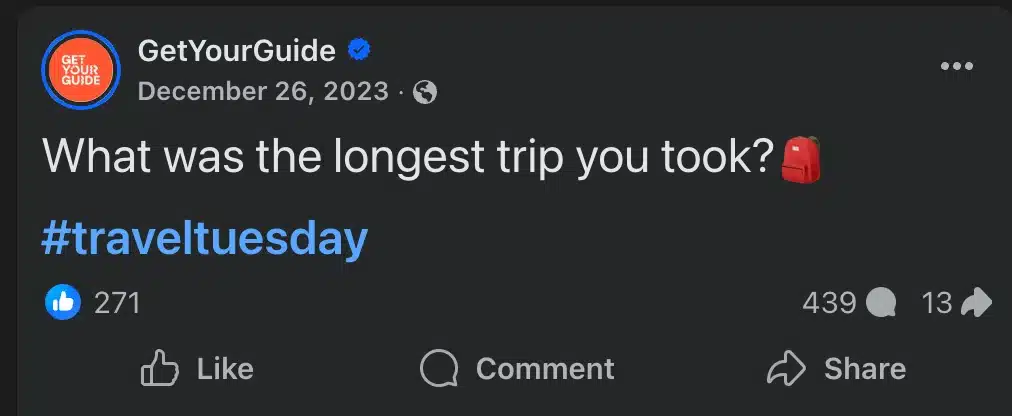
This example keeps everything stripped back. One sentence. One clear question. No setup. Most people already have an answer in mind, so commenting feels natural. Once a few replies appear, others follow along.
The post leaves room for people to talk, and that’s the point. The comments become the content. That early activity helps the Facebook algorithm keep the post visible longer, which is why posts like this often turn into most engaging posts on a page.
How to adapt it for your own brand
- Ask about everyday experiences your Facebook audience already relates to
- Keep the question short and specific
- Use one question per post
- Skip extra explanation and let people respond freely
- Mix these into your regular post ideas
- Share them often enough that commenting feels normal
5. Value-packed carousel post
A value-packed carousel post works well when you need more room to explain something clearly.
On Facebook, this format lets you share important information without cramming everything into one image or long caption. Each slide gives people one thing to focus on, which helps keep Facebook posts readable and easy to follow.

Why it works
In this example, UNICEF uses the carousel to slow the reader down. The first slide states the situation plainly. No extra framing. No distractions. As you swipe, the next slides add context through facts and specific actions being taken. The layout is simple, the text is easy to scan, and each slide feels purposeful.
This works because it matches how Facebook users actually read. People pause, swipe, and take in one idea at a time. The post feels informative rather than overwhelming, which encourages sharing and saves. Over time, posts like this build trust and steady audience engagement, especially when the topic matters to the community.
How to adapt it for your own brand
- Start with the one point you want people to remember
- Give each slide a single message instead of stacking ideas
- Use short sentences and clear wording
- Keep the design consistent so the carousel feels connected
- Add facts, steps, or takeaways that support your message
- Tie the last slide back to your broader Facebook content or ongoing updates
6. Giveaways
A giveaway is one of the Facebook engagement posts that gives people a clear reason to stop, read, and take part. On a social media platform like Facebook, giveaways work well because the action is simple and the reward is obvious. For a business owner, this is one of those post ideas that can bring quick attention without needing complex post content.
Why it works
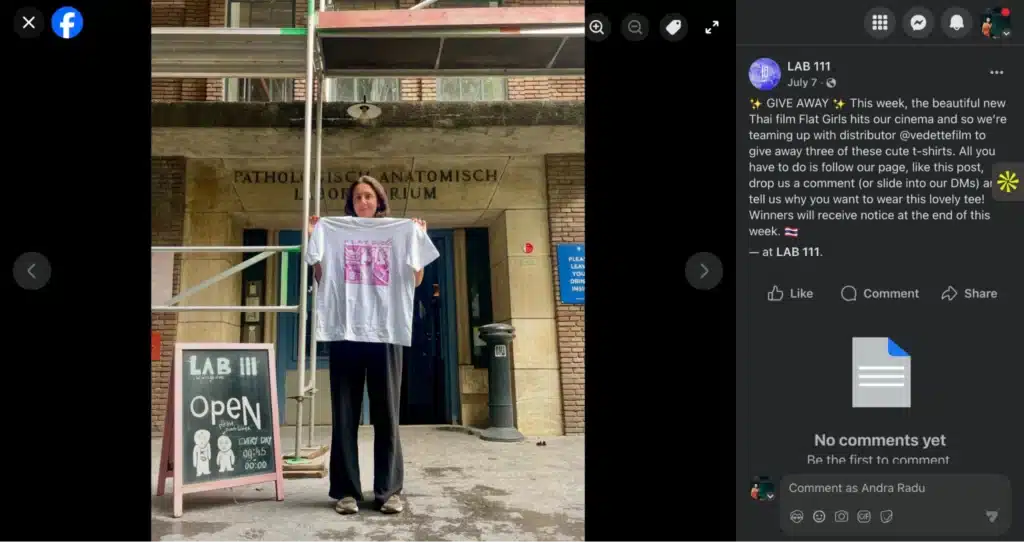
In this example, the giveaway feels grounded and personal. The photo shows a real person, a real location, and the actual prize. Nothing looks overproduced. You immediately understand what’s being offered and who it’s for.
The caption explains how to join in without overcomplicating things. That clarity helps fans engage quickly, which supports more engagement early on. Posts like this often become some of the most engaging posts on a Facebook audience feed because they invite participation instead of passive scrolling. When people comment or tag others, the Facebook algorithm is more likely to keep the post visible.
How to adapt it for your own brand
- Pick a prize that makes sense for your brand’s personality
- Use relevant photos that show the prize clearly
- Keep entry steps short so people act right away
- Ask people to comment or tag someone to generate engagement
- Set a clear end date so the post feels timely
7. Short relatable mini story
A short, relatable mini story works when it sounds like something you’d actually type without thinking too much about it.
On a social media platform like Facebook, these posts feel familiar. They sit comfortably next to friends’ updates and everyday status posts, which makes them easy to react to. This is one of those post ideas that keeps a page active without needing visuals or planning.

Why it works
This example uses one line to describe a moment people recognize immediately. It’s specific, slightly uncomfortable, and funny in a quiet way. That recognition does the work. People react because they’ve been there.
The post blends into the feed because it doesn’t look like branded post content. It reads like a normal update someone might share late at night. That’s why posts like this often turn into most engaging posts. They get quick reactions and comments, which helps the Facebook algorithm keep the post circulating.
How to adapt it for your own brand
- Pull from everyday moments your Facebook audience already relates to
- Keep it short enough to read instantly
- Use plain language that sounds natural, not polished
- Let the line stand on its own without explaining it
- Rotate these into your regular post ideas
- Post them often enough to keep the page feeling current
8. Teaser for an upcoming announcement
A teaser post is useful when you want to let people know something is coming without giving everything away. It works best when the post feels intentional and restrained, not promotional.
On Facebook, this type of post helps set context before a launch or announcement and gives your audience a reason to pay attention over the next few days.
Why it works
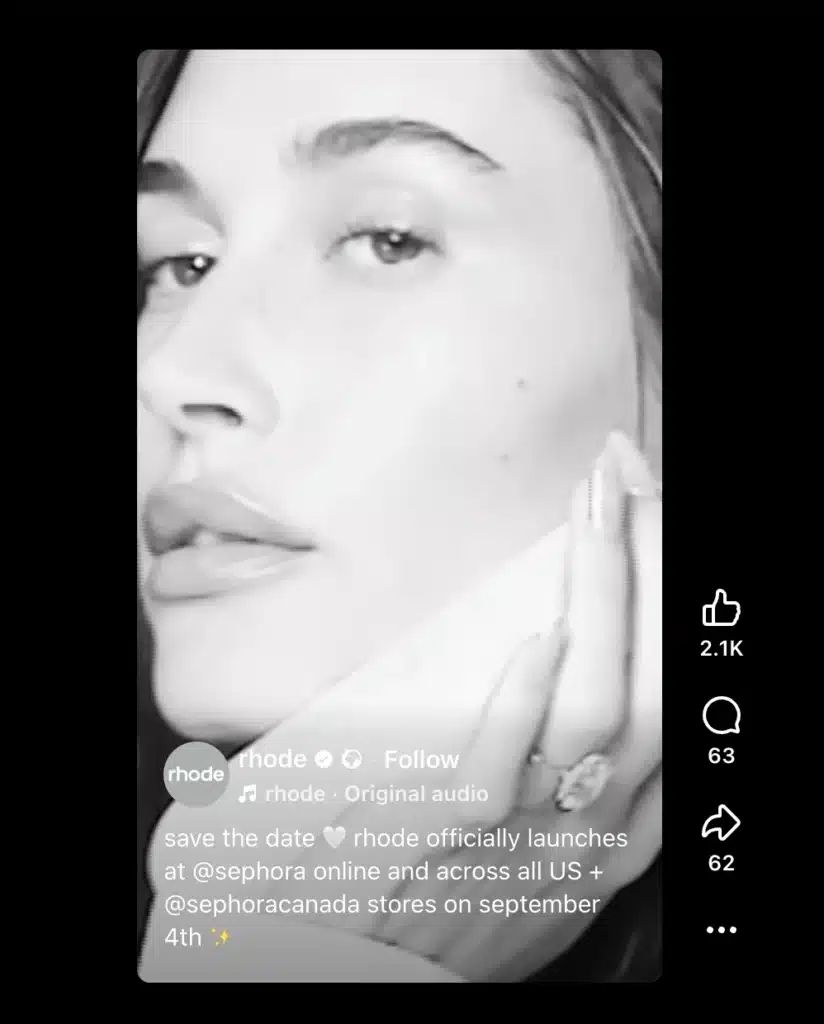
In this example, the post relies almost entirely on the visual. The black-and-white close-up feels calm and deliberate, which makes it easy to stop scrolling. The caption does only one job: it names the brand and the date.
There’s no extra explanation, no stacked messaging. That simplicity makes the post easy to remember and easy to engage with later when the launch actually happens. Posting this ahead of time also creates a natural reason to publish follow-up posts without repeating the same message.
How to adapt it for your own brand
- Pick one image that reflects the tone of what you’re about to announce
- Limit the caption to one concrete detail, such as a date or release window
- Avoid explaining the product or offer in this post
- Use the same visual style in the next teaser or reminder post
- Space teaser posts a few days apart so they feel planned, not repetitive
9. Poll to gather audience opinions
A poll post is an easy way to get people involved without asking them to do much. On a Facebook business page, it gives your Facebook audience something quick to react to, which helps keep Facebook posts active and visible between bigger updates.
Why it works
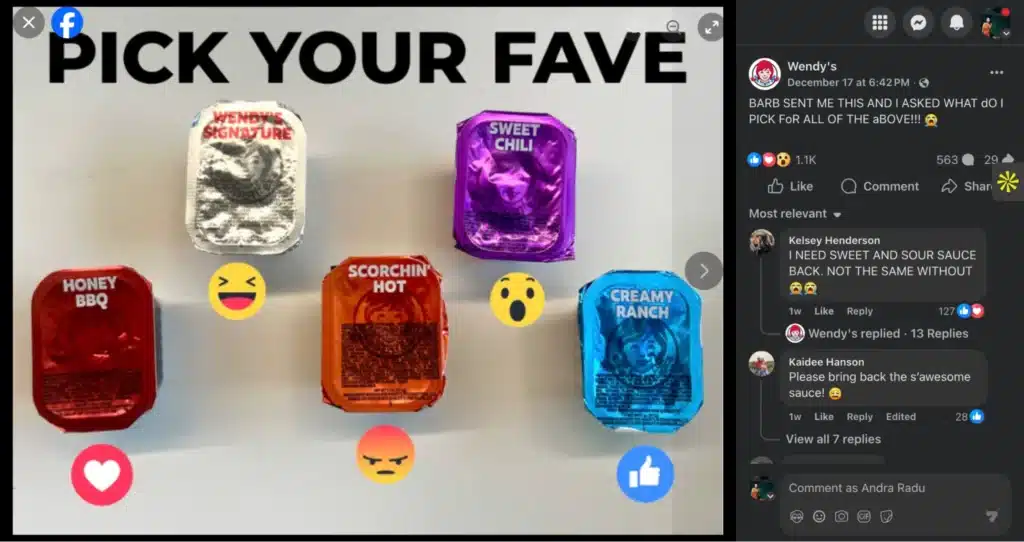
In this example, Wendy’s turns a simple question into a visual Facebook poll. All the sauce options are laid out clearly, and each one is paired with a reaction. You don’t need to read the caption to know what to do. People can react right away.
That’s why the comments fill up fast. Facebook fans jump in to share their favorites, disagree with each other, and tag friends. The post feels light and familiar, but it still ties directly back to the product or service.
At the same time, the brand gets useful customer feedback, better audience insights, and a clear read on audience sentiment without running a formal survey.
How to adapt it for your own brand
- Show all options in one clean image so the choice is obvious
- Stick to three to five options to keep it simple
- Use reactions, emojis, or short labels to guide how people respond
- Keep the caption short and focused on participation
- Watch reactions and comments to spot audience engagement patterns
- Use what you learn to shape future Facebook content or follow-up posts
10. User-generated content feature
A user-generated content feature is one of the easiest ways to make a Facebook page feel real. Instead of brand photos or planned shoots, you’re sharing a moment that already happened.
This kind of Facebook post fits naturally into the feed because it looks like something a person would post, not a campaign.
Why it works
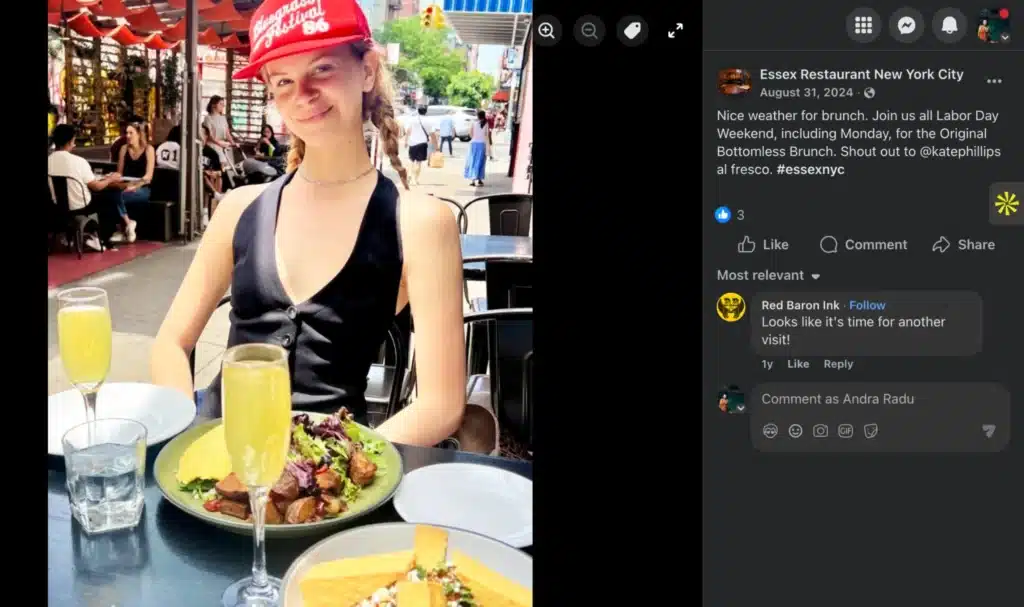
In this example, the restaurant reposts a customer photo from brunch. The lighting isn’t perfect. The setting isn’t staged. That’s exactly why it works. You can picture yourself at the table. The caption stays simple and lets the image do the talking.
The comments show what happens next. Facebook fans react, mention coming back, and tag friends. That interaction doubles as social proof. It reassures potential customers without the brand having to say much at all. Posts like this also feel good for the person being featured, which makes others more likely to tag the brand next time.
How to adapt it for your own brand
- Ask customers if you can reshare their photos or posts
- Pick images that feel natural and show real use of your product or service
- Keep captions short and casual so the post feels human
- Credit the person who shared the photo to encourage more tags
- Save strong UGC and repost it over the next few weeks
- Rotate these into your regular Facebook post ideas so your page stays balanced
Frequently asked questions
1. How to write a good post on Facebook?
A good Facebook post starts with one clear point. Pick one idea and write around it instead of trying to say everything at once. Use simple language, keep sentences short, and make sure the post is easy to understand without extra context.
Strong posts usually match the tone your Facebook audience already responds to and fit naturally into your overall social media marketing strategy. Posting regularly also helps, since consistency gives people a reason to keep paying attention.
2. What should I write on a Facebook post?
Write about things your audience already cares about or recognizes. That can be quick tips, personal stories, customer experiences, or short updates tied to industry news.
Many brands also reuse content from a blog post or turn trending topics into short, readable posts. The goal is to share post content that feels useful, familiar, or relatable instead of polished or sales-heavy.
3. What does a good Facebook post look like?
A good Facebook post is easy to scan. That might mean a short text update, a clean image with a clear message, or a simple video.
Relevant photos and highly visual layouts help, but the message still needs to be clear without explanation. A great Facebook post usually looks like it belongs in the feed, not like an ad dropped into it.
4. What Facebook posts get the most attention?
The most engaging posts tend to invite some kind of reaction. Interactive posts like Facebook polls, guessing games, and short relatable stories often perform well.
Posts that share customer testimonials or show behind-the-scenes moments also get strong responses because they feel grounded.
Over time, posts that generate engagement early are more likely to keep circulating thanks to the Facebook algorithm, which leads to more engagement overall.
5. How can I keep coming up with fresh Facebook content without repeating myself?
Most pages don’t run out of ideas. They run out of structure. A reliable way to keep fresh content ideas flowing is to rotate different types of posts instead of constantly inventing something new. That can include customer success stories, short post videos, an occasional informative post, or updates where you share industry news that’s relevant to your Facebook audience.
You can also reuse the same content in different formats. A long blog post can become short tips, open ended questions, or even short videos. Video content, including sharing YouTube videos, hosting live video, or posting quick Reels, is an excellent way to reach a wider audience and drive engagement, especially when posted at the right time.
Mixing in lighter posts helps too. Holiday posts, references to pop culture, or even a well-placed unpopular opinion can help your Facebook content feel current and spark a deeper connection. For bonus points, add free stuff or simple giveaways, which people love and which can help generate leads and attract new followers.
Ready to start sharing Facebook content
At the end of the day, the posts that work aren’t clever. They’re clear. They show real moments, invite real reactions, and give people a reason to stop for a second instead of scrolling past. When you rely on a few formats you understand and repeat them with intention, posting stops feeling random and starts feeling manageable.
The challenge usually isn’t coming up with ideas. It’s keeping everything organized, consistent, and easy to follow through on. That’s where planning makes the difference. When you can see what’s coming up, reuse what works, and stay on top of conversations, posting feels less like a chore and more like a habit.
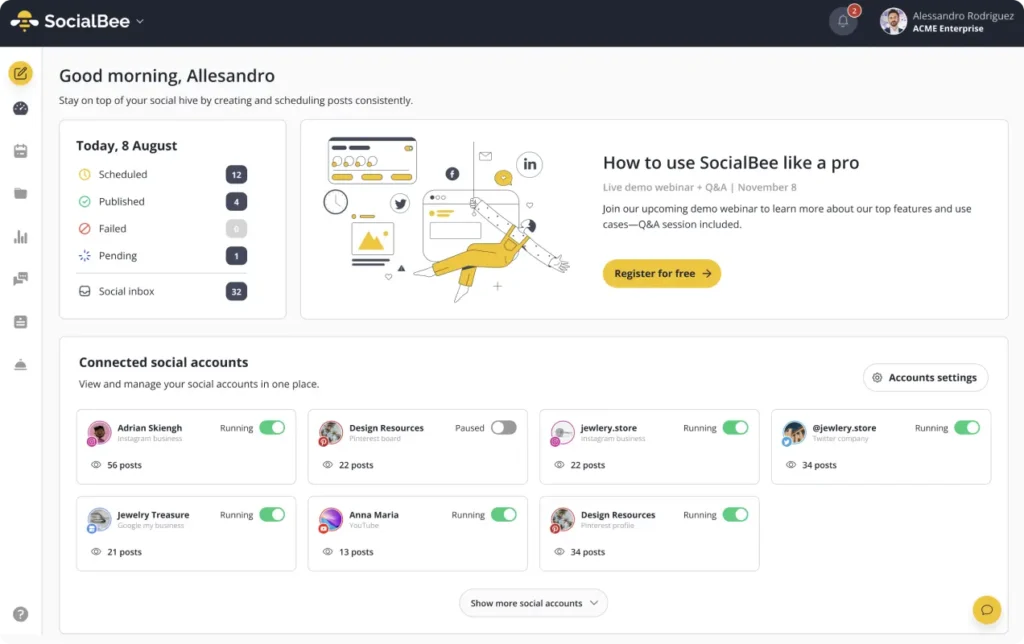
If you want a simpler way to plan, schedule, and manage your Facebook content, start your 14-day free SocialBee trial and build a posting rhythm you can actually keep.