


If going viral were as simple as copying trending content, every brand on TikTok would have millions of followers.
One in two users discovers new brands and products on TikTok, and 61% are likely to buy from a brand after seeing one of its ads. It’s no wonder more businesses are investing in TikTok marketing.
But here’s what happens next: one brand goes viral, everyone copies the format, and almost none of them achieve the same viral success.
The problem isn’t the execution. It’s the thinking behind it.
Most brands focus on the finished video: the trending sounds, the editing style, or the punchline. But creating viral digital content isn’t about copying what’s already worked. It’s about understanding why it worked and building a content strategy around your own brand’s personality, target audience, and cultural moments.
In this article, I’ll break down six brands on TikTok that consistently create engaging content, explain what makes their approach work, and show how you can apply the same ideas to your own social media presence.

Can you do business on TikTok? Here’s what the numbers say
If you’ve been on the fence about TikTok as a business tool, the data is pretty hard to argue with.
TikTok has roughly 1.99 billion monthly active users worldwide, according to Statista. Another Statista report found that almost 40% of TikTok users don’t mind advertising if they get free content in return.
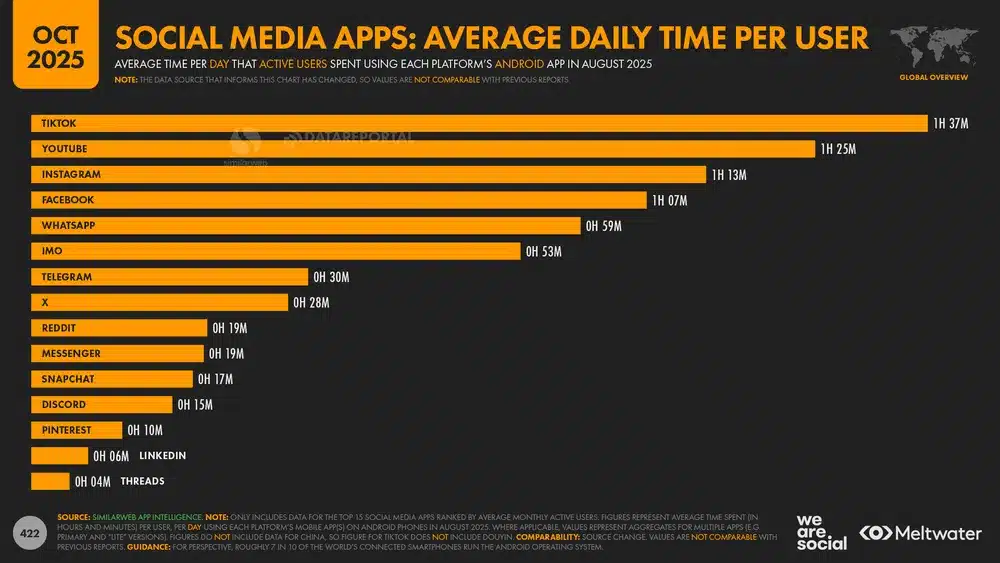
According to DataReportal’s Digital 2026 Global Overview Report, TikTok users spend an average of 1 hour and 37 minutes per day on the app, more than on any other social platform. That’s a lot of attention available to earn.
Now, you might be thinking, “Okay, TikTok has a huge number of active users, and those users spend a lot of time on the platform. So what?”
Well, it turns out that lots of users engage with the content, too. SociaVault conducted a study of 350,000 accounts and found that TikTok’s median engagement rate is 4.25%. That’s more than double Instagram’s 1.81%.
This means that whether you’re a small creator or a large brand, TikTok consistently delivers 2.3x the engagement per follower.
So, if you’re a brand with 50K followers, you can generate the same rate of engagement as a brand on Instagram with roughly 115K followers.
On the commerce side, the numbers have become impossible to ignore. According to Bloomberg News, TikTok Shop generated billions in US sales volume in 2025 as adoption among both consumers and small businesses accelerated.
EMARKETER also projects continued growth in social commerce spending driven by platforms like TikTok, especially among younger consumers who increasingly discover products through short-form video content.
And about 171,000 of those shops are small businesses. Together, they account for more than a third of total US TikTok transactions, according to the platform.
If that’s not convincing enough, over half of social buyers (51%) in the US will shop on TikTok in 2026, according to EMARKETER’s US Social Commerce Forecast 2026.
The advertising landscape on TikTok looks just as promising. The Small Business & Entrepreneurship Council found that more than 7 million US small and medium-sized businesses use TikTok ads. According to WordStream, TikTok ads cost between $0.30 and $1.50 per click, making them among the more cost-effective options for paid reach.
The short answer: Yes, you can absolutely do business on TikTok. The better question is what strategy fits your brand.
What type of businesses use TikTok marketing, and why it’s broader than you think
When people think about brands on TikTok, they usually picture fashion brands, skincare routines, or funny videos aimed at Gen Z. And while eCommerce brands were among the first to find viral success on the TikTok platform, they’re far from the only ones thriving today.
According to DataReportal, the largest group of TikTok users is now between 25 and 34 years old, and older demographics continue to grow. As the audience has matured, so have the types of businesses finding success on the platform.
Today, TikTok is less about what you sell and more about whether you can create content people genuinely want to watch. Whether you’re selling software, offering financial advice, or running a local service business, there’s room to build an engaged community with the right TikTok strategy.
Here are the types of companies thriving on Tiktok:
B2C businesses
Consumer brands still dominate many of TikTok’s most-followed accounts, but the brands seeing consistent engagement aren’t simply uploading product advertisements.
Instead, they build stories around their products. They participate in trends, respond to comments, collaborate with creators, and develop a recognizable personality that people want to follow.
Ryanair is one of the best-known examples. Rather than treating TikTok as another advertising channel, the airline turned its own planes into recurring characters and built an entire content strategy around trending sounds, self-deprecating humor, and internet culture.
Other brands, like Chipotle and Scrub Daddy, use recurring content series, behind-the-scenes videos, customer interactions, and community jokes to keep audiences engaged long after a single campaign ends.
Across industries like retail, beauty, restaurants, travel, fitness, consumer technology, and food & beverage, the most successful brands make their audience feel entertained first. Products naturally become part of the conversation rather than the entire focus.
B2B businesses
For years, B2B companies were told TikTok wasn’t for them. That couldn’t be further from the truth.
Software companies, HR platforms, AI startups, manufacturers, recruitment firms, and marketing agencies are using TikTok to educate their audiences while showing the people behind the business.
ClickUp is a great example. Instead of chasing every viral trend, the brand creates relatable content around productivity, workplace culture, and everyday office frustrations. The result feels native to the platform while still reinforcing its expertise.
Many successful B2B companies also publish product demonstrations, explain industry concepts, answer customer questions, and share founder insights. Rather than trying to appeal to everyone, they focus on creating content that speaks directly to their niche audience.
Professional service businesses
Some of the best-performing businesses on TikTok aren’t selling products at all.
Lawyers explain common legal misconceptions. Accountants answer tax questions. Consultants share practical business advice. Real estate agents give local market updates. Personal trainers demonstrate exercises, while photographers show behind-the-scenes moments from client shoots.
These businesses build trust by consistently teaching something useful.
Short-form educational videos work particularly well because they answer questions people are already searching for. Instead of making a sales pitch, they provide practical advice that helps viewers solve a problem. Over time, that credibility makes people far more likely to become customers.
For service-based businesses, TikTok often becomes a discovery platform where expertise creates brand visibility long before someone is ready to book.
Media and creator businesses
Publishers, podcasts, and media organizations have also found new ways to connect with audiences on TikTok.
The Washington Post is one of the best examples of a publisher adapting to the platform. Instead of repurposing TV clips or headlines, the team creates engaging videos using recurring characters, trending memes, and humour to make current events easier to follow.

That approach turns complicated news into content people actually want to watch—and share. It’s a great example of community building through personality rather than polished production.
SoFi takes a similar approach in a completely different industry.
Instead of posting about financial products, it creates relatable videos around real-life money situations, such as how to refinance with bad credit. Rather than overwhelming viewers with technical jargon, the brand breaks complex topics into short, digestible pieces of educational content that feels genuinely helpful.
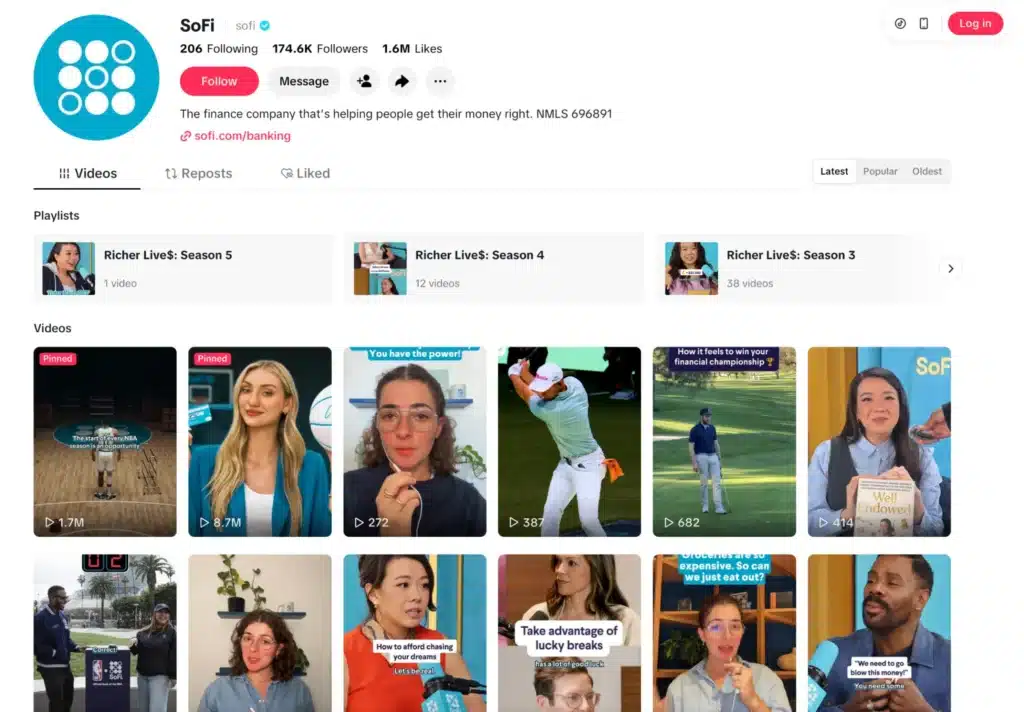
The lesson is simple: audiences don’t expect every business to become an influencer. They simply expect content that feels made for TikTok instead of repurposed from somewhere else.
Nonprofits and public institutions
TikTok has also become a valuable platform for organizations that aren’t selling products or services.
Universities use it to showcase campus life and answer questions from prospective students. Museums share fascinating stories from their collections. Charities raise awareness through personal storytelling, while public institutions explain complex topics in simple, engaging ways.
For these organizations, success isn’t measured by sales. It’s measured by education, community engagement, volunteer recruitment, donations, and public awareness.
Short-form video makes institutions feel more approachable, helping audiences connect with the people and stories behind the organization.
The brands on TikTok worth studying
Going viral on TikTok isn’t about luck. It’s about making the same smart decisions consistently.
When you look at the best brands on TikTok, you start to notice a pattern. They aren’t successful because they have bigger budgets or better cameras. They’ve each found one repeatable strategy that fits their brand and doubles down on it.
That’s why these examples matter.
Instead of copying individual videos, study the systems behind them. Ask what each brand does consistently, why it resonates with its audience, and how you can adapt the same idea to your own business.
Here are six brands succeeding on TikTok in 2026:
- Duolingo: Turn your mascot into a creator, not a logo.
- Chipotle: Turn your comments into content ideas.
- Gymshark: Let your community create the content.
- The Washington Post: Let people become the brand.
- Ryanair: Follow trends without sounding like everyone else.
- Scrub Daddy: Give people a reason to come back.
Duolingo: Turn your mascot into a creator, not a logo
If you’ve spent more than five minutes on the TikTok platform, you’ve probably come across Duolingo.
The language-learning app has become one of the best brands on TikTok, with more than 17 million followers and hundreds of millions of likes. But its success didn’t come from better video editing or jumping on every trend before everyone else.
It came from one strategic decision: turning the mascot into the brand.
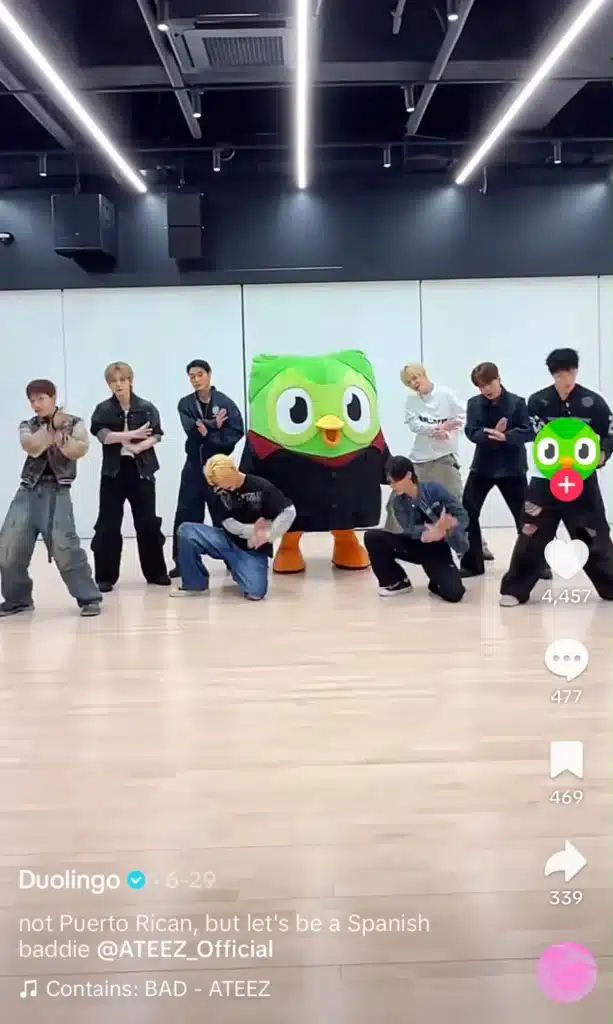
Instead of treating Duo as a character that occasionally appears in promotional videos, Duolingo made him the face of its entire TikTok strategy. He isn’t there to explain app features or encourage downloads. He has his own personality, his own jokes, and his own place in internet culture.

He’s dramatic, chaotic, slightly obsessive about people completing their language lessons, and constantly reacting to TikTok trends, trending memes, celebrities, and other viral moments. Over time, the green owl stopped feeling like a marketing asset and started feeling like one of the platform’s TikTok creators.
That’s an important distinction.
The best brands on TikTok don’t just create videos. They create characters, recurring formats, and creative concepts that people recognise before they even notice the logo.
Because Duo feels like an internet personality, people actively engage with him. The comments section is filled with fans playing along with the joke, creating their own fan videos, and treating the mascot like a real creator rather than a company account. That’s exactly the kind of community building that many brands struggle to achieve.
Perhaps the biggest lesson is that Duolingo rarely leads with its product. Language learning is almost secondary to the entertainment. Yet that entertaining content keeps the brand top of mind, strengthens its TikTok presence, and reaches a much broader audience than traditional advertising ever could.
What marketers can learn from Duolingo
You don’t need a giant green owl to recreate this strategy.
Ask yourself whether your business already has someone who could become the face of your content. It could be a founder, an employee, a fictional spokesperson, or even one of your own characters created specifically for social media.
The key is consistency. Give that character a clear point of view, a recognisable personality, and let them react to relevant trends in a way that feels authentic to your brand.
Most brands try to make every video different. Duolingo proves that keeping one consistent personality while changing the format is often a much stronger social strategy.
Chipotle: Turn your comments into content ideas
One of the smartest things Chipotle does on TikTok has nothing to do with trends or editing.
It listens.
While many brands on TikTok spend hours planning content calendars, Chipotle often gets its best ideas straight from the comments section. Instead of replying with a generic brand response, the team turns customer comments into videos.
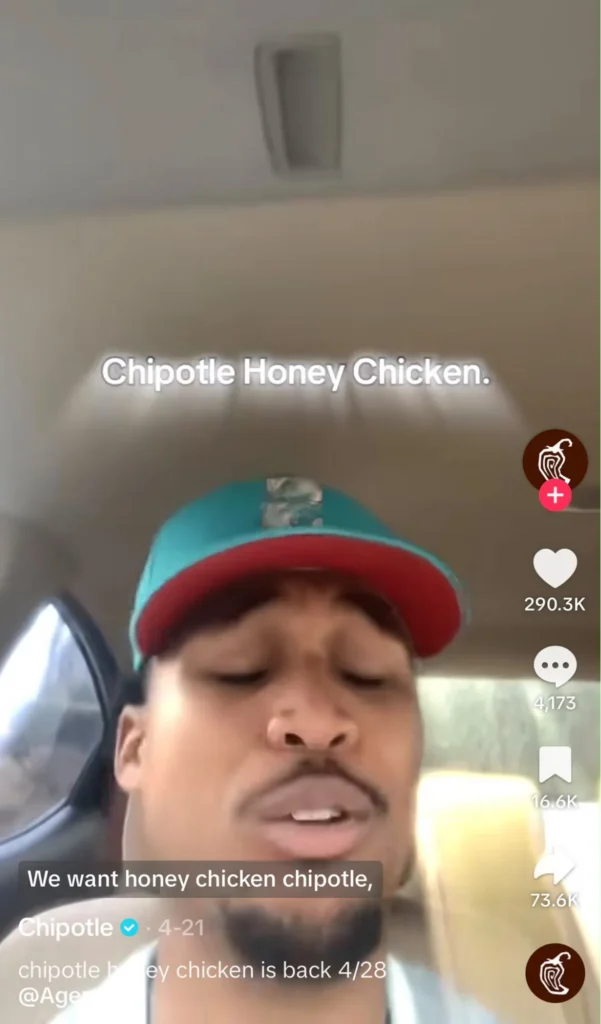
A customer asks for a menu hack? They make it.
Someone jokes about their favourite order? That becomes the next post.
People suggest unusual ingredient combinations? Chipotle tests them on camera.
By creating content around conversations that are already happening, every video has a reason to exist. More importantly, it already has people waiting to watch it.
That approach also makes followers feel involved. People realise their comments might inspire the next video, so they keep coming back, leaving more ideas and interacting with future posts. It’s a simple way to build an engaged community without forcing engagement.
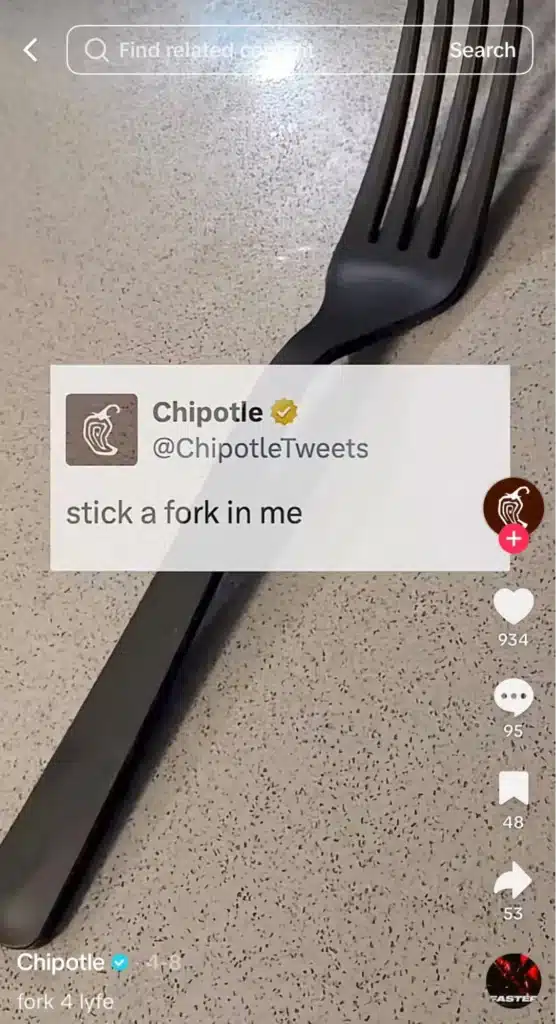
Chipotle mixes these audience-driven videos with behind-the-scenes clips, employee content, food preparation, and occasional influencer partnerships. Together, they create a TikTok page that feels authentic instead of overly planned.
Another reason it works is that the brand doesn’t try to sell in every video. The focus is on entertaining and relatable content first. The food naturally becomes part of the story.
What you can learn from Chipotle
Your audience is already giving you content ideas.
Before planning your next batch of TikTok content, go through the comments on your recent posts. Look for questions that keep coming up, funny observations, product requests, or opinions people agree with.
Those comments can become your next videos.
It’s also a great way to show people you’re listening. When someone sees their comment turned into a video, they’re much more likely to interact again. Over time, that helps build a stronger community around your brand.
Gymshark: Let your community create the content
Many brands assume they need a professional studio, expensive equipment, or polished production to succeed on the TikTok platform.
Gymshark proved the opposite.
The fitness brand grew its TikTok presence by posting consistently, experimenting with different formats, and encouraging its community to create content alongside the brand. Instead of chasing perfection, it focused on showing up regularly and learning what resonated with its audience.
One of the best examples is the #Gymshark66 challenge.
The idea was simple: commit to a habit for 66 days and share your progress on TikTok. The campaign generated 193 million views, not because Gymshark published hundreds of videos itself, but because tens of thousands of people joined in.
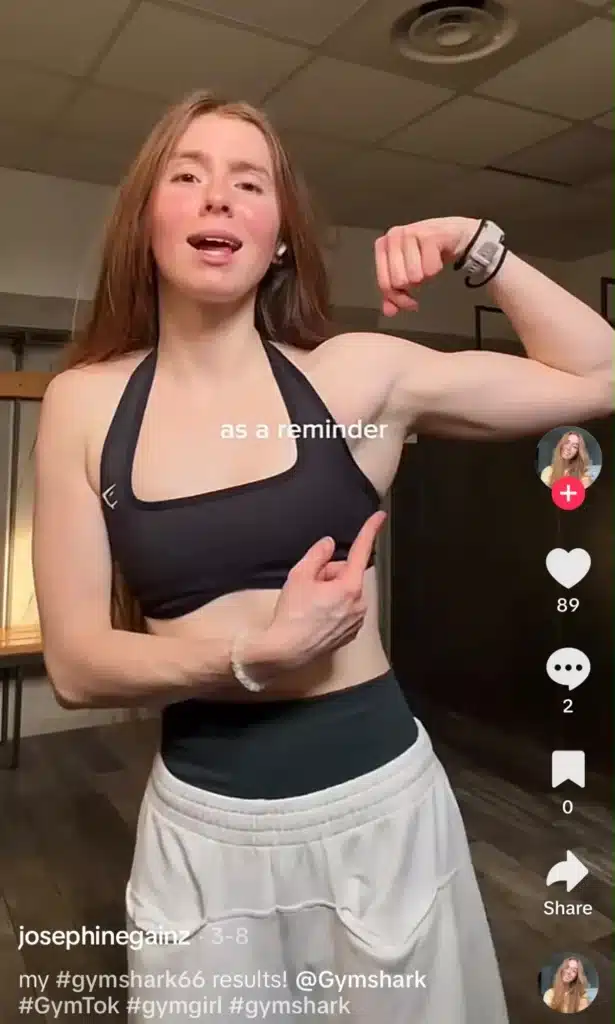
That’s what made the campaign so effective. Gymshark didn’t just create a hashtag. It gave people a reason to participate.
Every workout update, progress video, and milestone became authentic content that inspired even more people to join. Instead of relying only on its own account, the brand turned its customers into creators.
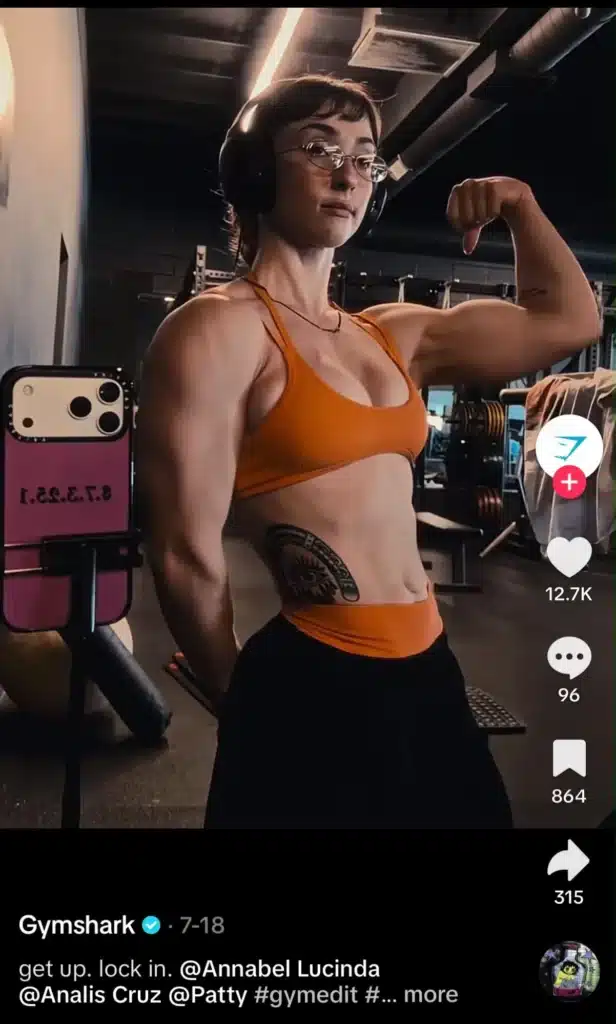
This is a great reminder that some of the best TikTok marketing doesn’t come from the brand itself. It comes from giving your audience something worth sharing.
What marketers can learn from Gymshark
Don’t measure success by how polished your videos look.
Instead, ask yourself whether your content gives people a reason to respond, participate, or create their own version. Challenges, recurring prompts, community initiatives, or even simple questions can generate far more engagement than a perfectly edited video.
If your audience is creating content because of your brand, your reach can grow far beyond your own followers. That’s much harder to achieve with traditional advertising alone.
The best brands on TikTok don’t try to control every conversation. They give people a reason to become part of it.
The Washington Post: Let people become the brand
You probably wouldn’t expect a 148-year-old newspaper to become one of the best brands on TikTok.
Yet The Washington Post has built a TikTok page with more than 1.9 million followers by doing something surprisingly simple: putting its journalists and employees in front of the camera.
Instead of repurposing stories from its website or posting clips that feel like a traditional TV channel, the team creates short-form videos designed specifically for TikTok. Current events become sketches. Breaking news becomes relatable content. Complex topics become conversations that feel approachable rather than intimidating.

Just as importantly, the people behind the videos don’t try to sound like a corporation.
Each presenter has their own personality, sense of humour, and delivery style. That makes the content feel like it comes from creators rather than a media company, helping the brand build a stronger social media presence while reaching younger audiences who might never pick up a newspaper.

The Washington Post also understands that people come to TikTok for entertainment as much as information. Rather than competing with other news outlets, it competes with every other piece of content in someone’s feed. That’s why its videos feel native to the platform instead of adapted from another format.
The lesson applies far beyond publishing. Whether you’re a software company, a local business, or one of many brands on TikTok, people connect with people before they connect with companies.
What marketers can learn from The Washington Post
You don’t need actors or influencers to make this work.
Look around your team. Is there someone who’s comfortable on camera? Someone who naturally explains things well or has a sense of humour that fits your brand?
Give them room to experiment and let their personality come through. The goal isn’t to memorise scripts or sound perfectly polished. It’s to create content that feels human.
As your audience gets familiar with the people behind your business, they’re more likely to stop scrolling, engage with your videos, and remember your brand long after they’ve left TikTok.
Ryanair: Follow trends without sounding like everyone else
Most brands on TikTok jump on trends as soon as they start gaining traction. The problem is that many of them end up sounding exactly the same.
Ryanair does the opposite.
The airline doesn’t follow trends for the sake of it. Instead, it filters every trend through its own personality. Whether it’s a trending sound, a viral format, or a popular meme, the result always feels unmistakably Ryanair.

The airline has fully embraced its reputation for ultra-cheap flights, strict baggage rules, and no-frills service. Instead of trying to hide the jokes people make about the brand, it joins in. The animated plane filter, complete with its expressive face, has become a recognisable character that appears across countless videos.
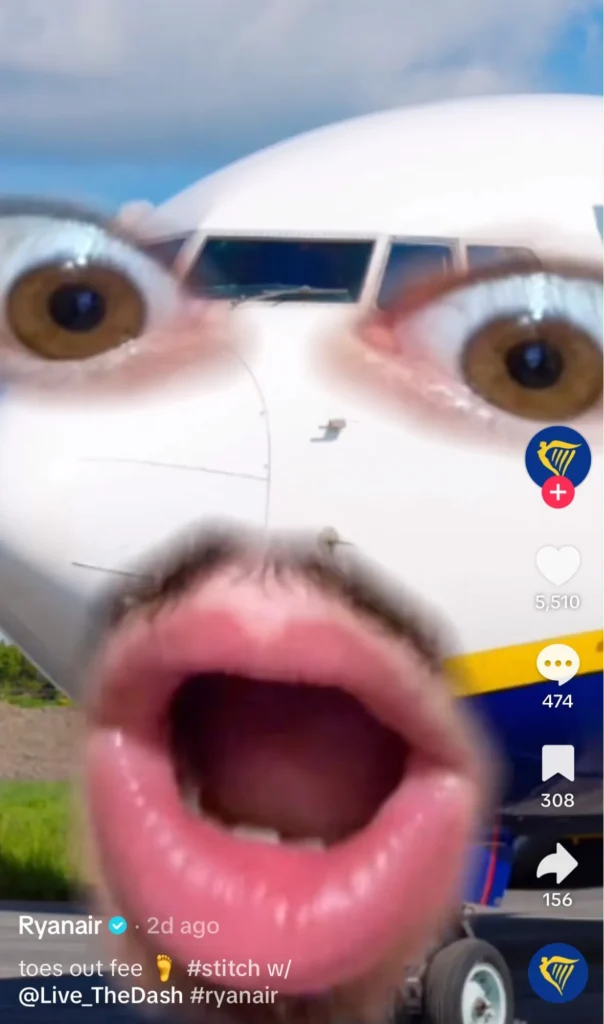
That consistency is what makes the strategy work.
Even when Ryanair uses the same sounds as thousands of other creators, the content feels original because the joke is always rooted in the brand’s personality. You could remove the logo from most of its videos and still know exactly who created them.
The humour doesn’t stop once the video ends either. The brand’s comments section is often just as entertaining, with witty replies that encourage more conversations and keep videos active long after they’re published.
It’s a great reminder that trends don’t build brands. A consistent voice does.
What marketers can learn from Ryanair
You don’t have to participate in every trend.
Before using a trending sound or format, ask yourself one simple question: Could only our brand make this video?
If the answer is yes, you’re probably onto something.
If your version could just as easily be posted by ten other companies, it’s worth rethinking the idea.
The best TikTok marketing doesn’t come from copying trends. It comes from adapting them so they reinforce your personality instead of replacing it. That’s how Ryanair has built one of the most recognisable TikTok pages, proving that even an airline can become one of the best brands on TikTok without taking itself too seriously.
Scrub Daddy: Give people a reason to come back
At first glance, Scrub Daddy doesn’t seem like an obvious TikTok success story. It’s a sponge.
Yet it’s become one of the best brands on TikTok by proving that you don’t need an exciting product. You need a repeatable content strategy.
Instead of constantly inventing new concepts, Scrub Daddy builds recurring series that people instantly recognise. Its satisfying before-and-after cleaning videos, ASMR transformations, and product demonstrations all follow a familiar format. Viewers know exactly what they’re getting, which gives them a reason to come back.

But repeatable formats are only half the strategy.
Scrub Daddy also encourages user-generated content, regularly featuring videos from customers and creators using its products in their own homes. That means the brand isn’t the only one creating content. Real customers become part of the storytelling too.
The result is an endless stream of authentic videos that feel far more relatable than traditional advertising. It’s a great example of how TikTok marketing can scale when your audience helps create the content alongside you.
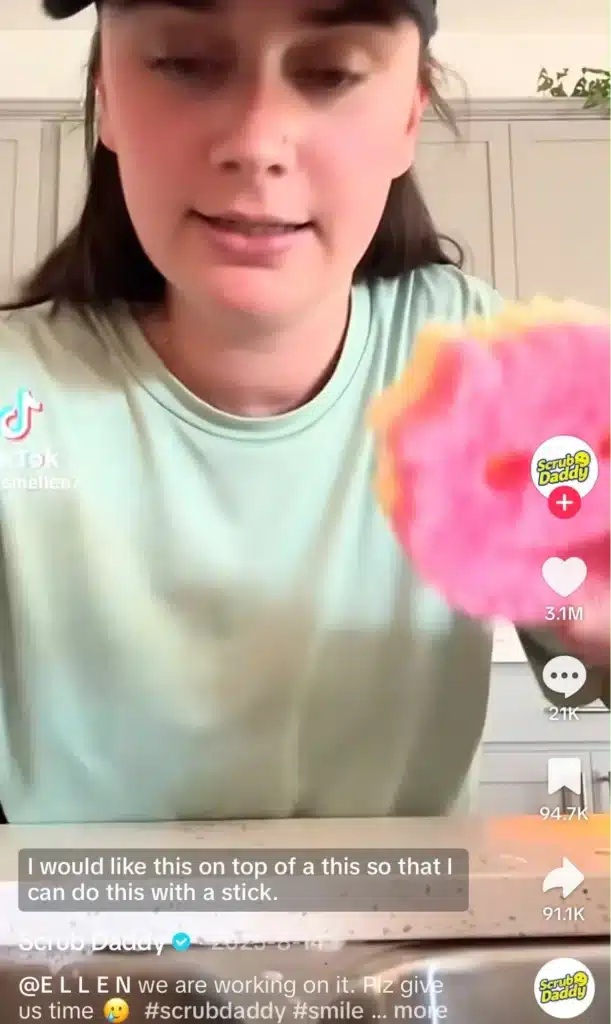
The brand also understands that TikTok is a social platform, not just a publishing platform. It regularly interacts with other brands, joins conversations around TikTok trends, and creates funny exchanges that people genuinely look forward to. Its ongoing interactions with Duolingo have become a running joke that followers actively follow, strengthening both brands without a formal campaign.
This mix of recurring formats, community participation, and a consistent brand voice has helped Scrub Daddy build a memorable social media presence while reaching a much broader audience than cleaning products usually attract.
What marketers can learn from Scrub Daddy
Don’t think about your next post. Think about your next series.
Ask yourself whether you have a format you could repeat dozens of times without it becoming boring. Then look for ways to invite your audience to participate as well.
Could customers recreate your videos? Share their own results? Answer a challenge? Put their own spin on an idea?
The easier you make it for people to participate, the more content your community creates for you.
That’s why some of the best brands on TikTok grow faster than others. They don’t just create videos. They create a system that encourages other people to create content too, turning their audience into one of their biggest marketing assets.
What trending TikTok brands have in common
After looking at all these examples, one thing becomes clear: the best brands on TikTok aren’t trying to sell in every video.
They’re trying to earn attention first.
Whether it’s Duolingo’s mascot, Ryanair’s humour, Gymshark’s community challenges, or Scrub Daddy’s recurring series, each brand understands that people open TikTok for entertainment, not advertisements. The product is there, but it isn’t the reason people keep watching.
That’s why the most successful accounts don’t use TikTok the same way they use other social media platforms or social media channels. They don’t simply repurpose existing campaigns. They create videos designed specifically for how people consume content on TikTok.
They also understand that consistency matters more than constant reinvention. Instead of chasing every new trend, they build a recognisable voice, repeat successful formats, and make it easy for people to recognise their content before they even see the logo.
Another pattern is participation.
The strongest brands don’t expect audiences to sit back and watch. They encourage people to comment, stitch, duet, remix, and create their own content. That interaction turns viewers into active participants and helps ideas spread far beyond the brand’s own audience.

Finally, they understand that TikTok is an entertainment platform first.
Even brands selling everyday products compete with creators, comedians, and entertainment brands every time someone opens the app. The businesses that succeed are the ones that educate, entertain, or inspire before they try to promote brands, products, or services.
If there’s one takeaway from these brand breakdowns, it’s this: stop asking how to advertise on TikTok and start asking why someone would choose to watch your next video. That shift in mindset is often what separates an average TikTok account from one people genuinely want to follow.
How to apply these TikTok tactics to your own business
The brands in this article have different audiences, products, and goals. What they have in common is that they all made one strategic decision and repeated it consistently.
You don’t need a viral mascot or millions of followers to see results. Start with one idea, test it, learn from it, and build from there.
1. Choose one strategy and stick with it
Don’t try to copy every brand at once.
Instead, pick the example that feels most relevant to your business.
If you’re a service provider, The Washington Post’s people-first approach might be the easiest place to start. If you sell products, Scrub Daddy’s recurring series or Chipotle’s comment-driven content may be a better fit. If your brand already has a strong personality, take inspiration from Ryanair or Duolingo.
Give yourself at least a month before deciding whether a strategy is working. TikTok rewards consistency more than constant reinvention.
2. Build a few repeatable content formats
The best TikTok accounts don’t reinvent themselves every week.
Instead of asking, “What should we post today?”, create three to five formats you can return to over and over again.
That could be:
- Behind-the-scenes videos
- Customer stories
- Product demonstrations
- Weekly tips
- Myth-busting videos
- Team moments
- Replies to customer questions
Having repeatable formats makes content planning much easier and helps people recognise your videos in their feed.
3. Plan your content in advance
Consistency is difficult when you’re creating every video on the day you want to post it.
Set aside time to record multiple videos in one session, then spread them across the coming weeks. Even recording five or six videos at once can remove the pressure of having to come up with new ideas every day.
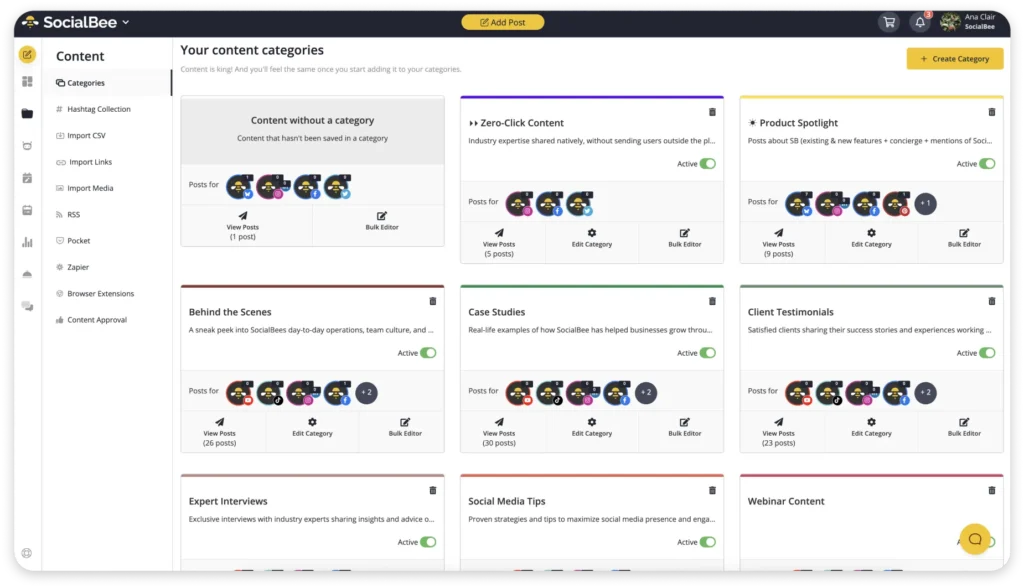
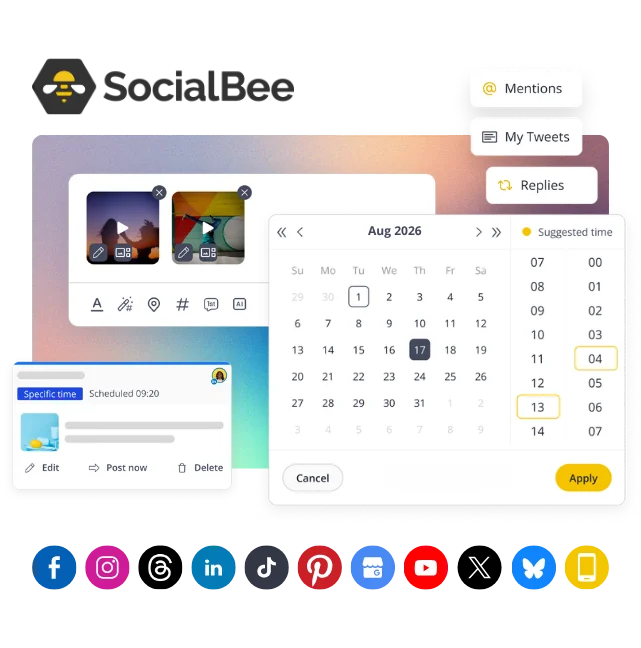
With SocialBee, you can organise your ideas into content categories, schedule posts ahead of time, and keep a consistent posting rhythm without relying on last-minute inspiration.