
Guest Author
Real estate social media marketing is already a meaningful source of business for agents. According to the National Association of REALTORS® 2025 Technology Survey, 75% of realtors use social media professionally, and 39% said social media generated their highest number of quality leads.
The question, then, isn’t whether real estate agents should use social media. It’s which social media platforms deserve their time, what content actually helps potential buyers and sellers, and how to turn that attention into inquiries rather than simply collecting likes.
In this guide, we’ll look at the best social platforms for real estate professionals, how to build a content strategy around your real estate listings and local expertise, proven strategies for generating leads, and the metrics that show whether your social media marketing is contributing to your real estate business.

We’re SocialBee LABS SRL, part of WebPros. We use the information you provide to share relevant content & updates, as outlined in our Privacy Policy. You can opt out anytime.
Short Summary
- Social media can help real estate agents generate high-quality leads, build local visibility, earn referrals, and stay connected with past and new clients.
- You don’t need to use every social media platform. Focus on the channels that best match your target audience, local market, and the content you can create for consistent posting.
- Mix real estate posts with educational content, neighborhood insights, market updates, and client results instead of only promoting listings.
- Turn social media attention into leads by giving future clients a clear next step, such as viewing a listing, registering for an open house, or contacting you directly.
- Use analytics to identify what drives meaningful results, then use a tool like SocialBee to plan, schedule, manage, and measure your content from one place.
Do real estate agents need social media marketing?
For most real estate agents, yes. Social media can support lead generation, referrals, local visibility, and ongoing relationships with past clients, although it shouldn’t replace your website, CRM, MLS, email marketing, or referral strategy.
Here’s where social media can make a difference for your real estate business:
- Reach potential clients in your local market: Sharing neighborhood tours and local events and market updates can put your name in front of people who are actively interested in buying or selling in the areas you serve.
- Generate and nurture leads: Every useful social media post gives potential clients another opportunity to discover your business and start a conversation. Staying active also keeps you visible to past clients who may need an agent again or recommend you to someone else.
- Build trust before someone contacts you: Educational content can show potential buyers and sellers that you understand the questions and decisions they’re facing. This is especially useful for audiences such as first-time homebuyers who may need more guidance before they’re ready to speak with an agent.
- Show properties beyond listing photos: Video content can give buyers a better feel for a property before they schedule a viewing. For example, you can use short-form video for quick walkthroughs and longer virtual tours when a property needs more context.
- Reach more relevant audiences with paid ads: Paid social campaigns let you put listings and other marketing materials in front of people based on factors such as location, rather than depending only on the organic reach of your social media accounts.
- Learn what potential clients care about: The questions people ask and the content that keeps the audience engaged can reveal useful patterns. If posts about mortgage costs and budget analyses consistently prompt real conversations while generic listing posts don’t, that’s a signal to create more content around the financial questions buyers are asking.
Social media can also improve your broader online discoverability by exposing more people to your name, listings, website, neighborhood content, and Google Business Profile. However, it’s better treated as a distribution and awareness channel than as a direct Google ranking tactic.
And in real estate, bigger reach isn’t necessarily better. Reaching people who live in or want to move to your local market matters more than building a large but geographically irrelevant audience. The next step is figuring out which social media sites can help you reach those people.
Choose the right social media platforms for real estate
You don’t need to be active on every social media platform to make real estate social media marketing work. For most agents, it’s better to choose two or three channels that match your target audience and the type of content you can create consistently.
The 2026 NAR Member Profile shows how real estate professionals currently use different social platforms. Facebook leads at 76%, followed by Instagram at 57%, LinkedIn at 55%, YouTube at 31%, and TikTok at 16%. Popularity among other agents is useful context, but it shouldn’t be your only deciding factor. Your local market, client base, and content strengths matter too.
Platform | Best real estate use |
Local communities, listings, open houses, and relationships with past clients | |
Property visuals, Reels, Stories, and agent brand identity | |
Commercial real estate, referrals, market expertise, and professional networking for business growth | |
TikTok | Short educational videos, property tours, local discovery, and younger audiences |
YouTube | Detailed property and neighborhood tours, plus evergreen educational content |
Home inspiration, design, renovations, and neighborhood or lifestyle discovery | |
X | Market news, commentary, and networking with real estate industry professionals |
For many residential real estate companies and agents, Facebook and Instagram are natural starting points. Facebook is useful when local connections matter. Beyond posting to your own social media pages, relevant Facebook Groups can help you follow neighborhood conversations and understand what people in your area are asking about. Instagram is a visual medium, making it particularly well suited to high-quality images, listing photos, short-form video, Instagram Stories, and neighborhood content.
TikTok and YouTube become more valuable if video is central to your strategy. A short video answering “How much do you need to buy your first home in [city]?” can work well on TikTok, while YouTube gives you room for a detailed neighborhood tour or an explanation of the local buying process. Useful video content can demonstrate your knowledge long before a potential buyer is ready to contact you.
LinkedIn makes more sense when professional relationships are particularly important, such as in commercial real estate or referral-driven businesses. Pinterest and X can also have a place, but only when their strengths match your audience and real estate marketing goals.
Once you’ve chosen your priority social media channels, avoid copying the exact same post into every account. The underlying idea can stay the same, but the format and message should fit how people use each platform. A new listing might become an Instagram Reel, a Facebook post with showing details, and a longer YouTube walkthrough.
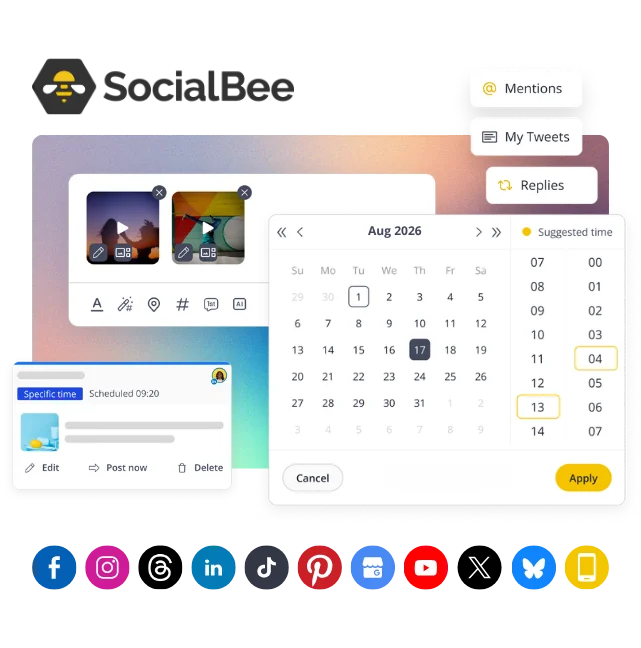
With SocialBee, you can create platform-specific versions of a social media post and schedule them from the same dashboard instead of manually rebuilding the content in every app. This makes it easier to manage Facebook, Instagram, LinkedIn, TikTok, YouTube, Pinterest, X, and other social media accounts while still adapting your content to each platform.
11 real estate social media marketing strategies you should know
The best real estate social media strategies have a clear purpose behind them. Your content should help you reach potential clients, show what you know about the local market, build relationships, or generate leads. The following strategies will help you decide what to post, where to focus your efforts, and how to turn social media activity into real opportunities for your business.
Here are 11 real estate marketing tips you can put into practice:
- Define your social media goals
- Understand your buyers, sellers, and local market
- Choose the platforms worth your time
- Build a balanced real estate content mix
- Create property content people want to watch
- Show your expertise and client results
- Make your content locally relevant
- Turn social media engagement into leads
- Build relationships with prospects and past clients
- Measure performance and improve your strategy
- Automate repetitive social media work
1. Define your social media goals
Decide what you want social media to contribute to your real estate business before deciding what to post. Your goal might be:
- Generating qualified leads
- Attracting potential buyers to new listings
- Earning referrals
- Building brand awareness in a specific neighborhood
- Driving more website traffic
The important part is connecting your marketing efforts to an outcome you can measure. If lead generation is your priority, for example, track inquiries, contact-form submissions, and booked consultations rather than judging social media success primarily by likes.
You can have more than one goal, but give each one a clear role. This makes it easier to decide which social media content deserves your time and which metrics actually matter.
2. Understand your buyers, sellers, and local market
Your target audience should shape both what you talk about and how you talk about it. A first-time homebuyer trying to understand closing costs needs different content from a luxury buyer evaluating neighborhoods or a homeowner deciding whether it’s the right time to sell.
Start with your existing client base. Look for recurring questions, concerns, locations, budgets, and motivations among the people you’ve successfully worked with. Then compare those patterns with the audience demographics and engagement data available through your social media accounts.
This is also where analytics can make audience research more concrete. SocialBee provides audience demographics and engagement insights across supported social media platforms, helping you see who follows your accounts and which content earns their attention.
Use SocialBee’s audience insights to better understand who engages with your social media content and target specific demographics.
3. Choose the platforms worth your time
Once you know which online platforms you want to focus on, give each one a clear role in your strategy. You can reuse the same core content idea without posting the exact same thing everywhere.
For example, a neighborhood tour could become a short Reel for Instagram, a longer walkthrough for YouTube, and a Facebook post inviting locals to share their favorite places in the area. The topic stays the same, but the format and angle change to suit each platform.
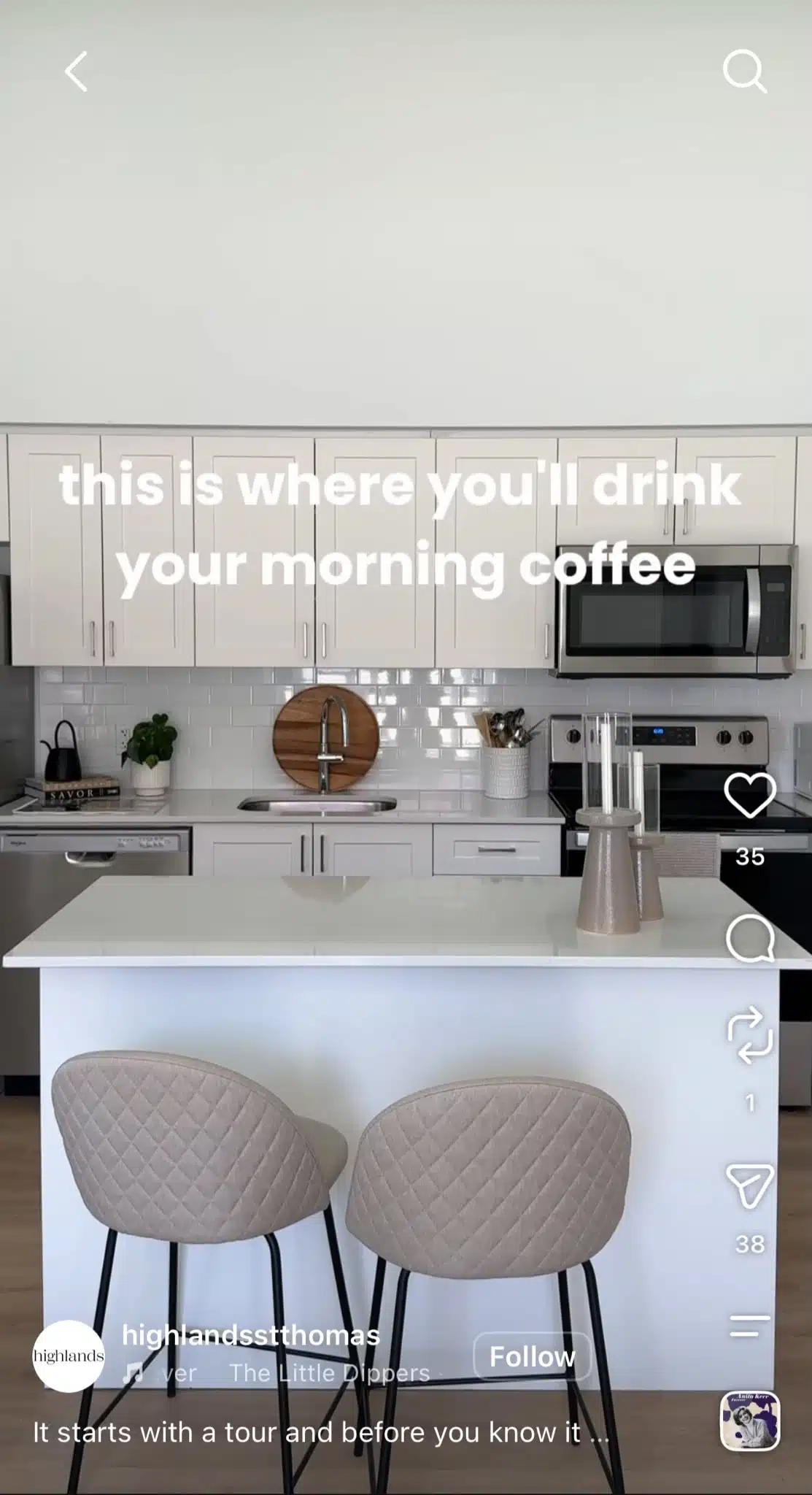
This approach helps you get more value from the content you create without making your social media accounts feel repetitive.
4. Build a balanced real estate content mix
If every social media post is a new listing, your accounts quickly become another property feed. Give people reasons to follow you even when they aren’t ready to buy or sell.
A useful content mix can include listings and open houses alongside market updates, home-buying advice, client stories, neighborhood information, and answers to questions you regularly hear from potential clients. The balance will depend on your audience and goals.
This also makes creating a social media content calendar easier. Instead of asking, “What should I post today?”, you can plan around recurring content themes and make sure self-promotion doesn’t dominate your feed.
For example, one week could include a new listing, a short video answering a buyer question, a neighborhood tour, and an informative post explaining a change in the local market. Each post serves a different purpose while supporting the same real estate business.
5. Create property content people want to watch
High-quality images still matter in real estate, but property marketing shouldn’t stop with listing photos. Use video content to show details that are difficult to communicate through a static gallery, from how rooms connect to what the street and surrounding neighborhood actually look like.
Short-form video works well for quick walkthroughs, standout property features, and previews of new listings. Longer virtual tours can give serious potential buyers a more complete look before they arrange an in-person viewing.
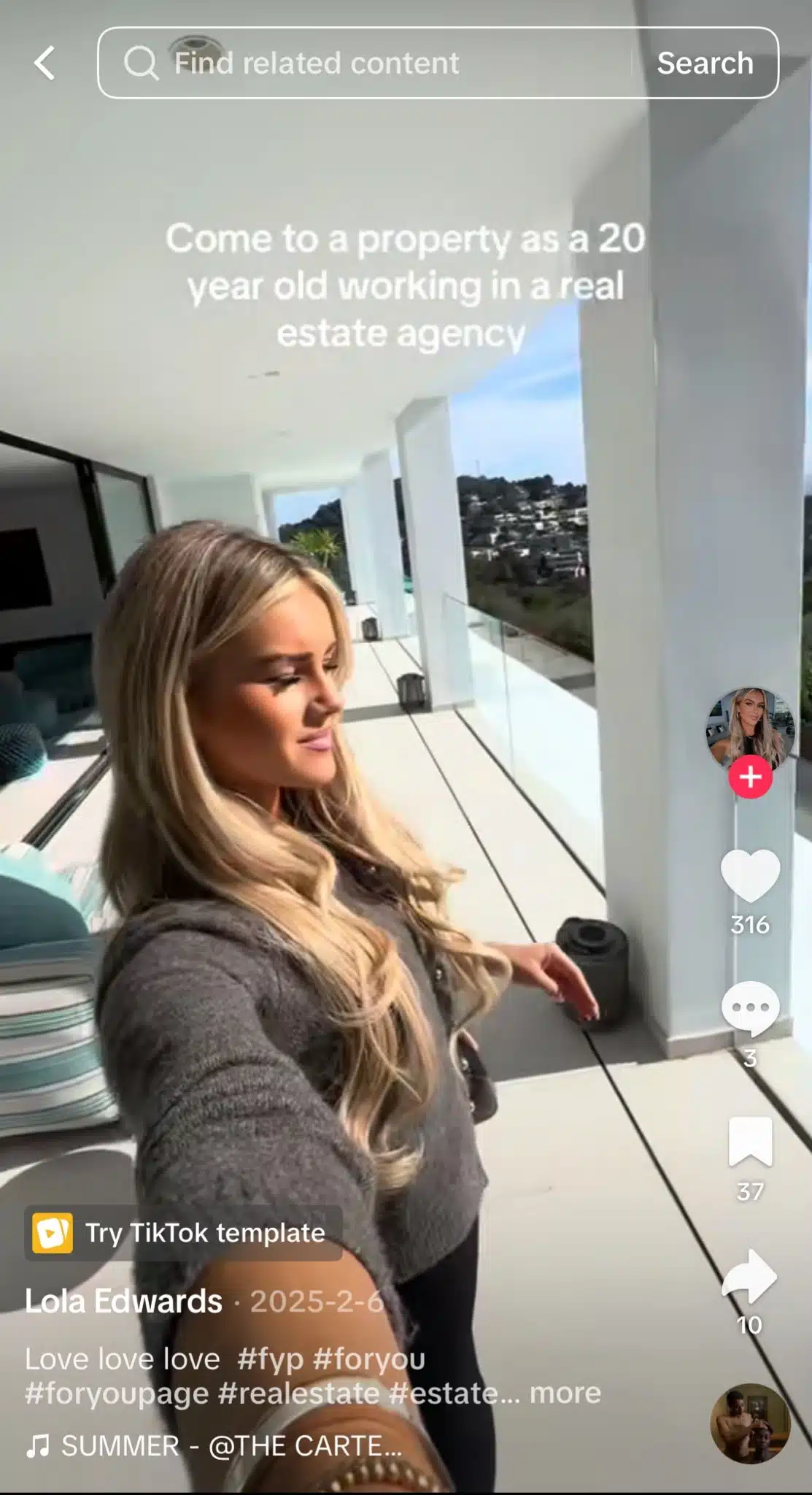
Think about the property itself before deciding how to present it. Daniel Heider, founder of the Heider real estate team, explains:
“We like to think that every property emits its own sort of frequency … it’s our job to figure out what that is and create a tailored marketing strategy that feels authentic and exciting.”
That principle is useful beyond luxury real estate. A historic townhouse, family home, downtown condo, and rural property shouldn’t automatically receive the same creative treatment. Identify what makes the property interesting to its likely buyer and build your photos, short video, and supporting copy around that.
6. Show your expertise and client results
People considering an agent want evidence that you understand the market and can help them through the process. Your social media presence should provide that evidence before they ever contact you.
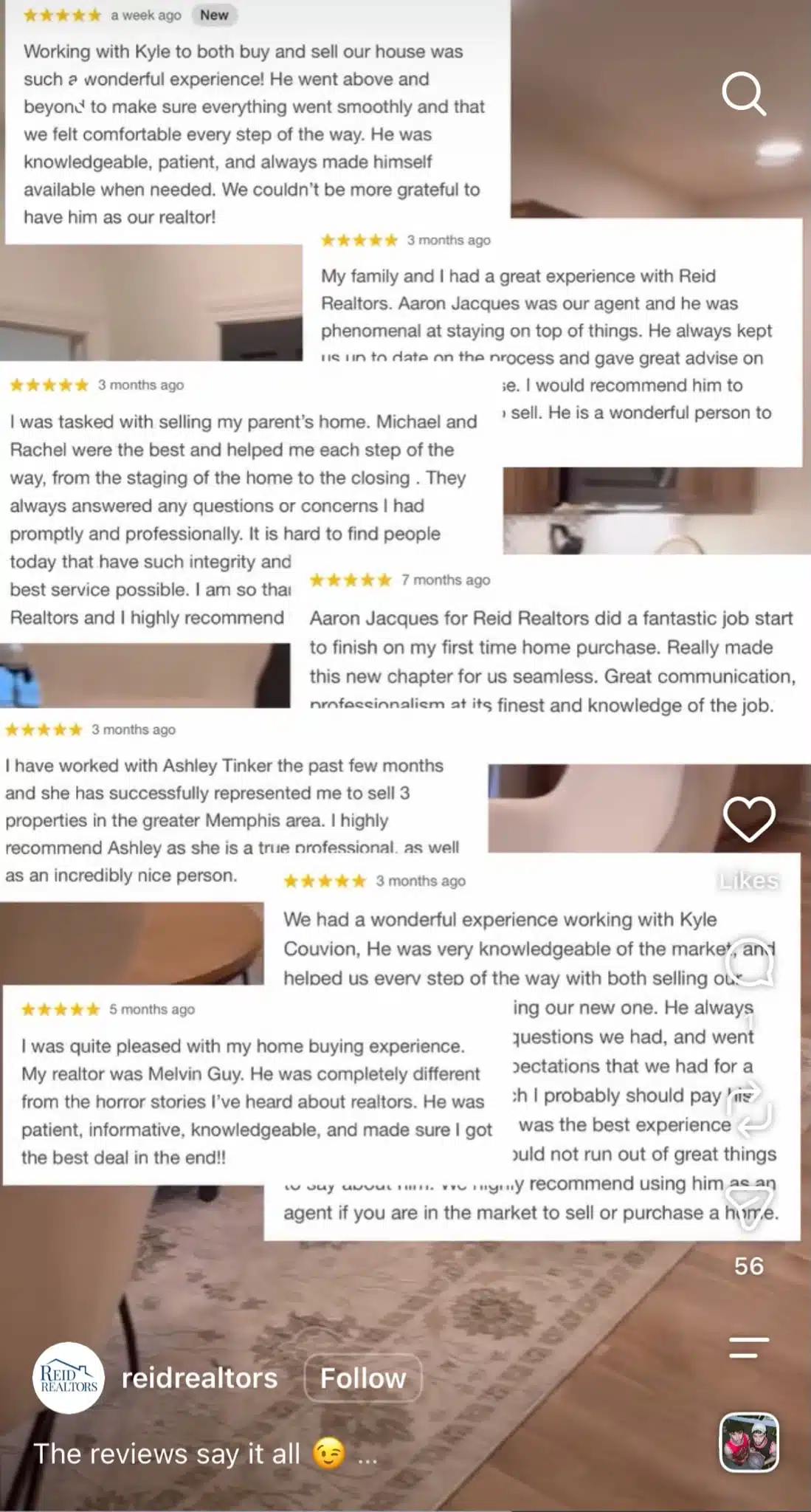
Client testimonials are one way to do it, but avoid turning every positive review into the same branded quote graphic. A short client video, closing story, case study, or testimonial carousel can provide more context about the problem you helped solve.
- Educational content demonstrates expertise from another angle. You can:
- Share quick tips for first-time homebuyers
- Explain what local market trends mean
- Answer common seller questions
- Break down a complicated part of a transaction in plain language
The strongest social proof combines what you know and what you’ve accomplished for real clients.
7. Make your content locally relevant
Real estate is local, and your social media content should reflect that. Showing that you understand the neighborhoods and communities you serve gives potential clients a reason to follow you beyond your property listings.
Instead of simply adding a city name to a caption, share content that’s genuinely useful to people interested in the area. Create neighborhood tours, highlight local businesses, talk about new developments, or explain what current market trends mean for buyers and sellers in your community.
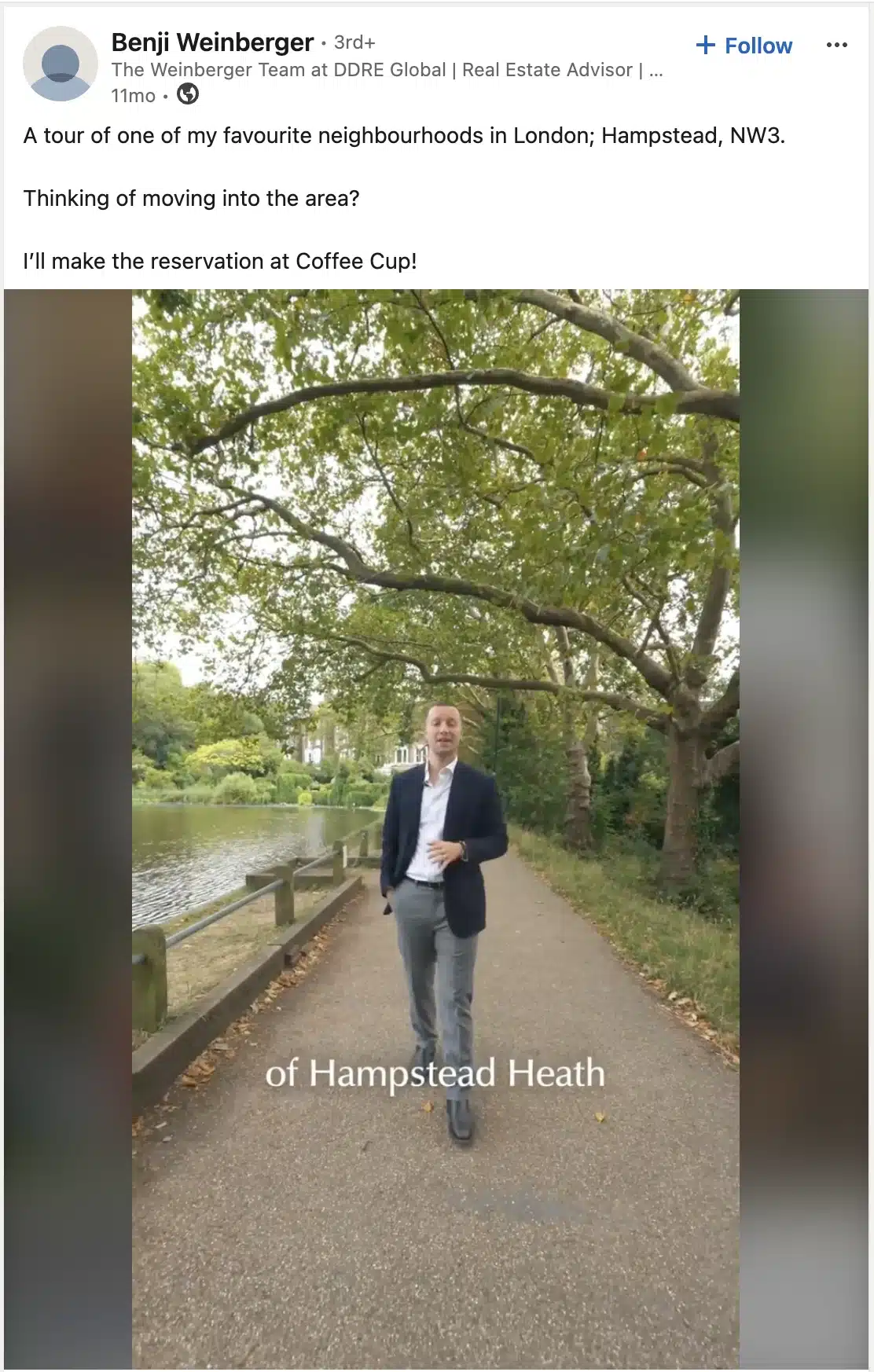
For example, a post saying “Home prices fell 3%” provides information, but “What a 3% drop in home prices means for first-time buyers in [neighborhood]” gives that information a local angle your target audience can actually use.
For instance, an educational guide created by Real Estate Skills explores house flipping strategies in North Carolina, offering tailored industry insights specifically designed for real estate investors in that market.
Your social media presence can also direct more people to useful local resources on your website or Google Business Profile. Think of social media as another way to distribute that content and strengthen your local visibility, rather than as a replacement for local SEO.
8. Turn social media engagement into leads
Reach and engagement only become valuable to your real estate business when interested people have a clear next step. If you know how to leverage social media well, it can be much more efficient than classic cold-calling.
Make it easy for someone to move from a social media post to a conversation. Depending on the content, that could mean visiting a listing page, requesting a property guide, registering for an open house, joining a webinar, completing a contact form, or sending you a direct message.
Match the call to action to the person’s level of intent. Someone watching a neighborhood video may not be ready to “book a consultation,” but they may happily download a neighborhood guide or ask for current listings in that area.
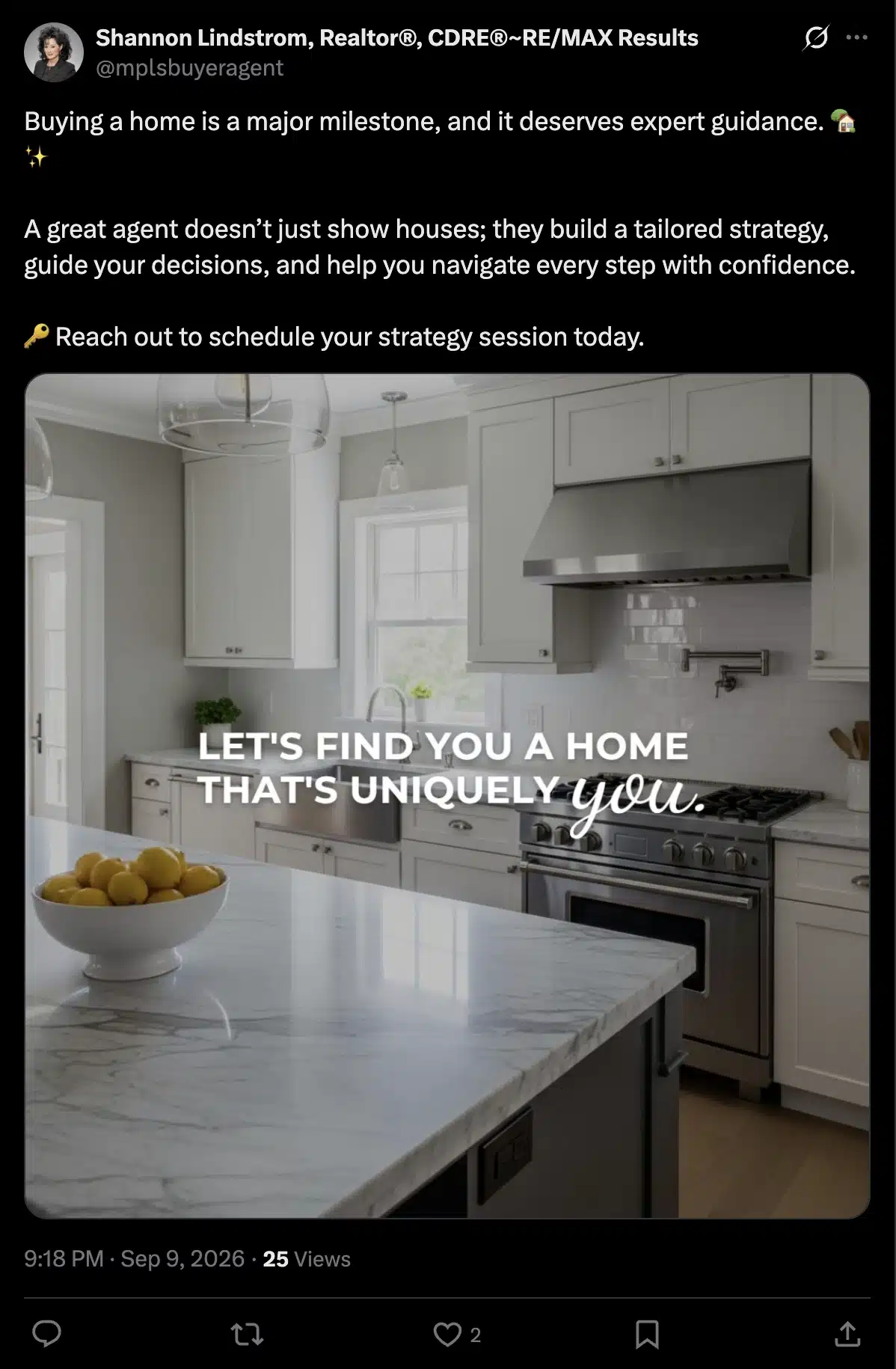
The goal is to generate quality leads, not collect as many contact details as possible. A smaller group of qualified leads with genuine interest in your local market is worth more than a large database of people who are unlikely to become clients.
9. Build relationships with prospects and past clients
Posting is only half of social media marketing. The conversations around your content can be where potential clients start deciding whether they trust you.
Respond to comments and direct messages, answer questions, and acknowledge feedback so your audience knows there’s a real person behind the account. You can also use polls, questions, and live Q&As to start conversations and find out what potential clients want to know.
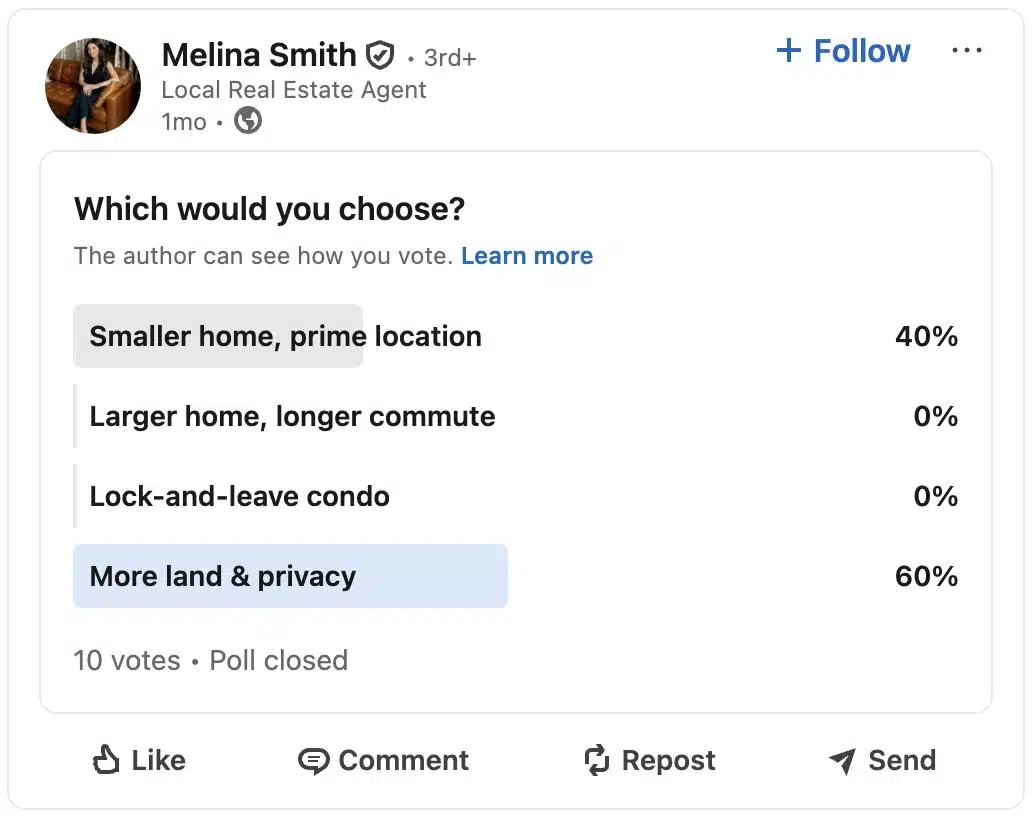
That familiarity can make it easier for someone to reach out when they’re ready to buy or sell. Choosing an agent is a high-trust decision, and regular interactions give potential clients a chance to get to know you before that first conversation.
Las Vegas REALTOR Cindy Mae Hawkins describes the effect this can have on lead quality:
“My clients feel more like warm leads because there’s already a rapport built from seeing my content. People often reach out because they already feel like we’ll work well together and that changes everything about the first conversation.”
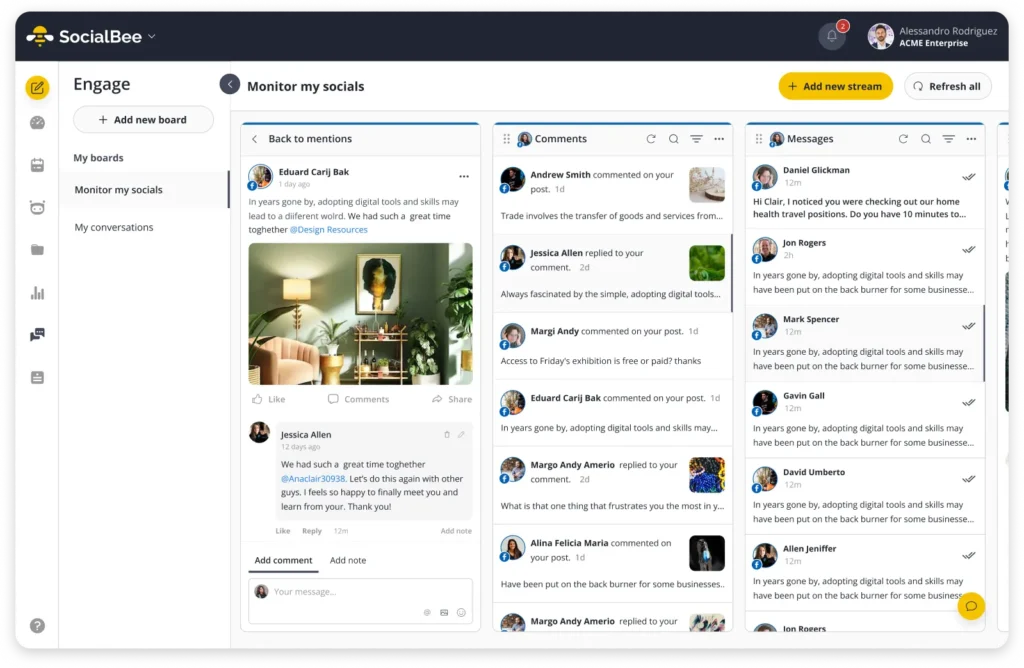
Staying responsive becomes harder as you manage more social media accounts. SocialBee’s social inbox brings comments, mentions, and messages from supported platforms into one dashboard, making it easier to keep track of real conversations without constantly switching between apps.
Manage social media conversations from SocialBee’s Engage dashboard.
10. Measure performance and improve your strategy
Measure social media against the goals you established at the beginning, not whichever metric happens to look impressive.
If you want more website traffic, track clicks. If you’re generating leads, pay attention to inquiries and conversions. For content decisions, look at reach and engagement alongside which topics and formats consistently prompt saves, shares, profile visits, or real conversations.
Patterns are more useful than isolated wins. If neighborhood tours repeatedly outperform generic property posts, create more of them. If market updates generate questions from potential sellers, turn those questions into future content ideas.
11. Automate repetitive social media work
Automation should remove repetitive work from your social media workflow, not remove the real person from your marketing.
Scheduling is a good example. You shouldn’t have to stop what you’re doing every time an Instagram post, Facebook update, or TikTok needs to go live. Plan content in batches, schedule posts ahead of time, and use the time you save for activities that require your expertise, such as speaking with clients or creating property videos.
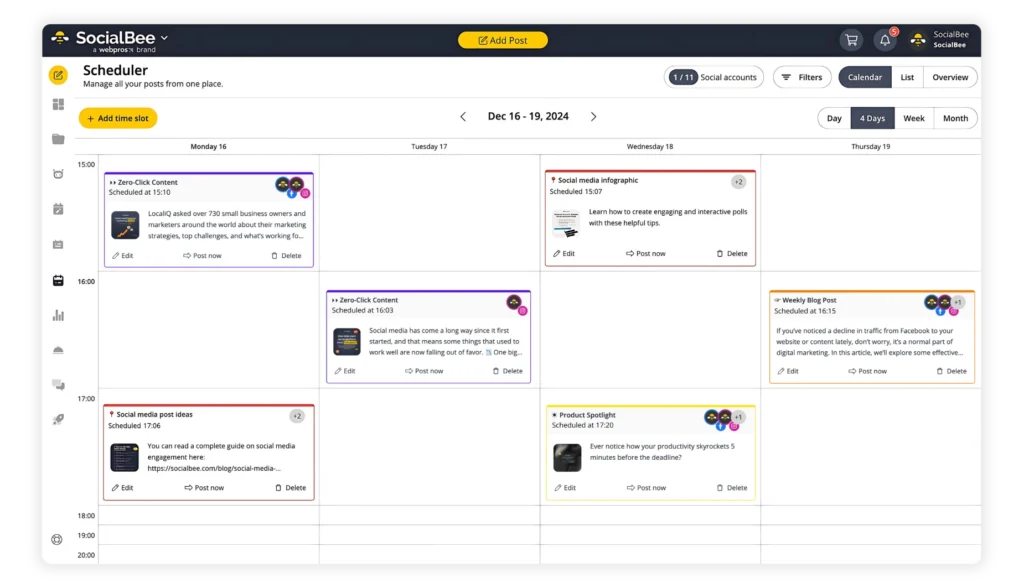
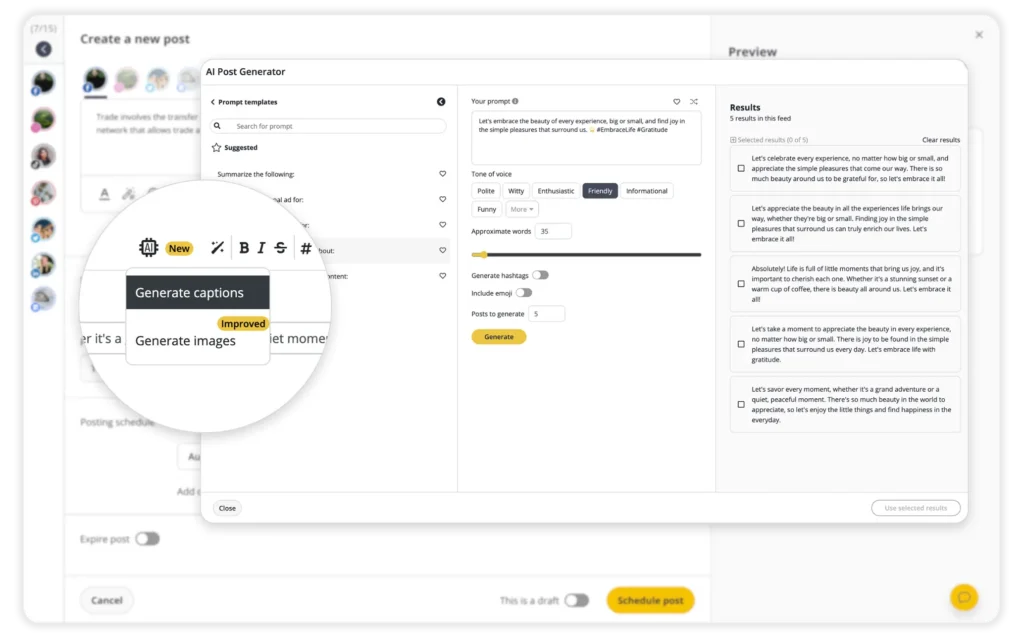
With SocialBee, you can plan content in a social media calendar, create content that is platform-specific, generate drafts with AI, and schedule content across multiple social platforms from one dashboard. Its Canva integration also lets you access designs while creating posts, reducing the back-and-forth between your design and scheduling tools.
Use SocialBee’s AI Post Generator to speed up first drafts while keeping your expertise and a strong personal brand voice at the center of the final post.
Frequently asked questions
1. What is the best social media platform for real estate agents?
Facebook and Instagram are strong starting points for many real estate agents because they support visually-appealing content while also helping agents stay visible in their local communities. However, a valuable platform depends on your audience and content strategy. LinkedIn can make more sense for commercial real estate, while TikTok and YouTube are useful if video is a major part of your marketing.
2. How often should real estate agents post on social media?
There’s no single posting frequency that works for every real estate business. Choose a schedule you can maintain consistently without sacrificing content quality, then use your social media analytics to see whether posting more or less often improves reach, engagement, and leads.
3. What should a real estate agent post on social media?
Real estate agents can post new listings, property tours, virtual open houses, neighborhood guides, market updates, client testimonials, and educational content for buyers and sellers. Aim for a mix that promotes your business while also giving potential clients useful reasons to follow you when they aren’t actively looking at properties.
4. Can real estate agents post other agents’ listings on social media?
It depends on your MLS rules, brokerage policies, local regulations, and whether you have permission to advertise the listing. Don’t assume that because a listing is publicly available online, you can repost its photos or market it as your own. Check the applicable rules and obtain any required permission before publishing.
5. How do real estate agents get leads from social media?
Real estate agents can generate leads by creating useful content for a specific local audience and giving interested people a clear next step. That could mean sending someone to a listing page, inviting them to an open house, offering a neighborhood guide, or encouraging them to send a direct message. Focus on attracting qualified leads rather than maximizing follower counts.
Build a real estate social media system you can actually maintain
Good real estate social media is about posting with a purpose. One post might introduce you to potential buyers, another might show how well you know the local market, and another might keep you top of mind with past clients.
You also don’t need to be everywhere at once. Focus on the appropriate social media platforms that make sense for your business and create engaging content of properties, helpful real estate advice, local content, and posts that show people what it’s like to work with you. Then, keep an eye on what actually brings people to your website and generates leads.
The challenge is keeping all of that going when social media is only one part of your job. That’s where SocialBee can help. You can plan and schedule content ahead of time, customize posts for each social network, manage engagement, and check how your content is performing without switching between multiple marketing tools.
Spend less time keeping up with your social media accounts and more time working with your clients. Start your 14-day SocialBee trial.
About the author: Catherine is a marketing & e-commerce specialist who helps brands grow their revenue and move their businesses to new levels.