

Bluesky vs Threads has become one of the biggest questions for anyone looking beyond X. The timing makes sense: Threads surpassed 500 million monthly active users in June 2026, while Bluesky grew from 25.94 million users to 41.41 million active users in 2025, an increase of almost 60%.
At the same time, both platforms have been introducing new ways to personalize the user experience, from Threads’ new Your Algo controls to Bluesky’s expanding custom feeds and decentralized ecosystem.
The right choice depends less on which platform is “better” and more on what you want to achieve. If you want the largest audience, built-in advertising opportunities, and seamless access to your existing Instagram account, Meta’s answer is Threads.
If you care more about user control, decentralized architecture, custom feeds, and shaping your own experience instead of relying on a single corporation, Bluesky offers a very different approach.
In this comparison, I’ll break down the key differences between Threads vs Bluesky. By the end, you’ll know whether to invest your time in one platform, maintain a presence on both, or focus your efforts somewhere else.

What is Bluesky?
Bluesky is a decentralized social media platform where users can share text, images, and videos, much like X (formerly Twitter). It began in 2019 as an internal Twitter initiative led by then-CEO Jack Dorsey to explore a more open approach to social networking.
In 2021, Jay Graber became CEO of the project, and by late 2022, Bluesky had spun out into an independent public benefit company after separating from Twitter.
The company’s long-term vision has remained remarkably consistent. As CEO Jay Graber explained:
“In 2019, I set out to build an open protocol for social media, with the goal of enabling the development of a new generation of applications designed to empower users.”
Unlike traditional platforms that are built around a single company’s infrastructure, Bluesky is built on the AT Protocol, an open framework that allows different services to host accounts, build custom feeds, provide moderation, and develop compatible social apps.
For businesses and creators, this has practical advantages. Your identity can be tied to a domain you own instead of relying solely on a platform-issued username. That means your brand identity remains portable, and if new AT Protocol apps emerge in the future, you can use them without rebuilding your audience or starting from scratch.
Another feature that sets Bluesky apart is the amount of control it gives users. Instead of relying on one algorithm, you can subscribe to custom feeds built around specific topics, communities, or interests. Users can also choose moderation services that fit their preferences, creating a more personalized experience than what’s available on most traditional social media platforms which have chronological feeds.
Posts can contain up to 300 characters, striking a balance between quick updates and a more thoughtful long-form discussion. Bluesky also offers multiple ways to establish authenticity:
- Domain handles, which let individuals and organizations use a website they own as their username (for example, @company.com).
- Official verification badges, introduced in April 2025 to identify authentic public-interest accounts.
- Trusted Verifiers, which allow approved organizations, such as news outlets and universities, to verify people within their own communities while Bluesky continues to oversee the system.
What is Threads?
Threads is Meta’s text-first social media platform, built for public conversations and closely connected to Instagram. Launched on July 5, 2023, it lets anyone with an Instagram account join Threads in just a few taps, making it one of the easiest social media platforms for early adopters who don’t want to start from scratch.
As Instagram head Adam Mosseri explained when discussing the platform’s vision:
“The goal isn’t to replace Twitter. The goal is to create a public square for communities on Instagram.”
Rather than building an entirely separate network, Meta designed Threads to extend the Instagram experience into text-based conversations, similar to old Twitter, while keeping the same identity, social graph, and creator ecosystem. This comes with unique advantages for businesses and creators, like the fact that you can reach an existing audience without convincing people to follow a brand-new account.
A Threads account allows users to publish posts of up to 500 characters, along with links, photos, GIFs, polls, and videos up to five minutes long. Combined with its Instagram integration, this makes it suitable for casual users who want everything from short updates and breaking news to longer discussions and quick engagement.
Businesses can also benefit from features such as analytics, location tags, and advertising through Meta’s ecosystem, giving Threads capabilities that many newer platforms still lack.
Threads made history almost immediately after launch. It became the fastest-growing consumer app ever, surpassing 100 million sign-ups in just five days by leveraging Instagram’s existing user base. The platform later expanded into the European Union in December 2023 after Meta addressed regional privacy and data protection requirements.
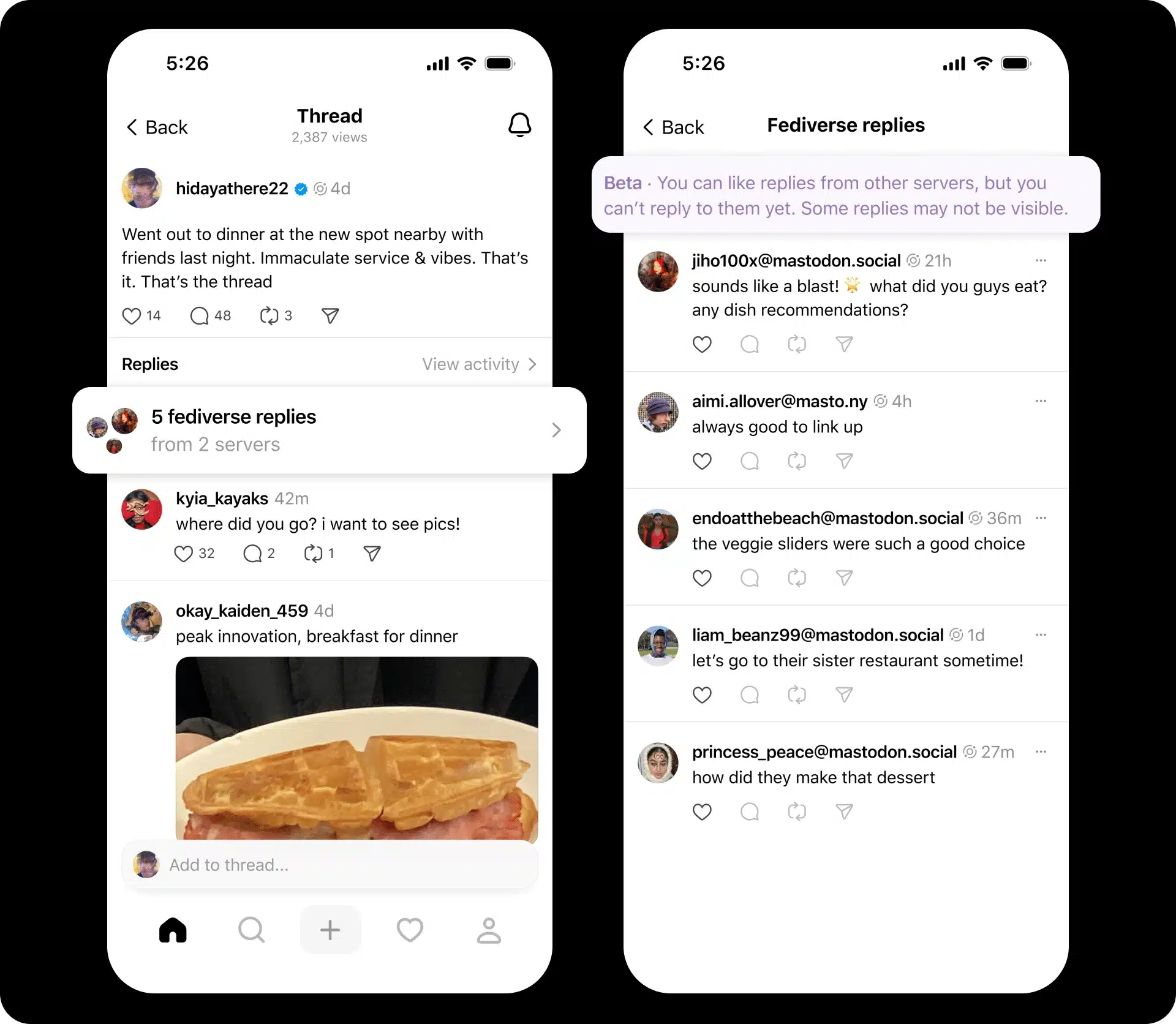
Meta has kept adding new features since Threads launched. In March 2024, it started connecting Threads to the fediverse through the ActivityPub protocol, making it possible for users to share posts with compatible platforms like Mastodon. Threads is still owned and run by Meta, but this update gives users more flexibility and opens the door to interacting with people outside the Threads app.
The platform has also introduced a steady stream of features designed to compete more directly with X. During 2025 and 2026, Meta rolled out custom topic controls, improved search, direct messaging, post scheduling, analytics, and Your Algorithm, which lets users decide which topics they want to see more or less of across their feed.
These updates give users more control over content discovery while helping businesses reach audiences interested in specific subjects instead of relying entirely on Meta’s recommendation system.
Bluesky vs Threads: What are the core differences?
These are the main differences between Bluesky and Threads:
- Bluesky is decentralized, while Threads is owned by Meta
- Threads is more closely connected to Instagram
- Bluesky and Threads offer different feed controls
- Threads supports longer written content
- Bluesky and Threads support different post formats
- Content discovery works differently on Bluesky and Threads
- Bluesky Starter Packs and Threads Communities serve different purposes
- Bluesky and Threads offer different engagement features
- Bluesky and Threads offer different messaging features
- Moderation works differently on Bluesky and Threads
- Verification works differently on Bluesky and Threads
- Profiles offer different customization options
- Threads supports advertising, while Bluesky focuses on organic reach
- Threads offers native scheduling, while Bluesky relies on third-party tools
- Threads offers native analytics, while Bluesky depends more on third-party tools
1. Bluesky is decentralized, while Threads is owned by Meta
The biggest difference between Bluesky and Threads is how they’re built. Threads is a centralized platform owned and operated by Meta, while Bluesky is built on the AT Protocol, an open social networking framework that allows different services to host accounts, build moderation tools, create custom feeds, and develop compatible social apps.
Bluesky still develops and operates the main Bluesky app, but the protocol itself isn’t tied to a single application. That means other developers can build apps that connect to the same network instead of creating an entirely separate platform with its own users.
One of the AT Protocol’s biggest advantages is account portability. If you move your account to another compatible Personal Data Server, you keep your identity, followers, and social graph instead of starting over with a brand-new profile.
For businesses, this means your identity can be tied to your own domain rather than only to a platform-issued username. It also creates the possibility of using other AT Protocol apps in the future without rebuilding your social identity from scratch.
Threads has moved toward greater interoperability too, but in a different way. In 2024, Meta started connecting Threads to the fediverse through the ActivityPub protocol, allowing public Threads posts to be shared with compatible platforms like Mastodon. Meta expanded this integration in 2025 by introducing a dedicated fediverse feed and making it easier to discover posts from outside Threads.
The difference is that Threads remains a Meta-owned platform. Its fediverse integration lets users interact with compatible networks, but your account is still part of Meta’s infrastructure. Bluesky’s architecture, on the other hand, is designed around an identity that can move between compatible services.
2. Threads is more closely connected to Instagram
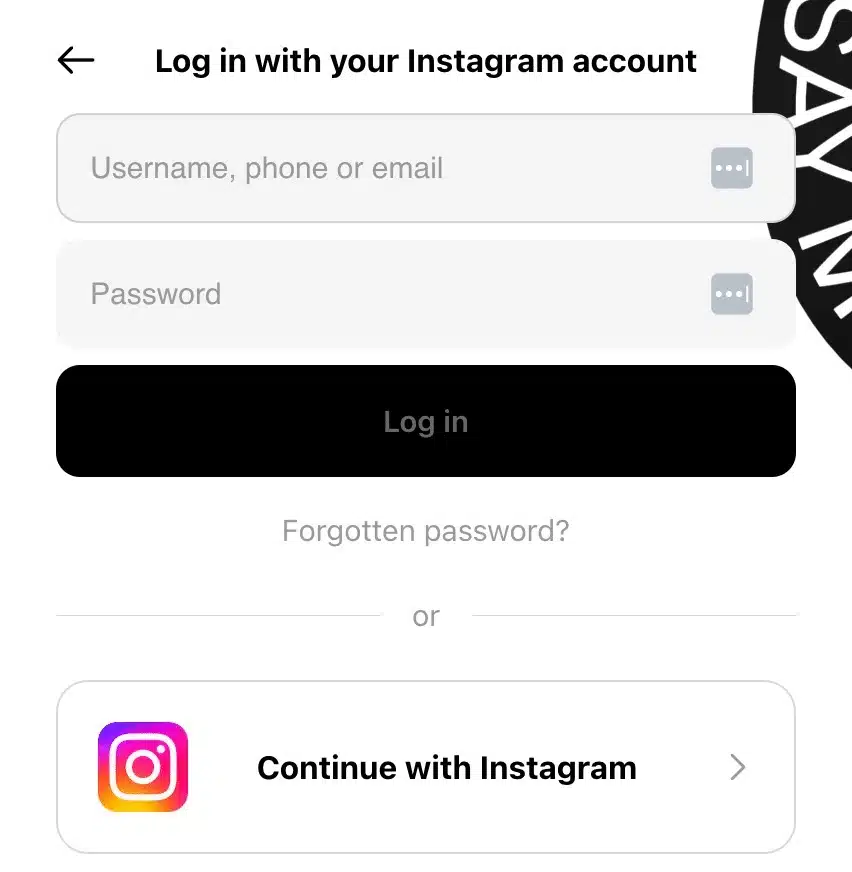
Threads was built as an extension of Instagram. When it launched in July 2023, users signed in with their Instagram account, kept the same username, and could immediately follow many of the same people they already followed on Instagram.
“To scale Threads rapidly, we leveraged Instagram’s tech stack, utilizing existing data models, business logic, security features, and server infrastructure,” says Etienne Blanc, Product Marketing Manager at Threads.
That integration is still one of Threads’ biggest strengths. Instead of building a new audience from zero, creators and businesses can use their existing Instagram identity to get started more quickly.
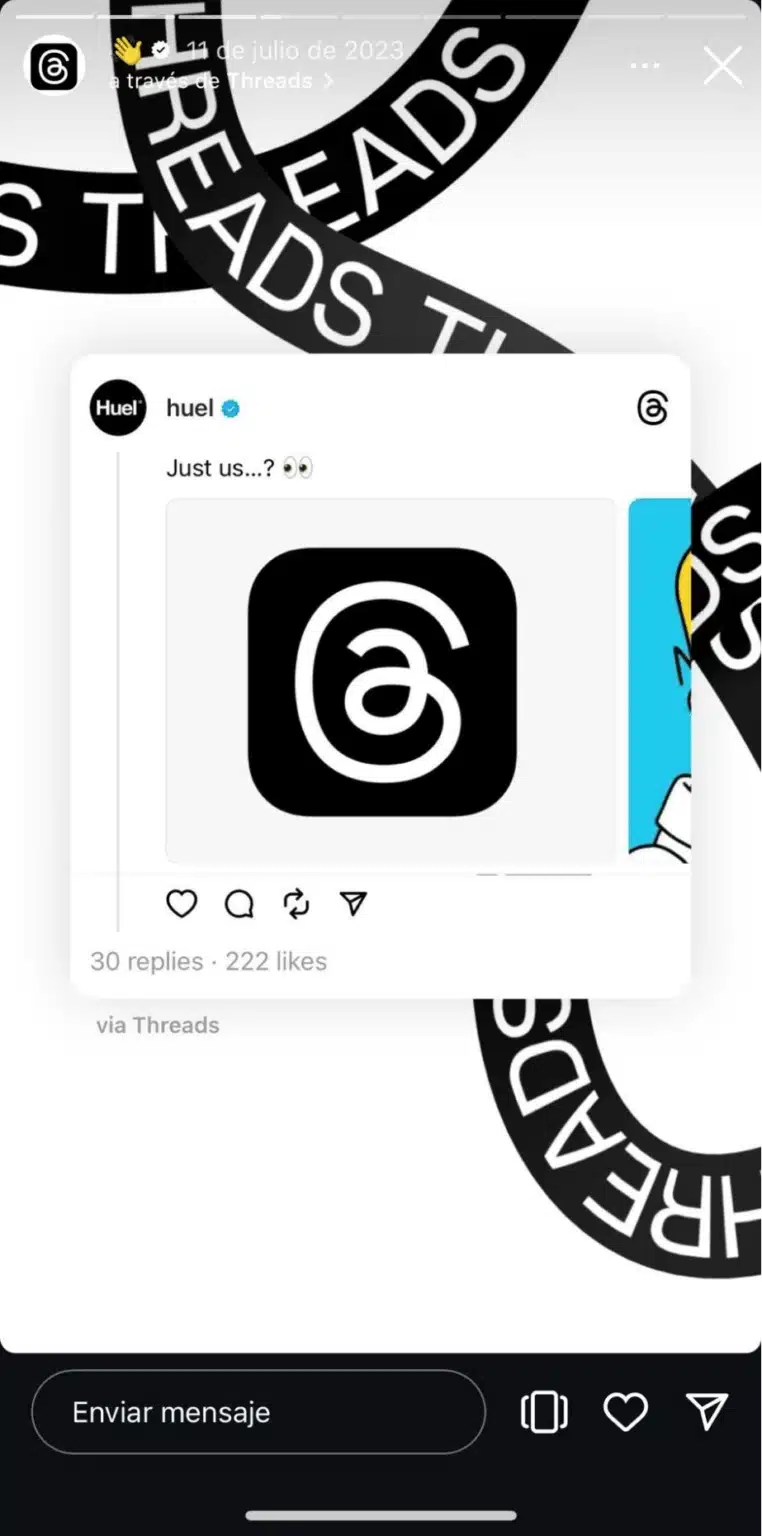
Meta has continued strengthening the connection between the two apps. For example, it introduced easier ways to share Threads posts to Instagram, including the ability to turn a Threads post into an image that can be shared directly on Instagram without taking a screenshot.
In April 2026, Meta also announced Meta Account, a unified account system for Threads, Instagram, Facebook, Messenger, and its other platforms. The company says this makes it easier to manage login, security settings, and connected experiences across the Meta ecosystem while still allowing users to maintain separate Meta Accounts if they choose.
Interestingly, Threads users aren’t simply recreating their Instagram network. Meta reported in 2025 that more than one-third of daily Threads users who follow connections follow mostly different accounts on Threads than they do on Instagram, showing that many people gradually build a separate community centered on text-based conversations.
Bluesky doesn’t have an equivalent connection to another social network. Every user creates a separate account and builds their audience through custom feeds, Starter Packs, lists, search, and conversations within the platform itself.
For businesses, the trade-off is straightforward. Threads makes it easier to get started if you already have an established Instagram presence, while Bluesky offers a completely independent social identity that isn’t tied to another platform.
3. Bluesky and Threads offer different feed controls
Both Bluesky and Threads let you choose between a Following feed and an algorithmic For You feed, but they take very different approaches to personalization.
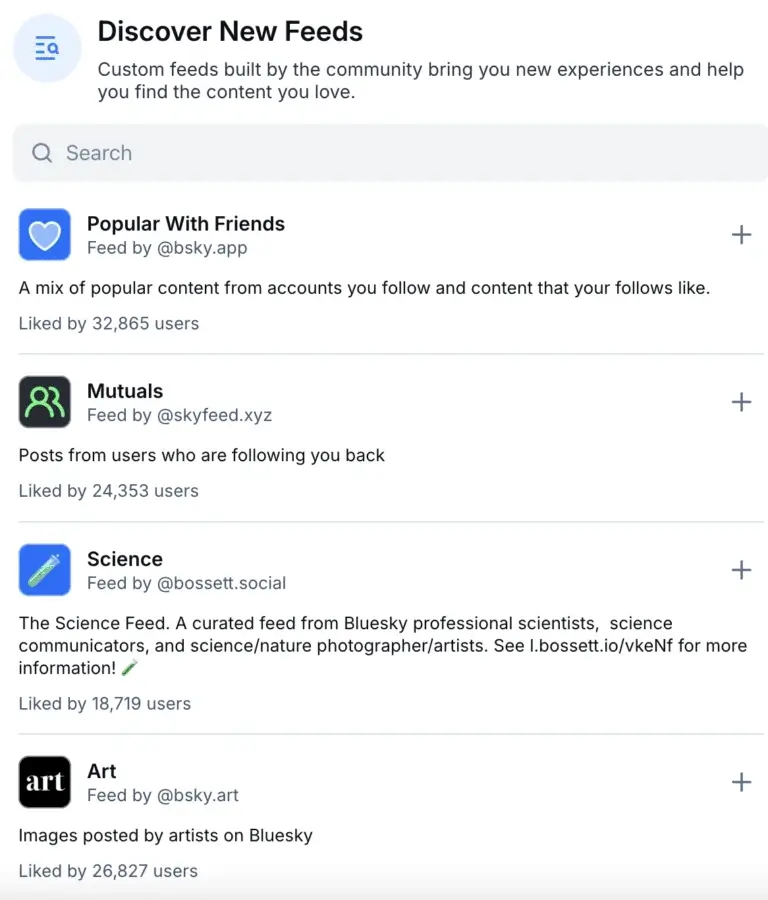
Bluesky was built around the idea that users should be able to choose which algorithm powers their timeline. Instead of relying on a single recommendation system, you can subscribe to custom feeds created by Bluesky or by other developers and communities.
These feeds can focus on anything from photography and sports to local news or cat pictures, and you can pin multiple feeds to quickly switch between them. Even better, anyone can build a custom feed using the AT Protocol.
Threads also gives users more control than it did at launch. In addition to Following and For You feeds, users can create and share custom feeds based on accounts or topics they care about. Meta has also introduced two personalization features:
- Dear Algo, which temporarily adjusts your recommendations after you tell Threads what you’d like to see more or less of.
- Your Algo, which gives you private controls for changing your feed for one, three, or seven days without posting your request publicly.
The biggest difference is where that control comes from. Bluesky lets users choose between different algorithms created by the community, while Threads lets users customize Meta’s recommendation system.
If you want to shape your experience without leaving Meta’s ecosystem, Threads gives you plenty of options. If you’d rather choose the algorithm itself, Bluesky offers much more flexibility.
4. Threads supports longer written content
If you mainly publish short updates, both platforms feel similar. However, Threads gives users much more room when they want to dive deeper into a topic.
Bluesky posts are limited to 300 characters, encouraging concise updates and conversations. Longer thoughts usually need to be split into multiple connected posts. This keeps the platform focused on quick discussions rather than lengthy essays.
Threads increased that flexibility from the start by allowing 500-character posts. Then, in September 2025, Meta introduced text attachments, letting users add up to 10,000 characters to a post. Instead of publishing a long thread or linking to an external blog, users can keep detailed articles, tutorials, announcements, or opinion pieces in a single post.
5. Bluesky and Threads support different post formats
Both platforms let users publish text, images, videos, GIFs, and links, but Threads has gradually expanded the types of content it supports, making it the more versatile option for creators and businesses.
Bluesky supports text posts of up to 300 characters, images, GIFs, links, and videos. Videos can include captions for accessibility, and users can add alternative text to images to make their content easier to understand for people using screen readers.

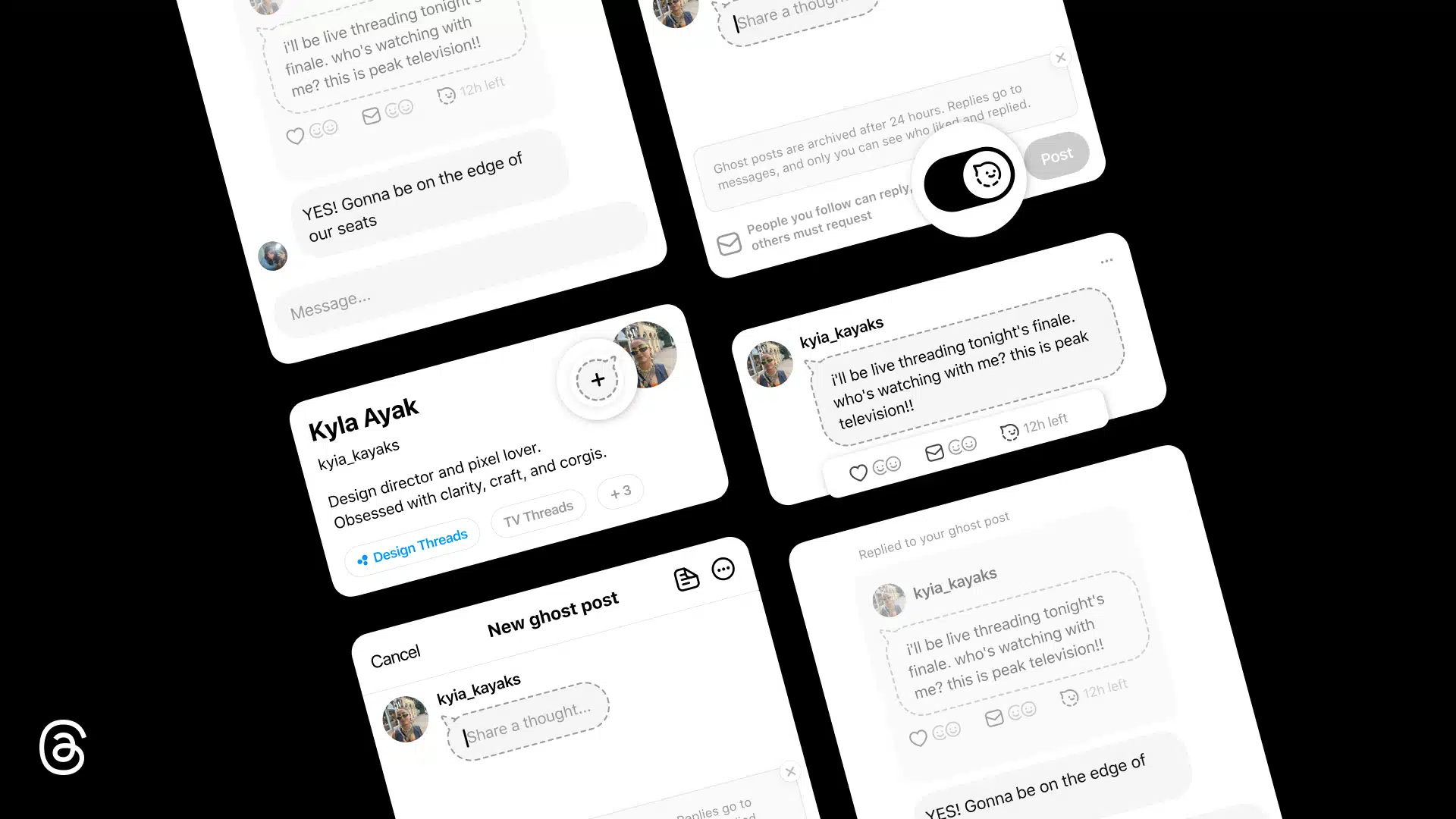
Threads supports all of those formats while also offering polls, carousel posts, and text attachments of up to 10,000 characters. In 2025, Meta also introduced spoiler tags, allowing users to hide text or media that others can reveal with a tap, and Ghost Posts, which disappear after 24 hours.
Another difference is Instagram integration. While Threads doesn’t have its own Stories feature, users can quickly share a Threads post to their Instagram Story, helping them reach followers across both platforms.
6. Content discovery works differently on Bluesky and Threads
Although both platforms help users discover new accounts and conversations, they do it in different ways.
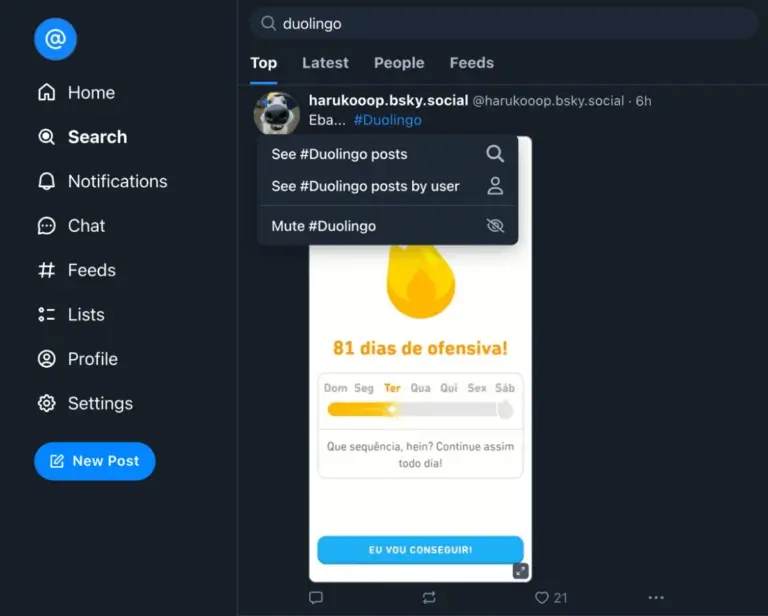
Bluesky leans on community-driven discovery. Besides search and trending topics, users can find people through Starter Packs, Lists, and custom feeds created by other users. These tools make it easier to explore niche communities based on specific interests instead of relying primarily on algorithmic recommendations.
Threads relies more heavily on Meta’s recommendation systems. Users discover content through topic pages, recommended posts, trending discussions, and Communities, which group conversations around shared interests. Meta’s algorithms play a much larger role in deciding what content reaches new audiences.

If you prefer finding content through recommendations from other users, Bluesky offers more community-driven discovery. If you’d rather have the platform recommend conversations based on your activity, Threads provides a more algorithmic experience.
7. Bluesky Starter Packs and Threads Communities serve different purposes
Although both features help users find relevant people and conversations, they solve different problems.
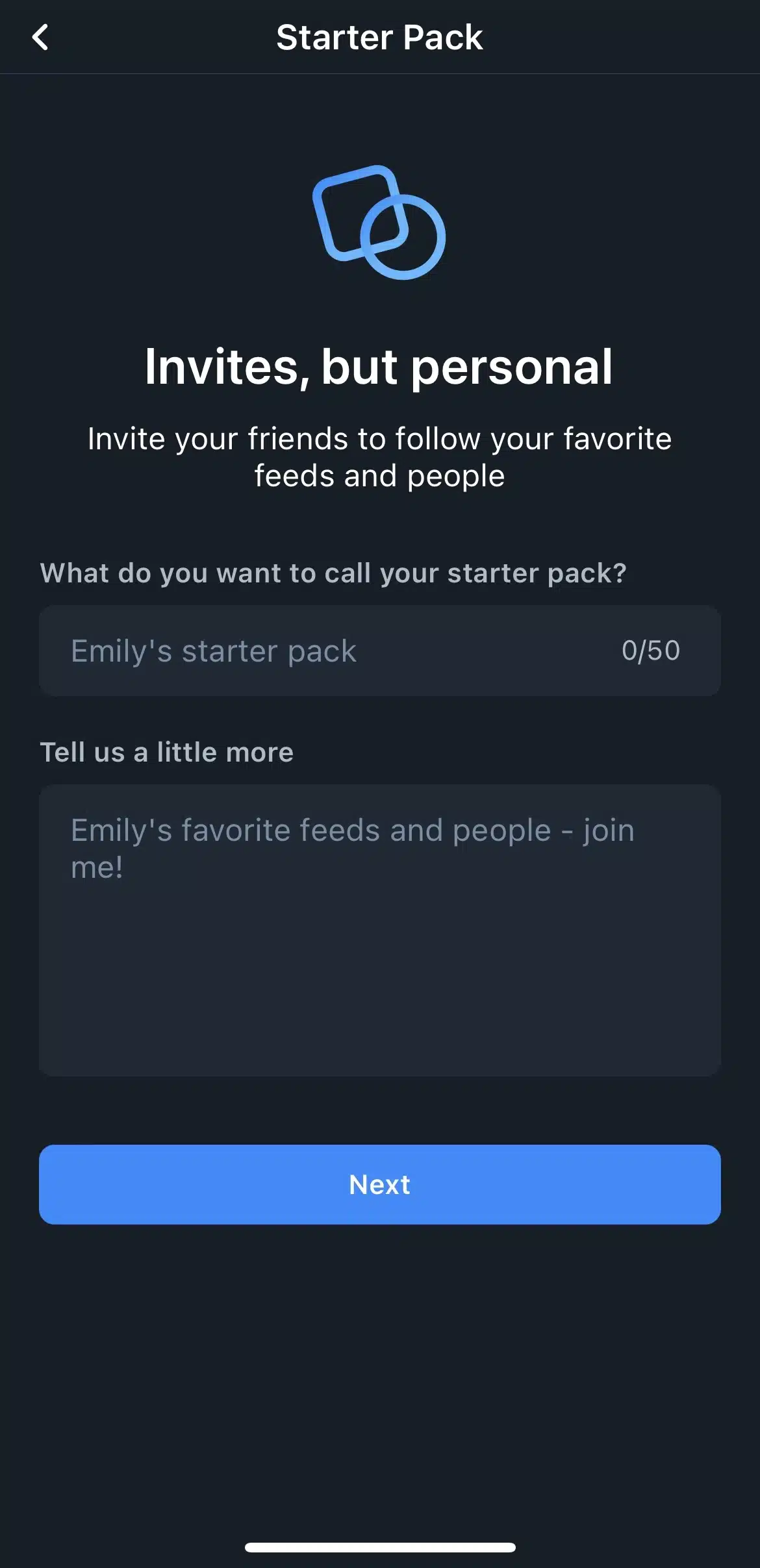
Starter Packs are curated collections of accounts, custom feeds, and sometimes lists that anyone can create and share. They’re designed to help new users quickly find people worth following around a specific topic, profession, or interest. For example, a journalist could create a Starter Pack featuring trusted reporters, news organizations, and politics-focused feeds, making it easy for others to build a relevant timeline in one click.
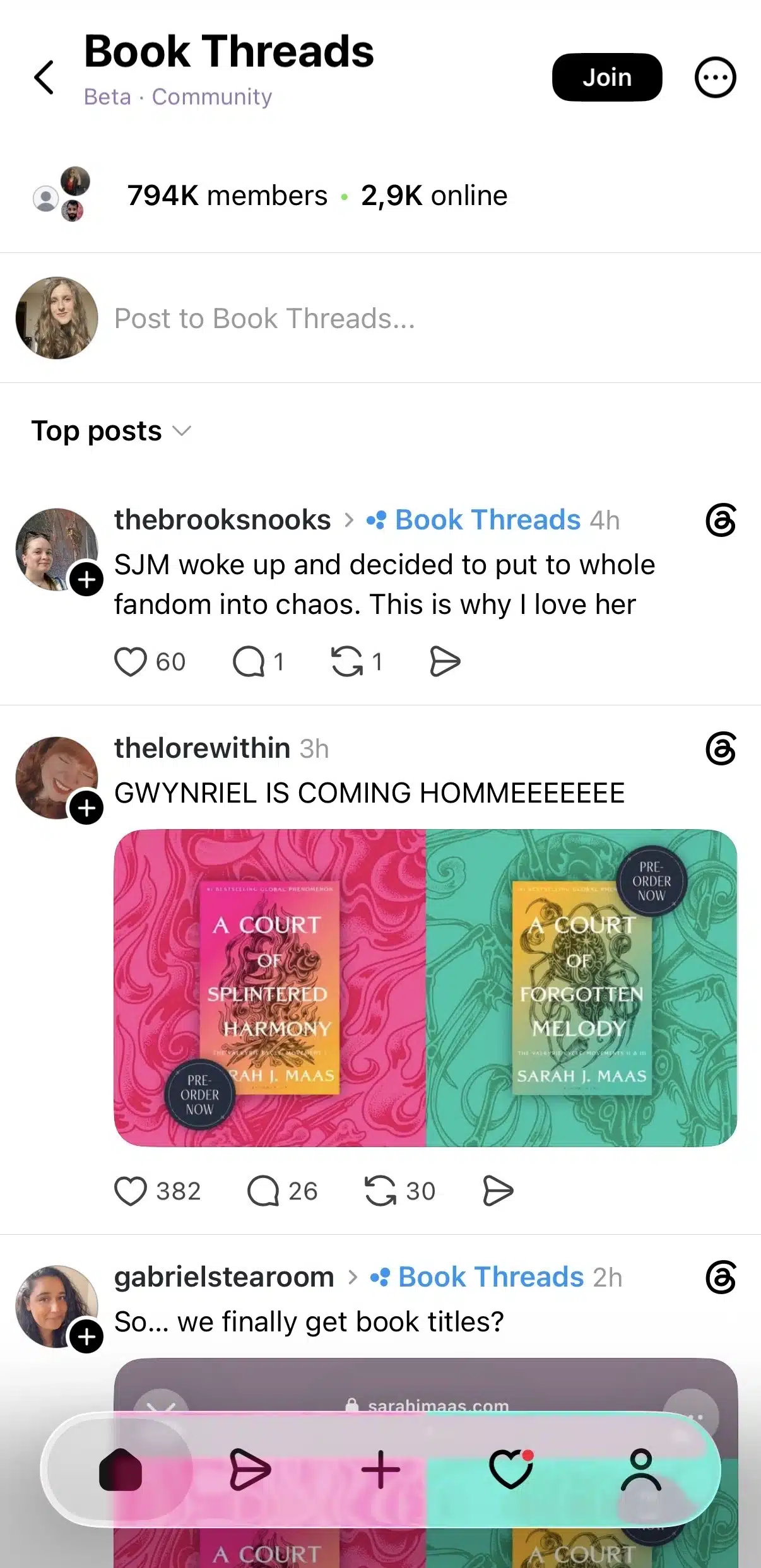
Threads Communities, on the other hand, are spaces where people can participate in ongoing discussions around a shared interest. Instead of recommending who to follow, Communities bring users together in one place to ask questions, share updates, and interact with others interested in the same topic. Meta expanded Communities beyond testing in 2026, making them available to more users.
In short, Starter Packs help you build your network, while Communities help you participate in one.
8. Bluesky and Threads offer different engagement features
Both platforms support the basics, including likes, replies, reposts, and quote posts. However, Threads has gradually added more ways for users to interact with content.
One example is saved posts, which let users bookmark content and return to it later, something Bluesky doesn’t currently support. Threads also makes it easier to share posts beyond the platform by allowing users to post them directly to Instagram Stories or copy them as images for Instagram.
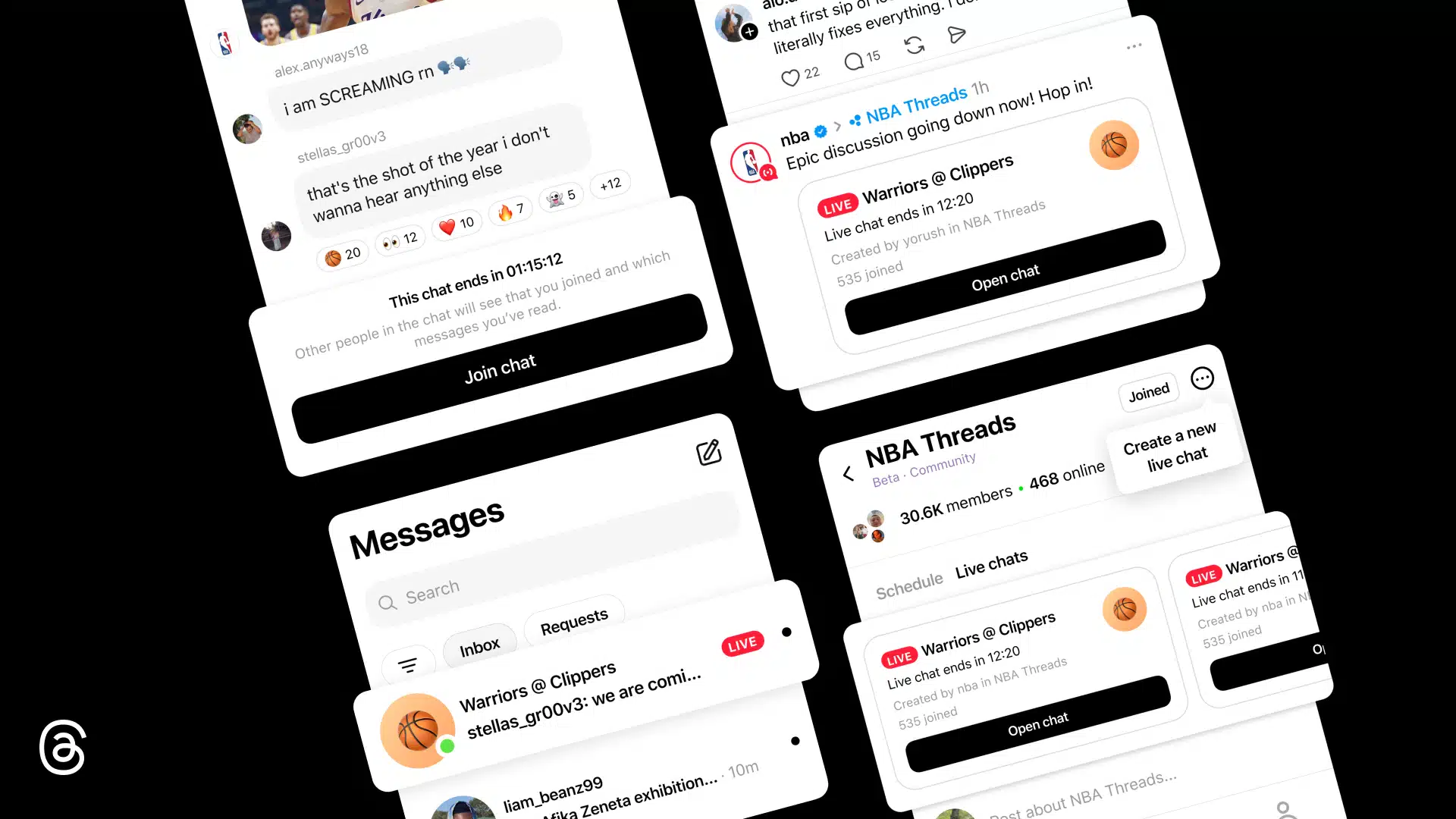
Meta has also introduced Live Chats, allowing users to join real-time conversations around events, sports, TV shows, or other timely topics.
Bluesky takes a simpler approach. Rather than adding platform-specific engagement patterns, it focuses on conversations through replies, quote posts, reposts, and community-built features like Starter Packs and custom feeds.
9. Bluesky and Threads offer different messaging features
Both Bluesky and Threads now support direct messages, but the experience isn’t identical.
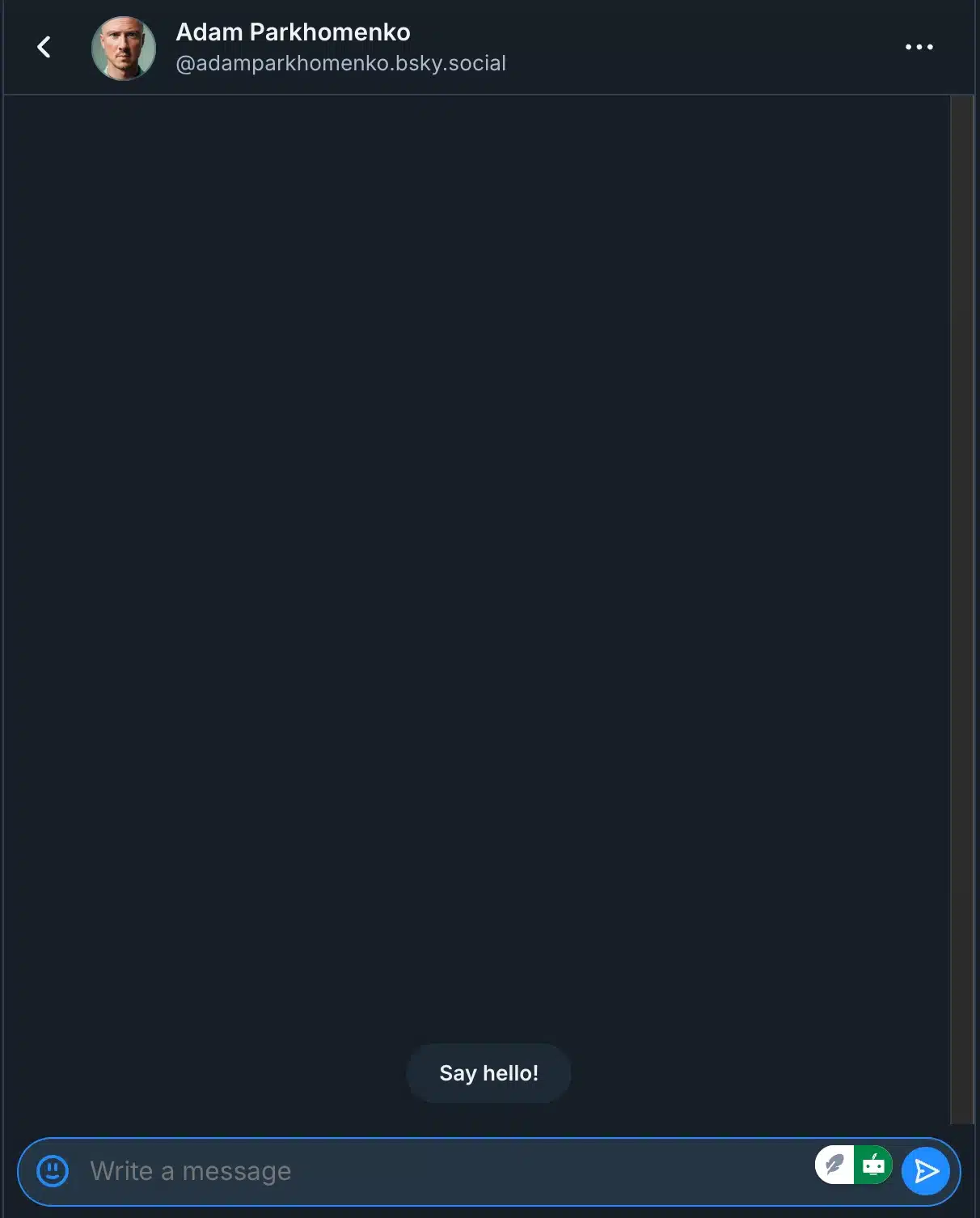
Bluesky introduced direct messages in 2024, allowing users to have private one-on-one conversations. By default, only people you follow can message you, although you can change your privacy settings to accept messages from everyone or disable them entirely.
Threads added native direct messages in 2025 after relying on Instagram DMs for nearly two years. Unlike Instagram, Threads DMs are designed specifically for conversations that begin on Threads, making it easier to continue public discussions privately without switching apps. At launch, Meta also announced plans to expand the feature with tools like message controls and group messaging.

Overall, both platforms now offer built-in messaging, so this is no longer a major differentiator. The main difference is that Threads’ messaging is newer and continues to expand, while Bluesky’s messaging remains intentionally simple.
10. Moderation works differently on Bluesky and Threads
Both platforms give users tools to block, mute, and report accounts, but they take very different approaches to moderation.
Threads follows Meta’s centralized moderation system. Meta decides how content is reviewed, which posts violate its Community Standards, and how recommendations are adjusted. Users can personalize their experience with features like Not Interested, reply controls, quote controls, and topic preferences, but the moderation rules themselves are set by Meta.
Bluesky takes a more flexible approach. In addition to its own moderation system, the AT Protocol allows users to subscribe to independent moderation services, sometimes called labelers.
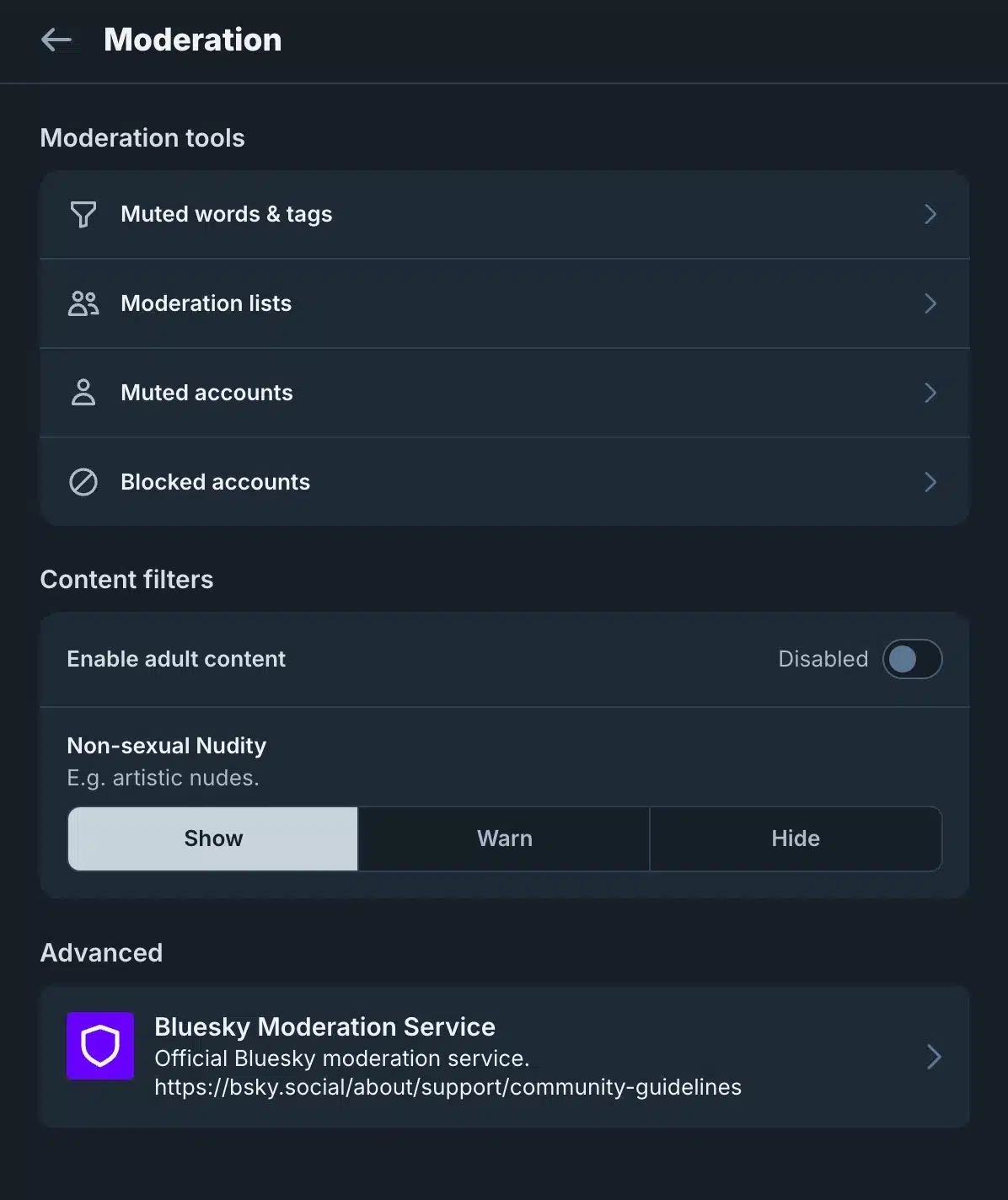
These services can apply labels to content, accounts, or media, and each user decides how those labels should be handled. For example, you can choose to hide, warn about, or allow specific types of content based on the moderation services you trust.
11. Verification works differently on Bluesky and Threads
Both platforms help users prove their identity, but they do so in different ways.
Bluesky originally relied on domain handles, allowing people and organizations to use a domain they own as their username, such as @company.com. This remains one of the platform’s most distinctive identity features because verification is tied to ownership of a website rather than a platform-issued badge. Bluesky Domain Handles documentation
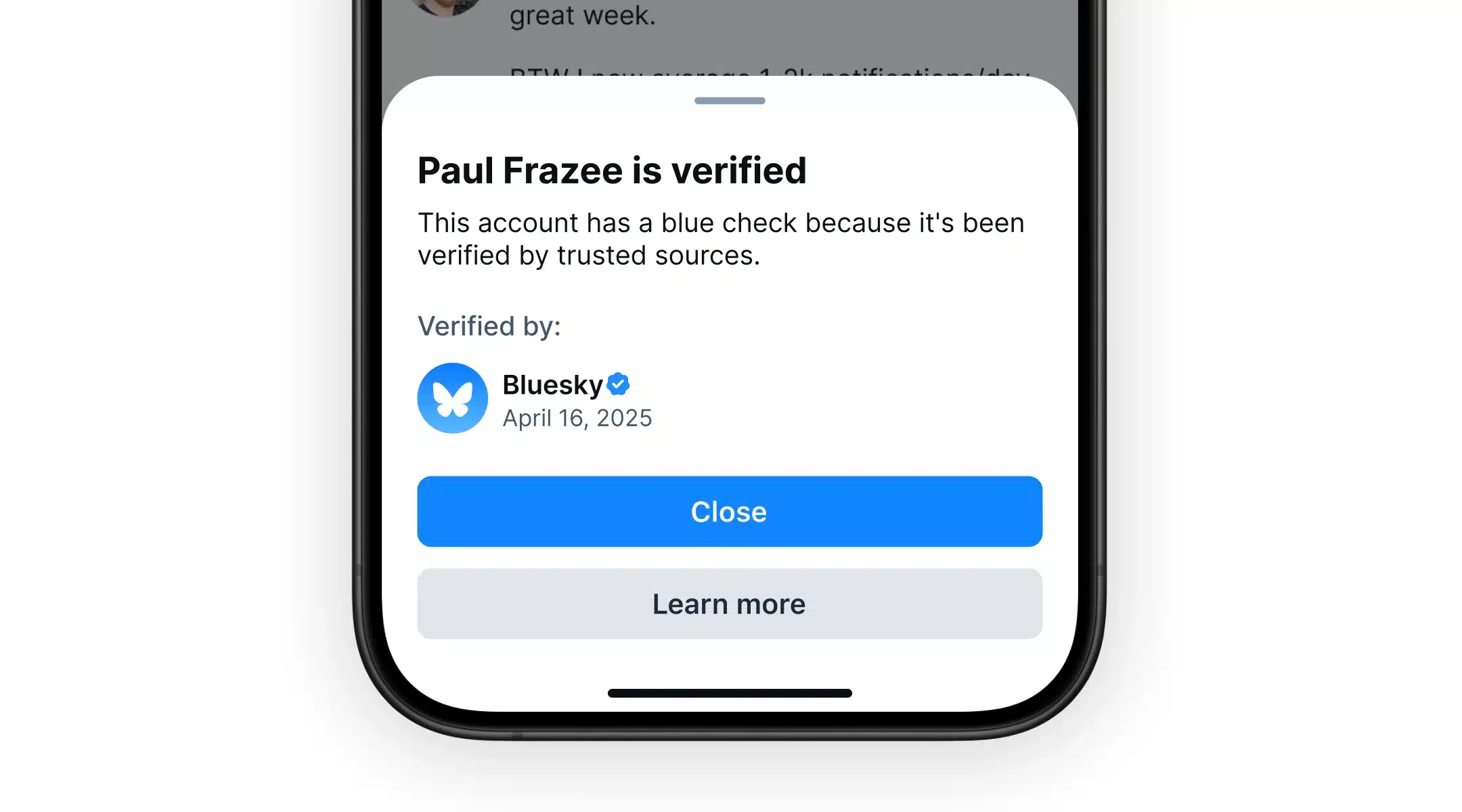
In 2025, Bluesky expanded its verification system by introducing verification badges and Trusted Verifiers. Bluesky can verify notable accounts directly, while approved organizations, such as universities or news outlets, can verify members of their own communities.
Threads uses the same verification system as the rest of Meta’s apps. Users can subscribe to Meta Verified, which includes identity verification and a verification badge, while notable public figures, brands, and organizations may also receive a verified badge directly from Meta.
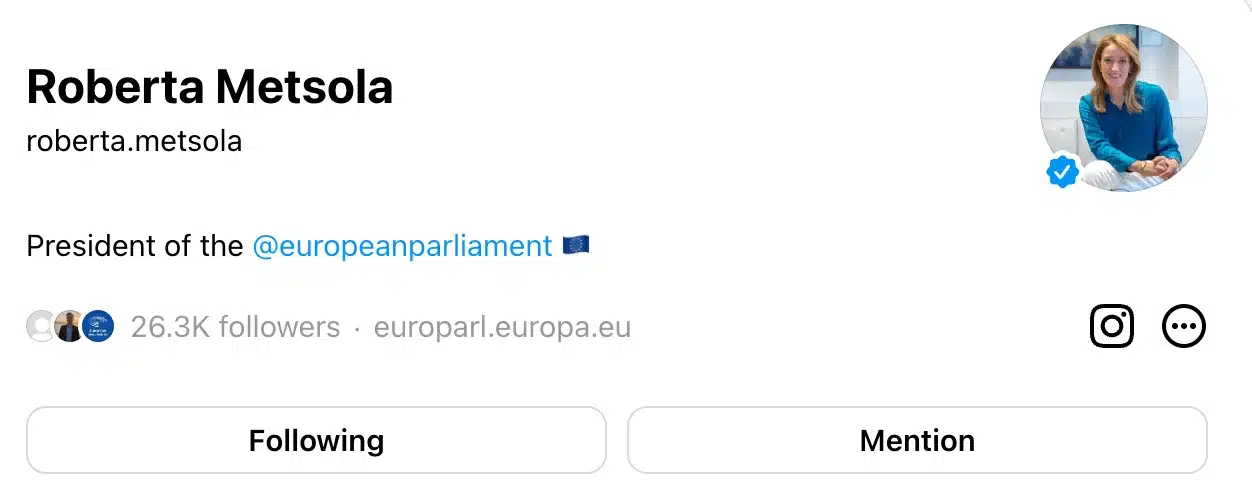
The biggest difference is what verification represents. On Threads, verification is part of Meta’s account system. On Bluesky, identity is built around domain ownership and an open verification model that can involve both Bluesky and trusted organizations.
12. Profiles offer different customization options
Both Bluesky and Threads let users create a profile with a photo, bio, and links, but Bluesky offers more customization.
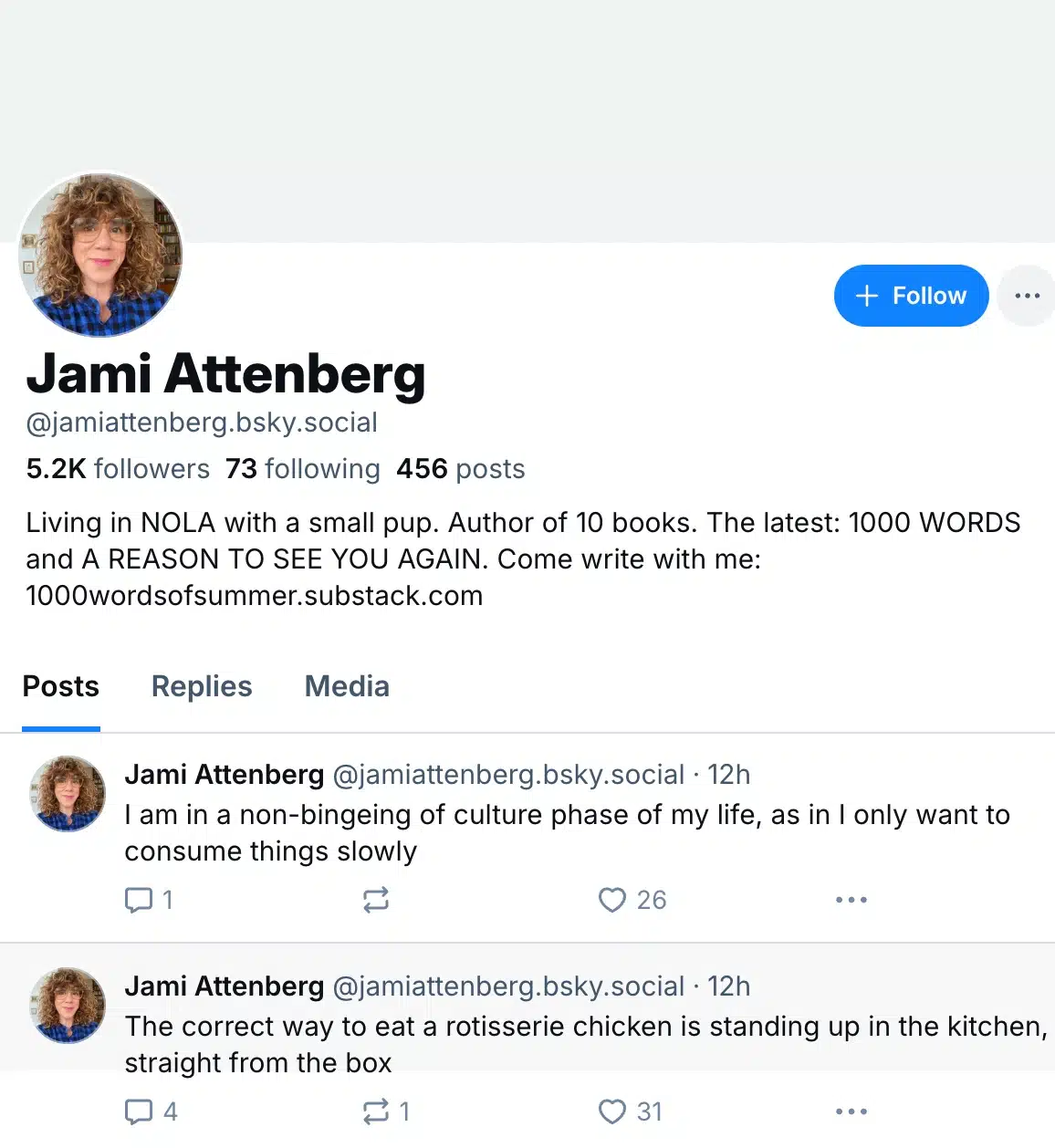
A Bluesky profile can include a profile picture, cover image, bio, website, and a custom domain handle, allowing brands and creators to use their own domain as their username. Profiles also include dedicated tabs for Posts, Replies, Media, Lists, and Starter Packs, making it easier to organize content and recommend other accounts.

Threads keeps profiles simpler. Users can add a profile picture, bio, links, and connect their profile to Instagram. Meta has also added features such as multiple links in bios and topic interests to help people discover relevant accounts.
13. Threads supports advertising, while Bluesky focuses on organic reach
This is one of the biggest differences for businesses.
Threads is now part of Meta Ads Manager, allowing advertisers to include Threads placements alongside Facebook and Instagram campaigns. Businesses can manage their ads from the same platform they already use for Meta advertising instead of creating a separate workflow. However, unlike X, there’s no public creator payout or ad revenue share for all users.
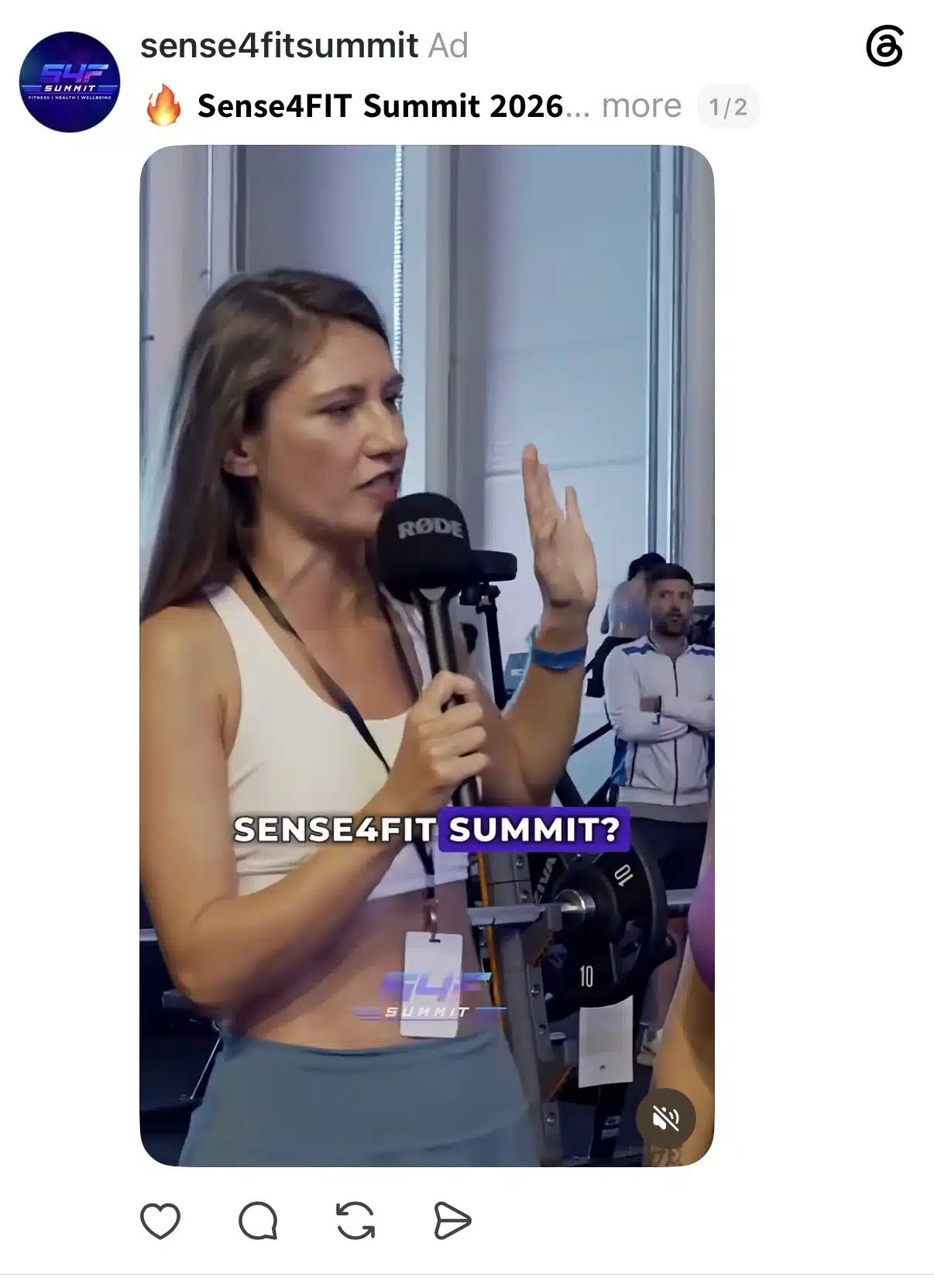
Bluesky doesn’t currently offer a native advertising platform. Brands grow their presence through organic posts, community participation, and conversations rather than paid promotion.
For businesses that already invest in Meta advertising, Threads fits naturally into an existing campaign strategy. If your focus is entirely on organic engagement, Bluesky provides an ad-free environment where every post competes on the same playing field.
14. Threads offers native scheduling, while Bluesky relies on third-party tools
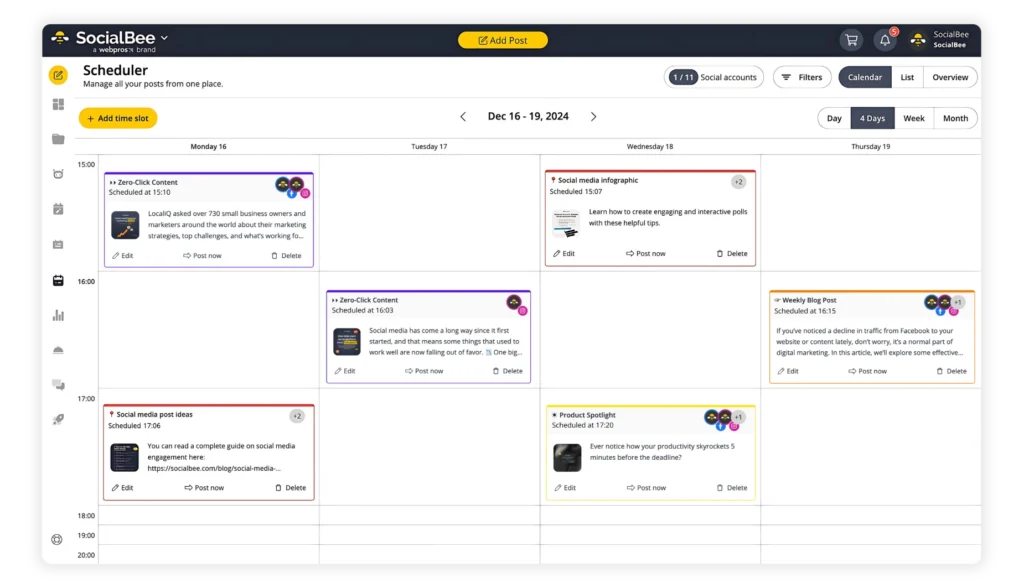
Threads includes a built-in scheduling feature, allowing users to schedule posts directly from the app. Meta introduced scheduling alongside drafts and Insights to help creators and businesses plan their content without relying on external tools.
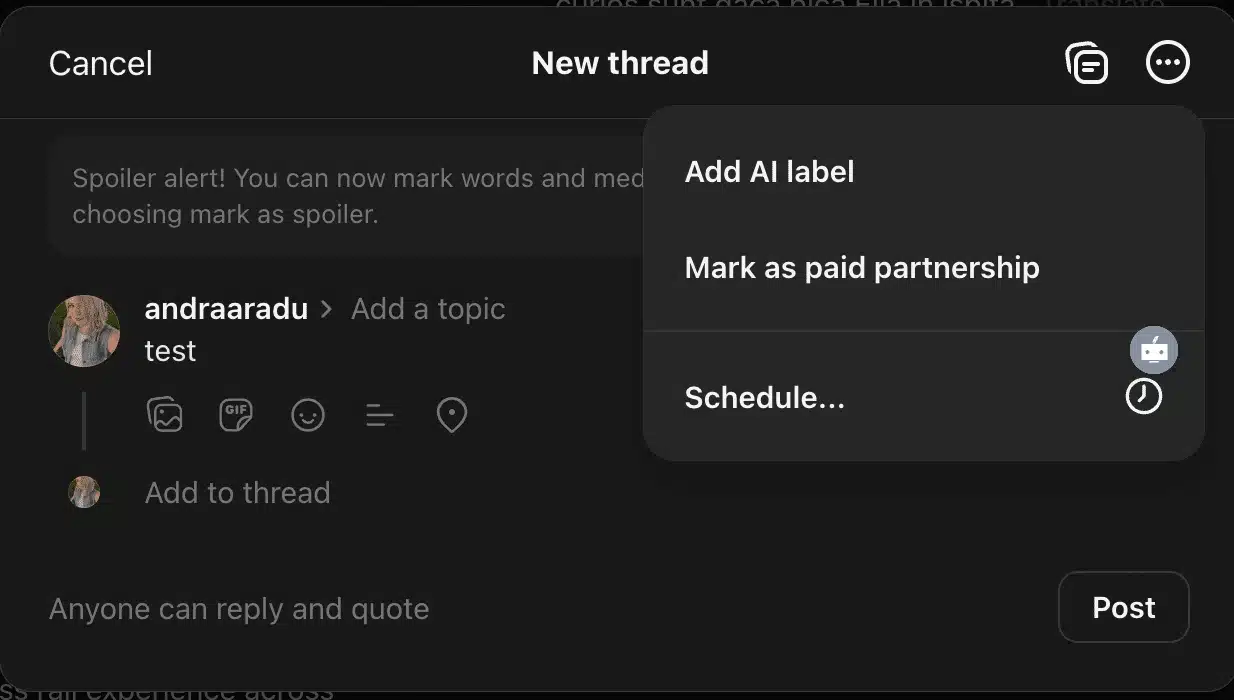
However, if you’re worried that using a scheduling tool could hurt your reach, Etienne Blanc has confirmed that “posts shared through third-party apps are treated the same as those posted directly through the Threads app or on the web.”
Bluesky doesn’t currently offer native post scheduling. If you want to plan content ahead of time, you’ll need to use a third-party tool.
15. Threads offers native analytics, while Bluesky depends more on third-party tools
Threads includes built-in Insights, giving users access to metrics such as views, interactions, follower growth, and audience activity. These reports help creators and businesses understand what content performs best without leaving the platform.

Bluesky doesn’t currently provide an equivalent native analytics dashboard. While users can see public engagement metrics like likes, reposts, and replies, more detailed reporting generally requires third-party analytics tools.