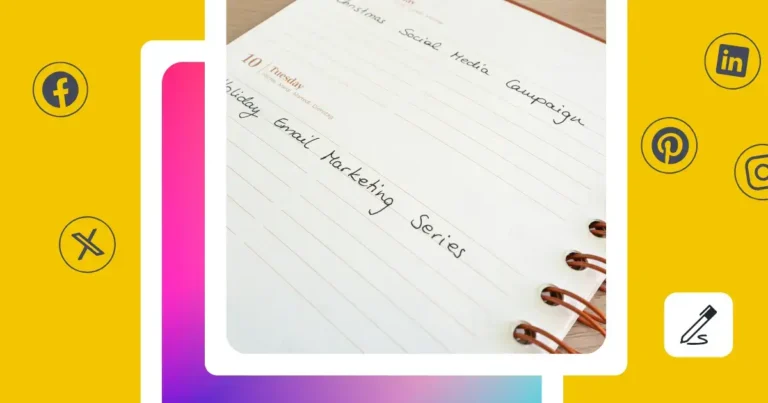


Con un calendario de días festivos para redes sociales, tendrás una idea nueva de contenido para cada día del año. Pero eso no significa que todos los días festivos merezcan un hueco en tu plan de contenido.
Las mejores publicaciones sobre días festivos en redes sociales son aquellas que conectan de forma natural con tu público, los valores de tu marca, tus productos o tu sector. Elegir bien un día festivo para publicar en redes sociales puede generar interacción, reforzar una campaña o ayudarte a sumarte a una conversación más amplia sin que parezca forzado.
Muchos profesionales del marketing también planifican sus contenidos en torno a los principales días festivos federales (los que reconoce la ley federal), ya que suelen generar una mayor interacción y una participación más amplia del público.
Por eso hemos elaborado este calendario de días festivos para redes sociales de 2026, que incluye más de 300 días festivos nacionales e internacionales. Encontrarás de todo, desde el Día Internacional de la Mujer y el Día Mundial de la Salud Mental hasta el Día Internacional del Gato y el Día Mundial del Emoji. Y lo más importante: aprenderás a elegir las fechas adecuadas para tu marca, a convertirlas en publicaciones atractivas para las redes sociales y a planificar tu calendario de contenidos con meses de antelación.
| ¿Estás listo para enriquecer tu calendario de contenidos para redes sociales con nuestra selección de días festivos divertidos y significativos? ¡Descarga a continuación nuestra plantilla de calendario de días festivos para redes sociales y disfruta de todas nuestras sugerencias en formato de calendario de verdad! |

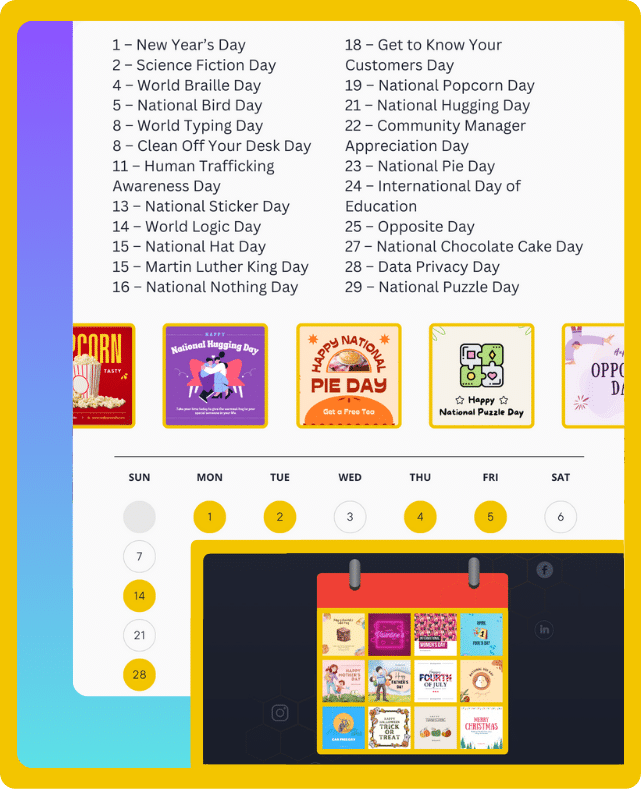
🎥 Watch: How to plan a YEAR’S worth of social media content in MINUTES!
Before you start building your holiday content calendar, take a few minutes to watch this quick video. It walks you through a proven system to plan a full year of social media content quickly and efficiently.
Plus, you’ll discover a Canva trick that transforms a list of ideas into dozens of ready-to-post designs in minutes, helping you save a lot of time.
Choose the right social media holidays for your brand
A packed social media holiday calendar can be both a blessing and a curse. While there are hundreds of dates to choose from, posting for every national day or international day usually leads to content that feels forced.
When I plan a social media calendar, I use three simple filters before adding any holiday to the schedule:
1. Check audience fit
Ask yourself whether your audience would genuinely care about the holiday.
For example, a pet brand can create engaging content around National Pet Day and National Dog Day. A B2B software company will probably get better results from World Productivity Day-style topics or awareness campaigns relevant to its industry.
In addition to awareness days and national observances, many brands create campaigns around major religious holidays such as Easter, Christmas, Diwali, or Ramadan.
2. Check brand fit
The best social media holiday posts connect naturally to your products, expertise, mission, or company values.
A healthcare organization might participate in World Health Day, World Mental Health Day, World Blood Donor Day, or World Cancer Day. A coffee brand has an obvious opportunity on International Coffee Day.
While some dates are recognized by state and local governments, many private businesses focus on holidays that align with their customers and industry.
3. Check content fit
Before adding a holiday to your social media content calendar, make sure you can create something useful, entertaining, or meaningful around it.
If you can’t turn the holiday into a strong visual, educational post, customer story, promotion, or conversation starter, it’s usually better to skip it.
A smaller calendar filled with relevant holidays will almost always outperform a calendar packed with random observances.
Top 2026 social media holidays to post about
The dates in this guide follow the Gregorian calendar, which is the standard calendar system used in most countries. Some celebrations may vary each year or follow lunar or other calendars, so always verify dates before scheduling campaigns.
January social media holidays: Top opportunities
Here are the January social media holidays that tend to work well across most social media platforms:
- New Year’s Day (January 1): Perfect for annual goals, predictions, resolutions, and «what’s ahead in 2026» content.
- Martin Luther King Jr. Day (January 19): Relevant for community initiatives, company values, volunteer work, and educational content.
- National Popcorn Day (January 19): A fun engagement-focused holiday that works well for polls, giveaways, and lighthearted posts.
- Inauguration Day (January 20): A notable civic event that may be relevant for news, education, and public affairs organizations.
- International Day of Education (January 24): Great for brands that teach, coach, consult, or share educational content.
- Data Privacy Day (January 28): Especially useful for SaaS, cybersecurity, technology, finance, and compliance-focused brands.
February social media holidays: Top opportunities
The month of February calendar is packed with cultural celebrations, awareness campaigns, seasonal events, and some of the year’s most important holidays for marketers. Throughout the entire month, brands can create content around Black History Month, American Heart Month, and any other February holiday that encourages education, storytelling, and community engagement.
- National Freedom Day (February 1): A U.S. observance recognizing the signing of the resolution that abolished slavery and promoting discussions around civil rights, equality, and social progress.
- Groundhog Day (February 2): A lighthearted holiday that gives brands an opportunity to share predictions, trends, industry forecasts, and entertaining content tied to the annual Groundhog Day tradition.
- World Cancer Day (February 4): Relevant for healthcare organizations, nonprofits, wellness brands, and companies supporting charitable causes.
- National Girls and Women in Sports Day (February 4): A great opportunity to celebrate women’s achievements in athletics, support youth participation in sports, and spotlight inspiring role models.
- National Wear Red Day (February 6): This health awareness campaign helps raise awareness about heart disease and pairs naturally with content related to wellness, healthcare, fitness, and American Heart Month.
- Safer Internet Day (February 10): A strong fit for technology companies, cybersecurity brands, educators, and businesses that handle customer data.
- International Day of Women and Girls in Science (February 11): Ideal for STEM organizations, educational institutions, and brands promoting diversity in technical fields.
- Lincoln’s Birthday (February 12): This observance commemorates Abraham Lincoln, one of the most influential presidents in U.S. history, and can inspire educational and historical content.
- Valentine’s Day (February 14): Useful for retailers, restaurants, hospitality brands, and any business that can create customer appreciation campaigns.
- Washington’s Birthday (February 16): Also known as Presidents’ Day, this holiday creates opportunities for educational, historical, and community-focused content.
- Random Acts of Kindness Day (February 17): Encourage your audience to perform random acts of kindness, share positive stories, or participate in community initiatives.
- Ash Wednesday (February 18): For many Christians, Ash Wednesday marks when Lent begins and is one of the most significant religious observances of the year.
- International Mother Language Day (February 21): A great opportunity to celebrate diversity, global communities, multilingual audiences, and inclusive communication.
- Presidents’ Day (Third Monday in February): Originally established to honor George Washington, this federal holiday now recognizes multiple U.S. presidents. Although many people associate it with George Washington’s actual birthday, the holiday is observed on the third Monday of February rather than on February 22.
- National Fairy Tale Day (February 26): Perfect for creative brands looking to share storytelling content, nostalgic memories, brand origin stories, or fun themed posts.
March social media holidays: Top opportunities
The March holidays on this complete list include cultural celebrations, awareness campaigns, seasonal milestones, and industry observances that can inspire engaging content throughout March 2026. Beginning on March 1, brands can start planning campaigns tied to any March Awareness Week (e.g. Brain Awareness Week), Developmental Disabilities Awareness Month, consumer awareness initiatives, and spring celebrations.
- Irish American Heritage Month: Celebrated throughout March, this observance recognizes the contributions, history, and cultural influence of Irish Americans. It’s a great opportunity to share educational content, historical stories, cultural traditions, and community spotlights.
- World Wildlife Day (March 3): Great for sustainability initiatives, environmental organizations, travel brands, and educational content.
- World Hearing Day (March 3): An awareness campaign focused on hearing health, prevention, and access to care, encouraging conversations about hearing loss and communication challenges.
- International Women’s Day (March 8): One of the most recognized global observances, often used to spotlight employees, customers, industry leaders, and community impact.
- World Consumer Rights Day (March 15): A relevant observance for businesses, nonprofits, and consumer-focused brands looking to discuss transparency, customer experience, ethical business practices, and consumer protections.
- National Chocolate Caramel Day (March 19): Food, hospitality, and lifestyle brands can use this sweet celebration to showcase products, recipes, promotions, or fun audience engagement campaigns.
- Spring Equinox (March 20): Marking the beginning of spring in the Northern Hemisphere, the Spring Equinox provides a natural opportunity for brands to create content centered on renewal, growth, seasonal changes, and fresh starts.
- International Day of Happiness (March 20): Works well for positive brand storytelling, employee spotlights, and customer appreciation campaigns.
- International Day for the Elimination of Racial Discrimination (March 21): Racial discrimination international day raises awareness about racial discrimination and encourages conversations around equality, inclusion, and social justice. Brands can participate through educational content, community initiatives, and meaningful advocacy.
- World Water Day (March 22): Particularly relevant for sustainability-focused brands and organizations working on environmental issues.
- International Day of Remembrance of the Victims of Slavery and the Transatlantic Slave Trade (March 25): An opportunity to honor the victims of the transatlantic slave trade, promote historical education, and share content focused on human rights, resilience, and remembrance.
- Something on a Stick Day (March 28): This quirky food holiday celebrates everything served on a stick, from corndogs and kebabs to popsicles and candy apples. Restaurants, food brands, and creators can use the day to showcase menu items, share recipes, run promotions, or engage audiences with fun food-themed content.
- National Vietnam War Veterans Day (March 29): Brands can recognize the day by sharing educational content, veteran stories, messages of gratitude, or supporting organizations that serve veterans and military communities.
- National Take A Walk in The Park Day (March 30): A great occasion for travel, outdoor, environmental, and tourism brands to highlight national parks, conservation efforts, outdoor activities, and nature-focused experiences.
- Transgender Day of Visibility (March 31): A day dedicated to celebrating transgender people, raising awareness, and promoting inclusion, equality, and visibility.
- National Taco Day (March 31): A fun engagement holiday for restaurants, food brands, and lifestyle-focused social media accounts.
April social media holidays: Top opportunities
April is a vibrant month filled with awareness campaigns, seasonal observances, and community events. As the month unfolds, it invites brands to participate in meaningful April celebrations focused on health, inclusion, sustainability, civic engagement, and education.
There are a lot of important weeks and it’s the month for a lot of awareness campaigns:
- Autism Acceptance Month (formerly Autism Awareness Month): Observed throughout April, this awareness month focuses on understanding, inclusion, and supporting people across the autism spectrum while promoting awareness of their experiences, achievements, and contributions.
- Stress Awareness Month: This awareness month encourages conversations about stress management, mental health, well being, and practical habits that improve people’s daily lives and overall health.
- National Volunteer Month: A great opportunity to celebrate volunteers, encourage civic engagement, and highlight the positive impact of community service initiatives.
- Arab American Heritage Month: This observance celebrates the rich history, achievements, and cultural contributions of Arab Americans while encouraging cultural appreciation and education.
- Alcohol Awareness Month: Dedicated to promoting awareness of alcohol misuse, prevention efforts, and resources that support healthier choices and overall health.
- National Child Abuse Prevention Month: This observance focuses on education, prevention, and community support efforts that help create safer environments for children and families.
- Earth Month: Celebrated throughout April, Earth Month encourages environmental protection, environmental stewardship, and sustainable practices that help create a brighter future.
- National Library Week: An opportunity to recognize local libraries, promote literacy, and celebrate the important role libraries play in communities.
And holidays:
- Easter Day (April 5): One of the most widely celebrated religious holidays worldwide, creating opportunities for seasonal campaigns, family-focused content, community engagement, giveaways, and creative Easter-themed promotions.
- World Health Day (April 7): Relevant for healthcare organizations, wellness brands, fitness companies, and employee wellbeing initiatives.
- National Pet Day (April 11): One of the easiest holidays to turn into engaging social media posts through customer photos and user-generated content.
- National Gardening Day (April 14): Perfect for sharing gardening tips, outdoor projects, sustainability content, and activities that connect people with nature.
- Earth Day (April 22): A major global event that allows brands to highlight sustainability efforts, environmental commitments, and community projects.
- International Dance Day (April 29): Perfect for video content, creator collaborations, and participation-driven campaigns.
- International Jazz Day (April 30): Useful for entertainment, arts, culture, and music-related brands.
May social media holidays: Top opportunities
The May holidays on this list combine seasonal celebrations, awareness campaigns, and community events that can inspire fresh content ideas throughout the month. Your May calendar may include everything from major holidays and major cultural celebrations and sporting events to health initiatives and family-focused observances.
- National Physical Fitness and Sports Month: Observed throughout May, this awareness campaign encourages physical activity, healthy lifestyles, and participation in sports and recreation.
- National Physical Education and Sport Week (May 1-7): This observance highlights the importance of physical activity, health education, and lifelong fitness habits for people of all ages.
- National Foster Care Month: This observance raises awareness about foster care, recognizes foster families and caregivers, and highlights the importance of supporting children and young people in care.
- Be Kind to Animals Week (First Full Week of May): A great opportunity for animal welfare organizations, pet brands, and community groups to promote responsible pet care and animal advocacy.
- Kentucky Derby (First Saturday in May): One of the most famous horse racing events in the world, the Kentucky Derby offers opportunities for themed content, event coverage, and community engagement.
- National Receptionists Day (Second Wednesday in May): An opportunity to recognize administrative professionals and celebrate the people who help organizations run smoothly.
- Don’t Fry Day (Friday Before Memorial Day): This awareness campaign promotes sun safety and skin cancer prevention ahead of the summer season.
- Mother’s Day (Second Sunday in May): One of the most widely celebrated family observances of the year, for some in March and for some in May, Mother’s Day gives brands an opportunity to share appreciation-focused content, gift guides, and community stories.
- National Lemonade Day (May 3): A lighthearted holiday that works well for food, beverage, hospitality, and lifestyle brands.
- Star Wars Day (May 4): A widely recognized pop culture holiday that often generates high engagement when used creatively.
- Cinco de Mayo (May 5): This celebration commemorates Mexico’s victory at the Battle of Puebla and is often marked through cultural events, food, music, and community gatherings.
- National Foster Care Day (May 7): Observed during National Foster Care Month, this day raises awareness about foster care and recognizes the families, caregivers, and organizations supporting children in care.
- Mother’s Day (May 10): One of the biggest consumer-focused holidays of the year and an excellent opportunity for appreciation campaigns.
- Peace Officers Memorial Day (May 15): This observance honors law enforcement officers who lost their lives in the line of duty and recognizes their service to communities.
- International Day of Families (May 15): Useful for brands serving parents, households, communities, or family-oriented audiences.
- National No Dirty Dishes Day (May 18): A lighthearted holiday that encourages people to take a break from household chores, making it a fun fit for lifestyle and home-focused content.
- National Scavenger Hunt Day (May 24): Ideal for contests, giveaways, and interactive audience participation campaigns.
- Memorial Day (May 25): One of the US’s public holidays, brands can participate respectfully through educational content, community initiatives, charitable partnerships, or messages of remembrance rather than promotional campaigns.
- National Paper Airplane Day (May 26): A fun holiday that encourages creativity, friendly competition, and educational content around design, engineering, and innovation.
- International Day of UN Peacekeepers (May 29): Also known as Peace Day in some calendars, this observance recognizes the contributions of peacekeepers working to maintain stability and security around the world.
June social media holidays: Top opportunities
June is packed with meaningful moments, cultural celebrations, health initiatives, and June awareness days that give brands opportunities to educate, inspire, and connect with their audiences. The June holidays on this list include everything from Pride Month and wellness campaigns to heritage celebrations and seasonal observances.
Many organizations also use June awareness initiatives to discuss mental health care, psychological safety, and the mental health benefits of creating supportive communities and workplaces.
- Pride Month: Celebrated throughout June, Pride Month honors LGBTQ+ communities and commemorates the movement for equality, including milestones such as the legalization of same sex marriage. Brands can participate through inclusive language, educational content, and initiatives that support diversity and inclusion.
- National PTSD Awareness Month: Observed throughout June, National PTSD Awareness Month helps raise awareness about post traumatic stress disorder, encourages conversations about mental health care, and highlights available support resources.
- Men’s Health Month: This month focuses on physical and mental well-being, encouraging preventive care, healthy habits, and conversations about long-term health outcomes.
- National Take Your Dog to Work Day: A lighthearted observance that often generates strong engagement through employee spotlights, pet photos, and workplace culture content.
- World Environment Day (June 5): A major awareness event for sustainability, conservation, and corporate responsibility initiatives.
- Loving Day (June 12): This observance marks the landmark Supreme Court decision that struck down laws banning interracial marriage, making it an opportunity to discuss civil rights, equality, and historical context.
- World Blood Donor Day (June 14): Relevant for healthcare organizations, nonprofits, and community-focused campaigns.
- World Refugee Day (June 20): Appropriate for educational content, nonprofit partnerships, and humanitarian causes.
- Summer Solstice (June 20 or 21): Marking the official start of summer in the Northern Hemisphere, the Summer Solstice is a natural opportunity for seasonal campaigns, outdoor content, and community engagement initiatives.
- National Indigenous Peoples Day (June 21): An opportunity to recognize Indigenous cultures, histories, and contributions while sharing educational content and community stories.
- National Selfie Day (June 21): One of the best holidays for user-generated content and audience participation.
- World Music Day (June 21): Great for entertainment brands, creators, local businesses, and community engagement campaigns.
July social media holidays: Top opportunities
The July holidays in this comprehensive list combine national celebrations, awareness campaigns, cultural observances, and community-focused events. July fits a wide range of content strategies, from patriotic campaigns and heritage celebrations to educational initiatives and seasonal engagement opportunities. Many organizations also use mid July observances to connect with audiences through meaningful storytelling and advocacy.
- Disability Pride Month: Observed throughout July, Disability Pride Month celebrates people with disabilities, raises awareness about disability rights, and recognizes the impact of the Americans with Disabilities Act on creating a more inclusive society.
- French American Heritage Month: This month celebrates the contributions of French Americans while highlighting French culture, history, and the lasting influence of the French Revolution on democratic values.
- Canada Day (July 1): Canada’s national holiday and a major opportunity for brands targeting Canadian audiences through localized campaigns, celebrations, and community-focused content.
- Independence Day (July 4): This U.S. national holiday commemorates American independence and represents a pivotal moment in the country’s history. Many brands celebrate the occasion through content focused on national identity, community events, and summer traditions.
- World Chocolate Day (July 7): Perfect for food, beverage, hospitality, and lifestyle brands looking to create fun, shareable content.
- Malala Day (July 12): Named in honor of Nobel Peace Prize laureate Malala Yousafzai, this observance promotes education, equality, and opportunities for young people around the world.
- World Day for International Justice (July 17): An opportunity to discuss human rights, accountability, equality, and the importance of international justice in building fairer societies.
- World Emoji Day (July 17): One of the most social media-friendly holidays of the year, ideal for engagement posts, polls, and interactive content.
- National Junk Food Day (July 21): A natural fit for restaurants, food brands, and lighthearted community engagement campaigns.
- International Day of Friendship (July 30): Great for customer appreciation posts, community building, and user-generated content initiatives.
- Parents’ Day (Fourth Sunday in July): This observance recognizes the role parents play in raising children and strengthening families, making it a great fit for family-focused brands and community organizations.
August social media holidays: Top opportunities
The August holidays on this list include seasonal celebrations, food-themed observances, awareness campaigns, and other monthly celebrations that help keep content fresh during the final stretch of summer. Many brands also plan campaigns around local events, bank holidays, and seasonal traditions that take place in mid August and beyond.
- National Raspberry Cream Pie Day (August 1): A lighthearted food holiday that works well for bakeries, restaurants, food creators, and brands sharing recipes or seasonal desserts.
- International Beer Day (First Friday in August): Restaurants, breweries, hospitality brands, and event organizers can use this celebration to highlight products, promotions, tasting events, and community gatherings.
- National Dollar Day (August 8): A fun opportunity for brands to create budget-focused content, special offers, discounts, or educational posts about money and financial literacy.
- International Clown Week: This week-long celebration recognizes the art of clowning and live entertainment, making it a creative fit for performers, family-focused brands, and event organizers.
- National Frozen Custard Day (August 8): Perfect for food and beverage brands looking to showcase seasonal treats, special menu items, and summer-themed promotions.
- International Cat Day (August 8): One of the most popular pet-related holidays online and an easy way to encourage user-generated content.
- International Youth Day (August 12): Relevant for educational organizations, nonprofits, youth-focused brands, and community initiatives.
- National Financial Awareness Day (August 14): Especially valuable for financial services, fintech companies, consultants, and B2B brands.
- International Bow Day (August 19): Fashion, beauty, retail, and lifestyle brands can use this day to showcase products, styling tips, and creative content featuring bows and accessories.
- World Humanitarian Day (August 19): A strong opportunity to highlight charitable partnerships, volunteer work, and community impact.
- National Senior Citizens Day (August 21): An opportunity to celebrate older adults, share community stories, and recognize their contributions and experiences.
- Women’s Equality Day (August 26): This observance commemorates the certification of the 19th Amendment in the United States and encourages conversations around equality, representation, and progress.
- International Dog Day (August 26): One of the most popular August observances for pet brands, animal organizations, and businesses looking to create highly shareable community content.
- National Dog Day (August 26): A highly engaging holiday that works well for contests, customer photos, and social media posts featuring pets.
- Just Because Day (August 27): A playful holiday that encourages spontaneous acts of kindness, surprise promotions, giveaways, and audience engagement campaigns.
September social media holidays: Top opportunities
The September holidays on this list include seasonal celebrations, awareness campaigns, and community-focused observances. As summer transitions into fall, brands can create timely content around education, business, charitable initiatives, and cultural events.
- National Food Bank Day (First Friday in September; September 4): An opportunity to support food banks, encourage charitable giving, and raise awareness about food insecurity in local communities.
- National Lazy Mom’s Day (First Friday in September; September 4): A fun observance encouraging parents to take a break, making it a natural fit for family, lifestyle, and wellness content.
- World Beard Day (First Saturday in September; September 5): A lighthearted celebration that encourages creative content, grooming tips, lifestyle posts, and community engagement.
- Labor Day (First Monday in September; September 7): This U.S. federal holiday honors workers and their contributions to society. Because many federal employees work modified schedules around the holiday weekend, organizations often adjust their Friday schedule or plan campaigns around the long weekend. Under the United States Code, Labor Day is observed on the first Monday of September.
- International Literacy Day (September 8): Ideal for educators, publishers, nonprofits, and brands focused on learning and professional development.
- National Day of Service and Remembrance (September 11): Appropriate for community initiatives, charitable projects, and educational content.
- National Video Games Day (September 12): Relevant for gaming companies, technology brands, creators, and entertainment businesses.
- National Women’s Friendship Day (Third Sunday in September; September 20): A celebration of friendship, community, and meaningful personal connections.
- American Business Women’s Day (September 22): This observance recognizes the achievements and contributions of women in business and entrepreneurship.
- National Hunting and Fishing Day (Saturday Closest to September 24; September 26): A day dedicated to outdoor recreation, conservation, and the role hunting and fishing play in wildlife management.
- World Tourism Day (September 27): A key date for travel brands, hospitality companies, local businesses, and destination marketing campaigns.
- International Podcast Day (September 30): Great for creators, marketers, media companies, and thought leaders who publish audio content.
October social media holidays: Top opportunities
October ushers in a busy season of holidays and observances, combining cultural celebrations, awareness campaigns, educational initiatives, and seasonal traditions. The month offers opportunities to create content around community engagement, learning, creativity, and global causes.
- National Family Literacy Month: Although observed throughout November, many organizations begin promoting literacy initiatives and family-focused educational programs during late October.
- International Coffee Day (October 1): A highly popular holiday for cafés, restaurants, lifestyle brands, and workplace culture content.
- World Smile Day (October 2): Perfect for positive brand storytelling, customer appreciation posts, and community-focused campaigns.
- World Animal Day (October 4): A great opportunity for pet brands, animal welfare organizations, and user-generated content campaigns.
- World Teachers’ Day (October 5): An opportunity to recognize educators, celebrate learning, and highlight the important role teachers play in communities and schools.
- World Mental Health Day (October 10): Relevant for healthcare organizations, employers, wellness brands, and conversations around mental health awareness.
- International Day of the Girl (October 11): This observance promotes equal opportunities, education, and empowerment for girls around the world.
- Columbus Day (Second Monday in October; October 12): A U.S. federal holiday that commemorates Christopher Columbus’s arrival in the Americas, though many communities now observe Indigenous Peoples’ Day instead.
- World Arthritis Day (October 12): An awareness day focused on joint health, arthritis education, and support for people living with musculoskeletal conditions.
- World Credit Union Day (Third Thursday in October; October 15): An observance recognizing the role credit unions play in supporting financial well-being and local communities.
- United Nations Day (October 24): Marking the anniversary of the founding of the United Nations, this day encourages conversations about international cooperation, peace, and global development.
- Make a Difference Day (Fourth Saturday in October; October 24): One of the largest volunteer events in the United States, encouraging people to make a positive impact in their communities.
- International Artist Day (October 25): A day dedicated to celebrating artists, creativity, and the impact of art on culture and society.
- National Pumpkin Day (October 26): A seasonal favorite that works well for food, lifestyle, retail, and community-focused content.
- World Day for Audiovisual Heritage (October 27): A celebration of film, television, radio, and other media that preserve cultural and historical records.
- Halloween (October 31): One of the biggest engagement holidays of the year, offering endless opportunities for creative content and audience participation.
November social media holidays: Top opportunities
The November holidays and observances on this list range from family-focused initiatives and educational campaigns to remembrance days and seasonal celebrations, giving brands plenty of opportunities to create timely and meaningful content.
- National Family Literacy Month: Observed throughout November, this initiative encourages reading, learning, and family engagement through educational activities and literacy programs.
- National Family Caregivers Month: A month-long observance recognizing the contributions of family caregivers and raising awareness about the support they provide to loved ones.
- World Orphans Day (Second Monday in November): This observance raises awareness about the challenges faced by orphaned and vulnerable children while encouraging community support and advocacy.
- World Day of Remembrance for Road Traffic Victims (Third Sunday in November): A day dedicated to honoring people killed or injured in road crashes and promoting road safety awareness.
- World Vegan Day (November 1): Relevant for food brands, sustainability-focused businesses, wellness companies, and educational content.
- Veterans Day (November 11): A meaningful opportunity to recognize military veterans, share stories of service and sacrifice, highlight veteran employees or community members, and support organizations that assist veterans and military families.
- World Kindness Day (November 13): Ideal for customer appreciation campaigns, employee recognition, and community-building initiatives.
- National Refrigerator Day (November 15): A lighthearted holiday that gives home, food, and lifestyle brands an opportunity to share storage tips, kitchen organization ideas, and appliance-related content.
- International Men’s Day (November 19): Useful for conversations around leadership, wellbeing, mentorship, and workplace culture.
- National Almond Day (November 23): Food, nutrition, and wellness brands can use this observance to share recipes, healthy snack ideas, and educational content about almonds.
- Thanksgiving Day (November 26): A natural opportunity for gratitude-focused content, customer appreciation, and seasonal campaigns.
- National Entrepreneurs Day (November 17): Especially valuable for B2B brands, startups, agencies, and small business communities.
December social media holidays: Top opportunities
December is driven by seasonal celebrations, reflection, and year-end storytelling. Your December calendar will likely be one of the busiest parts of the year, with major holidays, seasonal promotions, and year-end campaigns competing for attention.
- International Day of Persons with Disabilities (December 3): An opportunity to discuss accessibility, inclusion, and community impact.
- International Human Rights Day (December 10): Relevant for nonprofits, educational organizations, advocacy groups, and value-driven brands.
- Christmas Eve (December 24): Many brands begin their holiday messaging before Christmas Day, making Christmas Eve an important date for last-minute promotions, seasonal content, customer appreciation posts, and year-end engagement campaigns.
- Christmas Day (December 25): One of the largest global celebrations and a major opportunity for seasonal campaigns across industries.
- New Year’s Eve (December 31): Perfect for annual reviews, achievements, lessons learned, and predictions for 2027.
- First Day of Winter (December 21): A useful seasonal milestone for lifestyle, retail, travel, and hospitality brands.
PRO TIP: When a major holiday falls on a weekend, many brands start their campaigns earlier to maximize reach.
Top 10 examples of social media holiday posts
Looking at a social media holiday calendar is one thing. Turning those dates into posts people actually engage with is another.
To help you generate ideas for your own social media calendar, I’ve collected 10 examples of brands that used social media holidays effectively. As you go through them, pay attention to the content strategy behind each post, not just the creative execution.
The real goal is to understand why the content worked and how you can apply the same principles to your own social media posts.
1. SocialBee: International Women’s Day
Key lesson: Use social media holidays to celebrate the people behind your brand.
One of the easiest mistakes brands make during holidays like International Women’s Day is creating generic posts that could have come from any company. SocialBee took a more authentic approach by putting the spotlight on the women who help build the company every day.
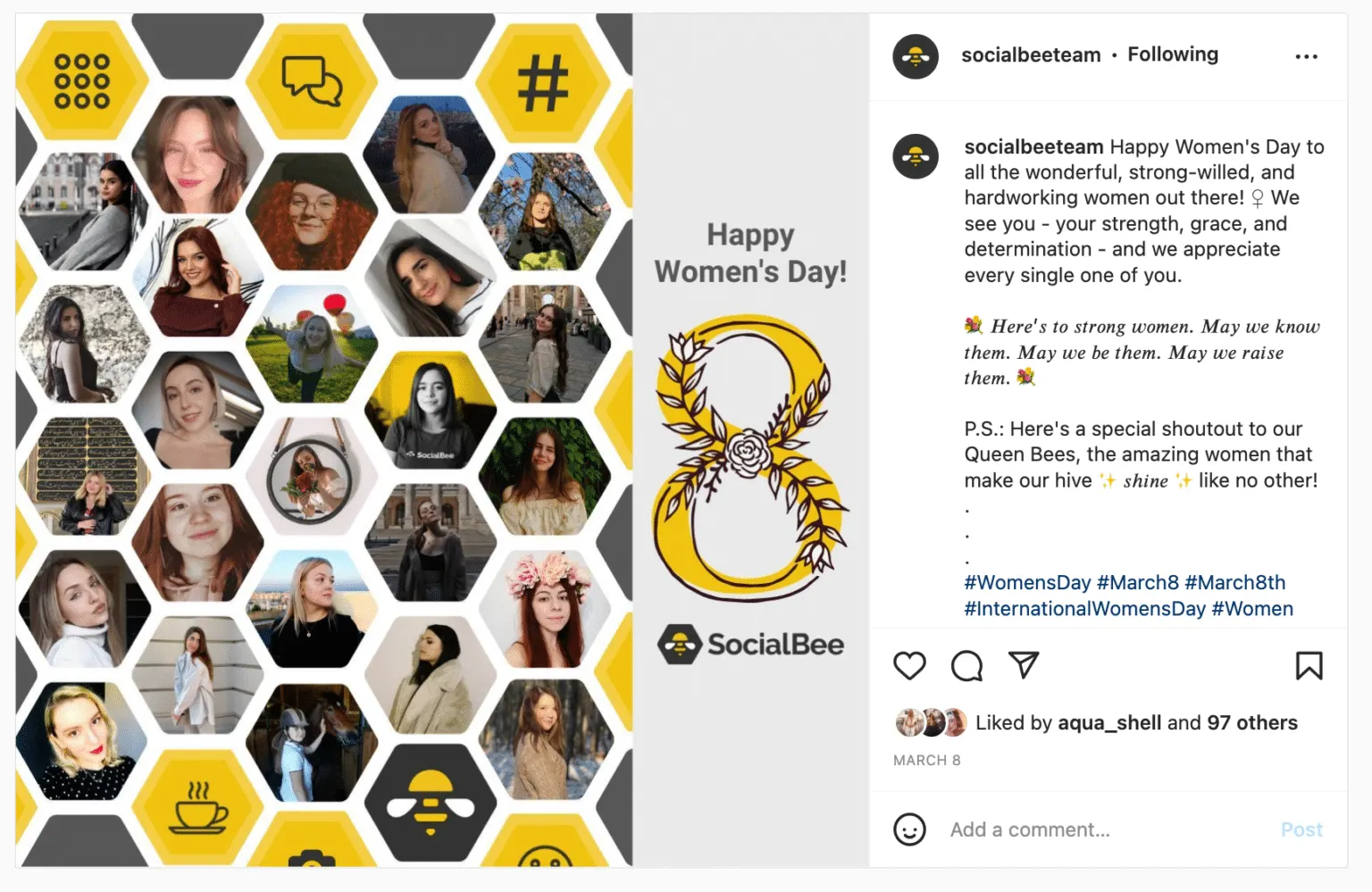
The post features a collage of team members alongside branded visual elements, including SocialBee’s signature colors, logo, and honeycomb-inspired design. This creates a strong connection between the holiday and the brand without making the post feel promotional.
What stands out most is how the content combines three elements:
- Employee recognition
- Brand identity
- A globally recognized awareness day
Instead of simply posting a Women’s Day graphic, SocialBee used the occasion to showcase the people behind the business. This makes the message feel more personal and credible while giving followers a glimpse into the company culture.
I also like how the visual immediately communicates the purpose of the post without requiring users to read the caption first. That’s an important detail because many people scroll quickly through social media feeds.
Why this post works:
- Highlights real people instead of stock imagery
- Reinforces the brand’s visual identity
- Creates an emotional connection with the audience
- Aligns naturally with the purpose of International Women’s Day
- Encourages community engagement through a relatable message
How you can apply this idea:
For awareness days like International Women’s Day, World Mental Health Day, International Youth Day, or World Kindness Day, look for opportunities to feature employees, customers, creators, volunteers, or community members. The people connected to your brand often tell a more compelling story than a generic holiday graphic ever could.
2. M&M’s: Halloween
Key lesson: Use seasonal holidays to make your products part of the celebration.
Some holidays naturally align with certain products. Halloween and candy are a perfect example. Instead of simply posting a «Happy Halloween» graphic, M&M’s built the entire post around a Halloween-themed version of its product.
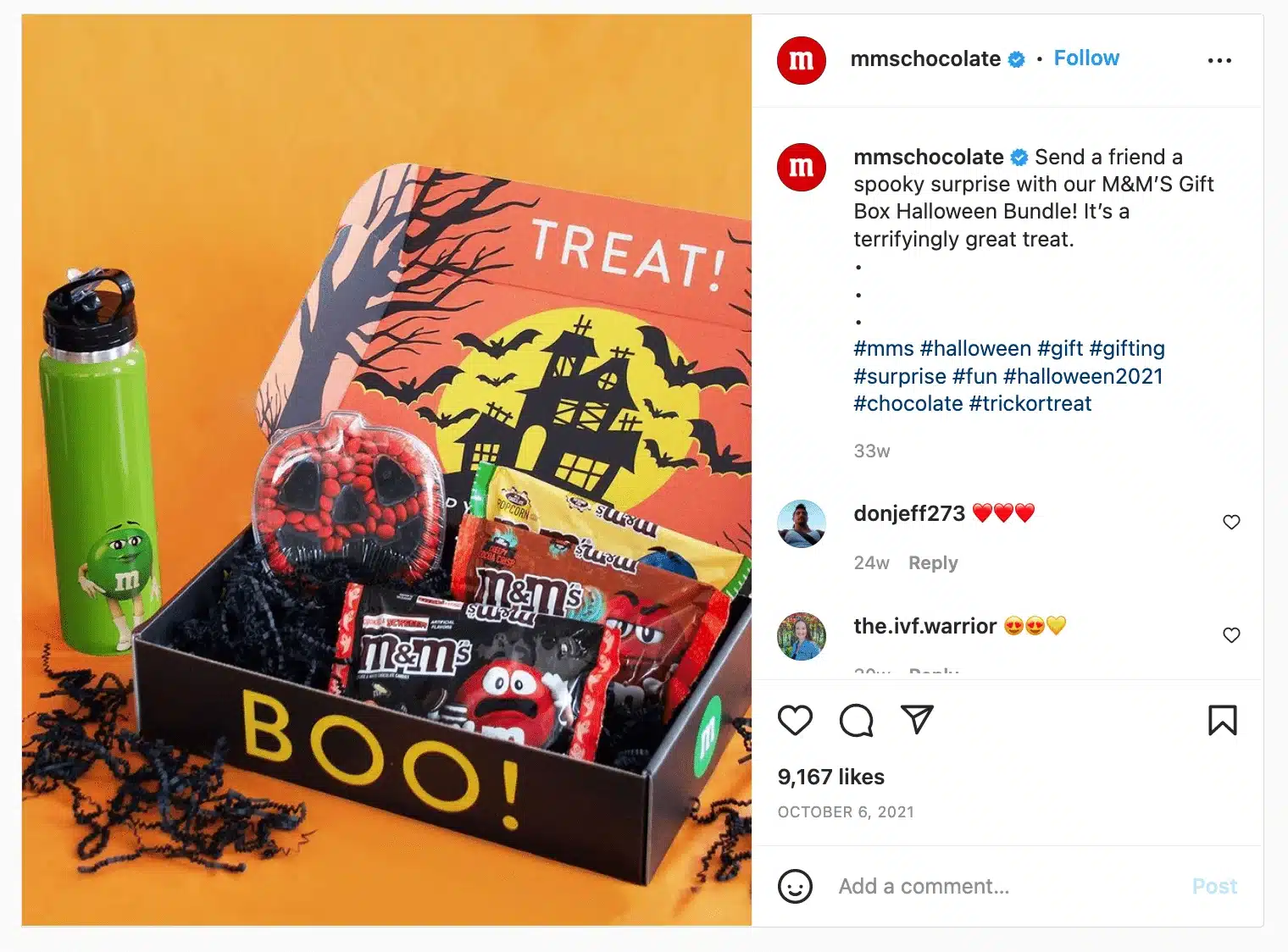
The post showcases a limited-edition Halloween gift box featuring themed packaging, seasonal colors, and spooky visual elements such as bats, haunted houses, and Halloween-inspired candy designs. Everything about the image immediately communicates the occasion.
What’s particularly effective is that the product doesn’t feel forced into the holiday. Halloween already creates demand for candy, treats, and gift boxes, so the promotion feels like a natural extension of the celebration rather than an advertisement disguised as holiday content.
This approach works because it answers a question many customers already have during seasonal events: «What should I buy for this occasion?»
Instead of interrupting the conversation, the brand becomes part of it.
Why this post works:
- Connects the product directly to a relevant holiday
- Uses seasonal packaging to make the content feel timely
- Creates urgency through a limited-time occasion
- Makes the product the hero of the visual
- Aligns with customer behavior during Halloween
How you can apply this idea:
If you sell products that naturally fit a holiday, don’t be afraid to feature them directly. National Pizza Day, National Ice Cream Day, World Chocolate Day, National Coffee Day, Valentine’s Day, Mother’s Day, and Christmas all create opportunities to showcase products in a way that feels relevant rather than promotional.
The key is making the holiday part of the story. Instead of posting a product photo and mentioning the holiday in the caption, build the creative concept around how your product helps people celebrate the occasion.
3. Slack: Thanksgiving
Key lesson: Use holidays as inspiration, not limitations.
One challenge with holiday marketing is that not every celebration resonates with a global audience. Thanksgiving is a good example. While it’s widely celebrated in the United States, many people around the world don’t observe it.
Instead of creating a traditional Thanksgiving post, Slack focused on the universal idea behind the holiday: gratitude.
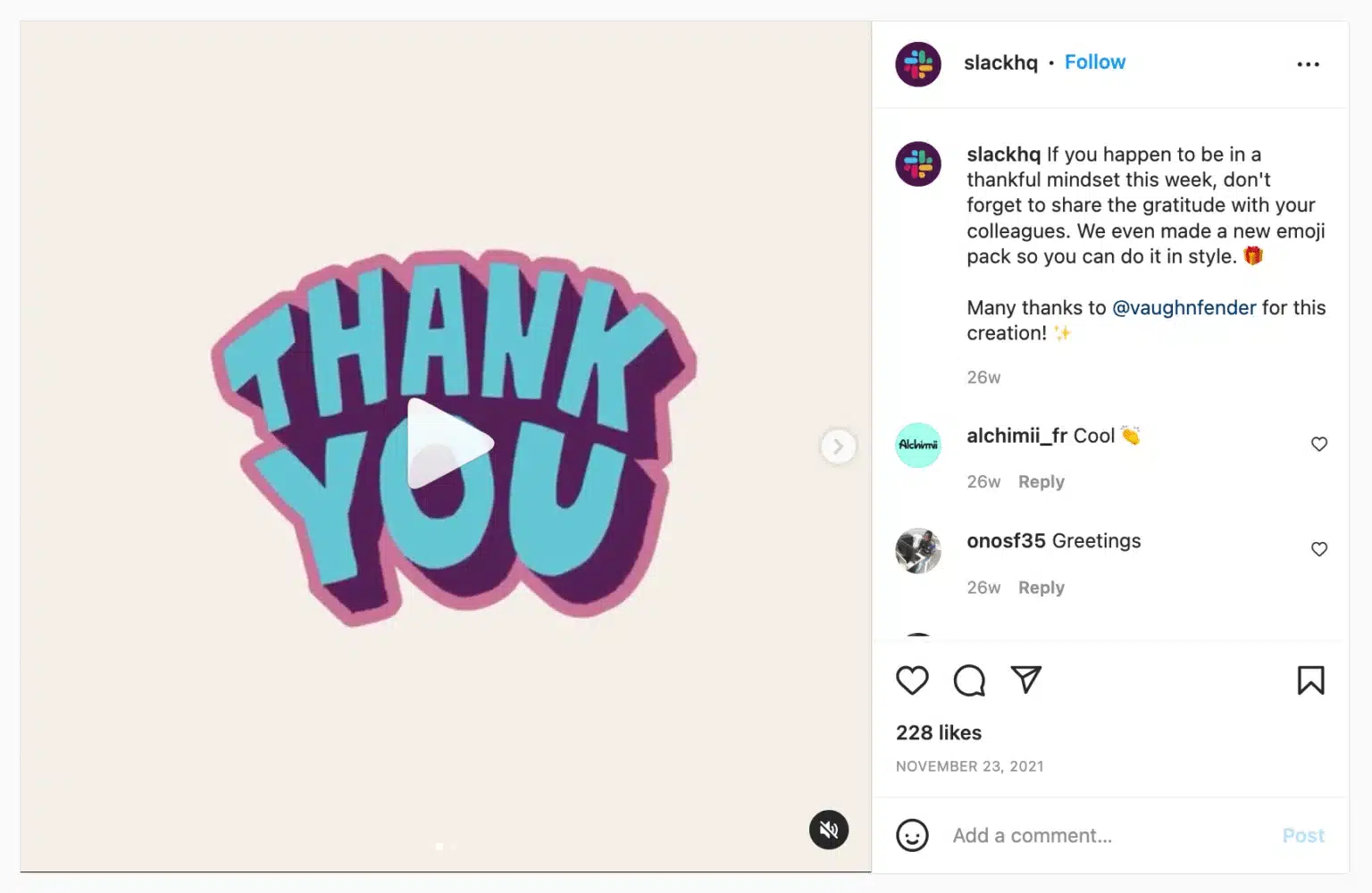
The post features a simple animated «Thank You» graphic paired with a message encouraging people to share appreciation with their colleagues. Slack also introduced a custom emoji pack, giving the audience a practical way to participate in the conversation.
What makes this example effective is that the brand extracted the core theme of the holiday rather than focusing on the holiday itself.
The result is content that feels relevant whether you’re in New York, Paris, Tokyo, or Sydney.
This is a particularly smart approach for brands with international audiences. Instead of centering the post on Thanksgiving traditions, Slack centered it on something everyone can relate to: expressing gratitude to the people they work with.
The content also aligns perfectly with Slack’s product. Workplace communication and team collaboration are at the heart of what the platform does, making the message feel authentic rather than opportunistic.
Why this post works:
- Focuses on a universal message instead of a location-specific celebration
- Aligns naturally with the brand’s purpose and audience
- Encourages audience participation
- Uses a simple visual that communicates the message instantly
- Makes the holiday relevant to a global community
How you can apply this idea:
When planning content for holidays like Thanksgiving, Mother’s Day, Father’s Day, International Women’s Day, or World Kindness Day, look beyond the holiday itself and identify the underlying theme.
For example:
- Thanksgiving → gratitude
- Mother’s Day → appreciation
- World Mental Health Day → support and wellbeing
- International Women’s Day → recognition and empowerment
- World Refugee Day → compassion and community
Often, the underlying message creates stronger content than the holiday itself because it allows more people to connect with what you’re saying.
4. Forever 21: Christmas Giveaway
Key lesson: Turn holiday excitement into audience participation.
The holiday season is one of the most competitive times of the year on social media. Brands are all competing for attention, which means simply posting a festive graphic often isn’t enough.
Forever 21 took a more interactive approach by combining a Christmas-themed giveaway with a simple game that encouraged followers to engage with the post.
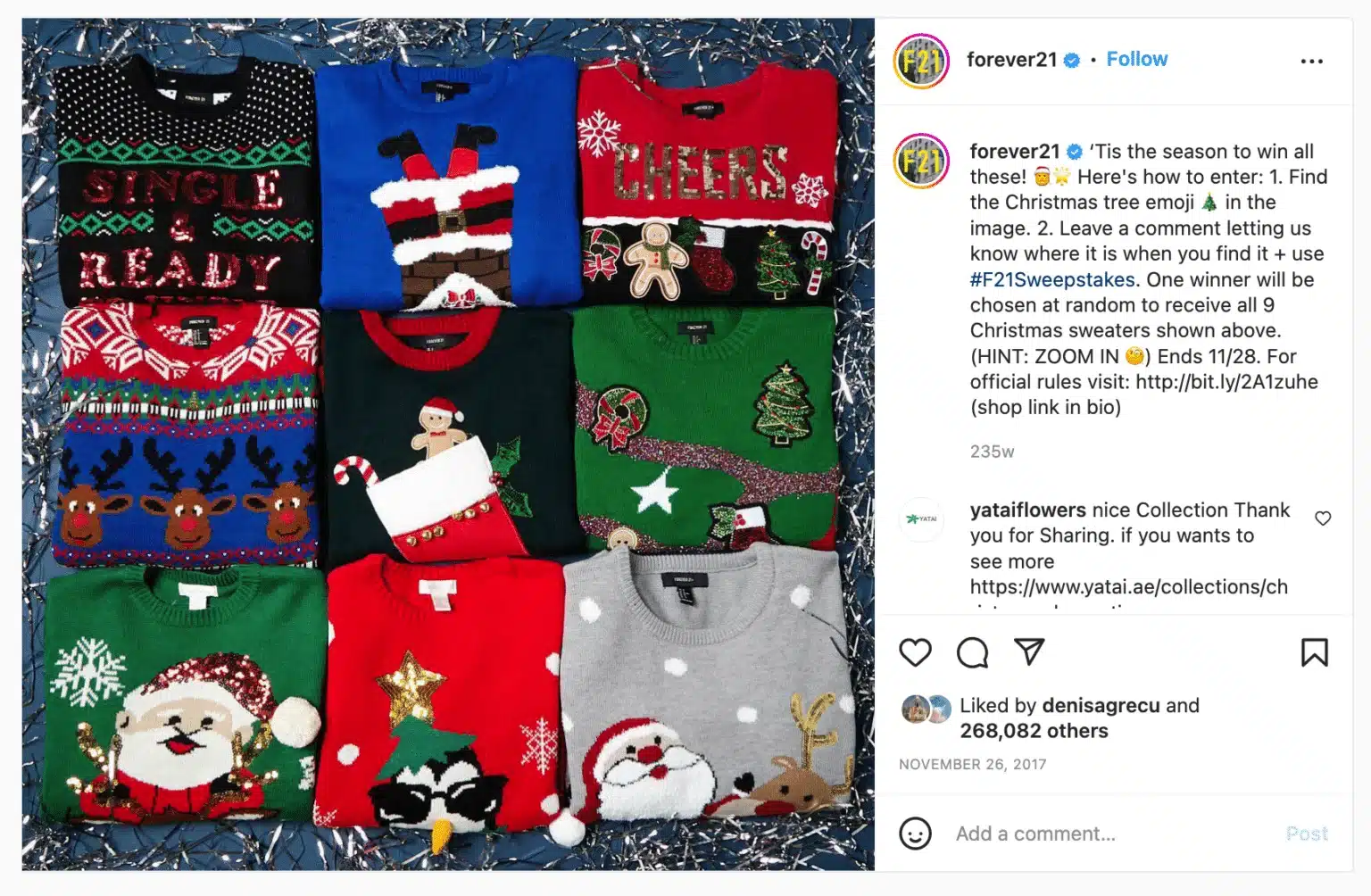
The image showcases a collection of holiday sweaters, while the caption asks users to find a hidden Christmas tree emoji and leave a comment with its location for a chance to win the featured products.
What’s smart about this campaign is that it gives people a reason to spend more time with the content. Instead of scrolling past the image, users have to actively search for the hidden element, increasing engagement and encouraging comments.
The giveaway also highlights the products naturally. Participants spend time examining the sweaters while looking for the emoji, which means the promotion doesn’t feel as intrusive as a traditional sales post.
This is a good example of how holiday content can support business goals without sacrificing entertainment value.
Why this post works:
- Combines a holiday theme with a giveaway
- Encourages comments and audience participation
- Increases the amount of time users spend interacting with the post
- Showcases products without feeling overly promotional
- Creates excitement around a seasonal collection
How you can apply this idea:
Holidays like Christmas, Halloween, Valentine’s Day, Mother’s Day, National Pizza Day, National Ice Cream Day, and World Chocolate Day are perfect opportunities for giveaways and contests.
You don’t need a massive budget to make them work. A simple challenge, quiz, hidden object game, caption contest, or user-generated content campaign can often generate more engagement than a standard promotional post.
The key is giving people a reason to interact with your content rather than simply asking them to like or share it.
5. HelloFresh: Super Bowl
Key lesson: Connect your brand to how people experience a holiday, not just the holiday itself.
The Super Bowl is one of the biggest annual events in the United States, but not everyone watches it for the same reason. Some people care about football. Others tune in for the halftime show, the commercials, or simply the chance to spend time with friends and family.
HelloFresh recognized a simple truth: for many people, game day is really about the food.
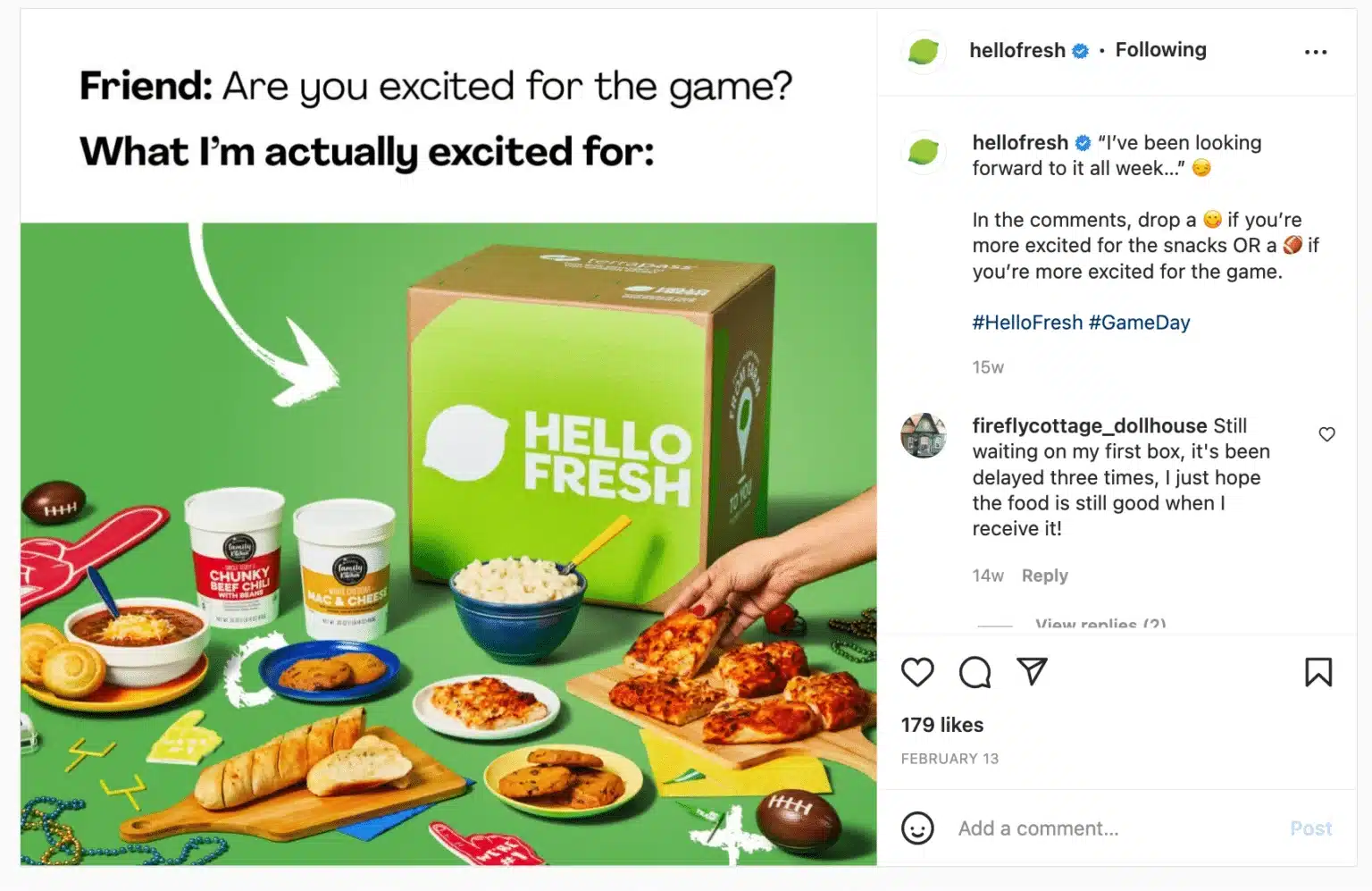
The post uses a relatable meme format that contrasts what people say they’re excited about (the game) with what they’re actually excited about (the snacks). The visual showcases a variety of game-day foods alongside HelloFresh products, creating an immediate connection between the event and the brand’s offering.
What makes this example effective is that it taps into a shared audience experience instead of focusing on football itself.
HelloFresh doesn’t need to be a sports brand to participate in the Super Bowl conversation. The company simply identified the part of the event that naturally aligns with its audience and products.
The caption also encourages engagement by asking followers whether they’re more excited about the food or the game, giving people an easy way to join the conversation.
Why this post works:
- Uses humor and relatability instead of direct promotion
- Connects the holiday to the brand’s core product
- Focuses on audience behavior rather than the event itself
- Encourages comments and engagement
- Makes the brand feel part of a larger cultural moment
How you can apply this idea:
When planning content for major holidays and events, think about the traditions, habits, and behaviors that surround them.
For example:
- Super Bowl → food, parties, and gatherings
- Halloween → costumes, candy, and creativity
- Valentine’s Day → gift-giving and relationships
- Christmas → family traditions and celebrations
- World Chocolate Day → treats and indulgence
- National Pizza Day → sharing meals with friends
6. Volvo: Valentine’s Day
Key lesson: Find a creative connection between the holiday and your brand.
Some brands have an obvious reason to participate in holidays like Valentine’s Day. Florists, restaurants, jewelry brands, and gift retailers can naturally tie their products to the occasion.
Automotive brands don’t have that luxury.
That’s what makes this Valentine’s Day post from Volvo interesting. Instead of forcing a connection between cars and romance, Volvo focused on an idea that aligns with both the holiday and the brand: bringing people together.

The visual features heavy machinery building a road between two people alongside the message «Build roads to love effortlessly.» It’s a simple concept, but one that transforms a construction-related product into a symbol of connection.
What makes this example effective is that Volvo didn’t try to imitate what other brands were doing on Valentine’s Day. Instead of hearts, flowers, and generic romantic messages, the company created a piece of content that could only come from Volvo.
The post feels relevant to the holiday while remaining true to the brand’s identity.
That’s an important lesson because one of the biggest mistakes brands make with social media holidays is abandoning their personality in an attempt to join a trend.
Why this post works:
- Creates a unique connection between the holiday and the brand
- Uses a memorable visual metaphor
- Maintains a strong brand identity
- Stands out from typical Valentine’s Day content
- Delivers a simple message that’s easy to understand
How you can apply this idea:
When a holiday doesn’t naturally connect to your products, look for an idea, value, or emotion that links the two.
For example:
- Valentine’s Day → connection, relationships, trust
- World Mental Health Day → support, wellbeing, balance
- International Women’s Day → recognition, leadership, achievement
- World Environment Day → responsibility, sustainability, long-term thinking
- World Kindness Day → community and positive impact
7. Guinness: St. Patrick’s Day
Key lesson: Use holiday campaigns to encourage user-generated content.
St. Patrick’s Day is one of the most important dates on Guinness’s marketing calendar. The holiday is closely associated with Irish culture, pubs, celebrations, and social gatherings, making it a natural fit for the brand.
Instead of simply posting festive content, Guinness turned the occasion into an interactive campaign that encouraged customers to create and share their own content.
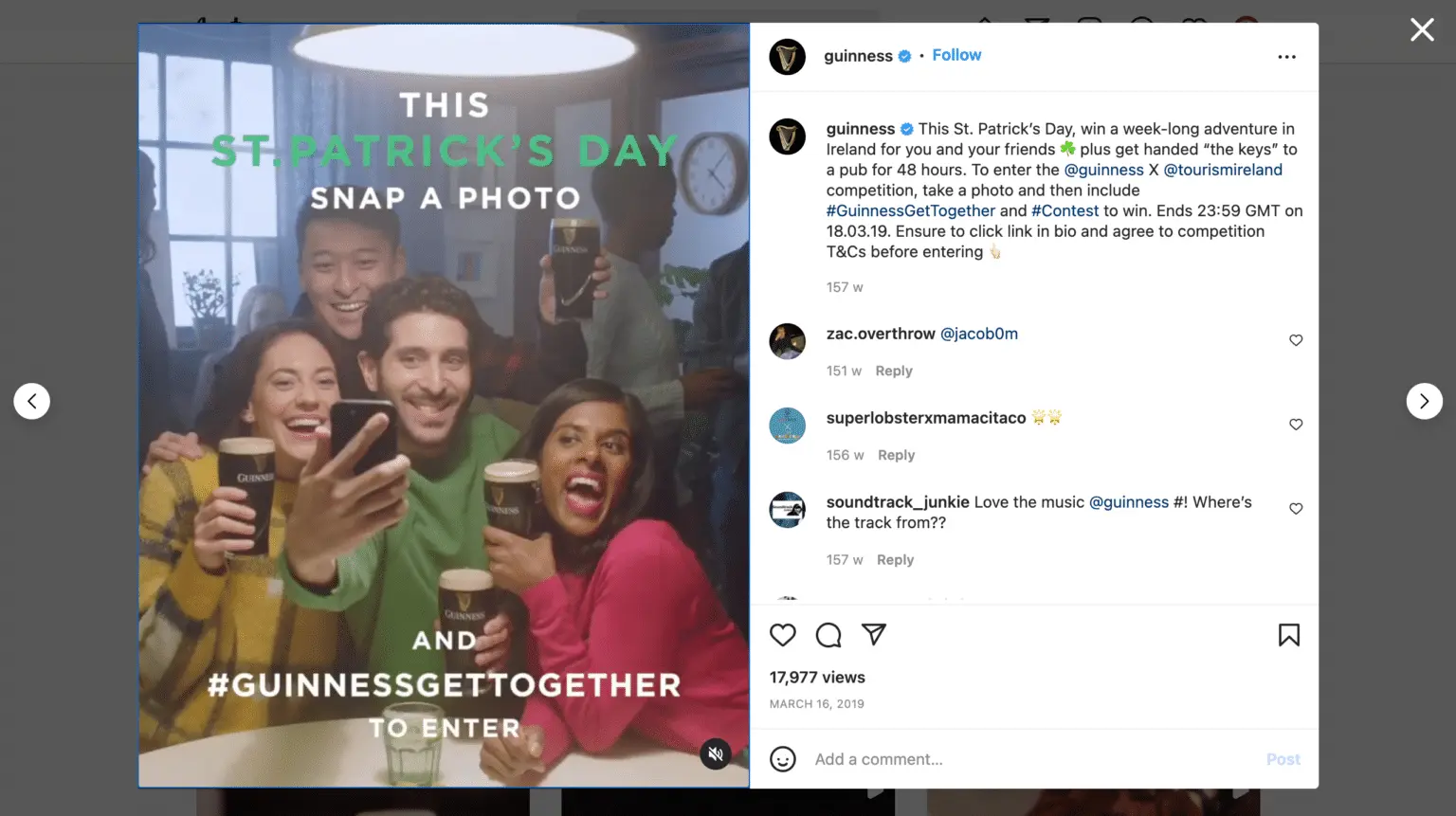
The campaign invited people to share photos using the hashtag #GuinnessGetTogether for a chance to win a trip to Ireland and other exclusive experiences. Rather than making Guinness the center of the conversation, the brand made its audience the star.
This is a powerful strategy because user-generated content often feels more authentic than branded content. Every photo shared by participants helped expand the campaign’s reach while creating a sense of community around the celebration.
The partnership with Tourism Ireland also added another layer to the campaign. By collaborating with an organization that shares a connection to the holiday, Guinness was able to offer a more compelling prize while reaching a wider audience.
What’s particularly effective is how the campaign reinforces Guinness’s heritage. St. Patrick’s Day already has strong associations with Ireland, and the contest naturally strengthens the connection between the brand and its roots without needing to explain it.
Why this post works:
- Encourages user-generated content at scale
- Creates a strong incentive for participation
- Expands reach through audience sharing
- Uses a branded hashtag to unify campaign entries
- Reinforces Guinness’s connection to Irish culture
- Benefits from a strategic brand partnership
How you can apply this idea:
Holidays that naturally bring people together are excellent opportunities for user-generated content campaigns.
For example:
- St. Patrick’s Day → celebration photos
- National Selfie Day → audience selfies
- International Cat Day → pet photos
- National Dog Day → customer pet stories
- Halloween → costume contests
- Christmas → holiday traditions and decorations
You don’t need to give away an international vacation to make this strategy work. A simple prize, branded hashtag, or community challenge can motivate people to create content and help spread your campaign organically.
8. Cadbury: Easter
Key lesson: Create content that helps people celebrate the holiday.
Many brands treat holiday marketing as a promotional opportunity. Cadbury took a different approach by creating content that added value to the celebration itself.
During Easter, the brand launched its #HideItHack campaign, sharing creative ways for families to hide Easter eggs around the house and make egg hunts more fun.
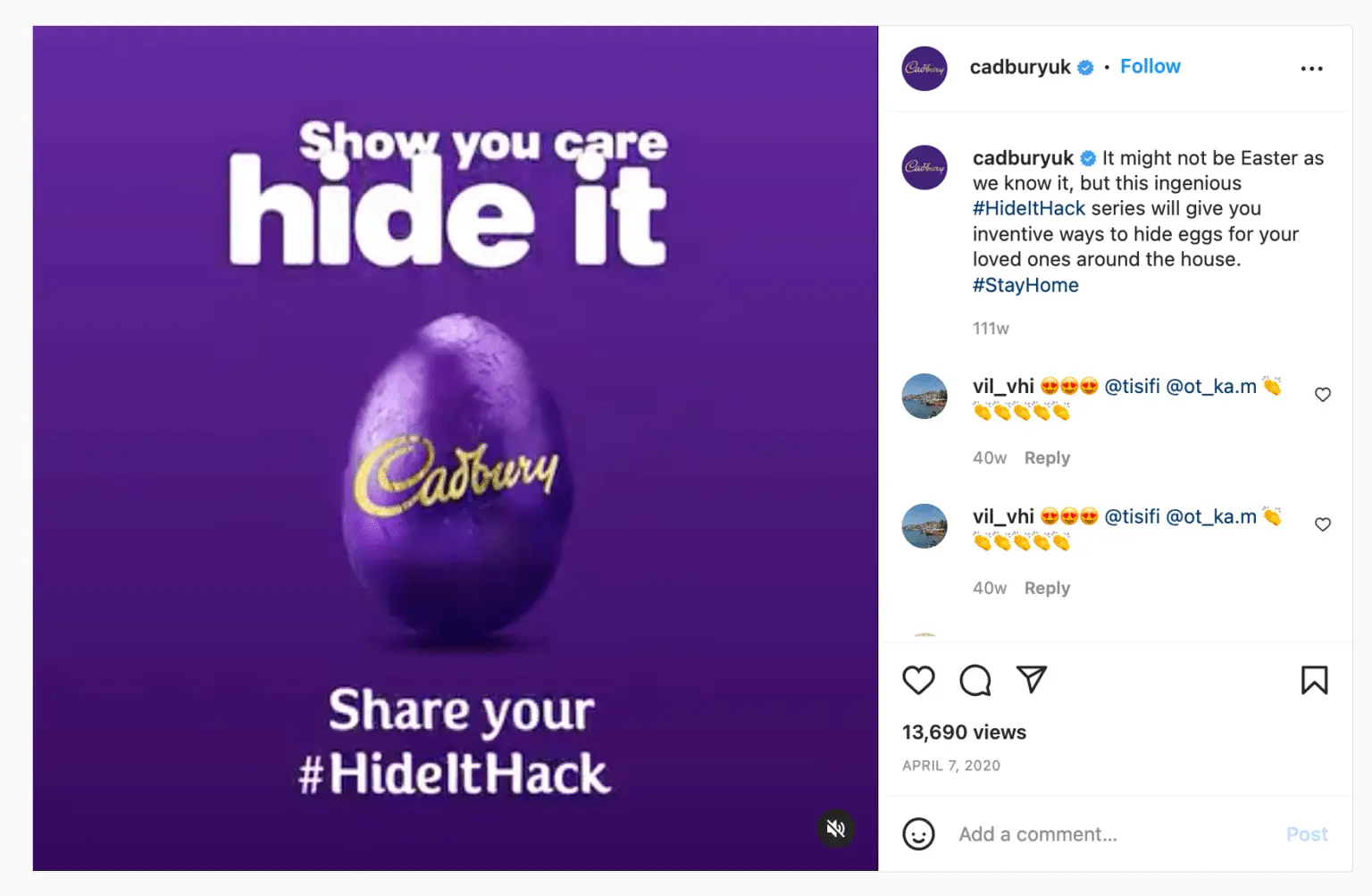
At first glance, the campaign looks simple. But it’s actually a strong example of content marketing.
Instead of telling people to buy chocolate eggs, Cadbury showed them how to create a better Easter experience. The product is still present, but it’s part of a larger activity rather than the sole focus of the post.
What’s especially clever is how the campaign turned a familiar holiday tradition into a source of ongoing content. By encouraging people to share their own hiding ideas using the hashtag #HideItHack, Cadbury created opportunities for community participation while generating additional user-generated content.
The campaign was also highly relevant to the moment. During a time when many families were spending more time at home, the brand adapted a classic Easter tradition to fit the reality of its audience.
Why this post works:
- Provides practical value instead of simply promoting a product
- Encourages audience participation through a branded hashtag
- Connects the product to a meaningful holiday tradition
- Creates opportunities for user-generated content
- Makes the brand part of the celebration rather than the center of attention
How you can apply this idea:
One of the most effective ways to use social media holidays is to teach your audience how to enjoy them.
For example:
- Halloween → costume ideas or decoration tutorials
- National Pizza Day → pizza-making tips or recipes
- World Chocolate Day → dessert inspiration
- Mother’s Day → gift ideas or family activities
- International Coffee Day → brewing tips or coffee recipes
- Christmas → decorating guides or holiday traditions
The goal isn’t always to promote a product directly. Sometimes the best holiday content helps people do something, make something, or celebrate something. When your brand becomes useful, engagement tends to follow naturally.
9. Madhappy: World Mental Health Day
Key lesson: Use awareness days to reinforce your mission, not promote your products.
Many brands participate in awareness days because they’re trending. The problem is that audiences can quickly tell when a company is joining the conversation without a genuine connection to the cause.
Madhappy takes the opposite approach.
Mental health awareness is central to the brand’s identity, which makes World Mental Health Day a natural opportunity to expand on a topic its audience already expects it to discuss.
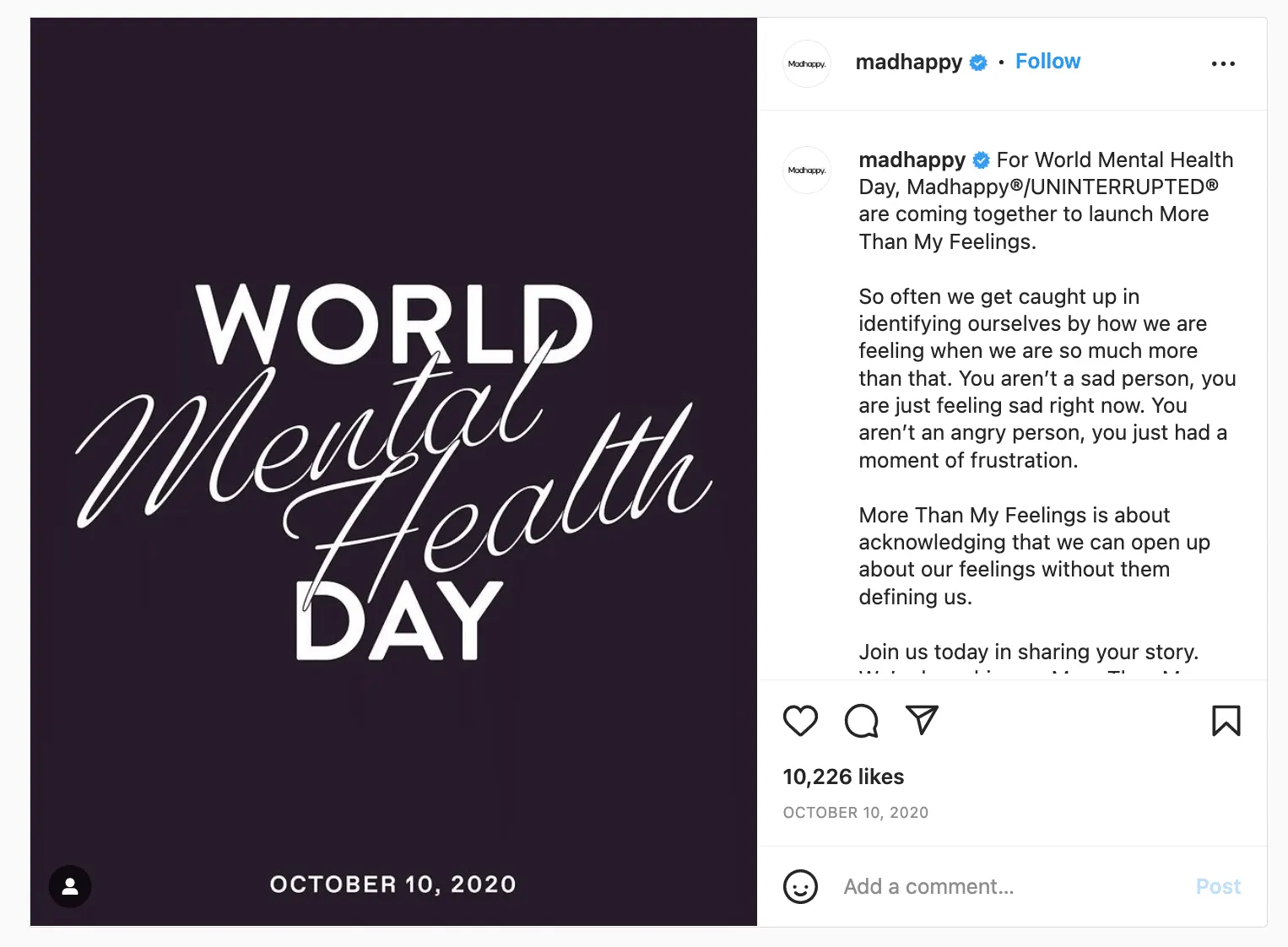
Rather than posting a generic awareness graphic, Madhappy used the occasion to launch a campaign called More Than My Feelings, encouraging people to talk openly about their mental health without letting their emotions define who they are.
The message is simple, but that’s part of what makes it effective.
Instead of trying to cover every aspect of mental health, the post focuses on a single idea: people are more than what they’re feeling in a particular moment. The caption then expands on that concept and invites the audience to share their own experiences.
This approach transforms the post from an announcement into a conversation.
What’s particularly effective is that the campaign creates value for the audience whether or not they ever purchase anything from the brand. The focus remains on awareness, education, and community support rather than product promotion.
Why this post works:
- Aligns directly with the brand’s mission and values
- Focuses on a clear, meaningful message
- Encourages conversation and community participation
- Uses the awareness day to provide value rather than sell
- Creates an emotional connection with the audience
How you can apply this idea:
Awareness days work best when they genuinely connect to your company’s mission, expertise, or values.
When participating in awareness days, focus on what your audience can learn, discuss, or contribute rather than what you can sell. The strongest campaigns leave people feeling informed, supported, or inspired, which is exactly what Madhappy accomplishes here.
10. UNESCO: International Day of Education
Key lesson: Use holidays to amplify your mission through powerful storytelling.
The strongest social media holiday posts remind people why that day exists in the first place.
UNESCO’s International Day of Education post is a great example of this approach.
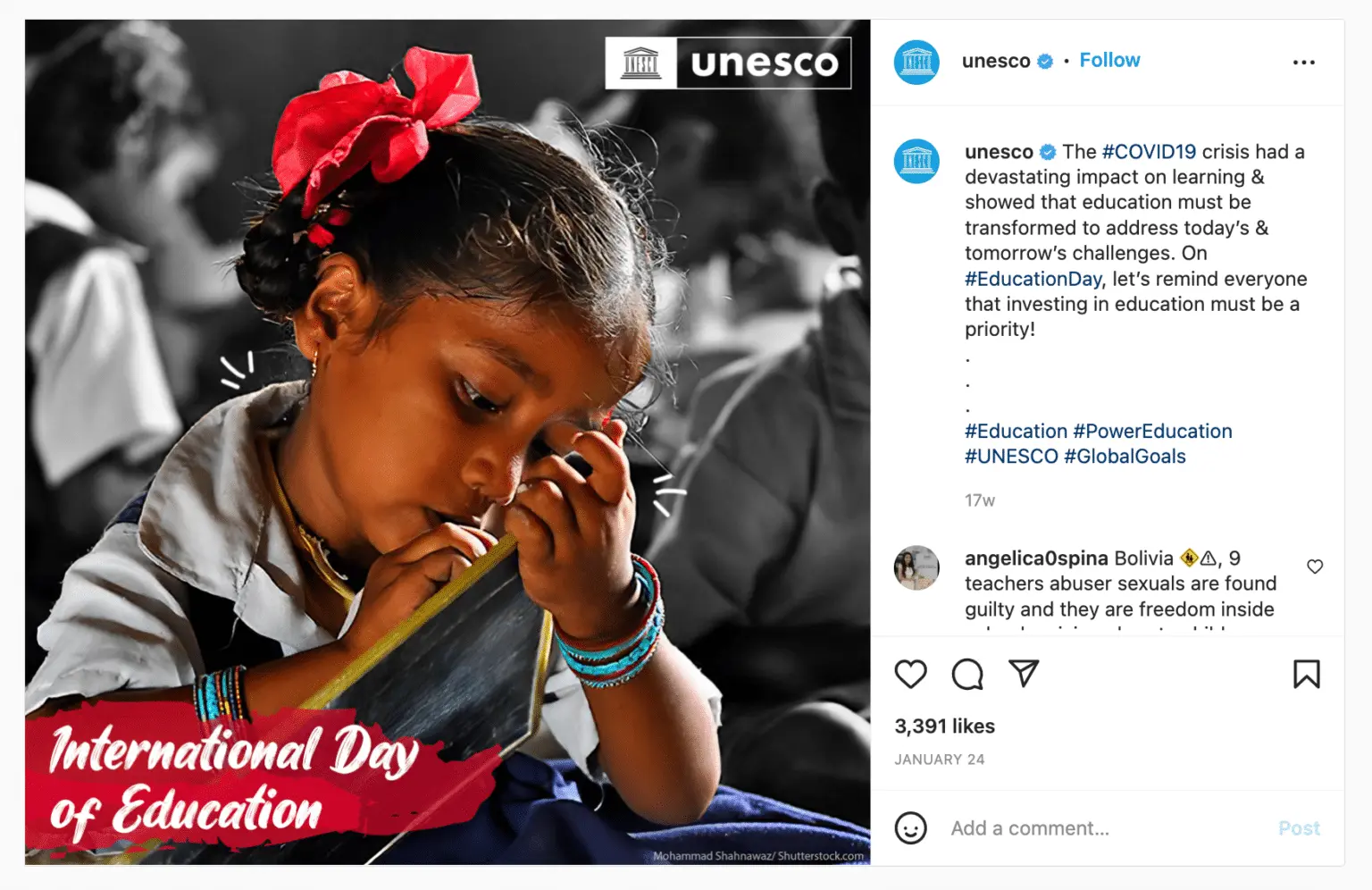
The visual features a child focused on learning, immediately putting a human face on the issue. Rather than relying on statistics or lengthy explanations, the image communicates the importance of education in a way that’s easy to understand and difficult to ignore.
The caption builds on that message by connecting the observance to a larger conversation about the future of education and the challenges exposed by the global pandemic.
What’s particularly effective is that UNESCO doesn’t try to make itself the center of the story. The focus remains on the cause, the people affected by it, and the action that needs to be taken.
That’s an important distinction because many organizations make the mistake of turning awareness days into self-promotional campaigns. UNESCO uses the holiday to reinforce its mission instead.
The result is content that educates, informs, and advocates at the same time.
Why this post works:
- Uses a compelling visual to communicate a complex issue
- Connects the holiday to a larger social conversation
- Reinforces the organization’s mission and purpose
- Focuses on the audience and the cause rather than the brand
- Creates an emotional connection without being overly promotional
How you can apply this idea:
Mission-driven holidays are a great opportunity to educate your audience and highlight causes that matter to your organization.
The most impactful holiday content often starts with a simple question: Why does this day exist?
If you can answer that question clearly and connect it to your organization’s mission, you’ll create content that feels meaningful long after the holiday has passed.
How to make the most of this social media holiday calendar
Here’s how to choose the right holidays, create engaging content around them, and plan your campaigns ahead of time.
1. Create your annual holiday content plan
One reason social media holiday calendars become overwhelming is that marketers try to plan them one month at a time.
A better approach is to build an annual content plan at the beginning of the year and identify where key holidays fit into your existing marketing efforts. This also allows you to begin your holiday campaigns as early as necessary, not simply throw out a few posts a couple of days before the date.
In fact, according to Sprout’s Q4 2025 Pulse Survey, 44% of people on social media say they are more likely to buy from brands that begin their fall and winter marketing campaigns as early as August, and this includes posts for holidays like Halloween, Thanksgiving, and Christmas.
Start by reviewing your major business goals, product launches, seasonal campaigns, events, and promotions. Then, look for social media holidays that can support those initiatives.
Also make sure that whatever holidays you include in your plan are relevant to your audience geographically as well. For example, on federal holidays, most federal employees receive the day off, making these dates highly visible across the United States.
Several U.S. holidays are officially recognized by the federal government, although not every observance has the same cultural significance for marketers.
This approach helps ensure your holiday content supports your broader marketing strategy instead of becoming a collection of disconnected posts.
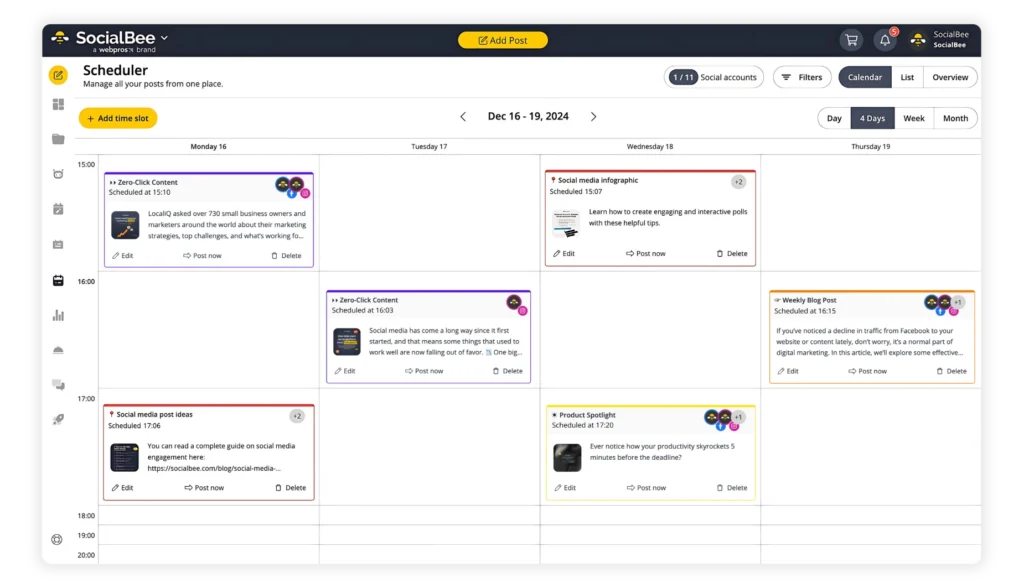
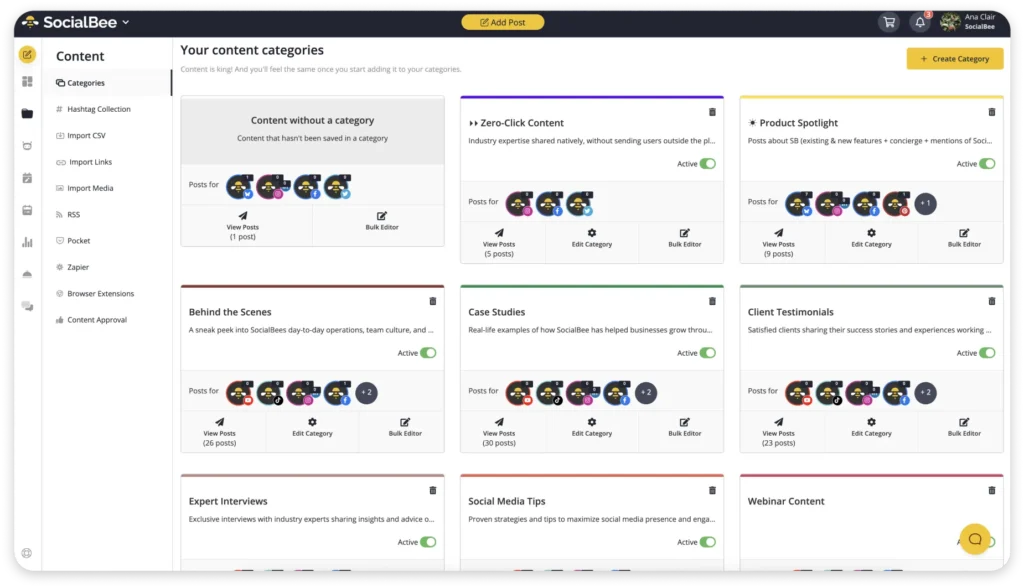
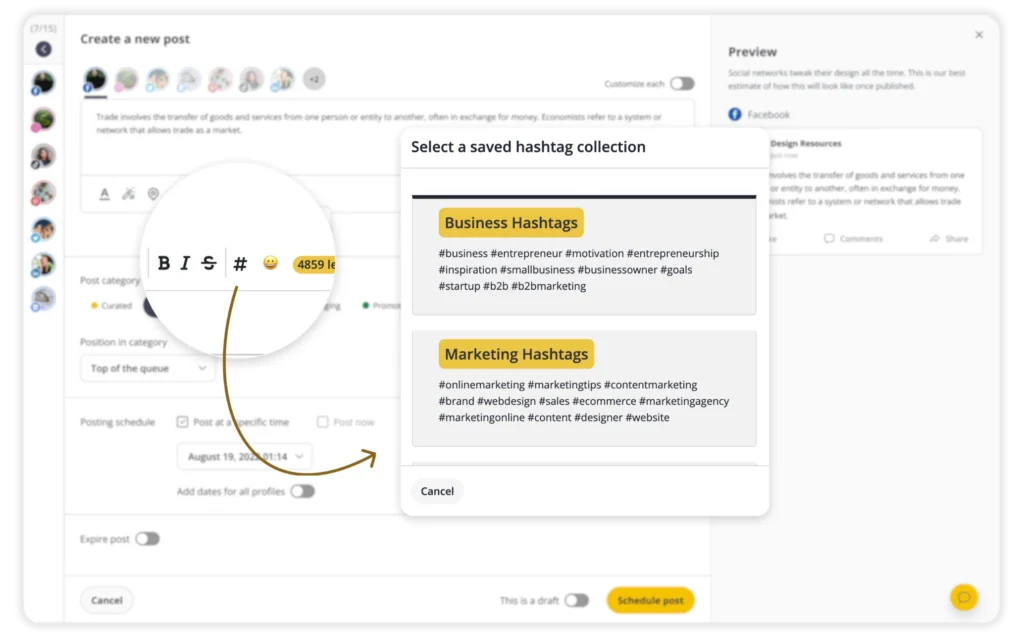
To keep everything organized, create a dedicated section in your content calendar for upcoming holidays and campaigns. In SocialBee, you can group related content into categories and view your plans in a visual calendar, making it easier to see how holidays fit into your content strategy throughout the year.
5. Crea elementos visuales que encajen tanto con la festividad como con tu branding
El contenido navideño debería transmitir un ambiente festivo sin dejar de lado tu identidad visual.
Aquí tienes algunas formas sencillas de mejorar tus imágenes navideñas:
- Adaptar los colores, los iconos o los elementos de temporada para que vayan a juego con la ocasión
- El uso de carruseles para contenidos educativos y de sensibilización
- Crear vídeos cortos para celebraciones y eventos
- Que los textos superpuestos sean breves y fáciles de leer
- Mantener la coherencia en los colores, las tipografías y los elementos de diseño del branding
El objetivo es que tu contenido resulte actual y, al mismo tiempo, se reconozca al instante como propio de tu marca.
Preguntas frecuentes
1. ¿Qué son las fiestas en las redes sociales?
Las fechas especiales en las redes sociales son días nacionales, conmemoraciones internacionales, campañas de concienciación y celebraciones de temporada que las marcas y los creadores aprovechan para crear contenido. Algunos ejemplos son el Día Internacional de la Mujer, el Día Mundial de la Salud Mental, el Día Mundial del Medio Ambiente, el Día Nacional del Perro y el Día Internacional del Café.
2. ¿Con cuánta antelación debería planificar las publicaciones de las redes sociales para las fiestas?
Para las fiestas importantes y las campañas de sensibilización, lo mejor es empezar a planificarlas con al menos un mes de antelación. Las campañas más grandes, que incluyan varias publicaciones, colaboraciones, sorteos o promociones, pueden necesitar varios meses de preparación para que salgan bien.
Hay días festivos que afectan a los colegios, los bancos y las oficinas públicas, lo que puede influir en el comportamiento de la audiencia y en los horarios de publicación.
3. ¿Qué debería publicar en las redes sociales con motivo de una festividad?
El mejor contenido para las fiestas depende de la ocasión y de tu público. Algunos formatos habituales son los artículos dedicados a empleados, las historias de clientes, los carruseles educativos, el contenido «entre bastidores», las encuestas, los sorteos y las publicaciones de concienciación. El objetivo es crear contenido que resulte relevante tanto para la festividad como para tu marca, en lugar de limitarte a mencionar la fecha.
Crea tu propio calendario de días festivos para las redes sociales
Las campañas de fiestas que más éxito tienen casi nunca surgen por casualidad. Normalmente son el resultado de planificar con antelación, detectar oportunidades a tiempo y tener el contenido listo antes de que todo el mundo empiece a hablar del mismo evento.
Usa este calendario de fiestas como fuente de ideas, no como una lista de tareas. Unas pocas campañas bien hechas casi siempre darán mejores resultados que docenas de publicaciones navideñas hechas a toda prisa.
Una vez que hayas identificado las fechas más importantes para tu marca, anótalas en tu calendario de contenidos y empieza a crear con antelación. Empieza tu prueba gratuita de 14 días de SocialBee y descubre cómo puedes organizar las campañas de las fiestas por categorías, visualizarlas en tu calendario de contenidos y programar publicaciones en todas las plataformas mucho antes de que llegue la fiesta.
Descarga nuestro calendario de días festivos en redes sociales para 2026 como guía de referencia de una sola página o guárdalo para futuras sesiones de planificación.