Why People Save Content?
When people save your content, they are signalling that it’s important and they don’t want to lose it. Here are the reasons why people save content:
- They believe that the content will be useful in the future. For example, recipe videos, guides, or checklists.
- If they save aspirational posts, before and after, or dream outcome posts, they signal that this is what they want to become.
- When content resonates with what the person believes but is not able to put into words, they save it.
Guide To Turn Saved Posts Into A Repeatable Content Format
Saved posts indicate that this content format worked well with the audience. So, you can use it to create future posts and get more engagement. Here’s how you can turn saved posts into a repeatable content format:
Identify Your Highest-Save Posts
Review your content analytics and create a list of high-save posts. For each post, look at:
- Topic
- Format
- Hook
- Content structure
- Audience segment
- Engagement metrics
Find the Underlying Framework
See the structure you used to create the post. For example:
Post 1: 7 Email Subject Lines That Increase Open Rates
Post 2: 7 LinkedIn Headlines That Attract Recruiters
Post 3: 7 CTA Examples That Increase Conversions
All have different topics, but the structure is the same across all. It is a curated list of actionable examples that solve a specific problem.
When analysing, see:
- What problem does this post solve?
- What structure does it use?
- What makes it easy to consume?
- Why would someone save it?
Your goal is to identify the repeatable pattern behind the success
Categorize Your Winning Content Formats
Most high-save posts fall into a handful of content categories.
Educational Frameworks
These explain a process or methodology, such as the 5-step sales funnel, the content creation workflow, and the SEO optimization checklist.
Resource Collections
These gather valuable tools or references.
Examples:
- Best AI tools for marketers
- Free design resources
- Top productivity apps
Swipe Files and Templates
These provide ready-to-use assets such as Email templates, sales scripts, caption formulas, and prompt libraries.
Mistakes and Lessons
These help users avoid common pitfalls. It includes:
- Content marketing mistakes
- SEO errors
- Branding misconceptions
Checklists
These help simplify complex tasks.
For example:
- Website launch checklist
- Podcast setup checklist
- LinkedIn profile optimization checklist
When you identify which category consistently earns saves, you can create more content within that framework.
Build a Content Template
Once you’ve identified a successful format, turn it into a reusable template. Create content series and use the template across different topics.
Test Variations Without Changing the Core Structure
Experiment with variables to see if a different format works better. Keep the core structure similar. Try different headlines, design styles, content depth, and examples.
Measure Format Performance
Not every content format will keep on generating saves forever. Track performance and regularly monitor save rate, reach, shares, engagement, conversion, and click-through rate.
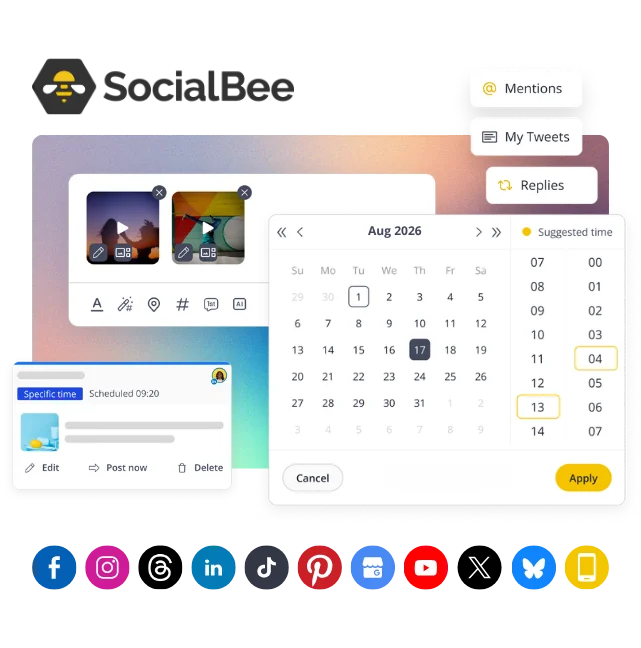
Turn Your High Save Posts Into Repeatable Format With SocialBee
High-save posts are valuable clues about what your audience genuinely finds useful. Instead of chasing new ideas every day, analyze your best-performing posts and identify the frameworks behind them.
By turning successful posts into repeatable content formats, you can create a scalable content system that consistently delivers value, increases engagement, and reduces the pressure of constant ideation.
And if you are looking for a platform that makes it easy for you, SocialBee is the right option.
It’s a social media management tool with built-in analytics, so you can check which posts get the most engagement, create more content based on those winning topics and formats, and track how the new posts perform. This way, you’re using real results to decide what to create next.
Start your 14-day SocialBee trial and let your best-performing content guide your next posts.
FAQs
What types of content usually generate the most saves?
Content such as how-to guides, checklists, templates, resource lists, tutorials, industry insights, case studies, and step-by-step frameworks receives the highest number of saves.
Should I copy the exact format of my top-performing posts?
You should replicate the framework, not duplicate the content. Keeping the structure consistent while introducing new insights, examples, and topics helps maintain audience interest and originality. Plus, experiment with different variables to increase engagement.
What metrics should I track besides saves?
In addition to saves, monitor shares, comments, reach, click-through rate, conversions, and follower growth to evaluate overall content performance.