You pull up your social media analytics after weeks of consistent publishing. You wait for the dashboard to reward you for your labor. But you notice a dip in engagement levels. Nothing alarming. Then you compare the numbers against previous months, and the red flags emerge. You notice fewer comments, fewer shares, and lower reach. Posts that once sparked conversations now barely register.
A single underperforming post isn’t a concern. A pattern is.
A downward trend in engagement is just a warning sign. It’s a symptom of problems in strategy, content, or execution. Early interception is the best course correction.
We’re SocialBee LABS SRL, part of WebPros. We use the information you provide to share relevant content & updates, as outlined in our Privacy Policy. You can opt out anytime.
Short summary
- Engagement drops are often a symptom, not the problem itself. Look beyond the numbers to identify the cause of the decline.
- Value-driven content wins. Audiences engage more with content that educates, solves problems, or sparks conversations.
- Consistency matters more than intensity. A reliable posting schedule typically outperforms sporadic bursts of activity.
- Social media is a two-way channel. Brands that actively respond to comments and participate in conversations tend to see stronger engagement.
- Platform behaviour changes constantly. Regularly testing new formats and reviewing performance helps keep your strategy relevant.
Reasons for Drop in Engagement Levels (And What You Can Do About It)
Engagement doesn’t vanish overnight. It is a ripple effect of various reasons, such as:
Your Content Isn’t Giving People Enough Value
Ask yourself: why does anyone engage with content? Simply put, because it delivers value. This value takes various forms. A new strategy, a fresh perspective, or a solution. Sometimes it’s as simple as feeling understood. In this context, repetitive, overly promotional, or disconnected posts bring engagement down. It’s not like followers actively reject the content. It’s just that nothing compels them to stop, react, or participate in the conversation.
What to do:
- Answer audience questions directly.
- Share examples from real-world experiences.
- Focus on audience problems, not company updates.
- Audit your highest-performing content and identify patterns.
Your Posting Schedule Feels Random
Even great content may flop in the absence of an audience. Sporadic posting makes it harder to maintain visibility and build familiarity. One week, you publish daily. The next week, crickets. That inconsistency creates momentum gaps. Plus, you’re out of sight and out of mind. It’s not just the audience that cares about your posting schedule; social platforms do too. In fact, they reward accounts that stay consistent in engaging audiences.
What to do:
- Create a realistic publishing schedule.
- Plan content at least two weeks ahead.
- Post during proven engagement windows.
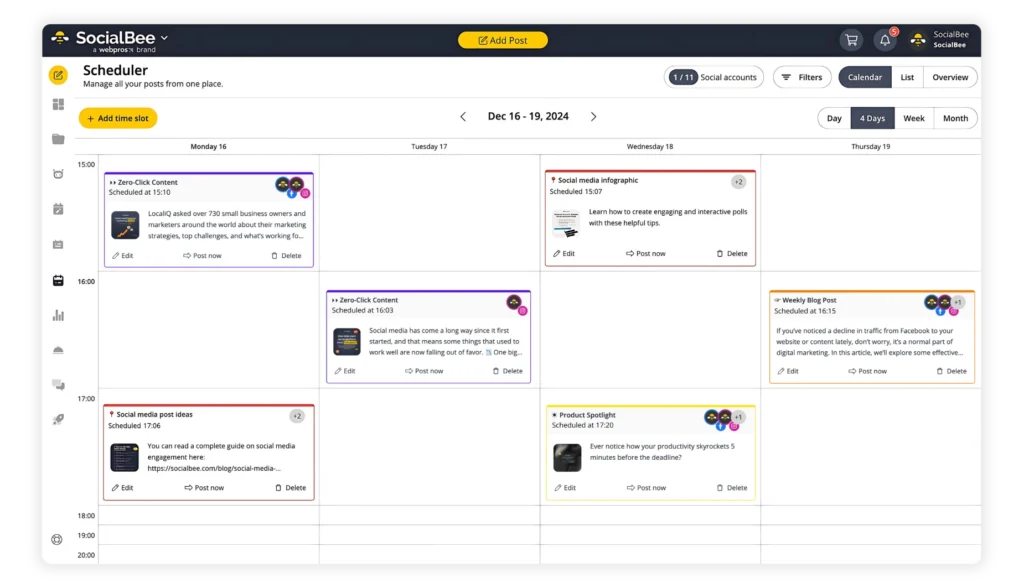
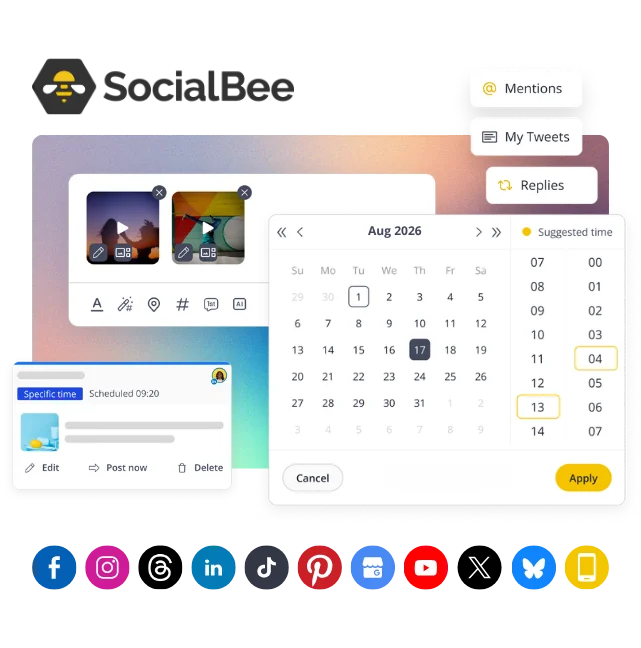
- Use SocialBee to schedule and maintain a consistent publishing cadence across channels. You can try SocialBee free for 14 days and see how much easier it is to stay consistent without publishing every post manually.
The Platform Changed, but Your Strategy Didn’t
Social media platforms constantly adjust how content gets distributed. Features gain prominence. Formats receive preferential treatment. Audience behavior shifts alongside those changes. Strategies that generated strong engagement a year ago may produce average results today. You need to keep up (and fast). This means cutting down on reliance on the same content formats, posting habits, and distribution tactics. Yes, even when content quality is strong.
What to do:
- Monitor platform updates regularly.
- Test new formats early.
- Review engagement trends monthly.
- Adjust your content mix based on performance.
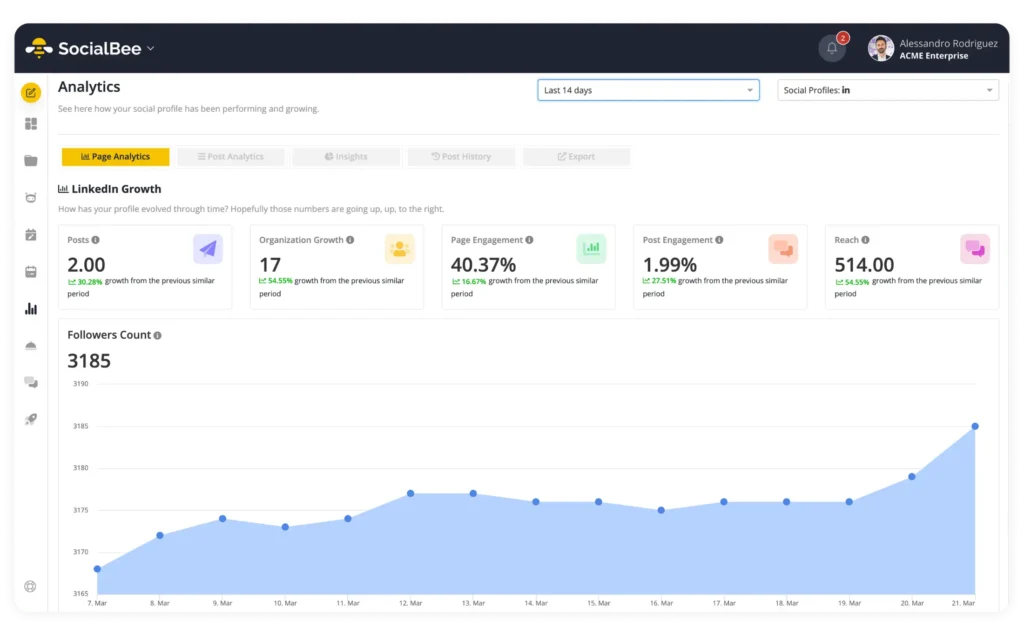
When engagement starts changing, your analytics can help you figure out what changed with it. SocialBee lets you compare how your posts are performing and see which topics and content types are getting the strongest response. If videos are picking up while your usual image posts are slowing down, for example, you have a clear reason to test more video rather than changing your strategy at random.
Use your results to decide what to test next.
You’re Competing for Attention in a Crowded Feed
Traditionally, businesses compete with other businesses in the same sector. But that’s not the case with social media. Here, the audience compares your content against every post that appears in their feed. This makes the entire internet your competition! You’re competing against industry experts, creators, influencers, brands, colleagues, friends, and family. And ICYMI, digital attention is as low as 47 seconds! It’s already an uphill battle.
What to do:
- Lead with stronger hooks.
- Share original opinions and observations.
- Add unique examples wherever possible.
- Prioritize quality over volume.
You’re Talking at Your Audience
Many brands treat social media as a broadcast channel. They create posts, hit publish, and move on to the next task. That’s probably why they lose engagement. Followers expect acknowledgment for their comments, questions, or opinions. Failing to interact sends a clear message: conversations aren’t welcome. Over time, people stop participating. After all, what’s the point of engaging?
What to do:
- Respond to comments as quickly as possible.
- Ask leading questions that spark discussions.
- Join conversations within your industry.
- Follow up with people who engage regularly.
Strong Engagement Starts With Better Decisions
A drop in engagement is feedback. Sure, it may raise concerns, but it’s nothing that can’t be fixed.
The numbers are telling you that something needs adjustment. It could be your content strategy, posting consistency, audience engagement, or platform approach. Small improvements within these pockets often produce bigger results.
We get it, managing content, scheduling posts, and maintaining consistency across platforms feels overwhelming. This is why SocialBee is here to help. Start your 14-day free trial and give your social media strategy the structure it needs. Keep engagement moving in the right direction.
FAQs
Why is my social media engagement dropping?
Engagement usually drops when content stops resonating with audiences, posting becomes inconsistent, platforms change their algorithms, or brands fail to interact with followers regularly.
How often should I post on social media?
The ideal frequency depends on the platform and audience.
Can social media algorithms affect engagement?
Yes. Platform algorithms influence how much visibility your content receives. Changes to content distribution, ranking factors, or preferred formats directly impact engagement levels.
What metrics should I track besides likes?
Focus on engagement rate, comments, shares, saves, profile visits, click-through rates, and conversions.